

Why Clinic Website Redesign Matters for User Experience
User-Centric Website Redesign in Healthcare
Redesigning a clinic website with a user-focused approach is essential to meet the diverse needs of patients, providers, and caregivers. A well-structured, patient-centric design helps ensure that information is clear and navigation is intuitive, reducing frustration and enhancing overall satisfaction.
Impact on Patient Trust, Engagement, and Conversion
A modern, professional website builds immediate trust through credible content, testimonials, and transparent privacy compliance. Clear calls-to-action (CTAs) such as appointment bookings improve engagement and increase conversion rates. Responsive mobile design and fast load times further encourage patients to interact with the site and complete desired actions.
Trends and Challenges in Healthcare Digital Experience
Current trends emphasize mobile-first design, accessibility compliance, AI-powered search, and integrated online scheduling tools. Challenges include simplifying complex medical information, ensuring HIPAA compliance, and maintaining site speed and usability across multiple devices. Continuous updates and data-driven improvements are crucial to adapt to evolving patient expectations and technology advancements.
Key Facts for Healthcare Website Optimization
- Over 91% of U.S. adults own a smartphone, emphasizing the need for mobile-first design.
- Responsive design not only improves usability but also boosts search engine rankings on Google.
- Speed is critical; websites loading in under 2 seconds foster trust and reduce bounce rates.
- The hero section is vital in establishing trust instantly with clear value propositions and patient-centric language.
- Audience-specific navigation (patients, providers, caregivers) improves satisfaction by streamlining content discovery.
- A robust find-a-provider tool with scheduling features empowers patient autonomy and improves engagement.
- Healthcare websites must comply with ADA and WCAG standards, including high contrast visuals and screen reader compatibility.
- Incorporating testimonials, awards, and trust badges builds patient trust and enhances credibility.
- Clear FAQs and transparent contact info reduce patient anxiety and encourage ongoing engagement.
- Regular site audits and post-launch improvements ensure long-term SEO, performance, and content relevance.
1. Prioritize Mobile-First and Responsive Design for Seamless Access

High Mobile Device Usage in US Healthcare
With over 91% of U.S. adults owning a smartphone and more than 55% of healthcare website traffic coming from mobile devices, mobile optimization for healthcare websites is essential for healthcare providers. Patients increasingly rely on smartphones and tablets for accessing medical information, scheduling appointments, and managing their health online.
Responsive Design Enhances Usability and SEO
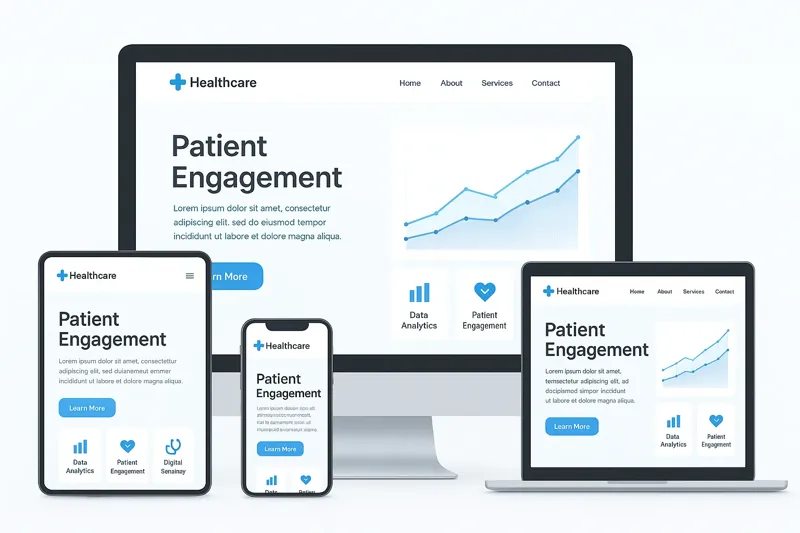
Responsive web design ensures healthcare websites automatically adjust to different screen sizes and devices, providing a consistent and user-friendly experience. This adaptability not only improves patient satisfaction but also positively impacts search engine rankings, as Google prioritizes mobile-friendly sites for better visibility.
Mobile-Optimized Forms and Navigation
To reduce patient frustration and increase engagement, healthcare websites must feature mobile-optimized forms with large input fields and streamlined questions. Intuitive navigation with clear labels and touch-friendly buttons allows users to find key information quickly, such as provider directories, insurance verifications, and appointment booking tools.
Importance of Fast Loading Times Under 2 Seconds
Speed is a critical factor in patient retention. Websites that load in under 2 seconds foster trust and prevent high bounce rates. Optimizing image sizes, minimizing scripts, and choosing high-quality hosting for medical sites are proven strategies to achieve rapid load times, further enhancing the overall patient experience.
These mobile-first strategies are crucial to meet patient expectations, improve accessibility, and maximize healthcare website performance in today's digital landscape.
2. Craft a Trustworthy Hero Section with Clear Value Propositions

The Role of the Hero Section Design for Healthcare Sites in Establishing Trust Instantly
The hero section serves as the first point of contact on a healthcare website, playing a pivotal role in forming immediate trust with visitors. Effective hero sections present clear value propositions that communicate the organization’s commitment to patient care, setting a reassuring tone right from the start.
Use of Patient-Centric Language in Healthcare UX, Conversational Language
To foster empathy and comfort, healthcare websites should employ patient-centric, conversational language in their hero sections. Avoiding complex medical jargon, this approach resonates with diverse patient populations, making information more accessible and engaging.
Clear and Prominent Primary CTAs in Healthcare Web Design
Strategically placed, easy-to-spot CTAs such as "Book an Appointment" or "Find a Provider" encourage patient interaction. These CTAs guide users transparently to take the next steps, reducing confusion and improving conversion rates.
Use of Credible Imagery and Testimonials in Healthcare Websites Elements
Incorporating credible imagery such as respectful photos of healthcare professionals and patient testimonials adds authenticity and humanizes the experience. Social proof elements like verified reviews or trust badges further reinforce legitimacy and encourage patient confidence.
Integrating these techniques ensures that the hero section acts not only as an entry point but also as a powerful trust builder, significantly enhancing patient engagement and satisfaction.
3. Implement Audience-Specific Navigation to Enhance User Journeys

Segmentation of users: patients, providers, caregivers
Healthcare websites must recognize the diverse needs of their user base, which typically includes patients, healthcare providers, and caregivers. Each group has distinct objectives and paths within the website, necessitating tailored content and navigation to facilitate relevant interactions and improve overall satisfaction.
Tailored navigation menus and mega menus
Deploying segmented navigation menus, such as role-specific mega menus, enhances the user experience by directly presenting options pertinent to each group. For instance, patients might access appointment scheduling and symptom checkers, while providers could find clinical resources and administrative tools more easily. This targeted structure reduces cognitive load and streamlines content discovery.
Persistent search bars and role-based CTAs
Incorporation of persistent search bars equipped with AI-driven predictive text allows users to locate information quickly regardless of their role. Moreover, context-sensitive calls-to-action (CTAs), designed specifically for audience segments, guide users toward relevant next steps, such as booking appointments for patients or accessing policy updates for providers, thereby improving engagement and conversion.
Reducing user frustration through intuitive pathways
Intuitive navigation pathways minimize confusion and user frustration by offering clear labels, hierarchical menus, and consistent layouts. Role-specific navigation fosters empathy and trust, ensuring users feel understood. The integration of these features into audience-specific journeys ultimately promotes smoother interactions, reduces bounce rates, and supports positive patient and stakeholder outcomes in healthcare settings.
4. Integrate a Robust Find-a-Provider Tool with Scheduling Features
Why is a Find-a-Provider Tool Features Essential for Patient Empowerment?
A find-a-provider tool is a critical feature for healthcare websites aiming to enhance patient autonomy and satisfaction. It allows patients to efficiently locate suitable healthcare professionals based on their specific needs, reducing administrative delays and simplifying access to care.
How Can Filtering Options in Provider Search Improve User Experience?
Advanced filtering options such as specialty, location, language, and insurance acceptance empower users to narrow down their search effectively. This customization accommodates diverse patient preferences and ensures a more personalized healthcare experience.
In What Ways Do Provider Profiles on Healthcare Sites Build Trust?
Comprehensive provider profiles that include credentials, expertise, and patient reviews humanize the care experience. They build emotional trust and help patients make informed decisions by providing transparency and insight into the provider’s background.
How Does Integrated Appointment Booking Enhance Convenience?
Integrating the find-a-provider tool with online appointment scheduling streamlines the patient journey by allowing users to book visits directly from provider profiles. This reduces friction, improves operational efficiency, and aligns with modern patient expectations for immediate access.
Healthcare organizations incorporating these features can expect improved patient engagement, decreased administrative burden, and measurable growth in appointment bookings, ultimately driving better patient outcomes and satisfaction.
5. Ensure Accessibility and Compliance for Inclusive User Experience
What are the ADA and WCAG compliance requirements for healthcare websites?
Healthcare websites in the United States must comply with the Americans with Disabilities Act (ADA) and Web Content Accessibility Guidelines (WCAG) to ensure that all patients, including those with disabilities, have equitable access to vital health information and services. ADA compliance mandates that digital content be accessible to individuals with disabilities, while WCAG provides detailed technical standards, such as keyboard navigation, text alternatives, and adaptable content presentation.
What accessibility features are essential for an inclusive healthcare website?
Effective accessibility features include:
- Readable fonts: Using clear, legible typography that supports ease of reading across devices.
- High contrast visuals: Ensuring sufficient contrast between text and background to aid users with low vision.
- Screen reader compatibility: Enabling assistive technologies to interpret website content seamlessly.
These features collectively reduce user frustration and help patients, especially those with disabilities, access healthcare resources efficiently. See more on Accessibility Features for Healthcare.
How does multilingual support enhance healthcare website accessibility?
Multilingual functionality ensures information reaches diverse populations, including non-English-speaking patients or those with limited English proficiency. Providing content in multiple languages fosters health equity by eliminating language barriers that could impede understanding critical healthcare guidance, appointment scheduling, or insurance information. Learn about Multilingual support for health equity.
Why is accessibility critical for health equity and legal compliance?
Accessible healthcare websites promote health equity by offering an inclusive digital environment that respects diverse needs. Additionally, legal compliance with ADA and other relevant regulations safeguards against lawsuits and penalties while reinforcing patient trust. Websites adhering to established accessibility standards contribute to better patient engagement, satisfaction, and outcomes in an increasingly digital healthcare ecosystem. Explore Healthcare website security and compliance for more insights.
6. Optimize Internal Search with AI-Driven Features for Quick Information
Smart internal search benefits and design
A well-designed internal search engine on healthcare websites is vital to help users quickly locate relevant clinical and service information. Effective search reduces user frustration and enhances the overall patient experience by enabling efficient navigation through complex medical content.
Use of AI and predictive text capabilities
Integrating artificial intelligence (AI) elevates search functionality by offering predictive search features and auto-completions. This anticipates user queries and accelerates the search process, helping patients find providers, services, or educational content with fewer keystrokes and less effort.
Meaningful labels and error tolerance
Clear, meaningful labels on search results and filters improve clarity, guiding users toward accurate information. AI-powered internal search also incorporates typo tolerance and error correction, preventing dead-ends due to misspellings or incomplete queries, which is critical in high-stakes healthcare contexts.
Reducing user frustration and improving information retrieval
These AI-enhanced search features decrease cognitive load and minimize frustration by delivering relevant results quickly. This contributes to patient trust and satisfaction, ultimately supporting better healthcare outcomes through improved access to information.
7. Design a Minimalist, Clear, and Reassuring Visual Interface
Minimal Clutter and Clear Visual Hierarchy
A Minimalist Design Benefits approach is essential for healthcare websites to create a professional and calming environment. Reducing clutter helps users focus on vital information and key actions without distraction. Clear visual hierarchies guide patients efficiently through the website, making important elements like calls-to-action (CTAs) and service highlights easily discoverable.
High-Quality, Inclusive Images Enhancing Trust
Incorporating high-quality, diverse, and accurate images of healthcare staff, facilities, and patients builds a trustworthy atmosphere. Inclusive imagery that reflects the community promotes empathy and patient comfort. These visuals humanize healthcare experiences, reinforcing credibility and emotional connection.
Consistent Branding and Professional Aesthetics
Maintaining Consistent Branding for Medical Websites across the website through color schemes, typography, and logos reinforces identity and professionalism. A warm and inviting color palette paired with thoughtful whitespace increases readability and positively influences patient perception.
Balancing Simplicity with Informative Content
While simplicity aids usability, healthcare websites must also provide comprehensive, easy-to-understand content. Using Simplifying medical terminology in UX and concise sections ensures vital information is accessible without overwhelming users. Bullet points and straightforward layouts improve comprehension, helping patients make informed decisions efficiently.
8. Highlight Social Proof and Credible Data to Build Patient Trust

Use of Testimonials and Patient Success Stories
Integrating patient testimonials and success stories in healthcare websites humanizes the care experience and establishes emotional connections. These narratives build trust by showcasing real patient outcomes, reducing anxiety for prospective patients. Effective testimonials are recent, specific to services, and prominently displayed to positively influence patient decision-making.
Display of Credible Statistics and Awards
Presenting verified statistics, such as outpatient visit numbers or treatment success rates, enhances credibility and authority. Infographics featuring recent awards, certifications, or provider achievements visually reinforce quality care standards. This data-driven transparency fosters patient confidence and highlights organizational expertise.
Trust Badges such as NABH, ISO
Featuring recognized trust badges like NABH (National Accreditation Board for Hospitals & Healthcare Providers) and ISO certifications prominently signals compliance with rigorous quality and safety standards. These badges function as visual proof points, assuring patients of the practice's commitment to excellence and regulatory adherence.
Leveraging Online Reviews and Reputation Management
Given that over 80% of consumers value online reviews as much as personal recommendations, showcasing positive reviews from Google and other platforms is essential. Actively managing reviews by responding professionally and highlighting patient satisfaction helps maintain reputation and encourages new patient engagement.
9. Streamline Content with Clear FAQs and Transparent Contact Information
Addressing Common Patient Concerns with FAQs
Incorporating a comprehensive FAQs for patient support section on healthcare websites is essential to address common patient worries efficiently. These FAQs should be crafted with clear, jargon-free language to ensure accessibility to all users, regardless of their medical knowledge or literacy levels. Providing straightforward answers helps demystify complex medical processes, reducing frustration and uncertainty.
Jargon-Free, Clear Explanations Enhance Understanding
Clear explanations within FAQs and throughout the website foster trust and patient confidence. Avoiding clinical jargon and using patient-focused conversational website copy makes the content approachable and improves user satisfaction. This transparency enables patients to make informed healthcare decisions with ease.
Prominent Contact Information and Calls to Action
Displaying clear contact information and accessible CTAs to reduce anxiety prominently and accessibly on every page is vital. Easy-to-find phone numbers, email addresses, and appointment booking buttons empower users to reach out without delays. Simplifying these interactions reduces barriers to engagement and increases appointment conversions.
Reducing Anxiety and Encouraging Engagement
By proactively answering patients’ questions and concerns, clear FAQs paired with transparent contact options reduce anxiety associated with healthcare navigation. This strategic content approach supports a reassuring visual design for healthcare sites and a trustworthy user experience that encourages ongoing patient engagement and strengthens the patient-provider relationship.
10. Conduct Comprehensive Site Audits and Post-Launch Iterative Improvements
Evaluating Current Functionality, SEO, and Analytics
Before initiating a healthcare website redesign, a comprehensive healthcare website audit is critical. This process involves evaluating the website’s existing functionality, responsiveness across devices, brand alignment, and the accuracy of content. Crucially, SEO and analytics performance must be assessed to identify strengths, weaknesses, and opportunities for improvement. An audit of user interaction tools helps ensure that navigation and call-to-action elements are effective and intuitive.
Stakeholder Involvement and Team Alignment
Successful healthcare website projects require dedicated teams with clearly defined roles and responsibilities. Engaging key stakeholders early guarantees alignment on objectives and facilitates smoother decision-making throughout the redesign. Multidisciplinary collaboration, including marketing, compliance, and IT, ensures that the website meets medical regulations, security standards, and marketing goals simultaneously. Refer to building a healthcare web team for more details.
Setting Realistic Timelines and Goals
Establishing a realistic and detailed timeline is essential to balance internal capacity, outsourcing needs, and the complexity of the project. Setting clear goals—such as increasing patient appointments, improving patient demographics reach, and enhancing online form efficiency—provides direction and measurable outcomes. Prioritizing wireframes, site architecture, and content creation phases helps streamline project flow and reduce delays. For comprehensive guidance, see healthcare website project planning.
Ongoing Performance Monitoring, Updates, and Content Optimization
Post-launch, continuous improvement is vital to maintain relevance and user engagement. Regular monitoring of key website metrics—such as organic traffic, bounce rates, and conversion rates—provides data-driven insights for iterative updates. Routine content audits ensure information remains accurate and optimized for SEO. Consistent technical maintenance, including security updates and accessibility compliance checks, extends the website’s effectiveness and supports sustained patient growth. Learn more about post-launch healthcare website strategies.
Maximizing Clinic Success Through Intelligent Website Redesign
Strategic Redesign Essentials for Healthcare Websites
Successful healthcare website redesign entails a comprehensive audit covering responsiveness, branding, content accuracy, SEO, and technical functions. Building a dedicated multidisciplinary team ensures clear roles and stakeholder involvement, facilitating smooth execution. Persona-driven strategies enable tailoring content and functionality to diverse patient and provider needs, streamlining navigation and enhancing user journeys. Early prioritization of wireframes, defining site architecture, and stakeholder approvals help maintain schedules and budgets.
Ongoing User Experience Refinement
Post-launch, continuous enhancements based on analytics are critical to sustain relevance and optimize performance. Routine maintenance, technical updates, and iterative improvements extend the website lifespan, ensuring usability and legal compliance. Integrating the website within broader marketing frameworks boosts patient engagement and retention.
Aligning Design with Patient Needs and Business Goals
A patient-centric approach with clear value propositions, accessible navigation, and targeted calls to action aligns user experience with business objectives like increased appointment bookings and expanded demographics. Features such as Find-a-Provider tools, centralized directories, and integration with EHR and scheduling systems reinforce care coordination and operational efficiency, translating to measurable patient growth outcomes.
Why Clinic Website Redesign Matters for User Experience
User-Centric Website Redesign in Healthcare
Redesigning a clinic website with a user-focused approach is essential to meet the diverse needs of patients, providers, and caregivers. A well-structured, patient-centric design helps ensure that information is clear and navigation is intuitive, reducing frustration and enhancing overall satisfaction.
Impact on Patient Trust, Engagement, and Conversion
A modern, professional website builds immediate trust through credible content, testimonials, and transparent privacy compliance. Clear calls-to-action (CTAs) such as appointment bookings improve engagement and increase conversion rates. Responsive mobile design and fast load times further encourage patients to interact with the site and complete desired actions.
Trends and Challenges in Healthcare Digital Experience
Current trends emphasize mobile-first design, accessibility compliance, AI-powered search, and integrated online scheduling tools. Challenges include simplifying complex medical information, ensuring HIPAA compliance, and maintaining site speed and usability across multiple devices. Continuous updates and data-driven improvements are crucial to adapt to evolving patient expectations and technology advancements.
Key Facts for Healthcare Website Optimization
- Over 91% of U.S. adults own a smartphone, emphasizing the need for mobile-first design.
- Responsive design not only improves usability but also boosts search engine rankings on Google.
- Speed is critical; websites loading in under 2 seconds foster trust and reduce bounce rates.
- The hero section is vital in establishing trust instantly with clear value propositions and patient-centric language.
- Audience-specific navigation (patients, providers, caregivers) improves satisfaction by streamlining content discovery.
- A robust find-a-provider tool with scheduling features empowers patient autonomy and improves engagement.
- Healthcare websites must comply with ADA and WCAG standards, including high contrast visuals and screen reader compatibility.
- Incorporating testimonials, awards, and trust badges builds patient trust and enhances credibility.
- Clear FAQs and transparent contact info reduce patient anxiety and encourage ongoing engagement.
- Regular site audits and post-launch improvements ensure long-term SEO, performance, and content relevance.
1. Prioritize Mobile-First and Responsive Design for Seamless Access
High Mobile Device Usage in US Healthcare
With over 91% of U.S. adults owning a smartphone and more than 55% of healthcare website traffic coming from mobile devices, mobile optimization for healthcare websites is essential for healthcare providers. Patients increasingly rely on smartphones and tablets for accessing medical information, scheduling appointments, and managing their health online.
Responsive Design Enhances Usability and SEO
Responsive web design ensures healthcare websites automatically adjust to different screen sizes and devices, providing a consistent and user-friendly experience. This adaptability not only improves patient satisfaction but also positively impacts search engine rankings, as Google prioritizes mobile-friendly sites for better visibility.
Mobile-Optimized Forms and Navigation
To reduce patient frustration and increase engagement, healthcare websites must feature mobile-optimized forms with large input fields and streamlined questions. Intuitive navigation with clear labels and touch-friendly buttons allows users to find key information quickly, such as provider directories, insurance verifications, and appointment booking tools.
Importance of Fast Loading Times Under 2 Seconds
Speed is a critical factor in patient retention. Websites that load in under 2 seconds foster trust and prevent high bounce rates. Optimizing image sizes, minimizing scripts, and choosing high-quality hosting for medical sites are proven strategies to achieve rapid load times, further enhancing the overall patient experience.
These mobile-first strategies are crucial to meet patient expectations, improve accessibility, and maximize healthcare website performance in today's digital landscape.
2. Craft a Trustworthy Hero Section with Clear Value Propositions
The Role of the Hero Section Design for Healthcare Sites in Establishing Trust Instantly
The hero section serves as the first point of contact on a healthcare website, playing a pivotal role in forming immediate trust with visitors. Effective hero sections present clear value propositions that communicate the organization’s commitment to patient care, setting a reassuring tone right from the start.
Use of Patient-Centric Language in Healthcare UX, Conversational Language
To foster empathy and comfort, healthcare websites should employ patient-centric, conversational language in their hero sections. Avoiding complex medical jargon, this approach resonates with diverse patient populations, making information more accessible and engaging.
Clear and Prominent Primary CTAs in Healthcare Web Design
Strategically placed, easy-to-spot CTAs such as "Book an Appointment" or "Find a Provider" encourage patient interaction. These CTAs guide users transparently to take the next steps, reducing confusion and improving conversion rates.
Use of Credible Imagery and Testimonials in Healthcare Websites Elements
Incorporating credible imagery such as respectful photos of healthcare professionals and patient testimonials adds authenticity and humanizes the experience. Social proof elements like verified reviews or trust badges further reinforce legitimacy and encourage patient confidence.
Integrating these techniques ensures that the hero section acts not only as an entry point but also as a powerful trust builder, significantly enhancing patient engagement and satisfaction.
3. Implement Audience-Specific Navigation to Enhance User Journeys
Segmentation of users: patients, providers, caregivers
Healthcare websites must recognize the diverse needs of their user base, which typically includes patients, healthcare providers, and caregivers. Each group has distinct objectives and paths within the website, necessitating tailored content and navigation to facilitate relevant interactions and improve overall satisfaction.
Tailored navigation menus and mega menus
Deploying segmented navigation menus, such as role-specific mega menus, enhances the user experience by directly presenting options pertinent to each group. For instance, patients might access appointment scheduling and symptom checkers, while providers could find clinical resources and administrative tools more easily. This targeted structure reduces cognitive load and streamlines content discovery.
Persistent search bars and role-based CTAs
Incorporation of persistent search bars equipped with AI-driven predictive text allows users to locate information quickly regardless of their role. Moreover, context-sensitive calls-to-action (CTAs), designed specifically for audience segments, guide users toward relevant next steps, such as booking appointments for patients or accessing policy updates for providers, thereby improving engagement and conversion.
Reducing user frustration through intuitive pathways
Intuitive navigation pathways minimize confusion and user frustration by offering clear labels, hierarchical menus, and consistent layouts. Role-specific navigation fosters empathy and trust, ensuring users feel understood. The integration of these features into audience-specific journeys ultimately promotes smoother interactions, reduces bounce rates, and supports positive patient and stakeholder outcomes in healthcare settings.
4. Integrate a Robust Find-a-Provider Tool with Scheduling Features
Why is a Find-a-Provider Tool Features Essential for Patient Empowerment?
A find-a-provider tool is a critical feature for healthcare websites aiming to enhance patient autonomy and satisfaction. It allows patients to efficiently locate suitable healthcare professionals based on their specific needs, reducing administrative delays and simplifying access to care.
How Can Filtering Options in Provider Search Improve User Experience?
Advanced filtering options such as specialty, location, language, and insurance acceptance empower users to narrow down their search effectively. This customization accommodates diverse patient preferences and ensures a more personalized healthcare experience.
In What Ways Do Provider Profiles on Healthcare Sites Build Trust?
Comprehensive provider profiles that include credentials, expertise, and patient reviews humanize the care experience. They build emotional trust and help patients make informed decisions by providing transparency and insight into the provider’s background.
How Does Integrated Appointment Booking Enhance Convenience?
Integrating the find-a-provider tool with online appointment scheduling streamlines the patient journey by allowing users to book visits directly from provider profiles. This reduces friction, improves operational efficiency, and aligns with modern patient expectations for immediate access.
Healthcare organizations incorporating these features can expect improved patient engagement, decreased administrative burden, and measurable growth in appointment bookings, ultimately driving better patient outcomes and satisfaction.
5. Ensure Accessibility and Compliance for Inclusive User Experience
What are the ADA and WCAG compliance requirements for healthcare websites?
Healthcare websites in the United States must comply with the Americans with Disabilities Act (ADA) and Web Content Accessibility Guidelines (WCAG) to ensure that all patients, including those with disabilities, have equitable access to vital health information and services. ADA compliance mandates that digital content be accessible to individuals with disabilities, while WCAG provides detailed technical standards, such as keyboard navigation, text alternatives, and adaptable content presentation.
What accessibility features are essential for an inclusive healthcare website?
Effective accessibility features include:
- Readable fonts: Using clear, legible typography that supports ease of reading across devices.
- High contrast visuals: Ensuring sufficient contrast between text and background to aid users with low vision.
- Screen reader compatibility: Enabling assistive technologies to interpret website content seamlessly.
These features collectively reduce user frustration and help patients, especially those with disabilities, access healthcare resources efficiently. See more on Accessibility Features for Healthcare.
How does multilingual support enhance healthcare website accessibility?
Multilingual functionality ensures information reaches diverse populations, including non-English-speaking patients or those with limited English proficiency. Providing content in multiple languages fosters health equity by eliminating language barriers that could impede understanding critical healthcare guidance, appointment scheduling, or insurance information. Learn about Multilingual support for health equity.
Why is accessibility critical for health equity and legal compliance?
Accessible healthcare websites promote health equity by offering an inclusive digital environment that respects diverse needs. Additionally, legal compliance with ADA and other relevant regulations safeguards against lawsuits and penalties while reinforcing patient trust. Websites adhering to established accessibility standards contribute to better patient engagement, satisfaction, and outcomes in an increasingly digital healthcare ecosystem. Explore Healthcare website security and compliance for more insights.
6. Optimize Internal Search with AI-Driven Features for Quick Information
Smart internal search benefits and design
A well-designed internal search engine on healthcare websites is vital to help users quickly locate relevant clinical and service information. Effective search reduces user frustration and enhances the overall patient experience by enabling efficient navigation through complex medical content.
Use of AI and predictive text capabilities
Integrating artificial intelligence (AI) elevates search functionality by offering predictive search features and auto-completions. This anticipates user queries and accelerates the search process, helping patients find providers, services, or educational content with fewer keystrokes and less effort.
Meaningful labels and error tolerance
Clear, meaningful labels on search results and filters improve clarity, guiding users toward accurate information. AI-powered internal search also incorporates typo tolerance and error correction, preventing dead-ends due to misspellings or incomplete queries, which is critical in high-stakes healthcare contexts.
Reducing user frustration and improving information retrieval
These AI-enhanced search features decrease cognitive load and minimize frustration by delivering relevant results quickly. This contributes to patient trust and satisfaction, ultimately supporting better healthcare outcomes through improved access to information.
7. Design a Minimalist, Clear, and Reassuring Visual Interface
Minimal Clutter and Clear Visual Hierarchy
A Minimalist Design Benefits approach is essential for healthcare websites to create a professional and calming environment. Reducing clutter helps users focus on vital information and key actions without distraction. Clear visual hierarchies guide patients efficiently through the website, making important elements like calls-to-action (CTAs) and service highlights easily discoverable.
High-Quality, Inclusive Images Enhancing Trust
Incorporating high-quality, diverse, and accurate images of healthcare staff, facilities, and patients builds a trustworthy atmosphere. Inclusive imagery that reflects the community promotes empathy and patient comfort. These visuals humanize healthcare experiences, reinforcing credibility and emotional connection.
Consistent Branding and Professional Aesthetics
Maintaining Consistent Branding for Medical Websites across the website through color schemes, typography, and logos reinforces identity and professionalism. A warm and inviting color palette paired with thoughtful whitespace increases readability and positively influences patient perception.
Balancing Simplicity with Informative Content
While simplicity aids usability, healthcare websites must also provide comprehensive, easy-to-understand content. Using Simplifying medical terminology in UX and concise sections ensures vital information is accessible without overwhelming users. Bullet points and straightforward layouts improve comprehension, helping patients make informed decisions efficiently.
8. Highlight Social Proof and Credible Data to Build Patient Trust
Use of Testimonials and Patient Success Stories
Integrating patient testimonials and success stories in healthcare websites humanizes the care experience and establishes emotional connections. These narratives build trust by showcasing real patient outcomes, reducing anxiety for prospective patients. Effective testimonials are recent, specific to services, and prominently displayed to positively influence patient decision-making.
Display of Credible Statistics and Awards
Presenting verified statistics, such as outpatient visit numbers or treatment success rates, enhances credibility and authority. Infographics featuring recent awards, certifications, or provider achievements visually reinforce quality care standards. This data-driven transparency fosters patient confidence and highlights organizational expertise.
Trust Badges such as NABH, ISO
Featuring recognized trust badges like NABH (National Accreditation Board for Hospitals & Healthcare Providers) and ISO certifications prominently signals compliance with rigorous quality and safety standards. These badges function as visual proof points, assuring patients of the practice's commitment to excellence and regulatory adherence.
Leveraging Online Reviews and Reputation Management
Given that over 80% of consumers value online reviews as much as personal recommendations, showcasing positive reviews from Google and other platforms is essential. Actively managing reviews by responding professionally and highlighting patient satisfaction helps maintain reputation and encourages new patient engagement.
9. Streamline Content with Clear FAQs and Transparent Contact Information
Addressing Common Patient Concerns with FAQs
Incorporating a comprehensive FAQs for patient support section on healthcare websites is essential to address common patient worries efficiently. These FAQs should be crafted with clear, jargon-free language to ensure accessibility to all users, regardless of their medical knowledge or literacy levels. Providing straightforward answers helps demystify complex medical processes, reducing frustration and uncertainty.
Jargon-Free, Clear Explanations Enhance Understanding
Clear explanations within FAQs and throughout the website foster trust and patient confidence. Avoiding clinical jargon and using patient-focused conversational website copy makes the content approachable and improves user satisfaction. This transparency enables patients to make informed healthcare decisions with ease.
Prominent Contact Information and Calls to Action
Displaying clear contact information and accessible CTAs to reduce anxiety prominently and accessibly on every page is vital. Easy-to-find phone numbers, email addresses, and appointment booking buttons empower users to reach out without delays. Simplifying these interactions reduces barriers to engagement and increases appointment conversions.
Reducing Anxiety and Encouraging Engagement
By proactively answering patients’ questions and concerns, clear FAQs paired with transparent contact options reduce anxiety associated with healthcare navigation. This strategic content approach supports a reassuring visual design for healthcare sites and a trustworthy user experience that encourages ongoing patient engagement and strengthens the patient-provider relationship.
10. Conduct Comprehensive Site Audits and Post-Launch Iterative Improvements
Evaluating Current Functionality, SEO, and Analytics
Before initiating a healthcare website redesign, a comprehensive healthcare website audit is critical. This process involves evaluating the website’s existing functionality, responsiveness across devices, brand alignment, and the accuracy of content. Crucially, SEO and analytics performance must be assessed to identify strengths, weaknesses, and opportunities for improvement. An audit of user interaction tools helps ensure that navigation and call-to-action elements are effective and intuitive.
Stakeholder Involvement and Team Alignment
Successful healthcare website projects require dedicated teams with clearly defined roles and responsibilities. Engaging key stakeholders early guarantees alignment on objectives and facilitates smoother decision-making throughout the redesign. Multidisciplinary collaboration, including marketing, compliance, and IT, ensures that the website meets medical regulations, security standards, and marketing goals simultaneously. Refer to building a healthcare web team for more details.
Setting Realistic Timelines and Goals
Establishing a realistic and detailed timeline is essential to balance internal capacity, outsourcing needs, and the complexity of the project. Setting clear goals—such as increasing patient appointments, improving patient demographics reach, and enhancing online form efficiency—provides direction and measurable outcomes. Prioritizing wireframes, site architecture, and content creation phases helps streamline project flow and reduce delays. For comprehensive guidance, see healthcare website project planning.
Ongoing Performance Monitoring, Updates, and Content Optimization
Post-launch, continuous improvement is vital to maintain relevance and user engagement. Regular monitoring of key website metrics—such as organic traffic, bounce rates, and conversion rates—provides data-driven insights for iterative updates. Routine content audits ensure information remains accurate and optimized for SEO. Consistent technical maintenance, including security updates and accessibility compliance checks, extends the website’s effectiveness and supports sustained patient growth. Learn more about post-launch healthcare website strategies.
Maximizing Clinic Success Through Intelligent Website Redesign
Strategic Redesign Essentials for Healthcare Websites
Successful healthcare website redesign entails a comprehensive audit covering responsiveness, branding, content accuracy, SEO, and technical functions. Building a dedicated multidisciplinary team ensures clear roles and stakeholder involvement, facilitating smooth execution. Persona-driven strategies enable tailoring content and functionality to diverse patient and provider needs, streamlining navigation and enhancing user journeys. Early prioritization of wireframes, defining site architecture, and stakeholder approvals help maintain schedules and budgets.
Ongoing User Experience Refinement
Post-launch, continuous enhancements based on analytics are critical to sustain relevance and optimize performance. Routine maintenance, technical updates, and iterative improvements extend the website lifespan, ensuring usability and legal compliance. Integrating the website within broader marketing frameworks boosts patient engagement and retention.
Aligning Design with Patient Needs and Business Goals
A patient-centric approach with clear value propositions, accessible navigation, and targeted calls to action aligns user experience with business objectives like increased appointment bookings and expanded demographics. Features such as Find-a-Provider tools, centralized directories, and integration with EHR and scheduling systems reinforce care coordination and operational efficiency, translating to measurable patient growth outcomes.