


Why Google Ads Are Essential for Medical Practices in 2026
The Importance of Digital Presence for Healthcare Providers
In 2026, the digital footprint of healthcare providers is more critical than ever. With over 80% of internet users searching for health-related information and 77% of patients researching online before booking an appointment, having a strong digital presence is foundational. Search engines drive three times more visitors to healthcare websites than other channels, emphasizing the power of online visibility.
Google Ads: Targeting High-Intent Patients
Google Ads offer a unique advantage by enabling practices to capture patients at the precise moment they are actively searching for specific healthcare services. This instant visibility bypasses the slower organic SEO process, allowing for immediate patient engagement. Ads can be finely targeted by location, demographics, device type, and even time of day, ensuring that marketing budgets are spent efficiently.
Comparison with Other Marketing Channels
While social media and content marketing build awareness and credibility over time, Google Ads focus on demand capture with high-intent audiences, often resulting in faster appointment bookings and measurable ROI. Paid search channels drive three times more traffic to hospital websites compared to non-search sources, attesting to the superior reach of Google Ads in healthcare marketing.
Compliance and Regulatory Considerations
Healthcare advertising on platforms like Google must rigorously adhere to regulations such as HIPAA to protect patient privacy and comply with FDA guidelines. Advertisers must avoid prohibited content and uncertified claims, often requiring certifications like LegitScript. Maintaining compliance not only safeguards patient trust but also ensures campaign longevity and effectiveness.
Healthcare organizations that strategically leverage Google Ads—while ensuring regulatory compliance—will effectively connect with motivated patients, optimize their marketing spend, and drive measurable growth in 2026.
Key Facts on Healthcare Google Ads Strategies and Best Practices
- Healthcare practices can utilize Google's demographic targeting tools to focus ads by age, gender, income, and device usage, improving relevance.
- Segmentation based on search intent and online behavior enables healthcare providers to deliver tailored ads to patients actively seeking relevant services.
- Using long-tail and condition-specific keywords with negative keywords maximizes ad relevance and ROI by attracting high-intent patient searches.
- Geo-targeting and location extensions increase local visibility, reduce waste, and facilitate immediate patient contact through call-only ads and location info.
- Crafting empathetic, compliant ad copy with clear benefits and strong CTAs encourages patient engagement while adhering to HIPAA and Google policies.
- Optimized, mobile-friendly landing pages that match ad messaging, include trust signals, and streamline appointment scheduling increase conversions.
- Utilizing ad extensions like sitelinks and callouts along with Smart Bidding strategies such as Target CPA improves campaign engagement and efficiency.
- Continuous monitoring of key metrics and offline conversion tracking are essential for refining campaigns and maximizing ROI.
- Regular updates to keywords, ad copy, and bidding strategies, aligned with Google policies, sustain campaign relevance and performance.
- Staying adaptable to Google’s evolving ad formats and policies ensures healthcare advertising remains effective, compliant, and competitive.
1. Hyper-Targeted Audience Segmentation Using Demographics and Behavior
Leveraging Google's Sophisticated Demographic Targeting Tools
Medical practices can utilize Google Ads for doctors advanced demographic targeting to focus ads on patient groups by age, gender, income, and device usage. This specificity allows campaigns to better align messaging with patient needs and preferences, maximizing ad relevance.
Using Behavioral Data and Search Intent to Refine Audience Reach
By analyzing search intent and online behaviors, healthcare providers can sharpen their audience targeting. Healthcare marketing Google Ads strategies enables segmentation based on browsing history and interaction patterns, allowing delivery of tailored ads to patients actively seeking relevant healthcare services.
Segmenting Audiences by Age, Gender, Income, and Healthcare Needs
Segmenting patient groups according to demographic factors and healthcare requirements supports personalized marketing. For example, age-based campaigns can address age-specific illnesses, while income segmentation ensures messaging aligns with patient affordability considerations. This follows best practices outlined in 2026 healthcare marketing strategy.
Improving Ad Relevance and Patient Engagement Through Precise Targeting
Precise audience segmentation enhances ad relevance, which increases click-through and conversion rates. By targeting patients most likely to need specific services, practices can optimize budget use, engage higher-quality leads, and improve overall campaign ROI as explained in Healthcare marketing 2026.
How can medical practices effectively target specific patient groups on Google Ads?
Medical practices can use Google's demographic and behavioral targeting options to segment audiences by age, gender, income, search intent, and healthcare interests. This ensures ads reach the most relevant patient groups, increasing engagement and conversion rates. For detailed guidance, see Guide to Google Ads for healthcare providers.
2. Strategic Use of Long-Tail and Condition-Specific Keywords

What keyword strategies optimize Google Ads for medical practices?
In healthcare PPC campaigns, keyword research for healthcare ads is foundational for targeting the right patients with precise intent, enhancing ad relevance and maximizing return on investment (ROI). Expert strategies emphasize the use of long-tail keywords in healthcare advertising, which are specific, often multi-word phrases that capture niche services or detailed patient needs. These keywords tend to have lower competition and attract higher-intent traffic, such as "emergency tooth extraction near me" or "bariatric surgery consultation cost."
Healthcare advertisers benefit from blending clinical terms with layman language to widen their patient pool. This approach ensures ads reach both medically informed patients and those seeking immediate care without specialized knowledge. For example, combining terms like "myocardial infarction treatment" with more common phrases such as "heart attack help" can capture diverse search queries.
Employing negative keywords is another critical tactic to filter out irrelevant traffic, reducing wasted ad spend. For instance, excluding terms like "free," "DIY," or unrelated specialties ensures that ads only appear for queries with genuine conversion potential.
Continuous keyword analysis and refinement using tools like Google Keyword Planner support dynamic adjustments, keeping campaigns aligned with patient search behaviors. Organizing keywords into tightly themed ad groups and matching ads and landing pages to searcher intent enhances quality scores and campaign performance.
Overall, a well-executed keyword strategy integrates condition-specific, long-tail, clinical, and common language keywords, alongside a robust negative keyword list, to attract high-value patients effectively while optimizing budget allocation.
3. Geo-Targeting and Location Extensions to Capture Local Patients

How does geo-targeting improve Google Ads effectiveness for healthcare providers?
Geo-targeting allows healthcare providers to focus their advertising efforts on specific geographic locations where their potential patients reside or are seeking care. This precise targeting increases the relevance of ads, reducing wasted spend by ensuring that marketing budgets are allocated to areas with the highest patient intent and likelihood to convert. Learn more about Geo-targeting in healthcare advertising.
Focusing ad spend on specific geographic locations
By concentrating ad spend on targeted regions, practices optimize their budgets and avoid broad campaigns that may attract irrelevant clicks. Geo-specific keywords and localized ad copy reinforce messaging that resonates with local searchers, enhancing patient engagement and appointment bookings. Detailed guides on Target audience analysis in healthcare ads and Keyword research for Google Ads can provide further insights.
Using location extensions and call-only ads for mobile users
Location extensions in Google Ads display the practice’s address and map details alongside the ad, aiding patients in finding the clinic easily. Call-only campaigns are designed for mobile users, enabling potential patients to call the clinic directly from the ad without visiting a website, which drives immediate bookings and improves conversion rates. For best practices, see Google Ads for Clinics and Boost Local Medical Clinic Visibility.
Optimizing campaigns around local search intent and peak appointment times
Scheduling ads to run during peak patient search times in the targeted geographic area enhances visibility when patients are most ready to act. Combining geo-targeting with behavioral insights like appointment booking patterns increases the efficiency and ROI of campaigns. More strategies are discussed in Google Ads for Medical Practices and Smart Bidding in healthcare marketing.
Geo-targeting and location extensions are essential strategies for healthcare providers seeking to maximize Google Ads' ROI. By delivering highly relevant, locally-focused ads and facilitating seamless patient contact, practices can significantly boost patient acquisition and revenue growth. For an overarching view on Healthcare marketing Google Ads strategies and Optimize Google Ads for Healthcare, refer to those resources.
4. Crafting Compliant, Clear, and Patient-Focused Ad Copy with Strong CTAs
Writing empathetic and benefit-focused ad text
Google Ads for doctors should connect with patients by addressing their concerns empathetically and highlighting clear benefits. Using accessible language that emphasizes how services improve patient well-being encourages engagement. Emphasize convenience, expertise, and trustworthiness to foster comfort and inspire action.
Adhering to HIPAA and Google healthcare advertising policies
Compliance is paramount. Ads must strictly avoid disclosing Protected Health Information (PHI) and adhere to Google’s healthcare advertising policies. This includes avoiding prohibited content such as unapproved treatments and speculative claims. Certifications like LegitScript and adherence to HIPAA regulations ensure ads meet stringent privacy and ethical standards.
Avoiding medical jargon and unverifiable claims
Clear communication means minimizing technical language that may confuse or overwhelm the audience. Ads should avoid medical jargon and unverifiable promises about treatment outcomes or cures, which are often prohibited under healthcare marketing regulations. Transparency and honesty build credibility and long-term patient trust.
Incorporating calls-to-action that drive appointment bookings
Strong calls-to-action (CTAs) guide prospective patients toward next steps such as “Book an Appointment Today,” “Schedule Your Consultation,” or “Call Now for Immediate Care.” CTAs boost click-through and conversion rates by providing clear, actionable instructions aligned with patient intent.
What elements make Google Ads copy effective and compliant for medical practices?
Effective ad copy balances clear, empathetic language with compliance by avoiding unsubstantiated claims and medical jargon. It highlights patient benefits and includes strong calls-to-action, encouraging prospective patients to schedule appointments while meeting regulatory standards. Refining ad text continuously through A/B testing for Google Ads supports sustained performance without compromising compliance.
5. Optimized Landing Pages Aligned with Ad Messaging and Mobile-Friendly Design
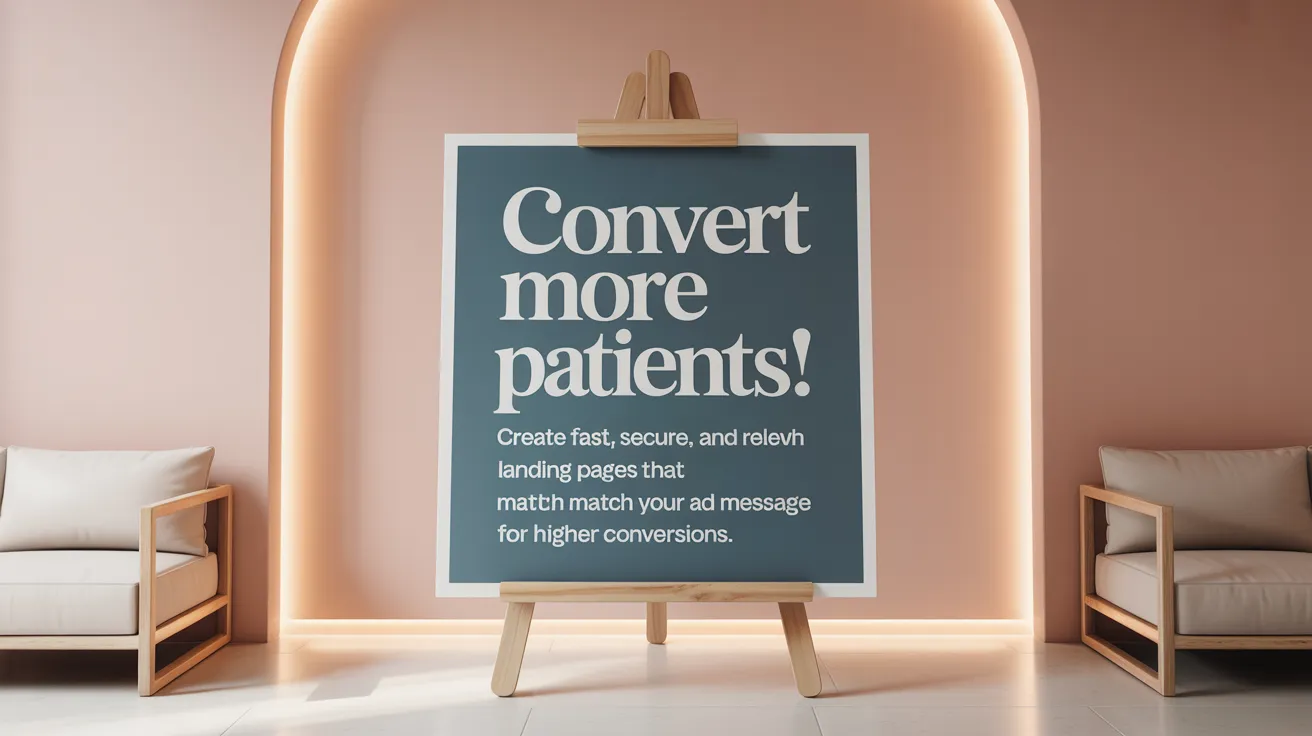
Why are optimized landing pages crucial for Google Ads success in healthcare?
Landing pages that align closely with ad copy and patient intent significantly enhance the user experience, ensuring potential patients find exactly what they are searching for. This alignment builds immediate trust through clear credentials, authentic patient reviews, and straightforward contact information, which are critical in healthcare marketing due to regulatory and ethical considerations. A seamless and quick appointment scheduling process further reduces friction, directly increasing conversion rates. For deeper insights on healthcare marketing Google Ads strategies and Google Ads for Medical Practices, these factors are crucial to campaign success.
Creating landing pages that reflect ad copy and address patient intent
Effective landing pages must mirror the messaging of the ads to maintain relevance. This involves incorporating condition-specific or procedure-specific information that patients seek based on the keywords they used. Tailoring content to address specific healthcare needs assures users that the provider understands their concern, encouraging them to take the next step. Detailed guidance on healthcare landing page best practices and creating relevant ad copy can aid in this process.
Ensuring fast loading, mobile responsiveness, and HIPAA compliance
Mobile optimization is essential since nearly half of healthcare searches originate from mobile devices. Pages should load swiftly to prevent drop-offs and maintain positive user engagement. Compliance with HIPAA is mandatory; landing pages must safeguard patient information, use secure forms, and avoid capturing Protected Health Information (PHI) in non-secure environments. For comprehensive information, see Google Ads for Clinics and healthcare advertising regulations.
Including trust signals such as credentials, reviews, and clear contact info
Displaying healthcare providers’ credentials and certifications prominently helps build authority. Incorporating verified patient testimonials and reviews reinforces credibility. Clearly visible contact details, including phone numbers and a call-to-action for immediate communication, improve trust and ease of access. Strategies related to patient testimonials in healthcare marketing and building trust through branding are valuable resources here.
Simplifying appointment scheduling to reduce conversion friction
Appointment booking interfaces should be intuitive with minimal steps, offering options like online scheduling or click-to-call for mobile users. Removing unnecessary fields and ensuring compatibility with HIPAA-compliant CRM systems streamlines the patient journey and increases the likelihood of appointment conversions. Learn more about mobile optimization for healthcare ads and offline conversion tracking with Google Ads.
By focusing on these landing page elements, healthcare providers maximize the efficiency and return on investment of their Google Ads campaigns, ultimately driving sustained patient growth. Additional recommendations on optimizing Google Ads for healthcare and avoiding pitfalls in Google Ads healthcare advertising complement this approach effectively.
6. Leveraging Ad Extensions and Smart Bidding for Enhanced Engagement and Efficiency

How do ad extensions and smart bidding improve Google Ads campaigns in healthcare?
Ad extensions significantly enhance the visibility and appeal of healthcare ads by providing extra, relevant details directly within the search results. These include sitelinks that direct patients to specific service pages, callouts highlighting unique benefits, structured snippets that showcase services offered, and location extensions that help attract nearby patients. Together, these elements increase click-through rates (CTR) and patient engagement (Maximizing Google ad extensions).
Smart bidding strategies such as Target CPA (Cost Per Acquisition) and Maximize Conversions use machine learning algorithms to automatically adjust bids in real-time, optimizing budget allocation to reach patients most likely to convert. This automation reduces manual effort and improves campaign efficiency by focusing spend on high-performing keywords and audiences (Google Ads AI-first automation, Smart Bidding in healthcare marketing).
Using site links, callouts, structured snippets, and location extensions
Ad extensions enrich healthcare Google Ads by exposing multiple options and key information upfront. Sitelinks may offer quick navigation to specialties or appointment booking; callouts emphasize credentials or patient-centered services; structured snippets highlight treatments or insurance plans accepted; location extensions ensure ads target local patients, critical for clinics and physicians servicing defined geographic areas (Google Ads for Clinics).
Implementing smart bidding strategies like Target CPA and Maximize Conversions
Smart bidding leverages AI-powered tools to optimize for specific conversion goals, enabling healthcare providers to maximize appointment bookings within defined budgets. Target CPA sets bids to achieve conversions at a target cost, while Maximize Conversions allocates budget to secure the highest total number of conversions. These strategies adapt to fluctuating patient search behaviors and market competition dynamically (Google Ads tips for allied health, Google Ads for Medical Practices).
How automation and AI optimize bids and budget allocation
Automation uses vast real-time data signals—including search intent, device, location, and user behavior—to adjust bids effectively. AI algorithms continuously learn and refine campaign performance, minimizing wasted spend and focusing on high-intent patient segments. This leads to better ROI and improved campaign scalability for healthcare organizations (AI adoption in healthcare, Mastering Google Ads for Healthcare Professionals).
Improving click-through rates and lowering cost per acquisition
By combining ad extensions with strategic smart bidding, healthcare advertisers can enhance ad relevancy and prominence, thereby increasing CTR while controlling costs. Higher CTRs often contribute to better Quality Scores, lowering cost per click and acquisition. Careful implementation results in more patient inquiries and appointments from optimized ad spend (Optimize Google Ads for Healthcare).
| Strategy Component | Function | Impact on Healthcare Ads |
|---|---|---|
| Sitelinks | Directs traffic to specific pages | Increases engagement and patient site navigation |
| Callouts | Highlights unique selling points | Builds trust and patient interest |
| Structured Snippets | Lists specific services offered | Improves ad relevance and search result visibility |
| Location Extensions | Displays practice location and contact info | Targets local patient base effectively |
| Target CPA Bidding | AI-driven bid optimization for target cost | Maximizes conversions within budget |
| Maximize Conversions Bidding | Focuses on generating the highest conversion count | Improves overall campaign efficiency |
7. Continuous Campaign Monitoring and Data-Driven Optimization for Maximum ROI

Why is ongoing optimization essential for Google Ads success in medical practices?
Continuous monitoring enables healthcare advertisers to refine their campaigns by thoroughly analyzing key performance metrics such as click-through rates (CTR), conversion rates, cost per lead, and overall return on investment (ROI). This practice ensures ads remain relevant, competitive, and compliant while maximizing patient acquisition and budget efficiency. Learn more about Google Ads for Medical Practices.
Tracking Key Metrics
Monitoring performance data like CTR and conversion rates allows practices to identify which ads and keywords generate the most valuable patient engagement. Cost per lead and ROI metrics provide insight into financial effectiveness, guiding budget allocation and bidding decisions. For deeper insights, visit 20 Tips to Optimize Google Ads for Healthcare.
Integrating Offline Conversion Tracking
Linking online interactions to real-world outcomes is vital. Practices should integrate offline conversion tracking tools that connect ad clicks to actual appointment bookings, often using Google Click ID (GCLID) and CRM integrations. This provides a clearer picture of campaign impact beyond clicks, supporting better decision-making. Reference Google Ads for Clinics for best practices.
Regularly Updating Campaign Elements
Optimization is an ongoing process. Keywords require frequent revision to include new high-intent and negative terms, while ad copy must stay clear, compliant, and patient-focused. Bid strategies should leverage automated machine learning tools like Smart Bidding to adapt in real time to market conditions and patient behavior. Explore guidelines on Healthcare PPC Guide and Mastering Google Ads for Healthcare Professionals.
Adapting to Google’s Evolving Formats and Policies
Healthcare marketers must stay vigilant to Google’s frequent updates to ad presentations, formats, and stringent healthcare-specific policies. Campaigns should maintain transparency and trustworthiness in messaging while responding quickly to changes in ad structure, such as the grouping of ads under 'Sponsored' labels, to safeguard performance metrics. Understand the implications of Google Ad Display Changes.
By combining rigorous performance analysis, offline tracking integration, and adaptive campaign management, medical practices can maintain an effective Google Ads presence that drives sustainable patient growth and maximizes marketing ROI. For comprehensive strategies, see Healthcare marketing Google Ads strategies.
Integrating These Google Ads Strategies to Drive Patient Growth in 2026
Leveraging Google Ads for Sustainable Patient Growth
To thrive in 2026, medical practices must integrate targeted Google Ads strategies that focus on high-intent keyword research, precise geo-targeting, and optimized ad copy aligned with patient needs. Utilizing ad extensions like call and location features boosts engagement by providing convenient access points for prospective patients.
Compliance and Patient-Centric Focus
Strict adherence to healthcare advertising regulations, including HIPAA compliance and avoiding unverified claims, is not optional. These regulatory frameworks ensure patient trust and safeguard sensitive information. Ads and landing pages must be transparent, professional, and designed with patient experience at the forefront to encourage conversions.
Harnessing AI and Data-Driven Approaches
AI-powered tools and smart bidding strategies such as Target CPA and Performance Max campaigns facilitate real-time optimization and budget efficiency. Employing first-party data enables hyper-personalized outreach, predictive analytics, and audience segmentation to deliver relevant content and foster deeper patient engagement.
Recommendations for Healthcare Providers
Healthcare organizations and providers are encouraged to adopt these advanced Google Ads techniques, continually testing and refining campaigns. Integrating these tactics not only maximizes return on ad spend but also builds lasting patient relationships and underpins sustainable practice growth in an increasingly competitive digital landscape.
Why Google Ads Are Essential for Medical Practices in 2026
The Importance of Digital Presence for Healthcare Providers
In 2026, the digital footprint of healthcare providers is more critical than ever. With over 80% of internet users searching for health-related information and 77% of patients researching online before booking an appointment, having a strong digital presence is foundational. Search engines drive three times more visitors to healthcare websites than other channels, emphasizing the power of online visibility.
Google Ads: Targeting High-Intent Patients
Google Ads offer a unique advantage by enabling practices to capture patients at the precise moment they are actively searching for specific healthcare services. This instant visibility bypasses the slower organic SEO process, allowing for immediate patient engagement. Ads can be finely targeted by location, demographics, device type, and even time of day, ensuring that marketing budgets are spent efficiently.
Comparison with Other Marketing Channels
While social media and content marketing build awareness and credibility over time, Google Ads focus on demand capture with high-intent audiences, often resulting in faster appointment bookings and measurable ROI. Paid search channels drive three times more traffic to hospital websites compared to non-search sources, attesting to the superior reach of Google Ads in healthcare marketing.
Compliance and Regulatory Considerations
Healthcare advertising on platforms like Google must rigorously adhere to regulations such as HIPAA to protect patient privacy and comply with FDA guidelines. Advertisers must avoid prohibited content and uncertified claims, often requiring certifications like LegitScript. Maintaining compliance not only safeguards patient trust but also ensures campaign longevity and effectiveness.
Healthcare organizations that strategically leverage Google Ads—while ensuring regulatory compliance—will effectively connect with motivated patients, optimize their marketing spend, and drive measurable growth in 2026.
Key Facts on Healthcare Google Ads Strategies and Best Practices
- Healthcare practices can utilize Google's demographic targeting tools to focus ads by age, gender, income, and device usage, improving relevance.
- Segmentation based on search intent and online behavior enables healthcare providers to deliver tailored ads to patients actively seeking relevant services.
- Using long-tail and condition-specific keywords with negative keywords maximizes ad relevance and ROI by attracting high-intent patient searches.
- Geo-targeting and location extensions increase local visibility, reduce waste, and facilitate immediate patient contact through call-only ads and location info.
- Crafting empathetic, compliant ad copy with clear benefits and strong CTAs encourages patient engagement while adhering to HIPAA and Google policies.
- Optimized, mobile-friendly landing pages that match ad messaging, include trust signals, and streamline appointment scheduling increase conversions.
- Utilizing ad extensions like sitelinks and callouts along with Smart Bidding strategies such as Target CPA improves campaign engagement and efficiency.
- Continuous monitoring of key metrics and offline conversion tracking are essential for refining campaigns and maximizing ROI.
- Regular updates to keywords, ad copy, and bidding strategies, aligned with Google policies, sustain campaign relevance and performance.
- Staying adaptable to Google’s evolving ad formats and policies ensures healthcare advertising remains effective, compliant, and competitive.
1. Hyper-Targeted Audience Segmentation Using Demographics and Behavior
Leveraging Google's Sophisticated Demographic Targeting Tools
Medical practices can utilize Google Ads for doctors advanced demographic targeting to focus ads on patient groups by age, gender, income, and device usage. This specificity allows campaigns to better align messaging with patient needs and preferences, maximizing ad relevance.
Using Behavioral Data and Search Intent to Refine Audience Reach
By analyzing search intent and online behaviors, healthcare providers can sharpen their audience targeting. Healthcare marketing Google Ads strategies enables segmentation based on browsing history and interaction patterns, allowing delivery of tailored ads to patients actively seeking relevant healthcare services.
Segmenting Audiences by Age, Gender, Income, and Healthcare Needs
Segmenting patient groups according to demographic factors and healthcare requirements supports personalized marketing. For example, age-based campaigns can address age-specific illnesses, while income segmentation ensures messaging aligns with patient affordability considerations. This follows best practices outlined in 2026 healthcare marketing strategy.
Improving Ad Relevance and Patient Engagement Through Precise Targeting
Precise audience segmentation enhances ad relevance, which increases click-through and conversion rates. By targeting patients most likely to need specific services, practices can optimize budget use, engage higher-quality leads, and improve overall campaign ROI as explained in Healthcare marketing 2026.
How can medical practices effectively target specific patient groups on Google Ads?
Medical practices can use Google's demographic and behavioral targeting options to segment audiences by age, gender, income, search intent, and healthcare interests. This ensures ads reach the most relevant patient groups, increasing engagement and conversion rates. For detailed guidance, see Guide to Google Ads for healthcare providers.
2. Strategic Use of Long-Tail and Condition-Specific Keywords
What keyword strategies optimize Google Ads for medical practices?
In healthcare PPC campaigns, keyword research for healthcare ads is foundational for targeting the right patients with precise intent, enhancing ad relevance and maximizing return on investment (ROI). Expert strategies emphasize the use of long-tail keywords in healthcare advertising, which are specific, often multi-word phrases that capture niche services or detailed patient needs. These keywords tend to have lower competition and attract higher-intent traffic, such as "emergency tooth extraction near me" or "bariatric surgery consultation cost."
Healthcare advertisers benefit from blending clinical terms with layman language to widen their patient pool. This approach ensures ads reach both medically informed patients and those seeking immediate care without specialized knowledge. For example, combining terms like "myocardial infarction treatment" with more common phrases such as "heart attack help" can capture diverse search queries.
Employing negative keywords is another critical tactic to filter out irrelevant traffic, reducing wasted ad spend. For instance, excluding terms like "free," "DIY," or unrelated specialties ensures that ads only appear for queries with genuine conversion potential.
Continuous keyword analysis and refinement using tools like Google Keyword Planner support dynamic adjustments, keeping campaigns aligned with patient search behaviors. Organizing keywords into tightly themed ad groups and matching ads and landing pages to searcher intent enhances quality scores and campaign performance.
Overall, a well-executed keyword strategy integrates condition-specific, long-tail, clinical, and common language keywords, alongside a robust negative keyword list, to attract high-value patients effectively while optimizing budget allocation.
3. Geo-Targeting and Location Extensions to Capture Local Patients
How does geo-targeting improve Google Ads effectiveness for healthcare providers?
Geo-targeting allows healthcare providers to focus their advertising efforts on specific geographic locations where their potential patients reside or are seeking care. This precise targeting increases the relevance of ads, reducing wasted spend by ensuring that marketing budgets are allocated to areas with the highest patient intent and likelihood to convert. Learn more about Geo-targeting in healthcare advertising.
Focusing ad spend on specific geographic locations
By concentrating ad spend on targeted regions, practices optimize their budgets and avoid broad campaigns that may attract irrelevant clicks. Geo-specific keywords and localized ad copy reinforce messaging that resonates with local searchers, enhancing patient engagement and appointment bookings. Detailed guides on Target audience analysis in healthcare ads and Keyword research for Google Ads can provide further insights.
Using location extensions and call-only ads for mobile users
Location extensions in Google Ads display the practice’s address and map details alongside the ad, aiding patients in finding the clinic easily. Call-only campaigns are designed for mobile users, enabling potential patients to call the clinic directly from the ad without visiting a website, which drives immediate bookings and improves conversion rates. For best practices, see Google Ads for Clinics and Boost Local Medical Clinic Visibility.
Optimizing campaigns around local search intent and peak appointment times
Scheduling ads to run during peak patient search times in the targeted geographic area enhances visibility when patients are most ready to act. Combining geo-targeting with behavioral insights like appointment booking patterns increases the efficiency and ROI of campaigns. More strategies are discussed in Google Ads for Medical Practices and Smart Bidding in healthcare marketing.
Geo-targeting and location extensions are essential strategies for healthcare providers seeking to maximize Google Ads' ROI. By delivering highly relevant, locally-focused ads and facilitating seamless patient contact, practices can significantly boost patient acquisition and revenue growth. For an overarching view on Healthcare marketing Google Ads strategies and Optimize Google Ads for Healthcare, refer to those resources.
4. Crafting Compliant, Clear, and Patient-Focused Ad Copy with Strong CTAs
Writing empathetic and benefit-focused ad text
Google Ads for doctors should connect with patients by addressing their concerns empathetically and highlighting clear benefits. Using accessible language that emphasizes how services improve patient well-being encourages engagement. Emphasize convenience, expertise, and trustworthiness to foster comfort and inspire action.
Adhering to HIPAA and Google healthcare advertising policies
Compliance is paramount. Ads must strictly avoid disclosing Protected Health Information (PHI) and adhere to Google’s healthcare advertising policies. This includes avoiding prohibited content such as unapproved treatments and speculative claims. Certifications like LegitScript and adherence to HIPAA regulations ensure ads meet stringent privacy and ethical standards.
Avoiding medical jargon and unverifiable claims
Clear communication means minimizing technical language that may confuse or overwhelm the audience. Ads should avoid medical jargon and unverifiable promises about treatment outcomes or cures, which are often prohibited under healthcare marketing regulations. Transparency and honesty build credibility and long-term patient trust.
Incorporating calls-to-action that drive appointment bookings
Strong calls-to-action (CTAs) guide prospective patients toward next steps such as “Book an Appointment Today,” “Schedule Your Consultation,” or “Call Now for Immediate Care.” CTAs boost click-through and conversion rates by providing clear, actionable instructions aligned with patient intent.
What elements make Google Ads copy effective and compliant for medical practices?
Effective ad copy balances clear, empathetic language with compliance by avoiding unsubstantiated claims and medical jargon. It highlights patient benefits and includes strong calls-to-action, encouraging prospective patients to schedule appointments while meeting regulatory standards. Refining ad text continuously through A/B testing for Google Ads supports sustained performance without compromising compliance.
5. Optimized Landing Pages Aligned with Ad Messaging and Mobile-Friendly Design
Why are optimized landing pages crucial for Google Ads success in healthcare?
Landing pages that align closely with ad copy and patient intent significantly enhance the user experience, ensuring potential patients find exactly what they are searching for. This alignment builds immediate trust through clear credentials, authentic patient reviews, and straightforward contact information, which are critical in healthcare marketing due to regulatory and ethical considerations. A seamless and quick appointment scheduling process further reduces friction, directly increasing conversion rates. For deeper insights on healthcare marketing Google Ads strategies and Google Ads for Medical Practices, these factors are crucial to campaign success.
Creating landing pages that reflect ad copy and address patient intent
Effective landing pages must mirror the messaging of the ads to maintain relevance. This involves incorporating condition-specific or procedure-specific information that patients seek based on the keywords they used. Tailoring content to address specific healthcare needs assures users that the provider understands their concern, encouraging them to take the next step. Detailed guidance on healthcare landing page best practices and creating relevant ad copy can aid in this process.
Ensuring fast loading, mobile responsiveness, and HIPAA compliance
Mobile optimization is essential since nearly half of healthcare searches originate from mobile devices. Pages should load swiftly to prevent drop-offs and maintain positive user engagement. Compliance with HIPAA is mandatory; landing pages must safeguard patient information, use secure forms, and avoid capturing Protected Health Information (PHI) in non-secure environments. For comprehensive information, see Google Ads for Clinics and healthcare advertising regulations.
Including trust signals such as credentials, reviews, and clear contact info
Displaying healthcare providers’ credentials and certifications prominently helps build authority. Incorporating verified patient testimonials and reviews reinforces credibility. Clearly visible contact details, including phone numbers and a call-to-action for immediate communication, improve trust and ease of access. Strategies related to patient testimonials in healthcare marketing and building trust through branding are valuable resources here.
Simplifying appointment scheduling to reduce conversion friction
Appointment booking interfaces should be intuitive with minimal steps, offering options like online scheduling or click-to-call for mobile users. Removing unnecessary fields and ensuring compatibility with HIPAA-compliant CRM systems streamlines the patient journey and increases the likelihood of appointment conversions. Learn more about mobile optimization for healthcare ads and offline conversion tracking with Google Ads.
By focusing on these landing page elements, healthcare providers maximize the efficiency and return on investment of their Google Ads campaigns, ultimately driving sustained patient growth. Additional recommendations on optimizing Google Ads for healthcare and avoiding pitfalls in Google Ads healthcare advertising complement this approach effectively.
6. Leveraging Ad Extensions and Smart Bidding for Enhanced Engagement and Efficiency
How do ad extensions and smart bidding improve Google Ads campaigns in healthcare?
Ad extensions significantly enhance the visibility and appeal of healthcare ads by providing extra, relevant details directly within the search results. These include sitelinks that direct patients to specific service pages, callouts highlighting unique benefits, structured snippets that showcase services offered, and location extensions that help attract nearby patients. Together, these elements increase click-through rates (CTR) and patient engagement (Maximizing Google ad extensions).
Smart bidding strategies such as Target CPA (Cost Per Acquisition) and Maximize Conversions use machine learning algorithms to automatically adjust bids in real-time, optimizing budget allocation to reach patients most likely to convert. This automation reduces manual effort and improves campaign efficiency by focusing spend on high-performing keywords and audiences (Google Ads AI-first automation, Smart Bidding in healthcare marketing).
Using site links, callouts, structured snippets, and location extensions
Ad extensions enrich healthcare Google Ads by exposing multiple options and key information upfront. Sitelinks may offer quick navigation to specialties or appointment booking; callouts emphasize credentials or patient-centered services; structured snippets highlight treatments or insurance plans accepted; location extensions ensure ads target local patients, critical for clinics and physicians servicing defined geographic areas (Google Ads for Clinics).
Implementing smart bidding strategies like Target CPA and Maximize Conversions
Smart bidding leverages AI-powered tools to optimize for specific conversion goals, enabling healthcare providers to maximize appointment bookings within defined budgets. Target CPA sets bids to achieve conversions at a target cost, while Maximize Conversions allocates budget to secure the highest total number of conversions. These strategies adapt to fluctuating patient search behaviors and market competition dynamically (Google Ads tips for allied health, Google Ads for Medical Practices).
How automation and AI optimize bids and budget allocation
Automation uses vast real-time data signals—including search intent, device, location, and user behavior—to adjust bids effectively. AI algorithms continuously learn and refine campaign performance, minimizing wasted spend and focusing on high-intent patient segments. This leads to better ROI and improved campaign scalability for healthcare organizations (AI adoption in healthcare, Mastering Google Ads for Healthcare Professionals).
Improving click-through rates and lowering cost per acquisition
By combining ad extensions with strategic smart bidding, healthcare advertisers can enhance ad relevancy and prominence, thereby increasing CTR while controlling costs. Higher CTRs often contribute to better Quality Scores, lowering cost per click and acquisition. Careful implementation results in more patient inquiries and appointments from optimized ad spend (Optimize Google Ads for Healthcare).
| Strategy Component | Function | Impact on Healthcare Ads |
|---|---|---|
| Sitelinks | Directs traffic to specific pages | Increases engagement and patient site navigation |
| Callouts | Highlights unique selling points | Builds trust and patient interest |
| Structured Snippets | Lists specific services offered | Improves ad relevance and search result visibility |
| Location Extensions | Displays practice location and contact info | Targets local patient base effectively |
| Target CPA Bidding | AI-driven bid optimization for target cost | Maximizes conversions within budget |
| Maximize Conversions Bidding | Focuses on generating the highest conversion count | Improves overall campaign efficiency |
7. Continuous Campaign Monitoring and Data-Driven Optimization for Maximum ROI
Why is ongoing optimization essential for Google Ads success in medical practices?
Continuous monitoring enables healthcare advertisers to refine their campaigns by thoroughly analyzing key performance metrics such as click-through rates (CTR), conversion rates, cost per lead, and overall return on investment (ROI). This practice ensures ads remain relevant, competitive, and compliant while maximizing patient acquisition and budget efficiency. Learn more about Google Ads for Medical Practices.
Tracking Key Metrics
Monitoring performance data like CTR and conversion rates allows practices to identify which ads and keywords generate the most valuable patient engagement. Cost per lead and ROI metrics provide insight into financial effectiveness, guiding budget allocation and bidding decisions. For deeper insights, visit 20 Tips to Optimize Google Ads for Healthcare.
Integrating Offline Conversion Tracking
Linking online interactions to real-world outcomes is vital. Practices should integrate offline conversion tracking tools that connect ad clicks to actual appointment bookings, often using Google Click ID (GCLID) and CRM integrations. This provides a clearer picture of campaign impact beyond clicks, supporting better decision-making. Reference Google Ads for Clinics for best practices.
Regularly Updating Campaign Elements
Optimization is an ongoing process. Keywords require frequent revision to include new high-intent and negative terms, while ad copy must stay clear, compliant, and patient-focused. Bid strategies should leverage automated machine learning tools like Smart Bidding to adapt in real time to market conditions and patient behavior. Explore guidelines on Healthcare PPC Guide and Mastering Google Ads for Healthcare Professionals.
Adapting to Google’s Evolving Formats and Policies
Healthcare marketers must stay vigilant to Google’s frequent updates to ad presentations, formats, and stringent healthcare-specific policies. Campaigns should maintain transparency and trustworthiness in messaging while responding quickly to changes in ad structure, such as the grouping of ads under 'Sponsored' labels, to safeguard performance metrics. Understand the implications of Google Ad Display Changes.
By combining rigorous performance analysis, offline tracking integration, and adaptive campaign management, medical practices can maintain an effective Google Ads presence that drives sustainable patient growth and maximizes marketing ROI. For comprehensive strategies, see Healthcare marketing Google Ads strategies.
Integrating These Google Ads Strategies to Drive Patient Growth in 2026
Leveraging Google Ads for Sustainable Patient Growth
To thrive in 2026, medical practices must integrate targeted Google Ads strategies that focus on high-intent keyword research, precise geo-targeting, and optimized ad copy aligned with patient needs. Utilizing ad extensions like call and location features boosts engagement by providing convenient access points for prospective patients.
Compliance and Patient-Centric Focus
Strict adherence to healthcare advertising regulations, including HIPAA compliance and avoiding unverified claims, is not optional. These regulatory frameworks ensure patient trust and safeguard sensitive information. Ads and landing pages must be transparent, professional, and designed with patient experience at the forefront to encourage conversions.
Harnessing AI and Data-Driven Approaches
AI-powered tools and smart bidding strategies such as Target CPA and Performance Max campaigns facilitate real-time optimization and budget efficiency. Employing first-party data enables hyper-personalized outreach, predictive analytics, and audience segmentation to deliver relevant content and foster deeper patient engagement.
Recommendations for Healthcare Providers
Healthcare organizations and providers are encouraged to adopt these advanced Google Ads techniques, continually testing and refining campaigns. Integrating these tactics not only maximizes return on ad spend but also builds lasting patient relationships and underpins sustainable practice growth in an increasingly competitive digital landscape.