.png)


Introduction: The Digital Front Door to Healthcare
The Digital Front Door to Healthcare
A healthcare website often serves as the first interaction point between patients and healthcare providers. Studies show that 74% of patients research a medical provider's website before making a decision, making high-quality web design critical to building trust and attracting new patients.
Patient-centric design is essential in healthcare websites, fostering credibility and enhancing user experience. Clear navigation, patient-focused messaging, and social proof elements like testimonials significantly impact patients' trust and willingness to engage with a provider.
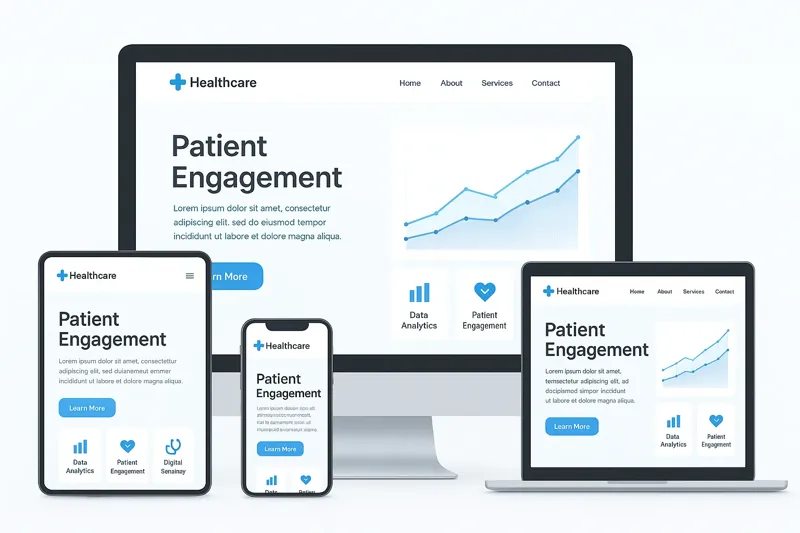
With over 60% of healthcare searches originating from mobile devices, adopting a mobile-first approach has become indispensable for modern healthcare websites. Fast load times, responsive layouts, and touch-friendly interfaces are crucial for retaining prospective patients and improving search engine rankings.
Beyond serving as an information portal, healthcare websites play a vital role in enhancing overall patient experience and engagement. Features like online appointment scheduling, integrated patient portals, and live chat support contribute to seamless, convenient care access, mirroring in-person service quality in the digital realm.
Mobile-First Design: Meeting Patients Where They Are

Importance of Mobile Device Use in Healthcare
Over 60% of healthcare-related searches originate from mobile devices in the United States. This growing trend reflects patients' preference to access healthcare information and services on-the-go. With nearly half of adults using their smartphones for health inquiries and provider searches, Mobile-First Design for Healthcare Sites must be prioritized to stay accessible and relevant.
Fast Loading Times and Mobile Responsiveness
Mobile users expect websites to load swiftly; 53% abandon sites that take longer than three seconds. A healthcare site with fast load times not only improves user experience but also positively impacts search engine rankings. Responsive design ensures that layouts and content adjust seamlessly across various screen sizes, enabling patients to navigate effortlessly without zooming or excessive scrolling. These concepts are emphasized in Fast loading healthcare websites and Mobile Responsive Healthcare Sites.
Mobile Experience Challenges for Patients
Poorly optimized mobile sites often frustrate patients, causing difficulties in finding providers, accessing portals, or booking appointments. Over 90% of patients report negative experiences with healthcare information on mobile devices, leading to reduced engagement and trust. Slow load speed, cluttered layouts, and complex navigation frequently contribute to high bounce rates among mobile visitors. The importance of this is detailed in Healthcare Website User Experience and healthcare website user behavior.
Design Strategies for Mobile Usability
- Simplified Navigation: Employ clear menus and large touch targets for easy access. Refer to Simple navigation for healthcare websites and Healthcare Website Navigation Tips.
- Prioritized Content: Highlight essential information such as provider search, accepted insurance, and appointment booking on the homepage. See Integrating patient portals and Online scheduling on healthcare sites.
- Mobile-First Features: Incorporate fast-loading live chat and AI-powered chatbots to provide immediate assistance, as recommended in Live Chat Satisfaction in Healthcare Customer Service and Healthcare website design strategies 2025.
- Accessibility Compliance: Ensure color contrast, readable fonts, and ADA compliance to facilitate use by all patients. Consult ADA Compliance for Healthcare Websites and Accessibility Features for Healthcare Sites.
- Streamlined Forms: Use secure, HIPAA-compliant mobile-friendly forms to simplify patient data entry, supported by HIPAA compliance for healthcare websites and HIPAA-compliant hosting providers.
Implementing these strategies creates a patient-centered digital front door that mirrors in-person care quality, fostering trust and improving overall patient engagement on mobile platforms, as highlighted in Enhancing Patient Experience in Healthcare Websites and Improving Patient Engagement through Website Design.
Streamlining Navigation and User Experience for Patient Convenience

Simplified navigation with clear labels and CTAs
A healthcare website must provide patients with a streamlined navigation system that features clear, descriptive labels and straightforward calls to action (CTAs). These elements help users quickly access essential services such as appointment booking, provider directories, and contact information. Simplified menus and prominently placed CTAs reduce confusion and minimize the time patients spend searching for vital information, significantly improving overall user satisfaction.
Personalized user journeys based on patient needs
Tailoring the website experience to different patient profiles enhances engagement and trust. By creating personalized user journeys — for example, by accommodating patients, caregivers, or providers separately — healthcare sites can deliver relevant content and services based on individual patient needs. Tools like AI-powered chatbots in healthcare websites and customizable filters (e.g., specialty, location, and insurance acceptance) guide users efficiently to appropriate providers or resources.
The role of intuitive site structure in reducing bounce rates
An intuitive site structure is fundamental in encouraging users to explore more pages. Streamlined sitemaps with logically grouped categories and easy-to-understand navigation labels prevent frustration. This approach reduces bounce rates and increases conversion by helping patients complete key actions smoothly. Fast-loading pages and mobile-responsive layouts further enhance this positive experience, ensuring users remain engaged regardless of device.
ADA and WCAG compliance for accessibility in navigation
Ensuring accessibility through adherence to ADA and WCAG standards is critical for inclusive healthcare web design. Features such as keyboard navigability, text-to-speech support, appropriate color contrast, and scalable fonts make navigation usable for individuals with disabilities. Compliance not only broadens patient access but also safeguards healthcare organizations from legal risks while enhancing patient trust and satisfaction.
Integrating Digital Tools to Enhance Patient Engagement and Satisfaction

How can online appointment scheduling systems improve patient engagement?
Online appointment scheduling is a highly effective digital tool that caters to modern patient preferences. Over 40% of patients favor booking appointments online, which enhances convenience and reduces barriers to care. By offering a seamless, Mobile-Friendly Medical Website Design, healthcare providers can boost patient satisfaction and loyalty while decreasing no-shows. Integrating scheduling directly into the website supports immediate action, streamlines workflows, and aligns with expectations for accessible and flexible care options.
What is the role of secure patient portals in healthcare websites?
Secure patient portals are essential for enabling 24/7 access to health records, test results, prescription management, and appointment information. These portals enhance patient autonomy and engagement by providing transparent access to personal health data. They must comply with HIPAA compliance for healthcare websites, ensuring encrypted data transmission, robust access controls, and secure hosting. Patient portals unify information management while supporting continuous communication between patients and providers, leading to improved care coordination and trust.
Why is telehealth integration an ongoing necessity in healthcare websites?
Telemedicine saw a dramatic increase during the COVID-19 pandemic and remains a critical digital service. Integrating telehealth capabilities within healthcare websites extends access to care beyond physical locations, accommodating patient preferences for virtual consultations. This integration improves patient convenience, reduces travel barriers, and meets growing demand for remote healthcare solutions. Telehealth offerings, when embedded securely, contribute significantly to patient satisfaction and operational efficiency as part of Streamlining Healthcare Operations with Websites.
How do live chat and AI-powered chatbots support patient engagement?
Live chat and AI-powered chatbots provide instant support and personalized assistance on healthcare websites, addressing common inquiries promptly. This technology enhances user experience by guiding patients through the website, assisting with appointment bookings, insurance questions, and portal navigation. AI chatbots can offer 24/7 availability, reduce response times, and help alleviate patient frustration, thereby improving engagement and trust. These digital communication tools also capture user data that informs further website optimizations in line with Enhancing Patient Experience in Healthcare Websites.
Integrating advanced digital tools such as online scheduling, secure portals, telehealth, and AI-driven chat functionalities creates a cohesive digital patient experience. Together, they foster trust, convenience, and ongoing engagement, which are essential for healthcare organizations seeking sustained growth and improved patient outcomes.
Content Strategy and SEO: Driving Traffic and Building Trust
Developing content strategies focused on patient personas
Creating effective healthcare content starts with understanding diverse patient personas. Tailoring messaging based on demographics, pain points, and informational needs enables healthcare organizations to resonate with their audience and improve patient engagement. Developing detailed personas helps guide content that addresses specific concerns, preferences, and healthcare journeys.
SEO optimization using localized and relevant keywords
Optimizing website content with localized and relevant keywords enhances search engine ranking and drives high-value patient traffic. Local SEO plays a crucial role in attracting patients seeking nearby providers by incorporating terms like "clinic near me" and location-specific keywords. Technical SEO practices such as fast load times, mobile responsiveness, and SSL security further improve visibility.
Maintaining up-to-date, jargon-free, and educational content
Regularly refreshing healthcare content maintains the website’s relevance and credibility. Using clear, jargon-free language helps simplify complex medical information, making it accessible to diverse patient audiences. Providing easy-to-understand explanations through online glossaries and multi-language support increases comprehension and trust as outlined in best practices for patient-friendly websites.
Use of blogs, FAQs, and testimonials to foster trust and answer patient queries
Integrating educational blogs and comprehensive FAQs addresses common patient questions proactively while supporting SEO efforts. Testimonials and patient success stories humanize the healthcare brand, demonstrating credibility and building trust. Together, these content elements encourage repeat visits and support patient conversion efforts by fostering confidence in the provider.
Security and Compliance: Protecting Patient Data and Building Confidence

HIPAA compliance essentials for healthcare websites
Ensuring HIPAA compliance for healthcare websites is critical for healthcare websites handling protected health information (PHI). Compliance mandates encrypted data transmission, strict access controls, audit logging, and secure hosting environments. Adhering to these standards protects patient privacy and helps healthcare organizations avoid costly legal penalties.
Secure hosting with encrypted data transmission and access controls
Selecting a hosting provider that offers HIPAA-compliant hosting providers, including encrypted storage and data transmission, is vital. Business Associate Agreements (BAAs) with hosting services clarify responsibilities for safeguarding PHI. Access controls in healthcare websites limit data exposure to authorized personnel only, reducing risk of breaches.
Importance of SSL certificates for security and SEO
Implementing SSL certificates ensures data exchanged between patients and the healthcare website is encrypted, preventing interception by unauthorized parties. Beyond security, SSL deployment also improves search engine rankings, boosting website visibility and patient trust. This aligns with SSL security in healthcare websites best practices.
Implementing secure online forms and controlling access to PHI
Healthcare websites must incorporate secure online forms that encrypt PHI data input by patients. Access to submitted information should be tightly controlled, with authentication and authorization protocols to prevent unauthorized access. This foundation is essential for protecting sensitive patient data while enabling convenient digital interactions such as appointment scheduling and telehealth, supported by Securing online forms and patient portals and Encrypting PHI in telehealth tools.
| Aspect | Description | Benefit |
|---|---|---|
| HIPAA Compliance | Encrypted data, access controls, audit logs | Privacy protection, legal compliance |
| Secure Hosting | HIPAA-compliant provider, BAAs | Secure PHI storage and transmission |
| SSL Certificates | Encrypts online communication | Data security, improved SEO rankings |
| Secure Online Forms | Encrypted submission, strict access management | Safe handling of PHI, trusted patient engagement |
Enhancing User Experience Through Design Elements and Interactive Features

The Role of Imagery and Storytelling in Building Emotional Connections
Imagery and storytelling play a pivotal role in fostering emotional connections on healthcare websites. High-quality images of staff, facilities, and patients humanize the healthcare brand, helping to build trust and relatability. Storytelling and Community in Healthcare Branding through patient testimonials and success stories creates an engaging, empathetic experience that resonates with visitors, encouraging loyalty and deeper engagement.
Use of Interactive Elements Like Dashboards and Maps to Explain Services
Interactive features such as dashboards, icon animations, and maps offer dynamic ways to present healthcare services. These tools help simplify complex medical information, making it more accessible and engaging to patients. Interactive Elements in Healthcare Website Redesigns can guide users to nearby facilities, while dashboards provide real-time updates on services or patient care metrics, enhancing user understanding and decision-making.
Visual Design Principles That Establish Trust and Clarity
Clean, calming layouts with well-organized content and a clear hierarchy are essential in Healthcare Website Design Best Practices. Utilizing carefully selected color schemes and readable fonts enhances clarity and fosters trust. Consistent branding and a simple navigation structure further reduce user frustration and support a professional, credible online presence.
Incorporation of Social Proof with Testimonials and Success Stories
Social proof is vital in reinforcing credibility. Displaying genuine patient testimonials, success stories, and trust badges evidences quality care and patient satisfaction. These elements significantly influence patient decision-making by building confidence in the healthcare provider’s expertise and services, as discussed in Healthcare Website Conversion Strategies.
Accessibility: Ensuring Equitable Healthcare Online
Meeting ADA and WCAG guidelines for inclusivity
Healthcare websites must comply with the ADA Compliance for Healthcare Websites and WCAG Guidelines Compliance to be accessible to all users, including those with disabilities. Compliance ensures legally mandated accessibility and promotes equitable healthcare by enabling patients with diverse needs to access information and services easily.
Accessibility features such as text-to-speech and high contrast modes
Incorporating features like text-to-speech enables users with reading difficulties or visual impairments to listen to content. High contrast color modes improve readability for those with visual challenges or low vision, enhancing overall user experience.
Multi-language support for diverse patient populations
Offering multi-language options on healthcare websites addresses language barriers faced by non-English speakers and improves understanding of medical information. Clear, jargon-free content combined with language choice supports effective communication and patient empowerment.
Assistive technologies for visually impaired users
Healthcare websites should support assistive technologies such as screen readers, screen magnifiers, and keyboard navigation. These tools help visually impaired users navigate and interact with content independently, aligning with modern accessibility standards and improving patient engagement.
By prioritizing these accessibility strategies, healthcare organizations contribute to a more inclusive digital environment, fostering trust and satisfaction among diverse patient populations.
Measuring Success: Analytics and Continuous Optimization
Utilizing tools like Google Analytics, heatmaps, and CRO platforms
Healthcare organizations increasingly rely on sophisticated analytics tools for healthcare websites to monitor and enhance website performance. Google Analytics provides detailed insights into visitor behavior, traffic sources, and engagement metrics. Heatmaps reveal how users interact with website elements, helping identify areas of friction or unutilized real estate. Conversion rate optimization (CRO) platforms enable iterative testing of calls to action, content layout, and user flows to maximize patient engagement and appointment bookings.
Tracking key performance indicators such as bounce rate and conversion
Key performance indicators (KPIs) like bounce rate, session duration, and conversion rates are vital for assessing the effectiveness of digital patient journeys. A high bounce rate may indicate navigation issues or irrelevant content, while conversion metrics illuminate how well the site transforms visitors into patients. Monitoring these KPIs allows healthcare marketers to identify problem areas and prioritize improvements that directly impact patient acquisition and retention.
Patient feedback incorporation for website usability improvements
Gathering and integrating patient feedback through surveys and usability testing strengthens website relevance and accessibility. Patients’ perspectives provide unique insights into pain points, content clarity, and navigation ease, enabling targeted refinements. This patient-centric approach supports compliance with healthcare accessibility standards and enhances trust, ultimately contributing to higher satisfaction and loyalty.
Continuous iteration to adapt to changing patient needs and behaviors
Healthcare website optimization is an ongoing process. Frequent analysis of website metrics combined with patient input allows organizations to adapt to evolving user expectations, technological advances, and regulatory requirements. Responsive iteration ensures that digital platforms remain intuitive, secure, and efficient, supporting sustained growth in patient engagement and organizational success through strategic design and responsive development.
Future-Proofing Your Clinic Website: Scalability and Adaptability
Modular and Flexible Website Architectures
Future-proof healthcare websites are built on modular and scalable healthcare websites architectures that allow for flexibility and scalability. Such designs enable providers to update functionalities or add new features without overhauling the entire site. This modularity supports quick adaptation to changing patient needs and healthcare standards.
Use of Headless CMS for Agile Content Updates
Implementing a headless CMS for healthcare empowers healthcare organizations to manage content independently from the front-end user interface. This separation facilitates faster, more agile updates to updating provider profiles online, service offerings, and educational resources, ensuring timely and accurate information delivery without technical delays.
Scalability to Accommodate Service Expansions and Evolving Regulations
A scalable healthcare website infrastructure can easily support the growth of healthcare providers, accommodating new locations, additional services, or expanded care teams. Moreover, it assists in seamless compliance with evolving healthcare regulations by enabling quick adjustments to privacy, security, and accessibility protocols.
Integrating Emerging Digital Health Trends Such as AI and Telehealth
Future-proof designs integrate emerging digital health technologies like AI-powered chatbots in healthcare websites for personalized patient support and telehealth integration platforms for virtual care delivery. These integrations enhance patient experience by providing instant assistance, streamlined appointment scheduling, and expanded access to care, keeping your clinic competitive in the digital landscape.
Conclusion: Building Trust and Enhancing Patient Care Through Website Redesign
Critical Redesign Aspects to Improve Patient Experience
A successful healthcare website redesign emphasizes mobile-first responsiveness, fast load times, and intuitive navigation. Integrating features like online scheduling, patient portals, and live chat enhances convenience and engagement. Simplified language, accessibility compliance, and clear calls-to-action reduce patient frustration and improve usability.
Aligning Design with Patient Expectations and Healthcare Standards
Modern patients expect seamless digital experiences comparable to retail platforms. Compliance with HIPAA, ADA, and WCAG guidelines ensures patient data protection and accessibility for all users. Tailoring content to patient personas and providing transparent, jargon-free information builds trust and meets evolving healthcare standards.
Role in Patient Acquisition and Retention
A well-designed website serves as the digital front door, influencing over 70% of patients’ provider decisions. Incorporating social proof such as testimonials, credentials, and updated content fosters confidence and loyalty. Optimized SEO and content strategies attract new patients and drive sustained engagement.
Commitment to Usability, Security, and Content Relevance
Ongoing website optimization through user behavior analytics and content audits maintains relevance and enhances user experience. Employing encrypted data transmission, secure hosting, and HIPAA-compliant tools safeguards patient information. Continuous updates and performance monitoring ensure the website adapts to changing patient needs and regulatory requirements.
Ultimately, an effective healthcare website redesign is a strategic investment that promotes patient-centered care, strengthens provider reputation, and supports measurable growth through enhanced digital engagement.
Introduction: The Digital Front Door to Healthcare
The Digital Front Door to Healthcare
A healthcare website often serves as the first interaction point between patients and healthcare providers. Studies show that 74% of patients research a medical provider's website before making a decision, making high-quality web design critical to building trust and attracting new patients.
Patient-centric design is essential in healthcare websites, fostering credibility and enhancing user experience. Clear navigation, patient-focused messaging, and social proof elements like testimonials significantly impact patients' trust and willingness to engage with a provider.
With over 60% of healthcare searches originating from mobile devices, adopting a mobile-first approach has become indispensable for modern healthcare websites. Fast load times, responsive layouts, and touch-friendly interfaces are crucial for retaining prospective patients and improving search engine rankings.
Beyond serving as an information portal, healthcare websites play a vital role in enhancing overall patient experience and engagement. Features like online appointment scheduling, integrated patient portals, and live chat support contribute to seamless, convenient care access, mirroring in-person service quality in the digital realm.
Mobile-First Design: Meeting Patients Where They Are
Importance of Mobile Device Use in Healthcare
Over 60% of healthcare-related searches originate from mobile devices in the United States. This growing trend reflects patients' preference to access healthcare information and services on-the-go. With nearly half of adults using their smartphones for health inquiries and provider searches, Mobile-First Design for Healthcare Sites must be prioritized to stay accessible and relevant.
Fast Loading Times and Mobile Responsiveness
Mobile users expect websites to load swiftly; 53% abandon sites that take longer than three seconds. A healthcare site with fast load times not only improves user experience but also positively impacts search engine rankings. Responsive design ensures that layouts and content adjust seamlessly across various screen sizes, enabling patients to navigate effortlessly without zooming or excessive scrolling. These concepts are emphasized in Fast loading healthcare websites and Mobile Responsive Healthcare Sites.
Mobile Experience Challenges for Patients
Poorly optimized mobile sites often frustrate patients, causing difficulties in finding providers, accessing portals, or booking appointments. Over 90% of patients report negative experiences with healthcare information on mobile devices, leading to reduced engagement and trust. Slow load speed, cluttered layouts, and complex navigation frequently contribute to high bounce rates among mobile visitors. The importance of this is detailed in Healthcare Website User Experience and healthcare website user behavior.
Design Strategies for Mobile Usability
- Simplified Navigation: Employ clear menus and large touch targets for easy access. Refer to Simple navigation for healthcare websites and Healthcare Website Navigation Tips.
- Prioritized Content: Highlight essential information such as provider search, accepted insurance, and appointment booking on the homepage. See Integrating patient portals and Online scheduling on healthcare sites.
- Mobile-First Features: Incorporate fast-loading live chat and AI-powered chatbots to provide immediate assistance, as recommended in Live Chat Satisfaction in Healthcare Customer Service and Healthcare website design strategies 2025.
- Accessibility Compliance: Ensure color contrast, readable fonts, and ADA compliance to facilitate use by all patients. Consult ADA Compliance for Healthcare Websites and Accessibility Features for Healthcare Sites.
- Streamlined Forms: Use secure, HIPAA-compliant mobile-friendly forms to simplify patient data entry, supported by HIPAA compliance for healthcare websites and HIPAA-compliant hosting providers.
Implementing these strategies creates a patient-centered digital front door that mirrors in-person care quality, fostering trust and improving overall patient engagement on mobile platforms, as highlighted in Enhancing Patient Experience in Healthcare Websites and Improving Patient Engagement through Website Design.
Streamlining Navigation and User Experience for Patient Convenience
Simplified navigation with clear labels and CTAs
A healthcare website must provide patients with a streamlined navigation system that features clear, descriptive labels and straightforward calls to action (CTAs). These elements help users quickly access essential services such as appointment booking, provider directories, and contact information. Simplified menus and prominently placed CTAs reduce confusion and minimize the time patients spend searching for vital information, significantly improving overall user satisfaction.
Personalized user journeys based on patient needs
Tailoring the website experience to different patient profiles enhances engagement and trust. By creating personalized user journeys — for example, by accommodating patients, caregivers, or providers separately — healthcare sites can deliver relevant content and services based on individual patient needs. Tools like AI-powered chatbots in healthcare websites and customizable filters (e.g., specialty, location, and insurance acceptance) guide users efficiently to appropriate providers or resources.
The role of intuitive site structure in reducing bounce rates
An intuitive site structure is fundamental in encouraging users to explore more pages. Streamlined sitemaps with logically grouped categories and easy-to-understand navigation labels prevent frustration. This approach reduces bounce rates and increases conversion by helping patients complete key actions smoothly. Fast-loading pages and mobile-responsive layouts further enhance this positive experience, ensuring users remain engaged regardless of device.
ADA and WCAG compliance for accessibility in navigation
Ensuring accessibility through adherence to ADA and WCAG standards is critical for inclusive healthcare web design. Features such as keyboard navigability, text-to-speech support, appropriate color contrast, and scalable fonts make navigation usable for individuals with disabilities. Compliance not only broadens patient access but also safeguards healthcare organizations from legal risks while enhancing patient trust and satisfaction.
Integrating Digital Tools to Enhance Patient Engagement and Satisfaction
How can online appointment scheduling systems improve patient engagement?
Online appointment scheduling is a highly effective digital tool that caters to modern patient preferences. Over 40% of patients favor booking appointments online, which enhances convenience and reduces barriers to care. By offering a seamless, Mobile-Friendly Medical Website Design, healthcare providers can boost patient satisfaction and loyalty while decreasing no-shows. Integrating scheduling directly into the website supports immediate action, streamlines workflows, and aligns with expectations for accessible and flexible care options.
What is the role of secure patient portals in healthcare websites?
Secure patient portals are essential for enabling 24/7 access to health records, test results, prescription management, and appointment information. These portals enhance patient autonomy and engagement by providing transparent access to personal health data. They must comply with HIPAA compliance for healthcare websites, ensuring encrypted data transmission, robust access controls, and secure hosting. Patient portals unify information management while supporting continuous communication between patients and providers, leading to improved care coordination and trust.
Why is telehealth integration an ongoing necessity in healthcare websites?
Telemedicine saw a dramatic increase during the COVID-19 pandemic and remains a critical digital service. Integrating telehealth capabilities within healthcare websites extends access to care beyond physical locations, accommodating patient preferences for virtual consultations. This integration improves patient convenience, reduces travel barriers, and meets growing demand for remote healthcare solutions. Telehealth offerings, when embedded securely, contribute significantly to patient satisfaction and operational efficiency as part of Streamlining Healthcare Operations with Websites.
How do live chat and AI-powered chatbots support patient engagement?
Live chat and AI-powered chatbots provide instant support and personalized assistance on healthcare websites, addressing common inquiries promptly. This technology enhances user experience by guiding patients through the website, assisting with appointment bookings, insurance questions, and portal navigation. AI chatbots can offer 24/7 availability, reduce response times, and help alleviate patient frustration, thereby improving engagement and trust. These digital communication tools also capture user data that informs further website optimizations in line with Enhancing Patient Experience in Healthcare Websites.
Integrating advanced digital tools such as online scheduling, secure portals, telehealth, and AI-driven chat functionalities creates a cohesive digital patient experience. Together, they foster trust, convenience, and ongoing engagement, which are essential for healthcare organizations seeking sustained growth and improved patient outcomes.
Content Strategy and SEO: Driving Traffic and Building Trust
Developing content strategies focused on patient personas
Creating effective healthcare content starts with understanding diverse patient personas. Tailoring messaging based on demographics, pain points, and informational needs enables healthcare organizations to resonate with their audience and improve patient engagement. Developing detailed personas helps guide content that addresses specific concerns, preferences, and healthcare journeys.
SEO optimization using localized and relevant keywords
Optimizing website content with localized and relevant keywords enhances search engine ranking and drives high-value patient traffic. Local SEO plays a crucial role in attracting patients seeking nearby providers by incorporating terms like "clinic near me" and location-specific keywords. Technical SEO practices such as fast load times, mobile responsiveness, and SSL security further improve visibility.
Maintaining up-to-date, jargon-free, and educational content
Regularly refreshing healthcare content maintains the website’s relevance and credibility. Using clear, jargon-free language helps simplify complex medical information, making it accessible to diverse patient audiences. Providing easy-to-understand explanations through online glossaries and multi-language support increases comprehension and trust as outlined in best practices for patient-friendly websites.
Use of blogs, FAQs, and testimonials to foster trust and answer patient queries
Integrating educational blogs and comprehensive FAQs addresses common patient questions proactively while supporting SEO efforts. Testimonials and patient success stories humanize the healthcare brand, demonstrating credibility and building trust. Together, these content elements encourage repeat visits and support patient conversion efforts by fostering confidence in the provider.
Security and Compliance: Protecting Patient Data and Building Confidence
HIPAA compliance essentials for healthcare websites
Ensuring HIPAA compliance for healthcare websites is critical for healthcare websites handling protected health information (PHI). Compliance mandates encrypted data transmission, strict access controls, audit logging, and secure hosting environments. Adhering to these standards protects patient privacy and helps healthcare organizations avoid costly legal penalties.
Secure hosting with encrypted data transmission and access controls
Selecting a hosting provider that offers HIPAA-compliant hosting providers, including encrypted storage and data transmission, is vital. Business Associate Agreements (BAAs) with hosting services clarify responsibilities for safeguarding PHI. Access controls in healthcare websites limit data exposure to authorized personnel only, reducing risk of breaches.
Importance of SSL certificates for security and SEO
Implementing SSL certificates ensures data exchanged between patients and the healthcare website is encrypted, preventing interception by unauthorized parties. Beyond security, SSL deployment also improves search engine rankings, boosting website visibility and patient trust. This aligns with SSL security in healthcare websites best practices.
Implementing secure online forms and controlling access to PHI
Healthcare websites must incorporate secure online forms that encrypt PHI data input by patients. Access to submitted information should be tightly controlled, with authentication and authorization protocols to prevent unauthorized access. This foundation is essential for protecting sensitive patient data while enabling convenient digital interactions such as appointment scheduling and telehealth, supported by Securing online forms and patient portals and Encrypting PHI in telehealth tools.
| Aspect | Description | Benefit |
|---|---|---|
| HIPAA Compliance | Encrypted data, access controls, audit logs | Privacy protection, legal compliance |
| Secure Hosting | HIPAA-compliant provider, BAAs | Secure PHI storage and transmission |
| SSL Certificates | Encrypts online communication | Data security, improved SEO rankings |
| Secure Online Forms | Encrypted submission, strict access management | Safe handling of PHI, trusted patient engagement |
Enhancing User Experience Through Design Elements and Interactive Features
The Role of Imagery and Storytelling in Building Emotional Connections
Imagery and storytelling play a pivotal role in fostering emotional connections on healthcare websites. High-quality images of staff, facilities, and patients humanize the healthcare brand, helping to build trust and relatability. Storytelling and Community in Healthcare Branding through patient testimonials and success stories creates an engaging, empathetic experience that resonates with visitors, encouraging loyalty and deeper engagement.
Use of Interactive Elements Like Dashboards and Maps to Explain Services
Interactive features such as dashboards, icon animations, and maps offer dynamic ways to present healthcare services. These tools help simplify complex medical information, making it more accessible and engaging to patients. Interactive Elements in Healthcare Website Redesigns can guide users to nearby facilities, while dashboards provide real-time updates on services or patient care metrics, enhancing user understanding and decision-making.
Visual Design Principles That Establish Trust and Clarity
Clean, calming layouts with well-organized content and a clear hierarchy are essential in Healthcare Website Design Best Practices. Utilizing carefully selected color schemes and readable fonts enhances clarity and fosters trust. Consistent branding and a simple navigation structure further reduce user frustration and support a professional, credible online presence.
Incorporation of Social Proof with Testimonials and Success Stories
Social proof is vital in reinforcing credibility. Displaying genuine patient testimonials, success stories, and trust badges evidences quality care and patient satisfaction. These elements significantly influence patient decision-making by building confidence in the healthcare provider’s expertise and services, as discussed in Healthcare Website Conversion Strategies.
Accessibility: Ensuring Equitable Healthcare Online
Meeting ADA and WCAG guidelines for inclusivity
Healthcare websites must comply with the ADA Compliance for Healthcare Websites and WCAG Guidelines Compliance to be accessible to all users, including those with disabilities. Compliance ensures legally mandated accessibility and promotes equitable healthcare by enabling patients with diverse needs to access information and services easily.
Accessibility features such as text-to-speech and high contrast modes
Incorporating features like text-to-speech enables users with reading difficulties or visual impairments to listen to content. High contrast color modes improve readability for those with visual challenges or low vision, enhancing overall user experience.
Multi-language support for diverse patient populations
Offering multi-language options on healthcare websites addresses language barriers faced by non-English speakers and improves understanding of medical information. Clear, jargon-free content combined with language choice supports effective communication and patient empowerment.
Assistive technologies for visually impaired users
Healthcare websites should support assistive technologies such as screen readers, screen magnifiers, and keyboard navigation. These tools help visually impaired users navigate and interact with content independently, aligning with modern accessibility standards and improving patient engagement.
By prioritizing these accessibility strategies, healthcare organizations contribute to a more inclusive digital environment, fostering trust and satisfaction among diverse patient populations.
Measuring Success: Analytics and Continuous Optimization
Utilizing tools like Google Analytics, heatmaps, and CRO platforms
Healthcare organizations increasingly rely on sophisticated analytics tools for healthcare websites to monitor and enhance website performance. Google Analytics provides detailed insights into visitor behavior, traffic sources, and engagement metrics. Heatmaps reveal how users interact with website elements, helping identify areas of friction or unutilized real estate. Conversion rate optimization (CRO) platforms enable iterative testing of calls to action, content layout, and user flows to maximize patient engagement and appointment bookings.
Tracking key performance indicators such as bounce rate and conversion
Key performance indicators (KPIs) like bounce rate, session duration, and conversion rates are vital for assessing the effectiveness of digital patient journeys. A high bounce rate may indicate navigation issues or irrelevant content, while conversion metrics illuminate how well the site transforms visitors into patients. Monitoring these KPIs allows healthcare marketers to identify problem areas and prioritize improvements that directly impact patient acquisition and retention.
Patient feedback incorporation for website usability improvements
Gathering and integrating patient feedback through surveys and usability testing strengthens website relevance and accessibility. Patients’ perspectives provide unique insights into pain points, content clarity, and navigation ease, enabling targeted refinements. This patient-centric approach supports compliance with healthcare accessibility standards and enhances trust, ultimately contributing to higher satisfaction and loyalty.
Continuous iteration to adapt to changing patient needs and behaviors
Healthcare website optimization is an ongoing process. Frequent analysis of website metrics combined with patient input allows organizations to adapt to evolving user expectations, technological advances, and regulatory requirements. Responsive iteration ensures that digital platforms remain intuitive, secure, and efficient, supporting sustained growth in patient engagement and organizational success through strategic design and responsive development.
Future-Proofing Your Clinic Website: Scalability and Adaptability
Modular and Flexible Website Architectures
Future-proof healthcare websites are built on modular and scalable healthcare websites architectures that allow for flexibility and scalability. Such designs enable providers to update functionalities or add new features without overhauling the entire site. This modularity supports quick adaptation to changing patient needs and healthcare standards.
Use of Headless CMS for Agile Content Updates
Implementing a headless CMS for healthcare empowers healthcare organizations to manage content independently from the front-end user interface. This separation facilitates faster, more agile updates to updating provider profiles online, service offerings, and educational resources, ensuring timely and accurate information delivery without technical delays.
Scalability to Accommodate Service Expansions and Evolving Regulations
A scalable healthcare website infrastructure can easily support the growth of healthcare providers, accommodating new locations, additional services, or expanded care teams. Moreover, it assists in seamless compliance with evolving healthcare regulations by enabling quick adjustments to privacy, security, and accessibility protocols.
Integrating Emerging Digital Health Trends Such as AI and Telehealth
Future-proof designs integrate emerging digital health technologies like AI-powered chatbots in healthcare websites for personalized patient support and telehealth integration platforms for virtual care delivery. These integrations enhance patient experience by providing instant assistance, streamlined appointment scheduling, and expanded access to care, keeping your clinic competitive in the digital landscape.
Conclusion: Building Trust and Enhancing Patient Care Through Website Redesign
Critical Redesign Aspects to Improve Patient Experience
A successful healthcare website redesign emphasizes mobile-first responsiveness, fast load times, and intuitive navigation. Integrating features like online scheduling, patient portals, and live chat enhances convenience and engagement. Simplified language, accessibility compliance, and clear calls-to-action reduce patient frustration and improve usability.
Aligning Design with Patient Expectations and Healthcare Standards
Modern patients expect seamless digital experiences comparable to retail platforms. Compliance with HIPAA, ADA, and WCAG guidelines ensures patient data protection and accessibility for all users. Tailoring content to patient personas and providing transparent, jargon-free information builds trust and meets evolving healthcare standards.
Role in Patient Acquisition and Retention
A well-designed website serves as the digital front door, influencing over 70% of patients’ provider decisions. Incorporating social proof such as testimonials, credentials, and updated content fosters confidence and loyalty. Optimized SEO and content strategies attract new patients and drive sustained engagement.
Commitment to Usability, Security, and Content Relevance
Ongoing website optimization through user behavior analytics and content audits maintains relevance and enhances user experience. Employing encrypted data transmission, secure hosting, and HIPAA-compliant tools safeguards patient information. Continuous updates and performance monitoring ensure the website adapts to changing patient needs and regulatory requirements.
Ultimately, an effective healthcare website redesign is a strategic investment that promotes patient-centered care, strengthens provider reputation, and supports measurable growth through enhanced digital engagement.