.png)

Understanding the Importance of ROI Tracking in Healthcare Marketing
Introduction to ROI in healthcare marketing
Return on Investment (ROI) in healthcare marketing quantifies the financial impact of marketing activities by comparing revenue generated to marketing costs. Unlike other industries, healthcare ROI considers a complex patient journey involving multiple touchpoints, making accurate measurement essential for strategic resource allocation.
Significance of data-driven marketing
Data-driven marketing enables healthcare organizations to optimize campaigns by targeting audiences with high engagement potential, enhancing patient acquisition, retention, and satisfaction. Tracking specific metrics such as cost per acquisition, conversion rates, and patient lifetime value supports informed decisions that maximize profitability and align marketing efforts with organizational goals.
Challenges unique to healthcare marketing ROI measurement
Healthcare marketing faces unique barriers including strict privacy regulations (e.g., HIPAA), fragmented data across electronic health records (EHRs), customer relationship management (CRM) systems, and marketing platforms, and the complexity of multi-channel patient interactions. These challenges demand integrated, HIPAA-compliant data solutions and sophisticated attribution models beyond basic first-touch or last-touch tracking to reveal true marketing impact and justify ongoing investment.
Core Digital Marketing Strategies for Healthcare Practices
What are the most effective digital marketing strategies for healthcare practices?
Effective digital marketing in healthcare involves a comprehensive, multi-channel approach tailored to patient needs and behaviors. Key strategies include:
Search Engine Optimization (SEO): Optimizing website content, keywords, and technical factors such as site speed and mobile-friendliness boosts organic visibility. Strong SEO helps healthcare providers capture high-intent patient searches and enhances local SEO to attract nearby patients.
Pay-Per-Click (PPC) Advertising: Targeted PPC campaigns on platforms like Google Ads and Facebook Ads deliver measurable results through precise demographic and keyword targeting, driving immediate patient inquiries at an average cost per click of $4-$6.
Content Marketing and Patient Education: Creating authoritative blog posts, videos, webinars, and infographics educates patients and positions healthcare practices as trusted sources. This content supports SEO and encourages consumer engagement in healthcare marketing and retention.
Social Media Engagement and Reputation Management: Active presence on Facebook, Instagram, Twitter, and LinkedIn fosters community interaction and trust. Social media campaigns enable precise audience quality in healthcare campaigns targeting and real-time communication, while managing patient reviews and testimonials enhances reputation.
Implementing seamless online appointment scheduling and integrating telehealth can further improve patient experience. Data analytics and marketing automation tools allow continuous monitoring and optimization of campaigns, ensuring measurable ROI and sustained patient growth.
Ensuring Compliance and Patient Privacy in Healthcare Digital Marketing

How can medical practices ensure compliance while using digital marketing?
Medical practices can ensure compliance in digital marketing by adhering strictly to HIPAA compliance in healthcare marketing, which protect patient health information (PHI). This includes securing written patient authorization before using PHI for marketing activities and avoiding the sharing or targeting of identifiable patient data across digital platforms unless proper protections are in place.
HIPAA regulations and marketing compliance
HIPAA regulations impact mandates that any marketing efforts involving PHI must be compliant with privacy standards. This requires anonymizing identifiable information or leveraging aggregated demographic insights rather than specific patient details. Marketing campaigns should steer clear of exposing or mishandling PHI to prevent privacy breaches.
Secure data management platforms
Utilizing secure platforms designed for healthcare data, such as NexHealth scheduling for online scheduling or Freshpaint's Healthcare Privacy Platform, helps maintain compliance. These tools integrate healthcare data systems and encrypt data to protect patient information while allowing accurate tracking of marketing performance without violating privacy laws.
Avoiding patient information exposure
Call tracking platforms, marketing automation must be configured to prevent access to sensitive patient data. Employing anonymized identifiers and avoiding direct capture of PHI in marketing analytics helps safeguard patient confidentiality. Business Associate Agreements (BAAs) are essential when collaborating with third-party vendors who handle patient data.
Importance of anonymized data and BAAs
Anonymizing data ensures that marketing insights are derived without compromising patient privacy. Business Associate Agreements (BAAs) legally bind service providers to protect PHI and comply with HIPAA regulations, forming a critical component of secure healthcare marketing infrastructures.
Staff training and security safeguards
Comprehensive staff training on privacy policies and secure handling of patient information is vital. Implementing access controls, encryption, and regular audits strengthens data security. Ongoing education ensures marketing teams remain vigilant about evolving compliance requirements and best practices.
By combining these measures, healthcare providers can leverage Healthcare Digital Marketing Strategies 2024 innovations effectively and responsibly, securing patient trust and sustaining compliance in their marketing initiatives.
Key Metrics to Measure and Prove ROI in Healthcare Marketing

How do audience quality metrics in healthcare impact healthcare marketing ROI?
Audience quality metrics are essential to determine whether healthcare marketing campaigns effectively reach and engage potential patients who are most likely to take meaningful actions. Tracking these metrics confirms that campaigns align with objectives such as awareness, engagement, or conversion, enabling marketers to allocate resources to segments with the highest likelihood of converting into actual patients.
Why is tracking leads generated in healthcare campaigns and their funnel stage tracking for patient inquiries crucial?
The number of leads generated and understanding their progression through funnel stages (acquisition, engagement, conversion) provide critical insight into campaign effectiveness. This helps marketers identify which channels and tactics convert interest into actionable patient inquiries, allowing for timely optimization of strategies to improve patient acquisition rates.
What role do conversion rates in healthcare marketing play in proving marketing ROI?
Conversion rates, defined as the percentage of patients completing desired actions (e.g., scheduling appointments or filling forms), directly indicate campaign success. Both campaign-specific and clinical conversion rates serve as benchmarks to assess how well marketing efforts drive patient engagement and influence care access.
How does acquisition costs by marketing channel inform marketing decisions?
Breaking down CPA by marketing channel and individual campaigns allows healthcare marketers to evaluate the cost-efficiency of their investments. Understanding which channels yield the lowest CPA and highest conversion rates supports informed budget allocation to maximize ROI amidst rising advertising costs.
Which consumer engagement metrics in healthcare should healthcare marketers track?
Measuring consumer engagement through clicks, shares, comments, and calls provides insight into how well outreach resonates with patients. Higher engagement correlates with improved patient retention and better health outcomes, making these metrics critical for long-term marketing success.
How does contribution margin in healthcare marketing ROI influence marketing profitability?
Contribution margin, calculated by subtracting variable costs from revenue generated by marketing initiatives, reveals the true profitability of campaigns. Positive margins confirm that marketing efforts are financially sustainable and justify ongoing or increased investment.
What is the impact of payer mix impact on healthcare revenue on healthcare marketing ROI?
The payer mix—particularly the proportion of patients with private insurance versus Medicare or Medicaid—significantly affects ROI calculations. Since private insurance typically reimburses at higher rates, campaigns that attract commercially insured patients usually demonstrate superior financial returns.
| Metric | What It Measures | Importance for ROI |
|---|---|---|
| Audience Quality | Target reach and relevance | Ensures campaigns engage high-potential patients |
| Leads & Funnel Stages | Prospect generation and progression | Guides optimization of conversion tactics |
| Conversion Rate | Percentage of completed patient actions | Gauges campaign effectiveness |
| CPA by Channel | Cost to acquire a patient per channel | Identifies most cost-efficient channels |
| Consumer Engagement | Patient interaction metrics (clicks, calls) | Correlates with retention and outcomes |
| Contribution Margin | Profitability from marketing campaigns | Validates financial sustainability |
| Payer Mix | Distribution of insurance types among patients | Influences revenue and ROI potential |
The Role of Patient Education in Enhancing Marketing Outcomes
What role does patient education play in healthcare digital marketing?
Patient education is fundamental in healthcare digital marketing as it builds trust and positions healthcare providers as authoritative and credible information sources. By delivering clear and reliable educational content, providers empower patients to make informed health decisions.
Importance of patient education
Educating patients improves health literacy at all levels—functional, interactive, and critical—which leads to better patient adherence, reduced hospitalizations, and improved health outcomes. Ready access to trustworthy and easy-to-understand health information also helps patients navigate their care journey confidently.
Building trust with educational content
Educational content incorporating plain language, visuals, and culturally sensitive messaging fosters stronger engagement. This approach helps providers connect respectfully with diverse populations, ensuring messaging resonates and reduces miscommunication.
Improving health literacy and outcomes
Enhanced patient understanding encourages proactive health behaviors, timely preventive care, and appropriate service utilization. These benefits directly improve clinical outcomes and support value-based care initiatives, which are increasingly influential in payer reimbursement structures.
Culturally sensitive and accessible content
Digital marketing strategies must integrate multilingual support and accessibility features tailored to different literacy levels and cultural backgrounds. These efforts expand reach and improve equity in health information access.
Impact on patient satisfaction and reimbursement
When patients feel educated and supported, satisfaction scores and Net Promoter Scores (NPS) increase, positively influencing referrals and reputation. Furthermore, better health outcomes and adherence can lead to higher payer reimbursements, especially under models that reward quality and patient engagement in healthcare marketing.
Healthcare organizations that prioritize patient education within their digital marketing campaigns gain measurable benefits, including attracting and retaining higher-value patients, optimizing reimbursement opportunities, and strengthening their market position.
Data-Driven Marketing: Attracting and Retaining High-Value Patients
How does data-driven marketing benefit medical clinics in attracting high-value patients?
Data-driven marketing empowers medical clinics to attract high-value patients by leveraging detailed insights from diverse data sources. Analyzing patient demographics and behavioral data collected through CRM systems, online analytics, and social media platforms allows marketers to identify and segment audiences most likely to engage meaningfully.
Personalized messaging tailored to patient preferences enhances relevance and trust, thereby increasing conversion rates in healthcare marketing for actions such as appointment bookings or form completions. Campaigns optimized with continuous feedback leverage real-time data and analytics to adjust targeting and content, ensuring maximum efficiency in resource allocation.
This approach supports retention by fostering long-term loyalty through consistent, patient-centric communications and timely outreach. Data-driven marketing also enables clinics to deploy targeted campaigns via preferred channels, including healthcare-specific digital platforms and professional networks, resulting in higher consumer engagement in healthcare marketing and satisfaction.
Ultimately, by integrating data insights with personalized strategies and dynamic campaign management, medical clinics can grow their patient base sustainably while maximizing Healthcare marketing ROI and enhancing patient lifetime value.
Leveraging Online Platforms for Maximum Healthcare Marketing ROI
Which online platforms are most effective for healthcare marketing?
Healthcare marketing in 2024 achieves maximum Healthcare Marketing ROI by strategically leveraging multiple online platforms tailored to diverse audience needs.
Google Ads and Paid Search Targeting stand out by capturing user intent through search queries related to symptoms, treatments, and healthcare services. This platform targets high-intent prospects actively seeking medical solutions, ensuring efficient leads generated in healthcare marketing.
Social Media Platforms such as Facebook and Instagram engage patients with health education, storytelling, and community-building content. Their massive user base and visual formats boost patient interaction and retention. LinkedIn plays a complementary role by connecting healthcare marketers with over 8.8 million US healthcare professionals, fostering professional relationships and B2B marketing opportunities.
Healthcare Review Sites are critical for managing online reputation and building patient trust. Positive reviews and timely responses on platforms like Healthgrades and RateMDs directly influence patient decision-making.
Adopting an Omnichannel Marketing Approach across these platforms ensures consistent brand messaging and patient experience. This seamless integration guides potential patients through multiple touchpoints, enhancing engagement and conversions.
Finally, Advanced Analytics tools monitor performance metrics such as cost-per-acquisition (CPA) in healthcare, conversion rates in healthcare marketing, and consumer engagement in healthcare marketing. Data-driven insights enable marketers to optimize budgets and strategies, delivering improved ROI and measurable patient growth.
Advanced Attribution and Technology to Optimize ROI in Healthcare Marketing
Challenges of Fragmented Healthcare Data
Healthcare marketing is uniquely challenged by fragmented healthcare data spread across electronic health records (EHRs), customer relationship management (CRM) systems, and marketing platforms. This siloing complicates comprehensive marketing ROI challenges in healthcare, as patient journeys are rarely linear and often involve multiple touchpoints across various channels.
Multi-Touch Attribution Models
To address complexity in healthcare patient decision-making, advanced multi-touch attribution (MTA) models are employed. MTA recognizes the influence of every marketing interaction from first contact through appointment booking and treatment, offering a more accurate and granular understanding of campaign conversion rates in healthcare effectiveness beyond simplistic first- or last-touch attribution.
Integrating CRM, EHR, and Marketing Systems
Successful ROI tracking in healthcare depends on unifying these disparate data sources. Integrations between CRM platforms, EHR systems, and marketing automation tools enable closed-loop reporting for patient tracking by connecting patient actions—such as appointment scheduling and attendance—with specific marketing campaigns. This holistic view supports strategic budget allocation and campaign optimization based on concrete patient outcomes.
AI and Automation for Real-Time Optimization
Artificial intelligence enhances attribution modeling in healthcare accuracy and enables marketers to derive actionable insights in real time. Automated analysis helps identify high-impact touchpoints, streamline campaign adjustments, and predict patient behaviors, leading to improved consumer engagement in healthcare marketing and optimized healthcare marketing ROI.
Privacy Platforms and HIPAA-Compliant Tracking
Given strict regulations like HIPAA, healthcare organizations adopt specialized Healthcare Privacy Platforms (HPPs) to securely manage patient data within legal frameworks. These platforms facilitate HIPAA-compliant visitor data collection and activation, bridging gaps between data silos while protecting sensitive health information.
Reporting Dashboards and Executive Alignment
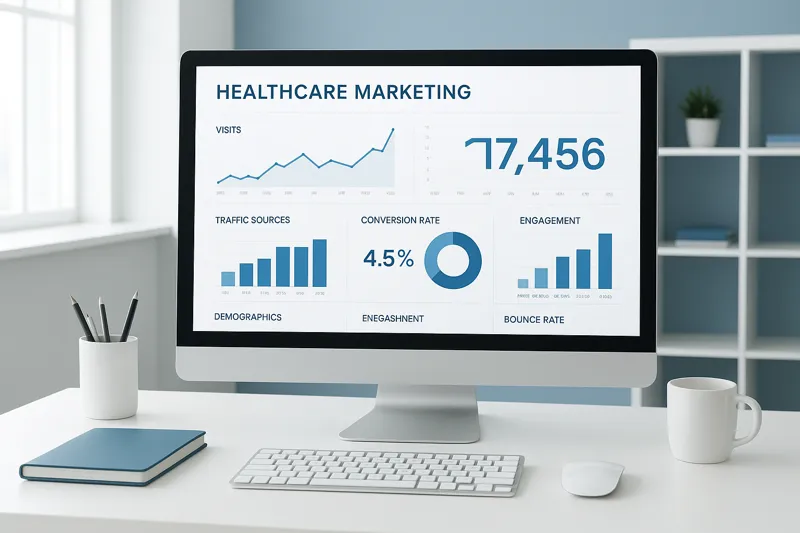
Consolidated healthcare marketing reporting dashboards aggregate comprehensive ROI metrics, providing transparency and fostering alignment with executive leadership. Clear demonstration of marketing impact through metrics like Customer Acquisition Cost (CAC) in healthcare marketing and contribution margin in healthcare marketing ROI helps secure ongoing investment and reinforce marketing’s strategic role in patient acquisition and revenue growth.
Future-Proofing Healthcare Marketing ROI with Metrics and Technology
Importance of Accurate ROI Measurement
Accurately measuring ROI remains fundamental in healthcare marketing to justify investments and guide strategic decisions. Metrics such as Customer Acquisition Cost (CAC), conversion rates, and lifetime patient value provide clear insights into the financial impact of marketing efforts. Employing multi-touch attribution models captures the complexity of patient journeys, enabling marketers to optimize campaigns effectively.
Adapting to Technology and Privacy Regulations
The healthcare sector must navigate evolving technologies alongside stringent privacy regulations like HIPAA. Integrating disparate data systems through Healthcare Privacy Platforms ensures secure, compliant data handling. Adoption of AI and automation enhances real-time analytics and campaign adjustments, enabling efficient resource allocation without compromising patient confidentiality.
Building Trust through Transparency and Compliance
Transparent reporting built on compliant data collection fosters trust with leadership and patients alike. Healthcare organizations that demonstrate accurate ROI tracking aligned with regulatory standards strengthen credibility, securing ongoing marketing support and improving patient relationships.
Leveraging Data for Sustained Growth and Patient Loyalty
Data-driven insights allow healthcare marketers to focus on audience quality and patient engagement metrics. This precision supports targeted retention initiatives and personalization strategies, cultivating long-term patient loyalty. Ultimately, leveraging compliant, multi-channel data analytics enables sustained growth and higher returns in an increasingly complex healthcare environment.
Understanding the Importance of ROI Tracking in Healthcare Marketing
Introduction to ROI in healthcare marketing
Return on Investment (ROI) in healthcare marketing quantifies the financial impact of marketing activities by comparing revenue generated to marketing costs. Unlike other industries, healthcare ROI considers a complex patient journey involving multiple touchpoints, making accurate measurement essential for strategic resource allocation.
Significance of data-driven marketing
Data-driven marketing enables healthcare organizations to optimize campaigns by targeting audiences with high engagement potential, enhancing patient acquisition, retention, and satisfaction. Tracking specific metrics such as cost per acquisition, conversion rates, and patient lifetime value supports informed decisions that maximize profitability and align marketing efforts with organizational goals.
Challenges unique to healthcare marketing ROI measurement
Healthcare marketing faces unique barriers including strict privacy regulations (e.g., HIPAA), fragmented data across electronic health records (EHRs), customer relationship management (CRM) systems, and marketing platforms, and the complexity of multi-channel patient interactions. These challenges demand integrated, HIPAA-compliant data solutions and sophisticated attribution models beyond basic first-touch or last-touch tracking to reveal true marketing impact and justify ongoing investment.
Core Digital Marketing Strategies for Healthcare Practices
What are the most effective digital marketing strategies for healthcare practices?
Effective digital marketing in healthcare involves a comprehensive, multi-channel approach tailored to patient needs and behaviors. Key strategies include:
Search Engine Optimization (SEO): Optimizing website content, keywords, and technical factors such as site speed and mobile-friendliness boosts organic visibility. Strong SEO helps healthcare providers capture high-intent patient searches and enhances local SEO to attract nearby patients.
Pay-Per-Click (PPC) Advertising: Targeted PPC campaigns on platforms like Google Ads and Facebook Ads deliver measurable results through precise demographic and keyword targeting, driving immediate patient inquiries at an average cost per click of $4-$6.
Content Marketing and Patient Education: Creating authoritative blog posts, videos, webinars, and infographics educates patients and positions healthcare practices as trusted sources. This content supports SEO and encourages consumer engagement in healthcare marketing and retention.
Social Media Engagement and Reputation Management: Active presence on Facebook, Instagram, Twitter, and LinkedIn fosters community interaction and trust. Social media campaigns enable precise audience quality in healthcare campaigns targeting and real-time communication, while managing patient reviews and testimonials enhances reputation.
Implementing seamless online appointment scheduling and integrating telehealth can further improve patient experience. Data analytics and marketing automation tools allow continuous monitoring and optimization of campaigns, ensuring measurable ROI and sustained patient growth.
Ensuring Compliance and Patient Privacy in Healthcare Digital Marketing
How can medical practices ensure compliance while using digital marketing?
Medical practices can ensure compliance in digital marketing by adhering strictly to HIPAA compliance in healthcare marketing, which protect patient health information (PHI). This includes securing written patient authorization before using PHI for marketing activities and avoiding the sharing or targeting of identifiable patient data across digital platforms unless proper protections are in place.
HIPAA regulations and marketing compliance
HIPAA regulations impact mandates that any marketing efforts involving PHI must be compliant with privacy standards. This requires anonymizing identifiable information or leveraging aggregated demographic insights rather than specific patient details. Marketing campaigns should steer clear of exposing or mishandling PHI to prevent privacy breaches.
Secure data management platforms
Utilizing secure platforms designed for healthcare data, such as NexHealth scheduling for online scheduling or Freshpaint's Healthcare Privacy Platform, helps maintain compliance. These tools integrate healthcare data systems and encrypt data to protect patient information while allowing accurate tracking of marketing performance without violating privacy laws.
Avoiding patient information exposure
Call tracking platforms, marketing automation must be configured to prevent access to sensitive patient data. Employing anonymized identifiers and avoiding direct capture of PHI in marketing analytics helps safeguard patient confidentiality. Business Associate Agreements (BAAs) are essential when collaborating with third-party vendors who handle patient data.
Importance of anonymized data and BAAs
Anonymizing data ensures that marketing insights are derived without compromising patient privacy. Business Associate Agreements (BAAs) legally bind service providers to protect PHI and comply with HIPAA regulations, forming a critical component of secure healthcare marketing infrastructures.
Staff training and security safeguards
Comprehensive staff training on privacy policies and secure handling of patient information is vital. Implementing access controls, encryption, and regular audits strengthens data security. Ongoing education ensures marketing teams remain vigilant about evolving compliance requirements and best practices.
By combining these measures, healthcare providers can leverage Healthcare Digital Marketing Strategies 2024 innovations effectively and responsibly, securing patient trust and sustaining compliance in their marketing initiatives.
Key Metrics to Measure and Prove ROI in Healthcare Marketing
How do audience quality metrics in healthcare impact healthcare marketing ROI?
Audience quality metrics are essential to determine whether healthcare marketing campaigns effectively reach and engage potential patients who are most likely to take meaningful actions. Tracking these metrics confirms that campaigns align with objectives such as awareness, engagement, or conversion, enabling marketers to allocate resources to segments with the highest likelihood of converting into actual patients.
Why is tracking leads generated in healthcare campaigns and their funnel stage tracking for patient inquiries crucial?
The number of leads generated and understanding their progression through funnel stages (acquisition, engagement, conversion) provide critical insight into campaign effectiveness. This helps marketers identify which channels and tactics convert interest into actionable patient inquiries, allowing for timely optimization of strategies to improve patient acquisition rates.
What role do conversion rates in healthcare marketing play in proving marketing ROI?
Conversion rates, defined as the percentage of patients completing desired actions (e.g., scheduling appointments or filling forms), directly indicate campaign success. Both campaign-specific and clinical conversion rates serve as benchmarks to assess how well marketing efforts drive patient engagement and influence care access.
How does acquisition costs by marketing channel inform marketing decisions?
Breaking down CPA by marketing channel and individual campaigns allows healthcare marketers to evaluate the cost-efficiency of their investments. Understanding which channels yield the lowest CPA and highest conversion rates supports informed budget allocation to maximize ROI amidst rising advertising costs.
Which consumer engagement metrics in healthcare should healthcare marketers track?
Measuring consumer engagement through clicks, shares, comments, and calls provides insight into how well outreach resonates with patients. Higher engagement correlates with improved patient retention and better health outcomes, making these metrics critical for long-term marketing success.
How does contribution margin in healthcare marketing ROI influence marketing profitability?
Contribution margin, calculated by subtracting variable costs from revenue generated by marketing initiatives, reveals the true profitability of campaigns. Positive margins confirm that marketing efforts are financially sustainable and justify ongoing or increased investment.
What is the impact of payer mix impact on healthcare revenue on healthcare marketing ROI?
The payer mix—particularly the proportion of patients with private insurance versus Medicare or Medicaid—significantly affects ROI calculations. Since private insurance typically reimburses at higher rates, campaigns that attract commercially insured patients usually demonstrate superior financial returns.
| Metric | What It Measures | Importance for ROI |
|---|---|---|
| Audience Quality | Target reach and relevance | Ensures campaigns engage high-potential patients |
| Leads & Funnel Stages | Prospect generation and progression | Guides optimization of conversion tactics |
| Conversion Rate | Percentage of completed patient actions | Gauges campaign effectiveness |
| CPA by Channel | Cost to acquire a patient per channel | Identifies most cost-efficient channels |
| Consumer Engagement | Patient interaction metrics (clicks, calls) | Correlates with retention and outcomes |
| Contribution Margin | Profitability from marketing campaigns | Validates financial sustainability |
| Payer Mix | Distribution of insurance types among patients | Influences revenue and ROI potential |
The Role of Patient Education in Enhancing Marketing Outcomes
What role does patient education play in healthcare digital marketing?
Patient education is fundamental in healthcare digital marketing as it builds trust and positions healthcare providers as authoritative and credible information sources. By delivering clear and reliable educational content, providers empower patients to make informed health decisions.
Importance of patient education
Educating patients improves health literacy at all levels—functional, interactive, and critical—which leads to better patient adherence, reduced hospitalizations, and improved health outcomes. Ready access to trustworthy and easy-to-understand health information also helps patients navigate their care journey confidently.
Building trust with educational content
Educational content incorporating plain language, visuals, and culturally sensitive messaging fosters stronger engagement. This approach helps providers connect respectfully with diverse populations, ensuring messaging resonates and reduces miscommunication.
Improving health literacy and outcomes
Enhanced patient understanding encourages proactive health behaviors, timely preventive care, and appropriate service utilization. These benefits directly improve clinical outcomes and support value-based care initiatives, which are increasingly influential in payer reimbursement structures.
Culturally sensitive and accessible content
Digital marketing strategies must integrate multilingual support and accessibility features tailored to different literacy levels and cultural backgrounds. These efforts expand reach and improve equity in health information access.
Impact on patient satisfaction and reimbursement
When patients feel educated and supported, satisfaction scores and Net Promoter Scores (NPS) increase, positively influencing referrals and reputation. Furthermore, better health outcomes and adherence can lead to higher payer reimbursements, especially under models that reward quality and patient engagement in healthcare marketing.
Healthcare organizations that prioritize patient education within their digital marketing campaigns gain measurable benefits, including attracting and retaining higher-value patients, optimizing reimbursement opportunities, and strengthening their market position.
Data-Driven Marketing: Attracting and Retaining High-Value Patients
How does data-driven marketing benefit medical clinics in attracting high-value patients?
Data-driven marketing empowers medical clinics to attract high-value patients by leveraging detailed insights from diverse data sources. Analyzing patient demographics and behavioral data collected through CRM systems, online analytics, and social media platforms allows marketers to identify and segment audiences most likely to engage meaningfully.
Personalized messaging tailored to patient preferences enhances relevance and trust, thereby increasing conversion rates in healthcare marketing for actions such as appointment bookings or form completions. Campaigns optimized with continuous feedback leverage real-time data and analytics to adjust targeting and content, ensuring maximum efficiency in resource allocation.
This approach supports retention by fostering long-term loyalty through consistent, patient-centric communications and timely outreach. Data-driven marketing also enables clinics to deploy targeted campaigns via preferred channels, including healthcare-specific digital platforms and professional networks, resulting in higher consumer engagement in healthcare marketing and satisfaction.
Ultimately, by integrating data insights with personalized strategies and dynamic campaign management, medical clinics can grow their patient base sustainably while maximizing Healthcare marketing ROI and enhancing patient lifetime value.
Leveraging Online Platforms for Maximum Healthcare Marketing ROI
Which online platforms are most effective for healthcare marketing?
Healthcare marketing in 2024 achieves maximum Healthcare Marketing ROI by strategically leveraging multiple online platforms tailored to diverse audience needs.
Google Ads and Paid Search Targeting stand out by capturing user intent through search queries related to symptoms, treatments, and healthcare services. This platform targets high-intent prospects actively seeking medical solutions, ensuring efficient leads generated in healthcare marketing.
Social Media Platforms such as Facebook and Instagram engage patients with health education, storytelling, and community-building content. Their massive user base and visual formats boost patient interaction and retention. LinkedIn plays a complementary role by connecting healthcare marketers with over 8.8 million US healthcare professionals, fostering professional relationships and B2B marketing opportunities.
Healthcare Review Sites are critical for managing online reputation and building patient trust. Positive reviews and timely responses on platforms like Healthgrades and RateMDs directly influence patient decision-making.
Adopting an Omnichannel Marketing Approach across these platforms ensures consistent brand messaging and patient experience. This seamless integration guides potential patients through multiple touchpoints, enhancing engagement and conversions.
Finally, Advanced Analytics tools monitor performance metrics such as cost-per-acquisition (CPA) in healthcare, conversion rates in healthcare marketing, and consumer engagement in healthcare marketing. Data-driven insights enable marketers to optimize budgets and strategies, delivering improved ROI and measurable patient growth.
Advanced Attribution and Technology to Optimize ROI in Healthcare Marketing
Challenges of Fragmented Healthcare Data
Healthcare marketing is uniquely challenged by fragmented healthcare data spread across electronic health records (EHRs), customer relationship management (CRM) systems, and marketing platforms. This siloing complicates comprehensive marketing ROI challenges in healthcare, as patient journeys are rarely linear and often involve multiple touchpoints across various channels.
Multi-Touch Attribution Models
To address complexity in healthcare patient decision-making, advanced multi-touch attribution (MTA) models are employed. MTA recognizes the influence of every marketing interaction from first contact through appointment booking and treatment, offering a more accurate and granular understanding of campaign conversion rates in healthcare effectiveness beyond simplistic first- or last-touch attribution.
Integrating CRM, EHR, and Marketing Systems
Successful ROI tracking in healthcare depends on unifying these disparate data sources. Integrations between CRM platforms, EHR systems, and marketing automation tools enable closed-loop reporting for patient tracking by connecting patient actions—such as appointment scheduling and attendance—with specific marketing campaigns. This holistic view supports strategic budget allocation and campaign optimization based on concrete patient outcomes.
AI and Automation for Real-Time Optimization
Artificial intelligence enhances attribution modeling in healthcare accuracy and enables marketers to derive actionable insights in real time. Automated analysis helps identify high-impact touchpoints, streamline campaign adjustments, and predict patient behaviors, leading to improved consumer engagement in healthcare marketing and optimized healthcare marketing ROI.
Privacy Platforms and HIPAA-Compliant Tracking
Given strict regulations like HIPAA, healthcare organizations adopt specialized Healthcare Privacy Platforms (HPPs) to securely manage patient data within legal frameworks. These platforms facilitate HIPAA-compliant visitor data collection and activation, bridging gaps between data silos while protecting sensitive health information.
Reporting Dashboards and Executive Alignment
Consolidated healthcare marketing reporting dashboards aggregate comprehensive ROI metrics, providing transparency and fostering alignment with executive leadership. Clear demonstration of marketing impact through metrics like Customer Acquisition Cost (CAC) in healthcare marketing and contribution margin in healthcare marketing ROI helps secure ongoing investment and reinforce marketing’s strategic role in patient acquisition and revenue growth.
Future-Proofing Healthcare Marketing ROI with Metrics and Technology
Importance of Accurate ROI Measurement
Accurately measuring ROI remains fundamental in healthcare marketing to justify investments and guide strategic decisions. Metrics such as Customer Acquisition Cost (CAC), conversion rates, and lifetime patient value provide clear insights into the financial impact of marketing efforts. Employing multi-touch attribution models captures the complexity of patient journeys, enabling marketers to optimize campaigns effectively.
Adapting to Technology and Privacy Regulations
The healthcare sector must navigate evolving technologies alongside stringent privacy regulations like HIPAA. Integrating disparate data systems through Healthcare Privacy Platforms ensures secure, compliant data handling. Adoption of AI and automation enhances real-time analytics and campaign adjustments, enabling efficient resource allocation without compromising patient confidentiality.
Building Trust through Transparency and Compliance
Transparent reporting built on compliant data collection fosters trust with leadership and patients alike. Healthcare organizations that demonstrate accurate ROI tracking aligned with regulatory standards strengthen credibility, securing ongoing marketing support and improving patient relationships.
Leveraging Data for Sustained Growth and Patient Loyalty
Data-driven insights allow healthcare marketers to focus on audience quality and patient engagement metrics. This precision supports targeted retention initiatives and personalization strategies, cultivating long-term patient loyalty. Ultimately, leveraging compliant, multi-channel data analytics enables sustained growth and higher returns in an increasingly complex healthcare environment.