.png)

The Rise of AI in Patient Engagement
Emergence and Growth of AI Chatbots in Healthcare
AI chatbots have become pivotal in transforming healthcare delivery, especially in the United States, where digital health solutions address pressing operational and financial pressures. The healthcare chatbot market is rapidly expanding, with projections estimating a growth from USD 1.49 billion in 2025 to USD 10.26 billion by 2034. Approximately 19% of US medical group practices have integrated AI-driven virtual assistants, underscoring widespread adoption.
These chatbots automate diverse tasks such as appointment scheduling, symptom triage, medication adherence support, and chronic disease management, delivering considerable operational efficiencies with some providers reporting up to 40% improvement. Their 24/7 availability enhances patient access, reduces clinician workloads, and offers cost-effective scalability crucial in managing high patient volumes.
Importance of Patient Engagement in Healthcare Outcomes
Effective patient engagement is intimately linked to improved treatment adherence, better health outcomes, and elevated patient satisfaction. Studies report patient engagement rates exceeding 90% and adherence to care plans reaching as high as 97% when supported by AI chatbots. These technologies demystify medical instructions by providing real-time reminders, explanations, and therapeutic support, particularly benefiting chronic disease patients who require ongoing guidance.
Moreover, AI chatbots facilitate personalized communication that resonates with patients' unique needs and behaviors, thereby strengthening trust and promoting continuous interaction with healthcare services. This engagement fosters patient retention and encourages referrals, contributing to practice growth and improved public health.
Overview of AI-Powered Live Chat Functionalities
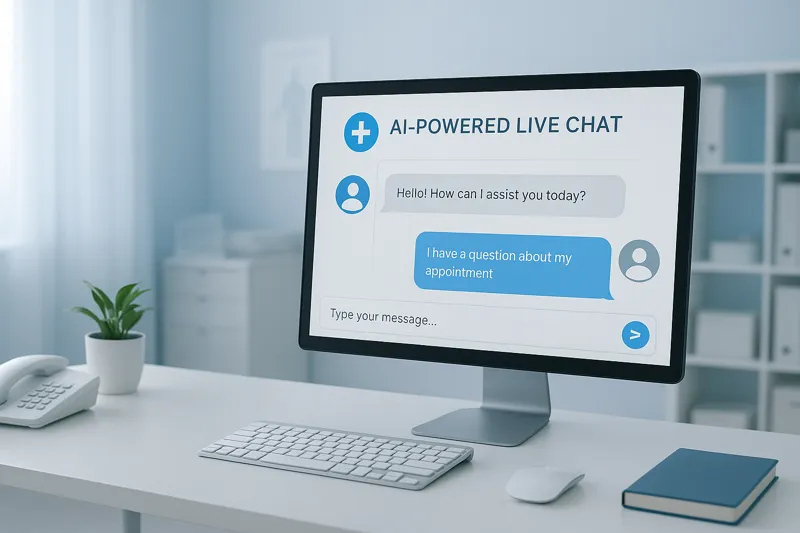
AI-powered live chat solutions in healthcare enable real-time, secure, and convenient patient interactions. Common functionalities include handling routine inquiries, automating appointment scheduling and reminders, medication management, and delivering condition-specific education.
Such live chat platforms incorporate natural language processing to understand complex patient questions and provide empathetic, human-like responses. They operate with HIPAA compliance, ensuring patient data privacy and security. Additionally, they allow immediate escalation to human clinicians when required, maintaining transparency.
By reducing administrative burdens and enhancing accessibility, AI chatbots empower healthcare providers to focus on complex patient care while delivering a seamless patient experience that supports engagement and adherence objectives essential for modern healthcare success.
Understanding Digital Marketing in Healthcare: The Foundation for Patient Engagement

What is digital marketing in healthcare?
Digital marketing in healthcare encompasses the strategic use of online platforms and digital tools to promote services and enhance patient engagement. This includes leveraging websites, social media channels, email campaigns, and SMS messaging to connect with patients effectively, all while adhering to healthcare regulations such as HIPAA. For deeper insights on healthcare marketing strategies, see related resources.
Role of online platforms like websites, social media, SMS, and email
Healthcare organizations use websites to provide comprehensive information and facilitate appointment scheduling, while social media platforms allow for targeted outreach and community building. SMS and email serve as direct communication channels to send appointment reminders, medication alerts, and personalized educational content, thereby improving adherence and fostering ongoing patient relationships. More on digital patient acquisition and importance of digital channels in patient engagement is available.
Importance of mobile optimization and data-driven marketing
With over 80% of patients researching health information and contacting providers via smartphones, optimizing digital content for mobile devices is critical. Data-driven marketing utilizes analytics and patient behavior insights to tailor messaging, ensuring relevance and maximizing engagement and conversion rates. Explore healthcare content marketing strategies and understanding your healthcare audience for more.
Statistical context of US healthcare market and digital ad spend
The US healthcare industry is a $4.5 trillion market with more than 900,000 competitive facilities. Digital advertising spend in healthcare is projected to reach nearly $18 billion in 2024, underscoring the growing reliance on digital channels to capture patient attention and market share. The topic is well covered under healthcare marketing strategies and data analytics in healthcare marketing.
How digital marketing attracts and retains high-value patients
Through targeted demographic segmentation, behavioral profiling, and precise channel selection, digital marketing attracts patients who are most likely to benefit from and engage with specific healthcare services. Personalized, transparent communication fosters trust and loyalty, improving patient retention, satisfaction, and ultimately contributing to sustainable practice growth. Additional guidance on patient engagement strategies, personalized patient communication, and tools for patient engagement is recommended.
The Critical Importance of Compliance in Healthcare Digital Marketing

Why is compliance important in healthcare digital marketing?
Compliance is essential in healthcare digital marketing because it safeguards patient privacy and confidentiality, primarily under the Health Insurance Portability and Accountability Act (HIPAA). This legal framework mandates strict protection of Protected Health Information (PHI), helping healthcare organizations avoid costly fines that can reach up to $2 million for violations. For more on Healthcare marketing strategies and HIPAA compliance in marketing, see these resources.
HIPAA regulations and patient data protection
HIPAA compliance requires healthcare marketers to implement rigorous data security measures, including encryption, access controls, and regular monitoring of information handling. Ensuring these protocols helps maintain the integrity and confidentiality of PHI throughout digital campaigns. Learn about best practices in patient communication technology benefits and Security practices and auditing protocols for PHI for healthcare chatbots.
Risks of non-compliance including fines and reputational damage
Failure to comply with healthcare data regulations exposes organizations not only to significant financial penalties but also to reputational harm. Trust is paramount in healthcare, and any breach or misuse of patient information can degrade patient confidence, resulting in loss of business and long-term brand damage. See more about patient trust indicators and data privacy in chatbots.
Use of AI tools for compliance validation
Advanced AI tools can automate the compliance validation process, streamlining content review to ensure all patient-facing communications adhere to regulatory standards. Platforms like GetGenAI minimize manual approval cycles and reduce human error, enabling faster and more consistent compliance checks. Explore how AI chatbots in healthcare and AI-assisted live chat contribute to compliance.
Building patient trust and transparency through compliance
Clear disclosure practices about data usage and communication channels foster transparency. Patients are more likely to engage and share information when they trust that their data is securely handled, enhancing overall patient experience and loyalty. Reference patient engagement strategies and ethical personalization in healthcare for deeper insights into building patient trust.
Security practices and auditing protocols for PHI
Robust security policies include encrypting data, restricting access based on role, maintaining detailed audit trails, and conducting regular security audits. These measures ensure continuous monitoring and rapid identification of risks associated with patient data. Learn more about Health Information and Communication Technologies (ICT) and Electronic Health Records (EHRs).
In sum, integrating compliance deeply into healthcare digital marketing processes not only protects patients and organizations from legal and financial risks but also reinforces ethical standards, builds patient trust, and supports sustainable growth in an increasingly digital healthcare environment. Additional information on Effect of Health Information Technology on Healthcare Communication and Healthcare transparency complements these essential compliance topics.
Leveraging AI-Powered Live Chat to Enhance Patient Engagement and Operational Efficiency

What capabilities do AI chatbots offer in healthcare?
AI-powered chatbots provide round-the-clock patient support, significantly improving access to healthcare services. These virtual assistants in healthcare handle a variety of functions, including appointment scheduling, triage, answering frequently asked questions (FAQs), and providing therapeutic support. Their natural language processing abilities allow chatbots to comprehend complex queries and deliver accurate, personalized responses swiftly.
How do AI chatbots reduce administrative burdens and operational costs?
By automating routine tasks such as appointment reminders, prescription refills, and initial symptom assessments, AI chatbots alleviate the workload on healthcare staff. This automation leads to marked reductions in operational costs and streamlines clinical workflows, enabling providers to focus on complex patient care. Real-world data shows AI integration can boost operational efficiency by up to 40%.
What is the impact of AI chatbot use on patient satisfaction and engagement?
Healthcare AI chatbots have demonstrated patient engagement rates exceeding 90%, with some systems reporting adherence rates as high as 97%. Offering immediate responses and continuous availability enhances patient satisfaction, reduces wait times, and fosters trust. Additionally, functionalities like medication reminders and educational content contribute to improved chronic disease management.
Are there examples of AI chatbot implementations in US healthcare?
Several leading US providers have successfully adopted AI chatbots. For instance, Cedars-Sinai's "GYANT" chatbot facilitates symptom assessment and preliminary diagnosis, while RevSpring’s "Let’s Talk™" virtual agent manages routine inbound calls and FAQs 24/7. These implementations underscore the scalability and effectiveness of AI chatbots in managing high patient volumes.
How do AI chatbots integrate with existing healthcare systems?
Modern AI chatbots seamlessly integrate with electronic health records (EHRs), telehealth platforms, appointment management software, and pharmacy systems. Such integration ensures that patient data is synchronized, streamlines communication between providers and patients, and supports coordinated care delivery. Additionally, adherence to HIPAA and data privacy standards ensures secure handling of sensitive health information.
| Feature | Benefit | Impact on Healthcare |
|---|---|---|
| 24/7 Patient Support | Immediate assistance anytime | Enhances access and satisfaction |
| Automated Scheduling | Reduces no-shows and errors | Improves operational efficiency |
| FAQ Handling | Answers common questions | Frees clinical staff to focus on complex care |
| Integration with EHR | Data synchronization | Enables comprehensive, coordinated patient management |
| Medication Reminders | Increases adherence | Improves chronic disease outcomes |
| Cost Reduction | Lowers administrative costs | Allows better allocation of healthcare resources |
AI Chatbots in Chronic Disease Management: Improving Adherence and Care Outcomes
Why Do Chronic Disease Patients Struggle with Adherence?
Approximately half of patients with chronic diseases fail to adhere to prescribed care plans, posing significant challenges to effective management.
Non-adherence leads to worsening health outcomes and increased healthcare utilization.
How Can AI chatbots deliver real-time reminders for chronic illness patients Enhance Adherence Through Real-Time Support?
AI chatbots deliver real-time reminders for medication and care activities.
They demystify medical instructions with clear explanations and offer educational support tailored to chronic conditions, empowering patients to better understand their treatment.
What Role Do AI-powered nudges for patient engagement Play in Medication Compliance?
AI-powered nudges send personalized, timely messages via preferred communication channels, boosting compliance.
These nudges leverage behavioral science and patient data to adapt messaging frequency and style, fostering trust and accountability.
How Do AI chatbots scale in healthcare to manage large patient populations efficiently?
AI chatbots scale seamlessly, handling thousands of interactions simultaneously without increasing staff workload.
This scalability addresses rising patient demand and operational pressures in the U.S. healthcare system.
In What Ways Does Chatbot Use Support Ongoing Patient Engagement and Reduce Costs?
By improving patient retention and satisfaction through continuous engagement, AI chatbots encourage repeat care use and referrals.
Automation of routine tasks reduces administrative costs, contributing to significant healthcare chatbot cost savings.
| Aspect | Benefit | Impact on Healthcare |
|---|---|---|
| Non-Adherence | High rates (~50%) | Increased risk, poor outcomes |
| Real-Time Reminders & Education | Clarifies instructions, supports | Improved medication adherence |
| Personalized AI Nudges | Tailored messaging | Increased patient trust and adherence |
| Scalability | Manages high patient volumes | Reduces staff burden, operational efficiency |
| Cost and Engagement | Enhances retention and satisfaction | Lowers costs, promotes care continuity |
Data-Driven Marketing Strategies to Attract High-Value Patients Using AI Insights
How can medical practices attract high-value patients through digital marketing?
Medical practices can effectively attract high-value patients by leveraging comprehensive, data-driven digital marketing approaches. Central to this strategy is the use of demographic and clinical propensity models which analyze de-identified claims and consumer data to predict individuals likely to seek certain healthcare services. This allows precise identification of profitable patient segments tailored by age, health condition, and treatment needs.
Use of demographic and clinical propensity models
Understanding the characteristics and health behaviors of specific patient groups enables practices to customize outreach efforts. By harnessing clinical propensity models, providers can forecast potential patient actions, from scheduling preventive care to managing chronic diseases, enabling proactive target marketing.
Incorporating social determinants of health for targeted outreach
Advanced marketing plans incorporate Social Determinants of Health (SDOH) data—factors like transportation access, education level, and economic status—which influence healthcare engagement. Accounting for these allows marketing campaigns to be empathetic and contextually relevant, ensuring underserved or at-risk populations receive appropriate messaging and support.
Personalized messaging and segmentation based on patient data
Segmentation divides patients by their healthcare journey stage or condition complexity. Personalized messages crafted using AI-driven insights help convey clear, compassionate, and empowering information, fostering trust and increasing adherence. Campaigns using real patient testimonials and inclusive language further enhance credibility.
Multi-channel marketing: social media, online ads, email, SMS
Effective patient acquisition requires multichannel engagement. Social media platforms reach diverse demographics, while optimized online ads target specific patient profiles. Email and SMS campaigns offer timely reminders and educational content, improving patient retention and prompting repeat use. Ensuring omnichannel consistency elevates patient experience and brand trust.
Tracking ROI and performance metrics to optimize campaigns
To maximize marketing impact and resource use, continuous monitoring of campaign metrics—click-through rates, conversion rates, patient satisfaction scores, and new patient volume—is essential. Implementing healthcare-specific customer relationship management (CRM) systems allows for real-time performance tracking and rapid adjustments based on patient behavior data.
This evidence-based, integrated approach aligns with evolving healthcare consumer expectations and supports sustainable practice growth in competitive US markets.
Ensuring Compliance with Online Marketing Strategies in Healthcare
What are some compliant online marketing strategies for healthcare providers?
Healthcare providers must prioritize patient privacy and regulatory adherence in their online marketing efforts, particularly under HIPAA compliance in marketing regulations. Key strategies include using secure and HIPAA-compliant communication platforms, such as encrypted emails and authorized telehealth systems, to safeguard patient data.
Organizations should avoid sharing protected health information (PHI) on public digital channels, including social media, and refrain from employing unapproved tracking tools that could compromise confidentiality. Instead, marketing content should focus on general health education, community engagement, and patient testimonials, but only with explicit patient consent and authorization.
Implementing comprehensive staff training programs ensures all employees understand compliance requirements and handle sensitive information appropriately. Routine audits and well-documented procedures help maintain vigilance and identify any potential compliance gaps early.
Transparency in marketing content is essential. Providers should openly disclose their use of patient information, explaining privacy practices clearly to build patient trust and confidence in the healthcare organization's commitment to data security.
Table: Compliance Components in Healthcare Online Marketing
| Component | Description | Example Practice |
|---|---|---|
| HIPAA Compliance | Adherence to privacy and security standards | Use of encrypted messaging platforms |
| PHI Handling | Limits on sharing identifiable patient data | No public posting of PHI without consent |
| Secure Platforms | Employing authorized communication tools | Telehealth portals and secure emails |
| Staff Training | Employee education on privacy and marketing | Regular HIPAA training sessions |
| Transparency | Clear communication about data use and privacy | Informative privacy notices on websites |
By integrating these practices, healthcare providers can execute effective, compliant online marketing strategies that protect patient privacy while enhancing patient engagement metrics and trust.
Transforming Patient Experience with AI-Driven Communication Technologies
How Do AI Chatbots Provide 24/7 Availability and Multilingual Support?
AI-powered healthcare chatbots offer round-the-clock availability, addressing patient needs instantly without the limitations of office hours. They reduce language barriers with multilingual support, making healthcare access equitable and convenient, especially for diverse U.S. populations.
How Do These Technologies Reduce Patient Wait Times and Frustration?
By automating routine inquiries and tasks such as appointment scheduling and FAQs, AI virtual agents minimize long phone hold times. This ease of access decreases patient frustration and enhances satisfaction.
What Are the Benefits of Real-Time Communication for Patients?
Real-time AI chat interfaces allow patients to receive immediate responses to their concerns, supporting better health engagement and timely care decisions. This responsiveness leads to improved adherence and trust in healthcare providers.
How Do AI Solutions Impact Healthcare Operational Efficiency and Staffing Costs?
Implementing AI virtual agents streamlines contact center workflows, resulting in increased operational efficiency and reduced staffing costs. Automation allows staff to prioritize complex care, while routine interactions are handled smoothly by AI.
Can You Provide Examples of Effective AI Virtual Agents in Healthcare?
One exemplary solution is RevSpring’s Let’s Talk™, a 24/7 AI-powered virtual agent. It manages inbound calls, answers common questions, and directs patients to the right departments. It features multilingual communication and behavioral intelligence for personalized patient engagement, significantly lowering call transfers and improving conversion rates.
| Feature | Benefit | Example Implementation |
|---|---|---|
| 24/7 Availability | Immediate patient support | RevSpring's Let’s Talk™ |
| Multilingual Support | Enhanced accessibility | Integrated language options |
| Automated Routine Tasks | Reduces wait times and workload | Scheduling, FAQs handled |
| Real-Time Communication | Improved patient convenience | Instant messaging responses |
| Behavioral Intelligence | Personalized digital engagement | Tailored outreach and care |
These AI-driven communication tools are reshaping patient experiences in the U.S., yielding higher satisfaction, lower operational burdens, and improved healthcare accessibility.
Integrating AI Chatbots with Healthcare IT Systems for Seamless Communication
How Are AI Chatbots Integrated with Healthcare IT Systems?
AI chatbots in healthcare are designed to interoperate with critical IT infrastructures such as Electronic Health Records (EHRs), appointment scheduling software, telemedicine platforms, and pharmacy management systems. This integration allows chatbots to access and update patient records in real time, manage appointment bookings and rescheduling efficiently, facilitate virtual consultations, and even support medication management tasks like prescription refills. Successful integration streamlines clinical and administrative workflows, enhancing both patient and provider experiences.
What Measures Ensure Data Security and HIPAA Compliance?
Data privacy is paramount when deploying AI chatbots in healthcare. Robust encryption, role-based access controls, audit trails, and data de-identification techniques safeguard Protected Health Information (PHI). Adhering to HIPAA regulations is mandatory, and many chatbot systems operate on secure cloud platforms certified for healthcare compliance, such as AWS, IBM Watson, and Google Cloud. Transparent disclosure of AI involvement and the ability for patients to escalate to human clinicians help maintain trust and compliance.
How Do Chatbots Support Clinician Workflows and Decision-Making?
AI chatbots support clinician workflows by automating routine tasks, including appointment management and initial symptom triage, reducing administrative burden. More advanced AI agents analyze patient histories and integrate with clinical decision support systems to provide summarized insights, aiding faster, more accurate diagnoses and personalized treatment plans. This support helps clinicians focus on complex care while maintaining high-quality patient interactions.
What Role Do AI Chatbots Play in Predictive Analytics and Personalized Care?
By leveraging data from EHRs and remote monitoring devices, AI chatbots contribute to predictive analytics that anticipate disease risks and personalize care plans. They send timely reminders for medication adherence and follow-ups and alert care teams of potential health risks. This proactive approach improves chronic disease management outcomes and patient engagement.
What Are the Challenges and Solutions for Interoperability in US Healthcare?
Interoperability challenges include the heterogeneity of healthcare IT systems, varying data standards, and evolving regulations. Solutions involve adopting standardized communication protocols (such as HL7 FHIR), creating modular chatbot architectures compatible with diverse platforms, and ensuring ongoing updates for regulatory compliance. Human oversight layers and escalation pathways further mitigate risks associated with automation.
Integrating AI chatbots with healthcare IT systems creates a seamless communication framework that optimizes operational efficiency, enhances patient engagement, and supports clinicians, all while prioritizing data security and regulatory adherence in the complex US healthcare environment.
Future Outlook: AI, Predictive Analytics, and Personalized Patient Care
Advancements in Natural Language Processing and Large Language Models
The future of AI in healthcare patient engagement is heavily influenced by progress in natural language processing in healthcare chatbots (NLP) and large language models (LLMs). These technologies enable chatbots and virtual assistants to understand complex queries, generate personalized responses, and simulate human-like conversations with increased accuracy. Recent LLMs like GPT-4 improve natural language understanding, empowering healthcare bots to deliver nuanced patient education and therapeutic support via AI chatbots around the clock.
Role of AI in Predictive Analytics for Disease Risk Forecasting
AI's integration with predictive analytics for disease risk allows for early identification of individual disease risks. By analyzing extensive clinical, genetic, and behavioral data, AI forecasts the likelihood of developing chronic conditions like diabetes or hypertension. This preemptive insight supports personalized preventive strategies, enhances remote patient monitoring with AI nudges, and facilitates timely clinical intervention to improve long-term health outcomes.
Customization of Communication Based on Patient Health Literacy and Preferences
Personalized patient communication is central to effective patient engagement. AI systems customize messages considering each patient's health literacy, language preference, and engagement patterns. This tailored approach builds trust by demystifying medical instructions and providing relevant reminders, which is especially beneficial for patients managing complex, chronic illnesses.
Combating Healthcare Disparities via Remote AI Support
AI-powered remote patient monitoring tools and chatbots significantly improve access for underserved and rural populations. These digital assistants offer multilingual support, 24/7 availability, and timely health education, reducing barriers caused by geographic and systemic disparities. This technology democratizes healthcare access and supports broader health equity goals.
Ethical Considerations, Bias Mitigation, and Building Patient Trust
As AI systems become more pervasive in healthcare, addressing ethical considerations in healthcare chatbots is critical. Strategies include ensuring algorithmic fairness and transparency in healthcare AI, transparent disclosure of AI use, and implementing strict data privacy controls aligned with HIPAA. Human oversight in AI healthcare remains essential to safeguard accuracy and empathy in patient interactions, fostering greater patient trust and compliance.
This evolving landscape of AI-enabled patient engagement and predictive care heralds a transformative era focused on scalable, personalized, and equitable healthcare delivery in the United States.
Harnessing AI-Powered Live Chat to Elevate Patient Engagement and Care Delivery
Enhancing Patient Engagement Through AI-Powered Chatbots
AI-driven chatbots have revolutionized patient engagement by providing 24/7 accessibility for inquiries, appointment scheduling, and symptom triage. These virtual assistants facilitate personalized, real-time communication, achieving patient engagement rates exceeding 90%, and increasing adherence to care plans up to 97%. Importantly, AI chatbots help demystify complex medical instructions by offering tailored explanations and timely reminders, which is especially beneficial for patients managing chronic diseases.
Building Trust and Compliance in Healthcare Marketing
Successful integration of AI in healthcare hinges on strict adherence to regulatory requirements such as HIPAA, ensuring data privacy and patient confidentiality. Transparent communication about AI usage, with clear disclosure and accessible human oversight options, fosters patient trust. By aligning AI technology with compliance standards, healthcare marketing not only promotes better patient experiences but also safeguards organizational integrity.
Driving Provider Adoption of AI Technologies
Healthcare providers are encouraged to embrace AI chatbots as complementary tools that enhance—not replace—clinician capabilities. Adoption is fueled by demonstrated improvements in operational efficiency, with some organizations reporting up to 40% gains. Through seamless integration with electronic health records and telehealth platforms, AI technologies streamline workflows, reduce administrative burdens, and free clinicians to focus on complex patient care.
Sustaining Efficiency and Improving Health Outcomes
AI chatbots contribute to sustainable healthcare delivery by managing high patient volumes without proportional increases in staffing costs. Their scalability supports remote patient monitoring and chronic disease management while driving cost savings and patient retention. By automating routine tasks and providing timely interventions, AI-enabled live chat enhances clinical outcomes and patient satisfaction, reinforcing a patient-centered care model aligned with the evolving expectations of the U.S. healthcare system.
The Rise of AI in Patient Engagement
Emergence and Growth of AI Chatbots in Healthcare
AI chatbots have become pivotal in transforming healthcare delivery, especially in the United States, where digital health solutions address pressing operational and financial pressures. The healthcare chatbot market is rapidly expanding, with projections estimating a growth from USD 1.49 billion in 2025 to USD 10.26 billion by 2034. Approximately 19% of US medical group practices have integrated AI-driven virtual assistants, underscoring widespread adoption.
These chatbots automate diverse tasks such as appointment scheduling, symptom triage, medication adherence support, and chronic disease management, delivering considerable operational efficiencies with some providers reporting up to 40% improvement. Their 24/7 availability enhances patient access, reduces clinician workloads, and offers cost-effective scalability crucial in managing high patient volumes.
Importance of Patient Engagement in Healthcare Outcomes
Effective patient engagement is intimately linked to improved treatment adherence, better health outcomes, and elevated patient satisfaction. Studies report patient engagement rates exceeding 90% and adherence to care plans reaching as high as 97% when supported by AI chatbots. These technologies demystify medical instructions by providing real-time reminders, explanations, and therapeutic support, particularly benefiting chronic disease patients who require ongoing guidance.
Moreover, AI chatbots facilitate personalized communication that resonates with patients' unique needs and behaviors, thereby strengthening trust and promoting continuous interaction with healthcare services. This engagement fosters patient retention and encourages referrals, contributing to practice growth and improved public health.
Overview of AI-Powered Live Chat Functionalities
AI-powered live chat solutions in healthcare enable real-time, secure, and convenient patient interactions. Common functionalities include handling routine inquiries, automating appointment scheduling and reminders, medication management, and delivering condition-specific education.
Such live chat platforms incorporate natural language processing to understand complex patient questions and provide empathetic, human-like responses. They operate with HIPAA compliance, ensuring patient data privacy and security. Additionally, they allow immediate escalation to human clinicians when required, maintaining transparency.
By reducing administrative burdens and enhancing accessibility, AI chatbots empower healthcare providers to focus on complex patient care while delivering a seamless patient experience that supports engagement and adherence objectives essential for modern healthcare success.
Understanding Digital Marketing in Healthcare: The Foundation for Patient Engagement
What is digital marketing in healthcare?
Digital marketing in healthcare encompasses the strategic use of online platforms and digital tools to promote services and enhance patient engagement. This includes leveraging websites, social media channels, email campaigns, and SMS messaging to connect with patients effectively, all while adhering to healthcare regulations such as HIPAA. For deeper insights on healthcare marketing strategies, see related resources.
Role of online platforms like websites, social media, SMS, and email
Healthcare organizations use websites to provide comprehensive information and facilitate appointment scheduling, while social media platforms allow for targeted outreach and community building. SMS and email serve as direct communication channels to send appointment reminders, medication alerts, and personalized educational content, thereby improving adherence and fostering ongoing patient relationships. More on digital patient acquisition and importance of digital channels in patient engagement is available.
Importance of mobile optimization and data-driven marketing
With over 80% of patients researching health information and contacting providers via smartphones, optimizing digital content for mobile devices is critical. Data-driven marketing utilizes analytics and patient behavior insights to tailor messaging, ensuring relevance and maximizing engagement and conversion rates. Explore healthcare content marketing strategies and understanding your healthcare audience for more.
Statistical context of US healthcare market and digital ad spend
The US healthcare industry is a $4.5 trillion market with more than 900,000 competitive facilities. Digital advertising spend in healthcare is projected to reach nearly $18 billion in 2024, underscoring the growing reliance on digital channels to capture patient attention and market share. The topic is well covered under healthcare marketing strategies and data analytics in healthcare marketing.
How digital marketing attracts and retains high-value patients
Through targeted demographic segmentation, behavioral profiling, and precise channel selection, digital marketing attracts patients who are most likely to benefit from and engage with specific healthcare services. Personalized, transparent communication fosters trust and loyalty, improving patient retention, satisfaction, and ultimately contributing to sustainable practice growth. Additional guidance on patient engagement strategies, personalized patient communication, and tools for patient engagement is recommended.
The Critical Importance of Compliance in Healthcare Digital Marketing
Why is compliance important in healthcare digital marketing?
Compliance is essential in healthcare digital marketing because it safeguards patient privacy and confidentiality, primarily under the Health Insurance Portability and Accountability Act (HIPAA). This legal framework mandates strict protection of Protected Health Information (PHI), helping healthcare organizations avoid costly fines that can reach up to $2 million for violations. For more on Healthcare marketing strategies and HIPAA compliance in marketing, see these resources.
HIPAA regulations and patient data protection
HIPAA compliance requires healthcare marketers to implement rigorous data security measures, including encryption, access controls, and regular monitoring of information handling. Ensuring these protocols helps maintain the integrity and confidentiality of PHI throughout digital campaigns. Learn about best practices in patient communication technology benefits and Security practices and auditing protocols for PHI for healthcare chatbots.
Risks of non-compliance including fines and reputational damage
Failure to comply with healthcare data regulations exposes organizations not only to significant financial penalties but also to reputational harm. Trust is paramount in healthcare, and any breach or misuse of patient information can degrade patient confidence, resulting in loss of business and long-term brand damage. See more about patient trust indicators and data privacy in chatbots.
Use of AI tools for compliance validation
Advanced AI tools can automate the compliance validation process, streamlining content review to ensure all patient-facing communications adhere to regulatory standards. Platforms like GetGenAI minimize manual approval cycles and reduce human error, enabling faster and more consistent compliance checks. Explore how AI chatbots in healthcare and AI-assisted live chat contribute to compliance.
Building patient trust and transparency through compliance
Clear disclosure practices about data usage and communication channels foster transparency. Patients are more likely to engage and share information when they trust that their data is securely handled, enhancing overall patient experience and loyalty. Reference patient engagement strategies and ethical personalization in healthcare for deeper insights into building patient trust.
Security practices and auditing protocols for PHI
Robust security policies include encrypting data, restricting access based on role, maintaining detailed audit trails, and conducting regular security audits. These measures ensure continuous monitoring and rapid identification of risks associated with patient data. Learn more about Health Information and Communication Technologies (ICT) and Electronic Health Records (EHRs).
In sum, integrating compliance deeply into healthcare digital marketing processes not only protects patients and organizations from legal and financial risks but also reinforces ethical standards, builds patient trust, and supports sustainable growth in an increasingly digital healthcare environment. Additional information on Effect of Health Information Technology on Healthcare Communication and Healthcare transparency complements these essential compliance topics.
Leveraging AI-Powered Live Chat to Enhance Patient Engagement and Operational Efficiency
What capabilities do AI chatbots offer in healthcare?
AI-powered chatbots provide round-the-clock patient support, significantly improving access to healthcare services. These virtual assistants in healthcare handle a variety of functions, including appointment scheduling, triage, answering frequently asked questions (FAQs), and providing therapeutic support. Their natural language processing abilities allow chatbots to comprehend complex queries and deliver accurate, personalized responses swiftly.
How do AI chatbots reduce administrative burdens and operational costs?
By automating routine tasks such as appointment reminders, prescription refills, and initial symptom assessments, AI chatbots alleviate the workload on healthcare staff. This automation leads to marked reductions in operational costs and streamlines clinical workflows, enabling providers to focus on complex patient care. Real-world data shows AI integration can boost operational efficiency by up to 40%.
What is the impact of AI chatbot use on patient satisfaction and engagement?
Healthcare AI chatbots have demonstrated patient engagement rates exceeding 90%, with some systems reporting adherence rates as high as 97%. Offering immediate responses and continuous availability enhances patient satisfaction, reduces wait times, and fosters trust. Additionally, functionalities like medication reminders and educational content contribute to improved chronic disease management.
Are there examples of AI chatbot implementations in US healthcare?
Several leading US providers have successfully adopted AI chatbots. For instance, Cedars-Sinai's "GYANT" chatbot facilitates symptom assessment and preliminary diagnosis, while RevSpring’s "Let’s Talk™" virtual agent manages routine inbound calls and FAQs 24/7. These implementations underscore the scalability and effectiveness of AI chatbots in managing high patient volumes.
How do AI chatbots integrate with existing healthcare systems?
Modern AI chatbots seamlessly integrate with electronic health records (EHRs), telehealth platforms, appointment management software, and pharmacy systems. Such integration ensures that patient data is synchronized, streamlines communication between providers and patients, and supports coordinated care delivery. Additionally, adherence to HIPAA and data privacy standards ensures secure handling of sensitive health information.
| Feature | Benefit | Impact on Healthcare |
|---|---|---|
| 24/7 Patient Support | Immediate assistance anytime | Enhances access and satisfaction |
| Automated Scheduling | Reduces no-shows and errors | Improves operational efficiency |
| FAQ Handling | Answers common questions | Frees clinical staff to focus on complex care |
| Integration with EHR | Data synchronization | Enables comprehensive, coordinated patient management |
| Medication Reminders | Increases adherence | Improves chronic disease outcomes |
| Cost Reduction | Lowers administrative costs | Allows better allocation of healthcare resources |
AI Chatbots in Chronic Disease Management: Improving Adherence and Care Outcomes
Why Do Chronic Disease Patients Struggle with Adherence?
Approximately half of patients with chronic diseases fail to adhere to prescribed care plans, posing significant challenges to effective management.
Non-adherence leads to worsening health outcomes and increased healthcare utilization.
How Can AI chatbots deliver real-time reminders for chronic illness patients Enhance Adherence Through Real-Time Support?
AI chatbots deliver real-time reminders for medication and care activities.
They demystify medical instructions with clear explanations and offer educational support tailored to chronic conditions, empowering patients to better understand their treatment.
What Role Do AI-powered nudges for patient engagement Play in Medication Compliance?
AI-powered nudges send personalized, timely messages via preferred communication channels, boosting compliance.
These nudges leverage behavioral science and patient data to adapt messaging frequency and style, fostering trust and accountability.
How Do AI chatbots scale in healthcare to manage large patient populations efficiently?
AI chatbots scale seamlessly, handling thousands of interactions simultaneously without increasing staff workload.
This scalability addresses rising patient demand and operational pressures in the U.S. healthcare system.
In What Ways Does Chatbot Use Support Ongoing Patient Engagement and Reduce Costs?
By improving patient retention and satisfaction through continuous engagement, AI chatbots encourage repeat care use and referrals.
Automation of routine tasks reduces administrative costs, contributing to significant healthcare chatbot cost savings.
| Aspect | Benefit | Impact on Healthcare |
|---|---|---|
| Non-Adherence | High rates (~50%) | Increased risk, poor outcomes |
| Real-Time Reminders & Education | Clarifies instructions, supports | Improved medication adherence |
| Personalized AI Nudges | Tailored messaging | Increased patient trust and adherence |
| Scalability | Manages high patient volumes | Reduces staff burden, operational efficiency |
| Cost and Engagement | Enhances retention and satisfaction | Lowers costs, promotes care continuity |
Data-Driven Marketing Strategies to Attract High-Value Patients Using AI Insights
How can medical practices attract high-value patients through digital marketing?
Medical practices can effectively attract high-value patients by leveraging comprehensive, data-driven digital marketing approaches. Central to this strategy is the use of demographic and clinical propensity models which analyze de-identified claims and consumer data to predict individuals likely to seek certain healthcare services. This allows precise identification of profitable patient segments tailored by age, health condition, and treatment needs.
Use of demographic and clinical propensity models
Understanding the characteristics and health behaviors of specific patient groups enables practices to customize outreach efforts. By harnessing clinical propensity models, providers can forecast potential patient actions, from scheduling preventive care to managing chronic diseases, enabling proactive target marketing.
Incorporating social determinants of health for targeted outreach
Advanced marketing plans incorporate Social Determinants of Health (SDOH) data—factors like transportation access, education level, and economic status—which influence healthcare engagement. Accounting for these allows marketing campaigns to be empathetic and contextually relevant, ensuring underserved or at-risk populations receive appropriate messaging and support.
Personalized messaging and segmentation based on patient data
Segmentation divides patients by their healthcare journey stage or condition complexity. Personalized messages crafted using AI-driven insights help convey clear, compassionate, and empowering information, fostering trust and increasing adherence. Campaigns using real patient testimonials and inclusive language further enhance credibility.
Multi-channel marketing: social media, online ads, email, SMS
Effective patient acquisition requires multichannel engagement. Social media platforms reach diverse demographics, while optimized online ads target specific patient profiles. Email and SMS campaigns offer timely reminders and educational content, improving patient retention and prompting repeat use. Ensuring omnichannel consistency elevates patient experience and brand trust.
Tracking ROI and performance metrics to optimize campaigns
To maximize marketing impact and resource use, continuous monitoring of campaign metrics—click-through rates, conversion rates, patient satisfaction scores, and new patient volume—is essential. Implementing healthcare-specific customer relationship management (CRM) systems allows for real-time performance tracking and rapid adjustments based on patient behavior data.
This evidence-based, integrated approach aligns with evolving healthcare consumer expectations and supports sustainable practice growth in competitive US markets.
Ensuring Compliance with Online Marketing Strategies in Healthcare
What are some compliant online marketing strategies for healthcare providers?
Healthcare providers must prioritize patient privacy and regulatory adherence in their online marketing efforts, particularly under HIPAA compliance in marketing regulations. Key strategies include using secure and HIPAA-compliant communication platforms, such as encrypted emails and authorized telehealth systems, to safeguard patient data.
Organizations should avoid sharing protected health information (PHI) on public digital channels, including social media, and refrain from employing unapproved tracking tools that could compromise confidentiality. Instead, marketing content should focus on general health education, community engagement, and patient testimonials, but only with explicit patient consent and authorization.
Implementing comprehensive staff training programs ensures all employees understand compliance requirements and handle sensitive information appropriately. Routine audits and well-documented procedures help maintain vigilance and identify any potential compliance gaps early.
Transparency in marketing content is essential. Providers should openly disclose their use of patient information, explaining privacy practices clearly to build patient trust and confidence in the healthcare organization's commitment to data security.
Table: Compliance Components in Healthcare Online Marketing
| Component | Description | Example Practice |
|---|---|---|
| HIPAA Compliance | Adherence to privacy and security standards | Use of encrypted messaging platforms |
| PHI Handling | Limits on sharing identifiable patient data | No public posting of PHI without consent |
| Secure Platforms | Employing authorized communication tools | Telehealth portals and secure emails |
| Staff Training | Employee education on privacy and marketing | Regular HIPAA training sessions |
| Transparency | Clear communication about data use and privacy | Informative privacy notices on websites |
By integrating these practices, healthcare providers can execute effective, compliant online marketing strategies that protect patient privacy while enhancing patient engagement metrics and trust.
Transforming Patient Experience with AI-Driven Communication Technologies
How Do AI Chatbots Provide 24/7 Availability and Multilingual Support?
AI-powered healthcare chatbots offer round-the-clock availability, addressing patient needs instantly without the limitations of office hours. They reduce language barriers with multilingual support, making healthcare access equitable and convenient, especially for diverse U.S. populations.
How Do These Technologies Reduce Patient Wait Times and Frustration?
By automating routine inquiries and tasks such as appointment scheduling and FAQs, AI virtual agents minimize long phone hold times. This ease of access decreases patient frustration and enhances satisfaction.
What Are the Benefits of Real-Time Communication for Patients?
Real-time AI chat interfaces allow patients to receive immediate responses to their concerns, supporting better health engagement and timely care decisions. This responsiveness leads to improved adherence and trust in healthcare providers.
How Do AI Solutions Impact Healthcare Operational Efficiency and Staffing Costs?
Implementing AI virtual agents streamlines contact center workflows, resulting in increased operational efficiency and reduced staffing costs. Automation allows staff to prioritize complex care, while routine interactions are handled smoothly by AI.
Can You Provide Examples of Effective AI Virtual Agents in Healthcare?
One exemplary solution is RevSpring’s Let’s Talk™, a 24/7 AI-powered virtual agent. It manages inbound calls, answers common questions, and directs patients to the right departments. It features multilingual communication and behavioral intelligence for personalized patient engagement, significantly lowering call transfers and improving conversion rates.
| Feature | Benefit | Example Implementation |
|---|---|---|
| 24/7 Availability | Immediate patient support | RevSpring's Let’s Talk™ |
| Multilingual Support | Enhanced accessibility | Integrated language options |
| Automated Routine Tasks | Reduces wait times and workload | Scheduling, FAQs handled |
| Real-Time Communication | Improved patient convenience | Instant messaging responses |
| Behavioral Intelligence | Personalized digital engagement | Tailored outreach and care |
These AI-driven communication tools are reshaping patient experiences in the U.S., yielding higher satisfaction, lower operational burdens, and improved healthcare accessibility.
Integrating AI Chatbots with Healthcare IT Systems for Seamless Communication
How Are AI Chatbots Integrated with Healthcare IT Systems?
AI chatbots in healthcare are designed to interoperate with critical IT infrastructures such as Electronic Health Records (EHRs), appointment scheduling software, telemedicine platforms, and pharmacy management systems. This integration allows chatbots to access and update patient records in real time, manage appointment bookings and rescheduling efficiently, facilitate virtual consultations, and even support medication management tasks like prescription refills. Successful integration streamlines clinical and administrative workflows, enhancing both patient and provider experiences.
What Measures Ensure Data Security and HIPAA Compliance?
Data privacy is paramount when deploying AI chatbots in healthcare. Robust encryption, role-based access controls, audit trails, and data de-identification techniques safeguard Protected Health Information (PHI). Adhering to HIPAA regulations is mandatory, and many chatbot systems operate on secure cloud platforms certified for healthcare compliance, such as AWS, IBM Watson, and Google Cloud. Transparent disclosure of AI involvement and the ability for patients to escalate to human clinicians help maintain trust and compliance.
How Do Chatbots Support Clinician Workflows and Decision-Making?
AI chatbots support clinician workflows by automating routine tasks, including appointment management and initial symptom triage, reducing administrative burden. More advanced AI agents analyze patient histories and integrate with clinical decision support systems to provide summarized insights, aiding faster, more accurate diagnoses and personalized treatment plans. This support helps clinicians focus on complex care while maintaining high-quality patient interactions.
What Role Do AI Chatbots Play in Predictive Analytics and Personalized Care?
By leveraging data from EHRs and remote monitoring devices, AI chatbots contribute to predictive analytics that anticipate disease risks and personalize care plans. They send timely reminders for medication adherence and follow-ups and alert care teams of potential health risks. This proactive approach improves chronic disease management outcomes and patient engagement.
What Are the Challenges and Solutions for Interoperability in US Healthcare?
Interoperability challenges include the heterogeneity of healthcare IT systems, varying data standards, and evolving regulations. Solutions involve adopting standardized communication protocols (such as HL7 FHIR), creating modular chatbot architectures compatible with diverse platforms, and ensuring ongoing updates for regulatory compliance. Human oversight layers and escalation pathways further mitigate risks associated with automation.
Integrating AI chatbots with healthcare IT systems creates a seamless communication framework that optimizes operational efficiency, enhances patient engagement, and supports clinicians, all while prioritizing data security and regulatory adherence in the complex US healthcare environment.
Future Outlook: AI, Predictive Analytics, and Personalized Patient Care
Advancements in Natural Language Processing and Large Language Models
The future of AI in healthcare patient engagement is heavily influenced by progress in natural language processing in healthcare chatbots (NLP) and large language models (LLMs). These technologies enable chatbots and virtual assistants to understand complex queries, generate personalized responses, and simulate human-like conversations with increased accuracy. Recent LLMs like GPT-4 improve natural language understanding, empowering healthcare bots to deliver nuanced patient education and therapeutic support via AI chatbots around the clock.
Role of AI in Predictive Analytics for Disease Risk Forecasting
AI's integration with predictive analytics for disease risk allows for early identification of individual disease risks. By analyzing extensive clinical, genetic, and behavioral data, AI forecasts the likelihood of developing chronic conditions like diabetes or hypertension. This preemptive insight supports personalized preventive strategies, enhances remote patient monitoring with AI nudges, and facilitates timely clinical intervention to improve long-term health outcomes.
Customization of Communication Based on Patient Health Literacy and Preferences
Personalized patient communication is central to effective patient engagement. AI systems customize messages considering each patient's health literacy, language preference, and engagement patterns. This tailored approach builds trust by demystifying medical instructions and providing relevant reminders, which is especially beneficial for patients managing complex, chronic illnesses.
Combating Healthcare Disparities via Remote AI Support
AI-powered remote patient monitoring tools and chatbots significantly improve access for underserved and rural populations. These digital assistants offer multilingual support, 24/7 availability, and timely health education, reducing barriers caused by geographic and systemic disparities. This technology democratizes healthcare access and supports broader health equity goals.
Ethical Considerations, Bias Mitigation, and Building Patient Trust
As AI systems become more pervasive in healthcare, addressing ethical considerations in healthcare chatbots is critical. Strategies include ensuring algorithmic fairness and transparency in healthcare AI, transparent disclosure of AI use, and implementing strict data privacy controls aligned with HIPAA. Human oversight in AI healthcare remains essential to safeguard accuracy and empathy in patient interactions, fostering greater patient trust and compliance.
This evolving landscape of AI-enabled patient engagement and predictive care heralds a transformative era focused on scalable, personalized, and equitable healthcare delivery in the United States.
Harnessing AI-Powered Live Chat to Elevate Patient Engagement and Care Delivery
Enhancing Patient Engagement Through AI-Powered Chatbots
AI-driven chatbots have revolutionized patient engagement by providing 24/7 accessibility for inquiries, appointment scheduling, and symptom triage. These virtual assistants facilitate personalized, real-time communication, achieving patient engagement rates exceeding 90%, and increasing adherence to care plans up to 97%. Importantly, AI chatbots help demystify complex medical instructions by offering tailored explanations and timely reminders, which is especially beneficial for patients managing chronic diseases.
Building Trust and Compliance in Healthcare Marketing
Successful integration of AI in healthcare hinges on strict adherence to regulatory requirements such as HIPAA, ensuring data privacy and patient confidentiality. Transparent communication about AI usage, with clear disclosure and accessible human oversight options, fosters patient trust. By aligning AI technology with compliance standards, healthcare marketing not only promotes better patient experiences but also safeguards organizational integrity.
Driving Provider Adoption of AI Technologies
Healthcare providers are encouraged to embrace AI chatbots as complementary tools that enhance—not replace—clinician capabilities. Adoption is fueled by demonstrated improvements in operational efficiency, with some organizations reporting up to 40% gains. Through seamless integration with electronic health records and telehealth platforms, AI technologies streamline workflows, reduce administrative burdens, and free clinicians to focus on complex patient care.
Sustaining Efficiency and Improving Health Outcomes
AI chatbots contribute to sustainable healthcare delivery by managing high patient volumes without proportional increases in staffing costs. Their scalability supports remote patient monitoring and chronic disease management while driving cost savings and patient retention. By automating routine tasks and providing timely interventions, AI-enabled live chat enhances clinical outcomes and patient satisfaction, reinforcing a patient-centered care model aligned with the evolving expectations of the U.S. healthcare system.