.png)

The Digital Shift in Patient Experience
Importance of digital experience in healthcare
The digital transformation in healthcare has become a fundamental driver of patient satisfaction and engagement. As patients increasingly turn to online platforms to manage their health—ranging from researching conditions to scheduling appointments—the quality of digital interactions profoundly shapes their overall experience. Healthcare organizations that optimize digital channels can attract and retain patients more effectively, contributing to improved outcomes and operational efficiency.
Patient expectations for seamless online interactions
Patients now expect a seamless and intuitive online healthcare journey comparable to retail experiences. This includes mobile-responsive websites, clear and accessible content, easy appointment scheduling, and integrated communication tools such as live chat and patient portals. Satisfaction hinges on consistent, secure, and personalized digital touchpoints that empower patients while simplifying complex healthcare processes.
Role of websites as the digital front door
Healthcare websites act as the critical digital front door, often representing the first point of contact for patients. Well-designed websites with optimized navigation, accessibility compliance, and fast load speeds enhance trust and facilitate patient engagement. Incorporating key functionalities—such as telehealth integration, secure patient portals, and clear information on services—ensures that websites efficiently support patient acquisition and ongoing care management, making them central hubs for the patient journey in the digital age.
Designing Patient-Centric Healthcare Websites for Enhanced Engagement

User-friendly navigation and clear site architecture
A healthcare website must prioritize intuitive navigation with well-structured menus linking essential pages such as Services, Locations, Patient Resources, and Contact information. Clear site architecture reduces patient frustration, enabling quick access to needed information and streamlining appointment scheduling. Effective internal search functions and strategic call-to-action placements further enhance ease of use, driving higher conversion rates and patient engagement. For more on Healthcare Website Design and Best Practices for Patient-Centric Hospital Sites.
Mobile responsiveness and accessibility standards
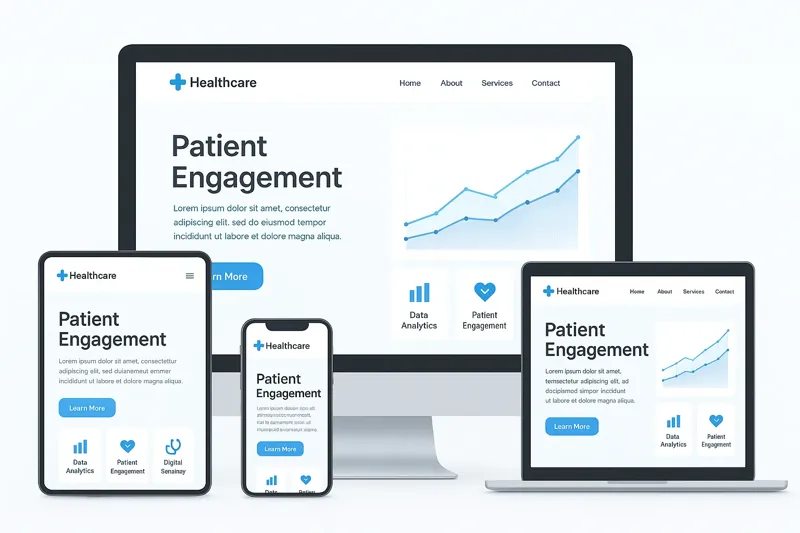
With over half of healthcare website traffic originating from mobile devices, adopting responsive design ensures accessibility across smartphones, tablets, and desktops. Additionally, compliance with accessibility standards like WCAG 2.1 and ADA is critical. Features such as keyboard navigation, screen reader compatibility, high contrast modes, and accommodating colorblindness foster inclusivity, improve legal compliance, and build patient trust. See more about Accessibility in Healthcare Websites and Trustworthy Healthcare Web Design.
Integration of online appointment scheduling and telehealth features
Embedding real-time, user-friendly online scheduling tools offers patients convenient options to book, reschedule, or cancel appointments without delay. Telehealth integration expands access, particularly for mobility-challenged or rural patients, by facilitating virtual consultations. Both functionalities significantly enhance patient convenience, satisfaction, and engagement while improving operational efficiency within healthcare organizations. Related insights are available on Patient Experience Improvement and Healthcare Website Design Best Practices.
Use of educational resources to improve health literacy
Incorporating clinician-reviewed articles, videos, infographics, and FAQs on health topics educates patients, empowering informed healthcare decisions. Tailored content marketing, aligned with patient needs and delivered across digital channels, establishes credibility and trust. This focus on health literacy not only supports positive patient outcomes but also drives patient retention and growth by positioning healthcare providers as authoritative, patient-centered partners. Learn more from Healthcare Digital Marketing Strategies and Healthcare Patient Education and Engagement.
How important is content marketing and patient education in healthcare digital marketing?
Content marketing and patient education are foundational pillars in healthcare digital marketing strategies. They build trust and authority through accurate, evidence-based information, fostering patient loyalty and engagement. By addressing common questions and health concerns with tailored, accessible content, providers can enhance patient satisfaction and health outcomes. Consequently, well-crafted educational initiatives contribute directly to business growth by attracting and retaining high-value patients in a competitive healthcare market. For comprehensive strategies, see Healthcare Marketing Strategy Insights and Creating a Digital Marketing Strategy Around the Patient.
Leveraging Advanced Digital Marketing Strategies to Attract High-Value Patients

What are the most effective digital marketing strategies for healthcare practices to attract high-value patients?
Attracting high-value patients requires a multi-faceted digital marketing approach tailored to the healthcare sector's unique demands. Effective strategies begin with SEO and local search optimization. Healthcare providers should optimize website content with localized keywords, create targeted landing pages, and maintain accurate, up-to-date listings on platforms like Google My Business, Healthgrades, and Vitals. This enhances online visibility where patients often initiate provider searches—for example, 77% use search engines before booking appointments.
Targeted PPC advertising and social media engagement supplement organic efforts by reaching specific demographics and geographic areas cost-effectively. Pay-per-click campaigns can be tailored using location and patient profiles while social media platforms such as Facebook and Instagram foster community engagement, patient education, and trust-building. These channels also accommodate emerging formats like video and native ads, which further boost awareness and patient outreach.
Building a robust online reputation management system is essential. Patient reviews and ratings heavily influence healthcare choices; about 84% avoid providers rated below 4 stars. Encouraging positive feedback and responding to reviews demonstrates responsiveness and care quality, enhancing trust and differentiating providers in competitive markets.
Lastly, personalized marketing campaigns using patient data drive engagement and patient retention. Integrating data from CRM, EHR, and marketing platforms allows for targeted communication tailored to individual needs. Automation tools enable delivery of personalized content such as appointment reminders, educational materials, and follow-ups. Compliance with regulations like HIPAA remains paramount throughout these processes.
Healthcare organizations that consolidate these strategies within a unified digital marketing framework see improved patient acquisition, stronger loyalty, and increased conversion rates. Embracing a patient-centric online presence, leveraging data-driven outreach, and engaging patients across their digital journey are vital steps for sustainable growth in today's healthcare market.
Ensuring Compliance in Healthcare Digital Marketing Campaigns

How can healthcare clinics ensure their online marketing campaigns comply with medical industry regulations?
Healthcare clinics must establish a rigorous compliance framework to align their online marketing campaigns with medical industry regulations such as HIPAA and GDPR. First, clinics need to fully understand these regulations, ensuring explicit and documented patient consent is obtained before using any protected health information (PHI) for marketing purposes.
HIPAA and GDPR compliance essentials
Compliance starts with clear privacy policies that are communicated to patients and enforced rigorously. Clinics should implement role-based access controls to limit data visibility only to authorized personnel, minimizing exposure risk. Regular audits and reviews of privacy notices and procedures are critical to ensure ongoing adherence to evolving regulatory standards.
Use of HIPAA-compliant marketing tools and platforms
Marketing tools and platforms supporting email campaigns, social media, and analytics must be HIPAA-compliant, incorporating encryption, secure authentication, and audit logging. Using these compliant channels ensures the security and confidentiality of PHI during marketing activities.
Staff training on privacy and security protocols
Continuous education equips marketing and clinical staff with knowledge of privacy laws, security best practices, and how to handle PHI responsibly. Training also covers preventing social media mistakes and understanding the implications of emerging technologies such as AI in marketing.
Ongoing updates and vendor management for regulation adherence
Healthcare clinics should maintain vigilant oversight of their marketing vendors, requiring Business Associate Agreements (BAAs) and verified compliance certifications. Staying updated with changes in global data protection laws and industry best practices ensures marketing remains legally sound.
By integrating these components, healthcare organizations foster a compliance-driven culture that not only protects patient data but also enhances trust and credibility in their digital marketing efforts.
Harnessing Data-Driven Marketing to Optimize Patient Acquisition
What role does data-driven marketing play in improving patient acquisition for medical practices?
Data-driven marketing is essential for modern medical practices aiming to enhance patient acquisition. It enables healthcare providers to tailor outreach based on detailed patient demographics and behavior, ensuring messages resonate deeply with target audiences. This personalized approach builds patient trust and engagement, key factors that impact their decision to choose a provider (digital marketing for medical practices).
Targeted outreach based on patient demographics and behavior
Healthcare organizations leverage comprehensive datasets to segment patients by age, location, health condition, and other behavioral metrics. This segmentation facilitates the delivery of tailored content and offers that meet specific needs, enhancing the likelihood of appointment bookings and long-term loyalty (Precision Marketing in Healthcare).
Utilizing robust analytics for campaign measurement and refinement
Advanced analytics platforms track campaign performance in real time. By analyzing key metrics such as conversion rates, engagement levels, and patient acquisition costs, marketers can optimize ad spend and continuously refine their strategies. This data-driven feedback loop ensures maximum return on investment and sustained patient growth (Healthcare digital marketing strategies).
Ethical handling of patient data with regulatory compliance
Maintaining compliance with regulations like HIPAA and GDPR is critical. Best practices include secure data encryption, anonymization where appropriate, and transparent consent acquisition. Ethical data handling not only protects patient privacy but also strengthens organizational credibility (Healthcare marketing ethical standards).
Personalized messaging enhancing patient trust and engagement
Beyond targeting, personalizing communication—through customized newsletters, appointment reminders, and educational content—demonstrates respect for patient preferences. This fosters a stronger provider-patient relationship, improves satisfaction, and encourages positive health outcomes (Creating a Digital Marketing Strategy Around the Patient).
By integrating data-driven marketing with stringent compliance measures and personalized patient engagement, medical practices can efficiently expand their patient base and establish lasting trust.
Creating Seamless and Secure Patient Portals to Enhance Engagement

Features of optimized patient portals such as real-time info access and communication
Optimized patient portals provide patients with real-time access to clinical information, including recent visit notes, lab results, and medication details. Modern functionalities often extend to completing intake questionnaires, entering remote monitoring data, and managing appointment schedules. These features empower patients to actively participate in their care and improve transparency and satisfaction. Patient portal optimization
Reducing provider workload through message triage and team-based workflows
To minimize provider burnout, many healthcare organizations implement team-based workflows that enable non-physician staff to triage and manage patient portal messages. Utilizing technology such as AI-based triage tools further streamlines inquiries by filtering messages related to routine questions, medication refills, or normal test results. This approach frees clinicians to focus on complex cases while maintaining high-quality communication. Cutting physician workload
Clear patient guidelines for portal use and response expectations
Establishing clear guidelines around portal use is essential for managing patient expectations and enhancing satisfaction. Patients benefit from understanding communication etiquette, such as message character limits, expected response times, and which inquiries may incur charges (e.g., e-visits). Transparent policies promote trust and prevent unnecessary messaging. Clear portal communication guidelines
Integration of telehealth and asynchronous communication tools
Integrating telehealth functionality directly into patient portals allows seamless virtual visits, improving access and convenience, especially for mobility-challenged or rural patients. Further, asynchronous communication tools enable patients to send messages or updates without waiting for real-time interactions, enhancing communication flexibility while controlling provider workflow load. Telehealth and asynchronous messaging
By combining secure, user-friendly portals with team-based management and integrated virtual care options, healthcare providers can significantly improve digital patient experience while optimizing operational efficiency.
Integrating Interoperability and Technology for a Unified Digital Patient Journey

Health record exchange and EHR interoperability benefits
Interoperability among Electronic Health Records (EHR Optimization) is critical for delivering a seamless patient experience. Efficient health record exchange reduces redundant testing and services, cuts healthcare costs, and improves diagnostic accuracy. For example, nearly 100% of patients at Stanford Health Care have records from multiple providers, demonstrating the extensive sharing enabled by interoperability. This also mitigates clinician burnout by minimizing manual data entry and streamlining care coordination.
Use of TEFCA framework and data exchange standards like FHIR
The Trusted Exchange Framework and Common Agreement (TEFCA), effective since late 2023, facilitates standardized health information exchange across providers and healthcare entities in the United States. It sets common rules and promotes interoperability, enabling secure and consistent data sharing. Additionally, data exchange standards such as Fast Healthcare Interoperability Resources (FHIR) enhance customization and enable medical applications to operate across platforms, improving care delivery and patient engagement.
Single sign-on authentication and brand consistency
Seamless digital patient experience require unified access through single sign-on (SSO) mechanisms. SSO authentication reduces patient frustration by eliminating multiple logins across platforms, enhancing convenience and security. Maintaining consistent branding across digital touchpoints reinforces trust and patient confidence while ensuring a coherent user experience.
Cloud-native technologies for security and seamless experiences
Cloud-native capabilities incorporating technologies like single-page applications, application programming interfaces (API), and content management systems enable adaptable, responsive digital healthcare environments. These technologies prioritize robust security measures to protect sensitive patient data per HIPAA standards. They also allow centralized management of notifications and content, providing patients with streamlined navigation and real-time updates, which collectively foster higher satisfaction and engagement in healthcare journeys.
Optimizing Website Performance and Accessibility to Build Trust
Why are fast load speeds and mobile responsiveness critical for healthcare websites?
Fast load speeds significantly enhance patient engagement by minimizing wait times, which reduces bounce rates and improves search engine rankings. Given that a large segment of patients accesses healthcare information on mobile devices, responsive design ensures seamless usability across all screen sizes, fostering higher satisfaction and accessibility. For more details, see Healthcare Website Design, Importance of Mobile Responsiveness in Healthcare Sites, and Healthcare Website Design Tips.
How do ADA and WCAG standards contribute to website accessibility?
Compliance with ADA and WCAG guidelines ensures that healthcare websites are accessible to users with disabilities, including screen reader compatibility, keyboard navigation, and appropriate color contrast. Meeting these standards not only fulfills legal requirements but also broadens patient reach and builds trust by offering inclusive digital experiences. Learn more about Accessibility in healthcare websites, Healthcare Website Design, and Healthcare Website Design Tips.
What role do clear contact information and simple language play in website navigation?
Displaying contact details prominently on every page encourages immediate communication and nurtures patient confidence. Using straightforward, jargon-free language improves comprehension, reduces confusion, and aids users in efficiently finding services, which enhances overall user experience and trust. Additional insights can be found in trustworthy healthcare web design, Healthcare Website Design, and Healthcare Website Design Tips.
Why is HIPAA compliance and data security essential for healthcare websites?
Healthcare websites frequently handle sensitive patient information through portals and online forms; protecting this data with encryption, secure hosting, and access controls as mandated by HIPAA is critical. Ensuring data privacy safeguards patient trust, maintains regulatory compliance, and protects healthcare providers from legal risks. For a comprehensive overview, refer to Healthcare website redesign best practices, HIPAA-compliant marketing tools, and Healthcare Website Design.
Aligning Marketing and Patient Experience to Build Loyalty and Trust
Bridging Marketing and Operational Care Delivery Teams
Effective healthcare delivery requires breaking down silos between marketing departments and clinical operations. Marketing often focuses on perception and patient acquisition, while operations handle actual care delivery. Aligning these teams fosters collaboration that improves the overall patient experience, ensuring that marketing promises match the realities of care.
Co-Creation of Patient Journey Maps and Shared KPIs
Developing patient journey maps collaboratively helps both marketing and operations understand patient touchpoints, pain points, and opportunities for enhancement. Establishing shared key performance indicators (KPIs) such as brand trust, patient satisfaction, and ease of access enables teams to measure and optimize performance holistically.
Leveraging Patient Stories for Authentic Marketing
Using real patient experiences in marketing efforts adds authenticity and credibility to healthcare communications. Patient stories resonate emotionally, building trust and demonstrating that the organization delivers on its promises. This approach also supports transparency and increased patient engagement.
Consistent Experience to Reinforce Brand Credibility and Patient Loyalty
Consistency between marketing messaging and the actual patient experience fosters brand trust and loyalty. When patients find their healthcare experience aligns with the expectations set by marketing, it strengthens credibility, encourages positive recommendations, and enhances long-term retention.
By integrating marketing strategies with patient experience management, healthcare organizations in the United States can enhance reputation, patient satisfaction, and competitive positioning effectively.
Driving Patient Satisfaction Through Continuous Digital Improvement
Data Analytics for Continuous Optimization
Healthcare organizations leverage data analytics to monitor key performance indicators such as bounce rates, session duration, and conversion rates. This insight guides iterative website and marketing enhancements to boost patient engagement and acquisition. Using tools like Google Analytics and heatmaps, providers identify user pain points and optimize patient pathways effectively.
Empowering Patients Digitally
Digital tools such as patient portals, telehealth platforms, and secure messaging systems empower patients by providing easy access to health information and seamless communication with providers. Features like online scheduling and personalized content foster sustained engagement and build long-term patient loyalty.
Future Outlook: Personalization and Technology
The future of healthcare digital experience centers on personalized patient journeys facilitated by AI-driven content and automated outreach. Integration across CRM, EHR, and marketing systems enables tailored communications that respond to individual patient needs, improving satisfaction and health outcomes while maintaining privacy and compliance.
The Digital Shift in Patient Experience
Importance of digital experience in healthcare
The digital transformation in healthcare has become a fundamental driver of patient satisfaction and engagement. As patients increasingly turn to online platforms to manage their health—ranging from researching conditions to scheduling appointments—the quality of digital interactions profoundly shapes their overall experience. Healthcare organizations that optimize digital channels can attract and retain patients more effectively, contributing to improved outcomes and operational efficiency.
Patient expectations for seamless online interactions
Patients now expect a seamless and intuitive online healthcare journey comparable to retail experiences. This includes mobile-responsive websites, clear and accessible content, easy appointment scheduling, and integrated communication tools such as live chat and patient portals. Satisfaction hinges on consistent, secure, and personalized digital touchpoints that empower patients while simplifying complex healthcare processes.
Role of websites as the digital front door
Healthcare websites act as the critical digital front door, often representing the first point of contact for patients. Well-designed websites with optimized navigation, accessibility compliance, and fast load speeds enhance trust and facilitate patient engagement. Incorporating key functionalities—such as telehealth integration, secure patient portals, and clear information on services—ensures that websites efficiently support patient acquisition and ongoing care management, making them central hubs for the patient journey in the digital age.
Designing Patient-Centric Healthcare Websites for Enhanced Engagement
User-friendly navigation and clear site architecture
A healthcare website must prioritize intuitive navigation with well-structured menus linking essential pages such as Services, Locations, Patient Resources, and Contact information. Clear site architecture reduces patient frustration, enabling quick access to needed information and streamlining appointment scheduling. Effective internal search functions and strategic call-to-action placements further enhance ease of use, driving higher conversion rates and patient engagement. For more on Healthcare Website Design and Best Practices for Patient-Centric Hospital Sites.
Mobile responsiveness and accessibility standards
With over half of healthcare website traffic originating from mobile devices, adopting responsive design ensures accessibility across smartphones, tablets, and desktops. Additionally, compliance with accessibility standards like WCAG 2.1 and ADA is critical. Features such as keyboard navigation, screen reader compatibility, high contrast modes, and accommodating colorblindness foster inclusivity, improve legal compliance, and build patient trust. See more about Accessibility in Healthcare Websites and Trustworthy Healthcare Web Design.
Integration of online appointment scheduling and telehealth features
Embedding real-time, user-friendly online scheduling tools offers patients convenient options to book, reschedule, or cancel appointments without delay. Telehealth integration expands access, particularly for mobility-challenged or rural patients, by facilitating virtual consultations. Both functionalities significantly enhance patient convenience, satisfaction, and engagement while improving operational efficiency within healthcare organizations. Related insights are available on Patient Experience Improvement and Healthcare Website Design Best Practices.
Use of educational resources to improve health literacy
Incorporating clinician-reviewed articles, videos, infographics, and FAQs on health topics educates patients, empowering informed healthcare decisions. Tailored content marketing, aligned with patient needs and delivered across digital channels, establishes credibility and trust. This focus on health literacy not only supports positive patient outcomes but also drives patient retention and growth by positioning healthcare providers as authoritative, patient-centered partners. Learn more from Healthcare Digital Marketing Strategies and Healthcare Patient Education and Engagement.
How important is content marketing and patient education in healthcare digital marketing?
Content marketing and patient education are foundational pillars in healthcare digital marketing strategies. They build trust and authority through accurate, evidence-based information, fostering patient loyalty and engagement. By addressing common questions and health concerns with tailored, accessible content, providers can enhance patient satisfaction and health outcomes. Consequently, well-crafted educational initiatives contribute directly to business growth by attracting and retaining high-value patients in a competitive healthcare market. For comprehensive strategies, see Healthcare Marketing Strategy Insights and Creating a Digital Marketing Strategy Around the Patient.
Leveraging Advanced Digital Marketing Strategies to Attract High-Value Patients
What are the most effective digital marketing strategies for healthcare practices to attract high-value patients?
Attracting high-value patients requires a multi-faceted digital marketing approach tailored to the healthcare sector's unique demands. Effective strategies begin with SEO and local search optimization. Healthcare providers should optimize website content with localized keywords, create targeted landing pages, and maintain accurate, up-to-date listings on platforms like Google My Business, Healthgrades, and Vitals. This enhances online visibility where patients often initiate provider searches—for example, 77% use search engines before booking appointments.
Targeted PPC advertising and social media engagement supplement organic efforts by reaching specific demographics and geographic areas cost-effectively. Pay-per-click campaigns can be tailored using location and patient profiles while social media platforms such as Facebook and Instagram foster community engagement, patient education, and trust-building. These channels also accommodate emerging formats like video and native ads, which further boost awareness and patient outreach.
Building a robust online reputation management system is essential. Patient reviews and ratings heavily influence healthcare choices; about 84% avoid providers rated below 4 stars. Encouraging positive feedback and responding to reviews demonstrates responsiveness and care quality, enhancing trust and differentiating providers in competitive markets.
Lastly, personalized marketing campaigns using patient data drive engagement and patient retention. Integrating data from CRM, EHR, and marketing platforms allows for targeted communication tailored to individual needs. Automation tools enable delivery of personalized content such as appointment reminders, educational materials, and follow-ups. Compliance with regulations like HIPAA remains paramount throughout these processes.
Healthcare organizations that consolidate these strategies within a unified digital marketing framework see improved patient acquisition, stronger loyalty, and increased conversion rates. Embracing a patient-centric online presence, leveraging data-driven outreach, and engaging patients across their digital journey are vital steps for sustainable growth in today's healthcare market.
Ensuring Compliance in Healthcare Digital Marketing Campaigns
How can healthcare clinics ensure their online marketing campaigns comply with medical industry regulations?
Healthcare clinics must establish a rigorous compliance framework to align their online marketing campaigns with medical industry regulations such as HIPAA and GDPR. First, clinics need to fully understand these regulations, ensuring explicit and documented patient consent is obtained before using any protected health information (PHI) for marketing purposes.
HIPAA and GDPR compliance essentials
Compliance starts with clear privacy policies that are communicated to patients and enforced rigorously. Clinics should implement role-based access controls to limit data visibility only to authorized personnel, minimizing exposure risk. Regular audits and reviews of privacy notices and procedures are critical to ensure ongoing adherence to evolving regulatory standards.
Use of HIPAA-compliant marketing tools and platforms
Marketing tools and platforms supporting email campaigns, social media, and analytics must be HIPAA-compliant, incorporating encryption, secure authentication, and audit logging. Using these compliant channels ensures the security and confidentiality of PHI during marketing activities.
Staff training on privacy and security protocols
Continuous education equips marketing and clinical staff with knowledge of privacy laws, security best practices, and how to handle PHI responsibly. Training also covers preventing social media mistakes and understanding the implications of emerging technologies such as AI in marketing.
Ongoing updates and vendor management for regulation adherence
Healthcare clinics should maintain vigilant oversight of their marketing vendors, requiring Business Associate Agreements (BAAs) and verified compliance certifications. Staying updated with changes in global data protection laws and industry best practices ensures marketing remains legally sound.
By integrating these components, healthcare organizations foster a compliance-driven culture that not only protects patient data but also enhances trust and credibility in their digital marketing efforts.
Harnessing Data-Driven Marketing to Optimize Patient Acquisition
What role does data-driven marketing play in improving patient acquisition for medical practices?
Data-driven marketing is essential for modern medical practices aiming to enhance patient acquisition. It enables healthcare providers to tailor outreach based on detailed patient demographics and behavior, ensuring messages resonate deeply with target audiences. This personalized approach builds patient trust and engagement, key factors that impact their decision to choose a provider (digital marketing for medical practices).
Targeted outreach based on patient demographics and behavior
Healthcare organizations leverage comprehensive datasets to segment patients by age, location, health condition, and other behavioral metrics. This segmentation facilitates the delivery of tailored content and offers that meet specific needs, enhancing the likelihood of appointment bookings and long-term loyalty (Precision Marketing in Healthcare).
Utilizing robust analytics for campaign measurement and refinement
Advanced analytics platforms track campaign performance in real time. By analyzing key metrics such as conversion rates, engagement levels, and patient acquisition costs, marketers can optimize ad spend and continuously refine their strategies. This data-driven feedback loop ensures maximum return on investment and sustained patient growth (Healthcare digital marketing strategies).
Ethical handling of patient data with regulatory compliance
Maintaining compliance with regulations like HIPAA and GDPR is critical. Best practices include secure data encryption, anonymization where appropriate, and transparent consent acquisition. Ethical data handling not only protects patient privacy but also strengthens organizational credibility (Healthcare marketing ethical standards).
Personalized messaging enhancing patient trust and engagement
Beyond targeting, personalizing communication—through customized newsletters, appointment reminders, and educational content—demonstrates respect for patient preferences. This fosters a stronger provider-patient relationship, improves satisfaction, and encourages positive health outcomes (Creating a Digital Marketing Strategy Around the Patient).
By integrating data-driven marketing with stringent compliance measures and personalized patient engagement, medical practices can efficiently expand their patient base and establish lasting trust.
Creating Seamless and Secure Patient Portals to Enhance Engagement
Features of optimized patient portals such as real-time info access and communication
Optimized patient portals provide patients with real-time access to clinical information, including recent visit notes, lab results, and medication details. Modern functionalities often extend to completing intake questionnaires, entering remote monitoring data, and managing appointment schedules. These features empower patients to actively participate in their care and improve transparency and satisfaction. Patient portal optimization
Reducing provider workload through message triage and team-based workflows
To minimize provider burnout, many healthcare organizations implement team-based workflows that enable non-physician staff to triage and manage patient portal messages. Utilizing technology such as AI-based triage tools further streamlines inquiries by filtering messages related to routine questions, medication refills, or normal test results. This approach frees clinicians to focus on complex cases while maintaining high-quality communication. Cutting physician workload
Clear patient guidelines for portal use and response expectations
Establishing clear guidelines around portal use is essential for managing patient expectations and enhancing satisfaction. Patients benefit from understanding communication etiquette, such as message character limits, expected response times, and which inquiries may incur charges (e.g., e-visits). Transparent policies promote trust and prevent unnecessary messaging. Clear portal communication guidelines
Integration of telehealth and asynchronous communication tools
Integrating telehealth functionality directly into patient portals allows seamless virtual visits, improving access and convenience, especially for mobility-challenged or rural patients. Further, asynchronous communication tools enable patients to send messages or updates without waiting for real-time interactions, enhancing communication flexibility while controlling provider workflow load. Telehealth and asynchronous messaging
By combining secure, user-friendly portals with team-based management and integrated virtual care options, healthcare providers can significantly improve digital patient experience while optimizing operational efficiency.
Integrating Interoperability and Technology for a Unified Digital Patient Journey
Health record exchange and EHR interoperability benefits
Interoperability among Electronic Health Records (EHR Optimization) is critical for delivering a seamless patient experience. Efficient health record exchange reduces redundant testing and services, cuts healthcare costs, and improves diagnostic accuracy. For example, nearly 100% of patients at Stanford Health Care have records from multiple providers, demonstrating the extensive sharing enabled by interoperability. This also mitigates clinician burnout by minimizing manual data entry and streamlining care coordination.
Use of TEFCA framework and data exchange standards like FHIR
The Trusted Exchange Framework and Common Agreement (TEFCA), effective since late 2023, facilitates standardized health information exchange across providers and healthcare entities in the United States. It sets common rules and promotes interoperability, enabling secure and consistent data sharing. Additionally, data exchange standards such as Fast Healthcare Interoperability Resources (FHIR) enhance customization and enable medical applications to operate across platforms, improving care delivery and patient engagement.
Single sign-on authentication and brand consistency
Seamless digital patient experience require unified access through single sign-on (SSO) mechanisms. SSO authentication reduces patient frustration by eliminating multiple logins across platforms, enhancing convenience and security. Maintaining consistent branding across digital touchpoints reinforces trust and patient confidence while ensuring a coherent user experience.
Cloud-native technologies for security and seamless experiences
Cloud-native capabilities incorporating technologies like single-page applications, application programming interfaces (API), and content management systems enable adaptable, responsive digital healthcare environments. These technologies prioritize robust security measures to protect sensitive patient data per HIPAA standards. They also allow centralized management of notifications and content, providing patients with streamlined navigation and real-time updates, which collectively foster higher satisfaction and engagement in healthcare journeys.
Optimizing Website Performance and Accessibility to Build Trust
Why are fast load speeds and mobile responsiveness critical for healthcare websites?
Fast load speeds significantly enhance patient engagement by minimizing wait times, which reduces bounce rates and improves search engine rankings. Given that a large segment of patients accesses healthcare information on mobile devices, responsive design ensures seamless usability across all screen sizes, fostering higher satisfaction and accessibility. For more details, see Healthcare Website Design, Importance of Mobile Responsiveness in Healthcare Sites, and Healthcare Website Design Tips.
How do ADA and WCAG standards contribute to website accessibility?
Compliance with ADA and WCAG guidelines ensures that healthcare websites are accessible to users with disabilities, including screen reader compatibility, keyboard navigation, and appropriate color contrast. Meeting these standards not only fulfills legal requirements but also broadens patient reach and builds trust by offering inclusive digital experiences. Learn more about Accessibility in healthcare websites, Healthcare Website Design, and Healthcare Website Design Tips.
What role do clear contact information and simple language play in website navigation?
Displaying contact details prominently on every page encourages immediate communication and nurtures patient confidence. Using straightforward, jargon-free language improves comprehension, reduces confusion, and aids users in efficiently finding services, which enhances overall user experience and trust. Additional insights can be found in trustworthy healthcare web design, Healthcare Website Design, and Healthcare Website Design Tips.
Why is HIPAA compliance and data security essential for healthcare websites?
Healthcare websites frequently handle sensitive patient information through portals and online forms; protecting this data with encryption, secure hosting, and access controls as mandated by HIPAA is critical. Ensuring data privacy safeguards patient trust, maintains regulatory compliance, and protects healthcare providers from legal risks. For a comprehensive overview, refer to Healthcare website redesign best practices, HIPAA-compliant marketing tools, and Healthcare Website Design.
Aligning Marketing and Patient Experience to Build Loyalty and Trust
Bridging Marketing and Operational Care Delivery Teams
Effective healthcare delivery requires breaking down silos between marketing departments and clinical operations. Marketing often focuses on perception and patient acquisition, while operations handle actual care delivery. Aligning these teams fosters collaboration that improves the overall patient experience, ensuring that marketing promises match the realities of care.
Co-Creation of Patient Journey Maps and Shared KPIs
Developing patient journey maps collaboratively helps both marketing and operations understand patient touchpoints, pain points, and opportunities for enhancement. Establishing shared key performance indicators (KPIs) such as brand trust, patient satisfaction, and ease of access enables teams to measure and optimize performance holistically.
Leveraging Patient Stories for Authentic Marketing
Using real patient experiences in marketing efforts adds authenticity and credibility to healthcare communications. Patient stories resonate emotionally, building trust and demonstrating that the organization delivers on its promises. This approach also supports transparency and increased patient engagement.
Consistent Experience to Reinforce Brand Credibility and Patient Loyalty
Consistency between marketing messaging and the actual patient experience fosters brand trust and loyalty. When patients find their healthcare experience aligns with the expectations set by marketing, it strengthens credibility, encourages positive recommendations, and enhances long-term retention.
By integrating marketing strategies with patient experience management, healthcare organizations in the United States can enhance reputation, patient satisfaction, and competitive positioning effectively.
Driving Patient Satisfaction Through Continuous Digital Improvement
Data Analytics for Continuous Optimization
Healthcare organizations leverage data analytics to monitor key performance indicators such as bounce rates, session duration, and conversion rates. This insight guides iterative website and marketing enhancements to boost patient engagement and acquisition. Using tools like Google Analytics and heatmaps, providers identify user pain points and optimize patient pathways effectively.
Empowering Patients Digitally
Digital tools such as patient portals, telehealth platforms, and secure messaging systems empower patients by providing easy access to health information and seamless communication with providers. Features like online scheduling and personalized content foster sustained engagement and build long-term patient loyalty.
Future Outlook: Personalization and Technology
The future of healthcare digital experience centers on personalized patient journeys facilitated by AI-driven content and automated outreach. Integration across CRM, EHR, and marketing systems enables tailored communications that respond to individual patient needs, improving satisfaction and health outcomes while maintaining privacy and compliance.