.png)

Introduction to AI Live Chat Solutions in Medical Practices
AI Live Chat in Healthcare: Definition and Scope
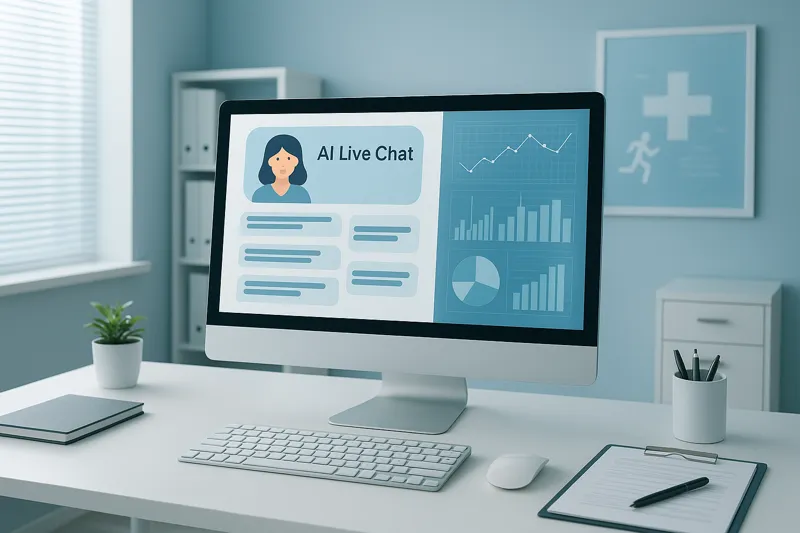
AI live chat solutions in healthcare encompass technologies such as chatbots, voice assistants, and messaging platforms designed to simulate human conversation. These tools facilitate real-time communication between patients and medical practices, automating routine interactions like appointment scheduling, symptom triage, and follow-up reminders.
The Rising Need for Automation in Small Medical Practices
Small medical practices often grapple with limited staff, high call volumes, and time-consuming manual patient intake. These challenges can result in staff burnout, missed calls, and inefficient workflows. AI live chat solutions address these issues by enabling 24/7 patient engagement, reducing administrative workload, and streamlining communication, particularly after hours.
Overview of Conversational AI Technologies
Conversational AI technologies include intelligent chatbots and voice assistants powered by natural language processing (NLP) and machine learning. Specialized healthcare chatbots understand clinical language, patient intent, and workflows, allowing them to automate tasks such as appointment requests, insurance verification, and patient education securely within HIPAA-compliant environments.
By integrating with existing healthcare systems like electronic health records (EHRs) and appointment schedulers, AI live chat solutions provide a seamless, efficient, and personalized patient experience while ensuring data privacy and regulatory compliance.
The Role of AI-Powered Live Chat in Streamlining Medical Practice Workflows

Challenges Faced by Small Medical Practices Like High Call Volumes and Limited Staff
Small medical practices often grapple with high patient call volumes and limited staff resources. This dynamic leads to long wait times, staff burnout, and inefficient manual appointment scheduling processes. Such administrative burdens can hamper patient engagement and clinical efficiency. For more details, see Challenges in Small Private Practices and Challenges of AI Chatbots in Healthcare.
How AI Chatbots Automate Appointment Scheduling, Reminders, and Insurance Collection
AI-powered chatbots provide automated solutions tailored to healthcare needs. They facilitate appointment bookings by managing schedules in real-time, reducing no-shows through automatic reminders, and streamlining insurance information collection. These chatbots understand clinical language and workflows, allowing them to triage patient requests accurately and handle routine administrative tasks 24/7. This automation decreases front-desk call volume and frees staff to focus on complex patient care activities. Learn more about Healthcare AI Chatbots Features, AI Chatbots in Healthcare, and AI chatbots in healthcare.
Integration with Existing Systems for Seamless Operations
Effective chatbot deployment involves seamless integration with electronic health records (EHR), scheduling platforms, and billing systems. This integration ensures that patient data is securely synchronized across platforms, enabling real-time access to appointment status and insurance verification. APIs and HIPAA-compliant secure data protocols support these connections, preserving patient confidentiality while enhancing operational workflows. Refer to HIPAA Compliance for AI Solutions, Integrating AI Chatbots with Healthcare Systems, and Data Security in Healthcare AI for comprehensive insights.
How Can Medical Clinics Measure the Effectiveness of Their Online Marketing Efforts?
Clinics can evaluate their online marketing success by tracking patient conversions via AI chatbot-enabled online booking. Monitoring metrics such as Patient Acquisition Costs and patient lifetime value, alongside utilizing HIPAA-compliant analytics tools, provides insights to optimize marketing campaigns. This data-driven approach enables clinics to maximize return on investment while maintaining compliance and improving patient engagement. See AI's Impact on Digital Marketing for Doctors and Benefits of generative AI in healthcare marketing for more information.
Ensuring HIPAA Compliance and Data Security in AI Chat Implementations

What compliance considerations should healthcare providers keep in mind when implementing digital marketing campaigns?
Healthcare providers must rigorously maintain HIPAA Compliance for AI Solutions when deploying digital marketing campaigns involving AI chatbots. Protecting patient data requires implementing End-to-End Encryption in Healthcare AI to secure communications, along with robust access control to restrict data availability only to authorized personnel. Secure audit trails must be maintained to track access and modifications to protected health information (PHI). Furthermore, partnering with third-party AI chatbot vendors necessitates proper Business Associate Agreements (BAAs) to ensure their compliance with HIPAA standards. Providers must also obtain explicit patient consent when using PHI for marketing or communication purposes. Using only platforms and tools that guarantee HIPAA Compliance for AI Chatbots is essential to safeguard sensitive data.
What are the risks of using non-HIPAA compliant platforms like Facebook Messenger?
Using platforms that do not meet HIPAA Compliance for AI Solutions, such as Facebook Messenger, exposes healthcare practices to significant legal and reputational risks. These include potential violations of HIPAA regulations, which can lead to severe fines and penalties. Additionally, non-compliant tools lack the necessary safeguards such as encryption, secure audit trails, and access control, increasing vulnerability to data breaches. The loss of patient trust due to compromised privacy can negatively impact practice reputation and patient retention.
What are best practices for selecting and deploying HIPAA-compliant AI chatbots?
Selecting a HIPAA-compliant AI chatbot solution requires thorough evaluation of security features such as:
- Encryption: Ensure all data transmission and storage are encrypted end-to-end.
- Access Control: Confirm role-based permissions and multi-factor authentication.
- Secure Audit Trails: Verify the availability of comprehensive logging for compliance monitoring.
- HIPAA-Compliant Hosting: Use data centers certified to meet HIPAA standards.
Deployment best practices include integrating the AI chatbot securely with existing electronic health records (EHR) and practice management systems through compliant APIs, conducting staff training on Staff Training for AI Systems and usage protocols, and continuously monitoring chatbot performance and security compliance. Regular reviews and updates safeguard against emerging threats and ensure ongoing adherence to HIPAA regulations.
By following these principles, healthcare organizations can harness the benefits of Conversational AI in Healthcare while maintaining stringent compliance and Data Security in Healthcare AI, improving both operational efficiency and patient confidence.
Improving Patient Engagement and Satisfaction through Conversational AI
Benefits of Conversational AI for Patient Access
Conversational AI in Healthcare offers patients 24/7 access to services via AI-powered Chatbots and Voice Assistants. These technologies provide instant responses to patient inquiries, appointment scheduling, reminders, and administrative support without the wait times associated with traditional phone or front desk communication. The availability of around-the-clock support enhances patient convenience and accessibility, which is especially crucial during after-hours and in high-demand scenarios.
Personalization of Communication Based on Patient History
AI chatbots utilize patient data and interaction history to deliver personalized communication. Messages regarding appointment reminders, medication schedules, and follow-up care are tailored to individual patient needs and preferences. Personalization improves patient experience by providing relevant information timely and empathetically. Furthermore, conversational AI can adapt responses using natural language processing and contextual awareness, fostering a more human-like engagement while maintaining HIPAA Compliance for AI Solutions and Data Security in Healthcare AI .
Real-World Impact on Patient Engagement Rates and Adherence to Care Plans
Healthcare practices deploying Conversational AI in Healthcare report significantly higher patient engagement metrics, with some systems achieving engagement rates upward of 90% and adherence rates to treatment plans as high as 97%. Automated reminders and symptom monitoring foster consistent follow-up and medication adherence, reducing no-shows and improving clinical outcomes. Practices observe improved patient satisfaction and operational efficiencies, with AI handling routine communications and freeing clinical staff for complex care tasks (Healthcare Chatbots Market Size).
What Are the Key Digital Marketing Strategies That Healthcare Practices Can Use to Attract High-Value Patients?
Healthcare providers can leverage Utilizing AI chatbots in medical marketing to deliver real-time, personalized patient communication that enhances online engagement. Digital marketing efforts should prioritize AI's Impact on Digital Marketing for Doctors, mobile-friendly website design, and secure patient portals. Deploying best practices for AI in healthcare marketing, combined with data analytics for audience segmentation, allows targeting of high-value patient demographics. These strategies collectively improve visibility, patient trust, and conversion rates, aligning marketing with evolving patient expectations for digital-first healthcare interaction.
Leveraging Data-Driven Insights for Enhanced Patient Acquisition and Retention

How does data-driven marketing improve patient acquisition for medical clinics?
Data-driven marketing combines analytics from AI chatbots in healthcare interactions with targeted campaigns to deeply understand patient behaviors, preferences, and communication patterns. This approach allows clinics to personalize patient outreach effectively, tailoring messages and services to meet specific needs.
By analyzing real-time data gathered from AI chat interactions—such as appointment requests, inquiry types, and engagement times—clinics can optimize marketing campaigns to focus on the most responsive patient segments. This precision targeting increases conversion rates by attracting patients who are more likely to engage and remain loyal.
Utilizing AI analytics to understand patient behaviors and preferences
AI chatbots in healthcare continuously collect and analyze patient data while maintaining HIPAA Compliance for AI Chatbots. These analytics reveal trends such as peak engagement periods, frequently asked questions, and preferred communication channels. Understanding these behaviors enables practices to adapt messaging and offers, thereby enhancing patient satisfaction and encouraging repeat interactions.
Optimizing marketing campaigns with data on patient interactions with AI chats
Healthcare practices can integrate AI-driven insights into their digital marketing strategies to boost efficiency. For example:
- Using conversational patterns to customize email subject lines and content
- Adjusting ad targeting based on chatbot demographic data
- Employing AI tools to perform A/B testing and dynamically adjust campaigns
These tactics help maximize outreach effectiveness, reduce marketing costs, and improve return on investment (ROI). For more on integrating AI in healthcare marketing, see Tips for Utilizing AI in Your Medical Practice's Marketing.
Measuring key indicators such as conversion rates, patient lifetime value, and ROI
Data-driven marketing incorporates measurable KPIs including:
| Metric | Importance | Application |
|---|---|---|
| Conversion Rates | Gauge effectiveness in attracting new patients | Track patients scheduling appointments via AI |
| Patient Lifetime Value | Estimate total revenue generated per patient over time | Guide retention strategies |
| ROI | Evaluate profitability of marketing campaigns | Optimize budget allocation with data insights |
Regular analysis of these indicators enables healthcare providers to make informed decisions, fine-tune campaigns, and strengthen patient acquisition and retention efforts.
By leveraging AI Chatbots Reducing Administrative Burdens analytics and Healthcare Marketing Guide to AI, medical practices can foster stronger patient relationships, enhance engagement, and achieve measurable growth in a competitive healthcare landscape.
Technology Foundations: Natural Language Processing and Integration with Healthcare Systems
What core technologies drive AI chatbots in healthcare?
AI chatbots leverage advanced technologies such as Natural Language Processing (NLP), Machine Learning (ML), speech recognition, and sentiment analysis to simulate human-like interactions. NLP enables chatbots to comprehend and respond in conversational language, understanding medical terms, patient intent, and context. ML allows continuous improvement through learning from interactions, adapting responses for greater relevance and accuracy. Speech recognition supports voice-enabled assistants, expanding accessibility for patients. Sentiment analysis detects emotional cues in patient interaction, enabling more empathetic responses. For more details on these technologies in healthcare chatbots, see AI Chatbots in Healthcare and Healthcare chatbots applications.
Why is integration important for healthcare AI chatbots?
Seamless integration with healthcare systems is crucial for operational efficiency and accurate data delivery. AI chatbots connect with electronic health records (EHRs), appointment scheduling platforms, pharmacy and billing systems, and telehealth services through secure APIs. This enables real-time access to patient histories, scheduling data, insurance information, and clinical workflows. Integration ensures chatbots provide up-to-date, context-aware information, facilitating streamlined appointment bookings, insurance verifications, reminders, and care management without manual intervention. Learn more about Integrating AI Chatbots with Healthcare Systems and ChatEHR clinical workflow tool.
How is accuracy and consistency ensured in chatbot responses?
Access to real-time, reliable data sources is essential for chatbot accuracy. Technologies like K2view’s Micro-Database enable low-latency retrieval of current patient data, lab results, and appointment status. This ensures responses reflect the latest clinical information, protecting patient safety and trust. Continuous monitoring and updates of datasets, combined with human oversight through escalation protocols, help maintain response precision while adhering to HIPAA compliance and data privacy standards. Additional insights available in Conversational AI in Healthcare and HIPAA Compliance for AI Solutions.
| Technology | Purpose | Healthcare Integration Benefits |
|---|---|---|
| NLP | Understands medical language and context | Improves conversational accuracy and patient engagement |
| Machine Learning | Learns from interactions and adapts | Enhances personalized communication and problem-solving |
| Speech Recognition | Enables voice-based interfaces | Expands accessibility for diverse patient populations |
| Sentiment Analysis | Detects emotions | Facilitates empathetic patient interactions |
| API Integration | Connects with EHR, scheduling, billing, telehealth | Provides real-time data for accurate, streamlined workflows |
| Real-Time Data Access | Ensures current clinical information | Maintains patient safety, trust, and compliance |
Reducing Administrative Workloads and Burnout Among Healthcare Staff

How AI live chat solutions automate routine inquiries and call routing
AI live chat solutions leverage natural language processing and conversational AI to manage frequent patient inquiries such as appointment scheduling, insurance verification, and medication reminders. Systems like healow Genie benefits enable automated call routing and instant responses to common questions, reducing the manual workload for front-desk staff. By integrating with existing healthcare platforms, these chatbots can collect patient information before forwarding complex issues to human agents, ensuring efficient triage and care delivery.
Impact on reducing time spent on phone and message management
Healthcare professionals, on average, spend over four hours daily managing patient calls and portal messages. AI-powered tools cut this time significantly by handling high-volume repetitive interactions. For example, pilot programs like Corewell Health West inboxologist pilot and the use of GPT-4-enabled message drafting dramatically reduce message volumes and accelerate response times. This automation helps alleviate staff burnout and lowers operational costs by minimizing the need for increased staffing and training.
Enhancing job satisfaction by allowing staff to focus on complex patient interactions
By delegating routine tasks to AI chatbots, healthcare staff can concentrate on clinically complex and emotionally sensitive patient interactions. Nurses and clinicians have reported greater job satisfaction due to reduced administrative burden and improved workflow efficiency. Additionally, AI systems provide real-time patient data to staff, facilitating informed and timely decision-making while promoting higher quality patient care. This shift supports better staff engagement and professional fulfillment.
Addressing Limitations and Building Trust in AI Chatbot Use
What are the main concerns about AI chatbot accuracy and handling complex cases?
Healthcare providers recognize that while AI chatbots in healthcare excel at automating routine tasks such as appointment scheduling and symptom triage, they face limitations in emotional understanding and managing complex medical scenarios. Physicians express worries about potential inaccuracies and the inability of AI systems to fully grasp nuanced clinical contexts or patient emotions, which can affect care quality. Patients, on the other hand, remain cautious, particularly when it comes to AI-powered diagnoses, due to these limitations.
How is human oversight incorporated to ensure safety and reliability?
To mitigate risks, implementing human oversight with clear escalation protocols is essential. AI chatbots are designed to handle straightforward inquiries and administrative duties, but when conversations require complex judgment or clinical decisions, the system escalates to qualified healthcare professionals. This supervised approach safeguards patient safety and maintains clinical reliability. Escalation pathways, anonymization, encryption, and multi-factor authentication further strengthen data security and regulatory compliance, as described in Healthcare AI Chatbots Features and Healthcare chatbot privacy and regulatory frameworks.
What strategies enhance patient trust and transparency in AI chatbot use?
Building patient trust begins with transparency about chatbot capabilities and limitations. Educating patients on when AI is used and how their data is secured promotes confidence. Tailored AI solutions developed with clinical expertise and adherence to regulations like HIPAA ensure privacy and safety. Providers emphasize a human-in-the-loop model to combine AI efficiency with professional judgment, fostering acceptance. Clear communication, gradual implementation, and involving staff and patients in testing improve adoption and trust over time, consistent with guidance found in HIPAA Compliance for AI Solutions and Patient Engagement Playbook.
| Concern | Mitigation Approach | Outcome |
|---|---|---|
| AI accuracy and complexity limits | Human oversight and escalation | Enhanced safety and clinical quality |
| Emotional understanding deficits | Transparency and patient education | Increased patient confidence |
| Data privacy risks | HIPAA compliance and security | Trust through secure handling |
These best practices create a balanced AI-human partnership in healthcare, enhancing workflow efficiency while preserving patient safety and trust.
Future Trends: AI Chatbots Shaping Healthcare Marketing and Patient Communication
How Is AI Driving Content Generation, Targeted Advertising, and Personalization in Healthcare Marketing?
AI technologies, especially generative AI like ChatGPT and Google's Gemini, are revolutionizing healthcare marketing by enabling dynamic, personalized content creation. Practices can automate campaign ideation, generate patient-focused email content, and tailor messages to specific segments, enhancing engagement and ROI. AI-driven platforms optimize ad placement and audience targeting through predictive analytics, improving the effectiveness of digital advertising across Google, Meta, and Microsoft channels. For more insights, see AI's Impact on Digital Marketing for Doctors and Healthcare marketers' guide to AI.
What Role Do Generative AI Technologies Play in Elevating Patient Conversations?
Generative AI chatbots facilitate natural, human-like interactions, maintaining context and understanding complex queries. This evolution supports more personalized patient communication and two-way conversations, improving user satisfaction and adherence to care plans. Integration with secure patient data ensures compliance while enhancing conversational relevance, thus strengthening patient trust and engagement. Related concepts are discussed in Conversational AI in Healthcare, AI Chatbots in Healthcare, and How chatbots help healthcare providers and patients.
How Should Healthcare Practices Adapt to the Evolving AI-Powered Search and Compliance Landscape?
With AI deeply embedded in search engines, healthcare providers must prioritize structured data, schema markup, and high-quality, patient-friendly content optimized for conversational AI. Maintaining HIPAA Compliance for AI Solutions remains essential amid expanding AI use in communication and search. Continuous monitoring and adaptation of digital marketing strategies, combined with reputation management through platforms like Google Business Profile and collaborations with specialized services, help sustain patient acquisition and trust in this shifting landscape. For detailed strategies, refer to Digital Marketing Strategies for Healthcare in 2025 and HIPAA Compliance for AI Solutions.
Conclusion: Maximizing the Benefits of AI Live Chat in Medical Practices
Enhancing Patient Engagement and Operational Efficiency
AI live chat solutions significantly improve patient engagement by providing 24/7 access, personalized communication, and rapid response capabilities. They streamline administrative workflows such as appointment scheduling, reminders, and insurance verification, thereby reducing staff burnout and no-shows while improving patient satisfaction.
Ensuring Compliance and Security
It is crucial for medical practices to adopt HIPAA-compliant AI tools that incorporate end-to-end encryption, access control, secure audit trails, and compliant data storage. Using non-compliant platforms risks patient data breaches, regulatory fines, and erosion of trust, making security a cornerstone of successful AI deployments.
Strategic Implementation and Marketing Transformation
Strategic integration of AI live chat calls for clear goal-setting, system interoperability, staff training, and continuous monitoring. Beyond patient engagement, AI enhances healthcare marketing by powering personalized content, optimizing outreach, and improving online reputation through AI-informed patient interactions.
The Future of Patient Communication
As AI technologies evolve, their role in healthcare will expand, fostering more natural, accurate, and empathetic interactions. Practices leveraging HIPAA-compliant conversational AI will be better positioned to meet rising patient expectations and operational demands, driving growth and improved health outcomes.
Introduction to AI Live Chat Solutions in Medical Practices
AI Live Chat in Healthcare: Definition and Scope
AI live chat solutions in healthcare encompass technologies such as chatbots, voice assistants, and messaging platforms designed to simulate human conversation. These tools facilitate real-time communication between patients and medical practices, automating routine interactions like appointment scheduling, symptom triage, and follow-up reminders.
The Rising Need for Automation in Small Medical Practices
Small medical practices often grapple with limited staff, high call volumes, and time-consuming manual patient intake. These challenges can result in staff burnout, missed calls, and inefficient workflows. AI live chat solutions address these issues by enabling 24/7 patient engagement, reducing administrative workload, and streamlining communication, particularly after hours.
Overview of Conversational AI Technologies
Conversational AI technologies include intelligent chatbots and voice assistants powered by natural language processing (NLP) and machine learning. Specialized healthcare chatbots understand clinical language, patient intent, and workflows, allowing them to automate tasks such as appointment requests, insurance verification, and patient education securely within HIPAA-compliant environments.
By integrating with existing healthcare systems like electronic health records (EHRs) and appointment schedulers, AI live chat solutions provide a seamless, efficient, and personalized patient experience while ensuring data privacy and regulatory compliance.
The Role of AI-Powered Live Chat in Streamlining Medical Practice Workflows
Challenges Faced by Small Medical Practices Like High Call Volumes and Limited Staff
Small medical practices often grapple with high patient call volumes and limited staff resources. This dynamic leads to long wait times, staff burnout, and inefficient manual appointment scheduling processes. Such administrative burdens can hamper patient engagement and clinical efficiency. For more details, see Challenges in Small Private Practices and Challenges of AI Chatbots in Healthcare.
How AI Chatbots Automate Appointment Scheduling, Reminders, and Insurance Collection
AI-powered chatbots provide automated solutions tailored to healthcare needs. They facilitate appointment bookings by managing schedules in real-time, reducing no-shows through automatic reminders, and streamlining insurance information collection. These chatbots understand clinical language and workflows, allowing them to triage patient requests accurately and handle routine administrative tasks 24/7. This automation decreases front-desk call volume and frees staff to focus on complex patient care activities. Learn more about Healthcare AI Chatbots Features, AI Chatbots in Healthcare, and AI chatbots in healthcare.
Integration with Existing Systems for Seamless Operations
Effective chatbot deployment involves seamless integration with electronic health records (EHR), scheduling platforms, and billing systems. This integration ensures that patient data is securely synchronized across platforms, enabling real-time access to appointment status and insurance verification. APIs and HIPAA-compliant secure data protocols support these connections, preserving patient confidentiality while enhancing operational workflows. Refer to HIPAA Compliance for AI Solutions, Integrating AI Chatbots with Healthcare Systems, and Data Security in Healthcare AI for comprehensive insights.
How Can Medical Clinics Measure the Effectiveness of Their Online Marketing Efforts?
Clinics can evaluate their online marketing success by tracking patient conversions via AI chatbot-enabled online booking. Monitoring metrics such as Patient Acquisition Costs and patient lifetime value, alongside utilizing HIPAA-compliant analytics tools, provides insights to optimize marketing campaigns. This data-driven approach enables clinics to maximize return on investment while maintaining compliance and improving patient engagement. See AI's Impact on Digital Marketing for Doctors and Benefits of generative AI in healthcare marketing for more information.
Ensuring HIPAA Compliance and Data Security in AI Chat Implementations
What compliance considerations should healthcare providers keep in mind when implementing digital marketing campaigns?
Healthcare providers must rigorously maintain HIPAA Compliance for AI Solutions when deploying digital marketing campaigns involving AI chatbots. Protecting patient data requires implementing End-to-End Encryption in Healthcare AI to secure communications, along with robust access control to restrict data availability only to authorized personnel. Secure audit trails must be maintained to track access and modifications to protected health information (PHI). Furthermore, partnering with third-party AI chatbot vendors necessitates proper Business Associate Agreements (BAAs) to ensure their compliance with HIPAA standards. Providers must also obtain explicit patient consent when using PHI for marketing or communication purposes. Using only platforms and tools that guarantee HIPAA Compliance for AI Chatbots is essential to safeguard sensitive data.
What are the risks of using non-HIPAA compliant platforms like Facebook Messenger?
Using platforms that do not meet HIPAA Compliance for AI Solutions, such as Facebook Messenger, exposes healthcare practices to significant legal and reputational risks. These include potential violations of HIPAA regulations, which can lead to severe fines and penalties. Additionally, non-compliant tools lack the necessary safeguards such as encryption, secure audit trails, and access control, increasing vulnerability to data breaches. The loss of patient trust due to compromised privacy can negatively impact practice reputation and patient retention.
What are best practices for selecting and deploying HIPAA-compliant AI chatbots?
Selecting a HIPAA-compliant AI chatbot solution requires thorough evaluation of security features such as:
- Encryption: Ensure all data transmission and storage are encrypted end-to-end.
- Access Control: Confirm role-based permissions and multi-factor authentication.
- Secure Audit Trails: Verify the availability of comprehensive logging for compliance monitoring.
- HIPAA-Compliant Hosting: Use data centers certified to meet HIPAA standards.
Deployment best practices include integrating the AI chatbot securely with existing electronic health records (EHR) and practice management systems through compliant APIs, conducting staff training on Staff Training for AI Systems and usage protocols, and continuously monitoring chatbot performance and security compliance. Regular reviews and updates safeguard against emerging threats and ensure ongoing adherence to HIPAA regulations.
By following these principles, healthcare organizations can harness the benefits of Conversational AI in Healthcare while maintaining stringent compliance and Data Security in Healthcare AI, improving both operational efficiency and patient confidence.
Improving Patient Engagement and Satisfaction through Conversational AI
Benefits of Conversational AI for Patient Access
Conversational AI in Healthcare offers patients 24/7 access to services via AI-powered Chatbots and Voice Assistants. These technologies provide instant responses to patient inquiries, appointment scheduling, reminders, and administrative support without the wait times associated with traditional phone or front desk communication. The availability of around-the-clock support enhances patient convenience and accessibility, which is especially crucial during after-hours and in high-demand scenarios.
Personalization of Communication Based on Patient History
AI chatbots utilize patient data and interaction history to deliver personalized communication. Messages regarding appointment reminders, medication schedules, and follow-up care are tailored to individual patient needs and preferences. Personalization improves patient experience by providing relevant information timely and empathetically. Furthermore, conversational AI can adapt responses using natural language processing and contextual awareness, fostering a more human-like engagement while maintaining HIPAA Compliance for AI Solutions and Data Security in Healthcare AI .
Real-World Impact on Patient Engagement Rates and Adherence to Care Plans
Healthcare practices deploying Conversational AI in Healthcare report significantly higher patient engagement metrics, with some systems achieving engagement rates upward of 90% and adherence rates to treatment plans as high as 97%. Automated reminders and symptom monitoring foster consistent follow-up and medication adherence, reducing no-shows and improving clinical outcomes. Practices observe improved patient satisfaction and operational efficiencies, with AI handling routine communications and freeing clinical staff for complex care tasks (Healthcare Chatbots Market Size).
What Are the Key Digital Marketing Strategies That Healthcare Practices Can Use to Attract High-Value Patients?
Healthcare providers can leverage Utilizing AI chatbots in medical marketing to deliver real-time, personalized patient communication that enhances online engagement. Digital marketing efforts should prioritize AI's Impact on Digital Marketing for Doctors, mobile-friendly website design, and secure patient portals. Deploying best practices for AI in healthcare marketing, combined with data analytics for audience segmentation, allows targeting of high-value patient demographics. These strategies collectively improve visibility, patient trust, and conversion rates, aligning marketing with evolving patient expectations for digital-first healthcare interaction.
Leveraging Data-Driven Insights for Enhanced Patient Acquisition and Retention
How does data-driven marketing improve patient acquisition for medical clinics?
Data-driven marketing combines analytics from AI chatbots in healthcare interactions with targeted campaigns to deeply understand patient behaviors, preferences, and communication patterns. This approach allows clinics to personalize patient outreach effectively, tailoring messages and services to meet specific needs.
By analyzing real-time data gathered from AI chat interactions—such as appointment requests, inquiry types, and engagement times—clinics can optimize marketing campaigns to focus on the most responsive patient segments. This precision targeting increases conversion rates by attracting patients who are more likely to engage and remain loyal.
Utilizing AI analytics to understand patient behaviors and preferences
AI chatbots in healthcare continuously collect and analyze patient data while maintaining HIPAA Compliance for AI Chatbots. These analytics reveal trends such as peak engagement periods, frequently asked questions, and preferred communication channels. Understanding these behaviors enables practices to adapt messaging and offers, thereby enhancing patient satisfaction and encouraging repeat interactions.
Optimizing marketing campaigns with data on patient interactions with AI chats
Healthcare practices can integrate AI-driven insights into their digital marketing strategies to boost efficiency. For example:
- Using conversational patterns to customize email subject lines and content
- Adjusting ad targeting based on chatbot demographic data
- Employing AI tools to perform A/B testing and dynamically adjust campaigns
These tactics help maximize outreach effectiveness, reduce marketing costs, and improve return on investment (ROI). For more on integrating AI in healthcare marketing, see Tips for Utilizing AI in Your Medical Practice's Marketing.
Measuring key indicators such as conversion rates, patient lifetime value, and ROI
Data-driven marketing incorporates measurable KPIs including:
| Metric | Importance | Application |
|---|---|---|
| Conversion Rates | Gauge effectiveness in attracting new patients | Track patients scheduling appointments via AI |
| Patient Lifetime Value | Estimate total revenue generated per patient over time | Guide retention strategies |
| ROI | Evaluate profitability of marketing campaigns | Optimize budget allocation with data insights |
Regular analysis of these indicators enables healthcare providers to make informed decisions, fine-tune campaigns, and strengthen patient acquisition and retention efforts.
By leveraging AI Chatbots Reducing Administrative Burdens analytics and Healthcare Marketing Guide to AI, medical practices can foster stronger patient relationships, enhance engagement, and achieve measurable growth in a competitive healthcare landscape.
Technology Foundations: Natural Language Processing and Integration with Healthcare Systems
What core technologies drive AI chatbots in healthcare?
AI chatbots leverage advanced technologies such as Natural Language Processing (NLP), Machine Learning (ML), speech recognition, and sentiment analysis to simulate human-like interactions. NLP enables chatbots to comprehend and respond in conversational language, understanding medical terms, patient intent, and context. ML allows continuous improvement through learning from interactions, adapting responses for greater relevance and accuracy. Speech recognition supports voice-enabled assistants, expanding accessibility for patients. Sentiment analysis detects emotional cues in patient interaction, enabling more empathetic responses. For more details on these technologies in healthcare chatbots, see AI Chatbots in Healthcare and Healthcare chatbots applications.
Why is integration important for healthcare AI chatbots?
Seamless integration with healthcare systems is crucial for operational efficiency and accurate data delivery. AI chatbots connect with electronic health records (EHRs), appointment scheduling platforms, pharmacy and billing systems, and telehealth services through secure APIs. This enables real-time access to patient histories, scheduling data, insurance information, and clinical workflows. Integration ensures chatbots provide up-to-date, context-aware information, facilitating streamlined appointment bookings, insurance verifications, reminders, and care management without manual intervention. Learn more about Integrating AI Chatbots with Healthcare Systems and ChatEHR clinical workflow tool.
How is accuracy and consistency ensured in chatbot responses?
Access to real-time, reliable data sources is essential for chatbot accuracy. Technologies like K2view’s Micro-Database enable low-latency retrieval of current patient data, lab results, and appointment status. This ensures responses reflect the latest clinical information, protecting patient safety and trust. Continuous monitoring and updates of datasets, combined with human oversight through escalation protocols, help maintain response precision while adhering to HIPAA compliance and data privacy standards. Additional insights available in Conversational AI in Healthcare and HIPAA Compliance for AI Solutions.
| Technology | Purpose | Healthcare Integration Benefits |
|---|---|---|
| NLP | Understands medical language and context | Improves conversational accuracy and patient engagement |
| Machine Learning | Learns from interactions and adapts | Enhances personalized communication and problem-solving |
| Speech Recognition | Enables voice-based interfaces | Expands accessibility for diverse patient populations |
| Sentiment Analysis | Detects emotions | Facilitates empathetic patient interactions |
| API Integration | Connects with EHR, scheduling, billing, telehealth | Provides real-time data for accurate, streamlined workflows |
| Real-Time Data Access | Ensures current clinical information | Maintains patient safety, trust, and compliance |
Reducing Administrative Workloads and Burnout Among Healthcare Staff
How AI live chat solutions automate routine inquiries and call routing
AI live chat solutions leverage natural language processing and conversational AI to manage frequent patient inquiries such as appointment scheduling, insurance verification, and medication reminders. Systems like healow Genie benefits enable automated call routing and instant responses to common questions, reducing the manual workload for front-desk staff. By integrating with existing healthcare platforms, these chatbots can collect patient information before forwarding complex issues to human agents, ensuring efficient triage and care delivery.
Impact on reducing time spent on phone and message management
Healthcare professionals, on average, spend over four hours daily managing patient calls and portal messages. AI-powered tools cut this time significantly by handling high-volume repetitive interactions. For example, pilot programs like Corewell Health West inboxologist pilot and the use of GPT-4-enabled message drafting dramatically reduce message volumes and accelerate response times. This automation helps alleviate staff burnout and lowers operational costs by minimizing the need for increased staffing and training.
Enhancing job satisfaction by allowing staff to focus on complex patient interactions
By delegating routine tasks to AI chatbots, healthcare staff can concentrate on clinically complex and emotionally sensitive patient interactions. Nurses and clinicians have reported greater job satisfaction due to reduced administrative burden and improved workflow efficiency. Additionally, AI systems provide real-time patient data to staff, facilitating informed and timely decision-making while promoting higher quality patient care. This shift supports better staff engagement and professional fulfillment.
Addressing Limitations and Building Trust in AI Chatbot Use
What are the main concerns about AI chatbot accuracy and handling complex cases?
Healthcare providers recognize that while AI chatbots in healthcare excel at automating routine tasks such as appointment scheduling and symptom triage, they face limitations in emotional understanding and managing complex medical scenarios. Physicians express worries about potential inaccuracies and the inability of AI systems to fully grasp nuanced clinical contexts or patient emotions, which can affect care quality. Patients, on the other hand, remain cautious, particularly when it comes to AI-powered diagnoses, due to these limitations.
How is human oversight incorporated to ensure safety and reliability?
To mitigate risks, implementing human oversight with clear escalation protocols is essential. AI chatbots are designed to handle straightforward inquiries and administrative duties, but when conversations require complex judgment or clinical decisions, the system escalates to qualified healthcare professionals. This supervised approach safeguards patient safety and maintains clinical reliability. Escalation pathways, anonymization, encryption, and multi-factor authentication further strengthen data security and regulatory compliance, as described in Healthcare AI Chatbots Features and Healthcare chatbot privacy and regulatory frameworks.
What strategies enhance patient trust and transparency in AI chatbot use?
Building patient trust begins with transparency about chatbot capabilities and limitations. Educating patients on when AI is used and how their data is secured promotes confidence. Tailored AI solutions developed with clinical expertise and adherence to regulations like HIPAA ensure privacy and safety. Providers emphasize a human-in-the-loop model to combine AI efficiency with professional judgment, fostering acceptance. Clear communication, gradual implementation, and involving staff and patients in testing improve adoption and trust over time, consistent with guidance found in HIPAA Compliance for AI Solutions and Patient Engagement Playbook.
| Concern | Mitigation Approach | Outcome |
|---|---|---|
| AI accuracy and complexity limits | Human oversight and escalation | Enhanced safety and clinical quality |
| Emotional understanding deficits | Transparency and patient education | Increased patient confidence |
| Data privacy risks | HIPAA compliance and security | Trust through secure handling |
These best practices create a balanced AI-human partnership in healthcare, enhancing workflow efficiency while preserving patient safety and trust.
Future Trends: AI Chatbots Shaping Healthcare Marketing and Patient Communication
How Is AI Driving Content Generation, Targeted Advertising, and Personalization in Healthcare Marketing?
AI technologies, especially generative AI like ChatGPT and Google's Gemini, are revolutionizing healthcare marketing by enabling dynamic, personalized content creation. Practices can automate campaign ideation, generate patient-focused email content, and tailor messages to specific segments, enhancing engagement and ROI. AI-driven platforms optimize ad placement and audience targeting through predictive analytics, improving the effectiveness of digital advertising across Google, Meta, and Microsoft channels. For more insights, see AI's Impact on Digital Marketing for Doctors and Healthcare marketers' guide to AI.
What Role Do Generative AI Technologies Play in Elevating Patient Conversations?
Generative AI chatbots facilitate natural, human-like interactions, maintaining context and understanding complex queries. This evolution supports more personalized patient communication and two-way conversations, improving user satisfaction and adherence to care plans. Integration with secure patient data ensures compliance while enhancing conversational relevance, thus strengthening patient trust and engagement. Related concepts are discussed in Conversational AI in Healthcare, AI Chatbots in Healthcare, and How chatbots help healthcare providers and patients.
How Should Healthcare Practices Adapt to the Evolving AI-Powered Search and Compliance Landscape?
With AI deeply embedded in search engines, healthcare providers must prioritize structured data, schema markup, and high-quality, patient-friendly content optimized for conversational AI. Maintaining HIPAA Compliance for AI Solutions remains essential amid expanding AI use in communication and search. Continuous monitoring and adaptation of digital marketing strategies, combined with reputation management through platforms like Google Business Profile and collaborations with specialized services, help sustain patient acquisition and trust in this shifting landscape. For detailed strategies, refer to Digital Marketing Strategies for Healthcare in 2025 and HIPAA Compliance for AI Solutions.
Conclusion: Maximizing the Benefits of AI Live Chat in Medical Practices
Enhancing Patient Engagement and Operational Efficiency
AI live chat solutions significantly improve patient engagement by providing 24/7 access, personalized communication, and rapid response capabilities. They streamline administrative workflows such as appointment scheduling, reminders, and insurance verification, thereby reducing staff burnout and no-shows while improving patient satisfaction.
Ensuring Compliance and Security
It is crucial for medical practices to adopt HIPAA-compliant AI tools that incorporate end-to-end encryption, access control, secure audit trails, and compliant data storage. Using non-compliant platforms risks patient data breaches, regulatory fines, and erosion of trust, making security a cornerstone of successful AI deployments.
Strategic Implementation and Marketing Transformation
Strategic integration of AI live chat calls for clear goal-setting, system interoperability, staff training, and continuous monitoring. Beyond patient engagement, AI enhances healthcare marketing by powering personalized content, optimizing outreach, and improving online reputation through AI-informed patient interactions.
The Future of Patient Communication
As AI technologies evolve, their role in healthcare will expand, fostering more natural, accurate, and empathetic interactions. Practices leveraging HIPAA-compliant conversational AI will be better positioned to meet rising patient expectations and operational demands, driving growth and improved health outcomes.