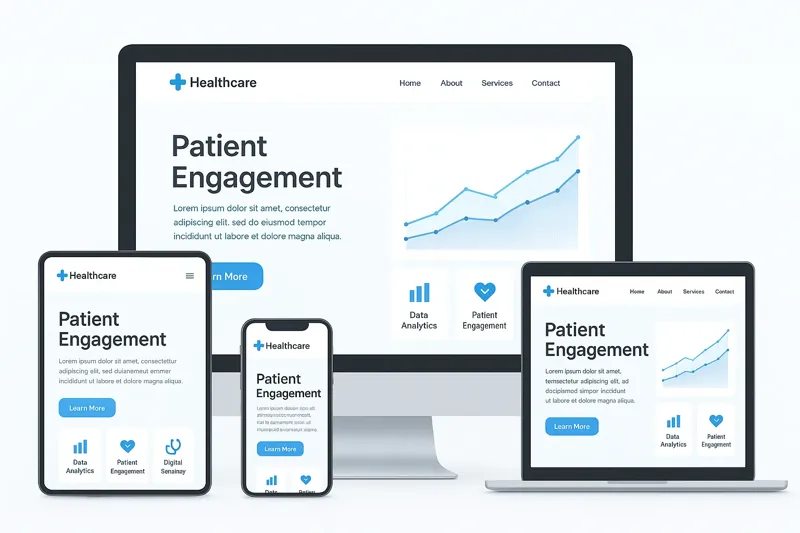



Why Mobile and SEO Optimization Are Crucial for Healthcare Websites
Healthcare Websites Drive Patient Acquisition
Healthcare websites serve as vital channels for patient acquisition by providing accessible and comprehensive information regarding services, providers, and contact options. Given that over 80% of U.S. adults engage in healthcare research online and that nearly 7% of daily internet searches pertain to health questions, a professionally designed and optimized website is foundational for growth in patient volume.
Mobile Usage Dominates Healthcare Searches
Mobile devices account for approximately 60% of healthcare-related searches, making mobile optimization imperative. Patients increasingly rely on smartphones to find and book healthcare services, review providers, and access telemedicine platforms. Failure to offer a seamless mobile experience risks user frustration, reduced engagement, and loss of potential patients.
Google's Mobile-First Indexing and Its Impact
With Google's mobile-first indexing fully implemented, the mobile version of a healthcare website exclusively determines its search ranking and visibility. Sites that are not mobile-optimized face lower rankings, reduced traffic, and diminished patient acquisition. Factors such as fast page load speeds, responsive design, and content parity between mobile and desktop versions are essential to comply with Google's evolving standards.
The Intersection of SEO and Mobile Optimization in Healthcare
SEO and mobile optimization in healthcare intersect critically. Local search optimization, including accurate business profiles and location-specific keywords, combined with mobile-friendly design, amplifies discoverability and relevance. Employing structured data markup and ensuring secure, compliant sites enhances both user trust and search engine performance. Together, these strategies enable healthcare providers to capitalize on high-intent searches, improve patient engagement, and sustain competitive advantage in the digital healthcare marketplace.
Understanding Healthcare SEO: Targeting High-Intent Patient Searches
What is healthcare SEO and why is it important?
Healthcare SEO is a specialized approach aimed at capturing high-intent patient searches to achieve measurable growth. It significantly increases website traffic, patient acquisition, and interest from investors by ensuring healthcare providers appear prominently in search engine results.
Role of healthcare SEO in driving targeted growth
Healthcare SEO focuses on attracting visitors who are actively seeking healthcare services. By targeting relevant, localized search terms, it drives highly qualified traffic that converts into patient appointments and enhances overall practice growth.
Importance of local SEO and consistent business listings
Local SEO is critical for healthcare providers to appear in geographically relevant searches. This includes claiming and optimizing Google Business Profile and Bing Places with accurate and consistent Name, Address, and Phone number (NAP) (using accurate NAP in healthcare SEO), service details, up-to-date operating hours, and engaging photos. Regular updates and reviews help maintain visibility and trust in local search results.
Use of long-tail, location-specific keywords
Employing long-tail healthcare keywords that combine intent and location, such as "emergency hospital Los Angeles," improves relevance and reduces competition. This precise targeting attracts patients searching for specific services nearby, increasing conversions and improving search rankings.
E-E-A-T principles for content credibility and trust
Quality healthcare content must adhere to the E-E-A-T in healthcare SEO framework: Expertise, Experience, Authority, and Trustworthiness. Involving clinicians in authoring or reviewing content (clinician-authored medical content ensures accuracy and boosts patient confidence. This is especially important for Your Money Your Life topics, where credibility impacts both user trust and search rankings.
Technical SEO elements like website architecture and security
A well-structured website architecture in healthcare SEO enhances user navigation and helps search engines understand page relationships, benefiting ranking performance. Security measures such as HTTPS/SSL for healthcare websites encryption are essential to protect sensitive patient data and signal trustworthiness to both users and search engines.
By integrating these strategies, healthcare providers can maximize their online presence, attract more relevant patient traffic, and foster trust through credible, secure, and user-friendly web platforms.
The Imperative of Mobile Optimization in Healthcare Digital Strategies

Why is mobile optimization essential for healthcare websites?
Mobile optimization is critical because over 60% of healthcare-related searches occur on mobile devices. Google’s Mobile-First Indexing by Google means search rankings depend primarily on the mobile site experience. Healthcare websites that are not Mobile-Friendly Healthcare Websites risk losing visibility and patient engagement.
Dominance of mobile in healthcare searches
Mobile devices dominate healthcare searches as patients increasingly seek immediate information and services via smartphones. This trend requires healthcare providers to prioritize mobile capabilities to capture and convert relevant local traffic effectively. Learn more about Mobile healthcare searches and Mobile optimization importance.
Mobile-friendly design and navigation
A mobile-friendly healthcare website features responsive design that adapts seamlessly to various screen sizes and touch-friendly navigation for easy access. Streamlined menus, clear labeling, and simplified forms enable patients to book appointments or find information quickly without frustration.
Mobile-first indexing approach by Google
Since Google’s complete shift to mobile-first indexing in 2024, healthcare websites must ensure content parity between desktop and mobile versions. All critical content, metadata, and functionalities need to be fully accessible on mobile to maintain or improve search rankings. Explore best mobile SEO meta tags and mobile content optimization.
Benefits of mobile optimization for patient engagement and appointments
Optimized mobile experiences lead to higher patient satisfaction and engagement by allowing convenient online booking, access to patient portals, and secure communication. Practices report increases in patient appointments and reductions in cancellations when mobile features are efficiently implemented. See how Mobile Optimization and Patient Engagement drive results.
Speed and responsive design for usability
Fast load times on mobile devices prevent bounce rates and improve user experience. Healthcare sites achieve this through optimized images, minimized code, caching, and adaptive layouts. Tools like Google PageSpeed Insights help with this optimization. A responsive design ensures consistent branding and usability across devices, fostering patient trust and retention.
| Aspect | Description | Impact on Healthcare Marketing |
|---|---|---|
| Mobile Search Dominance | Majority of healthcare queries happen on smartphones | Captures high-intent local patients |
| Responsive & Touch-Friendly | Design adapts to screen size, supports easy interaction | Enhances patient satisfaction and engagement |
| Google Mobile-First Indexing | Mobile version dictates search ranking | Improves visibility and SEO performance |
| Patient Engagement Features | Online booking, portals, secure payments | Increases appointment bookings and loyalty |
| Speed Optimization | Fast loading through image compression, caching | Reduces bounce rates, improves user experience |
Healthcare organizations adopting mobile-first strategies position themselves for sustainable growth and improved patient outcomes in a competitive digital landscape.
Technical SEO for Healthcare: Speed, Security, and Structure
What technical SEO practices are critical for healthcare websites?
Healthcare websites demand meticulous technical SEO in healthcare to ensure fast, secure, and user-friendly experiences that comply with regulatory standards. Key practices include:
Page Speed Optimization: Techniques such as compressing images using modern formats like WebP, leveraging browser caching, minimizing JavaScript and CSS files, and implementing lazy loading for mobile are essential. These strategies not only reduce load times—critical on mobile—but also lower bounce rates and improve ranking signals.
HTTPS/SSL Implementation: Securing healthcare websites with HTTPS through robust SSL certificates in healthcare is a non-negotiable. It protects sensitive patient information, builds user trust, and ensures adherence to HIPAA compliance in SEO requirements vital for sites offering patient portals or handling medical data.
Website Architecture: A clean, logical healthcare website architecture improves both user navigation and search engine crawlability. Effective structuring involves clear categorization of services, conditions, and provider information, which helps search engines understand page relationships and boosts rankings.
Schema Markup Usage: Incorporating schema such as LocalBusiness schema, MedicalEntity schema, Physician schema markup, and FAQ schema usage enhances search engine comprehension, elevates healthcare content in search results with rich snippets, and supports voice search, crucial for local patient acquisition.
Content Parity Between Mobile and Desktop: With Google’s mobile-first indexing, maintaining consistent, fully accessible content on mobile and desktop versions is imperative. This practice preserves SEO rankings and ensures users receive uniform information regardless of device.
By integrating these technical SEO strategies, healthcare organizations can achieve measurable growth, improve patient engagement, and maintain compliance in the competitive digital landscape.
Crafting High-Quality Content: E-E-A-T and Patient Trust

How does content quality affect healthcare SEO and patient trust?
High-quality content adhering to E-E-A-T in healthcare SEO principles—Expertise, Experience, Authority, and Trustworthiness—is essential for healthcare SEO success. This is particularly critical for Your Money Your Life topics, where inaccurate or misleading information can have serious health consequences.
Clinician involvement in content creation plays a vital role in elevating quality and credibility. Medical professionals authoring or reviewing content help ensure medical accuracy, which not only enhances patient trust but also aligns with search engine expectations, improving rankings.
Regular updates to content are necessary to maintain relevance and effectiveness. Incorporating long-tail healthcare keywords such as "emergency hospital Los Angeles" targets patient intent precisely, driving qualified local traffic. Additionally, optimizing content for conversational and voice search queries increases accessibility and discoverability in an evolving digital landscape.
Employing a well-structured approach to content—using clear headings, concise language, and patient-focused messaging—also supports better engagement and search visibility. This strategy reflects the growing importance of AI-powered search tools for healthcare and voice assistants, which prioritize natural, authoritative language.
Together, these content quality strategies build a trustworthy digital presence that attracts and retains patients while supporting compliance and marketing goals in healthcare.
Local SEO: Connecting Healthcare Providers with Nearby Patients
What local SEO strategies help healthcare providers attract local patients?
Local SEO is critical for healthcare providers aiming to connect with patients in their geographic area effectively. Key strategies include:
Optimizing Google Business Profile and Bing Places: Claiming and consistently updating listings with accurate name, address, and phone number (NAP), plus detailed services, photos, and up-to-date hours. This visibility on major platforms directly increases patient discovery (Google Business Profile for healthcare, Bing Places for healthcare, Optimizing Google My Business profiles).
Ensuring consistent NAP information: Uniformity of contact details across all online directories and platforms prevents confusion among patients and reduces the risk of search engine ranking penalties (using accurate NAP in healthcare SEO, Consistent NAP details).
Encouraging and managing patient reviews: Actively seeking patient feedback and thoughtfully responding to reviews strengthens reputation and signals trustworthiness to both search engines and prospective patients (Healthcare review management, Leveraging patient reviews for SEO).
Creating dedicated location pages: Custom pages for each service area enhance the relevance of local searches by using specific neighborhood or city keywords (location-specific medical SEO, Local SEO for healthcare).
Leveraging local keywords and schema markup: Incorporating long-tail, location-specific keywords targets patient intent precisely, while structured data markup (schema) helps search engines present rich local results (Long-tail healthcare keywords, Schema markup in healthcare SEO, Structured data and schema markup in healthcare SEO).
Together, these tactics provide measurable benefits by driving higher local traffic, improved patient acquisition rates, and elevating online visibility in competitive healthcare markets.
Mobile UX Best Practices: Enhancing Engagement and Accessibility
What are the best UX practices for mobile healthcare websites?
Designing a mobile healthcare website requires responsive and adaptive design principles that ensure seamless experiences across a wide range of devices and screen sizes. Responsive Design for Healthcare Websites automatically adjusts layout and content for optimal viewing whether on smartphones, tablets, or desktops, supporting consistent branding and usability.
Simplifying navigation is essential. Mobile interfaces should feature touch-friendly navigation such as large buttons, clear labels, and well-organized menus that make it easy for patients to find information or services quickly. This approach reduces user frustration and improves engagement.
Optimized mobile forms play a critical role. Best practices include using large input fields, streamlined questions, and features like auto-fill and geolocation to ease data entry. Concise and accessible forms help reduce abandonment rates and improve patient conversions.
Content readability and accessibility must meet regulatory and usability standards such as WCAG standards for healthcare websites. This involves using legible fonts, appropriate spacing, and clear headings to support ease of reading. Accommodating users with disabilities through screen reader compatibility and keyboard navigation is paramount for inclusivity and legal compliance.
Lastly, minimizing intrusive pop-ups enhances user comfort and trust. Allowing options like dark mode and reducing cluttered overlays contribute to a positive and accessible mobile experience, especially important in healthcare environments where clarity and reliability are valued.
Implementing these mobile UX best practices empowers healthcare organizations to increase patient engagement, improve satisfaction, and build trust, all while ensuring accessibility and compliance in a competitive digital landscape.
Integrating AI and Voice Search Optimization in Healthcare SEO

How are AI and voice search influencing healthcare SEO?
The rise of AI-powered search tools such as ChatGPT, Perplexity, and various voice assistants is significantly transforming how patients seek healthcare information online. These technologies prioritize conversational and long-tail healthcare keywords, reflecting natural, speech-like queries commonly used in voice searches. Healthcare SEO must thus adapt by optimizing content to match this shift, focusing on clear, patient-centric phrases that align with intent.
Structured data, including schema markup like FAQ, MedicalEntity, and Physician types, plays a pivotal role in enhancing visibility within answer engines and voice search results. This markup helps search platforms directly extract and display relevant answers, increasing the likelihood of appearing in featured snippets and voice responses.
Healthcare marketers increasingly leverage AI-powered search tools in healthcare SEO. These assist in identifying trending queries, drafting informative content, and ensuring medical accuracy, thereby streamlining SEO efforts while maintaining compliance and trustworthiness.
Continuous monitoring of search engine algorithm updates and diversifying SEO skill sets are essential strategies to sustain rankings amid rapidly evolving AI-driven search landscapes. Integrating these approaches allows healthcare providers to optimize not only for traditional search but also for emerging AI-powered digital experiences, ultimately driving patient acquisition and engagement.
Ensuring Compliance and Security in Mobile Healthcare Websites

What compliance and security measures are necessary for healthcare websites?
Healthcare websites must rigorously adhere to HIPAA compliance in SEO regulations to protect sensitive patient information, particularly when offering services like online appointment scheduling, test result access, or telemedicine portals. Compliance ensures that patient privacy is maintained, safeguarding against unauthorized data exposure.
Data Protection Through HTTPS and SSL Certificates
Implementing HTTPS/SSL for healthcare websites with SSL certificates is an essential security measure that encrypts data transmitted between users and healthcare servers. This encryption builds patient trust by ensuring their private information remains confidential during online interactions. Secure protocols are critical, especially for mobile platforms where wireless networks may introduce additional vulnerabilities.
Balancing Accessibility and Regulatory Standards
To serve all patient demographics effectively, healthcare websites must comply with accessibility standards such as the WCAG standards for healthcare websites. This ensures that users with disabilities can easily navigate and interact with the site via assistive technologies. Compliance with privacy and accessibility regulations is a dual priority for healthcare organizations aiming to foster inclusivity without sacrificing security.
Integrating Security with User-Friendly Mobile Features
Successful Mobile Optimization in Healthcare websites maintain a balance between stringent security protocols and user-centric design. Features such as streamlined navigation, touch-friendly interfaces, and fast load times must coexist with secure login processes and encrypted communication channels. This approach enhances patient engagement and satisfaction while preserving confidentiality and regulatory compliance.
By embedding these compliance and security strategies into Mobile Optimization in Healthcare, healthcare providers can build a trustworthy digital presence that fosters patient confidence and meets industry regulatory demands effectively.
The Business Impact: How Optimization Drives Patient Growth and Retention

How does optimizing healthcare websites affect patient acquisition and business growth?
Optimized healthcare websites, especially those that are Mobile-Friendly Healthcare Websites and Healthcare SEO guide, significantly impact patient acquisition and business growth. Mobile optimization leads to increased patient engagement by making appointment scheduling, telemedicine, and access to vital health information seamless and fast. This convenience has been shown to boost patient interactions by up to 30% and can reduce appointment cancellations by approximately 25%, directly improving operational efficiency.
What are the cost considerations for healthcare SEO services?
Investing in Healthcare SEO guide typically involves ongoing monthly fees ranging from $1,500 to $5,000 in the US. These costs cover comprehensive strategies, including content development, Local SEO for healthcare websites, Google Business Profile for healthcare, and technical improvements such as site speed and security compliance. While the expense may seem substantial, the return on investment is measurable through increased organic traffic, higher search rankings, and stronger patient acquisition rates.
How does digital presence provide a competitive advantage?
A robust digital presence built on mobile SEO best practices mobile-first indexing and Healthcare SEO strategies acts as a differentiation factor in today’s saturated healthcare market. Responsive websites with fast loading times and user-friendly navigation meet patient expectations and Google's ranking criteria. High-quality content coupled with local SEO strategies increases visibility in geographic searches, driving relevant patient traffic and elevating a practice above competitors. Moreover, positive online reviews and compliance with healthcare regulations build trust and credibility, critical for patient retention.
How is the ROI of optimization measured?
Healthcare providers leverage analytics tools such as SEO for healthcare providers and Google Search Console monitoring to track key performance indicators including website traffic, appointment requests, user engagement, and patient retention. These insights enable data-driven decisions to refine SEO and mobile strategies continuously. By measuring conversion rates, bounce rates, and patient acquisition costs, organizations can quantify the financial benefits of their digital marketing investments.
How do mobile tools reduce appointment cancellations?
Mobile-optimized platforms enhance patient communication with features like automated reminders, easy rescheduling options, and integrated telemedicine services. These functionalities lead to improved patient adherence to appointments and a significant reduction in no-shows. Furthermore, streamlined mobile UX best practices reduce friction in the patient journey, making healthcare access more convenient and fostering greater satisfaction and loyalty.
Future-Proofing Healthcare Websites: The Necessity of Mobile and SEO Excellence
Ongoing Importance of Mobile and SEO Integration
Mobile device usage dominates healthcare-related searches, with over 60% of such queries occurring on smartphones. Ensuring healthcare websites are both mobile-friendly and SEO-optimized is critical for visibility and patient acquisition. Google's mobile-first indexing confirms that mobile usability directly impacts search rankings, making responsive design and fast load times indispensable.
Continuous Updating and Compliance Maintenance
Healthcare websites must regularly update content and maintain compliance with evolving regulations such as HIPAA and WCAG accessibility standards. Continuous SEO audits, secure HTTPS implementation, and accurate local SEO through platforms like Google Business Profile safeguard trust, patient data, and search engine presence.
Adapting to Technological Advances Including AI and Voice Search
As AI-powered search tools and voice assistants grow, integrating structured data (schema markup) and conversational long-tail keywords enhance discoverability and position healthcare providers at the forefront of digital patient acquisition. Leveraging AI for content generation and technical optimization further boosts competitive edge.
Patient Engagement and Trust Benefits
Mobile-optimized, secure, and accessible websites improve user experience by streamlining appointment scheduling, telemedicine access, and patient portal utilization. E-E-A-T-based content authored or reviewed by clinicians increases credibility, fostering deeper patient trust and longer site engagement.
Call to Action for Healthcare Providers
Healthcare organizations must prioritize a mobile-first and comprehensive SEO strategy to thrive in the evolving digital landscape. Investing in expert SEO and mobile optimization partnerships ensures sustained growth, regulatory compliance, and enhanced patient acquisition through trusted, accessible online healthcare experiences.
Why Mobile and SEO Optimization Are Crucial for Healthcare Websites
Healthcare Websites Drive Patient Acquisition
Healthcare websites serve as vital channels for patient acquisition by providing accessible and comprehensive information regarding services, providers, and contact options. Given that over 80% of U.S. adults engage in healthcare research online and that nearly 7% of daily internet searches pertain to health questions, a professionally designed and optimized website is foundational for growth in patient volume.
Mobile Usage Dominates Healthcare Searches
Mobile devices account for approximately 60% of healthcare-related searches, making mobile optimization imperative. Patients increasingly rely on smartphones to find and book healthcare services, review providers, and access telemedicine platforms. Failure to offer a seamless mobile experience risks user frustration, reduced engagement, and loss of potential patients.
Google's Mobile-First Indexing and Its Impact
With Google's mobile-first indexing fully implemented, the mobile version of a healthcare website exclusively determines its search ranking and visibility. Sites that are not mobile-optimized face lower rankings, reduced traffic, and diminished patient acquisition. Factors such as fast page load speeds, responsive design, and content parity between mobile and desktop versions are essential to comply with Google's evolving standards.
The Intersection of SEO and Mobile Optimization in Healthcare
SEO and mobile optimization in healthcare intersect critically. Local search optimization, including accurate business profiles and location-specific keywords, combined with mobile-friendly design, amplifies discoverability and relevance. Employing structured data markup and ensuring secure, compliant sites enhances both user trust and search engine performance. Together, these strategies enable healthcare providers to capitalize on high-intent searches, improve patient engagement, and sustain competitive advantage in the digital healthcare marketplace.
Understanding Healthcare SEO: Targeting High-Intent Patient Searches
What is healthcare SEO and why is it important?
Healthcare SEO is a specialized approach aimed at capturing high-intent patient searches to achieve measurable growth. It significantly increases website traffic, patient acquisition, and interest from investors by ensuring healthcare providers appear prominently in search engine results.
Role of healthcare SEO in driving targeted growth
Healthcare SEO focuses on attracting visitors who are actively seeking healthcare services. By targeting relevant, localized search terms, it drives highly qualified traffic that converts into patient appointments and enhances overall practice growth.
Importance of local SEO and consistent business listings
Local SEO is critical for healthcare providers to appear in geographically relevant searches. This includes claiming and optimizing Google Business Profile and Bing Places with accurate and consistent Name, Address, and Phone number (NAP) (using accurate NAP in healthcare SEO), service details, up-to-date operating hours, and engaging photos. Regular updates and reviews help maintain visibility and trust in local search results.
Use of long-tail, location-specific keywords
Employing long-tail healthcare keywords that combine intent and location, such as "emergency hospital Los Angeles," improves relevance and reduces competition. This precise targeting attracts patients searching for specific services nearby, increasing conversions and improving search rankings.
E-E-A-T principles for content credibility and trust
Quality healthcare content must adhere to the E-E-A-T in healthcare SEO framework: Expertise, Experience, Authority, and Trustworthiness. Involving clinicians in authoring or reviewing content (clinician-authored medical content ensures accuracy and boosts patient confidence. This is especially important for Your Money Your Life topics, where credibility impacts both user trust and search rankings.
Technical SEO elements like website architecture and security
A well-structured website architecture in healthcare SEO enhances user navigation and helps search engines understand page relationships, benefiting ranking performance. Security measures such as HTTPS/SSL for healthcare websites encryption are essential to protect sensitive patient data and signal trustworthiness to both users and search engines.
By integrating these strategies, healthcare providers can maximize their online presence, attract more relevant patient traffic, and foster trust through credible, secure, and user-friendly web platforms.
The Imperative of Mobile Optimization in Healthcare Digital Strategies
Why is mobile optimization essential for healthcare websites?
Mobile optimization is critical because over 60% of healthcare-related searches occur on mobile devices. Google’s Mobile-First Indexing by Google means search rankings depend primarily on the mobile site experience. Healthcare websites that are not Mobile-Friendly Healthcare Websites risk losing visibility and patient engagement.
Dominance of mobile in healthcare searches
Mobile devices dominate healthcare searches as patients increasingly seek immediate information and services via smartphones. This trend requires healthcare providers to prioritize mobile capabilities to capture and convert relevant local traffic effectively. Learn more about Mobile healthcare searches and Mobile optimization importance.
Mobile-friendly design and navigation
A mobile-friendly healthcare website features responsive design that adapts seamlessly to various screen sizes and touch-friendly navigation for easy access. Streamlined menus, clear labeling, and simplified forms enable patients to book appointments or find information quickly without frustration.
Mobile-first indexing approach by Google
Since Google’s complete shift to mobile-first indexing in 2024, healthcare websites must ensure content parity between desktop and mobile versions. All critical content, metadata, and functionalities need to be fully accessible on mobile to maintain or improve search rankings. Explore best mobile SEO meta tags and mobile content optimization.
Benefits of mobile optimization for patient engagement and appointments
Optimized mobile experiences lead to higher patient satisfaction and engagement by allowing convenient online booking, access to patient portals, and secure communication. Practices report increases in patient appointments and reductions in cancellations when mobile features are efficiently implemented. See how Mobile Optimization and Patient Engagement drive results.
Speed and responsive design for usability
Fast load times on mobile devices prevent bounce rates and improve user experience. Healthcare sites achieve this through optimized images, minimized code, caching, and adaptive layouts. Tools like Google PageSpeed Insights help with this optimization. A responsive design ensures consistent branding and usability across devices, fostering patient trust and retention.
| Aspect | Description | Impact on Healthcare Marketing |
|---|---|---|
| Mobile Search Dominance | Majority of healthcare queries happen on smartphones | Captures high-intent local patients |
| Responsive & Touch-Friendly | Design adapts to screen size, supports easy interaction | Enhances patient satisfaction and engagement |
| Google Mobile-First Indexing | Mobile version dictates search ranking | Improves visibility and SEO performance |
| Patient Engagement Features | Online booking, portals, secure payments | Increases appointment bookings and loyalty |
| Speed Optimization | Fast loading through image compression, caching | Reduces bounce rates, improves user experience |
Healthcare organizations adopting mobile-first strategies position themselves for sustainable growth and improved patient outcomes in a competitive digital landscape.
Technical SEO for Healthcare: Speed, Security, and Structure
What technical SEO practices are critical for healthcare websites?
Healthcare websites demand meticulous technical SEO in healthcare to ensure fast, secure, and user-friendly experiences that comply with regulatory standards. Key practices include:
Page Speed Optimization: Techniques such as compressing images using modern formats like WebP, leveraging browser caching, minimizing JavaScript and CSS files, and implementing lazy loading for mobile are essential. These strategies not only reduce load times—critical on mobile—but also lower bounce rates and improve ranking signals.
HTTPS/SSL Implementation: Securing healthcare websites with HTTPS through robust SSL certificates in healthcare is a non-negotiable. It protects sensitive patient information, builds user trust, and ensures adherence to HIPAA compliance in SEO requirements vital for sites offering patient portals or handling medical data.
Website Architecture: A clean, logical healthcare website architecture improves both user navigation and search engine crawlability. Effective structuring involves clear categorization of services, conditions, and provider information, which helps search engines understand page relationships and boosts rankings.
Schema Markup Usage: Incorporating schema such as LocalBusiness schema, MedicalEntity schema, Physician schema markup, and FAQ schema usage enhances search engine comprehension, elevates healthcare content in search results with rich snippets, and supports voice search, crucial for local patient acquisition.
Content Parity Between Mobile and Desktop: With Google’s mobile-first indexing, maintaining consistent, fully accessible content on mobile and desktop versions is imperative. This practice preserves SEO rankings and ensures users receive uniform information regardless of device.
By integrating these technical SEO strategies, healthcare organizations can achieve measurable growth, improve patient engagement, and maintain compliance in the competitive digital landscape.
Crafting High-Quality Content: E-E-A-T and Patient Trust
How does content quality affect healthcare SEO and patient trust?
High-quality content adhering to E-E-A-T in healthcare SEO principles—Expertise, Experience, Authority, and Trustworthiness—is essential for healthcare SEO success. This is particularly critical for Your Money Your Life topics, where inaccurate or misleading information can have serious health consequences.
Clinician involvement in content creation plays a vital role in elevating quality and credibility. Medical professionals authoring or reviewing content help ensure medical accuracy, which not only enhances patient trust but also aligns with search engine expectations, improving rankings.
Regular updates to content are necessary to maintain relevance and effectiveness. Incorporating long-tail healthcare keywords such as "emergency hospital Los Angeles" targets patient intent precisely, driving qualified local traffic. Additionally, optimizing content for conversational and voice search queries increases accessibility and discoverability in an evolving digital landscape.
Employing a well-structured approach to content—using clear headings, concise language, and patient-focused messaging—also supports better engagement and search visibility. This strategy reflects the growing importance of AI-powered search tools for healthcare and voice assistants, which prioritize natural, authoritative language.
Together, these content quality strategies build a trustworthy digital presence that attracts and retains patients while supporting compliance and marketing goals in healthcare.
Local SEO: Connecting Healthcare Providers with Nearby Patients
What local SEO strategies help healthcare providers attract local patients?
Local SEO is critical for healthcare providers aiming to connect with patients in their geographic area effectively. Key strategies include:
Optimizing Google Business Profile and Bing Places: Claiming and consistently updating listings with accurate name, address, and phone number (NAP), plus detailed services, photos, and up-to-date hours. This visibility on major platforms directly increases patient discovery (Google Business Profile for healthcare, Bing Places for healthcare, Optimizing Google My Business profiles).
Ensuring consistent NAP information: Uniformity of contact details across all online directories and platforms prevents confusion among patients and reduces the risk of search engine ranking penalties (using accurate NAP in healthcare SEO, Consistent NAP details).
Encouraging and managing patient reviews: Actively seeking patient feedback and thoughtfully responding to reviews strengthens reputation and signals trustworthiness to both search engines and prospective patients (Healthcare review management, Leveraging patient reviews for SEO).
Creating dedicated location pages: Custom pages for each service area enhance the relevance of local searches by using specific neighborhood or city keywords (location-specific medical SEO, Local SEO for healthcare).
Leveraging local keywords and schema markup: Incorporating long-tail, location-specific keywords targets patient intent precisely, while structured data markup (schema) helps search engines present rich local results (Long-tail healthcare keywords, Schema markup in healthcare SEO, Structured data and schema markup in healthcare SEO).
Together, these tactics provide measurable benefits by driving higher local traffic, improved patient acquisition rates, and elevating online visibility in competitive healthcare markets.
Mobile UX Best Practices: Enhancing Engagement and Accessibility
What are the best UX practices for mobile healthcare websites?
Designing a mobile healthcare website requires responsive and adaptive design principles that ensure seamless experiences across a wide range of devices and screen sizes. Responsive Design for Healthcare Websites automatically adjusts layout and content for optimal viewing whether on smartphones, tablets, or desktops, supporting consistent branding and usability.
Simplifying navigation is essential. Mobile interfaces should feature touch-friendly navigation such as large buttons, clear labels, and well-organized menus that make it easy for patients to find information or services quickly. This approach reduces user frustration and improves engagement.
Optimized mobile forms play a critical role. Best practices include using large input fields, streamlined questions, and features like auto-fill and geolocation to ease data entry. Concise and accessible forms help reduce abandonment rates and improve patient conversions.
Content readability and accessibility must meet regulatory and usability standards such as WCAG standards for healthcare websites. This involves using legible fonts, appropriate spacing, and clear headings to support ease of reading. Accommodating users with disabilities through screen reader compatibility and keyboard navigation is paramount for inclusivity and legal compliance.
Lastly, minimizing intrusive pop-ups enhances user comfort and trust. Allowing options like dark mode and reducing cluttered overlays contribute to a positive and accessible mobile experience, especially important in healthcare environments where clarity and reliability are valued.
Implementing these mobile UX best practices empowers healthcare organizations to increase patient engagement, improve satisfaction, and build trust, all while ensuring accessibility and compliance in a competitive digital landscape.
Integrating AI and Voice Search Optimization in Healthcare SEO
How are AI and voice search influencing healthcare SEO?
The rise of AI-powered search tools such as ChatGPT, Perplexity, and various voice assistants is significantly transforming how patients seek healthcare information online. These technologies prioritize conversational and long-tail healthcare keywords, reflecting natural, speech-like queries commonly used in voice searches. Healthcare SEO must thus adapt by optimizing content to match this shift, focusing on clear, patient-centric phrases that align with intent.
Structured data, including schema markup like FAQ, MedicalEntity, and Physician types, plays a pivotal role in enhancing visibility within answer engines and voice search results. This markup helps search platforms directly extract and display relevant answers, increasing the likelihood of appearing in featured snippets and voice responses.
Healthcare marketers increasingly leverage AI-powered search tools in healthcare SEO. These assist in identifying trending queries, drafting informative content, and ensuring medical accuracy, thereby streamlining SEO efforts while maintaining compliance and trustworthiness.
Continuous monitoring of search engine algorithm updates and diversifying SEO skill sets are essential strategies to sustain rankings amid rapidly evolving AI-driven search landscapes. Integrating these approaches allows healthcare providers to optimize not only for traditional search but also for emerging AI-powered digital experiences, ultimately driving patient acquisition and engagement.
Ensuring Compliance and Security in Mobile Healthcare Websites
What compliance and security measures are necessary for healthcare websites?
Healthcare websites must rigorously adhere to HIPAA compliance in SEO regulations to protect sensitive patient information, particularly when offering services like online appointment scheduling, test result access, or telemedicine portals. Compliance ensures that patient privacy is maintained, safeguarding against unauthorized data exposure.
Data Protection Through HTTPS and SSL Certificates
Implementing HTTPS/SSL for healthcare websites with SSL certificates is an essential security measure that encrypts data transmitted between users and healthcare servers. This encryption builds patient trust by ensuring their private information remains confidential during online interactions. Secure protocols are critical, especially for mobile platforms where wireless networks may introduce additional vulnerabilities.
Balancing Accessibility and Regulatory Standards
To serve all patient demographics effectively, healthcare websites must comply with accessibility standards such as the WCAG standards for healthcare websites. This ensures that users with disabilities can easily navigate and interact with the site via assistive technologies. Compliance with privacy and accessibility regulations is a dual priority for healthcare organizations aiming to foster inclusivity without sacrificing security.
Integrating Security with User-Friendly Mobile Features
Successful Mobile Optimization in Healthcare websites maintain a balance between stringent security protocols and user-centric design. Features such as streamlined navigation, touch-friendly interfaces, and fast load times must coexist with secure login processes and encrypted communication channels. This approach enhances patient engagement and satisfaction while preserving confidentiality and regulatory compliance.
By embedding these compliance and security strategies into Mobile Optimization in Healthcare, healthcare providers can build a trustworthy digital presence that fosters patient confidence and meets industry regulatory demands effectively.
The Business Impact: How Optimization Drives Patient Growth and Retention
How does optimizing healthcare websites affect patient acquisition and business growth?
Optimized healthcare websites, especially those that are Mobile-Friendly Healthcare Websites and Healthcare SEO guide, significantly impact patient acquisition and business growth. Mobile optimization leads to increased patient engagement by making appointment scheduling, telemedicine, and access to vital health information seamless and fast. This convenience has been shown to boost patient interactions by up to 30% and can reduce appointment cancellations by approximately 25%, directly improving operational efficiency.
What are the cost considerations for healthcare SEO services?
Investing in Healthcare SEO guide typically involves ongoing monthly fees ranging from $1,500 to $5,000 in the US. These costs cover comprehensive strategies, including content development, Local SEO for healthcare websites, Google Business Profile for healthcare, and technical improvements such as site speed and security compliance. While the expense may seem substantial, the return on investment is measurable through increased organic traffic, higher search rankings, and stronger patient acquisition rates.
How does digital presence provide a competitive advantage?
A robust digital presence built on mobile SEO best practices mobile-first indexing and Healthcare SEO strategies acts as a differentiation factor in today’s saturated healthcare market. Responsive websites with fast loading times and user-friendly navigation meet patient expectations and Google's ranking criteria. High-quality content coupled with local SEO strategies increases visibility in geographic searches, driving relevant patient traffic and elevating a practice above competitors. Moreover, positive online reviews and compliance with healthcare regulations build trust and credibility, critical for patient retention.
How is the ROI of optimization measured?
Healthcare providers leverage analytics tools such as SEO for healthcare providers and Google Search Console monitoring to track key performance indicators including website traffic, appointment requests, user engagement, and patient retention. These insights enable data-driven decisions to refine SEO and mobile strategies continuously. By measuring conversion rates, bounce rates, and patient acquisition costs, organizations can quantify the financial benefits of their digital marketing investments.
How do mobile tools reduce appointment cancellations?
Mobile-optimized platforms enhance patient communication with features like automated reminders, easy rescheduling options, and integrated telemedicine services. These functionalities lead to improved patient adherence to appointments and a significant reduction in no-shows. Furthermore, streamlined mobile UX best practices reduce friction in the patient journey, making healthcare access more convenient and fostering greater satisfaction and loyalty.
Future-Proofing Healthcare Websites: The Necessity of Mobile and SEO Excellence
Ongoing Importance of Mobile and SEO Integration
Mobile device usage dominates healthcare-related searches, with over 60% of such queries occurring on smartphones. Ensuring healthcare websites are both mobile-friendly and SEO-optimized is critical for visibility and patient acquisition. Google's mobile-first indexing confirms that mobile usability directly impacts search rankings, making responsive design and fast load times indispensable.
Continuous Updating and Compliance Maintenance
Healthcare websites must regularly update content and maintain compliance with evolving regulations such as HIPAA and WCAG accessibility standards. Continuous SEO audits, secure HTTPS implementation, and accurate local SEO through platforms like Google Business Profile safeguard trust, patient data, and search engine presence.
Adapting to Technological Advances Including AI and Voice Search
As AI-powered search tools and voice assistants grow, integrating structured data (schema markup) and conversational long-tail keywords enhance discoverability and position healthcare providers at the forefront of digital patient acquisition. Leveraging AI for content generation and technical optimization further boosts competitive edge.
Patient Engagement and Trust Benefits
Mobile-optimized, secure, and accessible websites improve user experience by streamlining appointment scheduling, telemedicine access, and patient portal utilization. E-E-A-T-based content authored or reviewed by clinicians increases credibility, fostering deeper patient trust and longer site engagement.
Call to Action for Healthcare Providers
Healthcare organizations must prioritize a mobile-first and comprehensive SEO strategy to thrive in the evolving digital landscape. Investing in expert SEO and mobile optimization partnerships ensures sustained growth, regulatory compliance, and enhanced patient acquisition through trusted, accessible online healthcare experiences.