


Why Digital Marketing is Essential for Healthcare Success
Importance of Digital Presence for Healthcare Providers
A strong digital presence is critical for healthcare providers to effectively reach and engage potential patients. Over 77% of patients conduct online research before booking appointments, underscoring the need for healthcare organizations to maintain visible, accessible, and user-friendly digital assets. Search engines generate three times as much traffic to hospital websites compared to other sources, making optimized websites and local SEO focal points for patient acquisition.
Patients' Online Behaviors and Expectations
Patients increasingly rely on online resources for health-related information, with approximately 80% of internet users searching for health topics digitally. Mobile-friendly websites are essential, as 44% of patients researching hospitals via mobile devices proceed to schedule appointments. Moreover, 73% of healthcare consumers are receptive to digital communications, expecting personalized, secure, and timely messaging that supports transparency and builds trust.
Role of Digital Channels in Patient Acquisition and Engagement
Healthcare marketing leverages various digital channels including paid search, social media, email, and SMS campaigns to inform and engage patients. Personalized content and omnichannel strategies enhance patient experiences, while tools compliant with HIPAA ensure data privacy. Analytics and conversation intelligence platforms enable real-time measurement of campaign effectiveness and patient interactions, facilitating continuous optimization toward improved outcomes and revenue growth.
Building a Responsive and Mobile-Optimized Healthcare Website
Website as a Critical Marketing Asset
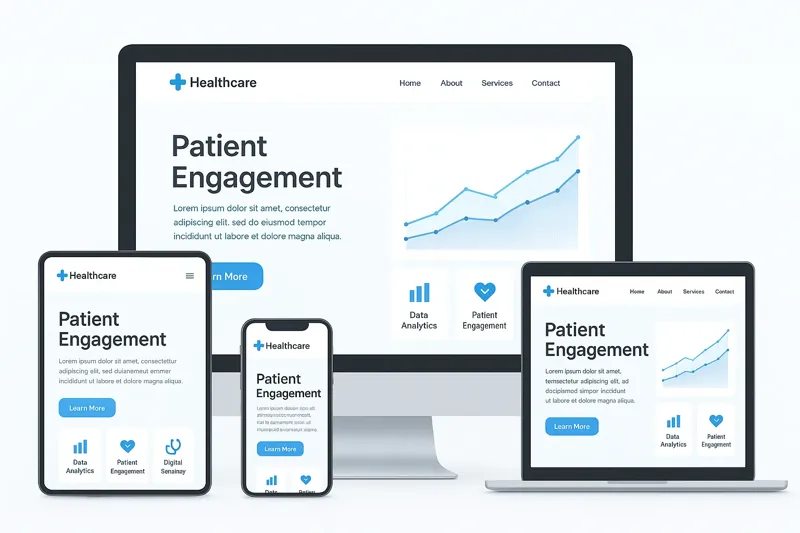
The healthcare website serves as the central hub for digital marketing for healthcare and patient engagement. It must deliver an authoritative, professional, and easy-to-navigate experience to build trust and convert visitors into patients. A well-designed healthcare website highlights services, specialties, and patient resources, supporting visibility and branding.
Mobile-First Design Importance
With over 80% of patients using smartphones to research and contact healthcare providers, mobile optimization in healthcare providers is essential. Google’s mobile-first indexing prioritizes mobile-friendly sites in search rankings, making responsive design crucial for healthcare websites. A mobile-optimized website ensures accessibility anytime, anywhere, accommodating modern patient behaviors.
Site Speed and User Experience
Fast loading times are fundamental; slow websites frustrate visitors and increase bounce rates. Clear navigation, straightforward information architecture, and clean design improve user experience and retain patient interest. Ensuring secure and easy access to critical healthcare information supports effective patient acquisition marketing.
Interactive Features
Interactive capabilities such as online appointment booking platforms for healthcare and patient testimonials in healthcare marketing directly impact patient conversion and retention. Online scheduling facilitates convenience and reduces administrative burden, while authentic testimonials build credibility and foster trust. These elements enhance engagement and patient satisfaction, supporting overall healthcare marketing strategy.
Why is a mobile-optimized website vital for healthcare marketing?
Over 80% of patients use smartphones to research and contact providers. A mobile-friendly healthcare website improves accessibility, enhances user experience, and is favored by Google's mobile-first indexing, thereby increasing patient engagement and appointment bookings.
Search Engine Optimization for Healthcare Visibility and Trust

How does SEO enhance healthcare practice visibility?
SEO improves a practice’s rank on search engines by targeting relevant healthcare keywords optimization, optimizing meta descriptions for healthcare SEO, using local SEO for healthcare for geographic targeting, and ensuring website trustworthiness per Google’s E-E-A-T principles in healthcare content, thus attracting more organic patient traffic.
Healthcare-specific SEO best practices
Healthcare SEO involves creating medically accurate and authoritative content tailored to patient needs, including symptom guides for patients and treatment information. This content should comply with Google’s E-E-A-T principles in healthcare content (Expertise, Authoritativeness, Trustworthiness) to ensure higher ranking and patient trust.
Use of relevant keywords and local SEO
Effective SEO uses keywords that patients frequently search for, such as symptoms, services, and provider specialties. Local SEO targets geographic keywords and includes optimizing Google Business Profile optimization, consistent Name, Address, Phone (NAP) listings, local backlinks for clinics, and hyperlocal SEO content, improving visibility in community-specific searches.
E-A-T principles in healthcare content
Content must demonstrate medical expertise and be produced or reviewed by qualified professionals. Transparent sources, accurate information, and regular content updates build patient confidence and comply with search engine standards, crucial in healthcare marketing.
Technical SEO elements like structured data and voice search
Technical optimization includes implementing structured data for healthcare SEO, to help search engines understand website content better, XML sitemaps, fast loading speeds, mobile-friendly healthcare websites, and optimizing for voice-based queries as voice searches grow. These factors enhance user experience and improve organic search rankings, critical for medical practices.
Leveraging Pay-Per-Click (PPC) Advertising for Targeted Patient Acquisition
What makes PPC effective in healthcare marketing?
Pay-Per-Click (PPC) advertising in healthcare is highly effective in healthcare marketing because it enables providers to reach audiences actively searching for specific services. This targeted approach reduces wasted spend by charging only when potential patients click on ads. By focusing on high-intent keywords like "urgent care near me" or treatment-specific queries, providers capture prospects closer to the decision-making stage.
Cost-efficient targeted ads
PPC campaigns are cost-efficient since healthcare organizations control budgets and bids strategically. Ads appear on search engines or social media platforms only to relevant users based on location, search terms, or demographics. This precision marketing delivers a higher return on investment compared to untargeted media.
Use of high-intent keywords
Strategically selecting high-intent keywords directly related to patient needs ensures PPC ads connect with motivated patients. Keywords such as "chronic disease management" or "telehealth consultation" drive quality traffic and increase appointment bookings.
Retargeting campaigns
Retargeting ads re-engage website visitors who previously showed interest but did not convert. These personalized ad experiences remind potential patients about specific services, clinic locations, or advantages such as shorter wait times, effectively increasing conversion rates and patient acquisition.
Tools to optimize bidding such as Invoca
Advanced tools like Invoca's conversation intelligence software analyze conversion data from phone calls and online interactions, enabling healthcare marketers to optimize bidding strategies dynamically. This conversation intelligence improves campaign efficiency by focusing spend on high-value patient inquiries, ensuring compliance with HIPAA compliance in digital marketing.
Employing PPC within a comprehensive digital marketing for healthcare strategy drives measurable patient growth while maintaining a patient-centric approach through targeted outreach and data-driven optimization.
Content Marketing: Educating and Engaging Patients
Creating Educational Blogs, Videos, and Infographics
Healthcare providers enhance patient engagement by developing educational content such as healthcare educational content, videos, and infographics. These materials simplify complex medical topics, helping patients make informed decisions while reinforcing a provider's expertise.
Personalized and Medically Accurate Content
Producing personalized healthcare content tailored to patient needs ensures relevance and fosters deeper connections. Accuracy and adherence to medical standards build patient trust and support compliance with healthcare regulations.
Building Authority and Trust Through Content
Consistently delivering trusted, educational content positions providers as thought leaders in their specialties. This credibility increases patient confidence and supports long-term relationships.
Video Marketing and Patient Testimonials
Video content—including patient testimonials and expert guides—dramatically improves engagement and conversion rates. Videos humanize care, showcase successes, and enhance Healthcare SEO strategies, driving new patient acquisition.
How does content marketing benefit healthcare providers?
Content marketing establishes providers as trusted authorities by offering educational, reliable information addressing patient questions and concerns. Utilizing Patient video testimonials and educational guides boosts engagement and SEO rankings, fostering both patient loyalty and acquisition.
Harnessing Social Media for Community Building and Patient Engagement

What role does social media play in healthcare marketing?
Social media in healthcare marketing serves as a crucial tool for building brand reputation, delivering reliable health information, and engaging patients directly. It facilitates two-way communication that enhances transparency and trust, while amplifying brand visibility using both organic content and strategically targeted paid advertising. This influence is significant, as 57% of consumers report healthcare provider social media presence sways their treatment decisions.
Organic and Paid Social Strategies
Healthcare organizations leverage a balanced mix of organic and paid social media strategies to connect with diverse patient groups. Organic posts, including educational videos and patient success stories, foster genuine engagement and community support. Complementing this, paid advertising targets specific demographics and geographic areas, improving reach and patient acquisition efficiency. Paid campaigns also enable precise measurement of ROI and campaign refinement.
Social Listening Tools
Tools such as Hootsuite, Sprout Social, and Brandwatch empower healthcare marketers to monitor patient feedback, industry conversations, and emerging health trends in real-time. These insights inform content creation, crisis management, and reputation management efforts by quickly identifying potential issues and areas for improvement.
Building Digital Health Communities
Healthcare providers are cultivating digital communities through dedicated social groups, condition-specific forums, and influencer partnerships. These platforms offer peer support, enhance patient education, and position providers as trusted authorities. Active engagement through these communities strengthens loyalty, facilitates shared experiences, and supports patient empowerment.
Managing Reputation with Reviews and Patient Stories
Proactive reputation management on social media includes encouraging patient reviews and sharing authentic patient stories with appropriate consent, adhering strictly to HIPAA compliance in marketing. Positive reviews and patient testimonials humanize the brand and enhance credibility. Responding thoughtfully to feedback demonstrates responsiveness and builds trust, critical factors in patient choice and retention.
Email and SMS Marketing: Personalized Patient Communication
Why are email and SMS marketing important in healthcare?
Email marketing for healthcare and SMS marketing are critical tools for healthcare providers aiming to maintain personalized, direct communication with patients. They enable organizations to keep patients informed about crucial health updates, upcoming check-ups, and wellness reminders, fostering ongoing patient engagement strategies and loyalty.
Low-cost engagement through newsletters and reminders
Newsletters and appointment reminders delivered via email campaigns in healthcare or SMS represent cost-effective methods to sustain patient contact. They efficiently promote preventive care and encourage timely follow-ups, driving better health outcomes while optimizing marketing budgets.
Segmentation and automation
Utilizing segmentation allows healthcare marketers to tailor messages based on patient demographics, health needs, or behavior patterns, improving relevance and responsiveness. Automation tools streamline campaign delivery, ensuring patients receive timely, personalized communications without manual intervention.
Compliance with HIPAA
Ensuring HIPAA compliance in marketing is fundamental in healthcare email and SMS campaigns to protect sensitive patient information. Organizations must use secure platforms and transparent data practices to maintain patient privacy and uphold regulatory standards.
Use of customizable campaign templates
Healthcare marketers benefit from access to customizable email templates, such as pre-built "Curations" Email Templates, designed specifically for healthcare outreach. These templates facilitate quick development of targeted, compliant campaigns that engage patients effectively while maintaining brand consistency.
Integrating AI and Advanced Analytics for Data-Driven Marketing
How does AI improve healthcare digital marketing?
Artificial Intelligence (AI) significantly enhances healthcare digital marketing by enabling highly personalized patient digital journeys. It allows marketers to segment patient audiences precisely and deliver tailored messaging that resonates with individual needs, improving patient engagement strategies and satisfaction.
AI-driven healthcare SEO strategies optimize website content, meta descriptions for healthcare SEO, and healthcare keywords optimization, boosting search engine rankings and increasing healthcare providers' online visibility. By analyzing extensive data sets, AI refines healthcare content marketing strategies to attract more relevant patient traffic.
Advanced analytics platforms like Invoca's conversation intelligence software facilitate the examination of both online and offline patient interactions. These tools help marketers understand patient behaviors, optimize campaign performance, and tailor outreach efforts for maximum impact.
Importantly, AI supports compliance with healthcare privacy regulations such as HIPAA compliance in marketing. Techniques like data masking and the use of HIPAA-compliant analytics tools ensure that sensitive patient information remains confidential throughout data analysis processes.
Through these AI and analytics applications, healthcare organizations can drive data-driven healthcare marketing strategies that enhance patient acquisition, build trust, and maximize return on investment while honoring privacy and ethical standards.
Embracing Telehealth and Virtual Care in Marketing Strategies
Why should healthcare marketers emphasize telehealth?
Telehealth expansion 2025 resonates strongly with modern patient preferences for convenient, remote healthcare, allowing providers to meet growing demands effectively. Emphasizing telehealth in marketing expands a practice's market reach beyond traditional geographic constraints and differentiates the organization in a competitive landscape. Optimizing telehealth services within marketing campaigns directly supports improved patient acquisition and satisfaction.
Promoting telehealth services
Effective marketing for telehealth involves clear communication about the availability, accessibility, and benefits of virtual care. Campaigns should highlight features like flexible scheduling and remote access to healthcare professionals, appealing to patients seeking convenient solutions. Integrating telemedicine services optimization into broader healthcare marketing strategy efforts can leverage paid search, social media, and content strategies to amplify patient awareness.
Optimizing telehealth landing pages
Dedicated telehealth landing pages should be mobile-friendly and provide straightforward navigation, concise service descriptions, and easy-to-use online appointment booking tools. Including testimonials, telehealth FAQs, and information about technology requirements helps reduce patient uncertainty. These pages must also be optimized for relevant keywords (e.g., "virtual care," "telehealth consultations") to enhance search engine visibility and capture patient intent.
Meeting growing patient demand for virtual care
With rising demand for virtual health services, effective marketing must position telehealth as a key component of care delivery. Highlighting telehealth’s role in reducing travel, accelerating access, and offering care continuity appeals especially to aging populations and those managing chronic conditions. This aligns with patient engagement strategies and personalized healthcare experiences.
Reducing wait times and enhancing convenience
Marketing that emphasizes telehealth’s ability to decrease patient wait times and provide care from home addresses critical patient experience concerns. Showcasing benefits such as real-time wait time displays and online check-in systems for virtual visits encourages uptake and increases overall patient satisfaction.
Through targeted promotion and optimization of telehealth offerings, healthcare organizations can drive patient engagement and achieve measurable growth in virtual care utilization.
Managing Online Reputation and Patient Reviews Effectively
What is the importance of online reputation management in healthcare?
Online reviews significantly impact patient trust and healthcare provider selection. Patients frequently consult reviews before choosing a provider; therefore, active reputation management in healthcare is critical for credibility and attracting new patients.
Review monitoring and response
Regularly monitoring online reviews across platforms allows healthcare organizations to address patient concerns promptly. Responding to both positive and negative feedback demonstrates commitment to patient care, builds trust, and improves patient satisfaction.
Impact of online reputation on patient choices
A positive online reputation enhances patient acquisition by increasing perceived quality and trustworthiness. Conversely, unresolved negative reviews can deter potential patients and harm local search rankings on platforms like Google, which underscores the importance of local SEO for healthcare.
Encouraging positive reviews
Healthcare providers should encourage satisfied patients to share their experiences online through follow-up communications or patient portals. Making the review process simple and accessible can increase the volume of genuine positive feedback. This practice aligns with patient engagement strategies to build lasting trust.
Strategies for reputation recovery
For organizations facing negative perceptions, developing a structured response plan that includes acknowledging issues, offering remedies, and improving services is vital. Leveraging positive testimonials and patient stories can also aid in restoring trust, as recommended in healthcare reputation management.
Effective online reputation management supports sustained patient loyalty and growth by reinforcing the healthcare organization's commitment to transparent, high-quality care.
Targeted Marketing for Special Populations and Service Lines
How does targeted marketing improve healthcare outreach?
Targeted marketing improves healthcare outreach by customizing strategies to meet the unique needs of specific populations and service areas. Tailoring content for marketing to Baby Boomers healthcare addresses their preferences for telehealth, chronic disease management, and home healthcare, aligning marketing efforts with their health priorities and increasing engagement.
Promoting specialized service lines like wellness and preventive healthcare targets health-conscious consumers, drawing attention to holistic and digital mental health services and virtual mental health care. This focused marketing enhances patient acquisition by communicating clear benefits and outcomes.
Building physician referrals programs serve as an organic growth channel by leveraging trusted relationships between providers and specialists. Structured referral processes and physician liaison efforts help expand patient networks, improving appointment volumes for targeted services.
Healthcare partnerships and sponsorships with local organizations and health charities reinforce brand credibility and show commitment to health equity in healthcare marketing. Collaborative campaigns increase local reach and foster trust among diverse populations.
By concentrating on demographic-specific messaging and service-related content, healthcare providers boost patient engagement strategies and acquisition efficiency. Integrating physician referral networks and community collaborations further strengthens patient trust and broadens outreach scope.
Ensuring Compliance and Ethical Standards in Healthcare Marketing

Why is compliance crucial in healthcare digital marketing?
Strict regulations such as HIPAA compliance in marketing safeguard patient data and are fundamental to maintaining trust between healthcare providers and patients. Compliance ensures marketing practices remain ethical, prevents costly legal ramifications, and nurtures long-term patient relationships through transparent data management and secure communication channels.
HIPAA and data privacy regulations
Healthcare marketers must rigorously adhere to HIPAA compliance in digital marketing and other data privacy laws to protect sensitive information. This includes implementing secure data handling practices, conducting regular audits, and ensuring any third-party vendors and digital platforms used are fully compliant.
Transparency in data practices
Clear communication about how patient data is collected, used, and stored is vital. Transparency helps to build trust, reassuring patients that their privacy rights are respected and that the healthcare organization values their confidentiality, consistent with Healthcare marketing compliance and transparency.
Use of compliant tools in digital campaigns
Employing HIPAA-compliant marketing tools like secure email platforms and analytics software is essential. These tools enable effective patient engagement without compromising legal or ethical standards.
Balancing personalization with ethics
While personalized content improves patient engagement, it must be balanced with strict ethical considerations. Marketing strategies should avoid intrusive data usage and always prioritize patient consent and privacy, aligning with best practices on Personalized healthcare content and Healthcare marketing compliance and transparency.
Future Outlook: Adapting to Evolving Digital Trends for Healthcare Growth
Importance of Agility in Marketing Strategies
Healthcare marketing must remain agile to keep pace with rapid changes in technology, patient expectations, and regulatory environments. Agile marketing allows healthcare organizations to test, learn, and iterate campaigns swiftly, improving effectiveness and ROI. Collaborative alignment among C-suite leaders—especially CMOs, CTOs/CDOs, and CIOs—is essential to execute sophisticated, data-driven marketing initiatives that respond to dynamic market conditions.
Emerging Technologies and Omnichannel Communication
Innovative tools such as augmented reality (AR) and virtual reality (VR) are enhancing patient engagement through immersive educational content and interactive brand experiences. Concurrently, omnichannel communication strategies integrate secure messaging, health apps, automated follow-ups, and AI-driven analytics to deliver seamless, personalized patient journeys across multiple platforms, strengthening brand loyalty and trust.
Continuous Data-Driven Optimization
Utilizing HIPAA-compliant analytics tools enables continuous monitoring and measurement of marketing campaigns. Data insights guide segmentation, content personalization, and real-time adjustments, enhancing patient acquisition and retention. Techniques like marketing mix modeling and A/B testing help maximize resource allocation and optimize patient engagement outcomes.
Patient-Centered Marketing for Sustained Success
Placing patients at the core of marketing efforts ensures relevance and builds long-term relationships. Personalization, transparency in communication, and privacy adherence foster trust and satisfaction. Organizations that prioritize patient experience and empower patients through educational and accessible digital content position themselves for lasting growth and competitive advantage in the evolving healthcare landscape.
Why Digital Marketing is Essential for Healthcare Success
Importance of Digital Presence for Healthcare Providers
A strong digital presence is critical for healthcare providers to effectively reach and engage potential patients. Over 77% of patients conduct online research before booking appointments, underscoring the need for healthcare organizations to maintain visible, accessible, and user-friendly digital assets. Search engines generate three times as much traffic to hospital websites compared to other sources, making optimized websites and local SEO focal points for patient acquisition.
Patients' Online Behaviors and Expectations
Patients increasingly rely on online resources for health-related information, with approximately 80% of internet users searching for health topics digitally. Mobile-friendly websites are essential, as 44% of patients researching hospitals via mobile devices proceed to schedule appointments. Moreover, 73% of healthcare consumers are receptive to digital communications, expecting personalized, secure, and timely messaging that supports transparency and builds trust.
Role of Digital Channels in Patient Acquisition and Engagement
Healthcare marketing leverages various digital channels including paid search, social media, email, and SMS campaigns to inform and engage patients. Personalized content and omnichannel strategies enhance patient experiences, while tools compliant with HIPAA ensure data privacy. Analytics and conversation intelligence platforms enable real-time measurement of campaign effectiveness and patient interactions, facilitating continuous optimization toward improved outcomes and revenue growth.
Building a Responsive and Mobile-Optimized Healthcare Website
Website as a Critical Marketing Asset
The healthcare website serves as the central hub for digital marketing for healthcare and patient engagement. It must deliver an authoritative, professional, and easy-to-navigate experience to build trust and convert visitors into patients. A well-designed healthcare website highlights services, specialties, and patient resources, supporting visibility and branding.
Mobile-First Design Importance
With over 80% of patients using smartphones to research and contact healthcare providers, mobile optimization in healthcare providers is essential. Google’s mobile-first indexing prioritizes mobile-friendly sites in search rankings, making responsive design crucial for healthcare websites. A mobile-optimized website ensures accessibility anytime, anywhere, accommodating modern patient behaviors.
Site Speed and User Experience
Fast loading times are fundamental; slow websites frustrate visitors and increase bounce rates. Clear navigation, straightforward information architecture, and clean design improve user experience and retain patient interest. Ensuring secure and easy access to critical healthcare information supports effective patient acquisition marketing.
Interactive Features
Interactive capabilities such as online appointment booking platforms for healthcare and patient testimonials in healthcare marketing directly impact patient conversion and retention. Online scheduling facilitates convenience and reduces administrative burden, while authentic testimonials build credibility and foster trust. These elements enhance engagement and patient satisfaction, supporting overall healthcare marketing strategy.
Why is a mobile-optimized website vital for healthcare marketing?
Over 80% of patients use smartphones to research and contact providers. A mobile-friendly healthcare website improves accessibility, enhances user experience, and is favored by Google's mobile-first indexing, thereby increasing patient engagement and appointment bookings.
Search Engine Optimization for Healthcare Visibility and Trust
How does SEO enhance healthcare practice visibility?
SEO improves a practice’s rank on search engines by targeting relevant healthcare keywords optimization, optimizing meta descriptions for healthcare SEO, using local SEO for healthcare for geographic targeting, and ensuring website trustworthiness per Google’s E-E-A-T principles in healthcare content, thus attracting more organic patient traffic.
Healthcare-specific SEO best practices
Healthcare SEO involves creating medically accurate and authoritative content tailored to patient needs, including symptom guides for patients and treatment information. This content should comply with Google’s E-E-A-T principles in healthcare content (Expertise, Authoritativeness, Trustworthiness) to ensure higher ranking and patient trust.
Use of relevant keywords and local SEO
Effective SEO uses keywords that patients frequently search for, such as symptoms, services, and provider specialties. Local SEO targets geographic keywords and includes optimizing Google Business Profile optimization, consistent Name, Address, Phone (NAP) listings, local backlinks for clinics, and hyperlocal SEO content, improving visibility in community-specific searches.
E-A-T principles in healthcare content
Content must demonstrate medical expertise and be produced or reviewed by qualified professionals. Transparent sources, accurate information, and regular content updates build patient confidence and comply with search engine standards, crucial in healthcare marketing.
Technical SEO elements like structured data and voice search
Technical optimization includes implementing structured data for healthcare SEO, to help search engines understand website content better, XML sitemaps, fast loading speeds, mobile-friendly healthcare websites, and optimizing for voice-based queries as voice searches grow. These factors enhance user experience and improve organic search rankings, critical for medical practices.
Leveraging Pay-Per-Click (PPC) Advertising for Targeted Patient Acquisition
What makes PPC effective in healthcare marketing?
Pay-Per-Click (PPC) advertising in healthcare is highly effective in healthcare marketing because it enables providers to reach audiences actively searching for specific services. This targeted approach reduces wasted spend by charging only when potential patients click on ads. By focusing on high-intent keywords like "urgent care near me" or treatment-specific queries, providers capture prospects closer to the decision-making stage.
Cost-efficient targeted ads
PPC campaigns are cost-efficient since healthcare organizations control budgets and bids strategically. Ads appear on search engines or social media platforms only to relevant users based on location, search terms, or demographics. This precision marketing delivers a higher return on investment compared to untargeted media.
Use of high-intent keywords
Strategically selecting high-intent keywords directly related to patient needs ensures PPC ads connect with motivated patients. Keywords such as "chronic disease management" or "telehealth consultation" drive quality traffic and increase appointment bookings.
Retargeting campaigns
Retargeting ads re-engage website visitors who previously showed interest but did not convert. These personalized ad experiences remind potential patients about specific services, clinic locations, or advantages such as shorter wait times, effectively increasing conversion rates and patient acquisition.
Tools to optimize bidding such as Invoca
Advanced tools like Invoca's conversation intelligence software analyze conversion data from phone calls and online interactions, enabling healthcare marketers to optimize bidding strategies dynamically. This conversation intelligence improves campaign efficiency by focusing spend on high-value patient inquiries, ensuring compliance with HIPAA compliance in digital marketing.
Employing PPC within a comprehensive digital marketing for healthcare strategy drives measurable patient growth while maintaining a patient-centric approach through targeted outreach and data-driven optimization.
Content Marketing: Educating and Engaging Patients
Creating Educational Blogs, Videos, and Infographics
Healthcare providers enhance patient engagement by developing educational content such as healthcare educational content, videos, and infographics. These materials simplify complex medical topics, helping patients make informed decisions while reinforcing a provider's expertise.
Personalized and Medically Accurate Content
Producing personalized healthcare content tailored to patient needs ensures relevance and fosters deeper connections. Accuracy and adherence to medical standards build patient trust and support compliance with healthcare regulations.
Building Authority and Trust Through Content
Consistently delivering trusted, educational content positions providers as thought leaders in their specialties. This credibility increases patient confidence and supports long-term relationships.
Video Marketing and Patient Testimonials
Video content—including patient testimonials and expert guides—dramatically improves engagement and conversion rates. Videos humanize care, showcase successes, and enhance Healthcare SEO strategies, driving new patient acquisition.
How does content marketing benefit healthcare providers?
Content marketing establishes providers as trusted authorities by offering educational, reliable information addressing patient questions and concerns. Utilizing Patient video testimonials and educational guides boosts engagement and SEO rankings, fostering both patient loyalty and acquisition.
Harnessing Social Media for Community Building and Patient Engagement
What role does social media play in healthcare marketing?
Social media in healthcare marketing serves as a crucial tool for building brand reputation, delivering reliable health information, and engaging patients directly. It facilitates two-way communication that enhances transparency and trust, while amplifying brand visibility using both organic content and strategically targeted paid advertising. This influence is significant, as 57% of consumers report healthcare provider social media presence sways their treatment decisions.
Organic and Paid Social Strategies
Healthcare organizations leverage a balanced mix of organic and paid social media strategies to connect with diverse patient groups. Organic posts, including educational videos and patient success stories, foster genuine engagement and community support. Complementing this, paid advertising targets specific demographics and geographic areas, improving reach and patient acquisition efficiency. Paid campaigns also enable precise measurement of ROI and campaign refinement.
Social Listening Tools
Tools such as Hootsuite, Sprout Social, and Brandwatch empower healthcare marketers to monitor patient feedback, industry conversations, and emerging health trends in real-time. These insights inform content creation, crisis management, and reputation management efforts by quickly identifying potential issues and areas for improvement.
Building Digital Health Communities
Healthcare providers are cultivating digital communities through dedicated social groups, condition-specific forums, and influencer partnerships. These platforms offer peer support, enhance patient education, and position providers as trusted authorities. Active engagement through these communities strengthens loyalty, facilitates shared experiences, and supports patient empowerment.
Managing Reputation with Reviews and Patient Stories
Proactive reputation management on social media includes encouraging patient reviews and sharing authentic patient stories with appropriate consent, adhering strictly to HIPAA compliance in marketing. Positive reviews and patient testimonials humanize the brand and enhance credibility. Responding thoughtfully to feedback demonstrates responsiveness and builds trust, critical factors in patient choice and retention.
Email and SMS Marketing: Personalized Patient Communication
Why are email and SMS marketing important in healthcare?
Email marketing for healthcare and SMS marketing are critical tools for healthcare providers aiming to maintain personalized, direct communication with patients. They enable organizations to keep patients informed about crucial health updates, upcoming check-ups, and wellness reminders, fostering ongoing patient engagement strategies and loyalty.
Low-cost engagement through newsletters and reminders
Newsletters and appointment reminders delivered via email campaigns in healthcare or SMS represent cost-effective methods to sustain patient contact. They efficiently promote preventive care and encourage timely follow-ups, driving better health outcomes while optimizing marketing budgets.
Segmentation and automation
Utilizing segmentation allows healthcare marketers to tailor messages based on patient demographics, health needs, or behavior patterns, improving relevance and responsiveness. Automation tools streamline campaign delivery, ensuring patients receive timely, personalized communications without manual intervention.
Compliance with HIPAA
Ensuring HIPAA compliance in marketing is fundamental in healthcare email and SMS campaigns to protect sensitive patient information. Organizations must use secure platforms and transparent data practices to maintain patient privacy and uphold regulatory standards.
Use of customizable campaign templates
Healthcare marketers benefit from access to customizable email templates, such as pre-built "Curations" Email Templates, designed specifically for healthcare outreach. These templates facilitate quick development of targeted, compliant campaigns that engage patients effectively while maintaining brand consistency.
Integrating AI and Advanced Analytics for Data-Driven Marketing
How does AI improve healthcare digital marketing?
Artificial Intelligence (AI) significantly enhances healthcare digital marketing by enabling highly personalized patient digital journeys. It allows marketers to segment patient audiences precisely and deliver tailored messaging that resonates with individual needs, improving patient engagement strategies and satisfaction.
AI-driven healthcare SEO strategies optimize website content, meta descriptions for healthcare SEO, and healthcare keywords optimization, boosting search engine rankings and increasing healthcare providers' online visibility. By analyzing extensive data sets, AI refines healthcare content marketing strategies to attract more relevant patient traffic.
Advanced analytics platforms like Invoca's conversation intelligence software facilitate the examination of both online and offline patient interactions. These tools help marketers understand patient behaviors, optimize campaign performance, and tailor outreach efforts for maximum impact.
Importantly, AI supports compliance with healthcare privacy regulations such as HIPAA compliance in marketing. Techniques like data masking and the use of HIPAA-compliant analytics tools ensure that sensitive patient information remains confidential throughout data analysis processes.
Through these AI and analytics applications, healthcare organizations can drive data-driven healthcare marketing strategies that enhance patient acquisition, build trust, and maximize return on investment while honoring privacy and ethical standards.
Embracing Telehealth and Virtual Care in Marketing Strategies
Why should healthcare marketers emphasize telehealth?
Telehealth expansion 2025 resonates strongly with modern patient preferences for convenient, remote healthcare, allowing providers to meet growing demands effectively. Emphasizing telehealth in marketing expands a practice's market reach beyond traditional geographic constraints and differentiates the organization in a competitive landscape. Optimizing telehealth services within marketing campaigns directly supports improved patient acquisition and satisfaction.
Promoting telehealth services
Effective marketing for telehealth involves clear communication about the availability, accessibility, and benefits of virtual care. Campaigns should highlight features like flexible scheduling and remote access to healthcare professionals, appealing to patients seeking convenient solutions. Integrating telemedicine services optimization into broader healthcare marketing strategy efforts can leverage paid search, social media, and content strategies to amplify patient awareness.
Optimizing telehealth landing pages
Dedicated telehealth landing pages should be mobile-friendly and provide straightforward navigation, concise service descriptions, and easy-to-use online appointment booking tools. Including testimonials, telehealth FAQs, and information about technology requirements helps reduce patient uncertainty. These pages must also be optimized for relevant keywords (e.g., "virtual care," "telehealth consultations") to enhance search engine visibility and capture patient intent.
Meeting growing patient demand for virtual care
With rising demand for virtual health services, effective marketing must position telehealth as a key component of care delivery. Highlighting telehealth’s role in reducing travel, accelerating access, and offering care continuity appeals especially to aging populations and those managing chronic conditions. This aligns with patient engagement strategies and personalized healthcare experiences.
Reducing wait times and enhancing convenience
Marketing that emphasizes telehealth’s ability to decrease patient wait times and provide care from home addresses critical patient experience concerns. Showcasing benefits such as real-time wait time displays and online check-in systems for virtual visits encourages uptake and increases overall patient satisfaction.
Through targeted promotion and optimization of telehealth offerings, healthcare organizations can drive patient engagement and achieve measurable growth in virtual care utilization.
Managing Online Reputation and Patient Reviews Effectively
What is the importance of online reputation management in healthcare?
Online reviews significantly impact patient trust and healthcare provider selection. Patients frequently consult reviews before choosing a provider; therefore, active reputation management in healthcare is critical for credibility and attracting new patients.
Review monitoring and response
Regularly monitoring online reviews across platforms allows healthcare organizations to address patient concerns promptly. Responding to both positive and negative feedback demonstrates commitment to patient care, builds trust, and improves patient satisfaction.
Impact of online reputation on patient choices
A positive online reputation enhances patient acquisition by increasing perceived quality and trustworthiness. Conversely, unresolved negative reviews can deter potential patients and harm local search rankings on platforms like Google, which underscores the importance of local SEO for healthcare.
Encouraging positive reviews
Healthcare providers should encourage satisfied patients to share their experiences online through follow-up communications or patient portals. Making the review process simple and accessible can increase the volume of genuine positive feedback. This practice aligns with patient engagement strategies to build lasting trust.
Strategies for reputation recovery
For organizations facing negative perceptions, developing a structured response plan that includes acknowledging issues, offering remedies, and improving services is vital. Leveraging positive testimonials and patient stories can also aid in restoring trust, as recommended in healthcare reputation management.
Effective online reputation management supports sustained patient loyalty and growth by reinforcing the healthcare organization's commitment to transparent, high-quality care.
Targeted Marketing for Special Populations and Service Lines
How does targeted marketing improve healthcare outreach?
Targeted marketing improves healthcare outreach by customizing strategies to meet the unique needs of specific populations and service areas. Tailoring content for marketing to Baby Boomers healthcare addresses their preferences for telehealth, chronic disease management, and home healthcare, aligning marketing efforts with their health priorities and increasing engagement.
Promoting specialized service lines like wellness and preventive healthcare targets health-conscious consumers, drawing attention to holistic and digital mental health services and virtual mental health care. This focused marketing enhances patient acquisition by communicating clear benefits and outcomes.
Building physician referrals programs serve as an organic growth channel by leveraging trusted relationships between providers and specialists. Structured referral processes and physician liaison efforts help expand patient networks, improving appointment volumes for targeted services.
Healthcare partnerships and sponsorships with local organizations and health charities reinforce brand credibility and show commitment to health equity in healthcare marketing. Collaborative campaigns increase local reach and foster trust among diverse populations.
By concentrating on demographic-specific messaging and service-related content, healthcare providers boost patient engagement strategies and acquisition efficiency. Integrating physician referral networks and community collaborations further strengthens patient trust and broadens outreach scope.
Ensuring Compliance and Ethical Standards in Healthcare Marketing
Why is compliance crucial in healthcare digital marketing?
Strict regulations such as HIPAA compliance in marketing safeguard patient data and are fundamental to maintaining trust between healthcare providers and patients. Compliance ensures marketing practices remain ethical, prevents costly legal ramifications, and nurtures long-term patient relationships through transparent data management and secure communication channels.
HIPAA and data privacy regulations
Healthcare marketers must rigorously adhere to HIPAA compliance in digital marketing and other data privacy laws to protect sensitive information. This includes implementing secure data handling practices, conducting regular audits, and ensuring any third-party vendors and digital platforms used are fully compliant.
Transparency in data practices
Clear communication about how patient data is collected, used, and stored is vital. Transparency helps to build trust, reassuring patients that their privacy rights are respected and that the healthcare organization values their confidentiality, consistent with Healthcare marketing compliance and transparency.
Use of compliant tools in digital campaigns
Employing HIPAA-compliant marketing tools like secure email platforms and analytics software is essential. These tools enable effective patient engagement without compromising legal or ethical standards.
Balancing personalization with ethics
While personalized content improves patient engagement, it must be balanced with strict ethical considerations. Marketing strategies should avoid intrusive data usage and always prioritize patient consent and privacy, aligning with best practices on Personalized healthcare content and Healthcare marketing compliance and transparency.
Future Outlook: Adapting to Evolving Digital Trends for Healthcare Growth
Importance of Agility in Marketing Strategies
Healthcare marketing must remain agile to keep pace with rapid changes in technology, patient expectations, and regulatory environments. Agile marketing allows healthcare organizations to test, learn, and iterate campaigns swiftly, improving effectiveness and ROI. Collaborative alignment among C-suite leaders—especially CMOs, CTOs/CDOs, and CIOs—is essential to execute sophisticated, data-driven marketing initiatives that respond to dynamic market conditions.
Emerging Technologies and Omnichannel Communication
Innovative tools such as augmented reality (AR) and virtual reality (VR) are enhancing patient engagement through immersive educational content and interactive brand experiences. Concurrently, omnichannel communication strategies integrate secure messaging, health apps, automated follow-ups, and AI-driven analytics to deliver seamless, personalized patient journeys across multiple platforms, strengthening brand loyalty and trust.
Continuous Data-Driven Optimization
Utilizing HIPAA-compliant analytics tools enables continuous monitoring and measurement of marketing campaigns. Data insights guide segmentation, content personalization, and real-time adjustments, enhancing patient acquisition and retention. Techniques like marketing mix modeling and A/B testing help maximize resource allocation and optimize patient engagement outcomes.
Patient-Centered Marketing for Sustained Success
Placing patients at the core of marketing efforts ensures relevance and builds long-term relationships. Personalization, transparency in communication, and privacy adherence foster trust and satisfaction. Organizations that prioritize patient experience and empower patients through educational and accessible digital content position themselves for lasting growth and competitive advantage in the evolving healthcare landscape.