.png)


Introduction to AI Live Chat in Healthcare
Overview of AI Live Chat Technology
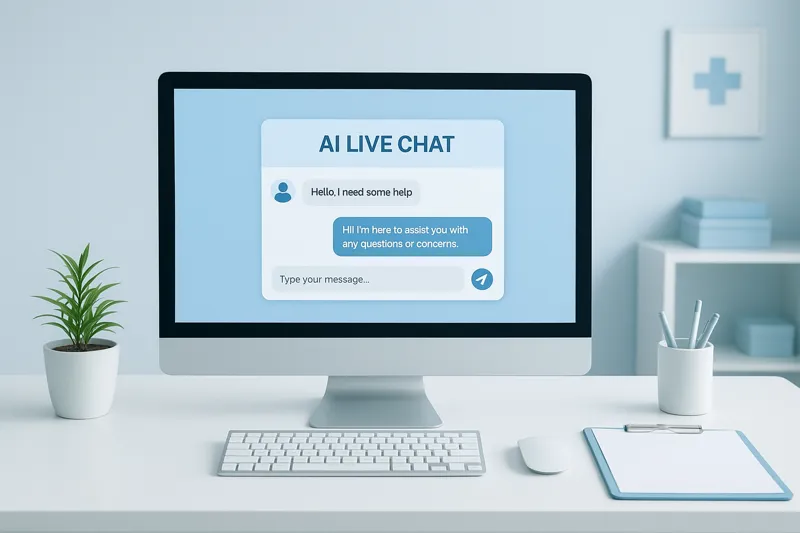
AI live chat in healthcare utilizes advanced conversational AI technologies, including natural language processing (NLP), machine learning, and speech recognition. These systems provide instant, secure, and HIPAA-compliant communication through chatbots and virtual assistants that simulate human conversation via text or voice. Integrated with electronic health records (EHRs) and practice management systems, AI live chat automates routine tasks such as appointment scheduling, symptom triage, and prescription refills, enabling seamless patient interactions 24/7.
Key Benefits in Healthcare Patient Interactions
By automating repetitive administrative duties, AI live chat significantly reduces clinician burden and operational costs. It facilitates real-time patient engagement through personalized responses, appointment reminders, and medication adherence support, minimizing no-shows and improving treatment compliance. Multilingual capabilities break down language barriers, promoting equity in care access across diverse populations. Furthermore, AI systems draft empathetic communications that clinicians can review and personalize, enhancing the quality and clarity of patient messages.
Impact on Engagement and Personalization
AI live chat elevates patient experience by delivering tailored, context-aware interactions based on individual health data and preferences. This personalization increases patient satisfaction, fosters trust, and encourages active participation in care plans. Institutions employing these solutions report measurable improvements, including higher response rates, reduced call volumes, and expanded virtual care visits. Ultimately, AI live chat empowers healthcare providers to offer more responsive, efficient, and patient-centered communication strategies, driving positive health outcomes and operational excellence.
Core Technologies Behind AI Live Chat and Their Role in Patient Personalization
Natural Language Processing and Understanding (NLP/NLU)
Conversational AI in healthcare relies heavily on NLP to interpret patient language accurately. NLP encompasses two critical areas: Natural Language Understanding (NLU), which helps AI comprehend patient queries and intentions, and Natural Language Generation (NLG), which enables the AI to respond empathically and clearly. This technology allows chatbots and virtual assistants to engage in natural, human-like conversations, making patient interactions more comfortable and efficient.
Machine Learning and Reinforcement Learning
Machine learning drives continuous improvement in AI chatbots by analyzing vast patient interactions and feedback data. Supervised, unsupervised, and reinforcement learning techniques enable the system to personalize responses based on patient preferences and behavioral cues. Reinforcement learning, in particular, allows AI to adapt dynamically by receiving feedback on the quality and relevance of its answers, making patient communication highly tailored and effective.
Speech Recognition and Voice-to-Digital Interaction
Speech recognition technologies, also known as Automatic Speech Recognition (ASR), convert spoken language into digital text, allowing Voice-Enabled Virtual Assistants to interact via phone or smart devices. These systems are trained specifically on medical terminology and noise-filtering to ensure accuracy even in clinical environments. Voice-to-Digital Patient Solutions expand accessibility by enabling 24/7 Healthcare Access, especially for users who prefer verbal communication or face literacy challenges.
Integration with EHR and Healthcare IT Systems
AI live chat solutions are designed to integrate seamlessly with Integrating AI with EHRs and other healthcare IT infrastructures, such as EHR systems. This connectivity enables Automating Documentation, real-time updates, and streamlined workflows. For example, conversational AI platforms can transcribe patient conversations directly into EHRs and support appointment scheduling or Medication Adherence Monitoring. Integration ensures a connected healthcare experience that personalizes care and reduces Reducing Clinician Workload.
Together, these core technologies enable AI live chat tools to deliver personalized, accessible, and efficient patient communication, significantly improving Healthcare Patient Engagement and operational outcomes.
Enhancing Patient Engagement Through Personalized AI-Powered Conversations
How AI Chatbots Tailor Interactions Based on Patient Data and Preferences
AI chatbots leverage patient data and preferences to deliver highly personalized interactions. By integrating electronic health record (EHR) information with non-EHR inputs, such as patient lifestyle and communication preferences, AI systems use large language models aligned with patient motivations to customize dialogs dynamically. This personalization enables tailored health coaching, reminders, and actionable recommendations that resonate with individual patients, fostering greater engagement (Improving Patient Engagement).
Examples of Personalization Improving Adherence and Satisfaction
Personalized conversational AI has demonstrated measurable benefits in medication adherence and patient satisfaction. For instance, platforms like Heidi AI Platform automate medication guideline inquiries and provide real-time monitoring, improving adherence rates up to 97%. AI-driven symptom tracking and appointment scheduling reduce no-show rates significantly while supporting continuous health management, especially for patients with chronic diseases or undergoing post-operative care (AI chatbots in healthcare).
Multilingual Capabilities to Reduce Language Barriers
Advanced conversational AI platforms now support communication in over 110 languages, addressing language barriers that traditionally hinder healthcare accessibility. Multilingual AI Capabilities facilitate clearer, culturally appropriate interactions, enabling underserved and diverse populations to engage comfortably. This capability not only improves information comprehension but also expands care outreach and equity (AI in healthcare).
Patient Education and Stigma Reduction via Conversational AI
Conversational AI enhances patient education by simplifying complex medical information into accessible language. AI uses empathetic, non-judgmental messaging to reduce stigma around sensitive health topics such as mental health, thereby encouraging open communication and timely intervention. Such digital tools offer 24/7 supportive environments that empower patients to seek care without fear or embarrassment (Conversational AI in Healthcare, Dangers of AI in Mental Health Care).
Overall, personalized, multilingual conversational AI technologies are transforming patient engagement by delivering customized, inclusive, and empathetic communication that supports better health outcomes and patient satisfaction (Conversational AI in Healthcare).
Operational Efficiency and Clinical Workflow Optimization Enabled by AI Chatbots
Automation of Routine Tasks Like Scheduling and Inquiries
AI chatbots in healthcare automate numerous routine tasks such as appointment scheduling, medication reminders, and handling common patient inquiries. These systems provide 24/7 patient access to health information, allowing patients to book, reschedule, or cancel appointments without direct staff involvement. This instant response capability reduces delays and enhances patient satisfaction while freeing administrative staff from repetitive tasks.
Reducing Administrative Burdens for Clinicians
Conversational AI in Healthcare significantly diminishes clinicians' administrative workload by automating documentation processes, clinical inquiries, and Integrating AI with EHRs. By streamlining workflows—such as symptom documentation, insurance verification, and Medication Adherence Monitoring—AI-powered chatbots enable clinicians to dedicate more time to patient care and complex decision-making.
Real-World Case Studies Illustrating Efficiency Gains
Institutions have reported measurable improvements: Conversational AI in healthcare solutions led to a 35% reduction in call center wait times and a 15% decrease in call volume, alongside a 30% rise in virtual visits. University of Pennsylvania’s Abramson Cancer Center’s AI chatbot "Penny AI-driven text messaging system" monitors patients on oral chemotherapy, improving medication adherence and enabling early clinician intervention. AI-powered patient communication platform Artera enhanced patient response rates by 83%, reduced no-shows by 40%, and cut staff time by up to 72%, demonstrating substantial operational efficiencies.
Hybrid AI-Human Support Models for Optimal Patient Service
Many healthcare providers implement Hybrid AI-human support models combining AI chatbot automation with human oversight. For example, UC San Diego Health integrates chatbots to draft patient portal responses that clinicians review and personalize, ensuring accuracy and empathy. This balance ensures AI handles high-volume, routine inquiries efficiently while clinicians manage complex or sensitive interactions, maintaining high-quality patient service and trust.
The Critical Role of Human Oversight and Ethical Considerations in AI Live Chat

Limitations of AI Chatbots in Complex Clinical Decisions
AI chatbots excel at managing routine tasks and providing timely health information; however, they face limitations in handling complex diagnoses, personalized treatment plans, and nuanced clinical data interpretation. These constraints necessitate continuous clinician involvement to ensure accurate medical decision-making and patient safety (AI chatbots in clinical decision-making).
Importance of Clinician Review and Transparency
Human oversight is crucial in monitoring AI chatbot responses, particularly in sensitive or complicated health situations. Clinician review improves the accuracy, empathy, and appropriateness of AI-generated communications. Transparent communication about a chatbot’s role encourages patient trust and informed participation, mitigating risks of overreliance on automated advice (AI chatbots in patient communication).
Privacy, Data Security, and Compliance
AI live chat implementations must adhere to stringent privacy regulations such as HIPAA and GDPR, ensuring that patient data is encrypted, securely stored, and used only with informed consent. Compliance with these standards safeguards sensitive health information and maintains legal and ethical integrity in digital health communications (Medical Chat).
Addressing Biases and Equitable Healthcare Access
Bias in AI training datasets can result in inaccuracies disproportionately affecting underrepresented groups. Ethical deployment demands training AI models on diverse, inclusive data and ongoing bias mitigation. Equitable AI tools expand care accessibility and improve health outcomes across demographics, supporting health equity and reducing disparities in patient care (Artificial Intelligence in Healthcare).
Real-World Implementations and Measurable Outcomes of AI Live Chat in Patient Communication
Major Health Centers Utilizing AI for Patient Monitoring and Messaging
Academic medical centers such as the University of Pennsylvania’s Abramson Cancer Center and UC San Diego Health have integrated AI-powered chatbots to monitor patients remotely and handle patient communications efficiently. The Abramson Cancer Center employs "Penny," a bi-directional text messaging system to track oral chemotherapy adherence and side effects, alerting clinicians to intervene proactively. UC San Diego Health leverages chatbots within its MyChart portal to draft empathetic responses to patient inquiries regarding appointments, prescriptions, and test results. Northwell Health uses customized AI chatbots to engage patients with chronic conditions like diabetes and heart failure, helping reduce hospital readmissions through continuous remote monitoring and timely follow-up.
Quantifiable Outcomes: Enhanced Satisfaction and Reduced No-Shows
Healthcare organizations utilizing AI chatbots in patient engagement report significant improvements in patient engagement and operational efficiency. Platforms such as Artera have demonstrated up to 83% patient response rates and a 40% reduction in appointment no-shows. These AI tools help automate scheduling, appointment confirmations, and referral follow-ups, substantially reducing administrative burdens. Additionally, Conversational AI in healthcare reported a 35% reduction in call center wait times, a 15% decrease in call volumes, and an approximate 30% increase in virtual visits through AI-assisted chat interactions, translating into greater patient satisfaction and smoother care delivery.
Managing Chronic Diseases and Medication Adherence
AI chatbots play an essential role in chronic illness management by providing continuous medication adherence monitoring, educational support, and symptom tracking. Penny’s implementation at the Abramson Cancer Center achieved medication adherence rates as high as 97%. These chatbots reduce readmissions by offering real-time insights and alerts to healthcare teams, enabling timely clinical intervention. Moreover, AI-driven chatbots in health care can demystify medical instructions, enhance patient understanding, and encourage adherence to complex treatment regimens, resulting in improved long-term clinical outcomes.
Expanding Access Through 24/7 Digital Support
One of the critical benefits of Conversational AI in Healthcare live chat solutions is their ability to deliver around-the-clock support across multiple digital channels—text, voice, and chat interfaces. Platforms like Heidi AI Platform support over 110 languages with instant appointment scheduling and Inbound Call Handling in Healthcare, significantly reducing language barriers and wait times. Conversational AI solutions in healthcare and Conversational AI in healthcare’s conversational AI offerings enable seamless shifting between voice and digital modalities, ensuring patients have easy, immediate access to information and care coordination services. This 24/7 accessibility not only improves patient experience but also reduces unnecessary in-person visits, optimizing healthcare resources.
Future Trends and Innovations in AI-Powered Patient Interaction Platforms
Advances in Large Language Models Tailored for Healthcare
Large Language Models (LLMs) are increasingly being refined to better understand and engage with patient-specific contexts in healthcare. Tailored LLMs incorporate synthetic data and reinforcement learning to align conversations with patient motivations, improving empathy and relevance. These models enable scalable, personalized interactions that support clinical decision-making while reducing clinician burden by generating real-time, patient-centered messaging (AI in patient-clinician communication).
Integration with IoT and Wearable Devices for Proactive Care
Integration of conversational AI with IoT and wearable technologies is transforming patient interaction platforms into proactive health management tools. These devices continuously collect vital signs and health data, enabling AI to monitor conditions in real-time. This facilitates early detection of clinical deterioration and personalized interventions, enhancing chronic disease management and reducing hospital readmissions (AI in disease diagnosis).
Emotional Intelligence and Affective Computing in AI
Emerging innovations focus on embedding emotional intelligence within AI systems to interpret and respond to patient emotions effectively. Affective computing in patient communication enables chatbots and virtual assistants to deliver empathetic and compassionate communication, reducing stigma and patient anxiety. This human-centered approach fosters trust and engagement, vital for sensitive health topics and mental health support (Conversational AI in Healthcare).
Regulatory Evolution and AI Transparency Measures
As AI adoption expands, regulatory frameworks are evolving to address data privacy, ethical considerations, and algorithmic accountability. Healthcare conversational AI platforms are increasingly designed with compliance to HIPAA, GDPR, and other standards. Transparency measures, including clear communication about AI roles and human oversight protocols, are essential to maintain patient trust and ensure safe, equitable use of AI in healthcare (Healthcare chatbot market growth).
These advancements position AI-powered patient interaction platforms at the forefront of delivering efficient, personalized, and empathetic care, aligned with regulatory expectations and clinical workflows (Conversational AI in Healthcare.
Impact of AI Live Chat on the Patient-Clinician Relationship and Quality of Care
Balancing Automation with Maintaining Empathy and Trust
AI live chat solutions in healthcare automate routine tasks such as appointment scheduling, prescription refills, and answering FAQs, significantly reducing clinicians' administrative burdens. However, preserving empathy and trust requires careful integration of Artificial intelligence in healthcare with human oversight. Transparent communication about AI use and ensuring patient consent are essential to maintain confidence and rapport.
AI's Role in Supporting Rather Than Replacing Human Clinicians
AI-powered chatbots and virtual assistants serve as supportive tools that augment clinician capabilities rather than replace them. Systems like UC San Diego Health’s chatbot draft empathetic message responses for physician review, allowing clinicians to personalize communication. This partnership leverages AI’s efficiency while upholding the indispensable human touch in patient care.
Improving Communication Quality and Reducing Physician Burnout
By automating administrative messaging and helping draft compassionate patient responses, AI reduces cognitive load on clinicians, helping to mitigate burnout. Studies indicate AI-generated drafts often result in longer, more thorough, and empathetic physician-patient communications, enhancing the quality of interactions without compromising personalization.
Personalized Communication Fostering Better Health Outcomes
AI enables tailored, patient-centric messaging that acknowledges individual experiences and motivations. Tools can dynamically adjust conversations based on patient context, fostering active engagement and better adherence to treatment plans. Personalized AI communications contribute to reducing treatment dropouts and improving outcomes, supporting the goals of precision and compassionate medicine.
Conclusion: AI Live Chat as a Catalyst for Personalized and Efficient Healthcare
Enhancing Patient and Provider Experiences
AI live chat technologies significantly elevate healthcare by offering continuous, personalized engagement. Patients benefit from 24/7 access to tailored information, appointment scheduling, medication reminders, and multilingual support, improving care accessibility and adherence. Providers experience reduced administrative burdens, streamlined communication, and improved workflow efficiency, allowing more time to focus on high-value clinical interactions.
Human-AI Collaboration in Healthcare
While AI drives increased efficiency and accuracy, its optimal impact is realized through collaboration with clinicians. AI serves as an assistive tool by generating empathetic, personalized communication drafts and aiding clinical decision-making, but human oversight remains critical for maintaining trust, ensuring quality, and contextualizing patient care.
Embracing AI Responsibly
Healthcare organizations are encouraged to adopt AI live chat solutions thoughtfully, emphasizing transparency, data security, and regulatory compliance. Leveraging AI to enhance, not replace, human interaction preserves the compassionate elements vital to patient care. Prioritizing ethical AI implementation ensures improved outcomes, operational excellence, and sustainable patient engagement in a rapidly evolving digital healthcare environment.
Introduction to AI Live Chat in Healthcare
Overview of AI Live Chat Technology
AI live chat in healthcare utilizes advanced conversational AI technologies, including natural language processing (NLP), machine learning, and speech recognition. These systems provide instant, secure, and HIPAA-compliant communication through chatbots and virtual assistants that simulate human conversation via text or voice. Integrated with electronic health records (EHRs) and practice management systems, AI live chat automates routine tasks such as appointment scheduling, symptom triage, and prescription refills, enabling seamless patient interactions 24/7.
Key Benefits in Healthcare Patient Interactions
By automating repetitive administrative duties, AI live chat significantly reduces clinician burden and operational costs. It facilitates real-time patient engagement through personalized responses, appointment reminders, and medication adherence support, minimizing no-shows and improving treatment compliance. Multilingual capabilities break down language barriers, promoting equity in care access across diverse populations. Furthermore, AI systems draft empathetic communications that clinicians can review and personalize, enhancing the quality and clarity of patient messages.
Impact on Engagement and Personalization
AI live chat elevates patient experience by delivering tailored, context-aware interactions based on individual health data and preferences. This personalization increases patient satisfaction, fosters trust, and encourages active participation in care plans. Institutions employing these solutions report measurable improvements, including higher response rates, reduced call volumes, and expanded virtual care visits. Ultimately, AI live chat empowers healthcare providers to offer more responsive, efficient, and patient-centered communication strategies, driving positive health outcomes and operational excellence.
Core Technologies Behind AI Live Chat and Their Role in Patient Personalization
Natural Language Processing and Understanding (NLP/NLU)
Conversational AI in healthcare relies heavily on NLP to interpret patient language accurately. NLP encompasses two critical areas: Natural Language Understanding (NLU), which helps AI comprehend patient queries and intentions, and Natural Language Generation (NLG), which enables the AI to respond empathically and clearly. This technology allows chatbots and virtual assistants to engage in natural, human-like conversations, making patient interactions more comfortable and efficient.
Machine Learning and Reinforcement Learning
Machine learning drives continuous improvement in AI chatbots by analyzing vast patient interactions and feedback data. Supervised, unsupervised, and reinforcement learning techniques enable the system to personalize responses based on patient preferences and behavioral cues. Reinforcement learning, in particular, allows AI to adapt dynamically by receiving feedback on the quality and relevance of its answers, making patient communication highly tailored and effective.
Speech Recognition and Voice-to-Digital Interaction
Speech recognition technologies, also known as Automatic Speech Recognition (ASR), convert spoken language into digital text, allowing Voice-Enabled Virtual Assistants to interact via phone or smart devices. These systems are trained specifically on medical terminology and noise-filtering to ensure accuracy even in clinical environments. Voice-to-Digital Patient Solutions expand accessibility by enabling 24/7 Healthcare Access, especially for users who prefer verbal communication or face literacy challenges.
Integration with EHR and Healthcare IT Systems
AI live chat solutions are designed to integrate seamlessly with Integrating AI with EHRs and other healthcare IT infrastructures, such as EHR systems. This connectivity enables Automating Documentation, real-time updates, and streamlined workflows. For example, conversational AI platforms can transcribe patient conversations directly into EHRs and support appointment scheduling or Medication Adherence Monitoring. Integration ensures a connected healthcare experience that personalizes care and reduces Reducing Clinician Workload.
Together, these core technologies enable AI live chat tools to deliver personalized, accessible, and efficient patient communication, significantly improving Healthcare Patient Engagement and operational outcomes.
Enhancing Patient Engagement Through Personalized AI-Powered Conversations
How AI Chatbots Tailor Interactions Based on Patient Data and Preferences
AI chatbots leverage patient data and preferences to deliver highly personalized interactions. By integrating electronic health record (EHR) information with non-EHR inputs, such as patient lifestyle and communication preferences, AI systems use large language models aligned with patient motivations to customize dialogs dynamically. This personalization enables tailored health coaching, reminders, and actionable recommendations that resonate with individual patients, fostering greater engagement (Improving Patient Engagement).
Examples of Personalization Improving Adherence and Satisfaction
Personalized conversational AI has demonstrated measurable benefits in medication adherence and patient satisfaction. For instance, platforms like Heidi AI Platform automate medication guideline inquiries and provide real-time monitoring, improving adherence rates up to 97%. AI-driven symptom tracking and appointment scheduling reduce no-show rates significantly while supporting continuous health management, especially for patients with chronic diseases or undergoing post-operative care (AI chatbots in healthcare).
Multilingual Capabilities to Reduce Language Barriers
Advanced conversational AI platforms now support communication in over 110 languages, addressing language barriers that traditionally hinder healthcare accessibility. Multilingual AI Capabilities facilitate clearer, culturally appropriate interactions, enabling underserved and diverse populations to engage comfortably. This capability not only improves information comprehension but also expands care outreach and equity (AI in healthcare).
Patient Education and Stigma Reduction via Conversational AI
Conversational AI enhances patient education by simplifying complex medical information into accessible language. AI uses empathetic, non-judgmental messaging to reduce stigma around sensitive health topics such as mental health, thereby encouraging open communication and timely intervention. Such digital tools offer 24/7 supportive environments that empower patients to seek care without fear or embarrassment (Conversational AI in Healthcare, Dangers of AI in Mental Health Care).
Overall, personalized, multilingual conversational AI technologies are transforming patient engagement by delivering customized, inclusive, and empathetic communication that supports better health outcomes and patient satisfaction (Conversational AI in Healthcare).
Operational Efficiency and Clinical Workflow Optimization Enabled by AI Chatbots
Automation of Routine Tasks Like Scheduling and Inquiries
AI chatbots in healthcare automate numerous routine tasks such as appointment scheduling, medication reminders, and handling common patient inquiries. These systems provide 24/7 patient access to health information, allowing patients to book, reschedule, or cancel appointments without direct staff involvement. This instant response capability reduces delays and enhances patient satisfaction while freeing administrative staff from repetitive tasks.
Reducing Administrative Burdens for Clinicians
Conversational AI in Healthcare significantly diminishes clinicians' administrative workload by automating documentation processes, clinical inquiries, and Integrating AI with EHRs. By streamlining workflows—such as symptom documentation, insurance verification, and Medication Adherence Monitoring—AI-powered chatbots enable clinicians to dedicate more time to patient care and complex decision-making.
Real-World Case Studies Illustrating Efficiency Gains
Institutions have reported measurable improvements: Conversational AI in healthcare solutions led to a 35% reduction in call center wait times and a 15% decrease in call volume, alongside a 30% rise in virtual visits. University of Pennsylvania’s Abramson Cancer Center’s AI chatbot "Penny AI-driven text messaging system" monitors patients on oral chemotherapy, improving medication adherence and enabling early clinician intervention. AI-powered patient communication platform Artera enhanced patient response rates by 83%, reduced no-shows by 40%, and cut staff time by up to 72%, demonstrating substantial operational efficiencies.
Hybrid AI-Human Support Models for Optimal Patient Service
Many healthcare providers implement Hybrid AI-human support models combining AI chatbot automation with human oversight. For example, UC San Diego Health integrates chatbots to draft patient portal responses that clinicians review and personalize, ensuring accuracy and empathy. This balance ensures AI handles high-volume, routine inquiries efficiently while clinicians manage complex or sensitive interactions, maintaining high-quality patient service and trust.
The Critical Role of Human Oversight and Ethical Considerations in AI Live Chat
Limitations of AI Chatbots in Complex Clinical Decisions
AI chatbots excel at managing routine tasks and providing timely health information; however, they face limitations in handling complex diagnoses, personalized treatment plans, and nuanced clinical data interpretation. These constraints necessitate continuous clinician involvement to ensure accurate medical decision-making and patient safety (AI chatbots in clinical decision-making).
Importance of Clinician Review and Transparency
Human oversight is crucial in monitoring AI chatbot responses, particularly in sensitive or complicated health situations. Clinician review improves the accuracy, empathy, and appropriateness of AI-generated communications. Transparent communication about a chatbot’s role encourages patient trust and informed participation, mitigating risks of overreliance on automated advice (AI chatbots in patient communication).
Privacy, Data Security, and Compliance
AI live chat implementations must adhere to stringent privacy regulations such as HIPAA and GDPR, ensuring that patient data is encrypted, securely stored, and used only with informed consent. Compliance with these standards safeguards sensitive health information and maintains legal and ethical integrity in digital health communications (Medical Chat).
Addressing Biases and Equitable Healthcare Access
Bias in AI training datasets can result in inaccuracies disproportionately affecting underrepresented groups. Ethical deployment demands training AI models on diverse, inclusive data and ongoing bias mitigation. Equitable AI tools expand care accessibility and improve health outcomes across demographics, supporting health equity and reducing disparities in patient care (Artificial Intelligence in Healthcare).
Real-World Implementations and Measurable Outcomes of AI Live Chat in Patient Communication
Major Health Centers Utilizing AI for Patient Monitoring and Messaging
Academic medical centers such as the University of Pennsylvania’s Abramson Cancer Center and UC San Diego Health have integrated AI-powered chatbots to monitor patients remotely and handle patient communications efficiently. The Abramson Cancer Center employs "Penny," a bi-directional text messaging system to track oral chemotherapy adherence and side effects, alerting clinicians to intervene proactively. UC San Diego Health leverages chatbots within its MyChart portal to draft empathetic responses to patient inquiries regarding appointments, prescriptions, and test results. Northwell Health uses customized AI chatbots to engage patients with chronic conditions like diabetes and heart failure, helping reduce hospital readmissions through continuous remote monitoring and timely follow-up.
Quantifiable Outcomes: Enhanced Satisfaction and Reduced No-Shows
Healthcare organizations utilizing AI chatbots in patient engagement report significant improvements in patient engagement and operational efficiency. Platforms such as Artera have demonstrated up to 83% patient response rates and a 40% reduction in appointment no-shows. These AI tools help automate scheduling, appointment confirmations, and referral follow-ups, substantially reducing administrative burdens. Additionally, Conversational AI in healthcare reported a 35% reduction in call center wait times, a 15% decrease in call volumes, and an approximate 30% increase in virtual visits through AI-assisted chat interactions, translating into greater patient satisfaction and smoother care delivery.
Managing Chronic Diseases and Medication Adherence
AI chatbots play an essential role in chronic illness management by providing continuous medication adherence monitoring, educational support, and symptom tracking. Penny’s implementation at the Abramson Cancer Center achieved medication adherence rates as high as 97%. These chatbots reduce readmissions by offering real-time insights and alerts to healthcare teams, enabling timely clinical intervention. Moreover, AI-driven chatbots in health care can demystify medical instructions, enhance patient understanding, and encourage adherence to complex treatment regimens, resulting in improved long-term clinical outcomes.
Expanding Access Through 24/7 Digital Support
One of the critical benefits of Conversational AI in Healthcare live chat solutions is their ability to deliver around-the-clock support across multiple digital channels—text, voice, and chat interfaces. Platforms like Heidi AI Platform support over 110 languages with instant appointment scheduling and Inbound Call Handling in Healthcare, significantly reducing language barriers and wait times. Conversational AI solutions in healthcare and Conversational AI in healthcare’s conversational AI offerings enable seamless shifting between voice and digital modalities, ensuring patients have easy, immediate access to information and care coordination services. This 24/7 accessibility not only improves patient experience but also reduces unnecessary in-person visits, optimizing healthcare resources.
Future Trends and Innovations in AI-Powered Patient Interaction Platforms
Advances in Large Language Models Tailored for Healthcare
Large Language Models (LLMs) are increasingly being refined to better understand and engage with patient-specific contexts in healthcare. Tailored LLMs incorporate synthetic data and reinforcement learning to align conversations with patient motivations, improving empathy and relevance. These models enable scalable, personalized interactions that support clinical decision-making while reducing clinician burden by generating real-time, patient-centered messaging (AI in patient-clinician communication).
Integration with IoT and Wearable Devices for Proactive Care
Integration of conversational AI with IoT and wearable technologies is transforming patient interaction platforms into proactive health management tools. These devices continuously collect vital signs and health data, enabling AI to monitor conditions in real-time. This facilitates early detection of clinical deterioration and personalized interventions, enhancing chronic disease management and reducing hospital readmissions (AI in disease diagnosis).
Emotional Intelligence and Affective Computing in AI
Emerging innovations focus on embedding emotional intelligence within AI systems to interpret and respond to patient emotions effectively. Affective computing in patient communication enables chatbots and virtual assistants to deliver empathetic and compassionate communication, reducing stigma and patient anxiety. This human-centered approach fosters trust and engagement, vital for sensitive health topics and mental health support (Conversational AI in Healthcare).
Regulatory Evolution and AI Transparency Measures
As AI adoption expands, regulatory frameworks are evolving to address data privacy, ethical considerations, and algorithmic accountability. Healthcare conversational AI platforms are increasingly designed with compliance to HIPAA, GDPR, and other standards. Transparency measures, including clear communication about AI roles and human oversight protocols, are essential to maintain patient trust and ensure safe, equitable use of AI in healthcare (Healthcare chatbot market growth).
These advancements position AI-powered patient interaction platforms at the forefront of delivering efficient, personalized, and empathetic care, aligned with regulatory expectations and clinical workflows (Conversational AI in Healthcare.
Impact of AI Live Chat on the Patient-Clinician Relationship and Quality of Care
Balancing Automation with Maintaining Empathy and Trust
AI live chat solutions in healthcare automate routine tasks such as appointment scheduling, prescription refills, and answering FAQs, significantly reducing clinicians' administrative burdens. However, preserving empathy and trust requires careful integration of Artificial intelligence in healthcare with human oversight. Transparent communication about AI use and ensuring patient consent are essential to maintain confidence and rapport.
AI's Role in Supporting Rather Than Replacing Human Clinicians
AI-powered chatbots and virtual assistants serve as supportive tools that augment clinician capabilities rather than replace them. Systems like UC San Diego Health’s chatbot draft empathetic message responses for physician review, allowing clinicians to personalize communication. This partnership leverages AI’s efficiency while upholding the indispensable human touch in patient care.
Improving Communication Quality and Reducing Physician Burnout
By automating administrative messaging and helping draft compassionate patient responses, AI reduces cognitive load on clinicians, helping to mitigate burnout. Studies indicate AI-generated drafts often result in longer, more thorough, and empathetic physician-patient communications, enhancing the quality of interactions without compromising personalization.
Personalized Communication Fostering Better Health Outcomes
AI enables tailored, patient-centric messaging that acknowledges individual experiences and motivations. Tools can dynamically adjust conversations based on patient context, fostering active engagement and better adherence to treatment plans. Personalized AI communications contribute to reducing treatment dropouts and improving outcomes, supporting the goals of precision and compassionate medicine.
Conclusion: AI Live Chat as a Catalyst for Personalized and Efficient Healthcare
Enhancing Patient and Provider Experiences
AI live chat technologies significantly elevate healthcare by offering continuous, personalized engagement. Patients benefit from 24/7 access to tailored information, appointment scheduling, medication reminders, and multilingual support, improving care accessibility and adherence. Providers experience reduced administrative burdens, streamlined communication, and improved workflow efficiency, allowing more time to focus on high-value clinical interactions.
Human-AI Collaboration in Healthcare
While AI drives increased efficiency and accuracy, its optimal impact is realized through collaboration with clinicians. AI serves as an assistive tool by generating empathetic, personalized communication drafts and aiding clinical decision-making, but human oversight remains critical for maintaining trust, ensuring quality, and contextualizing patient care.
Embracing AI Responsibly
Healthcare organizations are encouraged to adopt AI live chat solutions thoughtfully, emphasizing transparency, data security, and regulatory compliance. Leveraging AI to enhance, not replace, human interaction preserves the compassionate elements vital to patient care. Prioritizing ethical AI implementation ensures improved outcomes, operational excellence, and sustainable patient engagement in a rapidly evolving digital healthcare environment.