.png)


Introduction to Healthcare Website Redesign for Clinics
Enhancing Patient Engagement and Trust Through Website Redesign
The redesign of a healthcare website plays a pivotal role in fostering patient engagement and building trust. Given that approximately 74% of patients research medical providers online before making healthcare decisions, the quality and clarity of online information significantly influence patient choices. A thoughtfully redesigned website offers clear service overviews, provider biographies, and straightforward calls to action, all of which streamline the patient journey.
The Importance of Website Optimization
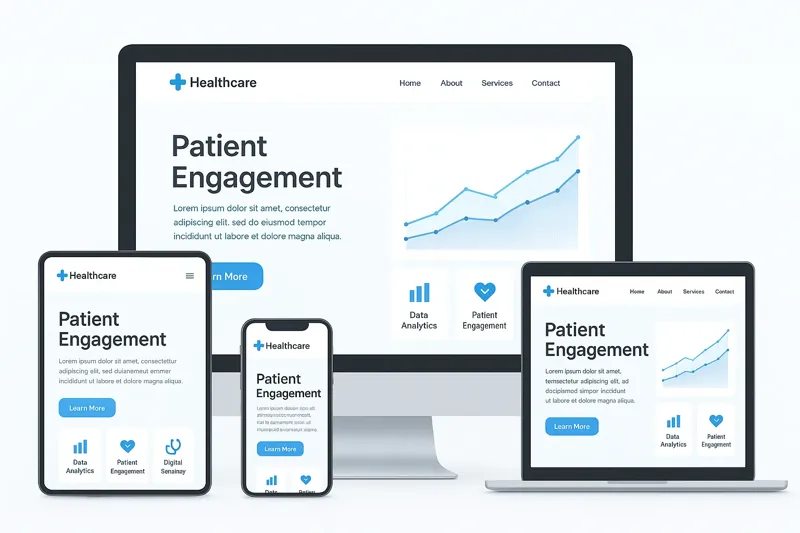
Healthcare websites must prioritize several optimization goals to remain effective and compliant. These include ensuring mobile responsiveness—considering that over 55% of web traffic originates from smartphones—and adherence to regulatory requirements like HIPAA to protect patient data during collection and transmission.
Strategic Goals of a Healthcare Website Redesign
The initiative should not only focus on aesthetics but also improve site speed, usability, and accessibility. Optimizing user navigation, enhancing local SEO, and integrating features such as online appointment booking and secure patient portals support operational efficiency and patient satisfaction. These objectives underpin a healthcare provider’s ability to attract and retain patients while maintaining a credible and professional online presence.
Foundations of a Successful Healthcare Website Redesign

What are the first steps clinics should take when redesigning their website?
Clinics should start their website redesign with a comprehensive site audit for healthcare. This audit evaluates existing functionality, responsiveness, the accuracy of content, and SEO performance. Understanding how the current website meets patient needs and regulatory standards forms a critical baseline.
Next, updating patient personas is essential. This process involves analyzing current demographics, pain points, and content needs of the target audience to ensure the website messaging connects effectively and addresses their specific requirements.
Following persona updates, clinics should develop a clear and detailed content strategy for healthcare websites. This includes conducting a content audit to identify outdated or redundant information to prune or refresh. Aligning content with patient interests and business goals boosts engagement and search rankings.
Sitemap development is a crucial part of the redesign. A well-organized sitemap ensures logical site architecture, which improves both user navigation and search engine indexing, aiding discoverability.
Realistic timelines that incorporate phases of content creation, design, testing, and stakeholder approvals are necessary to keep the project on track. An iterative healthcare website build and launch approach allows for continual refinements and optimizations after each release, ensuring the site consistently meets patient needs and adapts to new challenges.
Employing these foundational steps sets clinics on a path toward a functional, patient-centered, and search-optimized healthcare website redesign that drives trust and growth.
Design Principles to Enhance Patient Trust and Usability

What design elements are critical to gain patient trust through a clinic website?
Mobile responsiveness is essential for healthcare websites, with over 55% of traffic coming from smartphones. Optimizing for fast load times—ideally under 2 to 3 seconds—not only improves user experience but also reduces bounce rates, which boosts patient engagement and retention.
Intuitive navigation is another cornerstone of a trusted healthcare site. Implementing simple, clear menu structures such as collapsible or hamburger menus helps users quickly find important information like services or appointment booking. Logical categories and visible search bars streamline user journeys, reducing frustration especially for patients seeking timely care.
Visual design incorporating trust signals is vital. This includes displaying provider biographies, patient testimonials, security badges like HIPAA compliance seals, and professional certifications. These elements reassure visitors about the legitimacy and safety of the clinic, encouraging trust.
Accessibility compliance following WCAG 2.1 AA and ADA standards ensures that healthcare websites are usable by patients with disabilities. Features like text-to-speech compatibility, adjustable font sizes, and keyboard navigation options create an inclusive experience, broadening patient reach and reinforcing the clinic's commitment to patient-centered care.
Incorporating these design principles systematically enhances both usability and credibility, driving better patient satisfaction and long-term engagement.
Ensuring HIPAA Compliance and Security in Website Design

How can clinics ensure HIPAA compliance in healthcare websites when redesigning their websites?
Clinics must prioritize HIPAA compliance in healthcare websites through a comprehensive approach during website redesign.
Encrypted Data Transmission
Ensuring encrypted data transmission is critical. Using TLS encryption (Transport Layer Security) protocols protects all patient data transmitted via web forms, patient portals, or telehealth applications.
Secure Hosting and Access Controls
Selecting HIPAA-compliant hosting providers such as AWS HIPAA-eligible services or TrueVault hosting ensures robust infrastructure security. Access controls for PHI should restrict data access only to authorized personnel, backed by audit logs for HIPAA to monitor and record data interactions.
HIPAA-Compliant Form and Portal Integration
Online forms and patient portal integration and patient portals integrated into the website must adhere strictly to HIPAA standards by encrypting protected health information (PHI) and using secure authentication mechanisms. This safeguards patient confidentiality during data collection and communication.
Staff Training and Third-Party Vendor Management
Continual staff training on HIPAA regulations is essential to maintain compliance. Additionally, establishing Business Associate Agreements (BAAs) with third-party vendors secures shared responsibility for PHI protection. Employing data de-identification techniques further reduces compliance risk.
DemandExperts exemplifies these practices by managing consent protocols and secure data handling within their digital campaigns, ensuring adherence to legal requirements while enhancing patient trust and engagement.
Search Engine Optimization Strategies Tailored for Clinics
What SEO tactics should clinics use to increase their online visibility?
Clinics can significantly enhance their online visibility through targeted SEO strategies for doctors. Begin with comprehensive keyword research, focusing on local and intent-specific terms such as “emergency hospital near me” to align with patient search behaviors. Prioritizing patient intent ensures the website attracts qualified traffic ready to engage.
How does local SEO and Google Business Profile optimization support visibility?
Local SEO is critical for clinics as it directly improves presence in local map packs and search results. Clinics should claim and fully optimize their Google Business Profiles with accurate Name, Address, and Phone (NAP) details, updated service listings, and quality photos. Well-managed profiles increase trust and make it easier for potential patients to find and choose the clinic.
Why are site architecture and schema markup important?
A well-structured website, featuring descriptive URLs and logical navigation paths, supports both users and search engines. Integrating schema markup (structured data) further enhances search listings with rich snippets, improving click-through rates and making content easier to parse. This technical foundation is essential for higher search rankings and improved patient experience.
How can content demonstrate expertise and authority?
Content creation should emphasize demonstrating expertise, experience, authority, and trustworthiness (E-E-A-T). Involving qualified clinicians in content development and review strengthens credibility, while regularly updated, patient-centered educational materials reinforce authority. This approach fosters patient trust and aligns with algorithmic preferences for quality healthcare information.
By implementing these focused SEO strategies for doctors, clinics can improve organic search rankings, drive relevant local traffic, and ultimately increase patient acquisition and engagement.
Optimizing Patient Engagement Through Content and Functionality

How can clinics enhance patient engagement on their websites?
Clinics can significantly boost patient engagement by integrating essential digital tools such as online appointment scheduling features and secure patient portals that simplify interactions. Online appointment scheduling and secure patient portals cater to patient convenience, with studies showing 68% of patients prefer booking appointments digitally. These features reduce administrative burdens and increase patient satisfaction.
Providing educational and searchable health content, including blogs, videos, and health articles, helps clinics establish authority and trust. Well-crafted content that addresses common patient concerns supports informed decision-making and enhances engagement.
Incorporating frequently asked questions (FAQs) and interactive elements allows patients to quickly find answers to common queries, reducing staff workload and improving user experience. These interactive tools foster patient confidence and streamline communication.
Optimizing online forms and calls to action (CTAs) is crucial. Simplified, mobile-friendly forms with minimized fields reduce frustration and abandonment rates. Clear and personalized CTAs guide users seamlessly toward desired actions such as scheduling appointments or contacting the clinic.
Ongoing updates and SEO optimization ensure that content remains relevant and easily discoverable, maintaining high engagement levels over time. This strategic combination of content and functionality drives measurable patient growth and enhances operational efficiency.
Leveraging Social Proof and Online Reputation for Patient Trust

Why are patient reviews and social proof important for clinic websites?
Patient reviews and testimonials play a crucial role in establishing trust on healthcare websites. Approximately 80% of patients in the U.S. trust online reviews as much as personal recommendations. Displaying recent patient testimonials and third-party review scores prominently on your website helps build credibility and encourages new patient conversions. For guidance on this, see Patient Testimonials and Reviews and Building Patient Trust through Web Design.
Displaying patient reviews and testimonials
Showcasing authentic patient feedback, including written reviews and video testimonials, enhances the practice’s reputation and builds confidence among prospective patients. These real experiences reduce anxiety, making patients more comfortable choosing your services. Refer to Patient Testimonials SEO and Patient Testimonials in Healthcare for more details.
Trust badges and professional certifications
Incorporating visual trust signals, such as HIPAA compliance badges, security seals, and professional accreditation logos, reassures visitors about your clinic’s commitment to privacy, security, and quality care. Provider bios, including qualifications and certifications, further establish authority and trustworthiness. See Healthcare security badges, Provider credentials display, and Trust Signals in Healthcare Web Design for more on this topic.
Active management of online reputation
Healthcare providers should proactively monitor online reviews across platforms like Google, Healthgrades, and Yelp. Promptly responding to both positive and negative feedback demonstrates commitment to patient satisfaction. Reputation management must comply with privacy regulations such as HIPAA, ensuring sensitive information remains confidential. Useful resources include Managing Online Patient Reviews and Social Media for Healthcare Providers.
Impact of reviews on patient decision-making
Online reputation directly influences patient choices. Studies show that 74% of patients research medical providers online before booking appointments. Positive reviews and trust symbols can significantly improve perception, increase appointment bookings, and foster patient loyalty. See Medical SEO basics and Local SEO for medical practices for insights into patient search behavior and reputation impacts.
Effective use of social proof combined with vigilant reputation management is essential in today’s healthcare marketing landscape for attracting and retaining high-value patients. Learn more about Healthcare digital marketing strategies and Reputation Management in Healthcare.
Data-Driven Marketing and Analytics for Continuous Improvement
Why is data-driven marketing important for medical practices and clinics?
Data-driven marketing enables precise targeting and efficient resource allocation by analyzing patient demographics, search trends, and behavioral data. This approach allows healthcare providers to continually optimize their online presence by tracking essential key performance indicators (KPIs) such as website traffic, conversion rates, bounce rates, and session durations. For more on this, see Digital Marketing for Doctors.
Tracking KPIs like traffic, conversions, and bounce rates
Regularly monitoring KPIs helps clinics identify which pages attract visitors and where patients drop off. For instance, a high bounce rate on an appointment booking page indicates friction points, prompting redesign or content improvements. Conversions—such as completed contact forms or scheduled appointments—directly measure the success of marketing efforts, guiding budget allocation for maximum impact. Refer to Medical Website Best Practices for more details.
Using analytics to refine SEO and content
Integrating analytics tools like Google Analytics and Search Console enables practices to assess page performance, user behavior, and keyword effectiveness. This insight drives ongoing search engine optimization (SEO) enhancements and content updates that better match patient intent and improve organic rankings, especially important given the high volume of health queries online. Learn more from the Healthcare SEO guide and SEO strategies for doctors.
Patient feedback integration
Collecting and analyzing patient feedback from surveys, reviews, and site interactions strengthens trust and helps tailor messaging and services to patient needs. Positive patient testimonials bolster credibility and can be highlighted across marketing channels to influence new patient acquisition. See Building Patient Trust through Web Design to learn about using social proof effectively.
Adapting marketing based on performance data
Healthcare providers use data insights to refine ad targeting, content strategy, and website features. For example, if analytics reveal strong local engagement, investment in localized SEO and community content can be increased. Measurement of marketing ROI through metrics like cost-per-appointment ensures efficient spending and sustained growth. Refer to digital marketing for private practice for strategies on optimizing clinic marketing efforts.
Data-driven marketing forms the foundation for continuous improvement in healthcare digital strategies, enhancing patient engagement and competitive positioning. For comprehensive strategies and emerging trends, visit The Complete Guide to Digital Marketing for Healthcare.
Benefits of Partnering with Specialized Healthcare Marketing Agencies
What are the benefits of using a specialized digital marketing agency like DemandExperts for healthcare providers?
Partnering with a specialized healthcare marketing agency offers distinct advantages rooted in industry-specific expertise and deep regulatory knowledge. These agencies understand critical healthcare regulations such as HIPAA compliance in healthcare websites and digital accessibility standards like WCAG accessibility compliance. This expertise minimizes compliance risks during digital marketing initiatives, ensuring that sensitive patient data remains protected while meeting legal requirements.
Specialized agencies bring extensive experience accumulated from working with various healthcare clients. This breadth allows them to develop tailored and innovative marketing strategies, which can be continuously optimized based on data analytics. Their comprehensive service offerings cover the entire spectrum of digital marketing — from Healthcare SEO guide, content creation, and social media management to paid media buying and website analytics.
Moreover, these agencies build campaigns that are scalable and designed to attract high-value patients effectively. By focusing on measurable patient growth outcomes and combining secure marketing practices with data-driven insights, healthcare providers gain a competitive edge. This integrated approach enhances online visibility, boosts patient engagement, and drives sustainable practice growth beyond what generalist marketing firms typically achieve.
Future-Proofing Clinic Websites with Scalable and Flexible Designs
How can clinics ensure their websites remain effective as their services and regulations evolve?
Clinics can future-proof their websites by adopting modular website design principles paired with flexible CMS for healthcare that support healthcare compliance, including HIPAA compliance in healthcare websites. Headless CMS options such as Contentful CMS or Sanity CMS offer the versatility needed for continuous adaptation. These systems allow healthcare providers to easily integrate emerging technologies like telehealth tools integration, patient portal integration, and advanced online scheduling tools.
Such flexible infrastructure promotes seamless updates to content and functionalities, ensuring the site remains aligned with shifting patient needs and service expansions without extensive redevelopment. Additionally, it facilitates rapid modifications required by evolving healthcare regulations, supporting encrypted data transmission, secure hosting through HIPAA-compliant hosting providers, and audit logs for HIPAA.
By prioritizing a scalable, modular website architecture, clinics maintain a secure, user-friendly patient experience while enabling smooth growth, enhanced digital services, and sustained regulatory compliance. This strategic approach not only preserves trust and engagement but also supports long-term operational efficiency and marketing effectiveness.
Summary and Key Takeaways for Clinic Website Redesigns
Healthcare Website Redesign: Compliance, Usability, and SEO
Redesigning a clinic website demands strict adherence to healthcare regulations such as HIPAA, ensuring secure data handling and patient privacy. Usability enhancements like mobile responsiveness, clear navigation, and accessibility compliance improve patient engagement and trust. Optimizing for SEO, focusing on local keywords and content tailored to patient intent, boosts online visibility and attracts more prospective patients.
Leveraging Data and Expert Agencies
Successful redesigns leverage comprehensive data-driven analyses including site audits, user persona updates, and SEO performance reviews. Partnering with experienced healthcare marketing agencies ensures regulatory compliance, strategic content development, and the integration of digital tools like patient portals and online scheduling, greatly enhancing practice growth.
Ongoing Optimization for Patient Acquisition
Continuous website monitoring and iterative improvements are essential. Tracking metrics such as organic traffic, conversion rates, and patient feedback helps refine the user experience and SEO efficacy. This commitment to ongoing optimization supports sustained patient acquisition and positions clinics competitively in the digital healthcare landscape.
Introduction to Healthcare Website Redesign for Clinics
Enhancing Patient Engagement and Trust Through Website Redesign
The redesign of a healthcare website plays a pivotal role in fostering patient engagement and building trust. Given that approximately 74% of patients research medical providers online before making healthcare decisions, the quality and clarity of online information significantly influence patient choices. A thoughtfully redesigned website offers clear service overviews, provider biographies, and straightforward calls to action, all of which streamline the patient journey.
The Importance of Website Optimization
Healthcare websites must prioritize several optimization goals to remain effective and compliant. These include ensuring mobile responsiveness—considering that over 55% of web traffic originates from smartphones—and adherence to regulatory requirements like HIPAA to protect patient data during collection and transmission.
Strategic Goals of a Healthcare Website Redesign
The initiative should not only focus on aesthetics but also improve site speed, usability, and accessibility. Optimizing user navigation, enhancing local SEO, and integrating features such as online appointment booking and secure patient portals support operational efficiency and patient satisfaction. These objectives underpin a healthcare provider’s ability to attract and retain patients while maintaining a credible and professional online presence.
Foundations of a Successful Healthcare Website Redesign
What are the first steps clinics should take when redesigning their website?
Clinics should start their website redesign with a comprehensive site audit for healthcare. This audit evaluates existing functionality, responsiveness, the accuracy of content, and SEO performance. Understanding how the current website meets patient needs and regulatory standards forms a critical baseline.
Next, updating patient personas is essential. This process involves analyzing current demographics, pain points, and content needs of the target audience to ensure the website messaging connects effectively and addresses their specific requirements.
Following persona updates, clinics should develop a clear and detailed content strategy for healthcare websites. This includes conducting a content audit to identify outdated or redundant information to prune or refresh. Aligning content with patient interests and business goals boosts engagement and search rankings.
Sitemap development is a crucial part of the redesign. A well-organized sitemap ensures logical site architecture, which improves both user navigation and search engine indexing, aiding discoverability.
Realistic timelines that incorporate phases of content creation, design, testing, and stakeholder approvals are necessary to keep the project on track. An iterative healthcare website build and launch approach allows for continual refinements and optimizations after each release, ensuring the site consistently meets patient needs and adapts to new challenges.
Employing these foundational steps sets clinics on a path toward a functional, patient-centered, and search-optimized healthcare website redesign that drives trust and growth.
Design Principles to Enhance Patient Trust and Usability
What design elements are critical to gain patient trust through a clinic website?
Mobile responsiveness is essential for healthcare websites, with over 55% of traffic coming from smartphones. Optimizing for fast load times—ideally under 2 to 3 seconds—not only improves user experience but also reduces bounce rates, which boosts patient engagement and retention.
Intuitive navigation is another cornerstone of a trusted healthcare site. Implementing simple, clear menu structures such as collapsible or hamburger menus helps users quickly find important information like services or appointment booking. Logical categories and visible search bars streamline user journeys, reducing frustration especially for patients seeking timely care.
Visual design incorporating trust signals is vital. This includes displaying provider biographies, patient testimonials, security badges like HIPAA compliance seals, and professional certifications. These elements reassure visitors about the legitimacy and safety of the clinic, encouraging trust.
Accessibility compliance following WCAG 2.1 AA and ADA standards ensures that healthcare websites are usable by patients with disabilities. Features like text-to-speech compatibility, adjustable font sizes, and keyboard navigation options create an inclusive experience, broadening patient reach and reinforcing the clinic's commitment to patient-centered care.
Incorporating these design principles systematically enhances both usability and credibility, driving better patient satisfaction and long-term engagement.
Ensuring HIPAA Compliance and Security in Website Design
How can clinics ensure HIPAA compliance in healthcare websites when redesigning their websites?
Clinics must prioritize HIPAA compliance in healthcare websites through a comprehensive approach during website redesign.
Encrypted Data Transmission
Ensuring encrypted data transmission is critical. Using TLS encryption (Transport Layer Security) protocols protects all patient data transmitted via web forms, patient portals, or telehealth applications.
Secure Hosting and Access Controls
Selecting HIPAA-compliant hosting providers such as AWS HIPAA-eligible services or TrueVault hosting ensures robust infrastructure security. Access controls for PHI should restrict data access only to authorized personnel, backed by audit logs for HIPAA to monitor and record data interactions.
HIPAA-Compliant Form and Portal Integration
Online forms and patient portal integration and patient portals integrated into the website must adhere strictly to HIPAA standards by encrypting protected health information (PHI) and using secure authentication mechanisms. This safeguards patient confidentiality during data collection and communication.
Staff Training and Third-Party Vendor Management
Continual staff training on HIPAA regulations is essential to maintain compliance. Additionally, establishing Business Associate Agreements (BAAs) with third-party vendors secures shared responsibility for PHI protection. Employing data de-identification techniques further reduces compliance risk.
DemandExperts exemplifies these practices by managing consent protocols and secure data handling within their digital campaigns, ensuring adherence to legal requirements while enhancing patient trust and engagement.
Search Engine Optimization Strategies Tailored for Clinics
What SEO tactics should clinics use to increase their online visibility?
Clinics can significantly enhance their online visibility through targeted SEO strategies for doctors. Begin with comprehensive keyword research, focusing on local and intent-specific terms such as “emergency hospital near me” to align with patient search behaviors. Prioritizing patient intent ensures the website attracts qualified traffic ready to engage.
How does local SEO and Google Business Profile optimization support visibility?
Local SEO is critical for clinics as it directly improves presence in local map packs and search results. Clinics should claim and fully optimize their Google Business Profiles with accurate Name, Address, and Phone (NAP) details, updated service listings, and quality photos. Well-managed profiles increase trust and make it easier for potential patients to find and choose the clinic.
Why are site architecture and schema markup important?
A well-structured website, featuring descriptive URLs and logical navigation paths, supports both users and search engines. Integrating schema markup (structured data) further enhances search listings with rich snippets, improving click-through rates and making content easier to parse. This technical foundation is essential for higher search rankings and improved patient experience.
How can content demonstrate expertise and authority?
Content creation should emphasize demonstrating expertise, experience, authority, and trustworthiness (E-E-A-T). Involving qualified clinicians in content development and review strengthens credibility, while regularly updated, patient-centered educational materials reinforce authority. This approach fosters patient trust and aligns with algorithmic preferences for quality healthcare information.
By implementing these focused SEO strategies for doctors, clinics can improve organic search rankings, drive relevant local traffic, and ultimately increase patient acquisition and engagement.
Optimizing Patient Engagement Through Content and Functionality
How can clinics enhance patient engagement on their websites?
Clinics can significantly boost patient engagement by integrating essential digital tools such as online appointment scheduling features and secure patient portals that simplify interactions. Online appointment scheduling and secure patient portals cater to patient convenience, with studies showing 68% of patients prefer booking appointments digitally. These features reduce administrative burdens and increase patient satisfaction.
Providing educational and searchable health content, including blogs, videos, and health articles, helps clinics establish authority and trust. Well-crafted content that addresses common patient concerns supports informed decision-making and enhances engagement.
Incorporating frequently asked questions (FAQs) and interactive elements allows patients to quickly find answers to common queries, reducing staff workload and improving user experience. These interactive tools foster patient confidence and streamline communication.
Optimizing online forms and calls to action (CTAs) is crucial. Simplified, mobile-friendly forms with minimized fields reduce frustration and abandonment rates. Clear and personalized CTAs guide users seamlessly toward desired actions such as scheduling appointments or contacting the clinic.
Ongoing updates and SEO optimization ensure that content remains relevant and easily discoverable, maintaining high engagement levels over time. This strategic combination of content and functionality drives measurable patient growth and enhances operational efficiency.
Leveraging Social Proof and Online Reputation for Patient Trust
Why are patient reviews and social proof important for clinic websites?
Patient reviews and testimonials play a crucial role in establishing trust on healthcare websites. Approximately 80% of patients in the U.S. trust online reviews as much as personal recommendations. Displaying recent patient testimonials and third-party review scores prominently on your website helps build credibility and encourages new patient conversions. For guidance on this, see Patient Testimonials and Reviews and Building Patient Trust through Web Design.
Displaying patient reviews and testimonials
Showcasing authentic patient feedback, including written reviews and video testimonials, enhances the practice’s reputation and builds confidence among prospective patients. These real experiences reduce anxiety, making patients more comfortable choosing your services. Refer to Patient Testimonials SEO and Patient Testimonials in Healthcare for more details.
Trust badges and professional certifications
Incorporating visual trust signals, such as HIPAA compliance badges, security seals, and professional accreditation logos, reassures visitors about your clinic’s commitment to privacy, security, and quality care. Provider bios, including qualifications and certifications, further establish authority and trustworthiness. See Healthcare security badges, Provider credentials display, and Trust Signals in Healthcare Web Design for more on this topic.
Active management of online reputation
Healthcare providers should proactively monitor online reviews across platforms like Google, Healthgrades, and Yelp. Promptly responding to both positive and negative feedback demonstrates commitment to patient satisfaction. Reputation management must comply with privacy regulations such as HIPAA, ensuring sensitive information remains confidential. Useful resources include Managing Online Patient Reviews and Social Media for Healthcare Providers.
Impact of reviews on patient decision-making
Online reputation directly influences patient choices. Studies show that 74% of patients research medical providers online before booking appointments. Positive reviews and trust symbols can significantly improve perception, increase appointment bookings, and foster patient loyalty. See Medical SEO basics and Local SEO for medical practices for insights into patient search behavior and reputation impacts.
Effective use of social proof combined with vigilant reputation management is essential in today’s healthcare marketing landscape for attracting and retaining high-value patients. Learn more about Healthcare digital marketing strategies and Reputation Management in Healthcare.
Data-Driven Marketing and Analytics for Continuous Improvement
Why is data-driven marketing important for medical practices and clinics?
Data-driven marketing enables precise targeting and efficient resource allocation by analyzing patient demographics, search trends, and behavioral data. This approach allows healthcare providers to continually optimize their online presence by tracking essential key performance indicators (KPIs) such as website traffic, conversion rates, bounce rates, and session durations. For more on this, see Digital Marketing for Doctors.
Tracking KPIs like traffic, conversions, and bounce rates
Regularly monitoring KPIs helps clinics identify which pages attract visitors and where patients drop off. For instance, a high bounce rate on an appointment booking page indicates friction points, prompting redesign or content improvements. Conversions—such as completed contact forms or scheduled appointments—directly measure the success of marketing efforts, guiding budget allocation for maximum impact. Refer to Medical Website Best Practices for more details.
Using analytics to refine SEO and content
Integrating analytics tools like Google Analytics and Search Console enables practices to assess page performance, user behavior, and keyword effectiveness. This insight drives ongoing search engine optimization (SEO) enhancements and content updates that better match patient intent and improve organic rankings, especially important given the high volume of health queries online. Learn more from the Healthcare SEO guide and SEO strategies for doctors.
Patient feedback integration
Collecting and analyzing patient feedback from surveys, reviews, and site interactions strengthens trust and helps tailor messaging and services to patient needs. Positive patient testimonials bolster credibility and can be highlighted across marketing channels to influence new patient acquisition. See Building Patient Trust through Web Design to learn about using social proof effectively.
Adapting marketing based on performance data
Healthcare providers use data insights to refine ad targeting, content strategy, and website features. For example, if analytics reveal strong local engagement, investment in localized SEO and community content can be increased. Measurement of marketing ROI through metrics like cost-per-appointment ensures efficient spending and sustained growth. Refer to digital marketing for private practice for strategies on optimizing clinic marketing efforts.
Data-driven marketing forms the foundation for continuous improvement in healthcare digital strategies, enhancing patient engagement and competitive positioning. For comprehensive strategies and emerging trends, visit The Complete Guide to Digital Marketing for Healthcare.
Benefits of Partnering with Specialized Healthcare Marketing Agencies
What are the benefits of using a specialized digital marketing agency like DemandExperts for healthcare providers?
Partnering with a specialized healthcare marketing agency offers distinct advantages rooted in industry-specific expertise and deep regulatory knowledge. These agencies understand critical healthcare regulations such as HIPAA compliance in healthcare websites and digital accessibility standards like WCAG accessibility compliance. This expertise minimizes compliance risks during digital marketing initiatives, ensuring that sensitive patient data remains protected while meeting legal requirements.
Specialized agencies bring extensive experience accumulated from working with various healthcare clients. This breadth allows them to develop tailored and innovative marketing strategies, which can be continuously optimized based on data analytics. Their comprehensive service offerings cover the entire spectrum of digital marketing — from Healthcare SEO guide, content creation, and social media management to paid media buying and website analytics.
Moreover, these agencies build campaigns that are scalable and designed to attract high-value patients effectively. By focusing on measurable patient growth outcomes and combining secure marketing practices with data-driven insights, healthcare providers gain a competitive edge. This integrated approach enhances online visibility, boosts patient engagement, and drives sustainable practice growth beyond what generalist marketing firms typically achieve.
Future-Proofing Clinic Websites with Scalable and Flexible Designs
How can clinics ensure their websites remain effective as their services and regulations evolve?
Clinics can future-proof their websites by adopting modular website design principles paired with flexible CMS for healthcare that support healthcare compliance, including HIPAA compliance in healthcare websites. Headless CMS options such as Contentful CMS or Sanity CMS offer the versatility needed for continuous adaptation. These systems allow healthcare providers to easily integrate emerging technologies like telehealth tools integration, patient portal integration, and advanced online scheduling tools.
Such flexible infrastructure promotes seamless updates to content and functionalities, ensuring the site remains aligned with shifting patient needs and service expansions without extensive redevelopment. Additionally, it facilitates rapid modifications required by evolving healthcare regulations, supporting encrypted data transmission, secure hosting through HIPAA-compliant hosting providers, and audit logs for HIPAA.
By prioritizing a scalable, modular website architecture, clinics maintain a secure, user-friendly patient experience while enabling smooth growth, enhanced digital services, and sustained regulatory compliance. This strategic approach not only preserves trust and engagement but also supports long-term operational efficiency and marketing effectiveness.
Summary and Key Takeaways for Clinic Website Redesigns
Healthcare Website Redesign: Compliance, Usability, and SEO
Redesigning a clinic website demands strict adherence to healthcare regulations such as HIPAA, ensuring secure data handling and patient privacy. Usability enhancements like mobile responsiveness, clear navigation, and accessibility compliance improve patient engagement and trust. Optimizing for SEO, focusing on local keywords and content tailored to patient intent, boosts online visibility and attracts more prospective patients.
Leveraging Data and Expert Agencies
Successful redesigns leverage comprehensive data-driven analyses including site audits, user persona updates, and SEO performance reviews. Partnering with experienced healthcare marketing agencies ensures regulatory compliance, strategic content development, and the integration of digital tools like patient portals and online scheduling, greatly enhancing practice growth.
Ongoing Optimization for Patient Acquisition
Continuous website monitoring and iterative improvements are essential. Tracking metrics such as organic traffic, conversion rates, and patient feedback helps refine the user experience and SEO efficacy. This commitment to ongoing optimization supports sustained patient acquisition and positions clinics competitively in the digital healthcare landscape.