.png)

Why Social Media Matters in Healthcare Today
The Role of Social Media in Healthcare Decision-Making
Over 90% of consumers in the United States use social media to inform their health decisions. These platforms serve as pivotal resources where patients research symptoms, treatment options, and provider reputations before seeking care. The reliance on social media underscores its critical role as a primary channel for health information and education.
Consumer Behavior and Healthcare Information
Consumers increasingly turn to online channels to gather healthcare insights. About 56% to 79% depend on digital sources such as social media for trustworthy health content. This trend highlights the importance of healthcare organizations maintaining a strong online presence to reach and influence patients effectively.
Social Media’s Role in US Healthcare Marketing
For healthcare providers, social media is a powerful marketing tool that extends beyond patient education to actively growing patient bases. Platforms like Facebook, Instagram, LinkedIn, and Twitter offer diverse avenues to engage different demographics through tailored, HIPAA-compliant content. With strategic use—such as targeted advertising, community engagement, and sharing educational resources—social media enhances brand reputation, patient trust, and overall marketing ROI in the complex US healthcare landscape.
Choosing the Right Platforms for Different Audiences
What Are Platform Preferences by Demographic Groups?
Healthcare marketers must recognize that different demographic segments favor distinct social media platforms for healthcare professionals, enabling tailored outreach strategies.
- Gen Z and Millennials predominantly use Instagram Reels and TikTok for Healthcare for engaging, short-form video content.
- Parents and family-oriented users gravitate towards Facebook Groups and Pinterest for Parents, platforms effective for community support and comprehensive health information.
- Healthcare professionals (HCPs) preferentially use LinkedIn and Twitter for Healthcare Professionals for professional networking, industry news, and continuing education.
This segmentation underscores the importance of aligning platform choice with the target audience’s preferences to maximize engagement and credibility.
Which Platforms Are Effective for Healthcare Marketing?
Healthcare organizations in the United States leverage several platforms, each with unique strengths for marketing and patient engagement:
- Facebook: Ideal for building patient support groups, sharing health tips, and hosting live Q&A sessions.
- Instagram: Leverages visual storytelling through images, infographics, and short videos to educate and humanize the practice.
- LinkedIn: Effective for professional branding, thought leadership, and recruiting healthcare talent.
- YouTube: Suitable for longer educational videos, procedure explanations, and patient testimonials.
- TikTok: Useful for reaching younger audiences with creative, educational, and transparent content.
Selecting platforms that align with content strengths and audience preferences yields stronger patient connectivity.
Why Should Healthcare Organizations Focus Strategically on Select Platforms?
Rather than dispersing resources thinly across numerous social networks, healthcare marketers should concentrate on one or two platforms that best suit their audience and strategic goals.
- Maximizing ROI and Engagement: Focused efforts improve content quality, consistency, and community building.
- Compliance and Management: Streamlining platform use simplifies adherence to HIPAA compliance in social media and other healthcare regulations, reducing risks.
- Analytics and Optimization: Concentrated data collection allows deeper analytics and more precise strategy refinement.
Case studies reveal that institutions like Northwestern Medicine prioritize platforms such as TikTok health campaigns and Instagram for healthcare to capitalize on demographic trends efficiently.
By understanding audience preferences, selecting appropriate platforms, and prioritizing strategic focus, healthcare organizations can enhance their social media impact, foster patient trust, and drive measurable growth.
Content Strategies: Education, Engagement, and Trust Building
What types of engaging healthcare content are effective?
Healthcare organizations should create a mix of content that educates, informs, and humanizes their practice. Key content types include:
- Educational posts: Infographics, explainer videos, preventive health tips, and myth-busting articles help convey complex information in easily digestible formats. For more on Healthcare social media marketing strategies.
- Behind-the-scenes content: Showcasing day-to-day practice operations or staff experiences humanizes the organization and builds patient trust. See (Using social media in healthcare).
- User-generated content: Patient testimonials and reviews (with explicit consent) enhance credibility and build community. Learn about Building healthcare community pages.
- Interactive content: Polls, Q&A sessions, and live videos foster active engagement and real-time communication. Explore Engaging patients via social media.
- Trending topics and seasonal updates: Timely content on health news or awareness months keeps content relevant and engaging. See Social media influence on healthcare provider choice.
How can patient education be effectively delivered via social media?
Social media serves as a versatile platform for extending patient education beyond clinic walls by providing trustworthy, accessible health information. Strategies include:
- Sharing clear, jargon-free materials supported by reputable sources like CDC or WHO. For Patient education through social media.
- Utilizing multimedia formats such as short videos, infographics, and podcasts for broader reach. See Using Videos and Infographics.
- Addressing common patient concerns, myths, and FAQs to build understanding and reduce misinformation. Refer to Addressing health misinformation with verified facts.
- Linking to credible resources and encouraging patients to consult professionals for personalized advice. Learn about Reliable Health Resources: CDC and WHO.
- Encouraging ongoing dialogue through comments and direct engagement to foster a sense of community. Visit Social media for patient engagement and education.
How to balance professionalism and approachability in healthcare social media?
Healthcare practices must develop an online persona that is expert yet approachable to resonate with diverse audiences. Key approaches include:
- Maintaining HIPAA compliance and ethical standards to protect patient privacy. Details on HIPAA and social media compliance.
- Communicating with empathy, transparency, and cultural sensitivity. See Healthcare professionalism on social media.
- Using friendly, conversational language without compromising accuracy or professionalism. For tips, visit Tips for healthcare professionals using social media.
- Highlighting staff stories and achievements to add personality to the brand. Check Highlighting Organizational Achievements on Social Media.
- Leveraging humor and lighthearted posts sparingly to increase engagement while staying within professional boundaries. See Effective health communication strategies.
How to use patient testimonials ethically on social media?
Patient testimonials are powerful tools that require strict ethical considerations:
- Obtain explicit written consent before sharing any patient stories, images, or videos. Learn about Patient consent requirements.
- Avoid revealing identifiable patient information to ensure confidentiality and HIPAA compliance. Refer to Avoiding HIPAA violations on social media.
- Use testimonials to emphasize authentic patient experiences, outcomes, and satisfaction. See Patient testimonials on social media.
- Include disclaimers clarifying that individual results may vary. For more, visit Social media HIPAA guidelines.
- Regularly train staff on social media and privacy policies to uphold compliance and patient trust. Check Training staff for HIPAA compliance.
Effectively combining educational content, authentic engagement, and respectful storytelling on social media significantly enhances trust, patient loyalty, and healthcare marketing outcomes in a compliant manner. For comprehensive strategies, see Healthcare Digital Marketing.
Maintaining HIPAA Compliance and Privacy on Social Media
What are HIPAA regulations relating to social media?
HIPAA (Health Insurance Portability and Accountability Act) mandates strict protection of patients' Protected Health Information (PHI). When using social media, healthcare organizations must ensure that no identifiable patient information is shared without explicit written consent. This includes avoiding posting patient stories, images, videos, or responses that could reveal PHI. Compliance is critical to uphold patient privacy rights and prevent legal repercussions. See HIPAA regulations for nurses and HIPAA and social media compliance.
What are the risks of sharing PHI on social media?
Sharing PHI without proper safeguards can lead to severe risks including:
- Legal penalties with fines ranging from $100 to over $50,000 per violation
- Serious reputational damage and loss of patient trust
- Potential criminal charges including imprisonment in extreme cases
- Violations often occur unintentionally through direct or indirect disclosures, such as posting identifiable details or responding to patient reviews with sensitive information
For more, review Risks of sharing PHI on social platforms and Common social media HIPAA violations.
What strategies help ensure compliance and staff training?
Healthcare organizations should implement comprehensive social media policies that clearly outline acceptable practices and HIPAA compliance requirements. Key strategies include:
- Training all staff on HIPAA rules and responsible social media usage
- Prohibiting sharing of any PHI on personal or organizational accounts without consent
- Encouraging separation of personal and professional social media profiles
- Regular audits of social media content and privacy settings
- Developing a culture that encourages prompt reporting of potential violations
For detailed guidance, see Social media policies for healthcare and Staff training for HIPAA compliance.
Which tools and workflows support secure social media management?
Utilizing secure platforms and workflows is essential for HIPAA-compliant social media marketing. Recommended measures include:
- Using encrypted and HIPAA-compliant content management and hosting services like Office 365 or SharePoint
- Implementing role-based access controls and approval workflows to pre-approve posts
- Employing automated monitoring tools for detecting unauthorized PHI disclosures
- Applying strong password policies and two-factor authentication (2FA) to prevent unauthorized account access
- Maintaining audit trails and documentation to ensure accountability and compliance
Helpful resources on this topic include HIPAA compliance best practices and Secure social media management platforms.
By adopting these practices, healthcare organizations can effectively engage patients and communities on social media while preserving privacy, upholding ethical standards, and minimizing compliance risks. For comprehensive Healthcare social media marketing and Social media compliance for healthcare.
Building Community Through Interaction and User-Generated Content

How Can Healthcare Providers Enhance Engagement Through Interaction?
Healthcare providers can significantly enhance patient engagement by actively interacting on social media. This involves responding promptly to comments, hosting live Q&A sessions, and encouraging user participation. Engaging personally and professionally helps humanize the healthcare practice, fostering trust and patient loyalty. For more on Engaging patients via social media and Interacting with healthcare accounts, see the comprehensive tips available.
What Interactive Content Boosts Patient Participation?
Interactive content such as polls and Q&A features are highly effective in driving patient participation. Polls allow patients to share their opinions on health topics, while Q&A sessions provide opportunities for real-time dialogue, clarifications, and education. These formats invite active involvement, increasing community connection. Learn more about Patient engagement via social media and Interactive patient engagement.
Which Platforms Are Best for Building Healthcare Communities?
Platforms like Facebook and Instagram are ideal for community building in healthcare due to their broad user base and features such as dedicated groups, stories, and comment engagement. Facebook groups foster a sense of belonging around shared health interests, while Instagram's visual storytelling strengthens the emotional connection. Explore detailed guidance on Social media platforms for healthcare and Social Media Platforms in Healthcare.
What Are the Benefits of User-Generated Content in Healthcare?
User-generated content (UGC) such as patient testimonials, reviews, and shared experiences enhances credibility and trustworthiness. It provides authentic perspectives that resonate with prospective patients by humanizing the healthcare brand and illustrating real-world impact. Encouraging UGC helps amplify outreach and builds a supportive patient community. For insights on User-generated content for healthcare trust and Patient testimonials on social media, visit these resources.
Healthcare organizations should strategically leverage interaction and UGC to cultivate engaged, informed communities, driving patient acquisition and retention while maintaining compliance and professionalism. For best practices on Healthcare professionalism on social media and Healthcare social media compliance, consult the linked materials above.
Leveraging Paid Advertising for Patient Acquisition and Growth
How can targeted social media ads expand reach for healthcare providers?
Targeted social media advertising enables healthcare organizations to reach specific patient demographics based on factors such as age, location, health interests, and behavioral data. Platforms like Facebook, Instagram, LinkedIn, and Twitter offer detailed targeting options that help providers connect with high-value patients effectively. This precision reduces wasted ad spend and increases the likelihood of attracting patients who need particular services or specialties. Learn more about Healthcare social media marketing strategies and Healthcare social media advertising.
What role do promoted posts play in growing a healthcare practice’s online presence?
Promoted posts amplify organic content visibility by reaching a larger and more relevant audience beyond current followers. These paid boosts can highlight educational campaigns, new services, or patient testimonials, enhancing brand awareness and credibility. Promoted content attracts potential patients who may not yet be familiar with the healthcare provider, contributing directly to patient acquisition efforts. See detailed insights on Social media marketing for healthcare and Healthcare Social Media Marketing.
How should healthcare practices balance organic and paid social media strategies?
An integrated approach combining organic and paid content is essential for sustainable growth. Organic posts nurture community engagement and build long-term trust through consistent, authentic interaction and education. Meanwhile, paid ads strategically accelerate exposure for key campaigns, seasonal initiatives, or targeted messaging. Maintaining this balance ensures cost-effective resource allocation while supporting patient relationship development. Explore best practices for Healthcare marketing on social media and Healthcare Social Media Marketing.
How is ROI measured for social media advertising in healthcare?
ROI evaluation involves tracking metrics such as increased appointment requests, new patient inquiries, website traffic derived from ad campaigns, and conversion rates from clicks to bookings. Analytics tools like Facebook Insights, Google Analytics, and specialized healthcare marketing platforms facilitate detailed performance analysis. Monitoring these metrics helps marketers optimize targeting parameters and budget allocation, ensuring compliance with HIPAA and maximizing marketing effectiveness. For comprehensive guidance, refer to Tracking social media performance, Measuring ROI in healthcare marketing, and Social media compliance in healthcare.
Using Analytics and Social Listening to Optimize Strategy
Tools for Tracking and Analyzing Performance
Healthcare organizations rely on specialized tools such as Hootsuite, Sprout Social, Brandwatch, Weave, and Google Analytics to monitor social media performance. These platforms enable practices to schedule posts, track engagement, and gather valuable data to assess campaign effectiveness.
Social Listening for Patient Feedback and Public Sentiment
Social listening tools for healthcare marketing empower healthcare marketers to monitor patient conversations, identify health concerns, and track public sentiment in real time. Platforms like Hootsuite Listening help detect emerging health issues, misinformation, and audience needs, enabling proactive communication and tailored messaging.
Key Metrics to Monitor
Measuring success involves analyzing several key performance indicators:
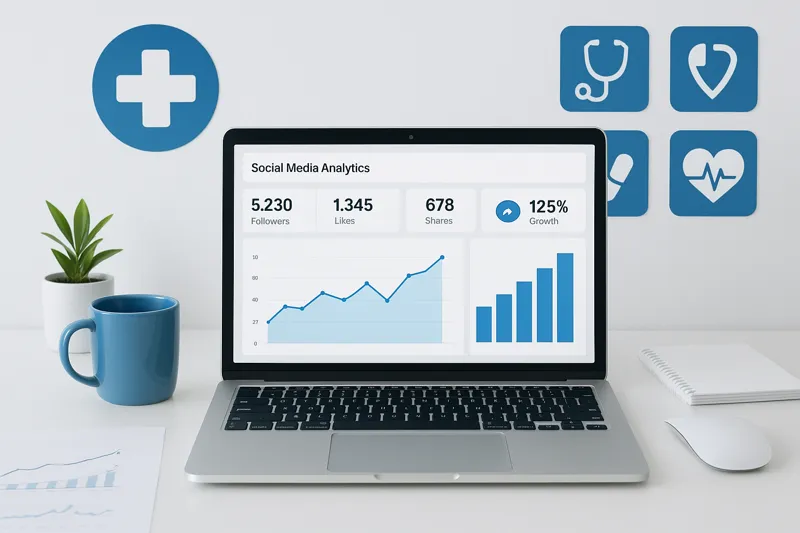
- Engagement Rate: Healthcare accounts generally aim for 3-5% engagement to ensure content resonates with the audience.
- Click-Through Rate (CTR): Tracks user actions and conversions generated from posts, crucial for understanding campaign impact.
- Follower Growth: Sustained increases indicate expanding reach and audience interest. Monitoring these metrics guides strategic decisions and resource allocation. See Healthcare social media marketing strategies for more.
Adjusting Content and Campaign Tactics Based on Data
Data-driven adjustments enhance campaign effectiveness by aligning content with audience preferences. For example, analytics might reveal higher engagement with educational videos or patient testimonials, prompting healthcare providers to increase such content. Similarly, social listening can uncover frequently asked questions or misinformation to address proactively. Continuous refinement based on analytics strengthens patient trust, increases visibility, and supports compliance with healthcare marketing standards.
Showcasing Healthcare Professionals and Organizational Culture
How can healthcare leaders develop their personal brand on social media?
Healthcare executives and professionals can enhance their personal brand by optimizing profiles with professional photos, compelling biographies, and clear value-driven headlines, especially on platforms like Optimize LinkedIn Profiles for Healthcare Executives. Regularly sharing insights, industry trends, and thought leadership content helps to build credibility and visibility within healthcare communities. Consistency and authenticity are essential to maintain professional stature while being approachable.
Why is humanizing healthcare providers important and how can it be achieved?
Humanizing healthcare providers fosters patient trust and engagement by showcasing the individuals behind clinical roles. Sharing behind-the-scenes content, day-in-the-life stories, and positive employee experiences on platforms such as Instagram and Facebook adds approachability to the brand. These narratives, when balanced with professionalism and Healthcare social media strategies, can strengthen relational connections and create a welcoming online presence.
What role does LinkedIn play in healthcare professional networking?
LinkedIn is a vital platform for healthcare professionals to network, collaborate, and share expertise. Engaging in relevant groups, posting original content, and connecting with leaders and policymakers amplifies influence. Highlighting organizational achievements and professional milestones on LinkedIn not only reinforces individual credibility but also elevates the organization's reputation.
How can social media be leveraged to attract and retain healthcare talent?
Social media supports talent attraction by showcasing organizational culture, employee stories, and career opportunities. Platforms like LinkedIn and Facebook facilitate targeted recruitment advertising and enable hospitals to communicate their values and working environment. By humanizing the workplace and actively engaging with potential hires online, healthcare organizations can address staffing challenges and build strong, committed teams. For more strategies on this, see Healthcare social media marketing strategies.
Crisis Communication and Reputation Management on Social Media
How can social media be effectively utilized during public health emergencies?
Social media serves as an essential platform for rapid dissemination of accurate and timely information during public health crises. Healthcare organizations use it to share safety guidelines, outbreak updates, and critical announcements, enabling swift outreach to large communities. For instance, platforms facilitate communication of guidelines from authorities like the CDC to manage public concerns efficiently (Social Media in Healthcare, Social media influence on healthcare provider choice, Social media for patient communication).
What are best practices for managing negative comments and misinformation on social media?
Managing misinformation and negative feedback requires prompt and respectful responses grounded in evidence-based information. Healthcare providers should address false claims with clear, verified facts from trusted sources to build credibility. Engaging transparently in conversations and redirecting sensitive matters offline can help maintain a positive online environment and patient loyalty (Tips for Healthcare Professionals Using Social Media, Addressing health misinformation, Healthcare social media marketing strategies).
How does transparent communication build trust with patients and communities?
Transparency fosters trust by demonstrating honesty and accountability. Sharing behind-the-scenes content, acknowledging concerns openly, and providing consistent updates reassures patients. When organizations communicate clearly about uncertainties or ongoing efforts, it strengthens patient relationships and reinforces their reputation (Building trust through social media, Building brand reputation in healthcare, Healthcare social media marketing).
Why is developing crisis communication plans and social media policies critical?
Proactive crisis planning allows healthcare organizations to respond efficiently and ethically. Detailed social media policies establish guidelines for content sharing, staff responsibilities, and privacy compliance, particularly regarding HIPAA regulations. Training and regular audits ensure readiness to handle emergencies while protecting patient confidentiality and maintaining compliance (HIPAA and social media compliance, American Hospital Association social media policy, Healthcare social media compliance, Social Media Compliance in Healthcare).
By integrating these elements—timely public health communication, active misinformation management, transparent engagement, and robust crisis protocols—healthcare providers can protect and enhance their reputation, even under challenging circumstances (Healthcare Marketing on Social Media, Ultimate Social Media Strategy for Healthcare, Healthcare Social Media Marketing.
Future Trends in Healthcare Social Media Marketing
Rise of Healthcare Influencers
Healthcare influencers are becoming pivotal in shaping patient perceptions and expanding outreach. Respected physicians and healthcare professionals use platforms such as TikTok, Instagram, and YouTube to sharing healthcare infographics and videos and personal stories. Collaborations with these influencers help healthcare organizations build authenticity, increase credibility, and connect with younger, digital-native audiences more effectively (Healthcare social media marketing strategies.
AI Integration and Chatbot Use
Artificial intelligence is increasingly integrated into healthcare social media marketing strategies. AI-powered chatbots provide instantaneous responses to patient inquiries, assist with appointment scheduling, and offer tailored health advice while ensuring HIPAA compliance in social media. These technologies not only enhance patient engagement but also free up staff resources to focus on complex care tasks (Healthcare digital marketing strategies).
Live Video and Real-Time Updates
Live videos and real-time social media updates drive higher engagement by providing an interactive and transparent view into healthcare services. Hospitals and providers share live educational sessions, behind-the-scenes tours, and timely health alerts, helping to build trust and respond swiftly during health crises or public health campaigns (Healthcare Marketing on Social Media, Social Media in Healthcare).
Emerging Tools and Technologies
Next-generation tools are transforming healthcare marketing. Platforms like Hootsuite for health concerns, Social media management tools for healthcare, and analytics suites enable precise targeting, sentiment analysis, and compliance monitoring. The use of AI-based content optimization tools ensures the creation of accurate, impactful, and compliant health content. With healthcare's stringent regulatory environment, these technologies facilitate effective strategy execution and measurable patient growth outcomes (Healthcare digital marketing strategies, Healthcare social media compliance).
Maximizing Social Media Impact for Healthcare Success
Best Practices for Healthcare Social Media
Healthcare providers must adopt targeted, platform-specific strategies to effectively reach their audience. Utilizing platforms like Facebook for patient support, Instagram for visual stories, LinkedIn for professional networking, and Twitter for real-time updates helps diversify engagement. Sharing accurate, educational content such as infographics, videos, and preventive health tips builds trust and enhances patient education.
Compliance and Patient Engagement
Strict adherence to HIPAA and other privacy laws is crucial to protect patient data and avoid costly penalties. Healthcare organizations should implement robust social media policies, staff training, and secure content approval workflows. Active engagement through responding to comments, hosting live Q&A sessions, and fostering community connections cultivates loyalty and improves patient satisfaction.
Innovation and Sustained Growth
Integrating analytics tools enables the continuous evaluation of campaign success and informed adjustments. The adoption of AI-driven content, healthcare influencers, and real-time interactive formats like live videos enhances reach and relevance. Embracing digital trends and compliance ensures sustained patient growth and bolstered online reputation in the competitive healthcare landscape.
Why Social Media Matters in Healthcare Today
The Role of Social Media in Healthcare Decision-Making
Over 90% of consumers in the United States use social media to inform their health decisions. These platforms serve as pivotal resources where patients research symptoms, treatment options, and provider reputations before seeking care. The reliance on social media underscores its critical role as a primary channel for health information and education.
Consumer Behavior and Healthcare Information
Consumers increasingly turn to online channels to gather healthcare insights. About 56% to 79% depend on digital sources such as social media for trustworthy health content. This trend highlights the importance of healthcare organizations maintaining a strong online presence to reach and influence patients effectively.
Social Media’s Role in US Healthcare Marketing
For healthcare providers, social media is a powerful marketing tool that extends beyond patient education to actively growing patient bases. Platforms like Facebook, Instagram, LinkedIn, and Twitter offer diverse avenues to engage different demographics through tailored, HIPAA-compliant content. With strategic use—such as targeted advertising, community engagement, and sharing educational resources—social media enhances brand reputation, patient trust, and overall marketing ROI in the complex US healthcare landscape.
Choosing the Right Platforms for Different Audiences
What Are Platform Preferences by Demographic Groups?
Healthcare marketers must recognize that different demographic segments favor distinct social media platforms for healthcare professionals, enabling tailored outreach strategies.
- Gen Z and Millennials predominantly use Instagram Reels and TikTok for Healthcare for engaging, short-form video content.
- Parents and family-oriented users gravitate towards Facebook Groups and Pinterest for Parents, platforms effective for community support and comprehensive health information.
- Healthcare professionals (HCPs) preferentially use LinkedIn and Twitter for Healthcare Professionals for professional networking, industry news, and continuing education.
This segmentation underscores the importance of aligning platform choice with the target audience’s preferences to maximize engagement and credibility.
Which Platforms Are Effective for Healthcare Marketing?
Healthcare organizations in the United States leverage several platforms, each with unique strengths for marketing and patient engagement:
- Facebook: Ideal for building patient support groups, sharing health tips, and hosting live Q&A sessions.
- Instagram: Leverages visual storytelling through images, infographics, and short videos to educate and humanize the practice.
- LinkedIn: Effective for professional branding, thought leadership, and recruiting healthcare talent.
- YouTube: Suitable for longer educational videos, procedure explanations, and patient testimonials.
- TikTok: Useful for reaching younger audiences with creative, educational, and transparent content.
Selecting platforms that align with content strengths and audience preferences yields stronger patient connectivity.
Why Should Healthcare Organizations Focus Strategically on Select Platforms?
Rather than dispersing resources thinly across numerous social networks, healthcare marketers should concentrate on one or two platforms that best suit their audience and strategic goals.
- Maximizing ROI and Engagement: Focused efforts improve content quality, consistency, and community building.
- Compliance and Management: Streamlining platform use simplifies adherence to HIPAA compliance in social media and other healthcare regulations, reducing risks.
- Analytics and Optimization: Concentrated data collection allows deeper analytics and more precise strategy refinement.
Case studies reveal that institutions like Northwestern Medicine prioritize platforms such as TikTok health campaigns and Instagram for healthcare to capitalize on demographic trends efficiently.
By understanding audience preferences, selecting appropriate platforms, and prioritizing strategic focus, healthcare organizations can enhance their social media impact, foster patient trust, and drive measurable growth.
Content Strategies: Education, Engagement, and Trust Building
What types of engaging healthcare content are effective?
Healthcare organizations should create a mix of content that educates, informs, and humanizes their practice. Key content types include:
- Educational posts: Infographics, explainer videos, preventive health tips, and myth-busting articles help convey complex information in easily digestible formats. For more on Healthcare social media marketing strategies.
- Behind-the-scenes content: Showcasing day-to-day practice operations or staff experiences humanizes the organization and builds patient trust. See (Using social media in healthcare).
- User-generated content: Patient testimonials and reviews (with explicit consent) enhance credibility and build community. Learn about Building healthcare community pages.
- Interactive content: Polls, Q&A sessions, and live videos foster active engagement and real-time communication. Explore Engaging patients via social media.
- Trending topics and seasonal updates: Timely content on health news or awareness months keeps content relevant and engaging. See Social media influence on healthcare provider choice.
How can patient education be effectively delivered via social media?
Social media serves as a versatile platform for extending patient education beyond clinic walls by providing trustworthy, accessible health information. Strategies include:
- Sharing clear, jargon-free materials supported by reputable sources like CDC or WHO. For Patient education through social media.
- Utilizing multimedia formats such as short videos, infographics, and podcasts for broader reach. See Using Videos and Infographics.
- Addressing common patient concerns, myths, and FAQs to build understanding and reduce misinformation. Refer to Addressing health misinformation with verified facts.
- Linking to credible resources and encouraging patients to consult professionals for personalized advice. Learn about Reliable Health Resources: CDC and WHO.
- Encouraging ongoing dialogue through comments and direct engagement to foster a sense of community. Visit Social media for patient engagement and education.
How to balance professionalism and approachability in healthcare social media?
Healthcare practices must develop an online persona that is expert yet approachable to resonate with diverse audiences. Key approaches include:
- Maintaining HIPAA compliance and ethical standards to protect patient privacy. Details on HIPAA and social media compliance.
- Communicating with empathy, transparency, and cultural sensitivity. See Healthcare professionalism on social media.
- Using friendly, conversational language without compromising accuracy or professionalism. For tips, visit Tips for healthcare professionals using social media.
- Highlighting staff stories and achievements to add personality to the brand. Check Highlighting Organizational Achievements on Social Media.
- Leveraging humor and lighthearted posts sparingly to increase engagement while staying within professional boundaries. See Effective health communication strategies.
How to use patient testimonials ethically on social media?
Patient testimonials are powerful tools that require strict ethical considerations:
- Obtain explicit written consent before sharing any patient stories, images, or videos. Learn about Patient consent requirements.
- Avoid revealing identifiable patient information to ensure confidentiality and HIPAA compliance. Refer to Avoiding HIPAA violations on social media.
- Use testimonials to emphasize authentic patient experiences, outcomes, and satisfaction. See Patient testimonials on social media.
- Include disclaimers clarifying that individual results may vary. For more, visit Social media HIPAA guidelines.
- Regularly train staff on social media and privacy policies to uphold compliance and patient trust. Check Training staff for HIPAA compliance.
Effectively combining educational content, authentic engagement, and respectful storytelling on social media significantly enhances trust, patient loyalty, and healthcare marketing outcomes in a compliant manner. For comprehensive strategies, see Healthcare Digital Marketing.
Maintaining HIPAA Compliance and Privacy on Social Media
What are HIPAA regulations relating to social media?
HIPAA (Health Insurance Portability and Accountability Act) mandates strict protection of patients' Protected Health Information (PHI). When using social media, healthcare organizations must ensure that no identifiable patient information is shared without explicit written consent. This includes avoiding posting patient stories, images, videos, or responses that could reveal PHI. Compliance is critical to uphold patient privacy rights and prevent legal repercussions. See HIPAA regulations for nurses and HIPAA and social media compliance.
What are the risks of sharing PHI on social media?
Sharing PHI without proper safeguards can lead to severe risks including:
- Legal penalties with fines ranging from $100 to over $50,000 per violation
- Serious reputational damage and loss of patient trust
- Potential criminal charges including imprisonment in extreme cases
- Violations often occur unintentionally through direct or indirect disclosures, such as posting identifiable details or responding to patient reviews with sensitive information
For more, review Risks of sharing PHI on social platforms and Common social media HIPAA violations.
What strategies help ensure compliance and staff training?
Healthcare organizations should implement comprehensive social media policies that clearly outline acceptable practices and HIPAA compliance requirements. Key strategies include:
- Training all staff on HIPAA rules and responsible social media usage
- Prohibiting sharing of any PHI on personal or organizational accounts without consent
- Encouraging separation of personal and professional social media profiles
- Regular audits of social media content and privacy settings
- Developing a culture that encourages prompt reporting of potential violations
For detailed guidance, see Social media policies for healthcare and Staff training for HIPAA compliance.
Which tools and workflows support secure social media management?
Utilizing secure platforms and workflows is essential for HIPAA-compliant social media marketing. Recommended measures include:
- Using encrypted and HIPAA-compliant content management and hosting services like Office 365 or SharePoint
- Implementing role-based access controls and approval workflows to pre-approve posts
- Employing automated monitoring tools for detecting unauthorized PHI disclosures
- Applying strong password policies and two-factor authentication (2FA) to prevent unauthorized account access
- Maintaining audit trails and documentation to ensure accountability and compliance
Helpful resources on this topic include HIPAA compliance best practices and Secure social media management platforms.
By adopting these practices, healthcare organizations can effectively engage patients and communities on social media while preserving privacy, upholding ethical standards, and minimizing compliance risks. For comprehensive Healthcare social media marketing and Social media compliance for healthcare.
Building Community Through Interaction and User-Generated Content
How Can Healthcare Providers Enhance Engagement Through Interaction?
Healthcare providers can significantly enhance patient engagement by actively interacting on social media. This involves responding promptly to comments, hosting live Q&A sessions, and encouraging user participation. Engaging personally and professionally helps humanize the healthcare practice, fostering trust and patient loyalty. For more on Engaging patients via social media and Interacting with healthcare accounts, see the comprehensive tips available.
What Interactive Content Boosts Patient Participation?
Interactive content such as polls and Q&A features are highly effective in driving patient participation. Polls allow patients to share their opinions on health topics, while Q&A sessions provide opportunities for real-time dialogue, clarifications, and education. These formats invite active involvement, increasing community connection. Learn more about Patient engagement via social media and Interactive patient engagement.
Which Platforms Are Best for Building Healthcare Communities?
Platforms like Facebook and Instagram are ideal for community building in healthcare due to their broad user base and features such as dedicated groups, stories, and comment engagement. Facebook groups foster a sense of belonging around shared health interests, while Instagram's visual storytelling strengthens the emotional connection. Explore detailed guidance on Social media platforms for healthcare and Social Media Platforms in Healthcare.
What Are the Benefits of User-Generated Content in Healthcare?
User-generated content (UGC) such as patient testimonials, reviews, and shared experiences enhances credibility and trustworthiness. It provides authentic perspectives that resonate with prospective patients by humanizing the healthcare brand and illustrating real-world impact. Encouraging UGC helps amplify outreach and builds a supportive patient community. For insights on User-generated content for healthcare trust and Patient testimonials on social media, visit these resources.
Healthcare organizations should strategically leverage interaction and UGC to cultivate engaged, informed communities, driving patient acquisition and retention while maintaining compliance and professionalism. For best practices on Healthcare professionalism on social media and Healthcare social media compliance, consult the linked materials above.
Leveraging Paid Advertising for Patient Acquisition and Growth
How can targeted social media ads expand reach for healthcare providers?
Targeted social media advertising enables healthcare organizations to reach specific patient demographics based on factors such as age, location, health interests, and behavioral data. Platforms like Facebook, Instagram, LinkedIn, and Twitter offer detailed targeting options that help providers connect with high-value patients effectively. This precision reduces wasted ad spend and increases the likelihood of attracting patients who need particular services or specialties. Learn more about Healthcare social media marketing strategies and Healthcare social media advertising.
What role do promoted posts play in growing a healthcare practice’s online presence?
Promoted posts amplify organic content visibility by reaching a larger and more relevant audience beyond current followers. These paid boosts can highlight educational campaigns, new services, or patient testimonials, enhancing brand awareness and credibility. Promoted content attracts potential patients who may not yet be familiar with the healthcare provider, contributing directly to patient acquisition efforts. See detailed insights on Social media marketing for healthcare and Healthcare Social Media Marketing.
How should healthcare practices balance organic and paid social media strategies?
An integrated approach combining organic and paid content is essential for sustainable growth. Organic posts nurture community engagement and build long-term trust through consistent, authentic interaction and education. Meanwhile, paid ads strategically accelerate exposure for key campaigns, seasonal initiatives, or targeted messaging. Maintaining this balance ensures cost-effective resource allocation while supporting patient relationship development. Explore best practices for Healthcare marketing on social media and Healthcare Social Media Marketing.
How is ROI measured for social media advertising in healthcare?
ROI evaluation involves tracking metrics such as increased appointment requests, new patient inquiries, website traffic derived from ad campaigns, and conversion rates from clicks to bookings. Analytics tools like Facebook Insights, Google Analytics, and specialized healthcare marketing platforms facilitate detailed performance analysis. Monitoring these metrics helps marketers optimize targeting parameters and budget allocation, ensuring compliance with HIPAA and maximizing marketing effectiveness. For comprehensive guidance, refer to Tracking social media performance, Measuring ROI in healthcare marketing, and Social media compliance in healthcare.
Using Analytics and Social Listening to Optimize Strategy
Tools for Tracking and Analyzing Performance
Healthcare organizations rely on specialized tools such as Hootsuite, Sprout Social, Brandwatch, Weave, and Google Analytics to monitor social media performance. These platforms enable practices to schedule posts, track engagement, and gather valuable data to assess campaign effectiveness.
Social Listening for Patient Feedback and Public Sentiment
Social listening tools for healthcare marketing empower healthcare marketers to monitor patient conversations, identify health concerns, and track public sentiment in real time. Platforms like Hootsuite Listening help detect emerging health issues, misinformation, and audience needs, enabling proactive communication and tailored messaging.
Key Metrics to Monitor
Measuring success involves analyzing several key performance indicators:
- Engagement Rate: Healthcare accounts generally aim for 3-5% engagement to ensure content resonates with the audience.
- Click-Through Rate (CTR): Tracks user actions and conversions generated from posts, crucial for understanding campaign impact.
- Follower Growth: Sustained increases indicate expanding reach and audience interest. Monitoring these metrics guides strategic decisions and resource allocation. See Healthcare social media marketing strategies for more.
Adjusting Content and Campaign Tactics Based on Data
Data-driven adjustments enhance campaign effectiveness by aligning content with audience preferences. For example, analytics might reveal higher engagement with educational videos or patient testimonials, prompting healthcare providers to increase such content. Similarly, social listening can uncover frequently asked questions or misinformation to address proactively. Continuous refinement based on analytics strengthens patient trust, increases visibility, and supports compliance with healthcare marketing standards.
Showcasing Healthcare Professionals and Organizational Culture
How can healthcare leaders develop their personal brand on social media?
Healthcare executives and professionals can enhance their personal brand by optimizing profiles with professional photos, compelling biographies, and clear value-driven headlines, especially on platforms like Optimize LinkedIn Profiles for Healthcare Executives. Regularly sharing insights, industry trends, and thought leadership content helps to build credibility and visibility within healthcare communities. Consistency and authenticity are essential to maintain professional stature while being approachable.
Why is humanizing healthcare providers important and how can it be achieved?
Humanizing healthcare providers fosters patient trust and engagement by showcasing the individuals behind clinical roles. Sharing behind-the-scenes content, day-in-the-life stories, and positive employee experiences on platforms such as Instagram and Facebook adds approachability to the brand. These narratives, when balanced with professionalism and Healthcare social media strategies, can strengthen relational connections and create a welcoming online presence.
What role does LinkedIn play in healthcare professional networking?
LinkedIn is a vital platform for healthcare professionals to network, collaborate, and share expertise. Engaging in relevant groups, posting original content, and connecting with leaders and policymakers amplifies influence. Highlighting organizational achievements and professional milestones on LinkedIn not only reinforces individual credibility but also elevates the organization's reputation.
How can social media be leveraged to attract and retain healthcare talent?
Social media supports talent attraction by showcasing organizational culture, employee stories, and career opportunities. Platforms like LinkedIn and Facebook facilitate targeted recruitment advertising and enable hospitals to communicate their values and working environment. By humanizing the workplace and actively engaging with potential hires online, healthcare organizations can address staffing challenges and build strong, committed teams. For more strategies on this, see Healthcare social media marketing strategies.
Crisis Communication and Reputation Management on Social Media
How can social media be effectively utilized during public health emergencies?
Social media serves as an essential platform for rapid dissemination of accurate and timely information during public health crises. Healthcare organizations use it to share safety guidelines, outbreak updates, and critical announcements, enabling swift outreach to large communities. For instance, platforms facilitate communication of guidelines from authorities like the CDC to manage public concerns efficiently (Social Media in Healthcare, Social media influence on healthcare provider choice, Social media for patient communication).
What are best practices for managing negative comments and misinformation on social media?
Managing misinformation and negative feedback requires prompt and respectful responses grounded in evidence-based information. Healthcare providers should address false claims with clear, verified facts from trusted sources to build credibility. Engaging transparently in conversations and redirecting sensitive matters offline can help maintain a positive online environment and patient loyalty (Tips for Healthcare Professionals Using Social Media, Addressing health misinformation, Healthcare social media marketing strategies).
How does transparent communication build trust with patients and communities?
Transparency fosters trust by demonstrating honesty and accountability. Sharing behind-the-scenes content, acknowledging concerns openly, and providing consistent updates reassures patients. When organizations communicate clearly about uncertainties or ongoing efforts, it strengthens patient relationships and reinforces their reputation (Building trust through social media, Building brand reputation in healthcare, Healthcare social media marketing).
Why is developing crisis communication plans and social media policies critical?
Proactive crisis planning allows healthcare organizations to respond efficiently and ethically. Detailed social media policies establish guidelines for content sharing, staff responsibilities, and privacy compliance, particularly regarding HIPAA regulations. Training and regular audits ensure readiness to handle emergencies while protecting patient confidentiality and maintaining compliance (HIPAA and social media compliance, American Hospital Association social media policy, Healthcare social media compliance, Social Media Compliance in Healthcare).
By integrating these elements—timely public health communication, active misinformation management, transparent engagement, and robust crisis protocols—healthcare providers can protect and enhance their reputation, even under challenging circumstances (Healthcare Marketing on Social Media, Ultimate Social Media Strategy for Healthcare, Healthcare Social Media Marketing.
Future Trends in Healthcare Social Media Marketing
Rise of Healthcare Influencers
Healthcare influencers are becoming pivotal in shaping patient perceptions and expanding outreach. Respected physicians and healthcare professionals use platforms such as TikTok, Instagram, and YouTube to sharing healthcare infographics and videos and personal stories. Collaborations with these influencers help healthcare organizations build authenticity, increase credibility, and connect with younger, digital-native audiences more effectively (Healthcare social media marketing strategies.
AI Integration and Chatbot Use
Artificial intelligence is increasingly integrated into healthcare social media marketing strategies. AI-powered chatbots provide instantaneous responses to patient inquiries, assist with appointment scheduling, and offer tailored health advice while ensuring HIPAA compliance in social media. These technologies not only enhance patient engagement but also free up staff resources to focus on complex care tasks (Healthcare digital marketing strategies).
Live Video and Real-Time Updates
Live videos and real-time social media updates drive higher engagement by providing an interactive and transparent view into healthcare services. Hospitals and providers share live educational sessions, behind-the-scenes tours, and timely health alerts, helping to build trust and respond swiftly during health crises or public health campaigns (Healthcare Marketing on Social Media, Social Media in Healthcare).
Emerging Tools and Technologies
Next-generation tools are transforming healthcare marketing. Platforms like Hootsuite for health concerns, Social media management tools for healthcare, and analytics suites enable precise targeting, sentiment analysis, and compliance monitoring. The use of AI-based content optimization tools ensures the creation of accurate, impactful, and compliant health content. With healthcare's stringent regulatory environment, these technologies facilitate effective strategy execution and measurable patient growth outcomes (Healthcare digital marketing strategies, Healthcare social media compliance).
Maximizing Social Media Impact for Healthcare Success
Best Practices for Healthcare Social Media
Healthcare providers must adopt targeted, platform-specific strategies to effectively reach their audience. Utilizing platforms like Facebook for patient support, Instagram for visual stories, LinkedIn for professional networking, and Twitter for real-time updates helps diversify engagement. Sharing accurate, educational content such as infographics, videos, and preventive health tips builds trust and enhances patient education.
Compliance and Patient Engagement
Strict adherence to HIPAA and other privacy laws is crucial to protect patient data and avoid costly penalties. Healthcare organizations should implement robust social media policies, staff training, and secure content approval workflows. Active engagement through responding to comments, hosting live Q&A sessions, and fostering community connections cultivates loyalty and improves patient satisfaction.
Innovation and Sustained Growth
Integrating analytics tools enables the continuous evaluation of campaign success and informed adjustments. The adoption of AI-driven content, healthcare influencers, and real-time interactive formats like live videos enhances reach and relevance. Embracing digital trends and compliance ensures sustained patient growth and bolstered online reputation in the competitive healthcare landscape.