
.png)

Introduction to Responsive Website Design in Healthcare
Importance of responsive design for healthcare providers
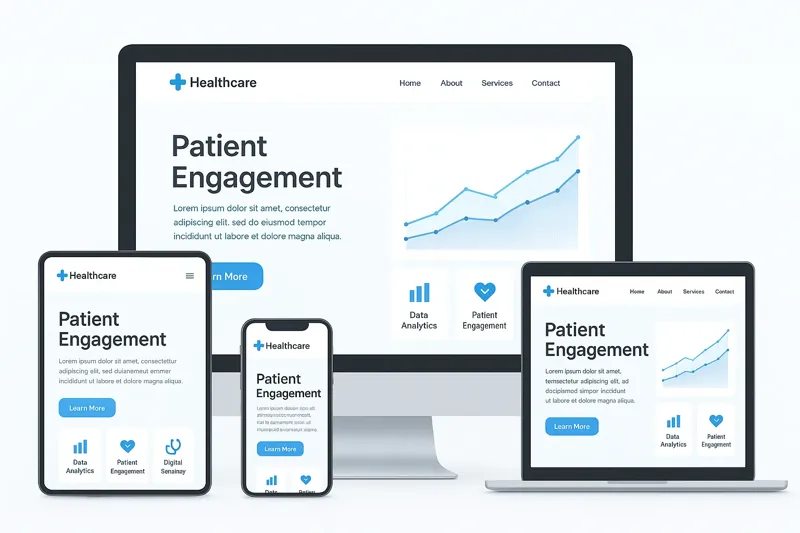
Responsive website design is essential for healthcare providers aiming to deliver exceptional patient engagement and experience. A responsive design ensures that healthcare websites automatically adjust their layout and functionality according to the device being used—whether a smartphone, tablet, or desktop. This adaptability enhances usability by minimizing the need for zooming, panning, or scrolling, which can be particularly taxing for patients seeking critical healthcare information.
Impact of mobile device usage on healthcare website access
Mobile device usage has surged significantly, with over 50% of healthcare website traffic in the United States originating from smartphones and tablets. Given this substantial volume, mobile responsiveness is crucial not only for user convenience but also for search engine optimization. Google’s mobile-first indexing favors mobile-optimized websites, meaning healthcare providers with responsive designs gain better visibility and accessibility to potential patients searching for care locally.
Overview of patient expectations from healthcare websites
Patients today expect healthcare websites to offer clean, intuitive navigation and quick access to trusted information. They prefer sites that prioritize user-friendly interfaces with accessible content, optimized for various screen sizes. Additionally, patients value secure, HIPAA-compliant platforms providing features such as online appointment scheduling and patient portals. Fast loading speeds, legible typography, and touch-friendly elements are also important to meet diverse patient needs across devices. Meeting these patient expectations plays a vital role in converting website visitors into loyal patients while building trust and credibility in a competitive healthcare market.
Why Responsive Design is a Necessity for Healthcare Websites

How important is responsive web design for healthcare websites?
Responsive healthcare websites is essential for healthcare websites as it ensures seamless usability and accessibility across all devices—desktops, tablets, and smartphones. In the United States, over 55% of healthcare website traffic comes from mobile devices, making a Mobile-Friendly Healthcare Website Design critical for reaching and engaging patients effectively. Responsive design automatically adjusts layouts and content to fit screen sizes, eliminating what would otherwise be cumbersome zooming, panning, and scrolling on smaller screens.
Mobile traffic statistics in healthcare
Mobile devices have surpassed desktop usage for accessing healthcare websites since 2015, with smartphones and tablets driving the majority of online health information searches. This trend underscores the need for Responsive web design basics that can accommodate diverse devices used by patients, including older adults and individuals with visual impairments. Mobile-responsive healthcare design prevents cluttered layouts and ensures intuitive navigation, which is vital for patient satisfaction and retention.
Google’s mobile-first indexing and SEO impact
Google’s Google mobile-first indexing for healthcare providers prioritizes the mobile version of a website for ranking purposes, directly influencing healthcare providers’ visibility in search results. Mobile-friendly sites benefit from higher search engine rankings, leading to improved discoverability among local patients who rely on online resources to find providers. Implementing fluid grids for adaptable webpage layouts, media queries with breakpoints and viewport meta tags for mobile browsers are standard techniques healthcare web developers use to optimize mobile performance and SEO.
User experience benefits across devices
A responsive healthcare website design enhances user experience by delivering fast loading times, readable typography, and touch-friendly interfaces across all devices. Accessibility features such as responsive typography with rem units and appropriately sized buttons (minimum 36 dp height) improve usability for patients with disabilities. Optimized media elements like images and videos load efficiently without compromising visual quality, preventing patient frustration due to slow load times or distorted layouts.
By embracing responsive healthcare websites, healthcare practices can ensure broad accessibility, foster patient trust with consistent branding, and improve appointment conversion rates through easy-to-use online tools—all while maintaining compliance with industry standards and legal requirements.
| Topic | Description | Practical Impact |
|---|---|---|
| Mobile Traffic in Healthcare | 55%+ of traffic from smartphones/tablets | Necessitates mobile-optimized layouts (Mobile-Friendly Healthcare Website Design) |
| Google Mobile-First Indexing | Mobile-friendly sites rank higher in search | Boosts local patient acquisition (Google mobile-first indexing for healthcare providers) |
| Responsive User Experience | Adaptable layouts, readable text, touch responsiveness | Increases patient engagement and reduces bounce rates (Responsive web design basics) |
| Accessibility & Compliance | ADA and HIPAA compliance for healthcare websites require accessible, secure sites | Ensures inclusivity and legal adherence (HIPAA compliance for healthcare websites) |
Core Principles Underpinning Effective Responsive Design

What principles should be followed for effective responsive web design?
Effective responsive healthcare websites in healthcare focus on enhancing user accessibility and experience across all device types. The foundation rests on three principal strategies:
Fluid Grid Systems and Relative Units: Instead of fixed pixel widths, fluid grids use relative units like percentages. This allows the layout to adjust proportionally to varying screen sizes, from smartphones to desktops. This adaptability ensures clean, uncluttered designs that improve usability on all devices. Learn more about fluid grids for adaptable webpage layouts.
Media Queries and Breakpoints: Media queries detect the device’s screen size, resolution, and orientation, enabling the delivery of specific CSS styles tailored to each device. Breakpoints define the thresholds where the layout transitions—for example, shifting from a single-column mobile layout to a multi-column desktop view—ensuring optimal content presentation. Find details on media queries with breakpoints.
Flexible Images and SVG Scalability: Images must be optimized with properties such as max-width for images set to 100%, allowing them to resize fluidly within their containers without distortion. Scalable Vector Graphics (SVGs) enhance this effect by allowing icons and graphics to remain crisp across all resolutions. See guidance on optimizing images and videos for mobile and max-width for images.
Additionally, compliance with accessibility standards like the WCAG guidelines and the Americans with Disabilities Act (ADA) is critical. Features such as text reflow, high contrast color schemes, and keyboard navigability ensure that healthcare websites remain accessible to users with visual, motor, or cognitive impairments, regardless of device. Explore more about Accessibility in healthcare web design and Healthcare Website Accessibility.
Integrating these principles delivers responsive healthcare websites that are not only visually appealing but also inclusive and compliant with legal standards, crucial for patient trust and engagement.
Best Practices for Implementing Responsive Web Design in Healthcare
What are the best practices for responsive web design in healthcare websites?
Responsive web design in healthcare focuses on delivering a seamless, accessible experience across all devices, particularly given the predominance of mobile traffic. Adopting a mobile-first design approach ensures that layouts adapt fluidly from smartphones to desktops using techniques like fluid grids, flexible images, and CSS media queries. This method reduces the need for zooming or panning, key for user ease.
Optimizing typography with scalable units such as rems guarantees text remains legible on devices of all sizes, while minimizing font sizes and line lengths to approximately 70-80 characters per line improves readability. Optimized media assets — including images and videos set to max-width 100% and compressed for fast loading — improve performance, reduce bounce rates, and enhance search engine rankings, particularly in light of Google’s mobile-first indexing.
Healthcare websites must also feature clear, minimal navigation and intuitive user interface elements. This includes prominent call-to-action buttons sized appropriately for touchscreen usage (minimum 36 dp high), straightforward menus, and above-the-fold content focused on patient needs. Accessibility compliance with WCAG 2.0, ARIA roles, and ADA ensures inclusivity for users with disabilities.
Lastly, rigorous testing across various devices and browsers is essential. Partnering with specialized healthcare web design experts supports adherence to HIPAA regulations, usability standards, and ongoing maintenance. Professional development teams ensure the site meets both legal requirements and delivers a user-centric, trustworthy digital experience that supports patient engagement and practice growth.
Using CSS Techniques to Enhance Responsiveness

How can CSS be used to make a healthcare website responsive?
CSS plays a pivotal role in crafting responsive healthcare websites by adapting layouts to various devices. Media queries with breakpoints enable developers to apply specific styling rules based on screen size, orientation, and resolution. This means the site can present a single-column layout on smartphones, two columns on tablets, and multiple columns on desktops, optimizing readability and navigation.
Media queries for adaptive layouts
Media queries define breakpoints that trigger layout changes, ensuring content rearranges fluidly to fit the available screen space. For instance, hiding or resizing certain elements, adjusting font sizes, and reorganizing navigation menus make the site intuitive across devices without compromising information accessibility.
Grid, flexbox, and multicol layouts
Modern CSS layout modules like Flexbox CSS Grid Multicol facilitate flexible, proportional positioning of page elements. These tools allow healthcare sites to maintain structural integrity regardless of device, preventing clutter or awkward spacing. Multicol layouts balance columns efficiently, improving content flow and user engagement for patients seeking health information.
Optimized responsive images and SVG usage
Images and icons are optimized using CSS properties such as max-width: 100% to ensure they scale within containers. SVGs provide resolution-independent graphics that remain crisp across devices without increasing load times, essential for maintaining fast performance on mobile.
Viewport meta tags and scaling
Including viewport meta tags for mobile browsers like <meta name="viewport" content="width=device-width, initial-scale=1"> informs browsers how to scale the page correctly on mobile devices. This prevents unwanted zooming and horizontal scrolling, enhancing usability especially for older or visually impaired users.
These combined CSS strategies empower responsive healthcare websites to deliver seamless, accessible experiences that meet patient expectations and comply with digital standards, ensuring improved engagement and search engine visibility.
Building Trust and Engagement Through UI Design and Content Strategies

What are effective UI design strategies for healthcare websites?
Effective UI design strategies for healthcare websites focus on delivering user-centered digital experiences that enhances ease of use, trust, and legal compliance. Intuitive navigation is central; organizing menus with clear labels guiding patients to services, appointment scheduling, provider information, and patient portals reduces friction and improves satisfaction. Prominent, strategically placed call-to-action buttons for medical websites (e.g., "Book Appointment," "Contact Provider") encourage engagement and increase conversions.
Incorporating patient testimonials section and social proof bolsters credibility, helping prospective patients feel confident in their choice of provider. Displaying authentic success stories and reviews while adhering to HIPAA compliance for healthcare websites ensures trust without compromising privacy.
Content must be clear, concise, and accessible, tailored specifically to patient concerns and literacy levels, typically aiming around a 12th-grade reading level. Using plain language and bite-sized information promotes comprehension, while accessibility features like high contrast design, alt text, and screen reader compatibility ensure inclusivity for users with disabilities.
Strict security measures are paramount in healthcare web design. Compliance with HIPAA compliance for healthcare websites and HITECH mandates implementing encryption, secure patient logins, access controls, and regular audits to protect sensitive information, fostering patient confidence in the website's safety.
By integrating these UI design and content strategies, healthcare websites can significantly improve patient trust, engagement, and overall experience, ultimately supporting business growth and better patient outcomes.
Security and Compliance: Protecting Patient Data Online
What are the essential guidelines for designing a healthcare website?
Designing a healthcare website requires prioritizing user experience, with clear navigation and accessible layouts for all visitors. Content must be concise, accurate, and tailored to patient needs, covering services, providers, and contact details. For more insights, see Healthcare Website Design Best Practices.
HIPAA and ADA compliance
Healthcare websites in the US must strictly comply with HIPAA compliance for healthcare websites regulations to ensure patient data privacy and security. This involves implementing encryption, secure hosting, and controlled access to sensitive information. Additionally, sites must meet ADA and WCAG standards to guarantee accessibility for users with disabilities, supporting screen readers, alt text, and sufficient color contrast.
Regular security audits and encryption
Performing routine security audits helps identify vulnerabilities and ensures ongoing compliance with HIPAA and other regulations. Encryption of data both in transit and at rest safeguards patient information from cyber threats, a critical measure given the high incidence of healthcare data breaches. See Healthcare Website Cybersecurity for more details.
Balancing user accessibility with data protection
Websites must harmonize ease of access with stringent data protection. Secure patient portals provide users with convenient access to medical records, appointments, and communication, while preserving confidentiality through authentication and privacy controls. Learn more about Patient-Focused Website Design and Designing Patient-Centered Websites.
Importance of professional development and audits
Engaging specialized professionals in professional responsive web development ensures that sites meet legal standards and offer robust security features. Continuous development and third-party compliance audits maintain website integrity, preventing costly penalties and maintaining patient trust.
Healthcare organizations benefit greatly from partnering with experienced agencies to implement these best practices, ensuring their websites remain secure, compliant, and accessible while enhancing patient engagement and trust. For comprehensive guidance, review Best Practices for Healthcare Websites.
Healthcare-Specific Features that Enhance Patient Access and Satisfaction
What are some practical examples of responsive healthcare websites?
Responsive healthcare websites utilize a combination of adaptable design and functional features tailored to patient needs across devices. Practical examples include platforms that offer:
Online appointment scheduling and patient portals: These allow patients to book, cancel, or reschedule appointments conveniently on any device, reducing administrative burdens and improving access. Secure patient portals provide direct messaging with providers, access to health records, and lab results, enhancing care personalization.
Telemedicine integration and functionalities: Responsive sites incorporate telehealth options for video consultations and secure messaging. This expands access, especially for patients in rural or underserved areas, and enables care delivery without travel barriers.
Accessible user interfaces for underserved populations: These interfaces comply with ADA and WCAG guidelines, featuring easy navigation, keyboard accessibility, screen reader compatibility, and clear visual contrasts. Usability tools such as text-to-speech and magnification support inclusivity, particularly for older adults and users with disabilities.
Multilingual support and usability enhancements: Featuring language options and culturally relevant content allows healthcare websites to engage diverse patient populations effectively. Simplified language and bite-sized information improve comprehension for users with limited health literacy.
Responsive healthcare websites also prioritize intuitive navigation, optimized loading speeds, and mobile-optimized layouts with appropriately sized buttons and readable typography. High-quality visuals and authoritative health content nurture patient trust and engagement.
Together, these features exemplify responsive healthcare websites that elevate patient satisfaction, accessibility, and overall experience.
Choosing the Right Platforms and Templates for Healthcare Websites
Which website builders are best suited for creating websites for physicians?
When building websites for physicians, selecting a platform that balances ease of use, customization, and healthcare-specific functionality is vital. Squarespace stands out as a robust choice, offering an integrated all-in-one platform with features like appointment scheduling through Acuity, ecommerce tools, and marketing resources tailored for health and wellness professionals. Other popular platforms suitable for medical practices include WordPress and Wix. These offer extensive customization options, support for patient portals, and can be configured to meet HIPAA compliance for healthcare websites and ADA compliance in healthcare.
Prioritizing mobile responsiveness, secure SSL certificates, and local SEO optimization ensures these websites are accessible, safe, and easily found by prospective patients. Ultimately, choosing a platform that supports ongoing maintenance, security updates, and compliance helps establish patient trust and drives sustained engagement.
Where can I find samples or templates for healthcare website design?
Quality healthcare website templates and design inspirations are abundant on platforms like ThemeForest and TemplateMonster, which offer customizable, compliant templates crafted for healthcare use. Additionally, reviewing websites from industry leaders such as Mayo Clinic, Cleveland Clinic, and Boston Children’s Hospital provides insight into effective user experience in medical websites, accessibility in healthcare web design, and patient engagement strategies.
Healthcare marketing agencies often publish case studies and white papers showcasing well-executed healthcare website design best practices and layout options that meet WCAG 2.0 Compliance AA and HIPAA standards. Partnering with professional web developers in healthcare who understand healthcare regulations ensures templates incorporate vital compliance features like ADA accessibility and data security.
These resources collectively allow healthcare providers to create patient-friendly, credible, and compliant websites that attract and retain high-value patients effectively.
Future-Proofing Healthcare Websites with Responsive Design
Ongoing Maintenance and Security Updates
Healthcare websites require continuous updates and rigorous maintenance to remain secure, functional, and compliant with regulations like HIPAA. Regular software updates, security patches, and audits safeguard sensitive patient data against ever-evolving cyber threats. Keeping performance optimized ensures fast loading times and minimal downtime, which are critical for maintaining patient trust.
Evolving Patient Expectations and Technology Trends
Patient expectations are advancing rapidly with growing mobile device usage and digital health services. Websites must adapt by incorporating features such as intuitive navigation, patient portals, telehealth support, and multilingual capabilities. Accessibility compliance with standards like ADA and WCAG ensures inclusivity for all patients, including those with disabilities. Staying ahead of trends guarantees healthcare providers meet their patients’ needs effectively.
Benefits of Partnering with Specialized Web Design Agencies
Specialized healthcare web design firms bring expertise in compliance, user experience, and responsive technology. They conduct rigorous cross-device testing, create HIPAA-compliant platforms, and maintain websites proactively. Collaboration with such agencies guarantees the integration of best practices in security, accessibility, and SEO, delivering measurable patient engagement and growth.
| Aspect | Importance | Description |
|---|---|---|
| Maintenance & Security | Critical | Regular updates protect data and optimize performance |
| Patient Expectations & Trends | Dynamic | Features like portals and accessibility foster engagement |
| Specialized Agencies | Strategic | Expertise in compliance and responsive design ensures longevity |
Introduction to Responsive Website Design in Healthcare
Importance of responsive design for healthcare providers
Responsive website design is essential for healthcare providers aiming to deliver exceptional patient engagement and experience. A responsive design ensures that healthcare websites automatically adjust their layout and functionality according to the device being used—whether a smartphone, tablet, or desktop. This adaptability enhances usability by minimizing the need for zooming, panning, or scrolling, which can be particularly taxing for patients seeking critical healthcare information.
Impact of mobile device usage on healthcare website access
Mobile device usage has surged significantly, with over 50% of healthcare website traffic in the United States originating from smartphones and tablets. Given this substantial volume, mobile responsiveness is crucial not only for user convenience but also for search engine optimization. Google’s mobile-first indexing favors mobile-optimized websites, meaning healthcare providers with responsive designs gain better visibility and accessibility to potential patients searching for care locally.
Overview of patient expectations from healthcare websites
Patients today expect healthcare websites to offer clean, intuitive navigation and quick access to trusted information. They prefer sites that prioritize user-friendly interfaces with accessible content, optimized for various screen sizes. Additionally, patients value secure, HIPAA-compliant platforms providing features such as online appointment scheduling and patient portals. Fast loading speeds, legible typography, and touch-friendly elements are also important to meet diverse patient needs across devices. Meeting these patient expectations plays a vital role in converting website visitors into loyal patients while building trust and credibility in a competitive healthcare market.
Why Responsive Design is a Necessity for Healthcare Websites
How important is responsive web design for healthcare websites?
Responsive healthcare websites is essential for healthcare websites as it ensures seamless usability and accessibility across all devices—desktops, tablets, and smartphones. In the United States, over 55% of healthcare website traffic comes from mobile devices, making a Mobile-Friendly Healthcare Website Design critical for reaching and engaging patients effectively. Responsive design automatically adjusts layouts and content to fit screen sizes, eliminating what would otherwise be cumbersome zooming, panning, and scrolling on smaller screens.
Mobile traffic statistics in healthcare
Mobile devices have surpassed desktop usage for accessing healthcare websites since 2015, with smartphones and tablets driving the majority of online health information searches. This trend underscores the need for Responsive web design basics that can accommodate diverse devices used by patients, including older adults and individuals with visual impairments. Mobile-responsive healthcare design prevents cluttered layouts and ensures intuitive navigation, which is vital for patient satisfaction and retention.
Google’s mobile-first indexing and SEO impact
Google’s Google mobile-first indexing for healthcare providers prioritizes the mobile version of a website for ranking purposes, directly influencing healthcare providers’ visibility in search results. Mobile-friendly sites benefit from higher search engine rankings, leading to improved discoverability among local patients who rely on online resources to find providers. Implementing fluid grids for adaptable webpage layouts, media queries with breakpoints and viewport meta tags for mobile browsers are standard techniques healthcare web developers use to optimize mobile performance and SEO.
User experience benefits across devices
A responsive healthcare website design enhances user experience by delivering fast loading times, readable typography, and touch-friendly interfaces across all devices. Accessibility features such as responsive typography with rem units and appropriately sized buttons (minimum 36 dp height) improve usability for patients with disabilities. Optimized media elements like images and videos load efficiently without compromising visual quality, preventing patient frustration due to slow load times or distorted layouts.
By embracing responsive healthcare websites, healthcare practices can ensure broad accessibility, foster patient trust with consistent branding, and improve appointment conversion rates through easy-to-use online tools—all while maintaining compliance with industry standards and legal requirements.
| Topic | Description | Practical Impact |
|---|---|---|
| Mobile Traffic in Healthcare | 55%+ of traffic from smartphones/tablets | Necessitates mobile-optimized layouts (Mobile-Friendly Healthcare Website Design) |
| Google Mobile-First Indexing | Mobile-friendly sites rank higher in search | Boosts local patient acquisition (Google mobile-first indexing for healthcare providers) |
| Responsive User Experience | Adaptable layouts, readable text, touch responsiveness | Increases patient engagement and reduces bounce rates (Responsive web design basics) |
| Accessibility & Compliance | ADA and HIPAA compliance for healthcare websites require accessible, secure sites | Ensures inclusivity and legal adherence (HIPAA compliance for healthcare websites) |
Core Principles Underpinning Effective Responsive Design
What principles should be followed for effective responsive web design?
Effective responsive healthcare websites in healthcare focus on enhancing user accessibility and experience across all device types. The foundation rests on three principal strategies:
Fluid Grid Systems and Relative Units: Instead of fixed pixel widths, fluid grids use relative units like percentages. This allows the layout to adjust proportionally to varying screen sizes, from smartphones to desktops. This adaptability ensures clean, uncluttered designs that improve usability on all devices. Learn more about fluid grids for adaptable webpage layouts.
Media Queries and Breakpoints: Media queries detect the device’s screen size, resolution, and orientation, enabling the delivery of specific CSS styles tailored to each device. Breakpoints define the thresholds where the layout transitions—for example, shifting from a single-column mobile layout to a multi-column desktop view—ensuring optimal content presentation. Find details on media queries with breakpoints.
Flexible Images and SVG Scalability: Images must be optimized with properties such as max-width for images set to 100%, allowing them to resize fluidly within their containers without distortion. Scalable Vector Graphics (SVGs) enhance this effect by allowing icons and graphics to remain crisp across all resolutions. See guidance on optimizing images and videos for mobile and max-width for images.
Additionally, compliance with accessibility standards like the WCAG guidelines and the Americans with Disabilities Act (ADA) is critical. Features such as text reflow, high contrast color schemes, and keyboard navigability ensure that healthcare websites remain accessible to users with visual, motor, or cognitive impairments, regardless of device. Explore more about Accessibility in healthcare web design and Healthcare Website Accessibility.
Integrating these principles delivers responsive healthcare websites that are not only visually appealing but also inclusive and compliant with legal standards, crucial for patient trust and engagement.
Best Practices for Implementing Responsive Web Design in Healthcare
What are the best practices for responsive web design in healthcare websites?
Responsive web design in healthcare focuses on delivering a seamless, accessible experience across all devices, particularly given the predominance of mobile traffic. Adopting a mobile-first design approach ensures that layouts adapt fluidly from smartphones to desktops using techniques like fluid grids, flexible images, and CSS media queries. This method reduces the need for zooming or panning, key for user ease.
Optimizing typography with scalable units such as rems guarantees text remains legible on devices of all sizes, while minimizing font sizes and line lengths to approximately 70-80 characters per line improves readability. Optimized media assets — including images and videos set to max-width 100% and compressed for fast loading — improve performance, reduce bounce rates, and enhance search engine rankings, particularly in light of Google’s mobile-first indexing.
Healthcare websites must also feature clear, minimal navigation and intuitive user interface elements. This includes prominent call-to-action buttons sized appropriately for touchscreen usage (minimum 36 dp high), straightforward menus, and above-the-fold content focused on patient needs. Accessibility compliance with WCAG 2.0, ARIA roles, and ADA ensures inclusivity for users with disabilities.
Lastly, rigorous testing across various devices and browsers is essential. Partnering with specialized healthcare web design experts supports adherence to HIPAA regulations, usability standards, and ongoing maintenance. Professional development teams ensure the site meets both legal requirements and delivers a user-centric, trustworthy digital experience that supports patient engagement and practice growth.
Using CSS Techniques to Enhance Responsiveness
How can CSS be used to make a healthcare website responsive?
CSS plays a pivotal role in crafting responsive healthcare websites by adapting layouts to various devices. Media queries with breakpoints enable developers to apply specific styling rules based on screen size, orientation, and resolution. This means the site can present a single-column layout on smartphones, two columns on tablets, and multiple columns on desktops, optimizing readability and navigation.
Media queries for adaptive layouts
Media queries define breakpoints that trigger layout changes, ensuring content rearranges fluidly to fit the available screen space. For instance, hiding or resizing certain elements, adjusting font sizes, and reorganizing navigation menus make the site intuitive across devices without compromising information accessibility.
Grid, flexbox, and multicol layouts
Modern CSS layout modules like Flexbox CSS Grid Multicol facilitate flexible, proportional positioning of page elements. These tools allow healthcare sites to maintain structural integrity regardless of device, preventing clutter or awkward spacing. Multicol layouts balance columns efficiently, improving content flow and user engagement for patients seeking health information.
Optimized responsive images and SVG usage
Images and icons are optimized using CSS properties such as max-width: 100% to ensure they scale within containers. SVGs provide resolution-independent graphics that remain crisp across devices without increasing load times, essential for maintaining fast performance on mobile.
Viewport meta tags and scaling
Including viewport meta tags for mobile browsers like <meta name="viewport" content="width=device-width, initial-scale=1"> informs browsers how to scale the page correctly on mobile devices. This prevents unwanted zooming and horizontal scrolling, enhancing usability especially for older or visually impaired users.
These combined CSS strategies empower responsive healthcare websites to deliver seamless, accessible experiences that meet patient expectations and comply with digital standards, ensuring improved engagement and search engine visibility.
Building Trust and Engagement Through UI Design and Content Strategies
What are effective UI design strategies for healthcare websites?
Effective UI design strategies for healthcare websites focus on delivering user-centered digital experiences that enhances ease of use, trust, and legal compliance. Intuitive navigation is central; organizing menus with clear labels guiding patients to services, appointment scheduling, provider information, and patient portals reduces friction and improves satisfaction. Prominent, strategically placed call-to-action buttons for medical websites (e.g., "Book Appointment," "Contact Provider") encourage engagement and increase conversions.
Incorporating patient testimonials section and social proof bolsters credibility, helping prospective patients feel confident in their choice of provider. Displaying authentic success stories and reviews while adhering to HIPAA compliance for healthcare websites ensures trust without compromising privacy.
Content must be clear, concise, and accessible, tailored specifically to patient concerns and literacy levels, typically aiming around a 12th-grade reading level. Using plain language and bite-sized information promotes comprehension, while accessibility features like high contrast design, alt text, and screen reader compatibility ensure inclusivity for users with disabilities.
Strict security measures are paramount in healthcare web design. Compliance with HIPAA compliance for healthcare websites and HITECH mandates implementing encryption, secure patient logins, access controls, and regular audits to protect sensitive information, fostering patient confidence in the website's safety.
By integrating these UI design and content strategies, healthcare websites can significantly improve patient trust, engagement, and overall experience, ultimately supporting business growth and better patient outcomes.
Security and Compliance: Protecting Patient Data Online
What are the essential guidelines for designing a healthcare website?
Designing a healthcare website requires prioritizing user experience, with clear navigation and accessible layouts for all visitors. Content must be concise, accurate, and tailored to patient needs, covering services, providers, and contact details. For more insights, see Healthcare Website Design Best Practices.
HIPAA and ADA compliance
Healthcare websites in the US must strictly comply with HIPAA compliance for healthcare websites regulations to ensure patient data privacy and security. This involves implementing encryption, secure hosting, and controlled access to sensitive information. Additionally, sites must meet ADA and WCAG standards to guarantee accessibility for users with disabilities, supporting screen readers, alt text, and sufficient color contrast.
Regular security audits and encryption
Performing routine security audits helps identify vulnerabilities and ensures ongoing compliance with HIPAA and other regulations. Encryption of data both in transit and at rest safeguards patient information from cyber threats, a critical measure given the high incidence of healthcare data breaches. See Healthcare Website Cybersecurity for more details.
Balancing user accessibility with data protection
Websites must harmonize ease of access with stringent data protection. Secure patient portals provide users with convenient access to medical records, appointments, and communication, while preserving confidentiality through authentication and privacy controls. Learn more about Patient-Focused Website Design and Designing Patient-Centered Websites.
Importance of professional development and audits
Engaging specialized professionals in professional responsive web development ensures that sites meet legal standards and offer robust security features. Continuous development and third-party compliance audits maintain website integrity, preventing costly penalties and maintaining patient trust.
Healthcare organizations benefit greatly from partnering with experienced agencies to implement these best practices, ensuring their websites remain secure, compliant, and accessible while enhancing patient engagement and trust. For comprehensive guidance, review Best Practices for Healthcare Websites.
Healthcare-Specific Features that Enhance Patient Access and Satisfaction
What are some practical examples of responsive healthcare websites?
Responsive healthcare websites utilize a combination of adaptable design and functional features tailored to patient needs across devices. Practical examples include platforms that offer:
Online appointment scheduling and patient portals: These allow patients to book, cancel, or reschedule appointments conveniently on any device, reducing administrative burdens and improving access. Secure patient portals provide direct messaging with providers, access to health records, and lab results, enhancing care personalization.
Telemedicine integration and functionalities: Responsive sites incorporate telehealth options for video consultations and secure messaging. This expands access, especially for patients in rural or underserved areas, and enables care delivery without travel barriers.
Accessible user interfaces for underserved populations: These interfaces comply with ADA and WCAG guidelines, featuring easy navigation, keyboard accessibility, screen reader compatibility, and clear visual contrasts. Usability tools such as text-to-speech and magnification support inclusivity, particularly for older adults and users with disabilities.
Multilingual support and usability enhancements: Featuring language options and culturally relevant content allows healthcare websites to engage diverse patient populations effectively. Simplified language and bite-sized information improve comprehension for users with limited health literacy.
Responsive healthcare websites also prioritize intuitive navigation, optimized loading speeds, and mobile-optimized layouts with appropriately sized buttons and readable typography. High-quality visuals and authoritative health content nurture patient trust and engagement.
Together, these features exemplify responsive healthcare websites that elevate patient satisfaction, accessibility, and overall experience.
Choosing the Right Platforms and Templates for Healthcare Websites
Which website builders are best suited for creating websites for physicians?
When building websites for physicians, selecting a platform that balances ease of use, customization, and healthcare-specific functionality is vital. Squarespace stands out as a robust choice, offering an integrated all-in-one platform with features like appointment scheduling through Acuity, ecommerce tools, and marketing resources tailored for health and wellness professionals. Other popular platforms suitable for medical practices include WordPress and Wix. These offer extensive customization options, support for patient portals, and can be configured to meet HIPAA compliance for healthcare websites and ADA compliance in healthcare.
Prioritizing mobile responsiveness, secure SSL certificates, and local SEO optimization ensures these websites are accessible, safe, and easily found by prospective patients. Ultimately, choosing a platform that supports ongoing maintenance, security updates, and compliance helps establish patient trust and drives sustained engagement.
Where can I find samples or templates for healthcare website design?
Quality healthcare website templates and design inspirations are abundant on platforms like ThemeForest and TemplateMonster, which offer customizable, compliant templates crafted for healthcare use. Additionally, reviewing websites from industry leaders such as Mayo Clinic, Cleveland Clinic, and Boston Children’s Hospital provides insight into effective user experience in medical websites, accessibility in healthcare web design, and patient engagement strategies.
Healthcare marketing agencies often publish case studies and white papers showcasing well-executed healthcare website design best practices and layout options that meet WCAG 2.0 Compliance AA and HIPAA standards. Partnering with professional web developers in healthcare who understand healthcare regulations ensures templates incorporate vital compliance features like ADA accessibility and data security.
These resources collectively allow healthcare providers to create patient-friendly, credible, and compliant websites that attract and retain high-value patients effectively.
Future-Proofing Healthcare Websites with Responsive Design
Ongoing Maintenance and Security Updates
Healthcare websites require continuous updates and rigorous maintenance to remain secure, functional, and compliant with regulations like HIPAA. Regular software updates, security patches, and audits safeguard sensitive patient data against ever-evolving cyber threats. Keeping performance optimized ensures fast loading times and minimal downtime, which are critical for maintaining patient trust.
Evolving Patient Expectations and Technology Trends
Patient expectations are advancing rapidly with growing mobile device usage and digital health services. Websites must adapt by incorporating features such as intuitive navigation, patient portals, telehealth support, and multilingual capabilities. Accessibility compliance with standards like ADA and WCAG ensures inclusivity for all patients, including those with disabilities. Staying ahead of trends guarantees healthcare providers meet their patients’ needs effectively.
Benefits of Partnering with Specialized Web Design Agencies
Specialized healthcare web design firms bring expertise in compliance, user experience, and responsive technology. They conduct rigorous cross-device testing, create HIPAA-compliant platforms, and maintain websites proactively. Collaboration with such agencies guarantees the integration of best practices in security, accessibility, and SEO, delivering measurable patient engagement and growth.
| Aspect | Importance | Description |
|---|---|---|
| Maintenance & Security | Critical | Regular updates protect data and optimize performance |
| Patient Expectations & Trends | Dynamic | Features like portals and accessibility foster engagement |
| Specialized Agencies | Strategic | Expertise in compliance and responsive design ensures longevity |