.png)

Digital Transformation in Healthcare: Setting the Stage for Immersive Experiences
Definition and Overview of Digital Transformation in Healthcare
Digital transformation in healthcare refers to the integration of advanced technologies into healthcare practices to improve patient care, operational efficiency, and overall health system performance. This transformation goes beyond digitizing records, moving toward a connected, data-driven environment that empowers patients and providers alike.
Key Benefits of Digital Transformation
Improved Patient Outcomes: Enhanced access to electronic health records (EHRs) and remote monitoring tools supports personalized care plans, leading to better management of chronic conditions and reduced hospital readmissions.
Operational Efficiency: Automation and AI-powered systems reduce administrative burdens, streamline workflows, and improve resource allocation, enabling healthcare staff to focus more on patient care.
Expanded Access to Care: Telehealth and mobile health technologies bridge geographic and socioeconomic gaps, providing remote consultations and continuous monitoring, especially for underserved or rural populations.
Examples of Digital Transformation Technologies
Electronic Health Records (EHRs): Widely adopted in 75% of U.S. hospitals, EHRs centralize patient information, facilitate care coordination, and support clinical decision-making.
Artificial Intelligence (AI): AI enhances diagnostics through improved imaging analysis and predictive analytics, enabling early intervention and personalized treatment pathways.
Telehealth: Virtual consultations and remote patient monitoring increase accessibility and convenience, with 94% of users expressing willingness to reuse these services.
By laying this technological foundation, healthcare organizations pave the way for immersive digital experiences such as virtual reality (VR) and augmented reality (AR), which further enhance patient engagement and provider capabilities.
Understanding Immersive Technologies in Healthcare

What are immersive technologies that create digital experiences?
Immersive technologies are advanced digital tools that create realistic and engaging virtual environments by stimulating multiple senses. These include virtual reality (VR), augmented reality (AR), mixed reality (MR), and extended reality (XR). They transform how users interact with digital content by blending actual and virtual worlds, providing a multi-sensory experience that is both interactive and immersive.
How do immersive technologies create realistic, multi-sensory digital experiences?
Immersive technologies use specialized hardware such as VR headsets, AR glasses, haptic feedback devices, and spatial computing systems. These tools enable users to visualize 3D content, interact with digital objects in real-time, and experience environments that mimic real life. By engaging sight, sound, and sometimes touch, these technologies deliver controlled, reproducible, and multi-sensory experiences that extend beyond traditional 2D screens.
Examples of immersive technologies in healthcare
- VR Surgical Planning: Surgeons employ VR and AR in surgical planning and remote surgeries to rehearse complex procedures virtually, improving precision and outcomes. VR also enables remote surgery assistance using AI robotics.
- AR Dashboards: AR-enabled healthcare dashboards powered dashboards consolidate electronic health records and staffing data into a command center, enhancing clinical workflow efficiency.
- VR Training: Medical professionals undergo VR cultural competence training for providers and clinical training, fostering empathetic care and skill development.
These immersive healthcare applications advance patient care and provider workflows by expanding access, personalizing treatments, and enhancing learning environments.
Designing Immersive Patient Experiences: Principles and Examples
How do you create an immersive experience?
Creating immersive patient experiences hinges on a multi-sensory storytelling approach that engages users’ emotions and senses fully. This means integrating compelling narratives that foster emotional resonance alongside interactive technologies such as Augmented reality (AR) in clinical workflows and Virtual reality (VR) for at-home physical therapy. Effective designs seamlessly blend visual, auditory, and tactile elements to transport patients into engaging, calming environments, fostering emotional connection and reducing stress during care.
What are examples of immersive experiences?
In healthcare, immersive experiences manifest as interactive environments that provide distraction and comfort, particularly for pediatric and chronic care patients. Children's hospitals frequently employ Interactive walls in hospitals and gesture-tracking displays; for example, Gesture-tracking technology at Cleveland Clinic Children’s Hospital uses gesture-tracking technology in lobbies to encourage safe play. Golisano Children’s Hospital integrates Virtual reality infusion room at Golisano Children's Health Center Naples, transporting young patients to immersive worlds to alleviate treatment anxiety. Similarly, Loma Linda Children’s Hospital offers Loma Land immersive experience, an interactive space featuring animated creatures and sensory elements like water sounds.
How do AR and VR reduce patient anxiety and improve care?
AR and VR extend beyond entertainment to therapeutic use. VR therapy rooms reduce perceived pain and anxiety by immersing patients in calming virtual settings during procedures. AR-enabled healthcare dashboards streamline care by consolidating clinical data, improving provider efficiency and response times, thereby enhancing patient experience with timely interventions. Together, these technologies address emotional and operational aspects of care, leading to improved outcomes and greater patient satisfaction.
Immersive Technologies Enhancing Clinical Care and Provider Training

How are VR and AR used for surgical planning, remote surgeries, and cultural competence training?
Virtual reality (VR) and augmented reality (AR) have become transformative tools in VR and AR in surgical planning and remote surgeries and clinical workflows. Surgeons employ VR and AR to simulate operations before actual procedures, enhancing precision and safety. Remote surgeries are increasingly feasible with surgeons collaborating using integrated VR goggles assisted by AI robotics, expanding access to specialized care even across vast distances, including rural areas in the United States. In addition, VR cultural competence training for providers immerses healthcare professionals in diverse scenarios to improve empathy and sensitivity, fostering stronger patient-provider relationships and trust.
What role does VR play in biomedical education and surgeon training?
Immersive technologies in biomedical education are revolutionizing biomedical education by providing realistic, interactive training environments. Institutions like the University of Mississippi Medical Center utilize VR to enhance medical training, resulting in improved learning outcomes and skill acquisition. Studies show that surgeons trained with VR make significantly fewer errors—six times fewer than those trained traditionally— underscoring VR's impact on improving clinical competence and patient safety.
How are digital twins and AI utilized in patient monitoring and predictive analytics?
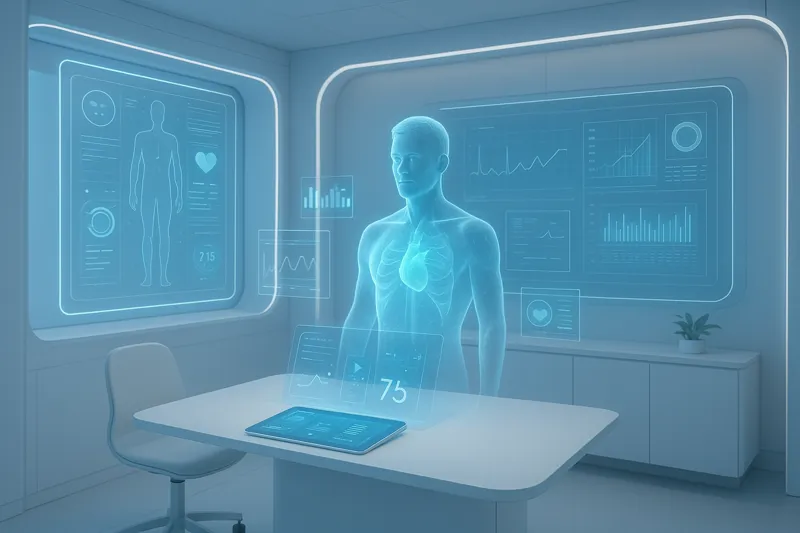
Digital twins for real-time patient monitoring, virtual replicas of patients created through AI and advanced imaging, enable real-time monitoring and predictive modeling of patient health. These technologies allow clinicians to tailor treatments based on comprehensive data-driven insights, such as predicting surgical risks or disease progression. AI in healthcare diagnostics and imaging integration amplifies diagnostic accuracy and supports evidence-based decisions, contributing to personalized medicine approaches that enhance outcomes and operational efficiency in US healthcare settings.
| Technology Application | Benefits | Impact on Healthcare |
|---|---|---|
| VR & AR Surgical Planning | Enhanced precision & remote access | Expanded surgical expertise and reduced travel burden |
| VR Biomedical Training | Reduced errors and improved skills | Safer surgeries and better-trained healthcare workforce |
| Digital Twins & AI Analytics | Personalized, predictive care | Improved treatment outcomes and resource utilization |
Digital Patient Engagement: Tools and Platforms Driving Conversion
What is an example of a digital experience, especially in healthcare?
A prime example is telemedicine platforms that enable patients to consult healthcare providers remotely. These platforms typically offer features such as appointment scheduling via mobile apps, automated reminders, access to medical records, and personalized health portals. Such digital experiences enhance patient access, satisfaction, and improve clinical workflow efficiency.
Digital Patient Engagement Tools
Key digital tools in patient engagement include:
- Patient Portals: Centralized platforms providing patients access to test results, medical records, and direct communication with providers.
- Telehealth Services: Enable virtual consultations and remote follow-ups, especially valuable in rural or underserved areas. Learn more about Telehealth enhanced with immersive technology.
- Remote Patient Monitoring (RPM): Devices and software that allow continuous health tracking outside clinical settings, fostering early intervention and ongoing management. Explore Remote patient monitoring.
Platforms Integrating Electronic Health Records (EHR) and Customer Relationship Management (CRM)
Leading platforms combine EHR data with CRM capabilities to streamline patient experiences and provider workflows. Examples include:
- PwC’s Digital Engagement Platform: Integrates with Salesforce Health Cloud, EMRs, and telephony systems to deliver personalized outreach and care management. See Digital Engagement Platform for Healthcare.
- Medbridge: Features direct EHR integration (Epic, MyChart), supporting telehealth, remote monitoring, and patient education resources. Details at Digital patient engagement tools.
- Cloud-Based CRMs: Improve patient engagement, care coordination, and operational efficiency by leveraging data analytics and personalized communication. Learn more about Cloud-based CRM in healthcare.
Benefits of 24/7 Access and Self-Service Capabilities
Providing patients with constant access to services empowers self-management and improves adherence. Benefits include:
- Convenience of scheduling, billing, and information retrieval anytime.
- Increased patient autonomy and trust due to transparent communication. For strategies on Building Trust in Healthcare.
- Reduced administrative burden on healthcare staff, allowing focus on high-value care.
- Higher patient satisfaction and outcome improvements through continuous engagement. Read about Patient engagement in digital health.
These capabilities are critical in meeting modern post-pandemic healthcare consumer expectations and support value-based care models by enhancing coordination, transparency, and responsiveness.
Balancing Technology and Human Touch in Patient Partnership
How can digital health enhance patient partnership without losing the human aspect of care?
Digital health technologies empower patient partnership by delivering personalized, accessible tools that encourage active engagement in health management. These tools, such as patient portals and wearable technology, mobile health apps, and telehealth platforms in patient care, provide patients the convenience and autonomy to participate in their care anytime and anywhere, fostering transparency and collaboration.
However, maintaining the human aspect of care is essential. Healthcare providers can preserve empathy and emotional intelligence by integrating digital tools that are designed with patient input and inclusive, user-centered design in digital health. This ensures that digital experiences are not only functional but also culturally sensitive and emotionally supportive.
Transparent communication and easy-to-navigate platforms build trust, making patients feel valued and understood. Moreover, digital engagement should complement—not replace—face-to-face interactions, allowing providers to respond compassionately and maintain therapeutic relationships.
Ultimately, combining technology with a patient-first mindset enables a balanced partnership where digital innovation enhances care without sacrificing the essential human connection.
Patient-Centric Marketing Strategies Powered by Immersive Technologies
How are personalized content and targeted marketing leveraged using patient data?
Healthcare marketing today centers on Patient Centric Marketing Strategies that prioritize personalized content tailored to individual medical needs, lifestyles, and preferences. Integrating advanced data analytics with consumer and Social Determinants of Health (SDOH) data enables highly targeted campaigns. This precision targeting helps healthcare organizations deliver culturally relevant, easily understood educational content about diseases and management strategies.
Digital Customer Relationship Management (CRM) systems enhance these efforts by tracking patient engagement and measuring campaign ROI, facilitating refined messaging that resonates with specific demographics, particularly in competitive US markets. Offering self-scheduling and streamlined online interactions further aligns marketing strategies with consumer expectations for convenience. For effective tactics, see Effective acquisition strategies for healthcare marketers.
How are AR, VR, and AI utilized in healthcare marketing to educate and engage patients?
Immersive technology in healthcare such as Augmented Reality (AR), Virtual Reality (VR), and Artificial Intelligence (AI) are revolutionizing patient engagement by creating interactive and educational experiences that deepen understanding and foster trust. VR can transport patients to virtual environments that reduce anxiety during treatments, while AR supports at-home health management and interactive educational tools accessible via mobile devices.
AI complements these efforts by analyzing patient data to deliver personalized content and predictive insights, optimizing care outreach and engagement. For instance, immersive VR simulations train healthcare professionals and provide realistic, empathetic patient education, enhancing the quality of information dissemination. Explore more about AI in healthcare diagnostics and imaging and VR and AR in surgical planning and remote surgeries.
Why are compliance, transparency, and multi-channel marketing approaches critical for conversion?
In healthcare marketing, strict adherence to compliance standards such as HIPAA, FDA, and GDPR regulations ensures the protection of sensitive patient information, building credibility and trust among potential patients. Transparency in communication about services and data use further strengthens patient-provider relationships.
Employing an omnichannel marketing approach that integrates digital platforms (social media, SEO, email campaigns) with offline outreach (community events, traditional media) significantly boosts marketing effectiveness. Multi-channel marketing in healthcare strategies increase campaign reach, with studies indicating up to a 300% improvement in engagement when four or more channels are used. Such comprehensive tactics ensure consistent messaging and a seamless consumer journey that drives patient acquisition and retention in today’s digitally savvy healthcare landscape. For more, see Healthcare digital marketing.
Future Trends: Virtual Hospitals, Metaverse, and Digital Twins
How Are Virtual Hospitals Enhancing Remote Care?
Virtual hospitals, powered by virtual reality (VR) at Duke, represent a transformative healthcare frontier. These virtual hospitals in the metaverse offer remote mental health treatment and physiotherapy, significantly expanding access for patients in rural and underserved regions of the United States. By creating extended remote healthcare consultations with immersive VR, VR provides patients with a deeper, more engaging consultation experience than traditional video calls, fostering better patient-provider connection despite physical distance.
What Is the Impact of Digital Twins on Personalized Medicine?
Digital twin technology in healthcare is revolutionizing personalized medicine by creating detailed virtual models of patients, including physiological and cellular aspects. These models enable predictive analytics and real-time monitoring to tailor treatment plans specifically for individual needs. For example, Digital twins for surgical risk assessment of heart cells assist in assessing surgical risks, helping surgeons make informed decisions that improve outcomes. Such precision medicine approaches are already advancing care effectiveness and risk mitigation in surgical procedures.
How Do Immersive Remote Consultations and AI Enhance Patient Engagement?
Extended remote healthcare consultations with immersive VR facilitate a sense of presence, improving the quality of virtual visits. These sessions often integrate data from wearable technology in healthcare devices, enabling clinicians to access real-time health metrics to personalize care effectively. Additionally, AI-driven systems provide personalized nudges and behavioral guidance, optimizing patient health journeys by improving engagement and adherence to care protocols. Evidence shows that integrating behavioral science in AI nudges increases patients' health action completion rates substantially, supporting continuous and individualized care management.
Together, virtual hospitals in the metaverse, digital twins for personalized care, and immersive technology in healthcare enhanced consultations illustrate how future healthcare technologies promise more accessible, personalized, and patient-focused care, especially benefiting populations with limited access to traditional healthcare services.
Operational and Financial Impact of Immersive Digital Experiences
Efficiency Gains Through AI, Automation, and Integrated Digital Platforms
Immersive digital technologies such as AI, virtual reality (VR) for at-home physical therapy, and augmented reality (AR) in clinical workflows significantly enhance operational efficiency in healthcare. Integration of these technologies into clinical systems streamlines workflows, enabling health systems to consolidate electronic health records, staffing information, and patient data into centralized dashboards. AI-powered diagnostic tools and workflow automation reduce manual tasks, shorten care delivery cycles, and enable predictive analytics through digital twins for real-time patient monitoring, resulting in personalized treatment plans and optimized resource utilization.
Reduction in Administrative Burdens and Improved Clinical Workflows
The adoption of immersive digital solutions alleviates administrative workload by automating complex billing cases, reducing errors, and managing patient documentation efficiently. Digital patient engagement tools like telehealth and patient portals facilitate self-service scheduling, virtual consultations, and remote monitoring, decreasing no-show rates and enabling providers to focus more on direct patient care. Enhanced interoperability and cloud-based platforms ensure compliance with privacy regulations such as HIPAA while simplifying integration efforts and reducing operational risk.
Patient Retention and Acquisition Improvements Through Superior Digital Engagement
Superior digital engagement, supported by immersive technology in healthcare, drives meaningful patient acquisition and retention. Multi-channel digital platforms offer personalized, culturally relevant content and convenient self-scheduling that align with patient preferences. Positive digital experiences increase trust and adherence, contributing to higher patient loyalty and measurable growth in patient volumes. Reputation management through online review monitoring further strengthens patient-provider relationships, enhancing brand recognition and competitive positioning in today’s healthcare marketplace.
Embracing Immersive Digital Experiences for Sustainable Healthcare Growth
Unlocking the Benefits of Immersive Technologies in Healthcare
Immersive technologies such as virtual reality (VR) and augmented reality (AR) are reshaping patient care and healthcare marketing. They enhance patient access through remote physical therapy and telehealth, improve clinical efficiency with AR-enabled dashboards, and foster empathetic care via VR-based cultural competence training. These tools also empower patients with educational and interactive experiences that build trust and engagement.
Driving Sustainable Growth through Innovation
Healthcare organizations adopting immersive solutions can achieve measurable patient growth by delivering personalized, seamless care experiences. Integration of these technologies supports operational excellence through improved workflows and remote capabilities, while digital marketing powered by immersive content strengthens patient-provider relationships and community outreach.
Call to Action for Healthcare Leaders
To remain competitive and responsive to evolving patient needs, healthcare providers must embrace immersive technologies strategically. Prioritizing innovation, patient-centric design, and operational efficiency will unlock new growth opportunities and advance healthcare outcomes in today’s digital era.
Digital Transformation in Healthcare: Setting the Stage for Immersive Experiences
Definition and Overview of Digital Transformation in Healthcare
Digital transformation in healthcare refers to the integration of advanced technologies into healthcare practices to improve patient care, operational efficiency, and overall health system performance. This transformation goes beyond digitizing records, moving toward a connected, data-driven environment that empowers patients and providers alike.
Key Benefits of Digital Transformation
Improved Patient Outcomes: Enhanced access to electronic health records (EHRs) and remote monitoring tools supports personalized care plans, leading to better management of chronic conditions and reduced hospital readmissions.
Operational Efficiency: Automation and AI-powered systems reduce administrative burdens, streamline workflows, and improve resource allocation, enabling healthcare staff to focus more on patient care.
Expanded Access to Care: Telehealth and mobile health technologies bridge geographic and socioeconomic gaps, providing remote consultations and continuous monitoring, especially for underserved or rural populations.
Examples of Digital Transformation Technologies
Electronic Health Records (EHRs): Widely adopted in 75% of U.S. hospitals, EHRs centralize patient information, facilitate care coordination, and support clinical decision-making.
Artificial Intelligence (AI): AI enhances diagnostics through improved imaging analysis and predictive analytics, enabling early intervention and personalized treatment pathways.
Telehealth: Virtual consultations and remote patient monitoring increase accessibility and convenience, with 94% of users expressing willingness to reuse these services.
By laying this technological foundation, healthcare organizations pave the way for immersive digital experiences such as virtual reality (VR) and augmented reality (AR), which further enhance patient engagement and provider capabilities.
Understanding Immersive Technologies in Healthcare
What are immersive technologies that create digital experiences?
Immersive technologies are advanced digital tools that create realistic and engaging virtual environments by stimulating multiple senses. These include virtual reality (VR), augmented reality (AR), mixed reality (MR), and extended reality (XR). They transform how users interact with digital content by blending actual and virtual worlds, providing a multi-sensory experience that is both interactive and immersive.
How do immersive technologies create realistic, multi-sensory digital experiences?
Immersive technologies use specialized hardware such as VR headsets, AR glasses, haptic feedback devices, and spatial computing systems. These tools enable users to visualize 3D content, interact with digital objects in real-time, and experience environments that mimic real life. By engaging sight, sound, and sometimes touch, these technologies deliver controlled, reproducible, and multi-sensory experiences that extend beyond traditional 2D screens.
Examples of immersive technologies in healthcare
- VR Surgical Planning: Surgeons employ VR and AR in surgical planning and remote surgeries to rehearse complex procedures virtually, improving precision and outcomes. VR also enables remote surgery assistance using AI robotics.
- AR Dashboards: AR-enabled healthcare dashboards powered dashboards consolidate electronic health records and staffing data into a command center, enhancing clinical workflow efficiency.
- VR Training: Medical professionals undergo VR cultural competence training for providers and clinical training, fostering empathetic care and skill development.
These immersive healthcare applications advance patient care and provider workflows by expanding access, personalizing treatments, and enhancing learning environments.
Designing Immersive Patient Experiences: Principles and Examples
How do you create an immersive experience?
Creating immersive patient experiences hinges on a multi-sensory storytelling approach that engages users’ emotions and senses fully. This means integrating compelling narratives that foster emotional resonance alongside interactive technologies such as Augmented reality (AR) in clinical workflows and Virtual reality (VR) for at-home physical therapy. Effective designs seamlessly blend visual, auditory, and tactile elements to transport patients into engaging, calming environments, fostering emotional connection and reducing stress during care.
What are examples of immersive experiences?
In healthcare, immersive experiences manifest as interactive environments that provide distraction and comfort, particularly for pediatric and chronic care patients. Children's hospitals frequently employ Interactive walls in hospitals and gesture-tracking displays; for example, Gesture-tracking technology at Cleveland Clinic Children’s Hospital uses gesture-tracking technology in lobbies to encourage safe play. Golisano Children’s Hospital integrates Virtual reality infusion room at Golisano Children's Health Center Naples, transporting young patients to immersive worlds to alleviate treatment anxiety. Similarly, Loma Linda Children’s Hospital offers Loma Land immersive experience, an interactive space featuring animated creatures and sensory elements like water sounds.
How do AR and VR reduce patient anxiety and improve care?
AR and VR extend beyond entertainment to therapeutic use. VR therapy rooms reduce perceived pain and anxiety by immersing patients in calming virtual settings during procedures. AR-enabled healthcare dashboards streamline care by consolidating clinical data, improving provider efficiency and response times, thereby enhancing patient experience with timely interventions. Together, these technologies address emotional and operational aspects of care, leading to improved outcomes and greater patient satisfaction.
Immersive Technologies Enhancing Clinical Care and Provider Training
How are VR and AR used for surgical planning, remote surgeries, and cultural competence training?
Virtual reality (VR) and augmented reality (AR) have become transformative tools in VR and AR in surgical planning and remote surgeries and clinical workflows. Surgeons employ VR and AR to simulate operations before actual procedures, enhancing precision and safety. Remote surgeries are increasingly feasible with surgeons collaborating using integrated VR goggles assisted by AI robotics, expanding access to specialized care even across vast distances, including rural areas in the United States. In addition, VR cultural competence training for providers immerses healthcare professionals in diverse scenarios to improve empathy and sensitivity, fostering stronger patient-provider relationships and trust.
What role does VR play in biomedical education and surgeon training?
Immersive technologies in biomedical education are revolutionizing biomedical education by providing realistic, interactive training environments. Institutions like the University of Mississippi Medical Center utilize VR to enhance medical training, resulting in improved learning outcomes and skill acquisition. Studies show that surgeons trained with VR make significantly fewer errors—six times fewer than those trained traditionally— underscoring VR's impact on improving clinical competence and patient safety.
How are digital twins and AI utilized in patient monitoring and predictive analytics?
Digital twins for real-time patient monitoring, virtual replicas of patients created through AI and advanced imaging, enable real-time monitoring and predictive modeling of patient health. These technologies allow clinicians to tailor treatments based on comprehensive data-driven insights, such as predicting surgical risks or disease progression. AI in healthcare diagnostics and imaging integration amplifies diagnostic accuracy and supports evidence-based decisions, contributing to personalized medicine approaches that enhance outcomes and operational efficiency in US healthcare settings.
| Technology Application | Benefits | Impact on Healthcare |
|---|---|---|
| VR & AR Surgical Planning | Enhanced precision & remote access | Expanded surgical expertise and reduced travel burden |
| VR Biomedical Training | Reduced errors and improved skills | Safer surgeries and better-trained healthcare workforce |
| Digital Twins & AI Analytics | Personalized, predictive care | Improved treatment outcomes and resource utilization |
Digital Patient Engagement: Tools and Platforms Driving Conversion
What is an example of a digital experience, especially in healthcare?
A prime example is telemedicine platforms that enable patients to consult healthcare providers remotely. These platforms typically offer features such as appointment scheduling via mobile apps, automated reminders, access to medical records, and personalized health portals. Such digital experiences enhance patient access, satisfaction, and improve clinical workflow efficiency.
Digital Patient Engagement Tools
Key digital tools in patient engagement include:
- Patient Portals: Centralized platforms providing patients access to test results, medical records, and direct communication with providers.
- Telehealth Services: Enable virtual consultations and remote follow-ups, especially valuable in rural or underserved areas. Learn more about Telehealth enhanced with immersive technology.
- Remote Patient Monitoring (RPM): Devices and software that allow continuous health tracking outside clinical settings, fostering early intervention and ongoing management. Explore Remote patient monitoring.
Platforms Integrating Electronic Health Records (EHR) and Customer Relationship Management (CRM)
Leading platforms combine EHR data with CRM capabilities to streamline patient experiences and provider workflows. Examples include:
- PwC’s Digital Engagement Platform: Integrates with Salesforce Health Cloud, EMRs, and telephony systems to deliver personalized outreach and care management. See Digital Engagement Platform for Healthcare.
- Medbridge: Features direct EHR integration (Epic, MyChart), supporting telehealth, remote monitoring, and patient education resources. Details at Digital patient engagement tools.
- Cloud-Based CRMs: Improve patient engagement, care coordination, and operational efficiency by leveraging data analytics and personalized communication. Learn more about Cloud-based CRM in healthcare.
Benefits of 24/7 Access and Self-Service Capabilities
Providing patients with constant access to services empowers self-management and improves adherence. Benefits include:
- Convenience of scheduling, billing, and information retrieval anytime.
- Increased patient autonomy and trust due to transparent communication. For strategies on Building Trust in Healthcare.
- Reduced administrative burden on healthcare staff, allowing focus on high-value care.
- Higher patient satisfaction and outcome improvements through continuous engagement. Read about Patient engagement in digital health.
These capabilities are critical in meeting modern post-pandemic healthcare consumer expectations and support value-based care models by enhancing coordination, transparency, and responsiveness.
Balancing Technology and Human Touch in Patient Partnership
How can digital health enhance patient partnership without losing the human aspect of care?
Digital health technologies empower patient partnership by delivering personalized, accessible tools that encourage active engagement in health management. These tools, such as patient portals and wearable technology, mobile health apps, and telehealth platforms in patient care, provide patients the convenience and autonomy to participate in their care anytime and anywhere, fostering transparency and collaboration.
However, maintaining the human aspect of care is essential. Healthcare providers can preserve empathy and emotional intelligence by integrating digital tools that are designed with patient input and inclusive, user-centered design in digital health. This ensures that digital experiences are not only functional but also culturally sensitive and emotionally supportive.
Transparent communication and easy-to-navigate platforms build trust, making patients feel valued and understood. Moreover, digital engagement should complement—not replace—face-to-face interactions, allowing providers to respond compassionately and maintain therapeutic relationships.
Ultimately, combining technology with a patient-first mindset enables a balanced partnership where digital innovation enhances care without sacrificing the essential human connection.
Patient-Centric Marketing Strategies Powered by Immersive Technologies
How are personalized content and targeted marketing leveraged using patient data?
Healthcare marketing today centers on Patient Centric Marketing Strategies that prioritize personalized content tailored to individual medical needs, lifestyles, and preferences. Integrating advanced data analytics with consumer and Social Determinants of Health (SDOH) data enables highly targeted campaigns. This precision targeting helps healthcare organizations deliver culturally relevant, easily understood educational content about diseases and management strategies.
Digital Customer Relationship Management (CRM) systems enhance these efforts by tracking patient engagement and measuring campaign ROI, facilitating refined messaging that resonates with specific demographics, particularly in competitive US markets. Offering self-scheduling and streamlined online interactions further aligns marketing strategies with consumer expectations for convenience. For effective tactics, see Effective acquisition strategies for healthcare marketers.
How are AR, VR, and AI utilized in healthcare marketing to educate and engage patients?
Immersive technology in healthcare such as Augmented Reality (AR), Virtual Reality (VR), and Artificial Intelligence (AI) are revolutionizing patient engagement by creating interactive and educational experiences that deepen understanding and foster trust. VR can transport patients to virtual environments that reduce anxiety during treatments, while AR supports at-home health management and interactive educational tools accessible via mobile devices.
AI complements these efforts by analyzing patient data to deliver personalized content and predictive insights, optimizing care outreach and engagement. For instance, immersive VR simulations train healthcare professionals and provide realistic, empathetic patient education, enhancing the quality of information dissemination. Explore more about AI in healthcare diagnostics and imaging and VR and AR in surgical planning and remote surgeries.
Why are compliance, transparency, and multi-channel marketing approaches critical for conversion?
In healthcare marketing, strict adherence to compliance standards such as HIPAA, FDA, and GDPR regulations ensures the protection of sensitive patient information, building credibility and trust among potential patients. Transparency in communication about services and data use further strengthens patient-provider relationships.
Employing an omnichannel marketing approach that integrates digital platforms (social media, SEO, email campaigns) with offline outreach (community events, traditional media) significantly boosts marketing effectiveness. Multi-channel marketing in healthcare strategies increase campaign reach, with studies indicating up to a 300% improvement in engagement when four or more channels are used. Such comprehensive tactics ensure consistent messaging and a seamless consumer journey that drives patient acquisition and retention in today’s digitally savvy healthcare landscape. For more, see Healthcare digital marketing.
Future Trends: Virtual Hospitals, Metaverse, and Digital Twins
How Are Virtual Hospitals Enhancing Remote Care?
Virtual hospitals, powered by virtual reality (VR) at Duke, represent a transformative healthcare frontier. These virtual hospitals in the metaverse offer remote mental health treatment and physiotherapy, significantly expanding access for patients in rural and underserved regions of the United States. By creating extended remote healthcare consultations with immersive VR, VR provides patients with a deeper, more engaging consultation experience than traditional video calls, fostering better patient-provider connection despite physical distance.
What Is the Impact of Digital Twins on Personalized Medicine?
Digital twin technology in healthcare is revolutionizing personalized medicine by creating detailed virtual models of patients, including physiological and cellular aspects. These models enable predictive analytics and real-time monitoring to tailor treatment plans specifically for individual needs. For example, Digital twins for surgical risk assessment of heart cells assist in assessing surgical risks, helping surgeons make informed decisions that improve outcomes. Such precision medicine approaches are already advancing care effectiveness and risk mitigation in surgical procedures.
How Do Immersive Remote Consultations and AI Enhance Patient Engagement?
Extended remote healthcare consultations with immersive VR facilitate a sense of presence, improving the quality of virtual visits. These sessions often integrate data from wearable technology in healthcare devices, enabling clinicians to access real-time health metrics to personalize care effectively. Additionally, AI-driven systems provide personalized nudges and behavioral guidance, optimizing patient health journeys by improving engagement and adherence to care protocols. Evidence shows that integrating behavioral science in AI nudges increases patients' health action completion rates substantially, supporting continuous and individualized care management.
Together, virtual hospitals in the metaverse, digital twins for personalized care, and immersive technology in healthcare enhanced consultations illustrate how future healthcare technologies promise more accessible, personalized, and patient-focused care, especially benefiting populations with limited access to traditional healthcare services.
Operational and Financial Impact of Immersive Digital Experiences
Efficiency Gains Through AI, Automation, and Integrated Digital Platforms
Immersive digital technologies such as AI, virtual reality (VR) for at-home physical therapy, and augmented reality (AR) in clinical workflows significantly enhance operational efficiency in healthcare. Integration of these technologies into clinical systems streamlines workflows, enabling health systems to consolidate electronic health records, staffing information, and patient data into centralized dashboards. AI-powered diagnostic tools and workflow automation reduce manual tasks, shorten care delivery cycles, and enable predictive analytics through digital twins for real-time patient monitoring, resulting in personalized treatment plans and optimized resource utilization.
Reduction in Administrative Burdens and Improved Clinical Workflows
The adoption of immersive digital solutions alleviates administrative workload by automating complex billing cases, reducing errors, and managing patient documentation efficiently. Digital patient engagement tools like telehealth and patient portals facilitate self-service scheduling, virtual consultations, and remote monitoring, decreasing no-show rates and enabling providers to focus more on direct patient care. Enhanced interoperability and cloud-based platforms ensure compliance with privacy regulations such as HIPAA while simplifying integration efforts and reducing operational risk.
Patient Retention and Acquisition Improvements Through Superior Digital Engagement
Superior digital engagement, supported by immersive technology in healthcare, drives meaningful patient acquisition and retention. Multi-channel digital platforms offer personalized, culturally relevant content and convenient self-scheduling that align with patient preferences. Positive digital experiences increase trust and adherence, contributing to higher patient loyalty and measurable growth in patient volumes. Reputation management through online review monitoring further strengthens patient-provider relationships, enhancing brand recognition and competitive positioning in today’s healthcare marketplace.
Embracing Immersive Digital Experiences for Sustainable Healthcare Growth
Unlocking the Benefits of Immersive Technologies in Healthcare
Immersive technologies such as virtual reality (VR) and augmented reality (AR) are reshaping patient care and healthcare marketing. They enhance patient access through remote physical therapy and telehealth, improve clinical efficiency with AR-enabled dashboards, and foster empathetic care via VR-based cultural competence training. These tools also empower patients with educational and interactive experiences that build trust and engagement.
Driving Sustainable Growth through Innovation
Healthcare organizations adopting immersive solutions can achieve measurable patient growth by delivering personalized, seamless care experiences. Integration of these technologies supports operational excellence through improved workflows and remote capabilities, while digital marketing powered by immersive content strengthens patient-provider relationships and community outreach.
Call to Action for Healthcare Leaders
To remain competitive and responsive to evolving patient needs, healthcare providers must embrace immersive technologies strategically. Prioritizing innovation, patient-centric design, and operational efficiency will unlock new growth opportunities and advance healthcare outcomes in today’s digital era.