.png)

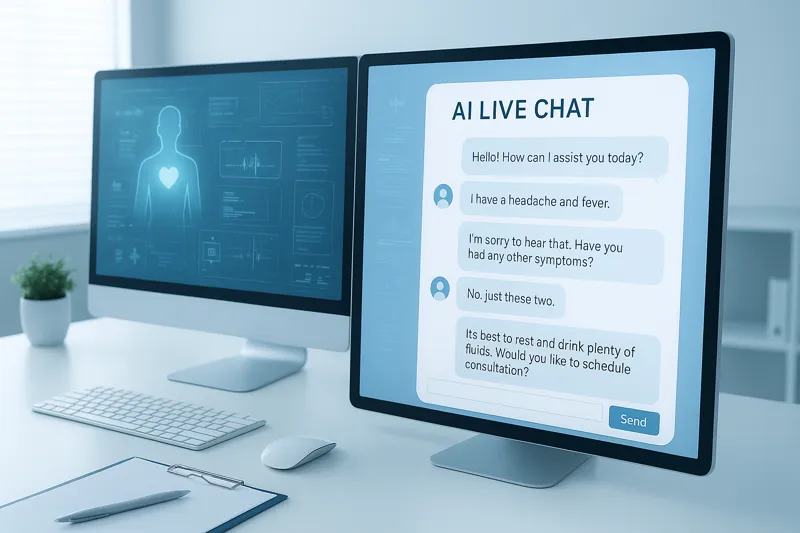
Introduction: The Rise of AI Live Chat in Patient Services
Overview of AI Live Chat in Healthcare
AI live chat in healthcare refers to the use of artificial intelligence-powered chatbots and virtual assistants to automate patient communication and support services. These AI systems employ advanced technologies such as natural language processing (NLP), machine learning, and contextual understanding to simulate human-like interactions. They provide 24/7 assistance with tasks including appointment scheduling, symptom checking, medication management, billing inquiries, and mental health support. Their integration with healthcare systems like Electronic Health Records (EHRs) and telemedicine platforms ensures seamless data exchange and personalized, efficient patient care.
Growing Market Trends for AI Chatbots
The healthcare chatbot market is expanding rapidly, projected to reach over USD 10 billion by 2034, with a compound annual growth rate near 24%. North America leads this growth, benefiting from strong healthcare infrastructure, widespread smartphone use, and IoT adoption. Approximately one-fifth of US medical practices have already integrated AI chatbots, reflecting increasing acceptance. The technology's ability to reduce administrative burdens and operational costs—anticipated savings of USD 3.6 billion by 2025 globally—fuels further adoption. Major US healthcare organizations and technology companies are investing heavily in refining AI chatbots to advance patient care delivery.
Importance of Improved Patient Engagement and Operational Efficiency
AI chatbots significantly enhance patient engagement by providing instant access to healthcare information and services anytime, including outside traditional business hours. Engagement rates regularly exceed 90%, with medication adherence reaching up to 97%, highlighting their effectiveness. Furthermore, chatbots improve healthcare operational efficiency by automating routine tasks like appointment management and follow-up communication, reported to increase workflow efficiency by up to 40%. These gains reduce staff workload, lower costs, and elevate overall patient satisfaction, aligning with the healthcare sector's pressing goals for accessibility, affordability, and quality care.
How AI Live Chat Enhances Patient Care and Provider Efficiency
How does AI enhance patient care?
Artificial Intelligence (AI chatbots in healthcare) significantly elevates patient care by improving diagnostic accuracy through robust data analysis and pattern recognition capabilities. AI assists clinicians in interpreting complex medical images, lab results, and patient histories rapidly, which decreases diagnostic delays and enhances clinical decision-making (Benefits of AI in healthcare).
Role of AI in improving diagnostic accuracy
AI algorithms analyze vast clinical datasets and imaging with high precision, identifying subtle indicators not easily recognized by human providers (AI chatbots in healthcare. This enables earlier detection of diseases, including rare conditions, and reduces diagnostic errors, thereby fostering timely and effective interventions (Benefits of AI in healthcare.
Support for personalized patient treatment
AI live chat systems contribute to personalized care by integrating patient data from electronic health records (EHRs) and tailoring communication and health recommendations to individual needs (Conversational AI in Healthcare). These AI tools deliver customized advice, medication reminders, and follow-up prompts, improving patient adherence and satisfaction (Healthcare Chatbots and Staff Workload).
Remote patient monitoring benefits
AI-powered chatbots and virtual assistants support remote patient monitoring by continuously gathering symptom data and health metrics (OSF HealthCare virtual health assistant Clare). They provide patients with 24/7 access to care guidance and alert clinicians to potential health risks early, which decreases emergency visits and hospital readmissions (chatbots connecting to live nurses.
Reduction of administrative burdens
AI chat technology automates routine tasks such as appointment scheduling, insurance verification, symptom checking, and billing inquiries (AI chatbots in healthcare. This automation reduces administrative workload for healthcare staff by up to 60%, allowing providers to focus on delivering direct patient care and enhancing clinical workflows (AI contact center solutions in healthcare).
Overall, AI live chat functions as a transformative tool that heightens care quality and operational efficiency, aligning with healthcare’s evolving focus on patient-centric, accessible, and data-driven services (Benefits of AI chatbots in healthcare).
The Transformative Benefits of AI Chatbots in Healthcare Delivery
What are the benefits of AI chatbots in healthcare?
AI Chatbots in Healthcare, frequently referred to as Virtual Health Assistants (VHAs), deliver substantial Benefits of healthcare chatbots across healthcare systems. They enable timely and standardized data collection, which significantly improves clinical research quality and patient monitoring. Through continuous engagement mechanisms—such as medication reminders, symptom tracking, and routine check-ins—chatbots enhance patient adherence and health outcomes. Importantly, VHAs contribute to reduced hospital admissions and emergency visits, promoting more efficient care pathways and supporting patient autonomy in self-care.
How do AI chatbots enhance patient engagement?
By providing interactive, accessible communication, AI chatbots improving patient engagement foster higher patient involvement. Some healthcare systems report patient engagement rates exceeding 90%, with adherence to care plans reaching up to 97%. These tools offer personalized interactions and empathetic support, bridging gaps between patients and providers. They improve accessibility by delivering 24/7 assistance for chatbots for symptom checking, medication guidance, and mental health support.
In what ways do chatbots automate routine tasks and improve administrative efficiency?
AI chatbots in healthcare automate many routine administrative functions such as appointment scheduling, reminders, bill payments, and referral management. This automation can reduce administrative burden by as much as 60%, freeing healthcare staff to concentrate on complex patient care activities. Healthcare facilities have observed healthcare operational efficiencies from chatbots climbing to 40% post-chatbot implementation, alongside a 20% cut in administrative handling times.
How does 24/7 accessibility and scalability support healthcare systems?
Providing round-the-clock availability, chatbots facilitate patient access to care beyond standard working hours, with nearly half of interactions occurring outside business hours in some deployments. This continuous presence helps manage chatbots managing patient flow effectively and supports underserved populations by expanding remote care offerings. The scalability of AI-driven healthcare chatbots allows health systems to accommodate increasing patient volumes without proportionate resource increases.
What role does data collection and analytics play in improving healthcare?
Chatbots systematically collect patient-reported data during interactions, which enhances clinical decision-making and population health management. The integration with EHR integration with healthcare chatbots and other healthcare IT systems enables seamless data exchange and real-time monitoring. Analyzing chatbot interaction data helps identify care gaps and tailor interventions, leading to more effective, personalized care delivery.
What practical applications do AI chatbots have in healthcare?
Common use cases include:
- Appointment scheduling: Automating bookings, reminders, and rescheduling, reducing no-show rates.
- Symptom checking and triage: Guiding patients to appropriate care levels and reducing unnecessary emergency visits.
- Medication adherence: Sending reminders, monitoring side effects, and managing prescription refills.
- Mental health support: Offering 24/7 assistance and self-help resources.
These applications demonstrate measurable improvements in patient satisfaction metrics, operational savings, and healthcare quality.
Ensuring Privacy and Compliance: HIPAA-Compliant AI Chatbots
Why is HIPAA Compliance Crucial for Healthcare AI Chatbots?
HIPAA compliance remains a cornerstone of trust and legality in the deployment of AI chatbots in healthcare. Given the sensitivity of protected health information (PHI), compliant chatbots are mandated to safeguard patient data from breaches and misuse, ensuring privacy and upholding patient rights. The protection of electronic health data not only prevents costly legal penalties but also strengthens patient confidence in digital health solutions.
What Features Ensure Data Privacy and Security?
Effective HIPAA-compliant AI chatbots integrate a range of advanced security measures to protect PHI. These include:
- End-to-end encryption: Safeguards the transmission of sensitive information.
- Audit logs and monitoring: Tracks access and interactions to detect anomalies.
- Role-based access controls: Limits data access based on organizational roles.
- Two-factor authentication: Adds an additional security layer for user verification.
- Secure infrastructure: Deployment on specialized, healthcare-grade cloud platforms such as AWS dedicated environments.
These functionalities collectively uphold the confidentiality, integrity, and availability of patient information throughout chatbot interactions.
Are There Examples of HIPAA-Compliant AI Chatbots?
Yes, several AI chatbots meet HIPAA standards, including SmartBot360 and ChatGPT for Healthcare.
SmartBot360 specializes in automating patient interactions such as appointment scheduling and follow-up communications. It seamlessly transitions between live and automated chat modes while maintaining compliance. Its security protocols include employee training and emergency response plans to address data risks.
ChatGPT for Healthcare, developed by OpenAI, incorporates enterprise-grade security controls like data residency, audit tracking, and customer-managed encryption keys. It provides role-based access and supports integration with healthcare tools such as Microsoft SharePoint and Teams, facilitating secure clinical and administrative workflows.
How Do These AI Chatbots Integrate with Healthcare Systems?
HIPAA-compliant chatbots are designed for smooth interoperability with electronic health records (EHRs), practice management software, CRM systems, and telehealth platforms. This integration enables:
- Real-time access to patient records for informed conversations.
- Automation of routine administrative tasks without compromising compliance.
- Secure exchange and storage of PHI within established healthcare infrastructure.
- Streamlined clinical documentation and patient communication workflows.
Such integration ensures a cohesive ecosystem that maximizes operational efficiency and clinical effectiveness.
What Benefits Result from Deploying Secure AI Chatbots?
Deploying HIPAA-compliant AI chatbots delivers multiple strategic advantages:
- Enhanced patient engagement: Patients receive timely, personalized support with guaranteed data privacy.
- Operational efficiency: Automating scheduling, reminders, and follow-up reduces administrative burdens.
- Regulatory adherence: Organizations mitigate risk of data breaches and maintain legal compliance.
- Scalable care delivery: Continuous access to support services at any hour meets patient demand without added staff strain.
Overall, secure AI chatbot implementation empowers healthcare providers to improve care accessibility, reduce costs, and foster greater patient trust while fulfilling regulatory mandates.
Advancing Patient Services through Conversational AI and Chatbot Technology
How do AI chatbots advance healthcare for patients and providers?
AI chatbots in healthcare leverage natural language processing (NLP) and machine learning (ML) to understand and respond to patient inquiries with human-like accuracy and empathy. This technological foundation enables chatbots to interpret complex medical questions and provide personalized, evidence-based information swiftly and reliably.
Integration with electronic health records (EHRs) and customer relationship management (CRM) systems allows chatbots to tailor communications to individual patient histories and preferences. Such connectivity enhances the context-awareness of interactions, improving the relevance and efficacy of chatbot responses.
These platforms perform critical functions including symptom triage, appointment scheduling, medication adherence reminders, and insurance assistance. Chatbots can assess symptoms to guide patients toward appropriate care levels, reducing unnecessary emergency visits and optimizing clinical workflows.
Patients increasingly prefer AI-driven communication due to the anonymity, convenience, and 24/7 availability chatbots offer. This reduces barriers for sensitive health issues where patients might hesitate to engage directly with providers.
The operational impact of deploying these AI solutions includes diminished administrative burdens on healthcare staff, increased patient engagement rates exceeding 90%, and enhanced adherence to care plans. Real-world implementations report up to 40% gains in operational efficiency, allowing clinicians to focus more on complex and high-value patient care activities.
Overall, AI chatbots in healthcare elevate healthcare delivery by combining technological sophistication with patient-centered design to improve accessibility, engagement, and healthcare outcomes.
Operational and Marketing Advantages of AI Live Chat in Healthcare Practices

What are the main benefits of AI live chat in medical practices?
AI live chat delivers rapid, personalized communication channels that significantly boost patient engagement and satisfaction. Available 24/7, these systems allow patients to schedule appointments, ask health-related queries, and access essential services at their convenience, enhancing accessibility and care responsiveness. Automation of routine administrative tasks such as appointment management, billing inquiries, and patient triage reduces staff workload and operational costs, generating notable efficiency gains.
AI chat also supports valuable data collection and analytics, offering insights into patient preferences and behavior. This intelligence enables healthcare providers to tailor services, improve health education, and deliver targeted communications more effectively. The expanding global healthcare chatbot market, projected to surpass USD 10 billion, underscores AI live chat's growing impact in healthcare communication and patient outcomes.
How is AI used in healthcare marketing?
AI is transforming healthcare marketing by driving automated, HIPAA-compliant patient interactions via chatbots and conversational AI, fostering enhanced engagement and trust. It automates operational processes—scheduling, reminders, billing, and data integration—reducing administrative burdens and boosting practice efficiency.
Advanced AI-driven platforms enable seamless integration with electronic health records, appointment systems, and payment gateways, ensuring cohesive workflows and real-time data usage. These platforms analyze campaign performance, patient segmentation, and behavioral insights to optimize marketing efforts dynamically, attracting high-value patients with tailored messaging.
Healthcare marketers leverage AI-generated content, predictive analytics, and patient profiling tools to create personalized campaigns at scale while maintaining compliance with privacy regulations. This fusion of automation and data-driven strategy delivers higher ROI, lowers marketing costs, and strengthens patient loyalty.
Efficiency gains through automation of scheduling, reminders, and billing inquiries
- 24/7 self-service reduces reliance on live staff.
- Automated appointment booking decreases no-shows and errors.
- AI chatbots manage billing queries, streamlining patient support.
- Integration with EHR and billing systems enhances data accuracy.
Examples of AI-driven healthcare marketing tools and platforms
| Platform/Tool | Primary Function | Benefits |
|---|---|---|
| Keragon | Automated ad placements and HIPAA-compliant system integration | Real-time data-driven marketing optimizations (AI in healthcare marketing) |
| QliqSOFT | Secure messaging combined with AI chat | Ensures privacy and improves patient communication |
| LivePerson | Conversational AI for patient engagement | Reduces call volumes and enhances instant support (Conversational AI in Healthcare) |
| Hyro | HIPAA-compliant conversational AI for health systems | Automates over 65% of incoming calls; reduces wait times (Hyro's HIPAA-compliant AI) |
Leveraging AI live chat technologies and marketing tools enables healthcare practices to enhance operational efficiencies, deepen patient engagement, and execute targeted, compliant marketing strategies that drive measurable growth.
Implementation Considerations and Future Trends in AI Healthcare Chatbots
System integration challenges and solutions
Healthcare AI chatbots in healthcare must seamlessly integrate with existing systems such as Electronic Health Records (EHRs), Customer Relationship Management (CRM), telemedicine platforms, and billing systems. This integration is essential for ensuring comprehensive patient data availability and smooth workflows. Challenges include data silos and differing system standards. Solutions focus on deploying APIs and middleware that facilitate interoperability, enabling chatbots to retrieve and update patient information securely and in real time.
Ensuring security, privacy, and regulatory compliance
Given the sensitive nature of health data, AI chatbot deployment requires strict adherence to security protocols and regulatory mandates like HIPAA in the United States. HIPAA-compliant chatbots must implement robust data encryption, access controls, secure user authentication, and audit trails. Technologies such as PII masking and role-based access are employed to safeguard patient information. Compliance is critical to maintain trust and avoid legal repercussions while enabling seamless care delivery.
Importance of continual monitoring and training
AI chatbots in healthcare require ongoing monitoring to ensure accuracy, responsiveness, and safety. Continuous training with updated clinical data and patient feedback helps refine natural language understanding and chat flow. Regular performance evaluations using metrics like task success rates, patient satisfaction, and engagement levels guide iterative improvements that adapt to evolving healthcare needs.
Emerging technologies: large language models (LLMs) and generative AI
The integration of advanced large language models like GPT-5.2 and generative AI enables chatbots to deliver more human-like, contextualized, and empathetic interactions. These models facilitate complex question interpretation, real-time clarification, and personalized responses while supporting multilingual capabilities. Use of generative AI also offers enhanced documentation capabilities and efficient clinical workflow support. Explore further on OpenAI for Healthcare.
Potential for predictive, personalized, and proactive patient engagement
Future AI chatbots will leverage predictive analytics and real-time data monitoring to anticipate patient needs, thus enabling proactive health interventions. Personalization of care plans and conversational flows will increase through continuous learning from patient interactions and medical history. This evolution promises improved adherence, early detection of health issues, and better clinical outcomes by guiding patients with tailored advice and timely reminders around the clock. Learn more in Conversational AI in Healthcare.
Popular AI Chatbot Platforms Empowering Healthcare Providers

Which AI chatbots are considered the best for healthcare?
Leading AI-driven healthcare chatbots such as Kore.ai, Hyro's adaptive communications platform, SmartBot360, and Ada stand out as some of the best solutions specifically designed for healthcare providers. Kore.ai excels at automating appointment scheduling and patient communication, significantly reducing administrative workload while enhancing patient experience. Hyro.ai is notable for managing large volumes of patient interactions across multiple channels with real-time data insights that help improve clinical outcomes and operational efficiency.
What core features do these platforms offer?
These platforms provide essential features including:
- Multilingual support: Ensures accessibility for diverse patient populations.
- Bot-human handoffs: Seamless transitions between AI and live agents to maintain care quality.
- Real-time data insights: Enables healthcare teams to monitor patient interactions and identify trends instantly.
How do these chatbots integrate with healthcare IT systems?
Top healthcare chatbots are designed to integrate smoothly with Electronic Health Records (EHR) integration, appointment scheduling systems, billing platforms, and telemedicine services. This integration facilitates:
- Shared patient information and clinical data
- Streamlined workflows for clinicians and administrators
- Enhanced personalization and contextual accuracy in patient interactions
What benefits do these platforms bring to medical practices?
By deploying Benefits of AI chatbots in healthcare, medical practices can achieve:
- Improved patient engagement and satisfaction through 24/7 support and personalized communication
- Higher operational efficiency by automating routine tasks like scheduling, reminders, and symptom screening
- Cost reductions via decreased administrative burden and optimized resource allocation
- Better data collection for informed decision-making and marketing strategies
Overall, these healthcare chatbots empower healthcare providers to deliver more accessible, efficient, and patient-centric care while advancing digital transformation goals.
Conclusion: Embracing AI Live Chat for a Future-Ready Patient Experience
Harnessing AI Live Chat Benefits for Healthcare
AI live chat solutions have demonstrated transformative impacts on healthcare delivery. These AI-powered chatbots enhance patient engagement by providing 24/7 access to appointment scheduling, symptom checking, medication management, and mental health support. They reduce administrative burdens by automating routine tasks, improving operational efficiency by up to 40%, and decreasing wait times, thereby elevating overall patient satisfaction.
Prioritizing Compliance and Data Security
Healthcare providers adopting AI chat technologies must strictly adhere to HIPAA and other regulatory standards to secure patient health information. Implementation of HIPAA-compliant platforms ensures secure handling of Protected Health Information (PHI), safeguards patient privacy, and mitigates compliance risks, which is crucial for maintaining patient trust and regulatory adherence.
A Strategic Imperative for Healthcare Practices
Healthcare organizations are encouraged to integrate AI live chat to improve patient access and streamline workflows. Early adoption enables scaling care delivery while optimizing resources and reducing operational costs. Investment in AI-driven communication tools positions healthcare providers to meet evolving patient expectations and deliver competitive, patient-centered care.
AI as a Catalyst for Patient-Centered Care
Looking ahead, AI live chat represents a strategic enabler, facilitating personalized, empathetic interactions through continuous learning and integration with healthcare systems. It supports proactive care pathways and predictive patient engagement, reinforcing AI’s pivotal role in advancing accessible, efficient, and high-quality healthcare services.
Introduction: The Rise of AI Live Chat in Patient Services
Overview of AI Live Chat in Healthcare
AI live chat in healthcare refers to the use of artificial intelligence-powered chatbots and virtual assistants to automate patient communication and support services. These AI systems employ advanced technologies such as natural language processing (NLP), machine learning, and contextual understanding to simulate human-like interactions. They provide 24/7 assistance with tasks including appointment scheduling, symptom checking, medication management, billing inquiries, and mental health support. Their integration with healthcare systems like Electronic Health Records (EHRs) and telemedicine platforms ensures seamless data exchange and personalized, efficient patient care.
Growing Market Trends for AI Chatbots
The healthcare chatbot market is expanding rapidly, projected to reach over USD 10 billion by 2034, with a compound annual growth rate near 24%. North America leads this growth, benefiting from strong healthcare infrastructure, widespread smartphone use, and IoT adoption. Approximately one-fifth of US medical practices have already integrated AI chatbots, reflecting increasing acceptance. The technology's ability to reduce administrative burdens and operational costs—anticipated savings of USD 3.6 billion by 2025 globally—fuels further adoption. Major US healthcare organizations and technology companies are investing heavily in refining AI chatbots to advance patient care delivery.
Importance of Improved Patient Engagement and Operational Efficiency
AI chatbots significantly enhance patient engagement by providing instant access to healthcare information and services anytime, including outside traditional business hours. Engagement rates regularly exceed 90%, with medication adherence reaching up to 97%, highlighting their effectiveness. Furthermore, chatbots improve healthcare operational efficiency by automating routine tasks like appointment management and follow-up communication, reported to increase workflow efficiency by up to 40%. These gains reduce staff workload, lower costs, and elevate overall patient satisfaction, aligning with the healthcare sector's pressing goals for accessibility, affordability, and quality care.
How AI Live Chat Enhances Patient Care and Provider Efficiency
How does AI enhance patient care?
Artificial Intelligence (AI chatbots in healthcare) significantly elevates patient care by improving diagnostic accuracy through robust data analysis and pattern recognition capabilities. AI assists clinicians in interpreting complex medical images, lab results, and patient histories rapidly, which decreases diagnostic delays and enhances clinical decision-making (Benefits of AI in healthcare).
Role of AI in improving diagnostic accuracy
AI algorithms analyze vast clinical datasets and imaging with high precision, identifying subtle indicators not easily recognized by human providers (AI chatbots in healthcare. This enables earlier detection of diseases, including rare conditions, and reduces diagnostic errors, thereby fostering timely and effective interventions (Benefits of AI in healthcare.
Support for personalized patient treatment
AI live chat systems contribute to personalized care by integrating patient data from electronic health records (EHRs) and tailoring communication and health recommendations to individual needs (Conversational AI in Healthcare). These AI tools deliver customized advice, medication reminders, and follow-up prompts, improving patient adherence and satisfaction (Healthcare Chatbots and Staff Workload).
Remote patient monitoring benefits
AI-powered chatbots and virtual assistants support remote patient monitoring by continuously gathering symptom data and health metrics (OSF HealthCare virtual health assistant Clare). They provide patients with 24/7 access to care guidance and alert clinicians to potential health risks early, which decreases emergency visits and hospital readmissions (chatbots connecting to live nurses.
Reduction of administrative burdens
AI chat technology automates routine tasks such as appointment scheduling, insurance verification, symptom checking, and billing inquiries (AI chatbots in healthcare. This automation reduces administrative workload for healthcare staff by up to 60%, allowing providers to focus on delivering direct patient care and enhancing clinical workflows (AI contact center solutions in healthcare).
Overall, AI live chat functions as a transformative tool that heightens care quality and operational efficiency, aligning with healthcare’s evolving focus on patient-centric, accessible, and data-driven services (Benefits of AI chatbots in healthcare).
The Transformative Benefits of AI Chatbots in Healthcare Delivery
What are the benefits of AI chatbots in healthcare?
AI Chatbots in Healthcare, frequently referred to as Virtual Health Assistants (VHAs), deliver substantial Benefits of healthcare chatbots across healthcare systems. They enable timely and standardized data collection, which significantly improves clinical research quality and patient monitoring. Through continuous engagement mechanisms—such as medication reminders, symptom tracking, and routine check-ins—chatbots enhance patient adherence and health outcomes. Importantly, VHAs contribute to reduced hospital admissions and emergency visits, promoting more efficient care pathways and supporting patient autonomy in self-care.
How do AI chatbots enhance patient engagement?
By providing interactive, accessible communication, AI chatbots improving patient engagement foster higher patient involvement. Some healthcare systems report patient engagement rates exceeding 90%, with adherence to care plans reaching up to 97%. These tools offer personalized interactions and empathetic support, bridging gaps between patients and providers. They improve accessibility by delivering 24/7 assistance for chatbots for symptom checking, medication guidance, and mental health support.
In what ways do chatbots automate routine tasks and improve administrative efficiency?
AI chatbots in healthcare automate many routine administrative functions such as appointment scheduling, reminders, bill payments, and referral management. This automation can reduce administrative burden by as much as 60%, freeing healthcare staff to concentrate on complex patient care activities. Healthcare facilities have observed healthcare operational efficiencies from chatbots climbing to 40% post-chatbot implementation, alongside a 20% cut in administrative handling times.
How does 24/7 accessibility and scalability support healthcare systems?
Providing round-the-clock availability, chatbots facilitate patient access to care beyond standard working hours, with nearly half of interactions occurring outside business hours in some deployments. This continuous presence helps manage chatbots managing patient flow effectively and supports underserved populations by expanding remote care offerings. The scalability of AI-driven healthcare chatbots allows health systems to accommodate increasing patient volumes without proportionate resource increases.
What role does data collection and analytics play in improving healthcare?
Chatbots systematically collect patient-reported data during interactions, which enhances clinical decision-making and population health management. The integration with EHR integration with healthcare chatbots and other healthcare IT systems enables seamless data exchange and real-time monitoring. Analyzing chatbot interaction data helps identify care gaps and tailor interventions, leading to more effective, personalized care delivery.
What practical applications do AI chatbots have in healthcare?
Common use cases include:
- Appointment scheduling: Automating bookings, reminders, and rescheduling, reducing no-show rates.
- Symptom checking and triage: Guiding patients to appropriate care levels and reducing unnecessary emergency visits.
- Medication adherence: Sending reminders, monitoring side effects, and managing prescription refills.
- Mental health support: Offering 24/7 assistance and self-help resources.
These applications demonstrate measurable improvements in patient satisfaction metrics, operational savings, and healthcare quality.
Ensuring Privacy and Compliance: HIPAA-Compliant AI Chatbots
Why is HIPAA Compliance Crucial for Healthcare AI Chatbots?
HIPAA compliance remains a cornerstone of trust and legality in the deployment of AI chatbots in healthcare. Given the sensitivity of protected health information (PHI), compliant chatbots are mandated to safeguard patient data from breaches and misuse, ensuring privacy and upholding patient rights. The protection of electronic health data not only prevents costly legal penalties but also strengthens patient confidence in digital health solutions.
What Features Ensure Data Privacy and Security?
Effective HIPAA-compliant AI chatbots integrate a range of advanced security measures to protect PHI. These include:
- End-to-end encryption: Safeguards the transmission of sensitive information.
- Audit logs and monitoring: Tracks access and interactions to detect anomalies.
- Role-based access controls: Limits data access based on organizational roles.
- Two-factor authentication: Adds an additional security layer for user verification.
- Secure infrastructure: Deployment on specialized, healthcare-grade cloud platforms such as AWS dedicated environments.
These functionalities collectively uphold the confidentiality, integrity, and availability of patient information throughout chatbot interactions.
Are There Examples of HIPAA-Compliant AI Chatbots?
Yes, several AI chatbots meet HIPAA standards, including SmartBot360 and ChatGPT for Healthcare.
SmartBot360 specializes in automating patient interactions such as appointment scheduling and follow-up communications. It seamlessly transitions between live and automated chat modes while maintaining compliance. Its security protocols include employee training and emergency response plans to address data risks.
ChatGPT for Healthcare, developed by OpenAI, incorporates enterprise-grade security controls like data residency, audit tracking, and customer-managed encryption keys. It provides role-based access and supports integration with healthcare tools such as Microsoft SharePoint and Teams, facilitating secure clinical and administrative workflows.
How Do These AI Chatbots Integrate with Healthcare Systems?
HIPAA-compliant chatbots are designed for smooth interoperability with electronic health records (EHRs), practice management software, CRM systems, and telehealth platforms. This integration enables:
- Real-time access to patient records for informed conversations.
- Automation of routine administrative tasks without compromising compliance.
- Secure exchange and storage of PHI within established healthcare infrastructure.
- Streamlined clinical documentation and patient communication workflows.
Such integration ensures a cohesive ecosystem that maximizes operational efficiency and clinical effectiveness.
What Benefits Result from Deploying Secure AI Chatbots?
Deploying HIPAA-compliant AI chatbots delivers multiple strategic advantages:
- Enhanced patient engagement: Patients receive timely, personalized support with guaranteed data privacy.
- Operational efficiency: Automating scheduling, reminders, and follow-up reduces administrative burdens.
- Regulatory adherence: Organizations mitigate risk of data breaches and maintain legal compliance.
- Scalable care delivery: Continuous access to support services at any hour meets patient demand without added staff strain.
Overall, secure AI chatbot implementation empowers healthcare providers to improve care accessibility, reduce costs, and foster greater patient trust while fulfilling regulatory mandates.
Advancing Patient Services through Conversational AI and Chatbot Technology
How do AI chatbots advance healthcare for patients and providers?
AI chatbots in healthcare leverage natural language processing (NLP) and machine learning (ML) to understand and respond to patient inquiries with human-like accuracy and empathy. This technological foundation enables chatbots to interpret complex medical questions and provide personalized, evidence-based information swiftly and reliably.
Integration with electronic health records (EHRs) and customer relationship management (CRM) systems allows chatbots to tailor communications to individual patient histories and preferences. Such connectivity enhances the context-awareness of interactions, improving the relevance and efficacy of chatbot responses.
These platforms perform critical functions including symptom triage, appointment scheduling, medication adherence reminders, and insurance assistance. Chatbots can assess symptoms to guide patients toward appropriate care levels, reducing unnecessary emergency visits and optimizing clinical workflows.
Patients increasingly prefer AI-driven communication due to the anonymity, convenience, and 24/7 availability chatbots offer. This reduces barriers for sensitive health issues where patients might hesitate to engage directly with providers.
The operational impact of deploying these AI solutions includes diminished administrative burdens on healthcare staff, increased patient engagement rates exceeding 90%, and enhanced adherence to care plans. Real-world implementations report up to 40% gains in operational efficiency, allowing clinicians to focus more on complex and high-value patient care activities.
Overall, AI chatbots in healthcare elevate healthcare delivery by combining technological sophistication with patient-centered design to improve accessibility, engagement, and healthcare outcomes.
Operational and Marketing Advantages of AI Live Chat in Healthcare Practices
What are the main benefits of AI live chat in medical practices?
AI live chat delivers rapid, personalized communication channels that significantly boost patient engagement and satisfaction. Available 24/7, these systems allow patients to schedule appointments, ask health-related queries, and access essential services at their convenience, enhancing accessibility and care responsiveness. Automation of routine administrative tasks such as appointment management, billing inquiries, and patient triage reduces staff workload and operational costs, generating notable efficiency gains.
AI chat also supports valuable data collection and analytics, offering insights into patient preferences and behavior. This intelligence enables healthcare providers to tailor services, improve health education, and deliver targeted communications more effectively. The expanding global healthcare chatbot market, projected to surpass USD 10 billion, underscores AI live chat's growing impact in healthcare communication and patient outcomes.
How is AI used in healthcare marketing?
AI is transforming healthcare marketing by driving automated, HIPAA-compliant patient interactions via chatbots and conversational AI, fostering enhanced engagement and trust. It automates operational processes—scheduling, reminders, billing, and data integration—reducing administrative burdens and boosting practice efficiency.
Advanced AI-driven platforms enable seamless integration with electronic health records, appointment systems, and payment gateways, ensuring cohesive workflows and real-time data usage. These platforms analyze campaign performance, patient segmentation, and behavioral insights to optimize marketing efforts dynamically, attracting high-value patients with tailored messaging.
Healthcare marketers leverage AI-generated content, predictive analytics, and patient profiling tools to create personalized campaigns at scale while maintaining compliance with privacy regulations. This fusion of automation and data-driven strategy delivers higher ROI, lowers marketing costs, and strengthens patient loyalty.
Efficiency gains through automation of scheduling, reminders, and billing inquiries
- 24/7 self-service reduces reliance on live staff.
- Automated appointment booking decreases no-shows and errors.
- AI chatbots manage billing queries, streamlining patient support.
- Integration with EHR and billing systems enhances data accuracy.
Examples of AI-driven healthcare marketing tools and platforms
| Platform/Tool | Primary Function | Benefits |
|---|---|---|
| Keragon | Automated ad placements and HIPAA-compliant system integration | Real-time data-driven marketing optimizations (AI in healthcare marketing) |
| QliqSOFT | Secure messaging combined with AI chat | Ensures privacy and improves patient communication |
| LivePerson | Conversational AI for patient engagement | Reduces call volumes and enhances instant support (Conversational AI in Healthcare) |
| Hyro | HIPAA-compliant conversational AI for health systems | Automates over 65% of incoming calls; reduces wait times (Hyro's HIPAA-compliant AI) |
Leveraging AI live chat technologies and marketing tools enables healthcare practices to enhance operational efficiencies, deepen patient engagement, and execute targeted, compliant marketing strategies that drive measurable growth.
Implementation Considerations and Future Trends in AI Healthcare Chatbots
System integration challenges and solutions
Healthcare AI chatbots in healthcare must seamlessly integrate with existing systems such as Electronic Health Records (EHRs), Customer Relationship Management (CRM), telemedicine platforms, and billing systems. This integration is essential for ensuring comprehensive patient data availability and smooth workflows. Challenges include data silos and differing system standards. Solutions focus on deploying APIs and middleware that facilitate interoperability, enabling chatbots to retrieve and update patient information securely and in real time.
Ensuring security, privacy, and regulatory compliance
Given the sensitive nature of health data, AI chatbot deployment requires strict adherence to security protocols and regulatory mandates like HIPAA in the United States. HIPAA-compliant chatbots must implement robust data encryption, access controls, secure user authentication, and audit trails. Technologies such as PII masking and role-based access are employed to safeguard patient information. Compliance is critical to maintain trust and avoid legal repercussions while enabling seamless care delivery.
Importance of continual monitoring and training
AI chatbots in healthcare require ongoing monitoring to ensure accuracy, responsiveness, and safety. Continuous training with updated clinical data and patient feedback helps refine natural language understanding and chat flow. Regular performance evaluations using metrics like task success rates, patient satisfaction, and engagement levels guide iterative improvements that adapt to evolving healthcare needs.
Emerging technologies: large language models (LLMs) and generative AI
The integration of advanced large language models like GPT-5.2 and generative AI enables chatbots to deliver more human-like, contextualized, and empathetic interactions. These models facilitate complex question interpretation, real-time clarification, and personalized responses while supporting multilingual capabilities. Use of generative AI also offers enhanced documentation capabilities and efficient clinical workflow support. Explore further on OpenAI for Healthcare.
Potential for predictive, personalized, and proactive patient engagement
Future AI chatbots will leverage predictive analytics and real-time data monitoring to anticipate patient needs, thus enabling proactive health interventions. Personalization of care plans and conversational flows will increase through continuous learning from patient interactions and medical history. This evolution promises improved adherence, early detection of health issues, and better clinical outcomes by guiding patients with tailored advice and timely reminders around the clock. Learn more in Conversational AI in Healthcare.
Popular AI Chatbot Platforms Empowering Healthcare Providers
Which AI chatbots are considered the best for healthcare?
Leading AI-driven healthcare chatbots such as Kore.ai, Hyro's adaptive communications platform, SmartBot360, and Ada stand out as some of the best solutions specifically designed for healthcare providers. Kore.ai excels at automating appointment scheduling and patient communication, significantly reducing administrative workload while enhancing patient experience. Hyro.ai is notable for managing large volumes of patient interactions across multiple channels with real-time data insights that help improve clinical outcomes and operational efficiency.
What core features do these platforms offer?
These platforms provide essential features including:
- Multilingual support: Ensures accessibility for diverse patient populations.
- Bot-human handoffs: Seamless transitions between AI and live agents to maintain care quality.
- Real-time data insights: Enables healthcare teams to monitor patient interactions and identify trends instantly.
How do these chatbots integrate with healthcare IT systems?
Top healthcare chatbots are designed to integrate smoothly with Electronic Health Records (EHR) integration, appointment scheduling systems, billing platforms, and telemedicine services. This integration facilitates:
- Shared patient information and clinical data
- Streamlined workflows for clinicians and administrators
- Enhanced personalization and contextual accuracy in patient interactions
What benefits do these platforms bring to medical practices?
By deploying Benefits of AI chatbots in healthcare, medical practices can achieve:
- Improved patient engagement and satisfaction through 24/7 support and personalized communication
- Higher operational efficiency by automating routine tasks like scheduling, reminders, and symptom screening
- Cost reductions via decreased administrative burden and optimized resource allocation
- Better data collection for informed decision-making and marketing strategies
Overall, these healthcare chatbots empower healthcare providers to deliver more accessible, efficient, and patient-centric care while advancing digital transformation goals.
Conclusion: Embracing AI Live Chat for a Future-Ready Patient Experience
Harnessing AI Live Chat Benefits for Healthcare
AI live chat solutions have demonstrated transformative impacts on healthcare delivery. These AI-powered chatbots enhance patient engagement by providing 24/7 access to appointment scheduling, symptom checking, medication management, and mental health support. They reduce administrative burdens by automating routine tasks, improving operational efficiency by up to 40%, and decreasing wait times, thereby elevating overall patient satisfaction.
Prioritizing Compliance and Data Security
Healthcare providers adopting AI chat technologies must strictly adhere to HIPAA and other regulatory standards to secure patient health information. Implementation of HIPAA-compliant platforms ensures secure handling of Protected Health Information (PHI), safeguards patient privacy, and mitigates compliance risks, which is crucial for maintaining patient trust and regulatory adherence.
A Strategic Imperative for Healthcare Practices
Healthcare organizations are encouraged to integrate AI live chat to improve patient access and streamline workflows. Early adoption enables scaling care delivery while optimizing resources and reducing operational costs. Investment in AI-driven communication tools positions healthcare providers to meet evolving patient expectations and deliver competitive, patient-centered care.
AI as a Catalyst for Patient-Centered Care
Looking ahead, AI live chat represents a strategic enabler, facilitating personalized, empathetic interactions through continuous learning and integration with healthcare systems. It supports proactive care pathways and predictive patient engagement, reinforcing AI’s pivotal role in advancing accessible, efficient, and high-quality healthcare services.