.png)

Introduction to PPC in Medical Practice Growth
Defining Medical Marketing and Its Importance
Medical marketing encompasses targeted strategies designed to attract and engage patients, primarily focusing on local and high-value clientele. It plays a critical role in expanding patient bases and strengthening brand visibility within competitive healthcare environments.
The Role of PPC in Healthcare Marketing
Pay-Per-Click (PPC) advertising is a pivotal component of healthcare marketing. It allows medical practices to place highly targeted ads on search engines and social media platforms, reaching patients actively seeking medical services. Its measurable, immediate results and flexible budgeting make PPC a preferred tool for driving patient acquisition and revenue growth.
Overview of Digital Marketing in Healthcare Practices
Digital marketing integrates multiple channels including PPC, SEO, social media, email, and content marketing to create comprehensive patient engagement journeys. Emphasizing patient-centric strategies, healthcare digital marketing enhances online visibility, fosters trust through reputation management, and aligns with evolving patient expectations for convenience and personalized communication.
Through effective use of PPC within a broader digital strategy, healthcare providers gain a competitive edge, enabling quick patient acquisition and sustained practice growth.
Understanding Medical Marketing and PPC's Role

What is medical marketing?
Medical marketing encompasses a variety of strategies used by healthcare providers to promote their services to both current and prospective patients. It involves crafting strategic messages that reach the right audience at the right time through diverse channels, including search engines, social media, email, and community engagement. The goal is to increase patient engagement, build trust, and foster lasting relationships while supporting sustainable practice growth.
A critical component of medical marketing is having a professional, mobile-friendly, and HIPAA-compliant marketing platforms website that is optimized with SEO best practices and compelling content. Such a platform establishes a credible online presence and enhances patient experience.
Digital landscape for healthcare marketing
The healthcare digital marketing landscape is dynamic and multi-faceted. It integrates various tactics such as paid search advertising (Medical PPC Advertising), social media outreach, email campaigns, and reputation management. PPC ads enable medical practices to target patients actively searching for healthcare services by leveraging specific keywords, demographics, and geographic areas. This results in immediate visibility and patient acquisition opportunities.
Healthcare organizations must navigate complex regulatory requirements like HIPAA compliance in healthcare advertising while implementing digital strategies. Platforms such as Google and Facebook provide opportunities for targeted campaigns, but adherence to regulations around patient privacy and advertising ethics is essential (Healthcare PPC Rules and Regulations).
Importance of online presence and patient engagement
An effective online presence is vital for healthcare providers, as approximately 86% of patients conduct health-related searches online before booking appointments (Patient Health Research Statistics). Patients increasingly rely on online reviews, physician bios, and educational content when selecting providers. Maintaining positive reviews on platforms such as Google My Business and Yelp significantly influences patient decisions.
Engaging patients through personalized digital journeys, including responsive websites, social media interactions, and secure direct messaging, fosters loyalty and retention. Additionally, mobile optimization is crucial given that over 80% of internet traffic originates from mobile devices.
Healthcare digital marketing that prioritizes patient needs and delivers timely, relevant messaging across digital channels leads to improved patient acquisition, retention, and overall practice growth.
Core PPC Strategies That Drive Medical Practice Growth

Benefits of PPC for Healthcare Providers
PPC (Pay-Per-Click) advertising offers medical practices immediate and measurable patient acquisition benefits. It places practices at the top of search engine results when potential patients actively seek healthcare services such as "urgent care near me" or specific specialties. With targeted ads that focus on relevant keywords, providers only pay when users click their advertisements, optimizing budget efficiency.
PPC campaigns generate rapid visibility, typically producing patient inquiries within days and more significant lead conversions within 2 to 4 weeks. This immediacy is especially useful for new practices, service launches, or time-sensitive promotions like flu shots.
Integration of PPC with SEO and Reputation Management
For sustained growth, PPC should be integrated with broader digital marketing strategies including SEO and reputation management. While SEO delivers long-term organic growth by improving local search rankings, PPC provides immediate traffic and patient acquisition, supporting practice visibility across different patient touchpoints.
Managing online reviews on platforms like Google My Business and Healthgrades is vital to build patient trust, improving conversion rates from both organic and paid channels. A responsive, mobile-optimized website with educational content ensures seamless patient engagement and supports PPC landing page effectiveness.
Targeted Keyword and Geo-Targeting Techniques
Effective PPC strategies center around rigorous keyword research using tools such as Google Keyword Planner and Semrush to identify high-intent healthcare queries. Campaigns should be segmented by services, conditions, and patient demographics to deliver tailored ad copy that resonates with specific audiences.
Geo-targeting is essential given healthcare’s local nature—ads should focus on patients within the practice’s service area, typically within a 15-25 mile radius, ensuring marketing spend targets geographically relevant patients.
Ad extensions like location info, call buttons, and sitelinks enhance ad visibility and facilitate patient interaction. Combined with mobile optimization, these tactics improve click-through and conversion rates.
How can digital marketing be used in medical practices?
Digital marketing plays a crucial role in medical practices by enhancing their online presence and attracting high-value patients who rely heavily on the internet for health research. Through integrated strategies involving SEO, PPC, and reputation management, practices rank prominently in local searches and gain patient trust. Optimized websites with clear calls-to-action and supporting positive online reviews encourage patient engagement and appointments. Despite regulatory constraints, compliant and consistent digital marketing efforts are vital for patient acquisition and sustainable practice growth.
Selecting the Right PPC Platforms for Healthcare Practices

Google Ads for High-Intent Healthcare Searches
Google Ads for Healthcare Practices is the premier platform for capturing patients actively seeking medical services. With approximately 70,000 Google Health-Related Queries processed per minute in the U.S., Google Ads allows healthcare providers to target high-intent keywords like "urgent care near me" or specialty searches specific to their practice. This platform offers quick engagement, often delivering patient inquiries within days, making it ideal for immediate PPC campaign results lead generation. Features such as targeted geographic advertising and ad extensions for healthcare PPC help ensure ads reach the right local audience and encourage patient interaction effectively.
Facebook and Social Media Ads for Demographic Targeting
Facebook and other social media ads in medical PPC platforms play a crucial role in healthcare PPC by facilitating demographic and interest-based targeting. These platforms enable providers to engage potential patients based on age, interests, and behavior, creating personalized outreach that builds brand awareness and fosters patient trust. Social media ads also complement search campaigns by supporting retargeting efforts, increasing patient engagement across channels. With 93% of healthcare marketers utilizing social media, platforms like Facebook and Instagram are essential for expanding reach beyond search-driven traffic. See more on Social media in healthcare marketing and Facebook Ads for Patient Engagement.
Bing Ads as a Cost-Effective Local Tool
Bing Ads for Local Clinic Visibility serve as a valuable, budget-friendly alternative for healthcare practices focusing on local visibility. With lower cost-per-click rates compared to Google Ads, Bing Ads provide a cost-effective approach to reaching patients within target geographic areas. This platform's strong geotargeting in healthcare PPC ability benefits clinics and smaller practices aiming to enhance community presence without the higher expenses associated with other PPC venues. Incorporating Bing Ads can contribute to a more balanced and efficient PPC strategy tailored for local patient acquisition.
Structuring Effective PPC Campaigns for Medical Services
Organizing campaigns by service or condition
An effective Healthcare PPC Guide campaign for medical practices starts with a well-organized structure. Organizing campaigns by specific services or medical conditions helps maintain clear focus and control. This segmentation allows for precise targeting, budget allocation, and performance tracking, ensuring each campaign addresses unique patient needs and search behaviors.
Use of targeted ad groups and tailored keywords
Within each campaign, creating targeted ad groups enables further refinement. Each ad group should focus on tightly related keywords relevant to the specific service or condition. Utilizing keyword match types—such as broad, phrase, and exact match—alongside negative keywords filters out irrelevant inquiries, improving ad relevance and reducing wasted spend.
Tailoring keywords to local search intent and patient demographics maximizes reach to high-value prospects. Geotargeting in healthcare PPC within a defined service area ensures ads are presented to potential patients nearby, an essential strategy given healthcare’s local nature.
Creating compliant and compelling ad copy
Ad copy must comply with Healthcare PPC Rules and Regulations, avoiding unverified claims or restricted language to maintain HIPAA and FDA compliance. Using multiple headlines and descriptions in Responsive Search Ads helps test messaging effectiveness and adapt to patient preferences.
Compelling ad copy highlights certifications, unique selling points, and clear calls-to-action (e.g., "Book an Appointment Today") to motivate patient engagement. Combining trust elements with benefit-driven messages fosters patient confidence and enhances campaign success.
By structuring Healthcare PPC Campaigns thoughtfully with focused ad groups and compliant, tailored messaging, healthcare providers can optimize patient acquisition and improve ROI in competitive markets.
Optimizing Landing Pages to Maximize PPC Conversions
Importance of customized, service-specific landing pages
Creating landing pages tailored specifically to the medical service or condition promoted in the Healthcare PPC Guide significantly enhances campaign performance. Customized pages align keyword intent, ad copy, and landing page content, resulting in improved user experience and higher conversion rates. Practices should avoid routing PPC traffic to generic homepages and instead develop focused pages that directly address patient queries with relevant information, clear benefits, and easy navigation.
Mobile optimization best practices
With approximately 85% of Americans using smartphones for health-related searches, mobile optimization of landing pages is no longer optional. A mobile-friendly design ensures fast load times, intuitive navigation, and responsiveness across devices. Utilizing tools to test and improve mobile performance, along with responsive search ads that adapt to screen sizes, helps capture and retain patient interest during critical decision-making moments.
Incorporating trust signals and clear calls-to-action
Building patient trust is essential for converting PPC traffic into leads. Landing pages should prominently feature trust signals such as provider certifications, patient testimonials, HIPAA compliance badges, and clear privacy policies. Adding straightforward and compelling calls-to-action (CTAs), such as "Book an Appointment," "Contact Us Today," or "Schedule a Free Consultation," guides prospective patients toward conversion efficiently.
How can the performance of PPC campaigns be improved?
Improving PPC campaign performance requires ongoing analysis and optimization. Healthcare marketers should leverage audience insights to refine keyword selection and ad targeting. Regularly conducting A/B testing on ad creatives and landing page elements identifies what resonates best with the target patient demographic. Optimizing bids during peak conversion times and employing negative keywords minimizes wasted spend. Tracking conversions through analytics tools enables data-driven decisions to maintain focus on attracting high-value patient leads effectively.
Navigating Compliance and Regulatory Challenges in Healthcare PPC

What challenges are commonly faced in healthcare marketing?
Healthcare digital marketing encounters significant challenges, predominantly due to stringent regulatory requirements such as HIPAA, which protect patient privacy but complicate advertising strategies and data tracking. Providers must communicate complex medical information clearly while ensuring compliance, which demands nuanced messaging to foster patient trust without overstepping legal boundaries.
HIPAA compliance in advertising and data tracking
HIPAA regulations require healthcare advertisers to safeguard patient information rigorously during Medical PPC Advertising. This includes avoiding Protected Health Information (PHI) in ads, landing pages, and tracking tools. Marketers must utilize HIPAA-compliant marketing platforms for data management and analytics, ensuring confidentiality is never compromised. Compliance also extends to maintaining secure communication channels when collecting leads or scheduling appointments online.
Platform-specific regulations for healthcare ads
Major advertising platforms like Google and Facebook impose strict policies specific to healthcare marketing. For example, Google mandates LegitScript certification for certain health services and prohibits ads that promote unapproved treatments or exploit sensitive health-related keywords. Facebook restricts targeting of personal health data and demands transparency concerning ad content. Navigating these requirements requires in-depth knowledge to avoid ad disapprovals and maintain campaign continuity.
Ethical advertising practices and patient privacy
Beyond compliance, ethical considerations are paramount. Advertisers should prioritize transparency, avoiding exaggerated claims, and use benefit-focused messaging that respects patient autonomy. Protecting patient privacy is not only a legal obligation but also essential for building long-term trust. Ethical PPC strategies incorporate clear disclosures, limit targeting to non-sensitive demographic information, and safeguard data to align marketing with healthcare providers' reputation and mission.
| Aspect | Considerations | Impact on Healthcare PPC Campaigns |
|---|---|---|
| HIPAA Compliance | Exclude PHI, use compliant tools | Protects patient data, avoids legal penalties |
| Platform Regulations | Certification, ads approval, restricted content | Ensures ad approval, maintains campaign integrity |
| Ethical Practices | Transparent messaging, data privacy emphasis | Builds trust, enhances brand reputation |
| Targeting Limitations | Avoid sensitive health info | Prevents violations, better audience relevance |
Adopting these regulatory and ethical frameworks allows Medical PPC Advertising to achieve measurable patient growth while preserving compliance and integrity.
Budgeting and ROI Benchmarks for Healthcare PPC Campaigns
What are benchmarks for pay-per-click (PPC) advertising in healthcare?
Healthcare PPC Campaigns typically aim for conversion rates between 2% and 5%. Well-optimized campaigns can achieve a return on ad spend (ROAS) ranging from 3:1 to 5:1. Click-through rates (CTR) usually fall between 3% and 6%, indicating effective engagement with targeted healthcare audiences. The cost per click (CPC) fluctuates significantly depending on the medical specialty and market competition, generally ranging from $50 to $200.
Google Ads remains the leading platform for healthcare PPC, benefiting from the fact that over 5% of all Google searches relate to health. Utilizing patient-focused keywords linked to local demand, practices can optimize Geotargeting in Healthcare PPC to reach high-value prospects efficiently. Ad extensions for Healthcare PPC—such as call, location, and sitelink extensions—play an important role in boosting visibility, especially on mobile devices, where 85% of health searches occur.
Typical PPC ad spend ranges for small to large practices
Healthcare PPC Budgeting vary notably based on practice size and goals:
- Small practices: $1,000 to $8,000 per month
- Mid-sized practices: $15,000 to $35,000 per month
- Large healthcare systems: $50,000 or more monthly
These budgets include media spend and management fees, which typically range from 10% to 20% of the ad spend when partnering with Healthcare PPC Marketing Agencies. Flexible PPC budgeting allows practices to scale campaigns seasonally or in response to emerging patient demand.
Measuring and optimizing ROI through analytics
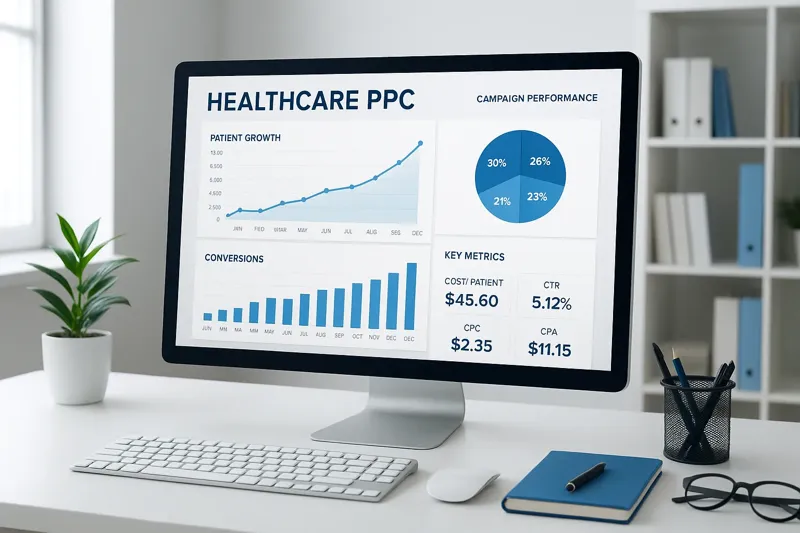
Success in Healthcare PPC requires constant monitoring and optimization. Key metrics include conversion tracking (appointments, calls, form submissions), CPC, CTR, and cost per acquisition (CPA). Practices should employ platforms like Google Ads combined with analytics tools to review performance data regularly.
A/B testing landing pages and ad copy improves message relevance and conversion rates, while exclusion of irrelevant keywords ensures budget efficiency. Integrating multi-channel analytics helps connect PPC efforts with overall patient acquisition and lifetime value. Compliance with HIPAA and advertising regulations is critical, especially when managing patient data for attribution purposes.
In summary, applying patient-centered targeting, maintaining localized ad campaigns with smart bid strategies, and ongoing campaign refinement are essential to maximize return on investment in Medical PPC Advertising.
Leveraging Geo-Targeting and Ad Extensions for Local Reach
Geographic targeting to reach nearby patients
Healthcare PPC campaigns excel when they focus on Geographic PPC Strategies, a strategy vital for reaching patients who are within the provider's service area. This targeted approach ensures that ads are shown to prospects searching within a relevant radius—often within 15 to 25 miles of the practice—maximizing ad spend efficiency and increasing conversion likelihood. Local targeting is crucial because healthcare decisions are often made with proximity in mind, reinforcing the need to capture users actively seeking providers nearby.
Use of call, location, and sitelink ad extensions
Ad extensions significantly amplify Healthcare PPC Campaigns performance in healthcare marketing. Call extensions provide potential patients with a one-click phone number to instantly contact the practice, pivotal for urgent inquiries. Location extensions display the clinic’s address and highlight proximity, enhancing trust and convenience. Sitelink extensions guide users to specific service pages or appointment booking portals, increasing engagement and directing traffic to the most relevant information. These extensions collectively improve visibility, user interaction, and ultimately patient acquisition.
Scheduling ads based on business hours
Strategically scheduling PPC ads around business hours optimizes ad spend and lead quality. Running ads during the practice’s operating hours ensures that phone calls and appointment requests are immediately actionable, improving patient experience and conversion rates. Conversely, suppressing ads during off-hours or non-service periods reduces wasted clicks and budget, making campaigns more cost-effective. Practices can also tailor schedules for extended hours during peak demand periods to capture additional patient traffic timely. Ad scheduling for healthcare campaigns offers best practices for maximizing PPC efficiency.
Partnering with Expert Healthcare Marketing Agencies
How can medical practices market themselves effectively?
Medical practices can market themselves effectively by establishing a strong digital presence. This includes optimizing websites for mobile use and local SEO, engaging with patients on social media in healthcare marketing, and managing online review profiles such as Google My Business and Yelp. Personalized patient communication, clear staff biographies, and patient testimonials help build trust and differentiate the practice. Creating educational content and hosting community events enhance credibility and patient engagement, while leveraging data from POS systems facilitates targeted marketing campaigns. Networking and strategic alliances within healthcare communities can further enhance patient referrals and local reputation.
Benefits of agency partnerships for PPC campaign management
Healthcare marketing agencies bring specialized expertise in navigating industry-specific challenges such as HIPAA compliance and Google’s healthcare advertising policies. Experienced agencies design and manage PPC advertising for medical practices that target high-intent patients through precise targeted geographic advertising and demographic segmentation. They regularly update and optimize ads to avoid Preventing PPC Ad Fatigue and improve conversion rates. Moreover, agencies incorporate multi-channel digital strategies combining Google Ads for Healthcare Practices, Facebook, and other platforms to maximize brand exposure and patient engagement.
Compliance support and performance tracking
Professional marketing partners ensure all campaigns align with strict regulatory standards, such as HIPAA and FDA guidelines, protecting patient information and maintaining legal compliance. They utilize HIPAA compliant healthcare advertising tracking and analytics tools to provide transparent performance monitoring. This includes detailed reporting on click-through rates, conversions, cost-per-acquisition, and patient lifetime value metrics, enabling continuous improvement and strategic decision-making. Such practices align with best Healthcare PPC Strategies and Healthcare PPC Campaigns.
Saving time and maximizing ROI through expert handling
Outsourcing PPC management to healthcare PPC marketing agencies allows medical practices to focus on patient care while experts handle campaign complexities. Agencies offer flexible PPC budgeting, adapting spend based on seasonal trends and campaign effectiveness. With thorough campaign audits, competitor analysis, and ongoing optimization, agencies ensure optimize ROI with medical PPC. Partnered practices often experience accelerated patient acquisition, increased appointment bookings, and enhanced local market competitiveness.
Conclusion: Driving Sustainable Growth Through PPC Excellence
Recap of effective PPC strategies
Successful healthcare PPC campaigns hinge on precise keyword targeting, geotargeting, and crafting compelling, benefit-focused ad copy. Utilizing ad extensions like call and location buttons enhances patient engagement. Integrating customized, mobile-optimized landing pages that align with search intent also improves conversion rates. Leveraging social media platforms such as Facebook alongside Google Ads creates a comprehensive, multi-channel approach to better patient acquisition and brand awareness.
Importance of compliance and continuous optimization
Given the strict regulatory environment, especially HIPAA requirements and Google healthcare ad policies, compliance is non-negotiable. Partnering with healthcare marketing experts ensures campaigns respect patient privacy while maximizing performance. Continuous campaign monitoring, including keyword adjustments, ad copy testing, and budget optimization, sustains and improves ROI over time. Regular audits prevent policy violations that could derail advertising efforts.
Future outlook for digital marketing in healthcare
Healthcare digital marketing is rapidly evolving, with advances like AI-powered personalization and more sophisticated analytics shaping future PPC strategies. Practices that integrate AI-driven hyper-targeting with compliant, patient-centric messaging are poised to outperform competitors. Continued emphasis on mobile engagement, reputation management, and multi-channel synergy will be instrumental in driving measurable patient growth and enhancing lifetime value, securing sustainable practice expansion.
Introduction to PPC in Medical Practice Growth
Defining Medical Marketing and Its Importance
Medical marketing encompasses targeted strategies designed to attract and engage patients, primarily focusing on local and high-value clientele. It plays a critical role in expanding patient bases and strengthening brand visibility within competitive healthcare environments.
The Role of PPC in Healthcare Marketing
Pay-Per-Click (PPC) advertising is a pivotal component of healthcare marketing. It allows medical practices to place highly targeted ads on search engines and social media platforms, reaching patients actively seeking medical services. Its measurable, immediate results and flexible budgeting make PPC a preferred tool for driving patient acquisition and revenue growth.
Overview of Digital Marketing in Healthcare Practices
Digital marketing integrates multiple channels including PPC, SEO, social media, email, and content marketing to create comprehensive patient engagement journeys. Emphasizing patient-centric strategies, healthcare digital marketing enhances online visibility, fosters trust through reputation management, and aligns with evolving patient expectations for convenience and personalized communication.
Through effective use of PPC within a broader digital strategy, healthcare providers gain a competitive edge, enabling quick patient acquisition and sustained practice growth.
Understanding Medical Marketing and PPC's Role
What is medical marketing?
Medical marketing encompasses a variety of strategies used by healthcare providers to promote their services to both current and prospective patients. It involves crafting strategic messages that reach the right audience at the right time through diverse channels, including search engines, social media, email, and community engagement. The goal is to increase patient engagement, build trust, and foster lasting relationships while supporting sustainable practice growth.
A critical component of medical marketing is having a professional, mobile-friendly, and HIPAA-compliant marketing platforms website that is optimized with SEO best practices and compelling content. Such a platform establishes a credible online presence and enhances patient experience.
Digital landscape for healthcare marketing
The healthcare digital marketing landscape is dynamic and multi-faceted. It integrates various tactics such as paid search advertising (Medical PPC Advertising), social media outreach, email campaigns, and reputation management. PPC ads enable medical practices to target patients actively searching for healthcare services by leveraging specific keywords, demographics, and geographic areas. This results in immediate visibility and patient acquisition opportunities.
Healthcare organizations must navigate complex regulatory requirements like HIPAA compliance in healthcare advertising while implementing digital strategies. Platforms such as Google and Facebook provide opportunities for targeted campaigns, but adherence to regulations around patient privacy and advertising ethics is essential (Healthcare PPC Rules and Regulations).
Importance of online presence and patient engagement
An effective online presence is vital for healthcare providers, as approximately 86% of patients conduct health-related searches online before booking appointments (Patient Health Research Statistics). Patients increasingly rely on online reviews, physician bios, and educational content when selecting providers. Maintaining positive reviews on platforms such as Google My Business and Yelp significantly influences patient decisions.
Engaging patients through personalized digital journeys, including responsive websites, social media interactions, and secure direct messaging, fosters loyalty and retention. Additionally, mobile optimization is crucial given that over 80% of internet traffic originates from mobile devices.
Healthcare digital marketing that prioritizes patient needs and delivers timely, relevant messaging across digital channels leads to improved patient acquisition, retention, and overall practice growth.
Core PPC Strategies That Drive Medical Practice Growth
Benefits of PPC for Healthcare Providers
PPC (Pay-Per-Click) advertising offers medical practices immediate and measurable patient acquisition benefits. It places practices at the top of search engine results when potential patients actively seek healthcare services such as "urgent care near me" or specific specialties. With targeted ads that focus on relevant keywords, providers only pay when users click their advertisements, optimizing budget efficiency.
PPC campaigns generate rapid visibility, typically producing patient inquiries within days and more significant lead conversions within 2 to 4 weeks. This immediacy is especially useful for new practices, service launches, or time-sensitive promotions like flu shots.
Integration of PPC with SEO and Reputation Management
For sustained growth, PPC should be integrated with broader digital marketing strategies including SEO and reputation management. While SEO delivers long-term organic growth by improving local search rankings, PPC provides immediate traffic and patient acquisition, supporting practice visibility across different patient touchpoints.
Managing online reviews on platforms like Google My Business and Healthgrades is vital to build patient trust, improving conversion rates from both organic and paid channels. A responsive, mobile-optimized website with educational content ensures seamless patient engagement and supports PPC landing page effectiveness.
Targeted Keyword and Geo-Targeting Techniques
Effective PPC strategies center around rigorous keyword research using tools such as Google Keyword Planner and Semrush to identify high-intent healthcare queries. Campaigns should be segmented by services, conditions, and patient demographics to deliver tailored ad copy that resonates with specific audiences.
Geo-targeting is essential given healthcare’s local nature—ads should focus on patients within the practice’s service area, typically within a 15-25 mile radius, ensuring marketing spend targets geographically relevant patients.
Ad extensions like location info, call buttons, and sitelinks enhance ad visibility and facilitate patient interaction. Combined with mobile optimization, these tactics improve click-through and conversion rates.
How can digital marketing be used in medical practices?
Digital marketing plays a crucial role in medical practices by enhancing their online presence and attracting high-value patients who rely heavily on the internet for health research. Through integrated strategies involving SEO, PPC, and reputation management, practices rank prominently in local searches and gain patient trust. Optimized websites with clear calls-to-action and supporting positive online reviews encourage patient engagement and appointments. Despite regulatory constraints, compliant and consistent digital marketing efforts are vital for patient acquisition and sustainable practice growth.
Selecting the Right PPC Platforms for Healthcare Practices
Google Ads for High-Intent Healthcare Searches
Google Ads for Healthcare Practices is the premier platform for capturing patients actively seeking medical services. With approximately 70,000 Google Health-Related Queries processed per minute in the U.S., Google Ads allows healthcare providers to target high-intent keywords like "urgent care near me" or specialty searches specific to their practice. This platform offers quick engagement, often delivering patient inquiries within days, making it ideal for immediate PPC campaign results lead generation. Features such as targeted geographic advertising and ad extensions for healthcare PPC help ensure ads reach the right local audience and encourage patient interaction effectively.
Facebook and Social Media Ads for Demographic Targeting
Facebook and other social media ads in medical PPC platforms play a crucial role in healthcare PPC by facilitating demographic and interest-based targeting. These platforms enable providers to engage potential patients based on age, interests, and behavior, creating personalized outreach that builds brand awareness and fosters patient trust. Social media ads also complement search campaigns by supporting retargeting efforts, increasing patient engagement across channels. With 93% of healthcare marketers utilizing social media, platforms like Facebook and Instagram are essential for expanding reach beyond search-driven traffic. See more on Social media in healthcare marketing and Facebook Ads for Patient Engagement.
Bing Ads as a Cost-Effective Local Tool
Bing Ads for Local Clinic Visibility serve as a valuable, budget-friendly alternative for healthcare practices focusing on local visibility. With lower cost-per-click rates compared to Google Ads, Bing Ads provide a cost-effective approach to reaching patients within target geographic areas. This platform's strong geotargeting in healthcare PPC ability benefits clinics and smaller practices aiming to enhance community presence without the higher expenses associated with other PPC venues. Incorporating Bing Ads can contribute to a more balanced and efficient PPC strategy tailored for local patient acquisition.
Structuring Effective PPC Campaigns for Medical Services
Organizing campaigns by service or condition
An effective Healthcare PPC Guide campaign for medical practices starts with a well-organized structure. Organizing campaigns by specific services or medical conditions helps maintain clear focus and control. This segmentation allows for precise targeting, budget allocation, and performance tracking, ensuring each campaign addresses unique patient needs and search behaviors.
Use of targeted ad groups and tailored keywords
Within each campaign, creating targeted ad groups enables further refinement. Each ad group should focus on tightly related keywords relevant to the specific service or condition. Utilizing keyword match types—such as broad, phrase, and exact match—alongside negative keywords filters out irrelevant inquiries, improving ad relevance and reducing wasted spend.
Tailoring keywords to local search intent and patient demographics maximizes reach to high-value prospects. Geotargeting in healthcare PPC within a defined service area ensures ads are presented to potential patients nearby, an essential strategy given healthcare’s local nature.
Creating compliant and compelling ad copy
Ad copy must comply with Healthcare PPC Rules and Regulations, avoiding unverified claims or restricted language to maintain HIPAA and FDA compliance. Using multiple headlines and descriptions in Responsive Search Ads helps test messaging effectiveness and adapt to patient preferences.
Compelling ad copy highlights certifications, unique selling points, and clear calls-to-action (e.g., "Book an Appointment Today") to motivate patient engagement. Combining trust elements with benefit-driven messages fosters patient confidence and enhances campaign success.
By structuring Healthcare PPC Campaigns thoughtfully with focused ad groups and compliant, tailored messaging, healthcare providers can optimize patient acquisition and improve ROI in competitive markets.
Optimizing Landing Pages to Maximize PPC Conversions
Importance of customized, service-specific landing pages
Creating landing pages tailored specifically to the medical service or condition promoted in the Healthcare PPC Guide significantly enhances campaign performance. Customized pages align keyword intent, ad copy, and landing page content, resulting in improved user experience and higher conversion rates. Practices should avoid routing PPC traffic to generic homepages and instead develop focused pages that directly address patient queries with relevant information, clear benefits, and easy navigation.
Mobile optimization best practices
With approximately 85% of Americans using smartphones for health-related searches, mobile optimization of landing pages is no longer optional. A mobile-friendly design ensures fast load times, intuitive navigation, and responsiveness across devices. Utilizing tools to test and improve mobile performance, along with responsive search ads that adapt to screen sizes, helps capture and retain patient interest during critical decision-making moments.
Incorporating trust signals and clear calls-to-action
Building patient trust is essential for converting PPC traffic into leads. Landing pages should prominently feature trust signals such as provider certifications, patient testimonials, HIPAA compliance badges, and clear privacy policies. Adding straightforward and compelling calls-to-action (CTAs), such as "Book an Appointment," "Contact Us Today," or "Schedule a Free Consultation," guides prospective patients toward conversion efficiently.
How can the performance of PPC campaigns be improved?
Improving PPC campaign performance requires ongoing analysis and optimization. Healthcare marketers should leverage audience insights to refine keyword selection and ad targeting. Regularly conducting A/B testing on ad creatives and landing page elements identifies what resonates best with the target patient demographic. Optimizing bids during peak conversion times and employing negative keywords minimizes wasted spend. Tracking conversions through analytics tools enables data-driven decisions to maintain focus on attracting high-value patient leads effectively.
Navigating Compliance and Regulatory Challenges in Healthcare PPC
What challenges are commonly faced in healthcare marketing?
Healthcare digital marketing encounters significant challenges, predominantly due to stringent regulatory requirements such as HIPAA, which protect patient privacy but complicate advertising strategies and data tracking. Providers must communicate complex medical information clearly while ensuring compliance, which demands nuanced messaging to foster patient trust without overstepping legal boundaries.
HIPAA compliance in advertising and data tracking
HIPAA regulations require healthcare advertisers to safeguard patient information rigorously during Medical PPC Advertising. This includes avoiding Protected Health Information (PHI) in ads, landing pages, and tracking tools. Marketers must utilize HIPAA-compliant marketing platforms for data management and analytics, ensuring confidentiality is never compromised. Compliance also extends to maintaining secure communication channels when collecting leads or scheduling appointments online.
Platform-specific regulations for healthcare ads
Major advertising platforms like Google and Facebook impose strict policies specific to healthcare marketing. For example, Google mandates LegitScript certification for certain health services and prohibits ads that promote unapproved treatments or exploit sensitive health-related keywords. Facebook restricts targeting of personal health data and demands transparency concerning ad content. Navigating these requirements requires in-depth knowledge to avoid ad disapprovals and maintain campaign continuity.
Ethical advertising practices and patient privacy
Beyond compliance, ethical considerations are paramount. Advertisers should prioritize transparency, avoiding exaggerated claims, and use benefit-focused messaging that respects patient autonomy. Protecting patient privacy is not only a legal obligation but also essential for building long-term trust. Ethical PPC strategies incorporate clear disclosures, limit targeting to non-sensitive demographic information, and safeguard data to align marketing with healthcare providers' reputation and mission.
| Aspect | Considerations | Impact on Healthcare PPC Campaigns |
|---|---|---|
| HIPAA Compliance | Exclude PHI, use compliant tools | Protects patient data, avoids legal penalties |
| Platform Regulations | Certification, ads approval, restricted content | Ensures ad approval, maintains campaign integrity |
| Ethical Practices | Transparent messaging, data privacy emphasis | Builds trust, enhances brand reputation |
| Targeting Limitations | Avoid sensitive health info | Prevents violations, better audience relevance |
Adopting these regulatory and ethical frameworks allows Medical PPC Advertising to achieve measurable patient growth while preserving compliance and integrity.
Budgeting and ROI Benchmarks for Healthcare PPC Campaigns
What are benchmarks for pay-per-click (PPC) advertising in healthcare?
Healthcare PPC Campaigns typically aim for conversion rates between 2% and 5%. Well-optimized campaigns can achieve a return on ad spend (ROAS) ranging from 3:1 to 5:1. Click-through rates (CTR) usually fall between 3% and 6%, indicating effective engagement with targeted healthcare audiences. The cost per click (CPC) fluctuates significantly depending on the medical specialty and market competition, generally ranging from $50 to $200.
Google Ads remains the leading platform for healthcare PPC, benefiting from the fact that over 5% of all Google searches relate to health. Utilizing patient-focused keywords linked to local demand, practices can optimize Geotargeting in Healthcare PPC to reach high-value prospects efficiently. Ad extensions for Healthcare PPC—such as call, location, and sitelink extensions—play an important role in boosting visibility, especially on mobile devices, where 85% of health searches occur.
Typical PPC ad spend ranges for small to large practices
Healthcare PPC Budgeting vary notably based on practice size and goals:
- Small practices: $1,000 to $8,000 per month
- Mid-sized practices: $15,000 to $35,000 per month
- Large healthcare systems: $50,000 or more monthly
These budgets include media spend and management fees, which typically range from 10% to 20% of the ad spend when partnering with Healthcare PPC Marketing Agencies. Flexible PPC budgeting allows practices to scale campaigns seasonally or in response to emerging patient demand.
Measuring and optimizing ROI through analytics
Success in Healthcare PPC requires constant monitoring and optimization. Key metrics include conversion tracking (appointments, calls, form submissions), CPC, CTR, and cost per acquisition (CPA). Practices should employ platforms like Google Ads combined with analytics tools to review performance data regularly.
A/B testing landing pages and ad copy improves message relevance and conversion rates, while exclusion of irrelevant keywords ensures budget efficiency. Integrating multi-channel analytics helps connect PPC efforts with overall patient acquisition and lifetime value. Compliance with HIPAA and advertising regulations is critical, especially when managing patient data for attribution purposes.
In summary, applying patient-centered targeting, maintaining localized ad campaigns with smart bid strategies, and ongoing campaign refinement are essential to maximize return on investment in Medical PPC Advertising.
Leveraging Geo-Targeting and Ad Extensions for Local Reach
Geographic targeting to reach nearby patients
Healthcare PPC campaigns excel when they focus on Geographic PPC Strategies, a strategy vital for reaching patients who are within the provider's service area. This targeted approach ensures that ads are shown to prospects searching within a relevant radius—often within 15 to 25 miles of the practice—maximizing ad spend efficiency and increasing conversion likelihood. Local targeting is crucial because healthcare decisions are often made with proximity in mind, reinforcing the need to capture users actively seeking providers nearby.
Use of call, location, and sitelink ad extensions
Ad extensions significantly amplify Healthcare PPC Campaigns performance in healthcare marketing. Call extensions provide potential patients with a one-click phone number to instantly contact the practice, pivotal for urgent inquiries. Location extensions display the clinic’s address and highlight proximity, enhancing trust and convenience. Sitelink extensions guide users to specific service pages or appointment booking portals, increasing engagement and directing traffic to the most relevant information. These extensions collectively improve visibility, user interaction, and ultimately patient acquisition.
Scheduling ads based on business hours
Strategically scheduling PPC ads around business hours optimizes ad spend and lead quality. Running ads during the practice’s operating hours ensures that phone calls and appointment requests are immediately actionable, improving patient experience and conversion rates. Conversely, suppressing ads during off-hours or non-service periods reduces wasted clicks and budget, making campaigns more cost-effective. Practices can also tailor schedules for extended hours during peak demand periods to capture additional patient traffic timely. Ad scheduling for healthcare campaigns offers best practices for maximizing PPC efficiency.
Partnering with Expert Healthcare Marketing Agencies
How can medical practices market themselves effectively?
Medical practices can market themselves effectively by establishing a strong digital presence. This includes optimizing websites for mobile use and local SEO, engaging with patients on social media in healthcare marketing, and managing online review profiles such as Google My Business and Yelp. Personalized patient communication, clear staff biographies, and patient testimonials help build trust and differentiate the practice. Creating educational content and hosting community events enhance credibility and patient engagement, while leveraging data from POS systems facilitates targeted marketing campaigns. Networking and strategic alliances within healthcare communities can further enhance patient referrals and local reputation.
Benefits of agency partnerships for PPC campaign management
Healthcare marketing agencies bring specialized expertise in navigating industry-specific challenges such as HIPAA compliance and Google’s healthcare advertising policies. Experienced agencies design and manage PPC advertising for medical practices that target high-intent patients through precise targeted geographic advertising and demographic segmentation. They regularly update and optimize ads to avoid Preventing PPC Ad Fatigue and improve conversion rates. Moreover, agencies incorporate multi-channel digital strategies combining Google Ads for Healthcare Practices, Facebook, and other platforms to maximize brand exposure and patient engagement.
Compliance support and performance tracking
Professional marketing partners ensure all campaigns align with strict regulatory standards, such as HIPAA and FDA guidelines, protecting patient information and maintaining legal compliance. They utilize HIPAA compliant healthcare advertising tracking and analytics tools to provide transparent performance monitoring. This includes detailed reporting on click-through rates, conversions, cost-per-acquisition, and patient lifetime value metrics, enabling continuous improvement and strategic decision-making. Such practices align with best Healthcare PPC Strategies and Healthcare PPC Campaigns.
Saving time and maximizing ROI through expert handling
Outsourcing PPC management to healthcare PPC marketing agencies allows medical practices to focus on patient care while experts handle campaign complexities. Agencies offer flexible PPC budgeting, adapting spend based on seasonal trends and campaign effectiveness. With thorough campaign audits, competitor analysis, and ongoing optimization, agencies ensure optimize ROI with medical PPC. Partnered practices often experience accelerated patient acquisition, increased appointment bookings, and enhanced local market competitiveness.
Conclusion: Driving Sustainable Growth Through PPC Excellence
Recap of effective PPC strategies
Successful healthcare PPC campaigns hinge on precise keyword targeting, geotargeting, and crafting compelling, benefit-focused ad copy. Utilizing ad extensions like call and location buttons enhances patient engagement. Integrating customized, mobile-optimized landing pages that align with search intent also improves conversion rates. Leveraging social media platforms such as Facebook alongside Google Ads creates a comprehensive, multi-channel approach to better patient acquisition and brand awareness.
Importance of compliance and continuous optimization
Given the strict regulatory environment, especially HIPAA requirements and Google healthcare ad policies, compliance is non-negotiable. Partnering with healthcare marketing experts ensures campaigns respect patient privacy while maximizing performance. Continuous campaign monitoring, including keyword adjustments, ad copy testing, and budget optimization, sustains and improves ROI over time. Regular audits prevent policy violations that could derail advertising efforts.
Future outlook for digital marketing in healthcare
Healthcare digital marketing is rapidly evolving, with advances like AI-powered personalization and more sophisticated analytics shaping future PPC strategies. Practices that integrate AI-driven hyper-targeting with compliant, patient-centric messaging are poised to outperform competitors. Continued emphasis on mobile engagement, reputation management, and multi-channel synergy will be instrumental in driving measurable patient growth and enhancing lifetime value, securing sustainable practice expansion.