

Introduction to AI-Driven Live Chat in Healthcare
Overview of AI chatbots in healthcare
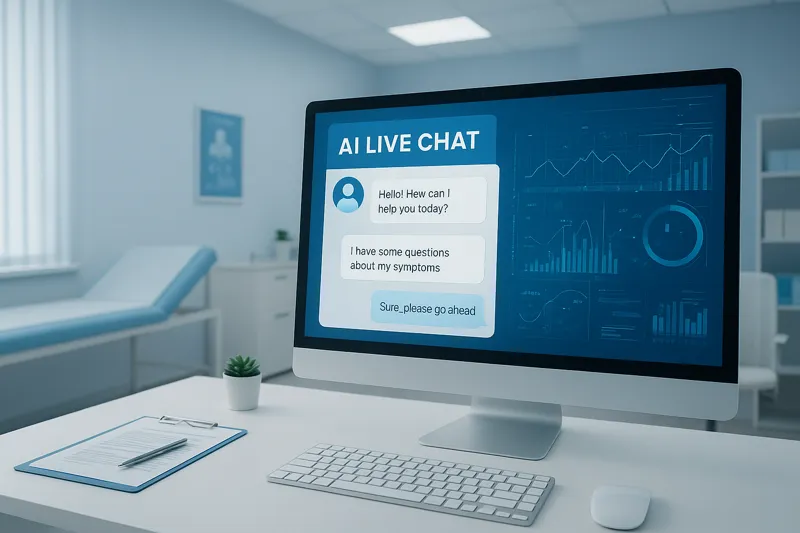
AI chatbots are transforming healthcare by automating patient support, enabling 24/7 access to health information, scheduling appointments, providing medication reminders, and improving symptom assessment and triage. These virtual assistants employ advanced technologies such as natural language processing, machine learning, and speech recognition to facilitate human-like interactions that enhance operational efficiency and patient engagement.
Importance of AI in enhancing patient communication
In the U.S., AI-driven communication tools improve patient adherence, reduce administrative burdens on clinicians, and offer timely, personalized responses. AI chatbots have demonstrated the ability to provide empathetic, detailed answers, often outperforming rapid physician replies for routine inquiries. Maintaining human oversight and transparency about data privacy remains critical for safe and ethical use.
Current trends in AI adoption in US healthcare
By 2025, 19% of U.S. medical group practices have integrated AI chatbots and virtual assistants to streamline patient communication. The healthcare chatbot market is expanding rapidly, with projected growth globally to over $10 billion by 2034. Adoption is driven by strong digital infrastructure and demand for scalable, cost-saving solutions to meet rising healthcare needs. AI applications span appointment management, chronic disease monitoring, mental health support, and patient education, emphasizing broad adoption across care settings.
The Evolving Role of AI Chatbots in Patient Communication
AI chatbots as virtual assistants
AI chatbots now serve as pivotal virtual assistants in healthcare, simplifying the communication between patients and providers. Their natural language processing capabilities enable them to interact with patients conversationally, providing immediate support 24/7. These systems reduce the burden on healthcare staff by managing routine inquiries and facilitating faster patient engagement.
Functions including appointment scheduling, symptom assessment, medication reminders
AI chatbots perform multiple essential functions:
- Appointment scheduling: Chatbots automate booking, rescheduling, and reminders, reducing no-shows and optimizing healthcare provider calendars.
- Symptom assessment: They offer basic triage by assessing symptoms and directing patients appropriately, helping minimize unnecessary visits.
- Medication reminders: Patients receive timely follow-ups and medication prompts, improving adherence and continuity of care.
These functions collectively enhance operational efficiency and patient satisfaction by automating repetitive tasks and facilitating patient-centered care.
Integration with existing healthcare systems such as EHR and telehealth platforms
Modern AI chatbots are designed to integrate seamlessly with existing healthcare infrastructure, including Electronic Health Records (EHR) and telehealth platforms. Integration enables:
- Customization of patient communication based on medical history and preferences.
- Streamlined workflows by syncing appointment, medication, and patient data across platforms.
- Enhanced data security and regulatory compliance through systems designed for HIPAA standards.
This interconnected approach allows for comprehensive, real-time patient engagement and supports clinicians in delivering personalized care efficiently.
Improving Patient Engagement and Satisfaction Through AI Chatbots

24/7 availability and multilingual support
AI chatbots provide round-the-clock access to healthcare support, ensuring patients receive timely assistance regardless of the hour. Many advanced chatbot systems support multiple languages, helping healthcare providers engage diverse patient populations effectively while maintaining secure communication aligned with HIPAA standards.
Personalized communication tailored to patient history and preferences
AI chatbots can customize interactions based on individual patient medical history, preferences, and prior engagements. This personalization enhances patient satisfaction by delivering relevant information such as appointment reminders, medication prompts, and educational content, promoting adherence and improving health outcomes.
High patient engagement and adherence rates
Healthcare AI chatbots consistently achieve engagement rates above 90%, with some systems reporting adherence rates as high as 97%. Frequent, concise chatbot interactions maintain patient interest without causing fatigue, supporting long-term compliance with care plans.
Examples from healthcare organizations using AI chatbots effectively
Institutions like the University of Pennsylvania's Penny system employ chatbots like Penny to monitor oral chemotherapy patients remotely, resulting in better medication adherence and early side effect detection. Northwell Health's customized chat services target chronic conditions, reducing hospital readmissions by proactive symptom monitoring. UC San Diego Health leverages AI chatbots integrated with patient portals to draft non-emergency responses, enabling clinicians to provide more empathetic and efficient communication.
These examples illustrate how AI chatbots in healthcare can improve patient engagement and satisfaction by combining continuous availability, personalized communication, and seamless integration with clinical workflows.
Enhancing Clinician Efficiency and Reducing Administrative Burden

How Are AI Tools Improving Administrative Tasks in Healthcare?
AI-powered chatbots and virtual assistants streamline numerous administrative tasks in healthcare settings. They manage appointment scheduling, automated reminders, follow-ups, and frequently asked questions (FAQs), offering 24/7 patient support. Platforms like healow Genie enable scheduling, bill payments, and referral requests through voice, text, and chat, which significantly reduces clerical workload.
What Impact Does AI Have on Physician Workload and Documentation?
AI tools notably alleviate physician workload by automating time-consuming tasks and documentation. AI scribes, for instance, transcribe conversations and draft notes, substantially reducing the time clinicians spend on paperwork. A 2024 NEJM Catalyst analysis reported that Permanente physicians saved nearly five years of work hours annually using AI scribes, allowing for more direct patient engagement.
Are There Studies Supporting Improved Physician-Patient Communication Due to AI?
Yes. Research at UC San Diego Health revealed that generative AI drafting compassionate responses to patient inquiries enhances the quality, length, and empathy of communication. Physicians reported reduced cognitive burden, enabling them to focus on complex clinical issues. Additionally, 47% of patients noticed their doctors spent less time on screens and more time engaging directly when AI scribes were used.
Can You Provide Examples of AI Applications Enhancing Communication?
AI chatbots draft personalized, empathetic responses that clinicians review before sending, optimizing response efficiency without sacrificing quality. Moreover, AI scribes capture real-time notes during patient encounters, facilitating smoother interactions and improved workflow.
Overall, AI-driven automation and communication support enable healthcare providers to focus on clinical care, improve patient engagement, and reduce burnout, aligning with the evolving demands of the U.S. healthcare system.
Ensuring Data Privacy, Security, and Ethical Use in AI Chatbots
Compliance with HIPAA and US Healthcare Data Privacy Standards
AI chatbots designed for healthcare must comply strictly with HIPAA compliance and AI tools regulations and other US healthcare data privacy standards to protect patient information. Tools like AI Tools at NYU Langone Health exemplify solutions tailored for handling protected health data responsibly. Ensuring regulatory adherence safeguards patient confidentiality and builds trust in digital communication platforms.
Transparency About Data Usage and Patient Consent
Transparency is critical in AI chatbot deployment. Patients should receive clear disclosures about how their data will be used, stored, and shared. Providing patients with opt-in choices for chatbot interactions reinforces autonomy and informed consent, essential for Transparency in AI patient communication.
Security Measures Such as Encryption and Access Controls
Robust security protocols are vital. Healthcare AI implementations employ industry-standard encryption (such as SSL/TLS) and strict access controls to secure communication channels and data storage. Platforms like healow Genie utilize secure Microsoft Azure data centers with SOC and HITRUST certifications, demonstrating industry best practice in protecting sensitive information.
Addressing Medicolegal, Ethical, and Safety Concerns in AI Chatbot Deployment
Medicolegal and ethical considerations weigh heavily on chatbot integration. Human oversight is necessary to verify chatbot-generated responses to prevent misinformation and harmful advice. Ethical factors also demand the mitigation of bias in AI models and safeguarding vulnerable populations. Continuous evaluation and adherence to ethical AI principles in healthcare promote safe and equitable patient care.
Overall, responsible deployment of AI chatbots in healthcare hinges on compliance, security, transparency, and ethics, ensuring these tools enhance patient communication without compromising privacy or safety.
Overcoming Challenges and Limitations in AI-Driven Patient Communication
How can patient hesitance and trust issues with AI diagnoses be addressed?
Despite AI chatbots' growing role in healthcare, many patients remain hesitant to fully trust AI-generated diagnoses, with only about 10% comfortable as of 2023. Building trust requires transparent communication about the AI’s role, clear disclosure of data use, and ensuring patients can opt into AI interactions. Human oversight must be maintained to validate AI responses, underscoring that these tools assist rather than replace clinicians.
What are the limitations of AI chatbots in emotional understanding and complex medical scenarios?
AI chatbots can enhance routine communication and administrative tasks but currently fall short in interpreting nuanced emotional states or handling complex medical situations. Physicians express concerns about chatbots’ limited empathy and accuracy in intricate cases, underscoring the need for human clinicians to intervene when empathy or judgment is critical.
What technical challenges do AI-driven patient communication tools face?
Technical challenges include natural language processing difficulties, such as understanding dialects, typos, or cultural context, and ensuring accessibility for diverse patient populations including those with impairments. Additionally, language barriers require multilingual AI support, and the AI systems must comply with HIPAA and other privacy standards to safeguard sensitive health information.
What strategies ensure human oversight and sustained patient engagement in AI communication?
Effective strategies involve integrating AI chatbot interactions with clinician review, particularly for medical advice or complex queries. Communication should remain brief and frequent to avoid fatigue, and patients must be fully informed about data privacy and the limitations of AI. Combining AI efficiency with empathetic human interaction helps maintain patient satisfaction and promotes adherence to care plans.
Technological Foundations and Innovations Powering AI Live Chat Tools
What technological components underpin AI chatbots in healthcare?
AI chatbots leverage Natural Language Processing (NLP) and Machine Learning (ML) to interpret and respond to patient queries naturally and effectively. Sentiment analysis further enhances communication by allowing chatbots to gauge emotional context, enabling more empathetic and personalized interactions.
How do AI chatbots integrate with existing healthcare systems?
Integration with Electronic Health Records (EHRs), telehealth platforms, and Customer Relationship Management (CRM) systems is essential for seamless workflows. This connectivity allows AI tools to access relevant patient data, update records automatically, and coordinate appointments or consultations efficiently.
What role does conversational AI and voice technology play in patient communication?
Conversational AI technologies facilitate human-like dialogue through text or voice interfaces. Voice-enabled AI systems offer 24/7 accessibility, handling appointment scheduling, symptom triage, and providing medical information through natural, personalized conversations. These technologies reduce workload on healthcare staff and improve patient access to care.
How are generative AI advances enhancing chatbot responsiveness?
Recent developments in generative AI enable chatbots to draft detailed, compassionate responses for patient inquiries. These AI-generated replies can be personalized and subsequently reviewed by clinicians, enhancing communication quality while reducing physician cognitive burden and improving overall patient interaction.
| Technology Aspect | Functionality | Impact on Healthcare Communication |
|---|---|---|
| NLP & Machine Learning | Understand and respond to diverse patient input | Improves natural, accurate engagement |
| System Integration | Connects with EHR, telehealth, CRM | Streamlines workflows and comprehensive care |
| Conversational AI | Enables voice/text interaction | Provides 24/7 access, reduces staff workload |
| Generative AI | Crafts personalized draft responses | Enhances empathy and saves clinician time |
Real-World Applications and Case Studies of AI Chatbots in US Healthcare
Penny chatbot at Abramson Cancer Center for chemotherapy patients
The University of Pennsylvania’s Abramson Cancer Center uses Penny, an AI-powered bi-directional text messaging system, to remotely monitor oral chemotherapy patients. This chatbot checks patient symptoms, medication adherence, and alerts clinicians promptly about side effects or complications, enhancing early intervention and reducing hospital readmissions.
Northwell Health's customized chat services condition-specific monitoring chatbots
Northwell Health employs tailored chatbots for patients with chronic conditions like diabetes and heart failure. These AI tools gather symptom and vital sign data remotely, asking condition-specific questions and escalating concerns to clinicians. This system supports ongoing patient care and significantly reduces unnecessary hospital visits.
UC San Diego Health AI chatbot integration assisted patient portals
At UC San Diego Health, AI chatbots integrated into patient portals draft replies to non-emergency messages from patients. Clinicians review and personalize these AI-generated responses, which have been shown to provide longer, empathetic, and detailed communications preferred over rapid physician replies. This approach improves response efficiency while maintaining human oversight.
healow Genie AI call center supporting 24/7 communication
healow Genie offers a comprehensive AI-powered contact center solution that enables patients to access services like appointment scheduling, medication refills, and billing support anytime via voice, text, or chat. Integrating with electronic health records and telephony systems, it streamlines operations for healthcare practices across the US. The platform maintains HIPAA compliance and uses machine learning to escalate complex inquiries to human agents, ensuring secure and personalized patient engagement.
These real-world deployments demonstrate how AI chatbots in US hospitals effectively enhance patient monitoring, improve communication workflows, and foster continuous care while upholding compliance and clinician involvement.
Future Outlook: Integrating AI Chatbots for Sustainable Patient Care

Projected Growth of Healthcare AI Chatbot Market
The healthcare AI chatbot market growth is experiencing rapid growth, with projections indicating a surge from USD 1.49 billion in 2025 to an anticipated USD 10.26 billion by 2034, reflecting a compound annual growth rate of nearly 24%. This expansion is largely driven by increasing adoption among healthcare providers in the United States, where approximately 19% of medical group practices have integrated chatbots as of 2025. The North American region leads this market due to its mature healthcare infrastructure and digital readiness.
Potential Cost Savings and Operational Efficiencies
AI chatbots contribute substantially to cost containment and operational streamlining in healthcare settings. Globally, it is expected that by 2025, healthcare systems could save up to USD 3.6 billion through chatbot deployment by automating appointment scheduling, medication management, patient triage, and routine inquiry handling. These efficiencies reduce the administrative workload, freeing healthcare staff to focus more on direct patient care and complex decision-making.
Role of AI Chatbots in Reducing Health Disparities and Improving Accessibility
AI in healthcare play a critical role in enhancing healthcare accessibility and equity. Their capacity to provide 24/7 multilingual support and personalized communication based on patient history promotes greater inclusivity, particularly benefiting underserved, rural, and non-English-speaking populations. By automating reminders and care management, chatbots help bridge gaps in care delivery while supporting marginalized groups through culturally sensitive engagement.
Importance of Continuous Evaluation, Human Oversight, and Ethical AI Integration
Sustainable integration of Healthcare chatbots roles necessitates ongoing performance evaluation and stringent human oversight to ensure accuracy, safety, and patient trust. Transparency about data usage, adherence to privacy regulations such as HIPAA, and clear communication regarding chatbot roles safeguard ethical standards in patient care. Combining AI efficiency with personalized human interaction fosters a balanced, patient-centered approach that maximizes the benefits of technological innovation while addressing concerns about overreliance and data security.
Conclusion: Transforming Patient Communication with AI-Powered Live Chat
AI chatbots are revolutionizing patient communication by enhancing engagement, accessibility, and operational efficiency in healthcare. They provide 24/7 support, automate routine tasks like appointment scheduling and medication reminders, and deliver personalized interactions grounded in patient history and preferences. These capabilities lead to improved patient adherence, satisfaction, and reduced administrative workloads for healthcare providers.
Despite their powerful benefits, maintaining the human touch remains essential. AI chatbots are most effective when integrated with clinician oversight, ensuring empathy, accuracy, and safety in patient interactions. Transparent communication about data use and patient opt-in choices further bolsters trust and patient empowerment.
To unlock their full potential, healthcare systems must prioritize responsible deployment of AI-driven live chat solutions. Ongoing evaluations and continuous improvements are necessary to address privacy, ethical concerns, and usability challenges. Widespread adoption of these innovative tools, balanced with human engagement, offers a path toward more efficient, patient-centered care and better health outcomes in the evolving U.S. healthcare landscape.
Introduction to AI-Driven Live Chat in Healthcare
Overview of AI chatbots in healthcare
AI chatbots are transforming healthcare by automating patient support, enabling 24/7 access to health information, scheduling appointments, providing medication reminders, and improving symptom assessment and triage. These virtual assistants employ advanced technologies such as natural language processing, machine learning, and speech recognition to facilitate human-like interactions that enhance operational efficiency and patient engagement.
Importance of AI in enhancing patient communication
In the U.S., AI-driven communication tools improve patient adherence, reduce administrative burdens on clinicians, and offer timely, personalized responses. AI chatbots have demonstrated the ability to provide empathetic, detailed answers, often outperforming rapid physician replies for routine inquiries. Maintaining human oversight and transparency about data privacy remains critical for safe and ethical use.
Current trends in AI adoption in US healthcare
By 2025, 19% of U.S. medical group practices have integrated AI chatbots and virtual assistants to streamline patient communication. The healthcare chatbot market is expanding rapidly, with projected growth globally to over $10 billion by 2034. Adoption is driven by strong digital infrastructure and demand for scalable, cost-saving solutions to meet rising healthcare needs. AI applications span appointment management, chronic disease monitoring, mental health support, and patient education, emphasizing broad adoption across care settings.
The Evolving Role of AI Chatbots in Patient Communication
AI chatbots as virtual assistants
AI chatbots now serve as pivotal virtual assistants in healthcare, simplifying the communication between patients and providers. Their natural language processing capabilities enable them to interact with patients conversationally, providing immediate support 24/7. These systems reduce the burden on healthcare staff by managing routine inquiries and facilitating faster patient engagement.
Functions including appointment scheduling, symptom assessment, medication reminders
AI chatbots perform multiple essential functions:
- Appointment scheduling: Chatbots automate booking, rescheduling, and reminders, reducing no-shows and optimizing healthcare provider calendars.
- Symptom assessment: They offer basic triage by assessing symptoms and directing patients appropriately, helping minimize unnecessary visits.
- Medication reminders: Patients receive timely follow-ups and medication prompts, improving adherence and continuity of care.
These functions collectively enhance operational efficiency and patient satisfaction by automating repetitive tasks and facilitating patient-centered care.
Integration with existing healthcare systems such as EHR and telehealth platforms
Modern AI chatbots are designed to integrate seamlessly with existing healthcare infrastructure, including Electronic Health Records (EHR) and telehealth platforms. Integration enables:
- Customization of patient communication based on medical history and preferences.
- Streamlined workflows by syncing appointment, medication, and patient data across platforms.
- Enhanced data security and regulatory compliance through systems designed for HIPAA standards.
This interconnected approach allows for comprehensive, real-time patient engagement and supports clinicians in delivering personalized care efficiently.
Improving Patient Engagement and Satisfaction Through AI Chatbots
24/7 availability and multilingual support
AI chatbots provide round-the-clock access to healthcare support, ensuring patients receive timely assistance regardless of the hour. Many advanced chatbot systems support multiple languages, helping healthcare providers engage diverse patient populations effectively while maintaining secure communication aligned with HIPAA standards.
Personalized communication tailored to patient history and preferences
AI chatbots can customize interactions based on individual patient medical history, preferences, and prior engagements. This personalization enhances patient satisfaction by delivering relevant information such as appointment reminders, medication prompts, and educational content, promoting adherence and improving health outcomes.
High patient engagement and adherence rates
Healthcare AI chatbots consistently achieve engagement rates above 90%, with some systems reporting adherence rates as high as 97%. Frequent, concise chatbot interactions maintain patient interest without causing fatigue, supporting long-term compliance with care plans.
Examples from healthcare organizations using AI chatbots effectively
Institutions like the University of Pennsylvania's Penny system employ chatbots like Penny to monitor oral chemotherapy patients remotely, resulting in better medication adherence and early side effect detection. Northwell Health's customized chat services target chronic conditions, reducing hospital readmissions by proactive symptom monitoring. UC San Diego Health leverages AI chatbots integrated with patient portals to draft non-emergency responses, enabling clinicians to provide more empathetic and efficient communication.
These examples illustrate how AI chatbots in healthcare can improve patient engagement and satisfaction by combining continuous availability, personalized communication, and seamless integration with clinical workflows.
Enhancing Clinician Efficiency and Reducing Administrative Burden
How Are AI Tools Improving Administrative Tasks in Healthcare?
AI-powered chatbots and virtual assistants streamline numerous administrative tasks in healthcare settings. They manage appointment scheduling, automated reminders, follow-ups, and frequently asked questions (FAQs), offering 24/7 patient support. Platforms like healow Genie enable scheduling, bill payments, and referral requests through voice, text, and chat, which significantly reduces clerical workload.
What Impact Does AI Have on Physician Workload and Documentation?
AI tools notably alleviate physician workload by automating time-consuming tasks and documentation. AI scribes, for instance, transcribe conversations and draft notes, substantially reducing the time clinicians spend on paperwork. A 2024 NEJM Catalyst analysis reported that Permanente physicians saved nearly five years of work hours annually using AI scribes, allowing for more direct patient engagement.
Are There Studies Supporting Improved Physician-Patient Communication Due to AI?
Yes. Research at UC San Diego Health revealed that generative AI drafting compassionate responses to patient inquiries enhances the quality, length, and empathy of communication. Physicians reported reduced cognitive burden, enabling them to focus on complex clinical issues. Additionally, 47% of patients noticed their doctors spent less time on screens and more time engaging directly when AI scribes were used.
Can You Provide Examples of AI Applications Enhancing Communication?
AI chatbots draft personalized, empathetic responses that clinicians review before sending, optimizing response efficiency without sacrificing quality. Moreover, AI scribes capture real-time notes during patient encounters, facilitating smoother interactions and improved workflow.
Overall, AI-driven automation and communication support enable healthcare providers to focus on clinical care, improve patient engagement, and reduce burnout, aligning with the evolving demands of the U.S. healthcare system.
Ensuring Data Privacy, Security, and Ethical Use in AI Chatbots
Compliance with HIPAA and US Healthcare Data Privacy Standards
AI chatbots designed for healthcare must comply strictly with HIPAA compliance and AI tools regulations and other US healthcare data privacy standards to protect patient information. Tools like AI Tools at NYU Langone Health exemplify solutions tailored for handling protected health data responsibly. Ensuring regulatory adherence safeguards patient confidentiality and builds trust in digital communication platforms.
Transparency About Data Usage and Patient Consent
Transparency is critical in AI chatbot deployment. Patients should receive clear disclosures about how their data will be used, stored, and shared. Providing patients with opt-in choices for chatbot interactions reinforces autonomy and informed consent, essential for Transparency in AI patient communication.
Security Measures Such as Encryption and Access Controls
Robust security protocols are vital. Healthcare AI implementations employ industry-standard encryption (such as SSL/TLS) and strict access controls to secure communication channels and data storage. Platforms like healow Genie utilize secure Microsoft Azure data centers with SOC and HITRUST certifications, demonstrating industry best practice in protecting sensitive information.
Addressing Medicolegal, Ethical, and Safety Concerns in AI Chatbot Deployment
Medicolegal and ethical considerations weigh heavily on chatbot integration. Human oversight is necessary to verify chatbot-generated responses to prevent misinformation and harmful advice. Ethical factors also demand the mitigation of bias in AI models and safeguarding vulnerable populations. Continuous evaluation and adherence to ethical AI principles in healthcare promote safe and equitable patient care.
Overall, responsible deployment of AI chatbots in healthcare hinges on compliance, security, transparency, and ethics, ensuring these tools enhance patient communication without compromising privacy or safety.
Overcoming Challenges and Limitations in AI-Driven Patient Communication
How can patient hesitance and trust issues with AI diagnoses be addressed?
Despite AI chatbots' growing role in healthcare, many patients remain hesitant to fully trust AI-generated diagnoses, with only about 10% comfortable as of 2023. Building trust requires transparent communication about the AI’s role, clear disclosure of data use, and ensuring patients can opt into AI interactions. Human oversight must be maintained to validate AI responses, underscoring that these tools assist rather than replace clinicians.
What are the limitations of AI chatbots in emotional understanding and complex medical scenarios?
AI chatbots can enhance routine communication and administrative tasks but currently fall short in interpreting nuanced emotional states or handling complex medical situations. Physicians express concerns about chatbots’ limited empathy and accuracy in intricate cases, underscoring the need for human clinicians to intervene when empathy or judgment is critical.
What technical challenges do AI-driven patient communication tools face?
Technical challenges include natural language processing difficulties, such as understanding dialects, typos, or cultural context, and ensuring accessibility for diverse patient populations including those with impairments. Additionally, language barriers require multilingual AI support, and the AI systems must comply with HIPAA and other privacy standards to safeguard sensitive health information.
What strategies ensure human oversight and sustained patient engagement in AI communication?
Effective strategies involve integrating AI chatbot interactions with clinician review, particularly for medical advice or complex queries. Communication should remain brief and frequent to avoid fatigue, and patients must be fully informed about data privacy and the limitations of AI. Combining AI efficiency with empathetic human interaction helps maintain patient satisfaction and promotes adherence to care plans.
Technological Foundations and Innovations Powering AI Live Chat Tools
What technological components underpin AI chatbots in healthcare?
AI chatbots leverage Natural Language Processing (NLP) and Machine Learning (ML) to interpret and respond to patient queries naturally and effectively. Sentiment analysis further enhances communication by allowing chatbots to gauge emotional context, enabling more empathetic and personalized interactions.
How do AI chatbots integrate with existing healthcare systems?
Integration with Electronic Health Records (EHRs), telehealth platforms, and Customer Relationship Management (CRM) systems is essential for seamless workflows. This connectivity allows AI tools to access relevant patient data, update records automatically, and coordinate appointments or consultations efficiently.
What role does conversational AI and voice technology play in patient communication?
Conversational AI technologies facilitate human-like dialogue through text or voice interfaces. Voice-enabled AI systems offer 24/7 accessibility, handling appointment scheduling, symptom triage, and providing medical information through natural, personalized conversations. These technologies reduce workload on healthcare staff and improve patient access to care.
How are generative AI advances enhancing chatbot responsiveness?
Recent developments in generative AI enable chatbots to draft detailed, compassionate responses for patient inquiries. These AI-generated replies can be personalized and subsequently reviewed by clinicians, enhancing communication quality while reducing physician cognitive burden and improving overall patient interaction.
| Technology Aspect | Functionality | Impact on Healthcare Communication |
|---|---|---|
| NLP & Machine Learning | Understand and respond to diverse patient input | Improves natural, accurate engagement |
| System Integration | Connects with EHR, telehealth, CRM | Streamlines workflows and comprehensive care |
| Conversational AI | Enables voice/text interaction | Provides 24/7 access, reduces staff workload |
| Generative AI | Crafts personalized draft responses | Enhances empathy and saves clinician time |
Real-World Applications and Case Studies of AI Chatbots in US Healthcare
Penny chatbot at Abramson Cancer Center for chemotherapy patients
The University of Pennsylvania’s Abramson Cancer Center uses Penny, an AI-powered bi-directional text messaging system, to remotely monitor oral chemotherapy patients. This chatbot checks patient symptoms, medication adherence, and alerts clinicians promptly about side effects or complications, enhancing early intervention and reducing hospital readmissions.
Northwell Health's customized chat services condition-specific monitoring chatbots
Northwell Health employs tailored chatbots for patients with chronic conditions like diabetes and heart failure. These AI tools gather symptom and vital sign data remotely, asking condition-specific questions and escalating concerns to clinicians. This system supports ongoing patient care and significantly reduces unnecessary hospital visits.
UC San Diego Health AI chatbot integration assisted patient portals
At UC San Diego Health, AI chatbots integrated into patient portals draft replies to non-emergency messages from patients. Clinicians review and personalize these AI-generated responses, which have been shown to provide longer, empathetic, and detailed communications preferred over rapid physician replies. This approach improves response efficiency while maintaining human oversight.
healow Genie AI call center supporting 24/7 communication
healow Genie offers a comprehensive AI-powered contact center solution that enables patients to access services like appointment scheduling, medication refills, and billing support anytime via voice, text, or chat. Integrating with electronic health records and telephony systems, it streamlines operations for healthcare practices across the US. The platform maintains HIPAA compliance and uses machine learning to escalate complex inquiries to human agents, ensuring secure and personalized patient engagement.
These real-world deployments demonstrate how AI chatbots in US hospitals effectively enhance patient monitoring, improve communication workflows, and foster continuous care while upholding compliance and clinician involvement.
Future Outlook: Integrating AI Chatbots for Sustainable Patient Care
Projected Growth of Healthcare AI Chatbot Market
The healthcare AI chatbot market growth is experiencing rapid growth, with projections indicating a surge from USD 1.49 billion in 2025 to an anticipated USD 10.26 billion by 2034, reflecting a compound annual growth rate of nearly 24%. This expansion is largely driven by increasing adoption among healthcare providers in the United States, where approximately 19% of medical group practices have integrated chatbots as of 2025. The North American region leads this market due to its mature healthcare infrastructure and digital readiness.
Potential Cost Savings and Operational Efficiencies
AI chatbots contribute substantially to cost containment and operational streamlining in healthcare settings. Globally, it is expected that by 2025, healthcare systems could save up to USD 3.6 billion through chatbot deployment by automating appointment scheduling, medication management, patient triage, and routine inquiry handling. These efficiencies reduce the administrative workload, freeing healthcare staff to focus more on direct patient care and complex decision-making.
Role of AI Chatbots in Reducing Health Disparities and Improving Accessibility
AI in healthcare play a critical role in enhancing healthcare accessibility and equity. Their capacity to provide 24/7 multilingual support and personalized communication based on patient history promotes greater inclusivity, particularly benefiting underserved, rural, and non-English-speaking populations. By automating reminders and care management, chatbots help bridge gaps in care delivery while supporting marginalized groups through culturally sensitive engagement.
Importance of Continuous Evaluation, Human Oversight, and Ethical AI Integration
Sustainable integration of Healthcare chatbots roles necessitates ongoing performance evaluation and stringent human oversight to ensure accuracy, safety, and patient trust. Transparency about data usage, adherence to privacy regulations such as HIPAA, and clear communication regarding chatbot roles safeguard ethical standards in patient care. Combining AI efficiency with personalized human interaction fosters a balanced, patient-centered approach that maximizes the benefits of technological innovation while addressing concerns about overreliance and data security.