.png)


The Importance of SEO in Healthcare: Navigating Patient Needs and Search Engine Demands
Overview of Healthcare SEO Importance
Healthcare SEO is a critical component for medical practices aiming to increase online visibility and attract relevant patient traffic. With over 1 billion health-related queries processed daily in the U.S., optimizing for search engines ensures that healthcare providers stand out in a highly competitive digital landscape. Effective SEO aligns website content, technical performance, and local search presence with the specific needs of patients and search engines alike.
Patient Search Behavior and Urgency
Healthcare searches often reflect urgent or high-stakes patient concerns, differentiating them from general online searches. Patients typically seek immediate answers or local providers, using long-tail and location-specific keywords such as “emergency hospital Los Angeles.” This urgency demands responsive, accessible, and trustworthy content that directly addresses patient needs and stages of their healthcare journey.
Role of SEO in Patient Acquisition and Practice Growth
SEO influences multiple facets of patient acquisition—from initial discovery through reputable content to converting visits into appointments via optimized local listings. Proper optimization of Google Business Profiles, consistent NAP data, and management of patient reviews improve local rankings, which significantly impact patient inquiries. Moreover, compliance with regulatory standards like HIPAA ensures ethical marketing practices while reinforcing trust. Collectively, these SEO strategies contribute to measurable practice growth by attracting engaged, high-intent patients and enhancing the patient-provider relationship through digital touchpoints.
Understanding Google's E-E-A-T and YMYL Standards in Healthcare SEO
What Is E-E-A-T and Why Does It Matter in Healthcare SEO?
E-E-A-T stands for Experience, Expertise, Authority, and Trustworthiness and represents Google’s framework for evaluating the quality and credibility of content, especially in sensitive fields such as healthcare. This principle ensures that medical content is created or vetted by qualified professionals and aligns closely with patient needs and safety.
What Does YMYL Mean for Healthcare Content?
YMYL, or "Your Money or Your Life," refers to content that can significantly impact a person's health, finances, or well-being. Healthcare topics inherently fall under this classification, meaning Google applies stricter scrutiny to ensure information accuracy and reliability.
How Does Compliance with E-E-A-T and YMYL Affect Content Ranking?
Google favors healthcare content that demonstrates strong E-E-A-T in healthcare content characteristics, elevating it in search rankings. This includes clear author credentials, institutional affiliations, and evidenced trust signals such as patient testimonials and awards. Non-compliance or insufficient authority may lead to diminished rankings and lower user trust.
What Is the Role of Clinician-Authored Content and Provider Credentials?
Integrating clinician-authored or reviewed content enhances expertise and authority signals, essential for high rankings in healthcare searches. Including detailed provider bios SEO and credentials builds patient confidence and reinforces trustworthiness. Showcasing verifiable expertise aligns with Google’s expectations and boosts the site’s overall SEO performance.
Healthcare SEO strategies must prioritize E-E-A-T and YMYL adherence to improve organic visibility, patient trust, and long-term growth.
Strategic Keyword Research: Long-Tail and Localized Keywords for Targeting High-Intent Patients
Importance of Long-Tail Keywords in Healthcare SEO
Long-tail keywords — longer, more specific search terms — are crucial for healthcare SEO guide because they face less competition and attract patients with clear, urgent intent. For example, "emergency hospital in Los Angeles" is more targeted and conversion-friendly than broader terms like "hospital." Using Long-tail Keywords in Healthcare SEO helps healthcare providers connect with searchers closer to making healthcare decisions.
Using Location-Specific Keywords to Capture Local Patient Searches
Healthcare searches frequently have strong local intent. Incorporating location-specific keywords such as "orthopedic surgeon in Chicago" or "pediatric clinic near me" is essential to capture geographically relevant patient traffic. Local SEO strategies for healthcare, including Google Business Profile optimization for doctors, hinge on this precise targeting, improving rankings in the Google Local Pack and enhancing appointment bookings.
Tools for Keyword Research
Leverage advanced SEO tools like SEMrush, Healthcare SEO tools Moz Ahrefs, and Keywords Everywhere for robust keyword research. These platforms enable healthcare marketers to identify high-value long-tail and local keywords by analyzing search volume, competition, and patient intent, crafting an informed and effective Keyword Strategy for Medical Practices.
Matching Keywords to Patient Journey and Search Intent
Different keywords correspond to various stages of the Patient Journey in Healthcare Search—from awareness and information gathering to decision-making. Understanding this progression allows creation of targeted content that addresses patient questions at each step. For instance, Educational Healthcare Content keywords fit early-stage queries, while service- or procedure-specific terms align with decision-ready searches.
By integrating long-tail and localized keywords matched to Healthcare search intent stages, healthcare SEO campaigns can achieve greater visibility and attract high-intent patient audiences, ultimately driving measurable patient growth and engagement.
Local SEO Optimization: Dominating the Google Local Pack and Attracting Nearby Patients
Claiming and Optimizing Google Business Profile and Bing Places Listings
Healthcare providers must start by claiming their Google Business Profile (GBP) and Bing Places listings to enhance local search visibility. Complete and accurate profiles with detailed service descriptions, operating hours, photos, and relevant categories drive higher rankings and patient engagement.
Ensuring Consistent NAP Details Across Directories
Maintaining consistent Name, Address, and Phone number (NAP) information across all online directories and review platforms is critical. Discrepancies can reduce search engine trust, hurting local SEO rankings and causing confusion among potential patients.
Encouraging and Managing Patient Reviews with HIPAA Compliance
Positive patient reviews significantly impact rankings within the Google Local Pack. Encouraging authentic reviews through ethical, HIPAA-compliant methods builds trust and enhances social proof. Practices must avoid incentivizing reviews and respond thoughtfully while protecting patient privacy.
Importance of Photos, Virtual Tours, and Category Optimization
Visual content like high-quality photos and virtual tours enriches listings, improving user interaction and time spent on profiles. Additionally, precise category optimization aligned with the practice’s specialties ensures relevance in local search queries, boosting prominence and visibility.
Link-Building Strategies from Local Authoritative Sources
Building backlinks from reputable community organizations, local news outlets, healthcare directories, and professional associations strengthens domain authority. Ethical outreach through partnerships, sponsorships, and media features helps improve local search rankings without risking penalties.
By executing these local SEO best practices, healthcare providers can dominate the Google Local Pack, attract nearby patients effectively, and drive measurable growth through enhanced online presence and credibility.
Crafting Patient-Focused, Authoritative Content to Build Trust and Improve Rankings
Creating Educational and Evergreen Content Addressing Patient FAQs and Conditions
Healthcare SEO thrives on patient-centric content that directly addresses common questions and concerns. Developing evergreen educational materials—such as comprehensive guides on medical conditions and treatment options—ensures consistent traffic and positions your practice as a trusted resource over time. This content must be clear, accurate, and aligned with different stages of the patient journey in healthcare search.
Use of Blogs, Infographics, Videos, and Webinars to Engage Users
Diversifying content formats enhances user engagement and strengthens SEO performance. Healthcare SEO trends 2025 allow for continual updating with relevant health topics, while infographics simplify complex data for easy comprehension. Video content in healthcare SEO such as testimonials and virtual tours create emotional connections and trust, leveraging the power of storytelling. Webinars offer live, interactive education, increasing user loyalty and website visitation.
Demonstrating Expertise and Trust Through Accurate, Regularly Updated Information
Maintaining authoritative medical content authored or reviewed by credentialed clinicians is essential. Regular updates reflecting the latest medical guidelines and research reinforce trustworthiness and comply with Google's Google Ranking Factors for Medical Practices standards. This ongoing accuracy assures patients and search engines alike of the website’s reliability.
Including Patient Testimonials and Success Stories
Patient reviews and success narratives serve dual SEO and reputation purposes. They build social proof, improve improve local SEO for medical practices, and increase conversion rates. Displaying testimonials prominently, while adhering to privacy and HIPAA compliance in healthcare marketing, enhances authenticity and patient confidence.
Structuring Content With Headers, Meta Tags, and Schema Markup for SEO
Organized content with clear header tags (H1, H2, H3) improves readability and assists search engines in understanding page hierarchy. Optimizing meta titles and descriptions with targeted keywords increases click-through rates in search results. Implementing MedicalProcedure schema benefits and schema markup for medical content, reviews, and FAQs enriches search listings with rich snippets, improving visibility and patient engagement.
Technical SEO Essentials: Speed, Mobile Optimization, Security, and Structured Data

Optimizing Website Load Speed
Healthcare websites must load quickly, ideally within 2 to 3 seconds, to retain patient engagement and improve search rankings. Tools such as Google PageSpeed Insights for healthcare and Lighthouse help assess and guide optimization efforts. Techniques include image compression, minimizing redirects, and leveraging content delivery networks (CDNs).
Ensuring Mobile Responsiveness and Accessibility
With over 60% of healthcare searches conducted on mobile devices, responsive design is critical. A mobile-friendly healthcare website improves user experience and SEO rankings. Additionally, compliance with accessibility standards like WCAG 2.1 Level AA ensures that websites are usable for all patients, supporting better engagement and inclusivity.
Implementing HTTPS Security
Securing healthcare websites with HTTPS encryption through SSL certificates safeguards patient data and builds user trust. Google factors site security into ranking algorithms, making HTTPS and SSL certificates for medical sites a necessity for healthcare providers handling sensitive information.
Using Schema Markup for Enhanced Search Listings
Schema markup formats such as Hospital, Physician, MedicalCondition, and MedicalProcedure enrich search results with detailed snippets. Implementing structured data using JSON-LD improves search engine understanding and visibility, contributing to higher click-through rates. Learn more about structured data SEO and medical schemas.
Site Architecture and Navigation
A logical site architecture with clear internal linking structures facilitates efficient crawling and indexing by search engines. Using XML sitemaps and robots.txt and maintaining a hierarchical structure improves both user navigation and SEO performance, helping patients find relevant information quickly and boosting search rankings.
The Power of Backlinks: Building Authority Through Reputable Healthcare Sources
Importance of Backlinks from Authoritative Medical Websites, Directories, and Local Organizations
Backlinks from credible sources such as reputable medical websites, healthcare directories, and respected local organizations significantly bolster a healthcare website's authority. These links act as votes of confidence, signaling to Google that the practice is trustworthy and knowledgeable. For more detailed strategies, see Building Backlinks for Medical Websites, Backlinks for Healthcare Sites, and Building backlinks from reputable health sites.
Ethical Link-Building Practices Avoiding Black Hat SEO
Healthcare SEO must adhere to ethical link-building strategies to maintain compliance and avoid penalties. Practices involve securing genuine backlinks through high-quality, shareable content and legitimate partnerships rather than manipulative tactics like link farms or paid link schemes. For insights on ethical practices, see Ethical SEO practices in healthcare and Ethical Backlink Acquisition.
Leveraging Community Outreach, Media Features, and Collaborations
Engaging with the local community through events, media coverage, and collaborations with other healthcare entities creates natural backlink opportunities. These efforts not only enhance reputation but also generate authoritative inbound links that improve online visibility. Learn more at Community involvement for healthcare growth and Using shareable content to boost SEO.
Impact of Backlinks on Google’s Perception of Trust and Ranking
Google’s algorithm considers backlinks from trusted healthcare sites as endorsements, boosting a website's trustworthiness and search rankings. Quality backlinks help differentiate medical practices in competitive markets by amplifying domain authority. Relevant resources include Google Ranking Factors for Medical Practices and Google E-A-T for medical content.
How Backlinks Complement Content and Technical SEO Efforts
Backlinks work synergistically with well-optimized content and technical SEO elements such as site speed and mobile responsiveness. Together, they create a robust SEO foundation that drives sustained search engine ranking improvements and measurable patient acquisition growth. Explore more in Healthcare SEO strategies, Technical SEO for healthcare websites, and Improving website user experience in healthcare.
Maximizing Engagement with Multimedia: Videos, Images, and Patient Testimonials
How multimedia like videos and images boost user engagement and SEO rankings
Multimedia content such as videos and images significantly enhances the user experience on healthcare websites. Visual elements capture attention, increase the time visitors spend on the site, and improve overall engagement metrics—factors that Google values highly for SEO rankings. High-quality multimedia makes complex healthcare information more understandable and accessible, directly influencing patient trust and conversion rates.
Examples include patient testimonials, provider introductions, virtual tours
Patient testimonials serve as powerful social proof that reinforces the credibility of medical practices. Videos featuring provider introductions help humanize healthcare services, fostering a stronger connection between patients and providers. Virtual tours of facilities offer transparency, making patients more comfortable with choosing a provider. These multimedia touchpoints enrich website content and enhance search rankings by providing diversified, relevant material as part of healthcare content marketing.
Optimizing images with descriptive alt text and compression to enhance load speed
Healthcare websites must optimize images to achieve faster page load speeds, a critical ranking factor. Proper compression reduces file size without sacrificing quality, improving site performance on all devices. Descriptive alt text not only aids accessibility for medical sites but also helps search engines better understand content relevance, boosting SEO.
Leveraging YouTube as a search platform for healthcare content
YouTube, owned by Google, is the second-largest search engine globally and a vital platform for video content in healthcare SEO. Publishing engaging videos such as educational materials, patient stories, and procedure explanations on YouTube increases visibility and drives organic traffic to primary websites. Optimizing video titles, descriptions, and tags with targeted keywords further enhances discoverability.
Using multimedia for patient education and trust-building
Educational videos and infographics simplify complex medical topics, empowering patients to make informed decisions. Multimedia builds trust by showing transparency, expertise, and patient-centered care aligned with Google E-A-T for medical content. Interactive content like FAQs in video format or animated procedure walkthroughs improves patient engagement, satisfaction, and search engine rankings by aligning content with user intent and healthcare search intent.
Navigating Regulatory Compliance in Healthcare SEO: HIPAA and Ethical Marketing

Impact of HIPAA compliance in healthcare marketing on SEO Tactics
HIPAA regulations significantly influence Healthcare SEO strategies, especially in areas like patient review collection and content marketing. Practices must ensure that they do not inadvertently disclose protected health information (PHI) when encouraging reviews or sharing patient stories. SEO strategies must be meticulously designed to maintain regulatory compliance while still engaging users effectively.
Ensuring Patient Privacy and Secure Data Handling
Healthcare websites must prioritize secure handling of patient data. Implementing SSL and security for healthcare websites via SSL certificates is essential not only for compliance but also for improving search engine rankings. Secure data collection and storage mechanisms prevent unauthorized access and protect patient privacy, aligning with HIPAA requirements.
Avoiding Sharing Protected Health Information (PHI) Online
Medical marketers should avoid posting any PHI on websites or in online content. This includes careful monitoring and redaction of any identifiable patient details in testimonials, case studies, or multimedia. Compliance demands strict oversight to prevent accidental disclosures that could lead to legal repercussions and damage patient trust.
Ethical Management of Online Reviews and Reputation
Collecting and managing patient reviews ethically is critical. Practices should not incentivize reviews or manipulate them, as this violates both HIPAA and SEO best practices. Transparent and authentic review management, including regular monitoring and responding appropriately without breaching privacy, enhances reputation and local SEO rankings.
Balancing Regulatory Requirements with SEO Effectiveness
Successful Healthcare SEO strategies balance compliance with SEO strategies by integrating privacy safeguards into tactics. Collaborating with healthcare SEO experts ensures that marketing efforts respect HIPAA while maximizing visibility. Employing patient-centric, compliant content combined with robust local SEO and technical measures results in sustainable online growth and increased patient trust.
Monitoring and Measuring Healthcare SEO Success: Metrics Beyond Traffic

Tracking offline conversions, appointment bookings, and multi-touch attribution
Healthcare SEO success transcends basic web traffic metrics by focusing on outcomes that directly reflect patient acquisition and engagement. Tracking offline conversions, such as appointment bookings made via phone calls or in-person visits, provides a clear link between SEO efforts and practice growth. Multi-touch attribution models recognize that patient journey in healthcare search are often complex and involve multiple online touchpoints before conversion, affording a more nuanced evaluation of SEO impact.
Utilizing tools like Google Analytics, Search Console, SEMrush, and Ahrefs
Leveraging advanced analytics platforms is vital for capturing comprehensive SEO performance data. Tracking SEO performance with Google Analytics offers insights into user behavior, traffic sources, and conversion paths. Google Search Console helps monitor indexing status, search performance, and keyword positions. SEMrush competitor analysis for medical practices and Ahrefs provide competitive analysis, backlink profiles, and keyword tracking, enabling healthcare marketers to identify optimization opportunities and benchmark against competitors.
Measuring keyword rankings, click-through rates, bounce rates, and user engagement
Effective SEO measurement involves assessing keyword rankings for priority terms, particularly local and long-tail keywords in healthcare SEO that exhibit strong intent. Click-through rates (CTR) from search results indicate the effectiveness of meta tags and content relevance, while bounce rates and session duration reflect the quality of user experience and engagement. Together, these metrics inform whether content resonates with targeted healthcare audiences.
Importance of regular performance analysis for strategy refinement
Consistently reviewing SEO metrics allows healthcare organizations to adapt strategies based on data-driven insights. Regular analysis uncovers trends, technical issues, and content gaps, enabling continuous improvement. This adaptive approach is essential given evolving Healthcare SEO trends 2025, patient behaviors, and regulatory requirements within healthcare marketing.
Considering longer sales cycles in healthcare patient acquisition
Healthcare patient acquisition typically involves extended decision-making periods compared to other industries. SEO measurement strategies should factor in these longer sales cycles by tracking interactions over time, including repeat visits and multi-channel engagement, to accurately attribute new patient appointments and loyalty to SEO efforts.
Voice Search and Emerging Technologies: Preparing Healthcare SEO for the Future

Rising importance of voice search and conversational queries
Voice search is significantly reshaping healthcare SEO strategies as more patients use conversational, question-based queries like "where can I find an orthopedic surgeon near me?" to find services. This trend demands content that mirrors natural speech patterns and addresses detailed patient inquiries to capture this growing search volume.
Optimizing content for question-based and long-tail phrases
To align with voice search behavior, healthcare providers should prioritize long-tail healthcare keywords and develop comprehensive FAQ sections. These strategies improve the relevance of search results and meet patients' intent more precisely, boosting visibility in voice search and traditional queries alike.
Use of schema markup to enhance answer provision in search results
Structured data schema markup, particularly for medical FAQs, procedures, and provider information, enables search engines to deliver rich snippets and direct answers. This technical optimization not only improves SERP appearance but also enhances patient trust and engagement by providing immediate, authoritative information.
Emerging AI tools like ChatGPT for keyword research and content creation
Healthcare marketers are increasingly leveraging AI technologies such as ChatGPT to streamline keyword research, generate patient-centric content, and optimize SEO strategies. These tools assist in identifying relevant search terms and producing high-quality, compliant content efficiently. AI benefits in healthcare marketing are detailed in Healthcare SEO trends 2025.
Balancing AI automation with human expertise for compliance and trust
Despite AI advancements, human expertise remains essential to ensure content accuracy, adherence to HIPAA regulations and SEO, and preservation of trustworthiness. Healthcare SEO strategies must integrate AI-driven efficiency with clinician oversight to maintain patient safety and authoritative communication.
On-Page SEO Best Practices for Healthcare Websites
Effective Use of Header Tags (H1, H2, H3) for Content Structure and Readability
Healthcare websites benefit significantly from structured content using header tags. The main title should use a single H1 tag to clearly identify page focus for both users and search engines. Subheadings organized with H2 and H3 tags break down topics for better readability and allow search engines to understand the content hierarchy, improving indexing and user experience. See Role of On-Page SEO for Healthcare Websites.
Optimizing Meta Titles and Descriptions for Higher Click-Through Rates
Well-crafted meta titles and descriptions are essential for compelling search listings. Including targeted keywords naturally and providing clear, patient-focused messaging in titles and descriptions increase relevancy and entice users to click through to the website. This optimization supports higher click-through rates and better search visibility. See SEO for healthcare.
Keyword Placement Across Content, URLs, and Image Alt Tags
Strategic keyword integration throughout on-page elements is vital. Placing keywords in URLs, headers, body content, and image alt tags enhances search relevance, helping pages appear in specific healthcare-related queries. Using long-tail and location-specific keywords can target patient intent more precisely. See Healthcare SEO guide.
Internal Linking Strategies and Content Siloing for Improved Crawlability
Implementing internal links between related pages creates a logical website architecture that aids search engine crawlers. Content siloing groups related healthcare topics to boost topical authority and help Google better understand the site structure, positively influencing ranking and user navigation. See Healthcare SEO overview.
Importance of Regularly Updating Content and Technical Audits
Healthcare information changes frequently; therefore, regularly updating web content ensures accuracy, freshness, and compliance with medical standards. Conducting technical SEO audits to check site speed, mobile responsiveness, and crawl errors maintains optimal website health and search performance. See Healthcare SEO basics.
These on-page SEO best practices enable healthcare websites to strengthen authority, improve patient engagement, and achieve measurable growth in search rankings and patient acquisition.
The Role of User Experience in Healthcare SEO: Navigation, Accessibility, and Usability

Designing Intuitive Navigation and Logical Site Architecture
A well-structured website architecture enhances user navigation and aids search engines in crawling and indexing pages effectively. By implementing logical internal linking and content siloing, healthcare websites can provide a seamless user journey that matches patient journey in healthcare search and facilitates information discovery.
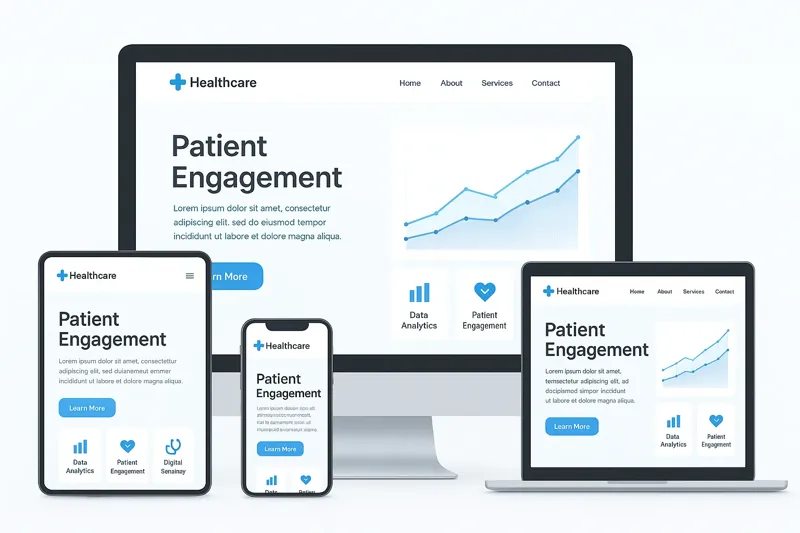
Mobile-First Design and Fast Load Times
With over 60% of healthcare-related searches occurring on mobile devices, responsive, mobile-first design for healthcare websites are essential. Fast page loading times, ideally under 2-3 seconds, improve user engagement and reduce bounce rates. Google prioritizes mobile-optimized websites in rankings, amplifying their visibility to prospective patients.
Accessibility Considerations
Healthcare websites must adhere to accessibility standards such as WCAG 2.1 Level AA to accommodate all users, including those with disabilities. Important factors include high color contrast for readability and keyboard navigation support. Compliance not only fosters inclusivity but also positively impacts usability in healthcare websites.
Use of Call-to-Actions (CTAs)
Strategically placed CTAs guide users toward desirable conversions, such as scheduling appointments or contacting the practice. Clear, concise, and prominent CTAs improve user experience and help convert website visitors into patients, supporting measurable growth.
Impact of Overall Website Usability
High usability builds patient trust by providing an efficient, informative, and secure online environment. This trust contributes to improved user engagement metrics, which search engines interpret as quality signals, ultimately boosting Healthcare SEO performance analysis and organic visibility for healthcare providers.
Sustaining Healthcare SEO Success Through Ongoing Adaptation and Ethical Practices
Healthcare SEO as a Continuous Process
Healthcare SEO is not a one-time setup but a continual effort. Regular updates to content, keywords, and technical components are necessary to maintain and improve rankings. The healthcare market evolves, and so does patient search behavior, requiring ongoing adaptation.
Adapting to Algorithm Changes and Emerging Technologies
Search engines like Google frequently update ranking algorithms. Healthcare providers must stay informed and adjust strategies accordingly. Emerging tools like AI-assisted keyword research and content creation can boost SEO but must be integrated responsibly to enhance relevance and user engagement.
Maintaining Compliance and Ethical Standards
Compliance with regulations such as HIPAA is imperative in healthcare SEO. Ethical marketing practices, including transparent review management and responsible keyword targeting, safeguard patient trust and SEO credibility. Avoiding black-hat tactics prevents penalties and preserves reputation.
Holistic Impact of SEO Elements
Sustained SEO success arises from the synergy of quality content demonstrating expertise and trustworthiness, robust technical SEO ensuring site speed and security, excellent user experience with mobile optimization, and strong local SEO through accurate listings and reviews.
Partnering with Healthcare SEO Experts
Engaging seasoned healthcare SEO professionals helps practices navigate complex regulatory environments and evolving SEO landscapes. Expert partnerships enable customized strategies that balance compliance, innovation, and measurable patient growth outcomes.
The Importance of SEO in Healthcare: Navigating Patient Needs and Search Engine Demands
Overview of Healthcare SEO Importance
Healthcare SEO is a critical component for medical practices aiming to increase online visibility and attract relevant patient traffic. With over 1 billion health-related queries processed daily in the U.S., optimizing for search engines ensures that healthcare providers stand out in a highly competitive digital landscape. Effective SEO aligns website content, technical performance, and local search presence with the specific needs of patients and search engines alike.
Patient Search Behavior and Urgency
Healthcare searches often reflect urgent or high-stakes patient concerns, differentiating them from general online searches. Patients typically seek immediate answers or local providers, using long-tail and location-specific keywords such as “emergency hospital Los Angeles.” This urgency demands responsive, accessible, and trustworthy content that directly addresses patient needs and stages of their healthcare journey.
Role of SEO in Patient Acquisition and Practice Growth
SEO influences multiple facets of patient acquisition—from initial discovery through reputable content to converting visits into appointments via optimized local listings. Proper optimization of Google Business Profiles, consistent NAP data, and management of patient reviews improve local rankings, which significantly impact patient inquiries. Moreover, compliance with regulatory standards like HIPAA ensures ethical marketing practices while reinforcing trust. Collectively, these SEO strategies contribute to measurable practice growth by attracting engaged, high-intent patients and enhancing the patient-provider relationship through digital touchpoints.
Understanding Google's E-E-A-T and YMYL Standards in Healthcare SEO
What Is E-E-A-T and Why Does It Matter in Healthcare SEO?
E-E-A-T stands for Experience, Expertise, Authority, and Trustworthiness and represents Google’s framework for evaluating the quality and credibility of content, especially in sensitive fields such as healthcare. This principle ensures that medical content is created or vetted by qualified professionals and aligns closely with patient needs and safety.
What Does YMYL Mean for Healthcare Content?
YMYL, or "Your Money or Your Life," refers to content that can significantly impact a person's health, finances, or well-being. Healthcare topics inherently fall under this classification, meaning Google applies stricter scrutiny to ensure information accuracy and reliability.
How Does Compliance with E-E-A-T and YMYL Affect Content Ranking?
Google favors healthcare content that demonstrates strong E-E-A-T in healthcare content characteristics, elevating it in search rankings. This includes clear author credentials, institutional affiliations, and evidenced trust signals such as patient testimonials and awards. Non-compliance or insufficient authority may lead to diminished rankings and lower user trust.
What Is the Role of Clinician-Authored Content and Provider Credentials?
Integrating clinician-authored or reviewed content enhances expertise and authority signals, essential for high rankings in healthcare searches. Including detailed provider bios SEO and credentials builds patient confidence and reinforces trustworthiness. Showcasing verifiable expertise aligns with Google’s expectations and boosts the site’s overall SEO performance.
Healthcare SEO strategies must prioritize E-E-A-T and YMYL adherence to improve organic visibility, patient trust, and long-term growth.
Strategic Keyword Research: Long-Tail and Localized Keywords for Targeting High-Intent Patients
Importance of Long-Tail Keywords in Healthcare SEO
Long-tail keywords — longer, more specific search terms — are crucial for healthcare SEO guide because they face less competition and attract patients with clear, urgent intent. For example, "emergency hospital in Los Angeles" is more targeted and conversion-friendly than broader terms like "hospital." Using Long-tail Keywords in Healthcare SEO helps healthcare providers connect with searchers closer to making healthcare decisions.
Using Location-Specific Keywords to Capture Local Patient Searches
Healthcare searches frequently have strong local intent. Incorporating location-specific keywords such as "orthopedic surgeon in Chicago" or "pediatric clinic near me" is essential to capture geographically relevant patient traffic. Local SEO strategies for healthcare, including Google Business Profile optimization for doctors, hinge on this precise targeting, improving rankings in the Google Local Pack and enhancing appointment bookings.
Tools for Keyword Research
Leverage advanced SEO tools like SEMrush, Healthcare SEO tools Moz Ahrefs, and Keywords Everywhere for robust keyword research. These platforms enable healthcare marketers to identify high-value long-tail and local keywords by analyzing search volume, competition, and patient intent, crafting an informed and effective Keyword Strategy for Medical Practices.
Matching Keywords to Patient Journey and Search Intent
Different keywords correspond to various stages of the Patient Journey in Healthcare Search—from awareness and information gathering to decision-making. Understanding this progression allows creation of targeted content that addresses patient questions at each step. For instance, Educational Healthcare Content keywords fit early-stage queries, while service- or procedure-specific terms align with decision-ready searches.
By integrating long-tail and localized keywords matched to Healthcare search intent stages, healthcare SEO campaigns can achieve greater visibility and attract high-intent patient audiences, ultimately driving measurable patient growth and engagement.
Local SEO Optimization: Dominating the Google Local Pack and Attracting Nearby Patients
Claiming and Optimizing Google Business Profile and Bing Places Listings
Healthcare providers must start by claiming their Google Business Profile (GBP) and Bing Places listings to enhance local search visibility. Complete and accurate profiles with detailed service descriptions, operating hours, photos, and relevant categories drive higher rankings and patient engagement.
Ensuring Consistent NAP Details Across Directories
Maintaining consistent Name, Address, and Phone number (NAP) information across all online directories and review platforms is critical. Discrepancies can reduce search engine trust, hurting local SEO rankings and causing confusion among potential patients.
Encouraging and Managing Patient Reviews with HIPAA Compliance
Positive patient reviews significantly impact rankings within the Google Local Pack. Encouraging authentic reviews through ethical, HIPAA-compliant methods builds trust and enhances social proof. Practices must avoid incentivizing reviews and respond thoughtfully while protecting patient privacy.
Importance of Photos, Virtual Tours, and Category Optimization
Visual content like high-quality photos and virtual tours enriches listings, improving user interaction and time spent on profiles. Additionally, precise category optimization aligned with the practice’s specialties ensures relevance in local search queries, boosting prominence and visibility.
Link-Building Strategies from Local Authoritative Sources
Building backlinks from reputable community organizations, local news outlets, healthcare directories, and professional associations strengthens domain authority. Ethical outreach through partnerships, sponsorships, and media features helps improve local search rankings without risking penalties.
By executing these local SEO best practices, healthcare providers can dominate the Google Local Pack, attract nearby patients effectively, and drive measurable growth through enhanced online presence and credibility.
Crafting Patient-Focused, Authoritative Content to Build Trust and Improve Rankings
Creating Educational and Evergreen Content Addressing Patient FAQs and Conditions
Healthcare SEO thrives on patient-centric content that directly addresses common questions and concerns. Developing evergreen educational materials—such as comprehensive guides on medical conditions and treatment options—ensures consistent traffic and positions your practice as a trusted resource over time. This content must be clear, accurate, and aligned with different stages of the patient journey in healthcare search.
Use of Blogs, Infographics, Videos, and Webinars to Engage Users
Diversifying content formats enhances user engagement and strengthens SEO performance. Healthcare SEO trends 2025 allow for continual updating with relevant health topics, while infographics simplify complex data for easy comprehension. Video content in healthcare SEO such as testimonials and virtual tours create emotional connections and trust, leveraging the power of storytelling. Webinars offer live, interactive education, increasing user loyalty and website visitation.
Demonstrating Expertise and Trust Through Accurate, Regularly Updated Information
Maintaining authoritative medical content authored or reviewed by credentialed clinicians is essential. Regular updates reflecting the latest medical guidelines and research reinforce trustworthiness and comply with Google's Google Ranking Factors for Medical Practices standards. This ongoing accuracy assures patients and search engines alike of the website’s reliability.
Including Patient Testimonials and Success Stories
Patient reviews and success narratives serve dual SEO and reputation purposes. They build social proof, improve improve local SEO for medical practices, and increase conversion rates. Displaying testimonials prominently, while adhering to privacy and HIPAA compliance in healthcare marketing, enhances authenticity and patient confidence.
Structuring Content With Headers, Meta Tags, and Schema Markup for SEO
Organized content with clear header tags (H1, H2, H3) improves readability and assists search engines in understanding page hierarchy. Optimizing meta titles and descriptions with targeted keywords increases click-through rates in search results. Implementing MedicalProcedure schema benefits and schema markup for medical content, reviews, and FAQs enriches search listings with rich snippets, improving visibility and patient engagement.
Technical SEO Essentials: Speed, Mobile Optimization, Security, and Structured Data
Optimizing Website Load Speed
Healthcare websites must load quickly, ideally within 2 to 3 seconds, to retain patient engagement and improve search rankings. Tools such as Google PageSpeed Insights for healthcare and Lighthouse help assess and guide optimization efforts. Techniques include image compression, minimizing redirects, and leveraging content delivery networks (CDNs).
Ensuring Mobile Responsiveness and Accessibility
With over 60% of healthcare searches conducted on mobile devices, responsive design is critical. A mobile-friendly healthcare website improves user experience and SEO rankings. Additionally, compliance with accessibility standards like WCAG 2.1 Level AA ensures that websites are usable for all patients, supporting better engagement and inclusivity.
Implementing HTTPS Security
Securing healthcare websites with HTTPS encryption through SSL certificates safeguards patient data and builds user trust. Google factors site security into ranking algorithms, making HTTPS and SSL certificates for medical sites a necessity for healthcare providers handling sensitive information.
Using Schema Markup for Enhanced Search Listings
Schema markup formats such as Hospital, Physician, MedicalCondition, and MedicalProcedure enrich search results with detailed snippets. Implementing structured data using JSON-LD improves search engine understanding and visibility, contributing to higher click-through rates. Learn more about structured data SEO and medical schemas.
Site Architecture and Navigation
A logical site architecture with clear internal linking structures facilitates efficient crawling and indexing by search engines. Using XML sitemaps and robots.txt and maintaining a hierarchical structure improves both user navigation and SEO performance, helping patients find relevant information quickly and boosting search rankings.
The Power of Backlinks: Building Authority Through Reputable Healthcare Sources
Importance of Backlinks from Authoritative Medical Websites, Directories, and Local Organizations
Backlinks from credible sources such as reputable medical websites, healthcare directories, and respected local organizations significantly bolster a healthcare website's authority. These links act as votes of confidence, signaling to Google that the practice is trustworthy and knowledgeable. For more detailed strategies, see Building Backlinks for Medical Websites, Backlinks for Healthcare Sites, and Building backlinks from reputable health sites.
Ethical Link-Building Practices Avoiding Black Hat SEO
Healthcare SEO must adhere to ethical link-building strategies to maintain compliance and avoid penalties. Practices involve securing genuine backlinks through high-quality, shareable content and legitimate partnerships rather than manipulative tactics like link farms or paid link schemes. For insights on ethical practices, see Ethical SEO practices in healthcare and Ethical Backlink Acquisition.
Leveraging Community Outreach, Media Features, and Collaborations
Engaging with the local community through events, media coverage, and collaborations with other healthcare entities creates natural backlink opportunities. These efforts not only enhance reputation but also generate authoritative inbound links that improve online visibility. Learn more at Community involvement for healthcare growth and Using shareable content to boost SEO.
Impact of Backlinks on Google’s Perception of Trust and Ranking
Google’s algorithm considers backlinks from trusted healthcare sites as endorsements, boosting a website's trustworthiness and search rankings. Quality backlinks help differentiate medical practices in competitive markets by amplifying domain authority. Relevant resources include Google Ranking Factors for Medical Practices and Google E-A-T for medical content.
How Backlinks Complement Content and Technical SEO Efforts
Backlinks work synergistically with well-optimized content and technical SEO elements such as site speed and mobile responsiveness. Together, they create a robust SEO foundation that drives sustained search engine ranking improvements and measurable patient acquisition growth. Explore more in Healthcare SEO strategies, Technical SEO for healthcare websites, and Improving website user experience in healthcare.
Maximizing Engagement with Multimedia: Videos, Images, and Patient Testimonials
How multimedia like videos and images boost user engagement and SEO rankings
Multimedia content such as videos and images significantly enhances the user experience on healthcare websites. Visual elements capture attention, increase the time visitors spend on the site, and improve overall engagement metrics—factors that Google values highly for SEO rankings. High-quality multimedia makes complex healthcare information more understandable and accessible, directly influencing patient trust and conversion rates.
Examples include patient testimonials, provider introductions, virtual tours
Patient testimonials serve as powerful social proof that reinforces the credibility of medical practices. Videos featuring provider introductions help humanize healthcare services, fostering a stronger connection between patients and providers. Virtual tours of facilities offer transparency, making patients more comfortable with choosing a provider. These multimedia touchpoints enrich website content and enhance search rankings by providing diversified, relevant material as part of healthcare content marketing.
Optimizing images with descriptive alt text and compression to enhance load speed
Healthcare websites must optimize images to achieve faster page load speeds, a critical ranking factor. Proper compression reduces file size without sacrificing quality, improving site performance on all devices. Descriptive alt text not only aids accessibility for medical sites but also helps search engines better understand content relevance, boosting SEO.
Leveraging YouTube as a search platform for healthcare content
YouTube, owned by Google, is the second-largest search engine globally and a vital platform for video content in healthcare SEO. Publishing engaging videos such as educational materials, patient stories, and procedure explanations on YouTube increases visibility and drives organic traffic to primary websites. Optimizing video titles, descriptions, and tags with targeted keywords further enhances discoverability.
Using multimedia for patient education and trust-building
Educational videos and infographics simplify complex medical topics, empowering patients to make informed decisions. Multimedia builds trust by showing transparency, expertise, and patient-centered care aligned with Google E-A-T for medical content. Interactive content like FAQs in video format or animated procedure walkthroughs improves patient engagement, satisfaction, and search engine rankings by aligning content with user intent and healthcare search intent.
Navigating Regulatory Compliance in Healthcare SEO: HIPAA and Ethical Marketing
Impact of HIPAA compliance in healthcare marketing on SEO Tactics
HIPAA regulations significantly influence Healthcare SEO strategies, especially in areas like patient review collection and content marketing. Practices must ensure that they do not inadvertently disclose protected health information (PHI) when encouraging reviews or sharing patient stories. SEO strategies must be meticulously designed to maintain regulatory compliance while still engaging users effectively.
Ensuring Patient Privacy and Secure Data Handling
Healthcare websites must prioritize secure handling of patient data. Implementing SSL and security for healthcare websites via SSL certificates is essential not only for compliance but also for improving search engine rankings. Secure data collection and storage mechanisms prevent unauthorized access and protect patient privacy, aligning with HIPAA requirements.
Avoiding Sharing Protected Health Information (PHI) Online
Medical marketers should avoid posting any PHI on websites or in online content. This includes careful monitoring and redaction of any identifiable patient details in testimonials, case studies, or multimedia. Compliance demands strict oversight to prevent accidental disclosures that could lead to legal repercussions and damage patient trust.
Ethical Management of Online Reviews and Reputation
Collecting and managing patient reviews ethically is critical. Practices should not incentivize reviews or manipulate them, as this violates both HIPAA and SEO best practices. Transparent and authentic review management, including regular monitoring and responding appropriately without breaching privacy, enhances reputation and local SEO rankings.
Balancing Regulatory Requirements with SEO Effectiveness
Successful Healthcare SEO strategies balance compliance with SEO strategies by integrating privacy safeguards into tactics. Collaborating with healthcare SEO experts ensures that marketing efforts respect HIPAA while maximizing visibility. Employing patient-centric, compliant content combined with robust local SEO and technical measures results in sustainable online growth and increased patient trust.
Monitoring and Measuring Healthcare SEO Success: Metrics Beyond Traffic
Tracking offline conversions, appointment bookings, and multi-touch attribution
Healthcare SEO success transcends basic web traffic metrics by focusing on outcomes that directly reflect patient acquisition and engagement. Tracking offline conversions, such as appointment bookings made via phone calls or in-person visits, provides a clear link between SEO efforts and practice growth. Multi-touch attribution models recognize that patient journey in healthcare search are often complex and involve multiple online touchpoints before conversion, affording a more nuanced evaluation of SEO impact.
Utilizing tools like Google Analytics, Search Console, SEMrush, and Ahrefs
Leveraging advanced analytics platforms is vital for capturing comprehensive SEO performance data. Tracking SEO performance with Google Analytics offers insights into user behavior, traffic sources, and conversion paths. Google Search Console helps monitor indexing status, search performance, and keyword positions. SEMrush competitor analysis for medical practices and Ahrefs provide competitive analysis, backlink profiles, and keyword tracking, enabling healthcare marketers to identify optimization opportunities and benchmark against competitors.
Measuring keyword rankings, click-through rates, bounce rates, and user engagement
Effective SEO measurement involves assessing keyword rankings for priority terms, particularly local and long-tail keywords in healthcare SEO that exhibit strong intent. Click-through rates (CTR) from search results indicate the effectiveness of meta tags and content relevance, while bounce rates and session duration reflect the quality of user experience and engagement. Together, these metrics inform whether content resonates with targeted healthcare audiences.
Importance of regular performance analysis for strategy refinement
Consistently reviewing SEO metrics allows healthcare organizations to adapt strategies based on data-driven insights. Regular analysis uncovers trends, technical issues, and content gaps, enabling continuous improvement. This adaptive approach is essential given evolving Healthcare SEO trends 2025, patient behaviors, and regulatory requirements within healthcare marketing.
Considering longer sales cycles in healthcare patient acquisition
Healthcare patient acquisition typically involves extended decision-making periods compared to other industries. SEO measurement strategies should factor in these longer sales cycles by tracking interactions over time, including repeat visits and multi-channel engagement, to accurately attribute new patient appointments and loyalty to SEO efforts.
Voice Search and Emerging Technologies: Preparing Healthcare SEO for the Future
Rising importance of voice search and conversational queries
Voice search is significantly reshaping healthcare SEO strategies as more patients use conversational, question-based queries like "where can I find an orthopedic surgeon near me?" to find services. This trend demands content that mirrors natural speech patterns and addresses detailed patient inquiries to capture this growing search volume.
Optimizing content for question-based and long-tail phrases
To align with voice search behavior, healthcare providers should prioritize long-tail healthcare keywords and develop comprehensive FAQ sections. These strategies improve the relevance of search results and meet patients' intent more precisely, boosting visibility in voice search and traditional queries alike.
Use of schema markup to enhance answer provision in search results
Structured data schema markup, particularly for medical FAQs, procedures, and provider information, enables search engines to deliver rich snippets and direct answers. This technical optimization not only improves SERP appearance but also enhances patient trust and engagement by providing immediate, authoritative information.
Emerging AI tools like ChatGPT for keyword research and content creation
Healthcare marketers are increasingly leveraging AI technologies such as ChatGPT to streamline keyword research, generate patient-centric content, and optimize SEO strategies. These tools assist in identifying relevant search terms and producing high-quality, compliant content efficiently. AI benefits in healthcare marketing are detailed in Healthcare SEO trends 2025.
Balancing AI automation with human expertise for compliance and trust
Despite AI advancements, human expertise remains essential to ensure content accuracy, adherence to HIPAA regulations and SEO, and preservation of trustworthiness. Healthcare SEO strategies must integrate AI-driven efficiency with clinician oversight to maintain patient safety and authoritative communication.
On-Page SEO Best Practices for Healthcare Websites
Effective Use of Header Tags (H1, H2, H3) for Content Structure and Readability
Healthcare websites benefit significantly from structured content using header tags. The main title should use a single H1 tag to clearly identify page focus for both users and search engines. Subheadings organized with H2 and H3 tags break down topics for better readability and allow search engines to understand the content hierarchy, improving indexing and user experience. See Role of On-Page SEO for Healthcare Websites.
Optimizing Meta Titles and Descriptions for Higher Click-Through Rates
Well-crafted meta titles and descriptions are essential for compelling search listings. Including targeted keywords naturally and providing clear, patient-focused messaging in titles and descriptions increase relevancy and entice users to click through to the website. This optimization supports higher click-through rates and better search visibility. See SEO for healthcare.
Keyword Placement Across Content, URLs, and Image Alt Tags
Strategic keyword integration throughout on-page elements is vital. Placing keywords in URLs, headers, body content, and image alt tags enhances search relevance, helping pages appear in specific healthcare-related queries. Using long-tail and location-specific keywords can target patient intent more precisely. See Healthcare SEO guide.
Internal Linking Strategies and Content Siloing for Improved Crawlability
Implementing internal links between related pages creates a logical website architecture that aids search engine crawlers. Content siloing groups related healthcare topics to boost topical authority and help Google better understand the site structure, positively influencing ranking and user navigation. See Healthcare SEO overview.
Importance of Regularly Updating Content and Technical Audits
Healthcare information changes frequently; therefore, regularly updating web content ensures accuracy, freshness, and compliance with medical standards. Conducting technical SEO audits to check site speed, mobile responsiveness, and crawl errors maintains optimal website health and search performance. See Healthcare SEO basics.
These on-page SEO best practices enable healthcare websites to strengthen authority, improve patient engagement, and achieve measurable growth in search rankings and patient acquisition.
The Role of User Experience in Healthcare SEO: Navigation, Accessibility, and Usability
Designing Intuitive Navigation and Logical Site Architecture
A well-structured website architecture enhances user navigation and aids search engines in crawling and indexing pages effectively. By implementing logical internal linking and content siloing, healthcare websites can provide a seamless user journey that matches patient journey in healthcare search and facilitates information discovery.
Mobile-First Design and Fast Load Times
With over 60% of healthcare-related searches occurring on mobile devices, responsive, mobile-first design for healthcare websites are essential. Fast page loading times, ideally under 2-3 seconds, improve user engagement and reduce bounce rates. Google prioritizes mobile-optimized websites in rankings, amplifying their visibility to prospective patients.
Accessibility Considerations
Healthcare websites must adhere to accessibility standards such as WCAG 2.1 Level AA to accommodate all users, including those with disabilities. Important factors include high color contrast for readability and keyboard navigation support. Compliance not only fosters inclusivity but also positively impacts usability in healthcare websites.
Use of Call-to-Actions (CTAs)
Strategically placed CTAs guide users toward desirable conversions, such as scheduling appointments or contacting the practice. Clear, concise, and prominent CTAs improve user experience and help convert website visitors into patients, supporting measurable growth.
Impact of Overall Website Usability
High usability builds patient trust by providing an efficient, informative, and secure online environment. This trust contributes to improved user engagement metrics, which search engines interpret as quality signals, ultimately boosting Healthcare SEO performance analysis and organic visibility for healthcare providers.
Sustaining Healthcare SEO Success Through Ongoing Adaptation and Ethical Practices
Healthcare SEO as a Continuous Process
Healthcare SEO is not a one-time setup but a continual effort. Regular updates to content, keywords, and technical components are necessary to maintain and improve rankings. The healthcare market evolves, and so does patient search behavior, requiring ongoing adaptation.
Adapting to Algorithm Changes and Emerging Technologies
Search engines like Google frequently update ranking algorithms. Healthcare providers must stay informed and adjust strategies accordingly. Emerging tools like AI-assisted keyword research and content creation can boost SEO but must be integrated responsibly to enhance relevance and user engagement.
Maintaining Compliance and Ethical Standards
Compliance with regulations such as HIPAA is imperative in healthcare SEO. Ethical marketing practices, including transparent review management and responsible keyword targeting, safeguard patient trust and SEO credibility. Avoiding black-hat tactics prevents penalties and preserves reputation.
Holistic Impact of SEO Elements
Sustained SEO success arises from the synergy of quality content demonstrating expertise and trustworthiness, robust technical SEO ensuring site speed and security, excellent user experience with mobile optimization, and strong local SEO through accurate listings and reviews.
Partnering with Healthcare SEO Experts
Engaging seasoned healthcare SEO professionals helps practices navigate complex regulatory environments and evolving SEO landscapes. Expert partnerships enable customized strategies that balance compliance, innovation, and measurable patient growth outcomes.