

Enhancing Patient Interaction through AI Live Chat
Overview of AI Live Chat in Healthcare
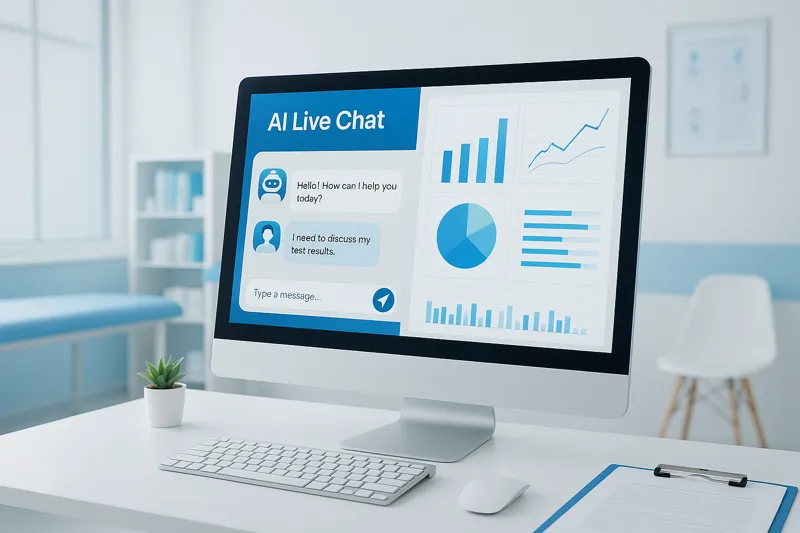
AI live chat systems, including chatbots and virtual health assistants, have become indispensable in modern healthcare. These AI tools leverage natural language processing and machine learning to provide 24/7 support for patients. Their functionalities range from appointment scheduling, symptom checking, and medication reminders to connecting patients with live nurses for more complex concerns. For example, OSF HealthCare’s virtual assistant Clare handles a significant portion of patient interactions outside business hours, underscoring the value of continuous accessibility.
Importance of Patient Engagement
Effective patient engagement through AI live chat improves healthcare delivery by enhancing communication, boosting patient satisfaction, and supporting adherence to treatment plans. AI chat systems automate routine administrative tasks, reducing wait times and freeing staff to focus on direct patient care. Studies have shown engagement rates surpassing 90% when AI chatbots are integrated with patient portals, illustrating their capacity to foster ongoing interaction and trust. Furthermore, personalized messaging based on patient history helps tailor the experience, lasting in better health outcomes.
Evolution of Digital Communication in Healthcare
Digital communication in healthcare has evolved rapidly with AI-driven platforms becoming central to patient-provider interactions. Over the past five years, primary care portal messages in US healthcare systems have surged by 160%, reflecting patient preference for digital channels. The integration of AI chatbots with electronic health records and telehealth services has further modernized care, enabling seamless information sharing and timely responses. Looking ahead, generative AI promises to advance this evolution by enabling adaptive, context-aware conversations that meet individual patient needs more effectively.
The Role of AI Chatbots in Modern Healthcare
How are AI chatbots used in healthcare?
AI chatbots serve as virtual health assistants operating around the clock to support How chatbots enhance patient care at OSF HealthCare in numerous ways. They enable patients to perform self-service tasks such as symptom checking and appointment scheduling with Clare and medication reminders without the need for direct human interaction. For example, Patient use of Clare outside business hours, providing flexible access to care and reducing unnecessary emergency visits.
Key functionalities like appointment scheduling and symptom checking
Core chatbot functions include:
- Appointment Scheduling: Chatbots automate booking and reminders, reducing patient wait times and lowering no-show rates, thereby optimizing practice management (AI chatbots streamline appointment scheduling).
- Symptom Checking and Patient Triage: Utilizing natural language processing, chatbots assess patient symptoms and recommend appropriate care pathways, enhancing early intervention (Natural language processing in healthcare chatbots).
- Medication Management: Reminders and follow-up support improve adherence, especially for chronic condition patients (Medication reminders via chatbots).
- Patient Education and Bill Payment: Chatbots provide reliable, doctor-approved health information and facilitate payment processes (Chatbots for appointment scheduling and bill payment).
Impact on operational efficiency and staff workload
The integration of AI chatbots leads to substantial operational gains. Healthcare organizations have reported efficiency improvements as high as 40%, with significant reductions in administrative workload (Operational efficiency through chatbots. OSF HealthCare’s implementation of Clare resulted in $2.4 million in savings in the first year by deflecting calls from contact centers and increasing revenue (OSF HealthCare's cost savings using chatbots.
By automating routine communications and data collection, chatbots free clinical staff to focus on complex patient needs and direct care delivery (Reducing administrative costs with virtual health assistants. This is especially critical in addressing provider shortages and improving access in underserved areas. Furthermore, AI chatbots enhance patient engagement—some systems have achieved over 90% engagement rates—boosting loyalty and health outcomes (AI chatbots in healthcare to improve patient experience.
These advancements underline AI chatbots as pivotal tools for modern healthcare, enhancing accessibility, efficiency, and the patient experience while ensuring compliance with privacy regulations like HIPAA in the US (HIPAA compliance in healthcare AI).
Benefits of AI Live Chat for Patient Engagement and Practice Efficiency

What are the benefits of using AI chatbots?
AI chatbots deliver substantial benefits for both patient engagement and practice efficiency in healthcare settings. They offer fast, accurate, and continuous (24/7 access to healthcare services with Clare support to patients, enabling seamless appointment scheduling, prescription refills, medication reminders, and symptom checking. This constant availability significantly reduces patient wait times and improves accessibility, accommodating diverse schedules and patient needs—45% of chatbot interactions, such as those with OSF HealthCare's virtual health assistant Clare, occur outside business hours.
How do chatbots improve patient engagement and reduce administrative burden?
Chatbots enhance patient engagement by providing personalized communication tailored to individual patient histories and preferences. They also automate routine inquiries, allowing healthcare staff to focus on complex cases and reducing administrative workload. This automation decreases no-shows through timely appointment reminders and streamlines practice management, leading to up to a 40% increase in operational efficiency for some US healthcare providers, contributing to operational efficiency through chatbots and reducing administrative burdens in healthcare.
What advantages do multilingual and always-available AI chatbots offer?
The multilingual capabilities of AI chatbots break language barriers, supporting inclusivity and better communication with diverse patient populations. Their 24/7 availability ensures that patients can access healthcare information and services any time, increasing satisfaction and loyalty. These features are vital in the US healthcare market, where patient diversity and demand for convenient access are high, as noted in discussions about natural language processing in healthcare chatbots and healthcare chatbot patient engagement.
| Benefit | Description | Impact on Healthcare Practice |
|---|---|---|
| 24/7 Availability | Round-the-clock patient support | Increased patient satisfaction and access |
| Multilingual Support | Communication in multiple languages | Enhanced inclusivity and patient engagement |
| Automation of Routine Tasks | Appointment booking, reminders, and FAQs | Reduced administrative costs and staff workload |
| Personalized Patient Interaction | Tailored responses based on patient data | Improved adherence and health outcomes |
| Operational Efficiency | Streamlined workflows and call deflection | Up to 40% efficiency gains and $2.4M annual savings |
Compliance and Security: Ensuring HIPAA-Ready AI Chatbots
Are AI chatbots in healthcare HIPAA compliant?
AI chatbots can meet HIPAA compliance requirements when designed and deployed with rigorous safeguards. This includes implementing encryption to protect data in transit and at rest, and strict access controls to restrict unauthorized personnel from viewing Protected Health Information (PHI).
HIPAA compliance requirements for AI chatbots
Healthcare organizations must ensure AI chatbot vendors sign Business Associate Agreements (BAAs) confirming they uphold HIPAA standards. Regular security risk assessments are necessary to identify vulnerabilities. Integrating audit trails that track all access and changes to PHI assists with transparency and accountability.
Data privacy and security measures
Beyond encryption and access control, organizations should adopt HIPAA-compliant data storage and transmission protocols. Continuous monitoring and incident response plans help mitigate breaches. Transparent data governance policies build patient trust by clarifying how data is collected, stored, used, and shared.
Ensuring that AI chatbots operate within secure hosting environments such as HIPAA-certified cloud platforms further solidifies compliance. These practices together enable AI chatbots to securely support healthcare operations while preserving patient privacy and meeting regulatory obligations.
Integrating Conversational AI Chatbots into Healthcare Platforms
How do you integrate a conversational AI chatbot with a platform?
Integrating a conversational AI in healthcare begins with a clear planning phase, identifying specific use cases such as appointment scheduling, symptom triage, or personalized patient communication. Selecting a development platform that supports Natural Language Processing in Healthcare, speech recognition, and multilingual capabilities is essential for creating a responsive and accessible tool.
Designing effective conversational flows and user interfaces is critical. This involves mapping out dialogue paths that can handle diverse patient inquiries while maintaining clarity and empathy in interactions. User interfaces should be intuitive, ensuring personalized patient communication.
From a technical perspective, chatbots for appointment scheduling in healthcare plays a vital role by securely connecting the chatbot with electronic health records (EHRs), scheduling systems, billing platforms, and telehealth services. This integration guarantees ChatEHR AI software.
Compliance with regulations like HIPAA compliance in healthcare AI is non-negotiable. Measures include end-to-end encryption, access controls, and audit trails to protect patient data privacy. Ensuring the chatbot operates within this framework builds patient trust and meets legal standards.
Finally, rigorous testing and continuous optimization refine the chatbot’s accuracy and responsiveness. Monitoring performance metrics and incorporating user feedback help improve interactions and adapt to evolving patient needs, ultimately How chatbots enhance patient care at OSF HealthCare.
AI’s Impact on Patient Care: Improving Accuracy and Personalization

How does AI help improve patient care?
AI enhances patient care by facilitating faster and more precise diagnoses through advanced analysis of medical imaging, electronic health records, and genetic data. This accelerated diagnostic capability leads to timely interventions and improved health outcomes.
Faster diagnosis with AI analysis
AI-powered tools integrate natural language processing and machine learning to interpret complex clinical data rapidly. Technologies such as predictive analytics and large language models help detect diseases like cancer earlier and assist clinicians by feeding relevant patient history quickly, thus reducing diagnostic errors and delay.
Personalized treatment plans
Leveraging insights from genomics, phenotypic data, and continuous patient monitoring, AI enables customization of treatment strategies tailored to individual patient profiles. This personalization optimizes therapy effectiveness and supports proactive care management, especially in chronic disease contexts.
Support for complex procedures and chronic disease management
In surgical settings, AI-assisted robotics enhance precision and safety for complex operations. For chronic illness management, AI-driven virtual assistants and monitoring systems track patient adherence and vital signs continuously, alerting clinicians to emerging issues and improving long-term care.
By combining these advanced AI capabilities, healthcare providers can deliver more accurate, personalized, and efficient patient care — ultimately reducing costs and elevating clinical outcomes.
Strategic Use of AI in Healthcare Marketing and Patient Engagement
How is AI used in healthcare marketing?
AI is revolutionizing healthcare marketing by enabling precise, efficient, and compliant patient outreach. Advanced chatbots in patient engagement and automation platforms streamline routine patient interactions such as appointment scheduling, bill payments, and answering FAQs. By analyzing patient data and behavioral patterns, AI aids in crafting personalized marketing campaigns tailored to individual patient needs and preferences. This targeted approach not only enhances patient engagement but also optimizes operational workflows, helping healthcare providers increase accessibility and improve patient loyalty, all while adhering strictly to HIPAA and regulatory requirements.
How can AI be used in medical practices for patient engagement?
In medical practices, AI-powered tools automate key patient engagement functions, including scheduling, reminders, and follow-up communications, providing 24/7 access to healthcare services. These technologies support clinicians with decision-making by integrating patient data and remote monitoring capabilities, enabling proactive care management. Voice-enabled documentation systems alleviate administrative burdens, freeing up clinicians to devote more time to direct patient care. Additionally, AI facilitates personalized communication by customizing responses based on patient history, fostering stronger patient relationships and improving health outcomes.
What are the steps to integrate AI with digital marketing?
Successful AI integration in healthcare marketing requires a strategic, multi-step approach:
- Define clear marketing and engagement objectives aligned with business priorities.
- Secure qualified AI talent and invest in robust data infrastructure to manage sensitive patient information.
- Select compliant AI tools, such as natural language processing (NLP) chatbots, that seamlessly integrate with existing digital platforms and practice management systems.
- Develop workflows and messaging strategies that leverage AI-driven personalization and automation.
- Implement continuous testing, monitoring, and optimization to ensure maximum efficiency, accuracy, and compliance with healthcare regulations.
This disciplined approach ensures an effective balance between technological innovation, regulatory adherence, and patient-centric marketing.
| Aspect | AI Advantage | Strategic Outcome |
|---|---|---|
| Personalized Outreach | Data-driven targeting (Leveraging AI in Health Care Marketing) | Increased patient engagement |
| Automation | 24/7 scheduling, reminders (AI chatbots streamline appointment scheduling | Improved operational efficiency |
| Compliance | HIPAA-compliant tools (HIPAA compliance in healthcare AI | Protect patient privacy and build trust |
| Workflow Integration | EHR and portal connectivity (ChatEHR AI software) | Seamless clinician and patient interaction |
| Continuous Monitoring | Performance and risk management (Integrating AI support in patient care) | Sustained marketing effectiveness |
Real-World Applications: OSF HealthCare's Virtual Health Assistant Clare
Overview of Clare’s functionalities and impact
OSF HealthCare launched Virtual health assistant Clare at OSF HealthCare, in 2019 to enhance patient access and streamline communication. Clare provides round-the-clock services including Symptom checking and appointment scheduling with Clare. Notably, 45% of Clare’s interactions occur outside of traditional business hours, demonstrating high patient demand for Patient use of Clare outside business hours. Clare also connects users to live nurses, ensuring trustworthy medical advice and fostering patient confidence through Connecting patients to live nurses via Clare.
Cost savings and operational improvements
The implementation of Clare led to significant OSF HealthCare's cost savings using chatbots and efficiency gains. Within the first year, OSF HealthCare reported OSF HealthCare saved $2.4 million by diverting calls from contact centers and enhancing revenue streams. By Automating healthcare tasks with chatbots and Managing patient flow with virtual assistants, Clare reduces staff workload and lowers operational costs. This approach not only improves patient experience but also boosts primary care engagement, evidenced by a 160% increase in portal messages over five years.
Future AI enhancements like generative AI
Looking ahead, OSF HealthCare plans to integrate Future integration of generative AI in Clare to further personalize and refine patient interactions. This advancement will enable Clare to learn from individual patient needs and adapt responses dynamically, elevating care quality. Generative AI's incorporation promises a more empathetic and contextually aware virtual assistant, aligning with evolving Chatbots in digital health strategies aimed at delivering tailored and accessible patient care.
Overcoming Challenges: Trust, Transparency, and Human Oversight
Patient preference for physician-authored messages
Patients tend to place higher trust in messages authored by their physicians because these messages offer a personal connection, empathy, reassurance, and an assurance that their provider has reviewed their individual data. This emotional bond remains a cornerstone of effective healthcare communication. Integrating AI support in patient care
Need for transparency when using AI
Transparency around AI involvement in patient communications is essential. Clear disclosure that AI is generating or assisting in composing messages helps prevent misinterpretation and builds confidence in the technology. Organizations like the World Health Organization emphasize transparency to foster patient trust. Integrating AI support in patient care
Balancing AI automation with human touch to maintain trust
While AI can alleviate clinician workload by handling routine messaging, maintaining human oversight ensures empathy and accuracy. Allowing patients to opt for physician-authored communications and providing clear pathways for escalation preserves important human elements in care. Acceptance of AI-generated messages varies among age groups and demographics, highlighting the need to balance automation with personalized interaction to maintain effective, trusted communication. Integrating AI support in patient care
Future Trends: The Evolution of AI Live Chat in Patient Interaction
Advancements in generative AI and personalization
Generative AI represents the next frontier in Generative AI in health system marketing, offering the capacity to learn from patient interactions and continuously adapt responses to individual needs. This technology enhances personalization by tailoring communication based on patient history and preferences, fostering a more human-like and empathetic interaction. Future virtual health assistants, such as OSF HealthCare’s Clare, are expected to leverage generative AI to provide richer, context-aware patient engagement while maintaining compliance with healthcare regulations. This evolution promises to improve patient satisfaction, loyalty, and operational efficiency significantly.
Integration with telehealth and wearable devices
The convergence of AI live chat with telehealth services and wearable health technologies is setting a new standard for remote patient care. AI chatbots are being integrated with ChatEHR AI software, patient portals, and biosensor data from wearables to provide real-time monitoring and personalized guidance. This seamless integration enables Integrating AI in telemedicine, reducing unnecessary visits and alleviating healthcare provider burden. The resulting ecosystem empowers both patients and clinicians with actionable insights, supporting proactive and continuous care outside traditional healthcare settings.
Potential of AI-powered mental health support
AI live chat extends its transformative impact into mental health, offering accessible, stigma-free support through confidential, conversational interfaces. AI chatbots equipped with natural language processing (NLP) and sentiment analysis can recognize emotional cues, deliver mood check-ins, and guide patients through self-care activities. These tools complement professional therapy by providing immediate assistance and continuous monitoring, especially critical in underserved or remote populations. As technology progresses, AI-driven mental health chatbots will likely improve in empathy and accuracy, becoming integral to comprehensive patient-centered care strategies.
The future of AI live chat in healthcare is thus poised to enhance patient interaction through innovative personalization, integrated clinical ecosystems, and expanded emotional support, driving measurable improvements in patient outcomes and health system efficiency.
Embracing AI Live Chat for a Patient-Centric Healthcare Future
Enhancing Patient Experience and Operational Efficiency
AI-powered chatbots in healthcare act as virtual assistants that provide 24/7 support for appointment scheduling, symptom triage, medication management, and billing inquiries. They streamline administrative workflows, reduce patient wait times, and increase access to care outside traditional office hours. The result is improved patient engagement—with some systems reporting over 90% patient interaction rates—and significant operational efficiencies, including up to 40% improvement in healthcare provider workflows and millions in cost savings.
Ensuring Compliance and Human-Centered Design
To maintain patient trust, AI chat implementations must comply with healthcare regulations like HIPAA, ensuring data privacy and security through encryption and audit trails. Importantly, successful AI solutions balance automation with the human touch by offering seamless escalation to live healthcare professionals and transparent communication about AI’s role. This human-centered design fosters empathy and reassurance, respecting patient preferences and improving acceptance.
Transforming Healthcare Communication and Access
Looking ahead, the integration of generative AI will enable chatbots to learn and adapt to individual patient needs, delivering highly personalized interactions. This transformation promises to reshape healthcare marketing, expand telehealth capabilities, and support chronic disease management more effectively. By embracing AI live chat technologies thoughtfully and responsibly, healthcare organizations can drive patient-centric care, boost satisfaction, and reduce administrative burdens, heralding a new era in healthcare delivery.
Enhancing Patient Interaction through AI Live Chat
Overview of AI Live Chat in Healthcare
AI live chat systems, including chatbots and virtual health assistants, have become indispensable in modern healthcare. These AI tools leverage natural language processing and machine learning to provide 24/7 support for patients. Their functionalities range from appointment scheduling, symptom checking, and medication reminders to connecting patients with live nurses for more complex concerns. For example, OSF HealthCare’s virtual assistant Clare handles a significant portion of patient interactions outside business hours, underscoring the value of continuous accessibility.
Importance of Patient Engagement
Effective patient engagement through AI live chat improves healthcare delivery by enhancing communication, boosting patient satisfaction, and supporting adherence to treatment plans. AI chat systems automate routine administrative tasks, reducing wait times and freeing staff to focus on direct patient care. Studies have shown engagement rates surpassing 90% when AI chatbots are integrated with patient portals, illustrating their capacity to foster ongoing interaction and trust. Furthermore, personalized messaging based on patient history helps tailor the experience, lasting in better health outcomes.
Evolution of Digital Communication in Healthcare
Digital communication in healthcare has evolved rapidly with AI-driven platforms becoming central to patient-provider interactions. Over the past five years, primary care portal messages in US healthcare systems have surged by 160%, reflecting patient preference for digital channels. The integration of AI chatbots with electronic health records and telehealth services has further modernized care, enabling seamless information sharing and timely responses. Looking ahead, generative AI promises to advance this evolution by enabling adaptive, context-aware conversations that meet individual patient needs more effectively.
The Role of AI Chatbots in Modern Healthcare
How are AI chatbots used in healthcare?
AI chatbots serve as virtual health assistants operating around the clock to support How chatbots enhance patient care at OSF HealthCare in numerous ways. They enable patients to perform self-service tasks such as symptom checking and appointment scheduling with Clare and medication reminders without the need for direct human interaction. For example, Patient use of Clare outside business hours, providing flexible access to care and reducing unnecessary emergency visits.
Key functionalities like appointment scheduling and symptom checking
Core chatbot functions include:
- Appointment Scheduling: Chatbots automate booking and reminders, reducing patient wait times and lowering no-show rates, thereby optimizing practice management (AI chatbots streamline appointment scheduling).
- Symptom Checking and Patient Triage: Utilizing natural language processing, chatbots assess patient symptoms and recommend appropriate care pathways, enhancing early intervention (Natural language processing in healthcare chatbots).
- Medication Management: Reminders and follow-up support improve adherence, especially for chronic condition patients (Medication reminders via chatbots).
- Patient Education and Bill Payment: Chatbots provide reliable, doctor-approved health information and facilitate payment processes (Chatbots for appointment scheduling and bill payment).
Impact on operational efficiency and staff workload
The integration of AI chatbots leads to substantial operational gains. Healthcare organizations have reported efficiency improvements as high as 40%, with significant reductions in administrative workload (Operational efficiency through chatbots. OSF HealthCare’s implementation of Clare resulted in $2.4 million in savings in the first year by deflecting calls from contact centers and increasing revenue (OSF HealthCare's cost savings using chatbots.
By automating routine communications and data collection, chatbots free clinical staff to focus on complex patient needs and direct care delivery (Reducing administrative costs with virtual health assistants. This is especially critical in addressing provider shortages and improving access in underserved areas. Furthermore, AI chatbots enhance patient engagement—some systems have achieved over 90% engagement rates—boosting loyalty and health outcomes (AI chatbots in healthcare to improve patient experience.
These advancements underline AI chatbots as pivotal tools for modern healthcare, enhancing accessibility, efficiency, and the patient experience while ensuring compliance with privacy regulations like HIPAA in the US (HIPAA compliance in healthcare AI).
Benefits of AI Live Chat for Patient Engagement and Practice Efficiency
What are the benefits of using AI chatbots?
AI chatbots deliver substantial benefits for both patient engagement and practice efficiency in healthcare settings. They offer fast, accurate, and continuous (24/7 access to healthcare services with Clare support to patients, enabling seamless appointment scheduling, prescription refills, medication reminders, and symptom checking. This constant availability significantly reduces patient wait times and improves accessibility, accommodating diverse schedules and patient needs—45% of chatbot interactions, such as those with OSF HealthCare's virtual health assistant Clare, occur outside business hours.
How do chatbots improve patient engagement and reduce administrative burden?
Chatbots enhance patient engagement by providing personalized communication tailored to individual patient histories and preferences. They also automate routine inquiries, allowing healthcare staff to focus on complex cases and reducing administrative workload. This automation decreases no-shows through timely appointment reminders and streamlines practice management, leading to up to a 40% increase in operational efficiency for some US healthcare providers, contributing to operational efficiency through chatbots and reducing administrative burdens in healthcare.
What advantages do multilingual and always-available AI chatbots offer?
The multilingual capabilities of AI chatbots break language barriers, supporting inclusivity and better communication with diverse patient populations. Their 24/7 availability ensures that patients can access healthcare information and services any time, increasing satisfaction and loyalty. These features are vital in the US healthcare market, where patient diversity and demand for convenient access are high, as noted in discussions about natural language processing in healthcare chatbots and healthcare chatbot patient engagement.
| Benefit | Description | Impact on Healthcare Practice |
|---|---|---|
| 24/7 Availability | Round-the-clock patient support | Increased patient satisfaction and access |
| Multilingual Support | Communication in multiple languages | Enhanced inclusivity and patient engagement |
| Automation of Routine Tasks | Appointment booking, reminders, and FAQs | Reduced administrative costs and staff workload |
| Personalized Patient Interaction | Tailored responses based on patient data | Improved adherence and health outcomes |
| Operational Efficiency | Streamlined workflows and call deflection | Up to 40% efficiency gains and $2.4M annual savings |
Compliance and Security: Ensuring HIPAA-Ready AI Chatbots
Are AI chatbots in healthcare HIPAA compliant?
AI chatbots can meet HIPAA compliance requirements when designed and deployed with rigorous safeguards. This includes implementing encryption to protect data in transit and at rest, and strict access controls to restrict unauthorized personnel from viewing Protected Health Information (PHI).
HIPAA compliance requirements for AI chatbots
Healthcare organizations must ensure AI chatbot vendors sign Business Associate Agreements (BAAs) confirming they uphold HIPAA standards. Regular security risk assessments are necessary to identify vulnerabilities. Integrating audit trails that track all access and changes to PHI assists with transparency and accountability.
Data privacy and security measures
Beyond encryption and access control, organizations should adopt HIPAA-compliant data storage and transmission protocols. Continuous monitoring and incident response plans help mitigate breaches. Transparent data governance policies build patient trust by clarifying how data is collected, stored, used, and shared.
Ensuring that AI chatbots operate within secure hosting environments such as HIPAA-certified cloud platforms further solidifies compliance. These practices together enable AI chatbots to securely support healthcare operations while preserving patient privacy and meeting regulatory obligations.
Integrating Conversational AI Chatbots into Healthcare Platforms
How do you integrate a conversational AI chatbot with a platform?
Integrating a conversational AI in healthcare begins with a clear planning phase, identifying specific use cases such as appointment scheduling, symptom triage, or personalized patient communication. Selecting a development platform that supports Natural Language Processing in Healthcare, speech recognition, and multilingual capabilities is essential for creating a responsive and accessible tool.
Designing effective conversational flows and user interfaces is critical. This involves mapping out dialogue paths that can handle diverse patient inquiries while maintaining clarity and empathy in interactions. User interfaces should be intuitive, ensuring personalized patient communication.
From a technical perspective, chatbots for appointment scheduling in healthcare plays a vital role by securely connecting the chatbot with electronic health records (EHRs), scheduling systems, billing platforms, and telehealth services. This integration guarantees ChatEHR AI software.
Compliance with regulations like HIPAA compliance in healthcare AI is non-negotiable. Measures include end-to-end encryption, access controls, and audit trails to protect patient data privacy. Ensuring the chatbot operates within this framework builds patient trust and meets legal standards.
Finally, rigorous testing and continuous optimization refine the chatbot’s accuracy and responsiveness. Monitoring performance metrics and incorporating user feedback help improve interactions and adapt to evolving patient needs, ultimately How chatbots enhance patient care at OSF HealthCare.
AI’s Impact on Patient Care: Improving Accuracy and Personalization
How does AI help improve patient care?
AI enhances patient care by facilitating faster and more precise diagnoses through advanced analysis of medical imaging, electronic health records, and genetic data. This accelerated diagnostic capability leads to timely interventions and improved health outcomes.
Faster diagnosis with AI analysis
AI-powered tools integrate natural language processing and machine learning to interpret complex clinical data rapidly. Technologies such as predictive analytics and large language models help detect diseases like cancer earlier and assist clinicians by feeding relevant patient history quickly, thus reducing diagnostic errors and delay.
Personalized treatment plans
Leveraging insights from genomics, phenotypic data, and continuous patient monitoring, AI enables customization of treatment strategies tailored to individual patient profiles. This personalization optimizes therapy effectiveness and supports proactive care management, especially in chronic disease contexts.
Support for complex procedures and chronic disease management
In surgical settings, AI-assisted robotics enhance precision and safety for complex operations. For chronic illness management, AI-driven virtual assistants and monitoring systems track patient adherence and vital signs continuously, alerting clinicians to emerging issues and improving long-term care.
By combining these advanced AI capabilities, healthcare providers can deliver more accurate, personalized, and efficient patient care — ultimately reducing costs and elevating clinical outcomes.
Strategic Use of AI in Healthcare Marketing and Patient Engagement
How is AI used in healthcare marketing?
AI is revolutionizing healthcare marketing by enabling precise, efficient, and compliant patient outreach. Advanced chatbots in patient engagement and automation platforms streamline routine patient interactions such as appointment scheduling, bill payments, and answering FAQs. By analyzing patient data and behavioral patterns, AI aids in crafting personalized marketing campaigns tailored to individual patient needs and preferences. This targeted approach not only enhances patient engagement but also optimizes operational workflows, helping healthcare providers increase accessibility and improve patient loyalty, all while adhering strictly to HIPAA and regulatory requirements.
How can AI be used in medical practices for patient engagement?
In medical practices, AI-powered tools automate key patient engagement functions, including scheduling, reminders, and follow-up communications, providing 24/7 access to healthcare services. These technologies support clinicians with decision-making by integrating patient data and remote monitoring capabilities, enabling proactive care management. Voice-enabled documentation systems alleviate administrative burdens, freeing up clinicians to devote more time to direct patient care. Additionally, AI facilitates personalized communication by customizing responses based on patient history, fostering stronger patient relationships and improving health outcomes.
What are the steps to integrate AI with digital marketing?
Successful AI integration in healthcare marketing requires a strategic, multi-step approach:
- Define clear marketing and engagement objectives aligned with business priorities.
- Secure qualified AI talent and invest in robust data infrastructure to manage sensitive patient information.
- Select compliant AI tools, such as natural language processing (NLP) chatbots, that seamlessly integrate with existing digital platforms and practice management systems.
- Develop workflows and messaging strategies that leverage AI-driven personalization and automation.
- Implement continuous testing, monitoring, and optimization to ensure maximum efficiency, accuracy, and compliance with healthcare regulations.
This disciplined approach ensures an effective balance between technological innovation, regulatory adherence, and patient-centric marketing.
| Aspect | AI Advantage | Strategic Outcome |
|---|---|---|
| Personalized Outreach | Data-driven targeting (Leveraging AI in Health Care Marketing) | Increased patient engagement |
| Automation | 24/7 scheduling, reminders (AI chatbots streamline appointment scheduling | Improved operational efficiency |
| Compliance | HIPAA-compliant tools (HIPAA compliance in healthcare AI | Protect patient privacy and build trust |
| Workflow Integration | EHR and portal connectivity (ChatEHR AI software) | Seamless clinician and patient interaction |
| Continuous Monitoring | Performance and risk management (Integrating AI support in patient care) | Sustained marketing effectiveness |
Real-World Applications: OSF HealthCare's Virtual Health Assistant Clare
Overview of Clare’s functionalities and impact
OSF HealthCare launched Virtual health assistant Clare at OSF HealthCare, in 2019 to enhance patient access and streamline communication. Clare provides round-the-clock services including Symptom checking and appointment scheduling with Clare. Notably, 45% of Clare’s interactions occur outside of traditional business hours, demonstrating high patient demand for Patient use of Clare outside business hours. Clare also connects users to live nurses, ensuring trustworthy medical advice and fostering patient confidence through Connecting patients to live nurses via Clare.
Cost savings and operational improvements
The implementation of Clare led to significant OSF HealthCare's cost savings using chatbots and efficiency gains. Within the first year, OSF HealthCare reported OSF HealthCare saved $2.4 million by diverting calls from contact centers and enhancing revenue streams. By Automating healthcare tasks with chatbots and Managing patient flow with virtual assistants, Clare reduces staff workload and lowers operational costs. This approach not only improves patient experience but also boosts primary care engagement, evidenced by a 160% increase in portal messages over five years.
Future AI enhancements like generative AI
Looking ahead, OSF HealthCare plans to integrate Future integration of generative AI in Clare to further personalize and refine patient interactions. This advancement will enable Clare to learn from individual patient needs and adapt responses dynamically, elevating care quality. Generative AI's incorporation promises a more empathetic and contextually aware virtual assistant, aligning with evolving Chatbots in digital health strategies aimed at delivering tailored and accessible patient care.
Overcoming Challenges: Trust, Transparency, and Human Oversight
Patient preference for physician-authored messages
Patients tend to place higher trust in messages authored by their physicians because these messages offer a personal connection, empathy, reassurance, and an assurance that their provider has reviewed their individual data. This emotional bond remains a cornerstone of effective healthcare communication. Integrating AI support in patient care
Need for transparency when using AI
Transparency around AI involvement in patient communications is essential. Clear disclosure that AI is generating or assisting in composing messages helps prevent misinterpretation and builds confidence in the technology. Organizations like the World Health Organization emphasize transparency to foster patient trust. Integrating AI support in patient care
Balancing AI automation with human touch to maintain trust
While AI can alleviate clinician workload by handling routine messaging, maintaining human oversight ensures empathy and accuracy. Allowing patients to opt for physician-authored communications and providing clear pathways for escalation preserves important human elements in care. Acceptance of AI-generated messages varies among age groups and demographics, highlighting the need to balance automation with personalized interaction to maintain effective, trusted communication. Integrating AI support in patient care
Future Trends: The Evolution of AI Live Chat in Patient Interaction
Advancements in generative AI and personalization
Generative AI represents the next frontier in Generative AI in health system marketing, offering the capacity to learn from patient interactions and continuously adapt responses to individual needs. This technology enhances personalization by tailoring communication based on patient history and preferences, fostering a more human-like and empathetic interaction. Future virtual health assistants, such as OSF HealthCare’s Clare, are expected to leverage generative AI to provide richer, context-aware patient engagement while maintaining compliance with healthcare regulations. This evolution promises to improve patient satisfaction, loyalty, and operational efficiency significantly.
Integration with telehealth and wearable devices
The convergence of AI live chat with telehealth services and wearable health technologies is setting a new standard for remote patient care. AI chatbots are being integrated with ChatEHR AI software, patient portals, and biosensor data from wearables to provide real-time monitoring and personalized guidance. This seamless integration enables Integrating AI in telemedicine, reducing unnecessary visits and alleviating healthcare provider burden. The resulting ecosystem empowers both patients and clinicians with actionable insights, supporting proactive and continuous care outside traditional healthcare settings.
Potential of AI-powered mental health support
AI live chat extends its transformative impact into mental health, offering accessible, stigma-free support through confidential, conversational interfaces. AI chatbots equipped with natural language processing (NLP) and sentiment analysis can recognize emotional cues, deliver mood check-ins, and guide patients through self-care activities. These tools complement professional therapy by providing immediate assistance and continuous monitoring, especially critical in underserved or remote populations. As technology progresses, AI-driven mental health chatbots will likely improve in empathy and accuracy, becoming integral to comprehensive patient-centered care strategies.
The future of AI live chat in healthcare is thus poised to enhance patient interaction through innovative personalization, integrated clinical ecosystems, and expanded emotional support, driving measurable improvements in patient outcomes and health system efficiency.
Embracing AI Live Chat for a Patient-Centric Healthcare Future
Enhancing Patient Experience and Operational Efficiency
AI-powered chatbots in healthcare act as virtual assistants that provide 24/7 support for appointment scheduling, symptom triage, medication management, and billing inquiries. They streamline administrative workflows, reduce patient wait times, and increase access to care outside traditional office hours. The result is improved patient engagement—with some systems reporting over 90% patient interaction rates—and significant operational efficiencies, including up to 40% improvement in healthcare provider workflows and millions in cost savings.
Ensuring Compliance and Human-Centered Design
To maintain patient trust, AI chat implementations must comply with healthcare regulations like HIPAA, ensuring data privacy and security through encryption and audit trails. Importantly, successful AI solutions balance automation with the human touch by offering seamless escalation to live healthcare professionals and transparent communication about AI’s role. This human-centered design fosters empathy and reassurance, respecting patient preferences and improving acceptance.
Transforming Healthcare Communication and Access
Looking ahead, the integration of generative AI will enable chatbots to learn and adapt to individual patient needs, delivering highly personalized interactions. This transformation promises to reshape healthcare marketing, expand telehealth capabilities, and support chronic disease management more effectively. By embracing AI live chat technologies thoughtfully and responsibly, healthcare organizations can drive patient-centric care, boost satisfaction, and reduce administrative burdens, heralding a new era in healthcare delivery.