

Introduction: The Critical Role of ROI in Healthcare Marketing
The Importance of ROI Measurement in Healthcare Marketing
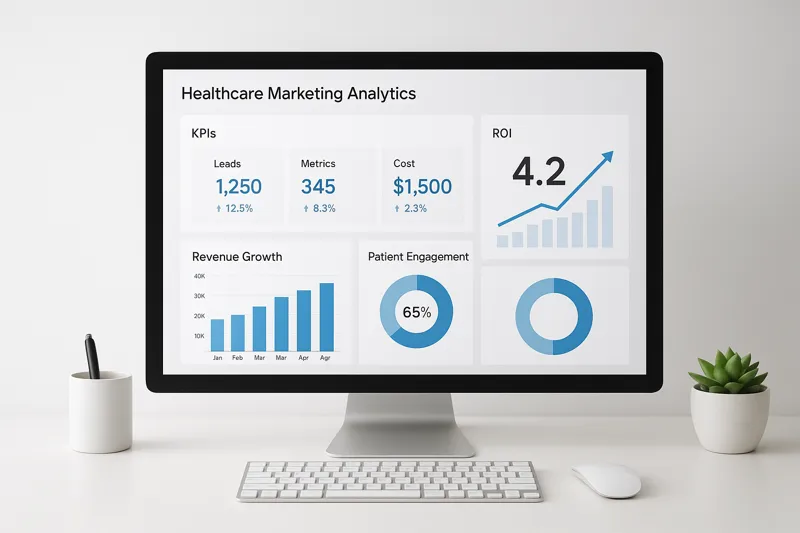
Demonstrating return on investment (ROI) in healthcare marketing is essential for organizations such as hospitals, clinics, and medical service providers to justify marketing budgets and optimize resource allocation. Accurate ROI measurement supports data-driven decision-making and aligns marketing efforts with organizational financial goals. This measurement goes beyond simple metrics; it connects marketing campaigns to patient actions, revenue, and strategic outcomes, ensuring that marketing delivers measurable value such as increased patient volume and improved retention rates.
Unique Challenges in Measuring Healthcare Marketing ROI
Healthcare marketing ROI is complex due to the non-linear nature of patient journeys, which involve multiple touchpoints across various channels. Unlike traditional industries, healthcare marketing must consider factors such as payer mix, regulatory compliance, and patient privacy. Multi-touch attribution models are critical to capturing the impact of every interaction, avoiding pitfalls of relying on vanity metrics or siloed data. Furthermore, healthcare organizations must comply with regulations like HIPAA, making the integration of secure, compliant digital marketing platforms an imperative.
The Impact of Digital Marketing in Healthcare
Digital marketing has become a cornerstone in healthcare, offering cost-effective channels such as SEO, social media, email, and SMS to engage patients meaningfully. Digital strategies generate 50% more interactions than traditional marketing and enable personalized patient journeys, boosting engagement and retention. The significant growth in telehealth and mobile device usage also underscores the need for mobile-friendly websites and omnichannel approaches. Leveraging analytics tools and AI-driven automation empowers healthcare marketers to continuously refine strategies and maximize ROI while ensuring patient satisfaction and loyalty.
Foundations of a Healthcare Digital Marketing Strategy
What is digital marketing strategy for healthcare?
A Healthcare digital marketing involves creating targeted online campaigns designed to increase a healthcare organization's visibility and engage potential patients effectively. It integrates multiple digital channels such as SEO for healthcare organizations, paid advertising (PPC), social media platforms, and content marketing. Critical to this strategy is strict compliance with healthcare regulations like HIPAA compliance in digital marketing to protect patient information and maintain trust.
This approach prioritizes producing educational, trustworthy content that builds patient confidence and encourages actions like appointment scheduling. Data analytics underpin the strategy by enabling marketers to refine campaigns continuously and measure their impact on patient acquisition and retention.
What are the main types of digital marketing strategies?
Healthcare digital marketing commonly employs four primary strategies:
- Content Marketing: Developing valuable content like blogs, videos, and patient testimonials that educate and engage prospective patients. See content marketing for healthcare.
- Social Media Marketing: Utilizing platforms such as Facebook, Instagram, and LinkedIn to increase brand awareness and foster a meaningful connection with patients. Refer to Social media in healthcare marketing.
- Search Engine Marketing (SEM): Enhancing online visibility through organic search optimization (SEO) and paid campaigns (PPC) targeted to specific healthcare-related keywords. For more see Healthcare digital marketing strategies.
- Email Marketing: Sending personalized, compliant communications that nurture patient relationships and promote practice services. Explore Healthcare email marketing templates.
Together, these strategies create a cohesive digital ecosystem that drives patient interest, improves retention, and strengthens the healthcare provider's market position.
How does digital marketing drive patient acquisition and retention?
Digital marketing channels serve as critical touchpoints in the patient journey, influencing decision-making at every stage. With nearly half of healthcare consumers perceiving the industry as more provider-focused than patient-focused, personalized and engaging digital experiences become essential to attract and maintain patient loyalty. See Marketing in healthcare: Improving the consumer experience.
Effective digital campaigns boost patient acquisition by targeting high-intent prospects and supporting local searches through optimized content and online reputation management. Furthermore, ongoing engagement via email and social media helps retain patients by maintaining communication, improving satisfaction, and encouraging repeat visits.
Overall, a comprehensive Healthcare digital marketing strategy enables practices to expand their reach, optimize marketing spend, and achieve measurable growth in patient volume and revenue while ensuring compliance with regulations. For insight on Measuring healthcare marketing ROI and true marketing ROI in healthcare.
Key Metrics for Measuring ROI in Healthcare Marketing

How do you measure ROI in marketing?
Measuring ROI in healthcare marketing extends beyond simple revenue-to-cost calculations. The basic ROI formula is net profit divided by total marketing cost, multiplied by 100 to express it as a percentage. However, understanding the full impact requires analyzing deeper digital marketing metrics.
Key indicators include:
- Website traffic: Evaluates brand awareness and reach.
- Conversion rates: Measures how effectively marketing turns visitors into booked appointments or inquiries.
- Cost per lead (CPL) and cost per acquisition (CPA): Gauge the efficiency of different campaigns and channels.
- Customer lifetime value (CLV) and retention: Reveal long-term patient loyalty and revenue potential.
Integrating these metrics empowers healthcare marketers to optimize strategy and budget allocation for better patient growth outcomes.
How do you calculate ROI in healthcare marketing?
Healthcare marketing ROI calculation combines financial and non-financial indicators. Financial ROI is calculated as:
ROI (%) = (Net profit attributable to marketing ÷ Marketing spend) × 100
Benchmarking is essential—organizations should measure metrics like baseline patient volume and satisfaction before campaigns start to attribute growth accurately.
Non-financial benefits such as increased patient engagement, satisfaction, and improved health outcomes contribute to a broader ROI evaluation. Utilizing data analytics and validated methodologies, like claims-based analysis, facilitates accurate and meaningful ROI assessment.
What are essential ROI metrics for healthcare marketing?
Fundamental metrics to track include:
- Conversion rate: Tracks appointment bookings or contact form completions.
- Cost per acquisition (CPA): Measures average spend per patient acquired.
- Customer lifetime value (CLV): Estimates total revenue from a patient over time.
- Engagement metrics: Clicks, shares, comments, and calls reflect consumer interaction and engagement.
Tracking healthcare marketing audience quality ensures marketing reaches patients most likely to engage and convert. This involves analyzing demographic data and the lead funnel stages in healthcare.
How do analytics tools and multi-touch attribution support ROI measurement?
Tools like Google Analytics for healthcare, healthcare CRM tools for attribution, and CallRail's healthcare marketing ROI resources offer critical tracking capabilities for web traffic, conversion events, and call/form tracking. These tools allow granular insight into which campaigns drive patient inquiries and appointments.
Given the complex, non-linear patient journey with multiple interactions, multi-touch attribution in healthcare models are vital. They credit all touchpoints influencing the patient’s decision rather than only first or last interactions. This comprehensive perspective allows marketers to understand the true impact of integrated campaigns and optimize accordingly.
| Metric | Purpose | Implementation Example |
|---|---|---|
| Conversion Rate | Measure patient action success | Track appointment bookings via forms |
| Cost Per Acquisition (CPA) | Assess marketing spend per patient gained | Divide campaign spend by patients acquired |
| Customer Lifetime Value (CLV) | Estimate long-term patient revenue | Use CRM to evaluate patient retention |
| Engagement Metrics | Gauge consumer interaction | Analyze clicks, shares, calls via CRM |
| Multi-Touch Attribution | Credit all influences in patient journey | Employ attribution software & AI models |
By combining these metrics and tools, healthcare marketers achieve accurate ROI measurement, enabling strategic resource allocation and justification of marketing investments toward patient growth and retention.
Overcoming Challenges in Tracking Healthcare Marketing ROI
Why is measuring ROI important in healthcare marketing?
Measuring ROI in healthcare marketing is vital for healthcare organizations to assess the effectiveness of their strategies, justify marketing budgets, and make data-driven decisions that foster patient growth. Healthcare providers track key metrics like conversion rate, patient engagements, and revenue impacts using tools such as Google Analytics for healthcare, Salesforce in healthcare marketing, and healthcare CRM tools for attribution. Accurate measurement allows identification of high-performing campaigns and optimization of resource allocation.
Complexity of non-linear patient journeys with multiple touchpoints
Healthcare marketing ROI measurement faces complexity due to the patient journey's non-linear nature involving numerous interactions across channels—website visits, social media, emails, calls, and in-person engagement. Traditional single-touch attribution models (first or last touch) fail to capture this complexity, resulting in incomplete ROI insights.
Limitations of vanity metrics and first/last-touch attribution
Relying solely on avoiding vanity metrics in healthcare marketing like impressions or clicks does not give a true picture of marketing impact in healthcare. First- or last-touch attribution models oversimplify the patient journey, ignoring the cumulative influence of multiple marketing interactions. This leads to inaccurate assessments and suboptimal campaign optimization.
Need for integrated data systems and closed-loop reporting
Building a strong ROI measurement foundation requires integrated data systems that unify patient profiles across marketing, sales, and clinical platforms. Closed-loop reporting for marketing ROI connects marketing efforts directly to patient actions such as appointment scheduling, service utilization, and revenue generation. This cohesive data approach enables precise attribution and meaningful analysis.
The role of AI and automation in refining marketing attribution and strategy optimization
AI and automation in marketing ROI enhance ROI tracking by analyzing large data sets to identify high-impact touchpoints in real time. AI-powered multi-touch attribution in healthcare models improve accuracy by crediting all relevant marketing interactions along the patient journey. Automation facilitates ongoing campaign refinement and personalization, increasing patient acquisition and retention while optimizing marketing spend.
Effective true marketing ROI in healthcare measurement requires addressing these challenges with a strategic approach that integrates advanced attribution models, technology, and collaborative data management. Doing so strengthens marketers’ ability to demonstrate true value, optimize campaigns, and contribute to sustainable organizational growth and improved patient outcomes.
Effective Tools and Techniques for Monitoring ROI

How can marketing ROI be tracked and monitored effectively?
Effectively tracking and monitoring healthcare marketing ROI requires clear, measurable goals tightly connected to organizational objectives. Utilizing powerful analytics platforms like Google Analytics for healthcare, HubSpot for healthcare marketing, Salesforce in healthcare marketing, and Call and Form Tracking Tools provides invaluable insights into patient inquiries, lead generation, conversion rates, and appointment bookings.
Utilizing tracking URLs and call/form tracking for detailed insights
Setting up unique Tracking URLs for Healthcare Campaigns enables healthcare organizations to attribute patient actions to specific campaigns or channels. Call and form tracking tools, such as CallRail, capture patient inquiries, allowing granular analysis of which marketing efforts drive engagement and conversions. A/B testing forms in healthcare marketing further refines messaging effectiveness.
Reporting frameworks for transparent ROI measurement
Comprehensive reporting frameworks including real-time dashboards and executive impact reports facilitate ongoing monitoring and transparent communication with leadership. Quarterly reviews and strategy updates help identify trends and pivot strategies proactively, reinforcing Data-Driven Marketing Reports.
Cross-team collaboration for accurate ROI reporting
Accurate measuring healthcare marketing ROI depends on close collaboration between marketing, finance, technology, and data specialists. Marketing teams implement campaigns and capture performance metrics, finance teams calculate financial returns, and technology and data experts ensure seamless integration of analytics and CRM tools. This integrated approach aligns marketing activities with revenue goals and enhances accountability.
Together, these tools and techniques empower healthcare organizations to continuously optimize their healthcare digital marketing, personalize patient engagement strategies, and transparently demonstrate value across their teams and stakeholders.
Strategies to Improve ROI in Healthcare Digital Marketing

How can you improve ROI in digital marketing?
Improving ROI in digital marketing requires a comprehensive approach that hinges on leveraging data and technology effectively. Start by conducting thorough data analysis and monitoring key performance indicators (KPIs) such as conversion rates, cost per acquisition (CPA), and customer lifetime value (CLV). These metrics provide insights into the most profitable channels and patient segments.
Data-driven optimization through A/B testing and segmentation
Implement A/B testing to evaluate variations of your marketing messages, landing pages, and call-to-actions. This method pinpoints the best-performing elements, allowing continuous refinement. Coupled with audience segmentation, it enables personalized communication that resonates with different patient groups, increasing engagement and conversions.
Leveraging personalized content and targeted messaging
Develop tailored content that addresses the specific health concerns and preferences of your target audience. Personalized messaging, delivered via channels such as email, social media, and SMS, can significantly enhance patient experience and foster loyalty. Healthcare providers benefit from using HIPAA-compliant platforms to securely manage patient data for personalized outreach.
Experimenting with advertising channels and offers to maximize engagement
Diversify your digital advertising portfolio by testing multiple channels including search engine marketing (SEM), social media ads, and programmatic display campaigns. Experiment with offers like appointment discounts or educational webinars to drive patient actions. Measuring channel-specific cost per acquisition helps allocate budget efficiently.
Using marketing automation to increase efficiency and conversion rates
Marketing automation platforms enable the healthcare marketing team to deliver timely, relevant messages based on patient behavior and funnel stage. Automation improves campaign scalability and ensures consistent patient engagement, which is essential for nurturing leads and boosting conversion rates.
Focusing on patient experience and satisfaction as economic drivers
Patient satisfaction directly impacts retention and referral rates, which in turn affect revenue growth. Marketing strategies that improve appointment scheduling ease, responsiveness, and personalized care communication help enhance satisfaction. Satisfied patients are less likely to switch providers, improving long-term financial outcomes as supported by the 2021 McKinsey survey on healthcare consumers.
Healthcare organizations that adopt these data-driven and patient-centered strategies can optimize their digital marketing ROI significantly, advancing both patient engagement and organizational growth.
Evaluating New Healthcare Marketing Initiatives' ROI

How do you evaluate the ROI of a new marketing initiative?
Evaluating ROI for new healthcare marketing campaigns requires a systematic approach. Begin by measuring healthcare marketing ROI and the revenue directly generated from the initiative, such as appointments booked or services utilized that can be attributed specifically to the campaign.
Accurate attribution is essential. Use tracking codes on digital assets and monitor patient inquiry sources to link actions back to the marketing effort. These methods ensure that revenue calculations reflect true marketing ROI in healthcare.
Subtract total marketing costs from the attributed revenue to calculate conversion rate calculation and net profit, offering a clear financial perspective on campaign success.
Beyond direct financial returns, consider secondary benefits. Enhanced brand awareness and increased patient loyalty may not immediately show in revenue but contribute to long-term organizational growth and patient retention, essential elements of Marketing in healthcare.
Integrating these data points into an aggregated analysis helps healthcare marketers make informed decisions about resource allocation and strategic direction for future initiatives. Employing comprehensive data-driven marketing optimization strengthens justification for marketing budgets and supports continuous optimization.
Key Marketing Concepts in Healthcare: The 7 P’s Framework

What are the 7 P's of marketing in the healthcare industry?
The 7 P’s of healthcare marketing consist of product, price, place, promotion, patients, packaging, and positioning. These elements provide a comprehensive framework for healthcare organizations to design and execute effective marketing strategies.
Overview of the 7 P's: product, price, place, promotion, patients, packaging, and positioning
- Product: Refers to the healthcare services offered, tailored to meet patient needs and preferences.
- Price: Encompasses the cost patients pay and perceived value.
- Place: Involves the accessibility and location of healthcare services.
- Promotion: Covers communication channels and marketing efforts to reach patients.
- Patients: Emphasizes understanding patient behaviors, expectations, and outcomes as central to marketing success.
- Packaging: Relates to how services are presented and bundled to resonate with patient needs.
- Positioning: Establishes a unique identity in the competitive healthcare marketplace, differentiating providers through quality, specialization, or innovation.
How patient understanding and service packaging influence marketing success
Deep insights into patient needs allow healthcare providers to design service packages that align with patient preferences, improving engagement and satisfaction. Thoughtful packaging not only enhances perceived value but also simplifies complex healthcare offerings, facilitating patients' decision-making processes.
Role of positioning in differentiating healthcare providers in a competitive market
Positioning is critical in distinguishing a healthcare provider's brand, helping patients recognize unique benefits such as specialized expertise, advanced technology, or superior patient experience. This strategic differentiation supports higher patient acquisition and retention.
Connecting the 7 P’s to patient acquisition and retention strategies
By cohesively managing all 7 P's, healthcare marketers create patient-centered campaigns that drive awareness, build trust, and foster loyalty. This integrated approach is vital for sustainable patient growth and improving long-term health outcomes.
The Broader Impact of Healthcare Marketing and ROI on Organizational Growth
How Does Enhanced Patient Satisfaction Influence Loyalty and Marketing Success?
Patient satisfaction directly correlates with loyalty, which significantly amplifies the effectiveness of Marketing in healthcare. Research indicates that satisfied patients are 28% less likely to switch providers, underscoring the role of positive patient experience in fostering long-term relationships and reducing churn. Marketing that centers on improving patient engagement, such as personalized communication and streamlined scheduling, enhances satisfaction and thus drives retention and lifetime value.
What Are Examples of Healthcare Organizations Optimizing ROI Through Digital Strategies?
Leading institutions like Cleveland Clinic and Mayo Clinic have leveraged digital marketing to optimize their ROI effectively. By focusing on data-driven decision-making and analytics tools such as Google Analytics for Healthcare, Salesforce in healthcare marketing, and other healthcare CRM tools for attribution, these organizations have enhanced patient acquisition and engagement. For instance, Cleveland Clinic’s strategic focus on digital channels led to increased patient volumes and more efficient resource allocation, while Mayo Clinic pinpointed high-performing campaigns and optimized content for better campaign conversion rate.
What Are the Revenue and Cost Implications of Effective Marketing Campaigns?
Successful healthcare marketing campaigns can drive up revenues by up to 20% over five years while reducing operational costs by as much as 30%. Efficient marketing reduces the cost-per-acquisition in healthcare and increases contribution margin in healthcare marketing, ensuring financial sustainability. Positive patient engagement contributes to higher payer mix quality, favoring commercial insurance that yields greater healthcare marketing reimbursement rates and elevates overall ROI.
How Does Cross-Departmental Alignment Support Strategic Marketing Goals?
Achieving strategic healthcare marketing goals requires alignment among executive leadership and collaboration between marketing, finance, technology, and data teams. Coordination among the chief marketing officer, chief technology officer, chief digital officer, chief information officer, and chief financial officer ensures integrated omnichannel strategies and comprehensive effective healthcare marketing ROI tracking. Such collaboration enables agile optimizations, better resource allocation, and consistent demonstration of marketing’s impact on organizational growth.
Conclusion: Harnessing ROI Measurement to Drive Strategic Healthcare Marketing Success
Precise ROI Measurement and Tracking
Accurate measurement of healthcare marketing ROI is essential for demonstrating the true impact of campaigns. Metrics such as patient acquisition cost, conversion rates, lifetime value, and multi-channel attribution provide nuanced insights into both short-term and long-term success.
Advanced Attribution and Data-Driven Optimization
Deploying multi-touch attribution models and leveraging AI-driven analytics enable marketers to recognize the contribution of every patient interaction across complex journeys. This data foundation supports real-time campaign optimization and personalized messaging, enhancing resource allocation and campaign effectiveness.
Benefits of Improved ROI for Patient Engagement and Provider Growth
Higher ROI translates directly into stronger patient acquisition and retention, improved patient satisfaction, and growth in high-margin service lines. It empowers healthcare marketing teams to justify budget allocations and align marketing strategies with organizational goals, fostering better cross-department collaboration.
Future Outlook: Technology and Collaborative Excellence
The future of healthcare marketing ROI measurement lies in integrating technology platforms for unified patient profiles, closed-loop reporting, and privacy-compliant data usage. Collaborative efforts between marketing, finance, technology, and clinical teams will drive continued innovation, ensuring marketing investments consistently deliver measurable growth and enhanced patient outcomes.
Introduction: The Critical Role of ROI in Healthcare Marketing
The Importance of ROI Measurement in Healthcare Marketing
Demonstrating return on investment (ROI) in healthcare marketing is essential for organizations such as hospitals, clinics, and medical service providers to justify marketing budgets and optimize resource allocation. Accurate ROI measurement supports data-driven decision-making and aligns marketing efforts with organizational financial goals. This measurement goes beyond simple metrics; it connects marketing campaigns to patient actions, revenue, and strategic outcomes, ensuring that marketing delivers measurable value such as increased patient volume and improved retention rates.
Unique Challenges in Measuring Healthcare Marketing ROI
Healthcare marketing ROI is complex due to the non-linear nature of patient journeys, which involve multiple touchpoints across various channels. Unlike traditional industries, healthcare marketing must consider factors such as payer mix, regulatory compliance, and patient privacy. Multi-touch attribution models are critical to capturing the impact of every interaction, avoiding pitfalls of relying on vanity metrics or siloed data. Furthermore, healthcare organizations must comply with regulations like HIPAA, making the integration of secure, compliant digital marketing platforms an imperative.
The Impact of Digital Marketing in Healthcare
Digital marketing has become a cornerstone in healthcare, offering cost-effective channels such as SEO, social media, email, and SMS to engage patients meaningfully. Digital strategies generate 50% more interactions than traditional marketing and enable personalized patient journeys, boosting engagement and retention. The significant growth in telehealth and mobile device usage also underscores the need for mobile-friendly websites and omnichannel approaches. Leveraging analytics tools and AI-driven automation empowers healthcare marketers to continuously refine strategies and maximize ROI while ensuring patient satisfaction and loyalty.
Foundations of a Healthcare Digital Marketing Strategy
What is digital marketing strategy for healthcare?
A Healthcare digital marketing involves creating targeted online campaigns designed to increase a healthcare organization's visibility and engage potential patients effectively. It integrates multiple digital channels such as SEO for healthcare organizations, paid advertising (PPC), social media platforms, and content marketing. Critical to this strategy is strict compliance with healthcare regulations like HIPAA compliance in digital marketing to protect patient information and maintain trust.
This approach prioritizes producing educational, trustworthy content that builds patient confidence and encourages actions like appointment scheduling. Data analytics underpin the strategy by enabling marketers to refine campaigns continuously and measure their impact on patient acquisition and retention.
What are the main types of digital marketing strategies?
Healthcare digital marketing commonly employs four primary strategies:
- Content Marketing: Developing valuable content like blogs, videos, and patient testimonials that educate and engage prospective patients. See content marketing for healthcare.
- Social Media Marketing: Utilizing platforms such as Facebook, Instagram, and LinkedIn to increase brand awareness and foster a meaningful connection with patients. Refer to Social media in healthcare marketing.
- Search Engine Marketing (SEM): Enhancing online visibility through organic search optimization (SEO) and paid campaigns (PPC) targeted to specific healthcare-related keywords. For more see Healthcare digital marketing strategies.
- Email Marketing: Sending personalized, compliant communications that nurture patient relationships and promote practice services. Explore Healthcare email marketing templates.
Together, these strategies create a cohesive digital ecosystem that drives patient interest, improves retention, and strengthens the healthcare provider's market position.
How does digital marketing drive patient acquisition and retention?
Digital marketing channels serve as critical touchpoints in the patient journey, influencing decision-making at every stage. With nearly half of healthcare consumers perceiving the industry as more provider-focused than patient-focused, personalized and engaging digital experiences become essential to attract and maintain patient loyalty. See Marketing in healthcare: Improving the consumer experience.
Effective digital campaigns boost patient acquisition by targeting high-intent prospects and supporting local searches through optimized content and online reputation management. Furthermore, ongoing engagement via email and social media helps retain patients by maintaining communication, improving satisfaction, and encouraging repeat visits.
Overall, a comprehensive Healthcare digital marketing strategy enables practices to expand their reach, optimize marketing spend, and achieve measurable growth in patient volume and revenue while ensuring compliance with regulations. For insight on Measuring healthcare marketing ROI and true marketing ROI in healthcare.
Key Metrics for Measuring ROI in Healthcare Marketing
How do you measure ROI in marketing?
Measuring ROI in healthcare marketing extends beyond simple revenue-to-cost calculations. The basic ROI formula is net profit divided by total marketing cost, multiplied by 100 to express it as a percentage. However, understanding the full impact requires analyzing deeper digital marketing metrics.
Key indicators include:
- Website traffic: Evaluates brand awareness and reach.
- Conversion rates: Measures how effectively marketing turns visitors into booked appointments or inquiries.
- Cost per lead (CPL) and cost per acquisition (CPA): Gauge the efficiency of different campaigns and channels.
- Customer lifetime value (CLV) and retention: Reveal long-term patient loyalty and revenue potential.
Integrating these metrics empowers healthcare marketers to optimize strategy and budget allocation for better patient growth outcomes.
How do you calculate ROI in healthcare marketing?
Healthcare marketing ROI calculation combines financial and non-financial indicators. Financial ROI is calculated as:
ROI (%) = (Net profit attributable to marketing ÷ Marketing spend) × 100
Benchmarking is essential—organizations should measure metrics like baseline patient volume and satisfaction before campaigns start to attribute growth accurately.
Non-financial benefits such as increased patient engagement, satisfaction, and improved health outcomes contribute to a broader ROI evaluation. Utilizing data analytics and validated methodologies, like claims-based analysis, facilitates accurate and meaningful ROI assessment.
What are essential ROI metrics for healthcare marketing?
Fundamental metrics to track include:
- Conversion rate: Tracks appointment bookings or contact form completions.
- Cost per acquisition (CPA): Measures average spend per patient acquired.
- Customer lifetime value (CLV): Estimates total revenue from a patient over time.
- Engagement metrics: Clicks, shares, comments, and calls reflect consumer interaction and engagement.
Tracking healthcare marketing audience quality ensures marketing reaches patients most likely to engage and convert. This involves analyzing demographic data and the lead funnel stages in healthcare.
How do analytics tools and multi-touch attribution support ROI measurement?
Tools like Google Analytics for healthcare, healthcare CRM tools for attribution, and CallRail's healthcare marketing ROI resources offer critical tracking capabilities for web traffic, conversion events, and call/form tracking. These tools allow granular insight into which campaigns drive patient inquiries and appointments.
Given the complex, non-linear patient journey with multiple interactions, multi-touch attribution in healthcare models are vital. They credit all touchpoints influencing the patient’s decision rather than only first or last interactions. This comprehensive perspective allows marketers to understand the true impact of integrated campaigns and optimize accordingly.
| Metric | Purpose | Implementation Example |
|---|---|---|
| Conversion Rate | Measure patient action success | Track appointment bookings via forms |
| Cost Per Acquisition (CPA) | Assess marketing spend per patient gained | Divide campaign spend by patients acquired |
| Customer Lifetime Value (CLV) | Estimate long-term patient revenue | Use CRM to evaluate patient retention |
| Engagement Metrics | Gauge consumer interaction | Analyze clicks, shares, calls via CRM |
| Multi-Touch Attribution | Credit all influences in patient journey | Employ attribution software & AI models |
By combining these metrics and tools, healthcare marketers achieve accurate ROI measurement, enabling strategic resource allocation and justification of marketing investments toward patient growth and retention.
Overcoming Challenges in Tracking Healthcare Marketing ROI
Why is measuring ROI important in healthcare marketing?
Measuring ROI in healthcare marketing is vital for healthcare organizations to assess the effectiveness of their strategies, justify marketing budgets, and make data-driven decisions that foster patient growth. Healthcare providers track key metrics like conversion rate, patient engagements, and revenue impacts using tools such as Google Analytics for healthcare, Salesforce in healthcare marketing, and healthcare CRM tools for attribution. Accurate measurement allows identification of high-performing campaigns and optimization of resource allocation.
Complexity of non-linear patient journeys with multiple touchpoints
Healthcare marketing ROI measurement faces complexity due to the patient journey's non-linear nature involving numerous interactions across channels—website visits, social media, emails, calls, and in-person engagement. Traditional single-touch attribution models (first or last touch) fail to capture this complexity, resulting in incomplete ROI insights.
Limitations of vanity metrics and first/last-touch attribution
Relying solely on avoiding vanity metrics in healthcare marketing like impressions or clicks does not give a true picture of marketing impact in healthcare. First- or last-touch attribution models oversimplify the patient journey, ignoring the cumulative influence of multiple marketing interactions. This leads to inaccurate assessments and suboptimal campaign optimization.
Need for integrated data systems and closed-loop reporting
Building a strong ROI measurement foundation requires integrated data systems that unify patient profiles across marketing, sales, and clinical platforms. Closed-loop reporting for marketing ROI connects marketing efforts directly to patient actions such as appointment scheduling, service utilization, and revenue generation. This cohesive data approach enables precise attribution and meaningful analysis.
The role of AI and automation in refining marketing attribution and strategy optimization
AI and automation in marketing ROI enhance ROI tracking by analyzing large data sets to identify high-impact touchpoints in real time. AI-powered multi-touch attribution in healthcare models improve accuracy by crediting all relevant marketing interactions along the patient journey. Automation facilitates ongoing campaign refinement and personalization, increasing patient acquisition and retention while optimizing marketing spend.
Effective true marketing ROI in healthcare measurement requires addressing these challenges with a strategic approach that integrates advanced attribution models, technology, and collaborative data management. Doing so strengthens marketers’ ability to demonstrate true value, optimize campaigns, and contribute to sustainable organizational growth and improved patient outcomes.
Effective Tools and Techniques for Monitoring ROI
How can marketing ROI be tracked and monitored effectively?
Effectively tracking and monitoring healthcare marketing ROI requires clear, measurable goals tightly connected to organizational objectives. Utilizing powerful analytics platforms like Google Analytics for healthcare, HubSpot for healthcare marketing, Salesforce in healthcare marketing, and Call and Form Tracking Tools provides invaluable insights into patient inquiries, lead generation, conversion rates, and appointment bookings.
Utilizing tracking URLs and call/form tracking for detailed insights
Setting up unique Tracking URLs for Healthcare Campaigns enables healthcare organizations to attribute patient actions to specific campaigns or channels. Call and form tracking tools, such as CallRail, capture patient inquiries, allowing granular analysis of which marketing efforts drive engagement and conversions. A/B testing forms in healthcare marketing further refines messaging effectiveness.
Reporting frameworks for transparent ROI measurement
Comprehensive reporting frameworks including real-time dashboards and executive impact reports facilitate ongoing monitoring and transparent communication with leadership. Quarterly reviews and strategy updates help identify trends and pivot strategies proactively, reinforcing Data-Driven Marketing Reports.
Cross-team collaboration for accurate ROI reporting
Accurate measuring healthcare marketing ROI depends on close collaboration between marketing, finance, technology, and data specialists. Marketing teams implement campaigns and capture performance metrics, finance teams calculate financial returns, and technology and data experts ensure seamless integration of analytics and CRM tools. This integrated approach aligns marketing activities with revenue goals and enhances accountability.
Together, these tools and techniques empower healthcare organizations to continuously optimize their healthcare digital marketing, personalize patient engagement strategies, and transparently demonstrate value across their teams and stakeholders.
Strategies to Improve ROI in Healthcare Digital Marketing
How can you improve ROI in digital marketing?
Improving ROI in digital marketing requires a comprehensive approach that hinges on leveraging data and technology effectively. Start by conducting thorough data analysis and monitoring key performance indicators (KPIs) such as conversion rates, cost per acquisition (CPA), and customer lifetime value (CLV). These metrics provide insights into the most profitable channels and patient segments.
Data-driven optimization through A/B testing and segmentation
Implement A/B testing to evaluate variations of your marketing messages, landing pages, and call-to-actions. This method pinpoints the best-performing elements, allowing continuous refinement. Coupled with audience segmentation, it enables personalized communication that resonates with different patient groups, increasing engagement and conversions.
Leveraging personalized content and targeted messaging
Develop tailored content that addresses the specific health concerns and preferences of your target audience. Personalized messaging, delivered via channels such as email, social media, and SMS, can significantly enhance patient experience and foster loyalty. Healthcare providers benefit from using HIPAA-compliant platforms to securely manage patient data for personalized outreach.
Experimenting with advertising channels and offers to maximize engagement
Diversify your digital advertising portfolio by testing multiple channels including search engine marketing (SEM), social media ads, and programmatic display campaigns. Experiment with offers like appointment discounts or educational webinars to drive patient actions. Measuring channel-specific cost per acquisition helps allocate budget efficiently.
Using marketing automation to increase efficiency and conversion rates
Marketing automation platforms enable the healthcare marketing team to deliver timely, relevant messages based on patient behavior and funnel stage. Automation improves campaign scalability and ensures consistent patient engagement, which is essential for nurturing leads and boosting conversion rates.
Focusing on patient experience and satisfaction as economic drivers
Patient satisfaction directly impacts retention and referral rates, which in turn affect revenue growth. Marketing strategies that improve appointment scheduling ease, responsiveness, and personalized care communication help enhance satisfaction. Satisfied patients are less likely to switch providers, improving long-term financial outcomes as supported by the 2021 McKinsey survey on healthcare consumers.
Healthcare organizations that adopt these data-driven and patient-centered strategies can optimize their digital marketing ROI significantly, advancing both patient engagement and organizational growth.
Evaluating New Healthcare Marketing Initiatives' ROI
How do you evaluate the ROI of a new marketing initiative?
Evaluating ROI for new healthcare marketing campaigns requires a systematic approach. Begin by measuring healthcare marketing ROI and the revenue directly generated from the initiative, such as appointments booked or services utilized that can be attributed specifically to the campaign.
Accurate attribution is essential. Use tracking codes on digital assets and monitor patient inquiry sources to link actions back to the marketing effort. These methods ensure that revenue calculations reflect true marketing ROI in healthcare.
Subtract total marketing costs from the attributed revenue to calculate conversion rate calculation and net profit, offering a clear financial perspective on campaign success.
Beyond direct financial returns, consider secondary benefits. Enhanced brand awareness and increased patient loyalty may not immediately show in revenue but contribute to long-term organizational growth and patient retention, essential elements of Marketing in healthcare.
Integrating these data points into an aggregated analysis helps healthcare marketers make informed decisions about resource allocation and strategic direction for future initiatives. Employing comprehensive data-driven marketing optimization strengthens justification for marketing budgets and supports continuous optimization.
Key Marketing Concepts in Healthcare: The 7 P’s Framework
What are the 7 P's of marketing in the healthcare industry?
The 7 P’s of healthcare marketing consist of product, price, place, promotion, patients, packaging, and positioning. These elements provide a comprehensive framework for healthcare organizations to design and execute effective marketing strategies.
Overview of the 7 P's: product, price, place, promotion, patients, packaging, and positioning
- Product: Refers to the healthcare services offered, tailored to meet patient needs and preferences.
- Price: Encompasses the cost patients pay and perceived value.
- Place: Involves the accessibility and location of healthcare services.
- Promotion: Covers communication channels and marketing efforts to reach patients.
- Patients: Emphasizes understanding patient behaviors, expectations, and outcomes as central to marketing success.
- Packaging: Relates to how services are presented and bundled to resonate with patient needs.
- Positioning: Establishes a unique identity in the competitive healthcare marketplace, differentiating providers through quality, specialization, or innovation.
How patient understanding and service packaging influence marketing success
Deep insights into patient needs allow healthcare providers to design service packages that align with patient preferences, improving engagement and satisfaction. Thoughtful packaging not only enhances perceived value but also simplifies complex healthcare offerings, facilitating patients' decision-making processes.
Role of positioning in differentiating healthcare providers in a competitive market
Positioning is critical in distinguishing a healthcare provider's brand, helping patients recognize unique benefits such as specialized expertise, advanced technology, or superior patient experience. This strategic differentiation supports higher patient acquisition and retention.
Connecting the 7 P’s to patient acquisition and retention strategies
By cohesively managing all 7 P's, healthcare marketers create patient-centered campaigns that drive awareness, build trust, and foster loyalty. This integrated approach is vital for sustainable patient growth and improving long-term health outcomes.
The Broader Impact of Healthcare Marketing and ROI on Organizational Growth
How Does Enhanced Patient Satisfaction Influence Loyalty and Marketing Success?
Patient satisfaction directly correlates with loyalty, which significantly amplifies the effectiveness of Marketing in healthcare. Research indicates that satisfied patients are 28% less likely to switch providers, underscoring the role of positive patient experience in fostering long-term relationships and reducing churn. Marketing that centers on improving patient engagement, such as personalized communication and streamlined scheduling, enhances satisfaction and thus drives retention and lifetime value.
What Are Examples of Healthcare Organizations Optimizing ROI Through Digital Strategies?
Leading institutions like Cleveland Clinic and Mayo Clinic have leveraged digital marketing to optimize their ROI effectively. By focusing on data-driven decision-making and analytics tools such as Google Analytics for Healthcare, Salesforce in healthcare marketing, and other healthcare CRM tools for attribution, these organizations have enhanced patient acquisition and engagement. For instance, Cleveland Clinic’s strategic focus on digital channels led to increased patient volumes and more efficient resource allocation, while Mayo Clinic pinpointed high-performing campaigns and optimized content for better campaign conversion rate.
What Are the Revenue and Cost Implications of Effective Marketing Campaigns?
Successful healthcare marketing campaigns can drive up revenues by up to 20% over five years while reducing operational costs by as much as 30%. Efficient marketing reduces the cost-per-acquisition in healthcare and increases contribution margin in healthcare marketing, ensuring financial sustainability. Positive patient engagement contributes to higher payer mix quality, favoring commercial insurance that yields greater healthcare marketing reimbursement rates and elevates overall ROI.
How Does Cross-Departmental Alignment Support Strategic Marketing Goals?
Achieving strategic healthcare marketing goals requires alignment among executive leadership and collaboration between marketing, finance, technology, and data teams. Coordination among the chief marketing officer, chief technology officer, chief digital officer, chief information officer, and chief financial officer ensures integrated omnichannel strategies and comprehensive effective healthcare marketing ROI tracking. Such collaboration enables agile optimizations, better resource allocation, and consistent demonstration of marketing’s impact on organizational growth.
Conclusion: Harnessing ROI Measurement to Drive Strategic Healthcare Marketing Success
Precise ROI Measurement and Tracking
Accurate measurement of healthcare marketing ROI is essential for demonstrating the true impact of campaigns. Metrics such as patient acquisition cost, conversion rates, lifetime value, and multi-channel attribution provide nuanced insights into both short-term and long-term success.
Advanced Attribution and Data-Driven Optimization
Deploying multi-touch attribution models and leveraging AI-driven analytics enable marketers to recognize the contribution of every patient interaction across complex journeys. This data foundation supports real-time campaign optimization and personalized messaging, enhancing resource allocation and campaign effectiveness.
Benefits of Improved ROI for Patient Engagement and Provider Growth
Higher ROI translates directly into stronger patient acquisition and retention, improved patient satisfaction, and growth in high-margin service lines. It empowers healthcare marketing teams to justify budget allocations and align marketing strategies with organizational goals, fostering better cross-department collaboration.
Future Outlook: Technology and Collaborative Excellence
The future of healthcare marketing ROI measurement lies in integrating technology platforms for unified patient profiles, closed-loop reporting, and privacy-compliant data usage. Collaborative efforts between marketing, finance, technology, and clinical teams will drive continued innovation, ensuring marketing investments consistently deliver measurable growth and enhanced patient outcomes.