.png)


Introduction to Optimizing Clinic Websites for Healthcare SEO and UX
Importance of SEO and User Experience for Healthcare Clinics
In the competitive healthcare landscape, optimizing clinic websites through effective SEO strategies is essential for attracting new patients and establishing trust. Since over 70% of patients research healthcare providers online before scheduling appointments, clinics must prioritize both search engine optimization and a seamless user experience. Well-executed SEO enhances online visibility, particularly in local search results, positioning clinics prominently when patients search for nearby healthcare services.
Overview of the Digital Patient Journey and Online Visibility
A patient’s digital journey—from initial information search to appointment booking—depends heavily on a clinic’s ability to appear in relevant search results and provide intuitive website navigation. Mapping this journey enables clinics to optimize landing pages, content, and calls to action, improving patient conversion rates and engagement. Comprehensive SEO combined with user-friendly website design ensures clinics meet patient expectations for accessible, authoritative information.
Relevance of Mobile Friendliness and Compliance in Healthcare Websites
With over 60% of healthcare searches conducted via mobile devices, responsive web design and fast loading times are critical for user retention and improved search rankings. Additionally, maintaining HIPAA compliance and website security builds patient trust and safeguards sensitive information, complementing SEO efforts. Clinics that invest in mobile-optimized, compliant websites offer superior patient experiences and maintain a competitive edge in the digital healthcare space.
Fundamentals of Healthcare SEO: Building a Strong Foundation

Why is Local SEO Important in Healthcare?
Local SEO is critical for healthcare providers because most patients search for services with a geographic intent, such as "urgent care near me" or "pediatrician in Dallas." Ranking highly in local search results increases visibility among neighboring patients actively looking for care, thereby driving appointment bookings and practice growth. Optimized local listings and consistent citations signal trust and relevance to search engines, further boosting rankings.
How Should Keyword Research Be Approached for Healthcare SEO?
Effective keyword research combines local modifiers and long-tail keywords to capture high-intent patient queries. For example, keywords like "dermatology clinic near me" or "knee surgery Chicago" target specific services and locations. Incorporating long-tail keywords also helps attract patients seeking detailed information, enhancing both visibility and engagement on healthcare websites. Learn more about Keyword Research with Local Modifiers.
What is the Role of Google Business Profile Optimization?
Optimizing the Google Business Profile (GBP) is essential. It involves completing the profile with accurate contact details, service descriptions, business hours, and images. Regularly updating posts and managing patient reviews on GBP enhances engagement and boosts local search rankings. Positive reviews, especially when collected compliantly, foster credibility and encourage new patient inquiries.
How Does Consistency of NAP and Local Citations Affect SEO?
Maintaining consistent Name, Address, and Phone number (NAP) information across all online directories such as Yellow Pages, Healthgrades, and Zocdoc is fundamental. Uniform citations build search engines’ trust in the practice's local presence, reducing confusion and helping secure better rankings in local pack results.
Why Use Structured Data and Schema Markup in Healthcare SEO?
Structured data, including LocalBusiness, MedicalClinic, FAQ, and Review schema, enriches search listings with rich snippets and local packs. This enhanced presentation improves click-through rates and is increasingly favored by AI-driven search platforms. Schema markup also enables voice search optimization by providing clear, concise information for conversational queries.
How Can Healthcare Practices Measure SEO Performance Effectively?
Using analytics tools such as Google Analytics and Google Search Console is vital for tracking site traffic, keyword rankings, user behavior, and conversion metrics. These insights allow continuous refinement of SEO strategies, ensuring sustained improvements in patient acquisition and online visibility.
Best Practices for Improving Healthcare Websites Through SEO
To sum up, improving healthcare websites via SEO requires a comprehensive strategy combining local SEO, optimized Google Business Profiles, consistent NAP citations, and structured data. Ensuring website usability, mobile responsiveness, and HTTPS security fosters patient trust and boosts rankings. Producing expert-reviewed, authoritative content that aligns with E-E-A-T principles enhances credibility, while active review management and backlink building support sustained organic growth. Regular performance analysis and updates keep the practice competitive in evolving digital landscapes.
User Experience and Accessibility: Designing Patient-Centric Clinic Websites
What are the best strategies for optimizing clinic websites for SEO and user experience?
Optimizing clinic websites in the healthcare sector requires a holistic approach that integrates Healthcare SEO Optimization best practices with superior Healthcare UX Design Best Practices and user experience (UX) design principles.
UI/UX principles for healthcare websites
Healthcare websites should ensure clarity, ease of use, and trustworthiness. Intuitive navigation paired with a clear visual hierarchy guides patients effortlessly through important content. Usage of sans serif fonts like Arial or Montserrat enhances readability across devices. Designing for efficiency, error recovery, and familiar interaction patterns decreases confusion and bounce rates. These reflect UI/UX design principles for healthcare websites.
Mobile responsiveness and fast page speed
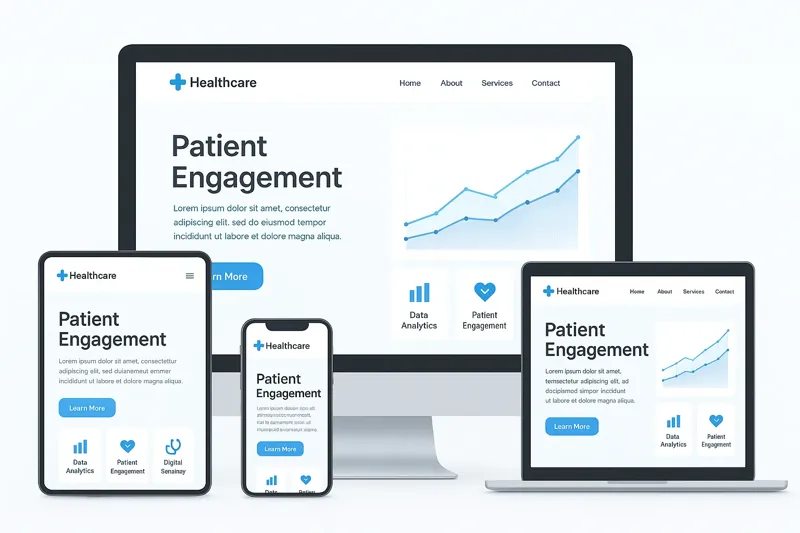
With over 60% of healthcare searches performed on mobile devices, Responsive web design for healthcare, Mobile Optimization for Healthcare Websites, and Fast Page Speed for Clinics are critical. Websites must adapt seamlessly across screen sizes while maintaining fast load times — vital for retaining users and supporting SEO. Tools such as Google PageSpeed Insights aid in optimizing site speed.
Accessibility compliance and ADA/WCAG standards
Meeting accessibility standards like ADA and WCAG ensures inclusivity of users with disabilities. Incorporating features like screen reader compatibility, alternative text, and captioning not only complies with legal requirements but also broadens patient reach and improves user satisfaction, aligning with Accessibility in Healthcare UX and Healthcare website design best practices.
Inclusive design for diverse patient needs
Considering factors such as age-related eyesight differences, cognitive load reduction, and providing clear calls to action caters to a wide demographic, including elderly patients and those with disabilities, following Medical website design best practices.
Clear navigation and visual hierarchy
Clear menu structures with concise labels, prominent headers, and call-to-action buttons enhance user navigation and conversion. Proper use of color contrasts and spacing reinforces content hierarchy, consistent with Clear navigation in healthcare websites.
Reducing bounce rates and improving engagement
A patient-centric site that provides relevant educational content, quick appointment scheduling, and easy access to contact information encourages longer visits and increases appointment conversions, supported by strategies for Improving patient experience online and Patient-Centric Healthcare Design.
Integrating SEO and UX for optimal patient acquisition
Implementing schema markup and structured data , fast-loading mobile-friendly pages, and authoritative content aligned to local and long-tail keywords improves search rankings and patient engagement. Ensuring HIPAA compliance and site security fosters trust critical for healthcare providers.
Continuous monitoring through tools like Using Google Search Console for Clinics and Google Analytics enables data-driven adjustments that sustain SEO health and enhance user experience.
By combining these strategies, healthcare providers can build a trustworthy, accessible, and engaging online presence that attracts and retains patients effectively.
Content Marketing and Patient Engagement: Building Authority and Trust

Creating authoritative and E-E-A-T-compliant healthcare content
Healthcare providers must focus on crafting content that adheres to E-E-A-T principles in healthcare SEO—Experience, Expertise, Authoritativeness, and Trustworthiness. This is particularly critical for YMYL (Your Money or Your Life) health information, demanding accuracy, compliance, and clinical review to boost search rankings and patient confidence.
Using blogs, FAQs, videos, and patient success stories
Employing diverse content formats like informative blogs, comprehensive FAQ schema in healthcare content, engaging videos, and authentic patient success stories enhances patient education and engagement. These formats address different patient preferences and foster trust by offering clear insights into treatments and outcomes.
Addressing common patient questions and concerns
Addressing frequently asked patient questions and common concerns through content allows practices to connect with prospective patients actively searching for answers. This patient-centric approach improves organic search visibility and positions the clinic as a reliable authority.
Content’s role in improving organic visibility and trust
Consistently updated and high-quality content significantly boosts organic search rankings and builds credibility. Localized content incorporating geographic keywords increases local reach, while embedding Schema Markup in Healthcare SEO and structured data optimize content for AI-powered search features like Google AI Overviews for Health.
Incorporation of structured content to support AI-driven search
Healthcare content optimized with medical schema types—such as FAQ schema, How-To schema, MedicalCondition schema, and Speakable schema—has a higher likelihood of appearing in AI-driven search results and rich snippets, amplifying visibility and patient acquisition potential.
Leveraging social media for engagement and reputation building
A strategic social media presence complements content marketing by amplifying reach, encouraging patient interaction, and managing online reputation effectively. Engaging and compliant posts on platforms like Facebook and Instagram enhance behavioral signals that indirectly improve search rankings and nurture patient loyalty, highlighted in resources about Social Media and Healthcare SEO and Medical practice social media presence.
What are the most effective digital marketing strategies for healthcare providers?
Adopting a multi-channel digital marketing approach is essential. This includes mobile-optimized websites, Healthcare Local Search Optimization, rich content formats, active social media engagement, personalized email campaigns, and data-driven strategies that comply with HIPAA compliant digital marketing platforms. Together, these tactics elevate patient trust, increase traffic, and boost appointment bookings, as discussed in Healthcare Digital Marketing Strategies.
Technical SEO and Security: Ensuring Trust and Compliance
Importance of SSL/HTTPS for Securing Patient Data
Implementing SSL (Secure Sockets Layer) and HTTPS protocols is crucial for protecting sensitive patient information from unauthorized access. Secure websites not only comply with HIPAA compliance and website security but also contribute positively to search engine rankings by Google, which prioritizes secure domains in search results.
Technical SEO Best Practices Including Site Speed and Crawlability
Healthcare websites must maintain Fast Page Speed for Clinics to reduce bounce rates and improve user experience, which directly influences SEO standings. Technical SEO for medical websites also emphasizes crawlability, ensuring search engines can efficiently navigate and index all relevant pages through optimized site architecture and XML sitemaps.
Fixing Broken Links and Optimizing URL Structure
Regular audits to identify and fix broken links prevent loss of SEO value and avoid frustrating users. Clean, descriptive, and logically structured URLs with keywords reflecting medical specialties and locations help both users and search engines understand site content and context, as advised in Healthcare SEO Guide.
HIPAA Compliance in Website Design and Data Handling
Compliance with HIPAA Compliance in Healthcare SEO is non-negotiable in healthcare digital marketing and website management. Websites must implement secure forms, encrypted data handling, and privacy controls to protect patient safety and trust, which in turn support better SEO through credibility.
Role of Schema Markup for Technical SEO and Rich Snippets
Using structured data such as LocalBusiness, MedicalClinic, FAQ, and Review schema enhances search results with rich snippets, increasing click-through rates. Implementing Schema Markup for Clinics also assists AI-driven search engines in accurately interpreting and presenting healthcare information.
Impact of Website Security on Patient Trust and SEO Rankings
Robust security measures not only comply with legal requirements but also build patient confidence in the provider’s professionalism. A secure, reliable website fosters Patient Trust Through Reviews and lower bounce rates, signaling quality to search engines and elevating search rankings.
What are the best practices for improving healthcare websites through SEO?
Ensuring Healthcare Website Usability and Accessibility, implementing HTTPS/SSL security, and embedding structured data schemas are essential. Maintaining HIPAA Compliance and consistently optimizing technical SEO elements like site speed, crawlability, and URL structure builds patient trust while supporting competitive search engine performance.
Local SEO Strategies: Capturing Patients ‘Near Me’
Optimizing Google Business Profile and Local Directories
Healthcare providers boost visibility by thoroughly optimizing their Google Business Profile for Healthcare (GBP). This includes providing complete and accurate information such as practice hours, services offered, and engaging regularly through posts. Additionally, maintaining precise listings on directories like Yellow Pages, Zocdoc, and Healthgrades establishes trust with search engines and patients alike.
Importance of Consistent NAP Data Across Platforms
Consistency in Name, Address, and Phone number (NAP) data is critical across all platforms to enhance importance of SEO for medical practices. Uniform NAP details prevent confusion in local searches and improve Google’s confidence in a healthcare practice’s authenticity.
Gathering and Managing Patient Reviews
Patient reviews are powerful local ranking factors. Encouraging patients to leave positive feedback on Google and online reviews engagement strengthens credibility. Active reputation management, including responding professionally to negative reviews, maintains patient trust and improves search placement.
Creating Localized Landing Pages with Geographic Keywords
Developing landing pages tailored to specific locations, featuring targeted geographic keywords such as “dermatology clinic near me” or “urgent care Chicago,” attracts high-intent patients. These pages enhance relevance in local search results and improve conversion opportunities. This aligns with strategies for Local SEO keywords for clinics.
Building Local Backlinks through Community Partnerships
Leveraging community engagement by sponsoring local events or collaborating with nearby organizations generates authoritative backlinks. These endorsements increase local search relevance and domain authority, as highlighted in Building Local Backlinks through Community Engagement.
Monitoring Local SEO Performance and Regular Audits
Utilizing tools like Google Analytics and Using Google Search Console for Clinics enables continuous tracking of traffic, keyword effectiveness, and patient engagement. Regular performance audits and updates ensure alignment with evolving search algorithms and local market trends.
Examples of Successful Healthcare Digital Marketing Strategies
Proven strategies include claiming and verifying Google My Business listings, consistently managing patient reviews, and using localized keywords to attract nearby patients. Supplementing these efforts with relevant Healthcare digital marketing strategies content marketing and targeted advertising further strengthens local patient acquisition.
| Strategy | Purpose | Benefit |
|---|---|---|
| Google Business Profile | Accurate local info and engagement | Higher local search visibility |
| Consistent NAP Data | Uniform contact info across platforms | Improved search engine trust |
| Patient Review Management | Encourage and respond to reviews | Enhanced reputation and rankings |
| Localized Landing Pages | Location-specific keyword targeting | Increased relevance and conversions |
| Local Backlink Building | Community partnerships and sponsorships | Boosts domain authority |
| Performance Monitoring & Audits | Track and refine SEO efforts | Sustained and improved rankings |
Leveraging Analytics and AI for Continuous Improvement
How Do Monitoring Tools Enhance Healthcare SEO Performance?
Healthcare marketers rely heavily on robust analytics platforms like Google Analytics, Google Business Profile for Healthcare, and SEMrush to track vital SEO metrics. These tools monitor keyword rankings, web traffic, bounce rates, and conversion rates, providing insight into patient engagement and website effectiveness.
Why is it Important to Adjust Strategies Based on Algorithm Updates and Data?
Search engine algorithms frequently change, impacting ranking factors. Healthcare providers must continuously analyze data trends and update their SEO for healthcare tactics accordingly. This adaptive approach ensures sustained visibility and helps practices stay competitive amid evolving search landscapes.
How Do AI Tools Support Keyword Research and Content Optimization?
Artificial intelligence simplifies identifying high-intent, localized, and conversational keywords, including long-tail terms aligned with patient queries. AI-powered content generators also facilitate crafting patient-centric articles and FAQs that address typical healthcare questions, enriching website relevance and improving voice search compatibility. For more on this, see Healthcare SEO Optimization.
What Role Does Conversational Content Play in Voice Search Optimization?
Given rising voice searches on smartphones and smart assistants, integrating conversational language and structured FAQs in healthcare websites is crucial. This strategy improves the chances of appearing in AI-powered search results and voice-driven local packs, attracting modern patients seeking natural interaction. Learn more about Voice Search Optimization in Healthcare.
How Can Healthcare Marketers Stay Ahead of SEO and Digital Marketing Trends?
Healthcare marketing professionals must develop skills in SEO, content marketing, data analytics, marketing automation, and healthcare compliance. Keeping current with industry trends, such as AI integration and evolving search behaviors, enables data-driven campaigns that comply with regulations and maximize patient acquisition. Explore Healthcare Digital Marketing Strategies and Digital Marketing Success in Healthcare.
| Topic | Tools & Techniques | Benefits |
|---|---|---|
| SEO Performance Monitoring | Google Analytics, Google Business Profile for Healthcare, SEMrush | Track rankings, traffic, bounce, conversions |
| Algorithm Adaptation | Data analysis, SEO for healthcare strategy revision | Maintains ranking amid updates |
| AI-Driven Keyword & Content | AI tools for research and content creation (Healthcare SEO Optimization) | Enhances relevance, voice search compatibility |
| Voice Search Optimization | Conversational FAQs, natural language content (Voice Search Optimization in Healthcare) | Captures modern user queries |
| Digital Marketing Skills for 2024 | SEO, content marketing, analytics, compliance (Healthcare Digital Marketing Strategies) | Implements effective, data-driven campaigns |
Mobile Optimization and Voice Search: Meeting Modern Patient Expectations
How does mobile-first website design enhance clinic SEO and user experience?
Healthcare websites must prioritize responsive layouts that adapt seamlessly across all devices, ensuring consistent user experiences regardless of screen size. Mobile-first website design is critical since over 60% of healthcare-related Google searches originate from mobile devices. A responsive site not only improves patient engagement but also contributes to higher search rankings by meeting Google's mobile usability standards.
What is the impact of mobile search on patient acquisition?
Mobile search leads directly to patient acquisition as patients increasingly use smartphones to find nearby healthcare services. Optimized mobile websites that load quickly and provide intuitive navigation can significantly improve appointment bookings and patient retention. Studies show that mobile-friendly sites reduce bounce rates and increase conversion rates by simplifying the patient journey from discovery to booking.
How can clinics optimize site speed and usability on mobile devices?
Fast page load time is imperative on mobile as slow speeds drive users away. Techniques such as minimizing image sizes, leveraging caching, and using AMP (Accelerated Mobile Pages) help ensure prompt loading. Additionally, clear call-to-actions (CTAs), streamlined navigation, and touch-friendly design features improve usability on small screens, facilitating easier appointment scheduling and information access.
What voice search optimization strategies are effective for healthcare websites?
Voice search optimization requires creating natural language content with conversational keywords and patient-centric FAQs. Clinics should utilize schema markup for Q&A, how-to guides, and location-based queries to increase chances of appearing in voice assistant results. Designing content that answers typical patient questions in accessible language supports voice queries initiated on smartphones or smart speakers.
Why is accessibility important across mobile and voice platforms?
Accessibility compliance ensures that all patients, including those with disabilities, can interact smoothly with healthcare websites on any device. Compliance with ADA and WCAG standards guarantees compatibility with screen readers and voice navigation tools. Accessible design enhances trust and equity in healthcare while positively affecting SEO by broadening audience reach.
How can the mobile patient journey be enhanced from search to appointment booking?
Mapping the patient journey reveals optimal conversion pathways, guiding improvements in landing page relevance, booking interface simplicity, and clear directions. Integrating features like clickable contact numbers, integrated maps, and secure online forms streamline the transition from information search to appointment scheduling, boosting patient acquisition and satisfaction.
| Strategy | Benefit | Implementation Detail |
|---|---|---|
| Mobile-first Responsive Design | Consistent UX across devices | Adaptive layouts and scalable images |
| Fast Page Load | Reduced bounce, higher retention | Image optimization, caching, AMP |
| Voice Search Optimization | Capture modern search queries | Use FAQs, natural language, schema markup |
| Accessibility Compliance | Inclusive patient access | ADA/WCAG adherence, screen reader compatibility |
| Patient Journey Mapping | Increased conversions | Streamlined bookings, clickable CTAs |
A mobile-friendly, fast-loading, and accessible website optimized for voice search is essential for improving both user experience and SEO, meeting the expectations of modern patients searching on smartphones and voice assistants.
Reputation and Review Management: Building Credibility Online

Encouraging Positive Patient Reviews on Platforms Like Google and Healthgrades
Healthcare providers must proactively encourage satisfied patients to leave reviews on prominent platforms such as Google Reviews for Healthcare, Healthgrades, and other healthcare-specific review platforms. Positive reviews increase social proof, boost patient trust, and influence potential patients' decisions by showcasing authentic experiences.
Responding Promptly to Negative Feedback and Reputation Crises
Timely and thoughtful responses to negative reviews or online reputation crises demonstrate a healthcare provider’s commitment to patient satisfaction and service improvement. Effective crisis management in healthcare SEO reduces reputational damage and prevents loss of search rankings caused by unresolved complaints.
Using Reviews to Improve SEO Rankings and Patient Trust
Online patient reviews are a significant factor in local SEO algorithms. A greater quantity and quality of reviews improve a provider’s visibility in local search results and "Google Local Pack for healthcare". Reviews also build patient trust by confirming a practice’s credibility and care quality.
Maintaining Compliance in Review Solicitation
While soliciting patient reviews, healthcare providers must adhere to HIPAA compliance in SEO and FTC Guidelines for Healthcare SEO to protect patient privacy and comply with advertising regulations. Using HIPAA-compliant digital marketing platforms and avoiding any incentivized or misleading solicitation preserves both legal and ethical standards.
Integration of Reputation Management with Local SEO
Reputation management seamlessly integrates with Local Citations for Healthcare Providers. Accurate, consistent business listings combined with authentic patient reviews amplify a practice’s local search authority. Managing reputation across platforms directly supports higher rankings and improved patient acquisition.
Role of Social Media in Reinforcing Credibility
Although social media activity is not a direct ranking factor for SEO, it enhances brand awareness and patient engagement. Positive interactions, patient testimonials, and educational content on social media and healthcare SEO strengthen overall online credibility, indirectly benefiting reputation and search performance.
How Effective Reputation Management Supports Healthcare Digital Marketing
Actively managing patient reviews and online reputation through credible platforms enhances trust and positively influences search rankings, a critical component of successful healthcare digital marketing strategies.
Partnering with Healthcare SEO Agencies: Accelerating Growth and Compliance
How can healthcare SEO companies or agencies help medical practices improve their online presence?
Healthcare SEO agencies specialize in elevating medical practices through comprehensive strategies tailored for the healthcare sector. These agencies optimize practice websites by incorporating high-value, localized keywords and developing authoritative content that aligns with compliance standards such as HIPAA. By managing local SEO campaigns — including Google Business Profile optimization and consistent citation across directories — they boost visibility for searches like "dermatology clinic near me".
Benefits of specialized healthcare SEO agencies
Specialized agencies bring deep knowledge of Healthcare digital marketing strategies and patient engagement nuances. They ensure website security and data privacy compliance, essential for maintaining patient trust. Their expertise in Implementing schema markup for clinics enhances search result presentation with rich snippets, increasing click-through rates.
Ensuring compliance with HIPAA and marketing regulations
Healthcare SEO agencies integrate compliance frameworks into digital marketing efforts, managing HIPAA compliant digital marketing platforms in website features like patient portals. This reduces legal risks while improving SEO performance through secure and trustworthy online experiences.
Developing tailored keyword and content strategies
Agencies conduct exhaustive Keyword research with local modifiers, optimizing for voice search and AI-driven queries. They produce Patient-Focused Healthcare Content that answers common healthcare questions, fostering patient trust and authority.
Implementing multi-location and local SEO campaigns
For practices with multiple sites, agencies maintain consistent NAP information and manage localized landing pages for each location. Strategic management of patient reviews across platforms such as Healthgrades and Yelp Reviews and Zocdoc further consolidates local rankings, driving high-intent patient traffic.
Leveraging agencies’ expertise for sustained growth and visibility
Ongoing monitoring via tools like Using Google Search Console for Clinics and Google Analytics enables agencies to adapt strategies to algorithm updates and market trends. This agility ensures continuous improvement in SEO rankings and patient acquisition.
Examples of how agencies enhance clinic websites
Healthcare SEO agencies improve website UX by ensuring Mobile Optimization for Healthcare Websites, fast page speeds, and accessibility compliance under WCAG standards. They embed features such as Online Booking for Healthcare Providers, secure bill payment gateways, and interactive content to streamline the Mapping Patient Digital Journey and increase conversion rates.
Through partnering with Local SEO Services for Medical Practices, medical practices can achieve accelerated growth, enhanced online visibility, and unwavering compliance in a competitive digital healthcare landscape.
Integrating Patient Journey Mapping into Website Optimization

Understanding patient needs and search intents
Healthcare providers must first grasp the diverse needs and search behaviors of patients to design effective websites. Patients often initiate their healthcare journey using highly specific local search terms such as "dermatology clinic near me" or more specialized queries like "pediatric dermatologist in New York". Recognizing these search intents allows practices to tailor website content that addresses patient concerns, enhancing both search relevance and trust.
Mapping digital touchpoints from search to booking
Mapping the entire patient digital journey—from the initial online search, through website navigation, to the appointment booking stage—is critical. Digital touchpoints include "Google Business Profile views", local directory listings, landing page visits, and form submissions. Identifying these points helps in optimizing each stage to reduce patient drop-off and improve overall engagement.
Optimizing landing pages for conversion
Landing pages should be specifically designed to meet patient expectations, with clear messaging, reassuring content, and accessible user interface elements. "Fast page load speeds", "mobile responsiveness", and simple, prominent call-to-actions (CTAs) such as "Book Appointment" or "Request a Callback" are essential. Incorporating "local keywords and schema markup" on these pages can enhance their visibility and effectiveness.
Utilizing behavioral data to refine user pathways
Employing analytics tools such as "Google Analytics and Search Console" enables healthcare providers to track user behaviors, including click patterns, bounce rates, and time spent on pages. Behavioral insights should drive continuous improvements in website layout, content relevance, and navigation flows to support smoother patient journeys.
Aligning website content and CTAs with patient journeys
Content must be "patient-centric", offering educational resources like FAQs and treatment explanations that correspond to common search queries. CTAs should be strategically placed throughout the site to guide patients logically through information gathering toward appointment scheduling, thereby enhancing conversion rates.
Measuring impact on appointment rates and patient satisfaction
Regular monitoring of "SEO metrics" alongside appointment booking data provides a direct measure of website effectiveness. Healthcare practices should track increases in genuine appointment requests, user engagement statistics, and patient satisfaction surveys to ensure their optimization strategies translate into tangible patient growth and improved care experiences.
Future-Proofing Clinic Websites for SEO and User Experience Excellence
Continuous Adaptation to SEO Algorithm Changes and User Expectations
Healthcare SEO is a dynamic field shaped by frequent updates to search engine algorithms and evolving patient behaviors. Clinics must monitor these changes regularly to maintain and enhance their search rankings. Ongoing assessment through tools like Google Analytics and Search Console enables timely adjustments in strategy, ensuring websites stay relevant and competitive in the digital space.
Ongoing Content Refresh and Technical Adjustments
Regularly updating website content with authoritative, patient-focused information keeps the site engaging and aligned with current medical standards. Technical optimizations—such as enhancing page speed, fixing broken links, and improving mobile responsiveness—are essential for sustained user satisfaction and compliance with search engine requirements.
Embracing Emerging Technologies like AI and Voice Search
Incorporation of artificial intelligence (AI) and voice search optimization into SEO strategies is increasingly critical. Creating natural language content, using FAQ schema, and optimizing for conversational queries facilitate presence in AI-driven search results. These technologies help meet modern patient search behaviors, boosting clinic visibility and patient acquisition.
Ensuring Compliance and Accessibility Remain Priority
Maintaining strict adherence to HIPAA and accessibility standards not only guards patient privacy but also builds trust. Accessible design features like screen reader compatibility and clear navigation serve diverse patient populations, enhancing user experience and complying with legal mandates.
The Critical Role of Expert Partnerships in Healthcare Digital Marketing
Engaging with specialized healthcare digital marketing agencies can accelerate SEO success by implementing tailored strategies, ensuring compliance, and leveraging advanced tools. Expert partnerships provide clinics with the knowledge and resources necessary to adapt swiftly to digital trends, driving measurable patient growth and operational excellence.
Introduction to Optimizing Clinic Websites for Healthcare SEO and UX
Importance of SEO and User Experience for Healthcare Clinics
In the competitive healthcare landscape, optimizing clinic websites through effective SEO strategies is essential for attracting new patients and establishing trust. Since over 70% of patients research healthcare providers online before scheduling appointments, clinics must prioritize both search engine optimization and a seamless user experience. Well-executed SEO enhances online visibility, particularly in local search results, positioning clinics prominently when patients search for nearby healthcare services.
Overview of the Digital Patient Journey and Online Visibility
A patient’s digital journey—from initial information search to appointment booking—depends heavily on a clinic’s ability to appear in relevant search results and provide intuitive website navigation. Mapping this journey enables clinics to optimize landing pages, content, and calls to action, improving patient conversion rates and engagement. Comprehensive SEO combined with user-friendly website design ensures clinics meet patient expectations for accessible, authoritative information.
Relevance of Mobile Friendliness and Compliance in Healthcare Websites
With over 60% of healthcare searches conducted via mobile devices, responsive web design and fast loading times are critical for user retention and improved search rankings. Additionally, maintaining HIPAA compliance and website security builds patient trust and safeguards sensitive information, complementing SEO efforts. Clinics that invest in mobile-optimized, compliant websites offer superior patient experiences and maintain a competitive edge in the digital healthcare space.
Fundamentals of Healthcare SEO: Building a Strong Foundation
Why is Local SEO Important in Healthcare?
Local SEO is critical for healthcare providers because most patients search for services with a geographic intent, such as "urgent care near me" or "pediatrician in Dallas." Ranking highly in local search results increases visibility among neighboring patients actively looking for care, thereby driving appointment bookings and practice growth. Optimized local listings and consistent citations signal trust and relevance to search engines, further boosting rankings.
How Should Keyword Research Be Approached for Healthcare SEO?
Effective keyword research combines local modifiers and long-tail keywords to capture high-intent patient queries. For example, keywords like "dermatology clinic near me" or "knee surgery Chicago" target specific services and locations. Incorporating long-tail keywords also helps attract patients seeking detailed information, enhancing both visibility and engagement on healthcare websites. Learn more about Keyword Research with Local Modifiers.
What is the Role of Google Business Profile Optimization?
Optimizing the Google Business Profile (GBP) is essential. It involves completing the profile with accurate contact details, service descriptions, business hours, and images. Regularly updating posts and managing patient reviews on GBP enhances engagement and boosts local search rankings. Positive reviews, especially when collected compliantly, foster credibility and encourage new patient inquiries.
How Does Consistency of NAP and Local Citations Affect SEO?
Maintaining consistent Name, Address, and Phone number (NAP) information across all online directories such as Yellow Pages, Healthgrades, and Zocdoc is fundamental. Uniform citations build search engines’ trust in the practice's local presence, reducing confusion and helping secure better rankings in local pack results.
Why Use Structured Data and Schema Markup in Healthcare SEO?
Structured data, including LocalBusiness, MedicalClinic, FAQ, and Review schema, enriches search listings with rich snippets and local packs. This enhanced presentation improves click-through rates and is increasingly favored by AI-driven search platforms. Schema markup also enables voice search optimization by providing clear, concise information for conversational queries.
How Can Healthcare Practices Measure SEO Performance Effectively?
Using analytics tools such as Google Analytics and Google Search Console is vital for tracking site traffic, keyword rankings, user behavior, and conversion metrics. These insights allow continuous refinement of SEO strategies, ensuring sustained improvements in patient acquisition and online visibility.
Best Practices for Improving Healthcare Websites Through SEO
To sum up, improving healthcare websites via SEO requires a comprehensive strategy combining local SEO, optimized Google Business Profiles, consistent NAP citations, and structured data. Ensuring website usability, mobile responsiveness, and HTTPS security fosters patient trust and boosts rankings. Producing expert-reviewed, authoritative content that aligns with E-E-A-T principles enhances credibility, while active review management and backlink building support sustained organic growth. Regular performance analysis and updates keep the practice competitive in evolving digital landscapes.
User Experience and Accessibility: Designing Patient-Centric Clinic Websites
What are the best strategies for optimizing clinic websites for SEO and user experience?
Optimizing clinic websites in the healthcare sector requires a holistic approach that integrates Healthcare SEO Optimization best practices with superior Healthcare UX Design Best Practices and user experience (UX) design principles.
UI/UX principles for healthcare websites
Healthcare websites should ensure clarity, ease of use, and trustworthiness. Intuitive navigation paired with a clear visual hierarchy guides patients effortlessly through important content. Usage of sans serif fonts like Arial or Montserrat enhances readability across devices. Designing for efficiency, error recovery, and familiar interaction patterns decreases confusion and bounce rates. These reflect UI/UX design principles for healthcare websites.
Mobile responsiveness and fast page speed
With over 60% of healthcare searches performed on mobile devices, Responsive web design for healthcare, Mobile Optimization for Healthcare Websites, and Fast Page Speed for Clinics are critical. Websites must adapt seamlessly across screen sizes while maintaining fast load times — vital for retaining users and supporting SEO. Tools such as Google PageSpeed Insights aid in optimizing site speed.
Accessibility compliance and ADA/WCAG standards
Meeting accessibility standards like ADA and WCAG ensures inclusivity of users with disabilities. Incorporating features like screen reader compatibility, alternative text, and captioning not only complies with legal requirements but also broadens patient reach and improves user satisfaction, aligning with Accessibility in Healthcare UX and Healthcare website design best practices.
Inclusive design for diverse patient needs
Considering factors such as age-related eyesight differences, cognitive load reduction, and providing clear calls to action caters to a wide demographic, including elderly patients and those with disabilities, following Medical website design best practices.
Clear navigation and visual hierarchy
Clear menu structures with concise labels, prominent headers, and call-to-action buttons enhance user navigation and conversion. Proper use of color contrasts and spacing reinforces content hierarchy, consistent with Clear navigation in healthcare websites.
Reducing bounce rates and improving engagement
A patient-centric site that provides relevant educational content, quick appointment scheduling, and easy access to contact information encourages longer visits and increases appointment conversions, supported by strategies for Improving patient experience online and Patient-Centric Healthcare Design.
Integrating SEO and UX for optimal patient acquisition
Implementing schema markup and structured data , fast-loading mobile-friendly pages, and authoritative content aligned to local and long-tail keywords improves search rankings and patient engagement. Ensuring HIPAA compliance and site security fosters trust critical for healthcare providers.
Continuous monitoring through tools like Using Google Search Console for Clinics and Google Analytics enables data-driven adjustments that sustain SEO health and enhance user experience.
By combining these strategies, healthcare providers can build a trustworthy, accessible, and engaging online presence that attracts and retains patients effectively.
Content Marketing and Patient Engagement: Building Authority and Trust
Creating authoritative and E-E-A-T-compliant healthcare content
Healthcare providers must focus on crafting content that adheres to E-E-A-T principles in healthcare SEO—Experience, Expertise, Authoritativeness, and Trustworthiness. This is particularly critical for YMYL (Your Money or Your Life) health information, demanding accuracy, compliance, and clinical review to boost search rankings and patient confidence.
Using blogs, FAQs, videos, and patient success stories
Employing diverse content formats like informative blogs, comprehensive FAQ schema in healthcare content, engaging videos, and authentic patient success stories enhances patient education and engagement. These formats address different patient preferences and foster trust by offering clear insights into treatments and outcomes.
Addressing common patient questions and concerns
Addressing frequently asked patient questions and common concerns through content allows practices to connect with prospective patients actively searching for answers. This patient-centric approach improves organic search visibility and positions the clinic as a reliable authority.
Content’s role in improving organic visibility and trust
Consistently updated and high-quality content significantly boosts organic search rankings and builds credibility. Localized content incorporating geographic keywords increases local reach, while embedding Schema Markup in Healthcare SEO and structured data optimize content for AI-powered search features like Google AI Overviews for Health.
Incorporation of structured content to support AI-driven search
Healthcare content optimized with medical schema types—such as FAQ schema, How-To schema, MedicalCondition schema, and Speakable schema—has a higher likelihood of appearing in AI-driven search results and rich snippets, amplifying visibility and patient acquisition potential.
Leveraging social media for engagement and reputation building
A strategic social media presence complements content marketing by amplifying reach, encouraging patient interaction, and managing online reputation effectively. Engaging and compliant posts on platforms like Facebook and Instagram enhance behavioral signals that indirectly improve search rankings and nurture patient loyalty, highlighted in resources about Social Media and Healthcare SEO and Medical practice social media presence.
What are the most effective digital marketing strategies for healthcare providers?
Adopting a multi-channel digital marketing approach is essential. This includes mobile-optimized websites, Healthcare Local Search Optimization, rich content formats, active social media engagement, personalized email campaigns, and data-driven strategies that comply with HIPAA compliant digital marketing platforms. Together, these tactics elevate patient trust, increase traffic, and boost appointment bookings, as discussed in Healthcare Digital Marketing Strategies.
Technical SEO and Security: Ensuring Trust and Compliance
Importance of SSL/HTTPS for Securing Patient Data
Implementing SSL (Secure Sockets Layer) and HTTPS protocols is crucial for protecting sensitive patient information from unauthorized access. Secure websites not only comply with HIPAA compliance and website security but also contribute positively to search engine rankings by Google, which prioritizes secure domains in search results.
Technical SEO Best Practices Including Site Speed and Crawlability
Healthcare websites must maintain Fast Page Speed for Clinics to reduce bounce rates and improve user experience, which directly influences SEO standings. Technical SEO for medical websites also emphasizes crawlability, ensuring search engines can efficiently navigate and index all relevant pages through optimized site architecture and XML sitemaps.
Fixing Broken Links and Optimizing URL Structure
Regular audits to identify and fix broken links prevent loss of SEO value and avoid frustrating users. Clean, descriptive, and logically structured URLs with keywords reflecting medical specialties and locations help both users and search engines understand site content and context, as advised in Healthcare SEO Guide.
HIPAA Compliance in Website Design and Data Handling
Compliance with HIPAA Compliance in Healthcare SEO is non-negotiable in healthcare digital marketing and website management. Websites must implement secure forms, encrypted data handling, and privacy controls to protect patient safety and trust, which in turn support better SEO through credibility.
Role of Schema Markup for Technical SEO and Rich Snippets
Using structured data such as LocalBusiness, MedicalClinic, FAQ, and Review schema enhances search results with rich snippets, increasing click-through rates. Implementing Schema Markup for Clinics also assists AI-driven search engines in accurately interpreting and presenting healthcare information.
Impact of Website Security on Patient Trust and SEO Rankings
Robust security measures not only comply with legal requirements but also build patient confidence in the provider’s professionalism. A secure, reliable website fosters Patient Trust Through Reviews and lower bounce rates, signaling quality to search engines and elevating search rankings.
What are the best practices for improving healthcare websites through SEO?
Ensuring Healthcare Website Usability and Accessibility, implementing HTTPS/SSL security, and embedding structured data schemas are essential. Maintaining HIPAA Compliance and consistently optimizing technical SEO elements like site speed, crawlability, and URL structure builds patient trust while supporting competitive search engine performance.
Local SEO Strategies: Capturing Patients ‘Near Me’
Optimizing Google Business Profile and Local Directories
Healthcare providers boost visibility by thoroughly optimizing their Google Business Profile for Healthcare (GBP). This includes providing complete and accurate information such as practice hours, services offered, and engaging regularly through posts. Additionally, maintaining precise listings on directories like Yellow Pages, Zocdoc, and Healthgrades establishes trust with search engines and patients alike.
Importance of Consistent NAP Data Across Platforms
Consistency in Name, Address, and Phone number (NAP) data is critical across all platforms to enhance importance of SEO for medical practices. Uniform NAP details prevent confusion in local searches and improve Google’s confidence in a healthcare practice’s authenticity.
Gathering and Managing Patient Reviews
Patient reviews are powerful local ranking factors. Encouraging patients to leave positive feedback on Google and online reviews engagement strengthens credibility. Active reputation management, including responding professionally to negative reviews, maintains patient trust and improves search placement.
Creating Localized Landing Pages with Geographic Keywords
Developing landing pages tailored to specific locations, featuring targeted geographic keywords such as “dermatology clinic near me” or “urgent care Chicago,” attracts high-intent patients. These pages enhance relevance in local search results and improve conversion opportunities. This aligns with strategies for Local SEO keywords for clinics.
Building Local Backlinks through Community Partnerships
Leveraging community engagement by sponsoring local events or collaborating with nearby organizations generates authoritative backlinks. These endorsements increase local search relevance and domain authority, as highlighted in Building Local Backlinks through Community Engagement.
Monitoring Local SEO Performance and Regular Audits
Utilizing tools like Google Analytics and Using Google Search Console for Clinics enables continuous tracking of traffic, keyword effectiveness, and patient engagement. Regular performance audits and updates ensure alignment with evolving search algorithms and local market trends.
Examples of Successful Healthcare Digital Marketing Strategies
Proven strategies include claiming and verifying Google My Business listings, consistently managing patient reviews, and using localized keywords to attract nearby patients. Supplementing these efforts with relevant Healthcare digital marketing strategies content marketing and targeted advertising further strengthens local patient acquisition.
| Strategy | Purpose | Benefit |
|---|---|---|
| Google Business Profile | Accurate local info and engagement | Higher local search visibility |
| Consistent NAP Data | Uniform contact info across platforms | Improved search engine trust |
| Patient Review Management | Encourage and respond to reviews | Enhanced reputation and rankings |
| Localized Landing Pages | Location-specific keyword targeting | Increased relevance and conversions |
| Local Backlink Building | Community partnerships and sponsorships | Boosts domain authority |
| Performance Monitoring & Audits | Track and refine SEO efforts | Sustained and improved rankings |
Leveraging Analytics and AI for Continuous Improvement
How Do Monitoring Tools Enhance Healthcare SEO Performance?
Healthcare marketers rely heavily on robust analytics platforms like Google Analytics, Google Business Profile for Healthcare, and SEMrush to track vital SEO metrics. These tools monitor keyword rankings, web traffic, bounce rates, and conversion rates, providing insight into patient engagement and website effectiveness.
Why is it Important to Adjust Strategies Based on Algorithm Updates and Data?
Search engine algorithms frequently change, impacting ranking factors. Healthcare providers must continuously analyze data trends and update their SEO for healthcare tactics accordingly. This adaptive approach ensures sustained visibility and helps practices stay competitive amid evolving search landscapes.
How Do AI Tools Support Keyword Research and Content Optimization?
Artificial intelligence simplifies identifying high-intent, localized, and conversational keywords, including long-tail terms aligned with patient queries. AI-powered content generators also facilitate crafting patient-centric articles and FAQs that address typical healthcare questions, enriching website relevance and improving voice search compatibility. For more on this, see Healthcare SEO Optimization.
What Role Does Conversational Content Play in Voice Search Optimization?
Given rising voice searches on smartphones and smart assistants, integrating conversational language and structured FAQs in healthcare websites is crucial. This strategy improves the chances of appearing in AI-powered search results and voice-driven local packs, attracting modern patients seeking natural interaction. Learn more about Voice Search Optimization in Healthcare.
How Can Healthcare Marketers Stay Ahead of SEO and Digital Marketing Trends?
Healthcare marketing professionals must develop skills in SEO, content marketing, data analytics, marketing automation, and healthcare compliance. Keeping current with industry trends, such as AI integration and evolving search behaviors, enables data-driven campaigns that comply with regulations and maximize patient acquisition. Explore Healthcare Digital Marketing Strategies and Digital Marketing Success in Healthcare.
| Topic | Tools & Techniques | Benefits |
|---|---|---|
| SEO Performance Monitoring | Google Analytics, Google Business Profile for Healthcare, SEMrush | Track rankings, traffic, bounce, conversions |
| Algorithm Adaptation | Data analysis, SEO for healthcare strategy revision | Maintains ranking amid updates |
| AI-Driven Keyword & Content | AI tools for research and content creation (Healthcare SEO Optimization) | Enhances relevance, voice search compatibility |
| Voice Search Optimization | Conversational FAQs, natural language content (Voice Search Optimization in Healthcare) | Captures modern user queries |
| Digital Marketing Skills for 2024 | SEO, content marketing, analytics, compliance (Healthcare Digital Marketing Strategies) | Implements effective, data-driven campaigns |
Mobile Optimization and Voice Search: Meeting Modern Patient Expectations
How does mobile-first website design enhance clinic SEO and user experience?
Healthcare websites must prioritize responsive layouts that adapt seamlessly across all devices, ensuring consistent user experiences regardless of screen size. Mobile-first website design is critical since over 60% of healthcare-related Google searches originate from mobile devices. A responsive site not only improves patient engagement but also contributes to higher search rankings by meeting Google's mobile usability standards.
What is the impact of mobile search on patient acquisition?
Mobile search leads directly to patient acquisition as patients increasingly use smartphones to find nearby healthcare services. Optimized mobile websites that load quickly and provide intuitive navigation can significantly improve appointment bookings and patient retention. Studies show that mobile-friendly sites reduce bounce rates and increase conversion rates by simplifying the patient journey from discovery to booking.
How can clinics optimize site speed and usability on mobile devices?
Fast page load time is imperative on mobile as slow speeds drive users away. Techniques such as minimizing image sizes, leveraging caching, and using AMP (Accelerated Mobile Pages) help ensure prompt loading. Additionally, clear call-to-actions (CTAs), streamlined navigation, and touch-friendly design features improve usability on small screens, facilitating easier appointment scheduling and information access.
What voice search optimization strategies are effective for healthcare websites?
Voice search optimization requires creating natural language content with conversational keywords and patient-centric FAQs. Clinics should utilize schema markup for Q&A, how-to guides, and location-based queries to increase chances of appearing in voice assistant results. Designing content that answers typical patient questions in accessible language supports voice queries initiated on smartphones or smart speakers.
Why is accessibility important across mobile and voice platforms?
Accessibility compliance ensures that all patients, including those with disabilities, can interact smoothly with healthcare websites on any device. Compliance with ADA and WCAG standards guarantees compatibility with screen readers and voice navigation tools. Accessible design enhances trust and equity in healthcare while positively affecting SEO by broadening audience reach.
How can the mobile patient journey be enhanced from search to appointment booking?
Mapping the patient journey reveals optimal conversion pathways, guiding improvements in landing page relevance, booking interface simplicity, and clear directions. Integrating features like clickable contact numbers, integrated maps, and secure online forms streamline the transition from information search to appointment scheduling, boosting patient acquisition and satisfaction.
| Strategy | Benefit | Implementation Detail |
|---|---|---|
| Mobile-first Responsive Design | Consistent UX across devices | Adaptive layouts and scalable images |
| Fast Page Load | Reduced bounce, higher retention | Image optimization, caching, AMP |
| Voice Search Optimization | Capture modern search queries | Use FAQs, natural language, schema markup |
| Accessibility Compliance | Inclusive patient access | ADA/WCAG adherence, screen reader compatibility |
| Patient Journey Mapping | Increased conversions | Streamlined bookings, clickable CTAs |
A mobile-friendly, fast-loading, and accessible website optimized for voice search is essential for improving both user experience and SEO, meeting the expectations of modern patients searching on smartphones and voice assistants.
Reputation and Review Management: Building Credibility Online
Encouraging Positive Patient Reviews on Platforms Like Google and Healthgrades
Healthcare providers must proactively encourage satisfied patients to leave reviews on prominent platforms such as Google Reviews for Healthcare, Healthgrades, and other healthcare-specific review platforms. Positive reviews increase social proof, boost patient trust, and influence potential patients' decisions by showcasing authentic experiences.
Responding Promptly to Negative Feedback and Reputation Crises
Timely and thoughtful responses to negative reviews or online reputation crises demonstrate a healthcare provider’s commitment to patient satisfaction and service improvement. Effective crisis management in healthcare SEO reduces reputational damage and prevents loss of search rankings caused by unresolved complaints.
Using Reviews to Improve SEO Rankings and Patient Trust
Online patient reviews are a significant factor in local SEO algorithms. A greater quantity and quality of reviews improve a provider’s visibility in local search results and "Google Local Pack for healthcare". Reviews also build patient trust by confirming a practice’s credibility and care quality.
Maintaining Compliance in Review Solicitation
While soliciting patient reviews, healthcare providers must adhere to HIPAA compliance in SEO and FTC Guidelines for Healthcare SEO to protect patient privacy and comply with advertising regulations. Using HIPAA-compliant digital marketing platforms and avoiding any incentivized or misleading solicitation preserves both legal and ethical standards.
Integration of Reputation Management with Local SEO
Reputation management seamlessly integrates with Local Citations for Healthcare Providers. Accurate, consistent business listings combined with authentic patient reviews amplify a practice’s local search authority. Managing reputation across platforms directly supports higher rankings and improved patient acquisition.
Role of Social Media in Reinforcing Credibility
Although social media activity is not a direct ranking factor for SEO, it enhances brand awareness and patient engagement. Positive interactions, patient testimonials, and educational content on social media and healthcare SEO strengthen overall online credibility, indirectly benefiting reputation and search performance.
How Effective Reputation Management Supports Healthcare Digital Marketing
Actively managing patient reviews and online reputation through credible platforms enhances trust and positively influences search rankings, a critical component of successful healthcare digital marketing strategies.
Partnering with Healthcare SEO Agencies: Accelerating Growth and Compliance
How can healthcare SEO companies or agencies help medical practices improve their online presence?
Healthcare SEO agencies specialize in elevating medical practices through comprehensive strategies tailored for the healthcare sector. These agencies optimize practice websites by incorporating high-value, localized keywords and developing authoritative content that aligns with compliance standards such as HIPAA. By managing local SEO campaigns — including Google Business Profile optimization and consistent citation across directories — they boost visibility for searches like "dermatology clinic near me".
Benefits of specialized healthcare SEO agencies
Specialized agencies bring deep knowledge of Healthcare digital marketing strategies and patient engagement nuances. They ensure website security and data privacy compliance, essential for maintaining patient trust. Their expertise in Implementing schema markup for clinics enhances search result presentation with rich snippets, increasing click-through rates.
Ensuring compliance with HIPAA and marketing regulations
Healthcare SEO agencies integrate compliance frameworks into digital marketing efforts, managing HIPAA compliant digital marketing platforms in website features like patient portals. This reduces legal risks while improving SEO performance through secure and trustworthy online experiences.
Developing tailored keyword and content strategies
Agencies conduct exhaustive Keyword research with local modifiers, optimizing for voice search and AI-driven queries. They produce Patient-Focused Healthcare Content that answers common healthcare questions, fostering patient trust and authority.
Implementing multi-location and local SEO campaigns
For practices with multiple sites, agencies maintain consistent NAP information and manage localized landing pages for each location. Strategic management of patient reviews across platforms such as Healthgrades and Yelp Reviews and Zocdoc further consolidates local rankings, driving high-intent patient traffic.
Leveraging agencies’ expertise for sustained growth and visibility
Ongoing monitoring via tools like Using Google Search Console for Clinics and Google Analytics enables agencies to adapt strategies to algorithm updates and market trends. This agility ensures continuous improvement in SEO rankings and patient acquisition.
Examples of how agencies enhance clinic websites
Healthcare SEO agencies improve website UX by ensuring Mobile Optimization for Healthcare Websites, fast page speeds, and accessibility compliance under WCAG standards. They embed features such as Online Booking for Healthcare Providers, secure bill payment gateways, and interactive content to streamline the Mapping Patient Digital Journey and increase conversion rates.
Through partnering with Local SEO Services for Medical Practices, medical practices can achieve accelerated growth, enhanced online visibility, and unwavering compliance in a competitive digital healthcare landscape.
Integrating Patient Journey Mapping into Website Optimization
Understanding patient needs and search intents
Healthcare providers must first grasp the diverse needs and search behaviors of patients to design effective websites. Patients often initiate their healthcare journey using highly specific local search terms such as "dermatology clinic near me" or more specialized queries like "pediatric dermatologist in New York". Recognizing these search intents allows practices to tailor website content that addresses patient concerns, enhancing both search relevance and trust.
Mapping digital touchpoints from search to booking
Mapping the entire patient digital journey—from the initial online search, through website navigation, to the appointment booking stage—is critical. Digital touchpoints include "Google Business Profile views", local directory listings, landing page visits, and form submissions. Identifying these points helps in optimizing each stage to reduce patient drop-off and improve overall engagement.
Optimizing landing pages for conversion
Landing pages should be specifically designed to meet patient expectations, with clear messaging, reassuring content, and accessible user interface elements. "Fast page load speeds", "mobile responsiveness", and simple, prominent call-to-actions (CTAs) such as "Book Appointment" or "Request a Callback" are essential. Incorporating "local keywords and schema markup" on these pages can enhance their visibility and effectiveness.
Utilizing behavioral data to refine user pathways
Employing analytics tools such as "Google Analytics and Search Console" enables healthcare providers to track user behaviors, including click patterns, bounce rates, and time spent on pages. Behavioral insights should drive continuous improvements in website layout, content relevance, and navigation flows to support smoother patient journeys.
Aligning website content and CTAs with patient journeys
Content must be "patient-centric", offering educational resources like FAQs and treatment explanations that correspond to common search queries. CTAs should be strategically placed throughout the site to guide patients logically through information gathering toward appointment scheduling, thereby enhancing conversion rates.
Measuring impact on appointment rates and patient satisfaction
Regular monitoring of "SEO metrics" alongside appointment booking data provides a direct measure of website effectiveness. Healthcare practices should track increases in genuine appointment requests, user engagement statistics, and patient satisfaction surveys to ensure their optimization strategies translate into tangible patient growth and improved care experiences.
Future-Proofing Clinic Websites for SEO and User Experience Excellence
Continuous Adaptation to SEO Algorithm Changes and User Expectations
Healthcare SEO is a dynamic field shaped by frequent updates to search engine algorithms and evolving patient behaviors. Clinics must monitor these changes regularly to maintain and enhance their search rankings. Ongoing assessment through tools like Google Analytics and Search Console enables timely adjustments in strategy, ensuring websites stay relevant and competitive in the digital space.
Ongoing Content Refresh and Technical Adjustments
Regularly updating website content with authoritative, patient-focused information keeps the site engaging and aligned with current medical standards. Technical optimizations—such as enhancing page speed, fixing broken links, and improving mobile responsiveness—are essential for sustained user satisfaction and compliance with search engine requirements.
Embracing Emerging Technologies like AI and Voice Search
Incorporation of artificial intelligence (AI) and voice search optimization into SEO strategies is increasingly critical. Creating natural language content, using FAQ schema, and optimizing for conversational queries facilitate presence in AI-driven search results. These technologies help meet modern patient search behaviors, boosting clinic visibility and patient acquisition.
Ensuring Compliance and Accessibility Remain Priority
Maintaining strict adherence to HIPAA and accessibility standards not only guards patient privacy but also builds trust. Accessible design features like screen reader compatibility and clear navigation serve diverse patient populations, enhancing user experience and complying with legal mandates.
The Critical Role of Expert Partnerships in Healthcare Digital Marketing
Engaging with specialized healthcare digital marketing agencies can accelerate SEO success by implementing tailored strategies, ensuring compliance, and leveraging advanced tools. Expert partnerships provide clinics with the knowledge and resources necessary to adapt swiftly to digital trends, driving measurable patient growth and operational excellence.