.png)


The Importance of Patient-Centered Digital Experiences in Healthcare
Significance of Patient-Centered Digital Interfaces
Patient-centered digital experiences in healthcare are critical for enhancing patient engagement and improving health outcomes. These interfaces prioritize the unique needs and preferences of patients, ensuring that digital tools are easy to navigate, trustworthy, and personalized. By focusing on value, simplicity, and connectivity, healthcare providers can create platforms that build patient trust and encourage active participation in their care.
Increasing Patient Reliance on Online Healthcare Resources
The majority of patients now conduct online research before choosing healthcare providers, with over 80% using the internet to seek health information. A significant portion prefers digital tools such as patient portals and online scheduling for managing their healthcare needs. This shift underscores the necessity for healthcare organizations to develop mobile-responsive, accessible, and user-friendly websites and applications that meet the expectations of modern consumers.
Overview of Digital Transformation in Healthcare
Healthcare is rapidly adopting digital transformation, integrating electronic health records, telemedicine, and patient portals to deliver seamless digital interactions. Investments in digital platforms focus on interoperability, personalized patient journeys, and secure, HIPAA-compliant technologies. This transformation aims to reduce health disparities, improve adherence, and streamline care delivery, ultimately elevating both patient satisfaction and clinical outcomes.
Essential Features Every Healthcare Website Must Include

What are the five essential features every website must have?
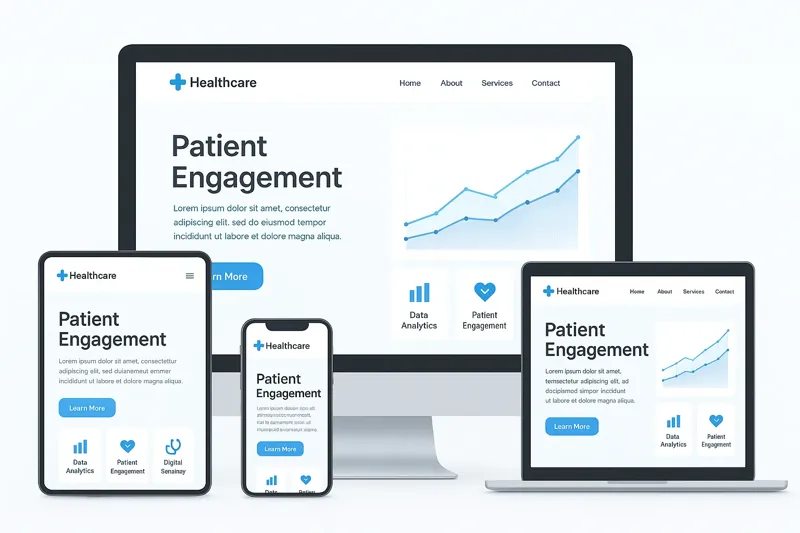
Every healthcare website must prioritize a seamless user experience by integrating intuitive navigation and mobile responsiveness to ensure accessibility across desktops, tablets, and smartphones. Nearly 90% of users begin their healthcare information searches on mobile devices, making responsive design indispensable.
High-quality, relevant content helps establish the website as a trusted resource. This includes patient-friendly language, educational blog posts, videos, and clear explanations without medical jargon to accommodate varying health literacy levels. Such content supports patient engagement, reduces anxiety, and enhances understanding.
Clear calls-to-action (CTAs) guide visitors towards desired interactions like online appointment scheduling, contact form submissions, or requesting more information. These CTAs streamline the patient journey and increase conversion rates by simplifying user decision-making.
Strong search engine optimization (SEO) is critical to improve visibility in local and national searches. Implementing local keywords, optimizing page load speeds, and maintaining accurate online listings help attract the right patient demographic. SEO combined with pay-per-click (PPC) strategies can maximize immediate and long-term online presence.
Lastly, incorporating trust signals such as patient reviews, testimonials, credentials, and adherence to privacy standards (HIPAA compliance) fosters credibility. Transparent display of staff qualifications and secure platforms for patient portals build confidence and patient loyalty.
These foundational features empower healthcare organizations to deliver patient-centric, accessible, and efficient online experiences that align with modern patient expectations and regulatory requirements.
Key Principles to Optimize User Experience for Healthcare Websites

What are the key rules to improve a website's user experience?
Improving user experience (UX) on healthcare websites demands a focus on simplicity and clarity. A simple and clean design is essential to build patient trust and present a professional image, especially within the U.S. healthcare sector where patients expect reliability and transparency. Consistency in typography, color schemes, and layout throughout the website fosters a cohesive experience that makes navigation comfortable and predictable for users (Healthcare website design best practices).
Fast loading speeds are critical, with a target of under three seconds to ensure visitors do not abandon the site. Responsiveness across all devices—including desktops, tablets, and smartphones—is crucial given the predominance of mobile device use among health information seekers (Mobile responsiveness in healthcare websites. Intuitive and accessible interfaces accommodate users with varying levels of digital literacy, reducing barriers and encouraging patient engagement (Patient-Centric Healthcare Websites).
Incorporating engaging multimedia elements such as videos and audio can cater to diverse learning preferences, helping to communicate complex health information more effectively. Navigation should minimize friction by using clear menus, straightforward calls to action, and reducing unnecessary steps, making it easier for patients to find information or complete actions like appointment scheduling (Clear and Simple Language in Medical Websites).
Finally, serving a diverse patient population, including the elderly, involves ensuring accessibility features such as high-contrast text, scalable fonts, keyboard navigation, and adherence to ADA and WCAG standards. These inclusive design principles make healthcare websites usable for patients with disabilities or age-related impairments, supporting equitable access to care (Healthcare Website Accessibility.
Building Patient Trust Through Digital Platforms and Online Reputation

Importance of Online Reviews and Reputation Management
Online reviews significantly influence patient decisions, with 75% of patients consulting reviews before choosing a healthcare provider. Actively managing online reputation on platforms like Google, Healthgrades, and Yelp is essential for building trust and attracting new patients. Practices that accumulate positive, recent reviews see improved credibility and increased patient appointments. For more on Advanced digital strategies consult the AMA guide.
Role of Patient Testimonials and Social Proof
Incorporating patient testimonials and social proof within healthcare websites enhances credibility and patient confidence. Showcasing authentic stories and ratings provides prospective patients with reassurance about quality and care standards, positively impacting conversion rates. Learn about Healthcare provider reputation and patient engagement tools.
Security and Compliance Such as HIPAA
A secure digital platform adhering to HIPAA regulations protects patient information, fostering trust and compliance. Implementing SSL encryption, secure portals, and privacy policies ensures confidentiality and mitigates cybersecurity risks that affect millions annually. Consider HIPAA compliance for healthcare websites and its importance in design.
Clear Communication and Transparency
Hospitals and practices demonstrating transparent, easy-to-navigate websites with clear communication channels improve patient engagement. Providing accessible health information, responsive messaging options, and detailed provider credentials enhances confidence and patient satisfaction. See best practices for Patient-centered hospital websites.
Accurate and Up-to-Date Provider Listings
Maintaining accurate and current online listings—including contact details, services offered, and office hours—in directories and profiles is critical. Complete and verified information helps patients find providers easily and reflects professionalism. Strategies on Building Patient Trust Through Digital Experiences provide further insights.
Benefits of Online Scheduling and Telehealth Integration
Offering online appointment scheduling and telehealth services simplifies access to care and meets patient expectations for immediacy and convenience. These features enhance the digital patient experience, reduce barriers to care, and increase patient retention. See insights on Digital front door for patient engagement.
Answering: What are effective strategies to improve patient experience in healthcare?
Effective strategies encompass prioritizing timely, transparent communication and empathetic care. Digital tools like online forms and AI-enabled feedback systems enable real-time responsiveness. Training staff in cultural competence and safety fosters a welcoming environment. Altogether, combining patient-centered culture with technological enhancements drives improved health outcomes and loyalty. Explore frameworks for Improve Digital Patient Experience for more details.
Leveraging Patient Portals and Digital Health Tools to Enhance Engagement

What are the key features and benefits of using a patient portal?
Patient portals have become essential digital health tools that offer a secure, HIPAA-compliant platform for patients to access their medical records anytime, enhancing privacy and regulatory adherence. These portals simplify online appointment scheduling, allowing patients to book consultations conveniently online, which helps reduce no-shows and administrative burdens for healthcare staff.
Moreover, patient portals facilitate improved communication between patients and providers through secure messaging systems. This continuous dialogue promotes better health literacy and stronger patient-provider relationships. Integration of telemedicine adoption in healthcare within portals has expanded access to virtual care, allowing patients to receive timely consultations without physical visits.
Administrative automation extends beyond appointments to include online billing and prescription management, streamlining patient interactions and improving convenience. Health tracking tools embedded in some portals empower patients to engage actively in their care, fostering adherence and self-management.
Recent healthcare regulations such as the Cures Act Final Rule emphasize patient access to electronic health information, accelerating adoption of these portals across the U.S. The result is improved patient satisfaction, enhanced clinical outcomes, and increased operational efficiency for providers. Overall, patient portals serve as a comprehensive digital front door for patient engagement, aligning with modern expectations for accessibility, security, and personalized care delivery.
Digital Strategies and Technologies Revolutionizing Clinical Practice and Patient Experience
What are examples of digital technology used in clinical practice?
Digital technology has transformed clinical practice through innovative tools that improve patient care and operational efficiency. Key examples include:
- Remote Patient Monitoring Devices: Biosensors, smart thermometers, and wearable trackers allow continuous health monitoring, enabling early intervention and personalized care.
- Telehealth Platforms: These offer accessible remote consultations, expanding healthcare access especially post-COVID-19.
- Connected Emergency Response Solutions: Real-time data sharing enhances emergency management and patient outcomes.
- Smart Hospital Management Systems: Utilizing Internet of Things (IoT), artificial intelligence (AI), and blockchain helps optimize resource allocation, secure patient data, and streamline workflows.
- Advanced Technologies: Extended reality supports medical training, robotic surgery improves surgical precision, and 5G networks enable real-time connectivity for remote care.
Remote Monitoring and Telehealth Platforms
Remote monitoring devices integrate with telehealth to facilitate continuous patient tracking and virtual visits. This combination reduces hospital admissions and increases patient engagement while expanding behavioral health access. Telehealth technologies support appointment scheduling, virtual check-ins, and secure communication. Digital front door for patient engagement
Integration of Electronic Health Records and Health IT Systems
Seamless integration of Electronic Health Records (EHR) with patient portals and clinical decision support tools strengthens care coordination. Unified data platforms reduce fragmentation, empowering providers with comprehensive patient information for informed decision-making and improved adherence. Seamless patient digital experience
Advanced Technologies like AI, IoT, and 5G
AI-driven analytics enable predictive modeling to identify high-risk patients. IoT devices collect real-time health data, enhancing monitoring outside clinical settings. The adoption of 5G offers faster and more reliable connectivity, supporting high-definition telemedicine and augmented reality applications. Digital strategies to improve patient experience
Impact on Care Coordination and Patient Journey Automation
Digital technologies automate various touchpoints in the patient journey, from online appointment scheduling and reminders to electronic pre-visit forms. Automated workflows reduce wait times and administrative burden, improving satisfaction. Connected systems ensure smooth transitions across care settings, reducing errors and enhancing outcomes. Five ways to improve the digital patient experience
This comprehensive suite of digital strategies is vital in modernizing healthcare delivery, promoting patient-centered care, and driving measurable improvements in clinical outcomes and practice efficiency in the United States.
Accessibility and Inclusivity: Keys to Patient-Centered Website Design

Compliance with WCAG and ADA Standards
Healthcare websites must adhere to the Web Content Accessibility Guidelines (WCAG) and Americans with Disabilities Act (ADA) standards to ensure equitable access. These regulations promote barrier-free digital experiences, mandating features like high contrast, scalable fonts, and accessible navigation.
Design for Aging Populations and Disabilities
With 80% of U.S. adults 65 and older managing at least one chronic condition, designing for their needs is critical. Websites should utilize larger fonts, clear layouts, and simple interfaces to accommodate visual, cognitive, and motor impairments, aligning with Patient-Centric Healthcare Websites.
Multilingual Content and Language Translation
Given the growing ethnic diversity in the U.S., providing multilingual options and accurate language translation helps bridge communication gaps. This inclusivity reduces health disparities and improves engagement with diverse patient populations, as discussed in Patient-Centric Healthcare Websites.
High Website Uptime for Emergency Access
Healthcare sites must maintain high availability to ensure continuous access to vital health information and services, particularly during emergencies, directly supporting patient outcomes and trust, which is emphasized in Patient-Centric Healthcare Websites.
Accessibility Tools like Keyboard Navigation and Alternative Text
Incorporating accessibility widgets such as keyboard navigation aids and alternative text for images supports users with disabilities. These features enhance usability for screen readers and assistive technologies, recommended in Healthcare web design best practices and Patient-centric web design.
Continuous Audits and AI Tools for Inclusive Design
Regular accessibility audits combined with engaging diverse user groups help detect and address usability issues. Emerging AI solutions further enable real-time assistance, improved content accessibility, and personalized patient support, as mentioned in Patient-Centric Healthcare Websites.
Implementing these strategies fosters a truly patient-centric digital environment that empowers all users, meets legal requirements, and promotes health equity.
Effective Digital Marketing and SEO Strategies for Healthcare Practices
Local SEO Optimization and Keyword Targeting
Local SEO plays a crucial role for healthcare providers aiming to attract regional patients. Optimizing for location-specific keywords like “orthopedic specialist in California” or “best pediatrician near me” ensures visibility at the top of relevant search results. Accurate and regularly updated profiles on platforms such as Google My Business improve local search rankings and patient trust.
Encouraging and Managing Online Reviews
Online reviews heavily influence patient choice, with over 70% checking ratings before scheduling. Proactively gathering patient feedback on platforms like Google, Facebook, and Healthgrades builds credibility. Managing reviews promptly enhances reputation and can increase appointment requests significantly. For detailed strategies on online reviews and reputation management, see Building Patient Trust Through Digital Experiences.
Use of Social Media and Content Marketing
Social media channels including Facebook, Instagram, and LinkedIn enable healthcare practices to share educational content, health tips, and provider news, fostering engagement and trust. Content marketing through blogs, videos, and infographics demonstrates expertise and supports SEO efforts by incorporating relevant keywords. Learn more about digital marketing for doctors and social media strategies.
Integration of Appointment Booking and Messaging Automation
Seamless digital experiences, including online scheduling and automated messaging platforms like AI chatbots, improve patient convenience and retention. These tools reduce administrative workload and streamline pre-visit preparations, contributing to higher patient satisfaction. More on digital strategies for medical practice marketing and patient engagement tools.
The 70/20/10 Rule in Digital Marketing
The 70/20/10 strategy balances healthcare marketing by allocating 70% of resources to proven tactics, 20% towards optimizing emerging initiatives, and 10% on experimental innovative approaches. This method ensures steady growth while promoting innovation in patient engagement. For comprehensive frameworks enhancing the digital patient experience, check Improving Patient Digital Experience in Healthcare.
Importance of a Professional Web Presence for Patient Attraction
A well-designed, mobile-responsive, and accessible website with clear navigation and HIPAA-compliant security is fundamental. It serves as the foundation for all digital marketing efforts, enhancing brand trust and driving patient acquisition through fast load times, educational content, and robust SEO. For best practices, refer to Healthcare Website Design Best Practices and Best Healthcare Web Design Tips.
Building a Patient-Centered Digital Future in Healthcare
The Importance of Digital Patient Experience
In today's healthcare landscape, a superior digital patient experience is pivotal for enhancing patient engagement, adherence, and health outcomes. With over 80% of patients researching healthcare providers online and 81% preferring digital tools to manage healthcare needs, a well-crafted digital presence has become a cornerstone of modern medical practices. Emerging frameworks like the Digital Experience Scale for Patients (DES/P) offer healthcare organizations precise, patient-centric metrics to evaluate and improve user experience tailored to healthcare requirements.
Embracing Best Practices
Healthcare providers must adopt digital best practices including mobile-first website design, simple navigation, secure patient portals, and ADA-compliant accessibility measures to serve diverse patient populations effectively. Integrating seamless appointment scheduling, robust online reputation management, and personalized communication channels fosters trust and satisfaction. Leveraging data-driven insights and continuous usability testing ensures that digital platforms meet evolving patient expectations and regulatory standards.
Commitment to Continuous Improvement and Patient Empowerment
Providers are urged to embed a culture of continuous digital innovation focused on patient empowerment. Deploying secure, easy-to-use digital health tools and regularly updating content to reduce medical jargon enhances health literacy. Prioritizing patient feedback and accessibility audits not only boosts engagement but also promotes health equity by addressing disparities. By investing in personalized, seamless, and accessible digital experiences, healthcare organizations can build lasting patient trust and drive measurable growth in patient satisfaction and outcomes.
The Importance of Patient-Centered Digital Experiences in Healthcare
Significance of Patient-Centered Digital Interfaces
Patient-centered digital experiences in healthcare are critical for enhancing patient engagement and improving health outcomes. These interfaces prioritize the unique needs and preferences of patients, ensuring that digital tools are easy to navigate, trustworthy, and personalized. By focusing on value, simplicity, and connectivity, healthcare providers can create platforms that build patient trust and encourage active participation in their care.
Increasing Patient Reliance on Online Healthcare Resources
The majority of patients now conduct online research before choosing healthcare providers, with over 80% using the internet to seek health information. A significant portion prefers digital tools such as patient portals and online scheduling for managing their healthcare needs. This shift underscores the necessity for healthcare organizations to develop mobile-responsive, accessible, and user-friendly websites and applications that meet the expectations of modern consumers.
Overview of Digital Transformation in Healthcare
Healthcare is rapidly adopting digital transformation, integrating electronic health records, telemedicine, and patient portals to deliver seamless digital interactions. Investments in digital platforms focus on interoperability, personalized patient journeys, and secure, HIPAA-compliant technologies. This transformation aims to reduce health disparities, improve adherence, and streamline care delivery, ultimately elevating both patient satisfaction and clinical outcomes.
Essential Features Every Healthcare Website Must Include
What are the five essential features every website must have?
Every healthcare website must prioritize a seamless user experience by integrating intuitive navigation and mobile responsiveness to ensure accessibility across desktops, tablets, and smartphones. Nearly 90% of users begin their healthcare information searches on mobile devices, making responsive design indispensable.
High-quality, relevant content helps establish the website as a trusted resource. This includes patient-friendly language, educational blog posts, videos, and clear explanations without medical jargon to accommodate varying health literacy levels. Such content supports patient engagement, reduces anxiety, and enhances understanding.
Clear calls-to-action (CTAs) guide visitors towards desired interactions like online appointment scheduling, contact form submissions, or requesting more information. These CTAs streamline the patient journey and increase conversion rates by simplifying user decision-making.
Strong search engine optimization (SEO) is critical to improve visibility in local and national searches. Implementing local keywords, optimizing page load speeds, and maintaining accurate online listings help attract the right patient demographic. SEO combined with pay-per-click (PPC) strategies can maximize immediate and long-term online presence.
Lastly, incorporating trust signals such as patient reviews, testimonials, credentials, and adherence to privacy standards (HIPAA compliance) fosters credibility. Transparent display of staff qualifications and secure platforms for patient portals build confidence and patient loyalty.
These foundational features empower healthcare organizations to deliver patient-centric, accessible, and efficient online experiences that align with modern patient expectations and regulatory requirements.
Key Principles to Optimize User Experience for Healthcare Websites
What are the key rules to improve a website's user experience?
Improving user experience (UX) on healthcare websites demands a focus on simplicity and clarity. A simple and clean design is essential to build patient trust and present a professional image, especially within the U.S. healthcare sector where patients expect reliability and transparency. Consistency in typography, color schemes, and layout throughout the website fosters a cohesive experience that makes navigation comfortable and predictable for users (Healthcare website design best practices).
Fast loading speeds are critical, with a target of under three seconds to ensure visitors do not abandon the site. Responsiveness across all devices—including desktops, tablets, and smartphones—is crucial given the predominance of mobile device use among health information seekers (Mobile responsiveness in healthcare websites. Intuitive and accessible interfaces accommodate users with varying levels of digital literacy, reducing barriers and encouraging patient engagement (Patient-Centric Healthcare Websites).
Incorporating engaging multimedia elements such as videos and audio can cater to diverse learning preferences, helping to communicate complex health information more effectively. Navigation should minimize friction by using clear menus, straightforward calls to action, and reducing unnecessary steps, making it easier for patients to find information or complete actions like appointment scheduling (Clear and Simple Language in Medical Websites).
Finally, serving a diverse patient population, including the elderly, involves ensuring accessibility features such as high-contrast text, scalable fonts, keyboard navigation, and adherence to ADA and WCAG standards. These inclusive design principles make healthcare websites usable for patients with disabilities or age-related impairments, supporting equitable access to care (Healthcare Website Accessibility.
Building Patient Trust Through Digital Platforms and Online Reputation
Importance of Online Reviews and Reputation Management
Online reviews significantly influence patient decisions, with 75% of patients consulting reviews before choosing a healthcare provider. Actively managing online reputation on platforms like Google, Healthgrades, and Yelp is essential for building trust and attracting new patients. Practices that accumulate positive, recent reviews see improved credibility and increased patient appointments. For more on Advanced digital strategies consult the AMA guide.
Role of Patient Testimonials and Social Proof
Incorporating patient testimonials and social proof within healthcare websites enhances credibility and patient confidence. Showcasing authentic stories and ratings provides prospective patients with reassurance about quality and care standards, positively impacting conversion rates. Learn about Healthcare provider reputation and patient engagement tools.
Security and Compliance Such as HIPAA
A secure digital platform adhering to HIPAA regulations protects patient information, fostering trust and compliance. Implementing SSL encryption, secure portals, and privacy policies ensures confidentiality and mitigates cybersecurity risks that affect millions annually. Consider HIPAA compliance for healthcare websites and its importance in design.
Clear Communication and Transparency
Hospitals and practices demonstrating transparent, easy-to-navigate websites with clear communication channels improve patient engagement. Providing accessible health information, responsive messaging options, and detailed provider credentials enhances confidence and patient satisfaction. See best practices for Patient-centered hospital websites.
Accurate and Up-to-Date Provider Listings
Maintaining accurate and current online listings—including contact details, services offered, and office hours—in directories and profiles is critical. Complete and verified information helps patients find providers easily and reflects professionalism. Strategies on Building Patient Trust Through Digital Experiences provide further insights.
Benefits of Online Scheduling and Telehealth Integration
Offering online appointment scheduling and telehealth services simplifies access to care and meets patient expectations for immediacy and convenience. These features enhance the digital patient experience, reduce barriers to care, and increase patient retention. See insights on Digital front door for patient engagement.
Answering: What are effective strategies to improve patient experience in healthcare?
Effective strategies encompass prioritizing timely, transparent communication and empathetic care. Digital tools like online forms and AI-enabled feedback systems enable real-time responsiveness. Training staff in cultural competence and safety fosters a welcoming environment. Altogether, combining patient-centered culture with technological enhancements drives improved health outcomes and loyalty. Explore frameworks for Improve Digital Patient Experience for more details.
Leveraging Patient Portals and Digital Health Tools to Enhance Engagement
What are the key features and benefits of using a patient portal?
Patient portals have become essential digital health tools that offer a secure, HIPAA-compliant platform for patients to access their medical records anytime, enhancing privacy and regulatory adherence. These portals simplify online appointment scheduling, allowing patients to book consultations conveniently online, which helps reduce no-shows and administrative burdens for healthcare staff.
Moreover, patient portals facilitate improved communication between patients and providers through secure messaging systems. This continuous dialogue promotes better health literacy and stronger patient-provider relationships. Integration of telemedicine adoption in healthcare within portals has expanded access to virtual care, allowing patients to receive timely consultations without physical visits.
Administrative automation extends beyond appointments to include online billing and prescription management, streamlining patient interactions and improving convenience. Health tracking tools embedded in some portals empower patients to engage actively in their care, fostering adherence and self-management.
Recent healthcare regulations such as the Cures Act Final Rule emphasize patient access to electronic health information, accelerating adoption of these portals across the U.S. The result is improved patient satisfaction, enhanced clinical outcomes, and increased operational efficiency for providers. Overall, patient portals serve as a comprehensive digital front door for patient engagement, aligning with modern expectations for accessibility, security, and personalized care delivery.
Digital Strategies and Technologies Revolutionizing Clinical Practice and Patient Experience
What are examples of digital technology used in clinical practice?
Digital technology has transformed clinical practice through innovative tools that improve patient care and operational efficiency. Key examples include:
- Remote Patient Monitoring Devices: Biosensors, smart thermometers, and wearable trackers allow continuous health monitoring, enabling early intervention and personalized care.
- Telehealth Platforms: These offer accessible remote consultations, expanding healthcare access especially post-COVID-19.
- Connected Emergency Response Solutions: Real-time data sharing enhances emergency management and patient outcomes.
- Smart Hospital Management Systems: Utilizing Internet of Things (IoT), artificial intelligence (AI), and blockchain helps optimize resource allocation, secure patient data, and streamline workflows.
- Advanced Technologies: Extended reality supports medical training, robotic surgery improves surgical precision, and 5G networks enable real-time connectivity for remote care.
Remote Monitoring and Telehealth Platforms
Remote monitoring devices integrate with telehealth to facilitate continuous patient tracking and virtual visits. This combination reduces hospital admissions and increases patient engagement while expanding behavioral health access. Telehealth technologies support appointment scheduling, virtual check-ins, and secure communication. Digital front door for patient engagement
Integration of Electronic Health Records and Health IT Systems
Seamless integration of Electronic Health Records (EHR) with patient portals and clinical decision support tools strengthens care coordination. Unified data platforms reduce fragmentation, empowering providers with comprehensive patient information for informed decision-making and improved adherence. Seamless patient digital experience
Advanced Technologies like AI, IoT, and 5G
AI-driven analytics enable predictive modeling to identify high-risk patients. IoT devices collect real-time health data, enhancing monitoring outside clinical settings. The adoption of 5G offers faster and more reliable connectivity, supporting high-definition telemedicine and augmented reality applications. Digital strategies to improve patient experience
Impact on Care Coordination and Patient Journey Automation
Digital technologies automate various touchpoints in the patient journey, from online appointment scheduling and reminders to electronic pre-visit forms. Automated workflows reduce wait times and administrative burden, improving satisfaction. Connected systems ensure smooth transitions across care settings, reducing errors and enhancing outcomes. Five ways to improve the digital patient experience
This comprehensive suite of digital strategies is vital in modernizing healthcare delivery, promoting patient-centered care, and driving measurable improvements in clinical outcomes and practice efficiency in the United States.
Accessibility and Inclusivity: Keys to Patient-Centered Website Design
Compliance with WCAG and ADA Standards
Healthcare websites must adhere to the Web Content Accessibility Guidelines (WCAG) and Americans with Disabilities Act (ADA) standards to ensure equitable access. These regulations promote barrier-free digital experiences, mandating features like high contrast, scalable fonts, and accessible navigation.
Design for Aging Populations and Disabilities
With 80% of U.S. adults 65 and older managing at least one chronic condition, designing for their needs is critical. Websites should utilize larger fonts, clear layouts, and simple interfaces to accommodate visual, cognitive, and motor impairments, aligning with Patient-Centric Healthcare Websites.
Multilingual Content and Language Translation
Given the growing ethnic diversity in the U.S., providing multilingual options and accurate language translation helps bridge communication gaps. This inclusivity reduces health disparities and improves engagement with diverse patient populations, as discussed in Patient-Centric Healthcare Websites.
High Website Uptime for Emergency Access
Healthcare sites must maintain high availability to ensure continuous access to vital health information and services, particularly during emergencies, directly supporting patient outcomes and trust, which is emphasized in Patient-Centric Healthcare Websites.
Accessibility Tools like Keyboard Navigation and Alternative Text
Incorporating accessibility widgets such as keyboard navigation aids and alternative text for images supports users with disabilities. These features enhance usability for screen readers and assistive technologies, recommended in Healthcare web design best practices and Patient-centric web design.
Continuous Audits and AI Tools for Inclusive Design
Regular accessibility audits combined with engaging diverse user groups help detect and address usability issues. Emerging AI solutions further enable real-time assistance, improved content accessibility, and personalized patient support, as mentioned in Patient-Centric Healthcare Websites.
Implementing these strategies fosters a truly patient-centric digital environment that empowers all users, meets legal requirements, and promotes health equity.
Effective Digital Marketing and SEO Strategies for Healthcare Practices
Local SEO Optimization and Keyword Targeting
Local SEO plays a crucial role for healthcare providers aiming to attract regional patients. Optimizing for location-specific keywords like “orthopedic specialist in California” or “best pediatrician near me” ensures visibility at the top of relevant search results. Accurate and regularly updated profiles on platforms such as Google My Business improve local search rankings and patient trust.
Encouraging and Managing Online Reviews
Online reviews heavily influence patient choice, with over 70% checking ratings before scheduling. Proactively gathering patient feedback on platforms like Google, Facebook, and Healthgrades builds credibility. Managing reviews promptly enhances reputation and can increase appointment requests significantly. For detailed strategies on online reviews and reputation management, see Building Patient Trust Through Digital Experiences.
Use of Social Media and Content Marketing
Social media channels including Facebook, Instagram, and LinkedIn enable healthcare practices to share educational content, health tips, and provider news, fostering engagement and trust. Content marketing through blogs, videos, and infographics demonstrates expertise and supports SEO efforts by incorporating relevant keywords. Learn more about digital marketing for doctors and social media strategies.
Integration of Appointment Booking and Messaging Automation
Seamless digital experiences, including online scheduling and automated messaging platforms like AI chatbots, improve patient convenience and retention. These tools reduce administrative workload and streamline pre-visit preparations, contributing to higher patient satisfaction. More on digital strategies for medical practice marketing and patient engagement tools.
The 70/20/10 Rule in Digital Marketing
The 70/20/10 strategy balances healthcare marketing by allocating 70% of resources to proven tactics, 20% towards optimizing emerging initiatives, and 10% on experimental innovative approaches. This method ensures steady growth while promoting innovation in patient engagement. For comprehensive frameworks enhancing the digital patient experience, check Improving Patient Digital Experience in Healthcare.
Importance of a Professional Web Presence for Patient Attraction
A well-designed, mobile-responsive, and accessible website with clear navigation and HIPAA-compliant security is fundamental. It serves as the foundation for all digital marketing efforts, enhancing brand trust and driving patient acquisition through fast load times, educational content, and robust SEO. For best practices, refer to Healthcare Website Design Best Practices and Best Healthcare Web Design Tips.
Building a Patient-Centered Digital Future in Healthcare
The Importance of Digital Patient Experience
In today's healthcare landscape, a superior digital patient experience is pivotal for enhancing patient engagement, adherence, and health outcomes. With over 80% of patients researching healthcare providers online and 81% preferring digital tools to manage healthcare needs, a well-crafted digital presence has become a cornerstone of modern medical practices. Emerging frameworks like the Digital Experience Scale for Patients (DES/P) offer healthcare organizations precise, patient-centric metrics to evaluate and improve user experience tailored to healthcare requirements.
Embracing Best Practices
Healthcare providers must adopt digital best practices including mobile-first website design, simple navigation, secure patient portals, and ADA-compliant accessibility measures to serve diverse patient populations effectively. Integrating seamless appointment scheduling, robust online reputation management, and personalized communication channels fosters trust and satisfaction. Leveraging data-driven insights and continuous usability testing ensures that digital platforms meet evolving patient expectations and regulatory standards.
Commitment to Continuous Improvement and Patient Empowerment
Providers are urged to embed a culture of continuous digital innovation focused on patient empowerment. Deploying secure, easy-to-use digital health tools and regularly updating content to reduce medical jargon enhances health literacy. Prioritizing patient feedback and accessibility audits not only boosts engagement but also promotes health equity by addressing disparities. By investing in personalized, seamless, and accessible digital experiences, healthcare organizations can build lasting patient trust and drive measurable growth in patient satisfaction and outcomes.