.png)


The Importance of Healthcare Website Redesign for Future Readiness
Why healthcare website redesign is critical today
Healthcare website redesign is essential in the evolving digital landscape to enhance patient engagement, trust, and accessibility. Given that over 1 billion health-related searches occur daily, patients demand websites that provide clear, credible information, streamlined navigation, and integrated services like telehealth and patient portals. A redesign also ensures compliance with regulations such as HIPAA by incorporating protocols like encrypted data transmission and secure hosting.
The connection between website performance and patient acquisition
Website performance directly impacts patient acquisition and retention. Fast load times, mobile responsiveness, intuitive navigation, and secure platforms foster confidence and convenience for users. Studies show that slow or non-mobile-friendly sites increase bounce rates and reduce conversion, while optimized websites improve appointment bookings, online interactions, and overall satisfaction. Integrating SEO best practices further increases visibility, drawing targeted, high-value patients actively searching online.
Overview of key factors influencing healthcare website success
Successful healthcare websites focus on:
- Accessibility compliance (ADA, WCAG) for inclusive user experience.
- Content flexibility using headless CMS to keep information current and scalable.
- Robust SEO strategies including local SEO, keyword targeting, and schema markup.
- Technical excellence with encrypted data storage, CDN usage, and uptime guarantees.
- Patient-centered design highlighting provider bios, testimonials, and clear CTAs.
These elements together ensure long-term growth by aligning digital presence with patient expectations and regulatory standards.
Building a Patient-Centered Strategy: Understanding Your Audience and Goals

Developing user personas based on patient demographics and needs
Creating detailed user personas is fundamental in healthcare website redesign best practices. This involves analyzing patient demographics, including age, tech literacy, language skills, and health concerns. Personas should also represent referring physicians and caregivers, identifying their unique information needs and navigation preferences. Understanding patient behavior and expectations helps tailor content and site features to improve accessibility and engagement. For more on understanding target audience in healthcare and creating healthcare audience personas.
Aligning redesign goals with business objectives such as increasing appointments or patient trust
A successful redesign aligns user needs with organizational goals. Common objectives include increasing appointment bookings, enhancing patient trust, and boosting service awareness. These goals are measurable through baseline analytics such as current appointment rates and site engagement metrics. Clearly defining objectives guides content strategy, website architecture, and functionality priorities like integrating online scheduling systems and patient portals integration. Explore insights on setting healthcare website goals and aligning healthcare site with marketing.
Incorporating emotional and practical patient concerns into site planning
Healthcare websites must address both emotional and practical aspects of patient journeys. Empathy in site design involves clear, reassuring messaging around patient care and support. Practical concerns like easy navigation, rapid access to provider profiles management, insurance information, and telehealth integration reduce friction. Anticipating common anxieties supports trust building and encourages patients to engage more confidently with services. Refer to best practices for patient-centric hospital sites and healthcare website trust and credibility.
By integrating nuanced audience insights with strategic business aims and empathetic content design, healthcare websites become powerful tools for patient engagement, trust-building, and long-term growth in patient volume. For comprehensive strategies on healthcare website redesign, healthcare SEO strategies, and patient-centered healthcare website strategies.
Comprehensive Site Audits: The Foundation of an Effective Redesign

Evaluating Current Website Strengths and Weaknesses Including UI/UX and Technical SEO
A thorough site audit begins with an in-depth evaluation of the existing website’s user interface (UI) and user experience (UX). This includes examining navigation clarity, visual design consistency, branding, and the presence of trust-building elements like provider bios and patient testimonials. Technical SEO factors, such as crawlability, structured site architecture, and keyword optimization, must also be assessed to determine how well the site currently performs in search rankings. Identifying broken links, duplicate content, and sitemap accuracy helps pinpoint issues that could hinder discoverability and user engagement. For detailed guidance, see Healthcare Website Redesign Best Practices and Healthcare website design secrets.
Assessing Compliance with HIPAA, Accessibility (WCAG, ADA), and Mobile Responsiveness
Compliance assessment is critical during the audit phase. The website must adhere to HIPAA requirements by ensuring Encrypted Data Transmission TLS SSL, HIPAA-Compliant Hosting Solutions, and proper Access Controls and Audit Logs to protect patient information. Accessibility evaluation according to WCAG and ADA guidelines ensures the site is usable by individuals with disabilities, enhancing both compliance and user inclusivity. Mobile responsiveness is also essential, given that over half of healthcare-related searches occur on mobile devices—responsive design improves usability and SEO rankings. Useful resources include Healthcare website security best practices and ADA and WCAG Compliance for Healthcare, as well as insights on Mobile-first design in healthcare websites.
Analyzing Site Performance Metrics Like Load Speed, Bounce Rate, and User Engagement
Performance metrics provide quantitative insight into website effectiveness. Load speed impacts patient satisfaction and SEO, with optimal times around 1.5 seconds significantly reducing bounce rates. Bounce rate analysis reveals if users find the site engaging and intuitive, while user engagement metrics such as time-on-site and conversion rates help identify content strengths and weaknesses. Leveraging tools like Google PageSpeed Insights and Analytics enables data-driven decisions that inform redesign priorities for patient acquisition and retention. For more on performance optimization, review Optimizing Healthcare Website Performance and Enhancing Website Loading Speed.
Regular comprehensive audits set a solid foundation for healthcare website redesigns by uncovering actionable insights across usability, compliance, and performance domains. This systematic approach ensures subsequent redesign efforts enhance patient trust, accessibility, and online visibility, ultimately driving measurable growth. For overarching best practices, see Healthcare Website Redesign Guide and Healthcare website redesign best practices.
Content Strategy and SEO Optimization for Healthcare Websites

Conducting Content Audits to Remove Outdated or Duplicate Content
A foundational step in healthcare website optimization is performing thorough content audits. This process identifies outdated, irrelevant, or duplicate information that can confuse users and dilute SEO effectiveness. Streamlining content ensures the website delivers accurate, up-to-date information reflecting current services and medical practices.
Building Content Aligned with E-E-A-T Principles for YMYL Healthcare Topics
Healthcare websites must establish Expertise, Experience, Authority, and Trustworthiness (E-E-A-T), especially for Your Money or Your Life (YMYL) content where patient well-being is concerned. This involves clinicians reviewing content, showcasing provider credentials, citing reputable sources, and maintaining transparency. High-quality, authoritative content not only builds patient trust but also enhances search engine credibility. For deeper insights on this, see Healthcare SEO strategies.
Targeting Long-Tail, Intent-Driven, and Local Keywords to Attract Relevant Patient Traffic
Integrating long-tail keywords that combine service intent with geographic modifiers (e.g., "pediatric dermatologist in Boston") helps attract highly qualified visitors. Local SEO tactics, such as optimizing Google Business Profiles and ensuring consistent Name, Address, Phone number (NAP) listings, reinforce the website’s local search dominance, resulting in better patient acquisition and community reach.
Using Schema Markup and Structured Sitemaps to Improve Search Engine Crawlability
Implementing schema markup specifically tailored for healthcare services assists search engines in accurately interpreting and displaying website content, often leading to enhanced listings like rich snippets. Additionally, a well-organized, SEO-friendly sitemap guides search engines through the site’s hierarchy efficiently, improving indexation and boosting organic rankings.
By combining disciplined content governance with strategic SEO targeting and technical enhancements, healthcare organizations can significantly elevate their online presence, driving patient engagement and trust while ensuring regulatory compliance. For more on comprehensive Healthcare Website Redesign Best Practices, visit the linked resources.
Choosing the Right CMS and Hosting for Compliance and Scalability
Advantages of Headless CMS Platforms for Healthcare
In healthcare website redesigns, choosing a headless CMS such as Contentful and Sanity for healthcare websites offers significant benefits. These platforms provide healthcare teams with flexible, scalable content management, allowing easy updates to provider profiles management, service line updates, and healthcare blog post updates without technical overhead. Additionally, content flexibility with headless CMS solutions facilitate API-driven content delivery, supporting seamless integration with patient portals integration and telehealth integration services while maintaining access controls and audit logs.
Ensuring HIPAA-Compliant Hosting
HIPAA compliance is non-negotiable for handling protected health information (PHI). Hosting providers must offer HIPAA-compliant hosting solutions, including encrypted data transmission TLS SSL, access controls and audit logs, and comprehensive audit trails to meet regulatory requirements. Providers like AWS HIPAA-eligible services and TrueVault hosting for healthcare specialize in compliant hosting environments, ensuring data encryption both at rest and in transit using encrypted data passing and secure monitoring. This secure healthcare hosting infrastructure safeguards patient data against unauthorized access and supports compliance audits.
Importance of CDN, Automatic Scaling, and Uptime Guarantees
Reliable website performance directly impacts patient engagement and SEO. Implementing content delivery networks in healthcare distributes content globally to reduce latency and load times. Automatic scaling for healthcare websites features adjust server resources during traffic surges, maintaining consistent responsiveness. Performance and uptime in healthcare SEO guarantees from hosting providers ensure continuous availability, critical for 24/7 patient access to scheduling, telehealth, and portals. Frameworks such as Next.js combined with platforms like Vercel or Netlify can enhance speed and uptime reliability in healthcare websites.
Integrating Essential Patient-Centric Features for Engagement and Convenience
Embedding Patient Portals, Telehealth Services, and Online Scheduling Within the Site
Seamless integration of patient portals, telehealth platforms, and online scheduling directly into healthcare websites dramatically improves patient experience. Such integrations allow patients to access medical records, communicate with providers, and book appointments without disruption. This consolidated approach reduces administrative burdens and fosters continuous engagement, supporting long-term growth for healthcare organizations.
Implementing HIPAA-Compliant Communication Tools
Incorporating secure messaging systems and HIPAA-compliant two-way texting functionalities ensures protected health information (PHI) remains confidential during digital communications. Employing encrypted data transmission TLS SSL, access controls and audit logs, and audit trails within these tools is critical for compliance. Practices adopting these technologies benefit from increased patient convenience while maintaining regulatory adherence and trust.
Highlighting Provider Bios, FAQs, Patient Testimonials, and Trust Signals
Prominently featuring detailed provider biographies improves transparency and enables patients to make informed healthcare decisions. Comprehensive FAQs help address common concerns, enhancing convenience and reducing inquiry response times. Displaying patient testimonials on healthcare websites and trust indicators such as accreditations or awards further solidifies credibility, building confidence among prospective and existing patients.
Collectively, these patient-centric features enhance usability, foster trust, and streamline interactions — all fundamental components of an effective healthcare website optimized for patient acquisition and retention.
Design Principles that Enhance Usability and Trust
Simplicity in Layout with Ample White Space and Intuitive Navigation
A clean, simple layout with plenty of white space is fundamental to healthcare website usability and healthcare website design best practices. It prevents overwhelming users and helps them focus on essential information such as location, physician details, and insurance acceptance. Intuitive navigation structures reduce patient frustration and bounce rates by making it easy to find services and contact options quickly.
Responsive and Mobile-First Design
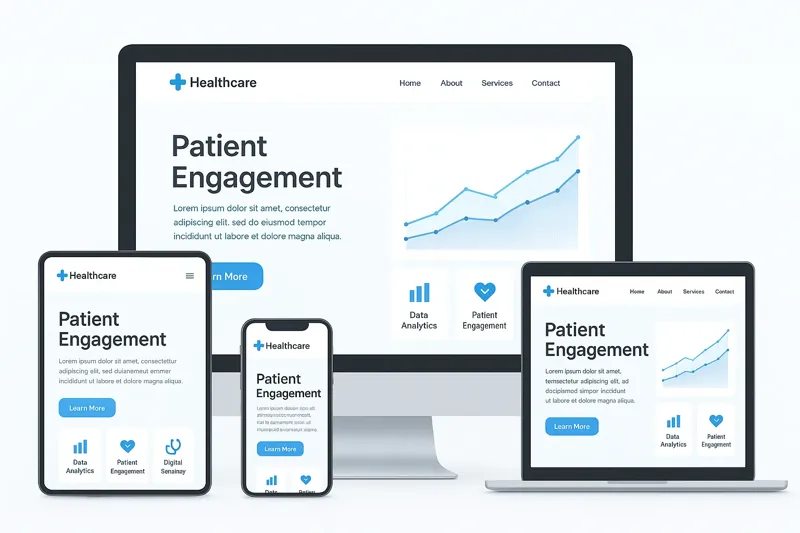
Given that over 50% of healthcare-related searches occur on mobile devices, responsive and mobile-first design ensures optimal user experience across all screen sizes. Mobile-friendly sites not only improve accessibility but also positively impact search engine rankings, as Google prioritizes mobile usability and mobile-first design in healthcare websites.
Color Coordination and Clear Calls to Action (CTAs)
Strategic color use guides patients through their journey on the website, drawing attention to key CTAs like appointment scheduling, patient portals, and contact forms. Clear, prominent CTAs foster engagement and conversion by simplifying the next steps for visitors, aligned with best practices in healthcare website design.
Visual Storytelling with Credentials, Awards, and Positive Reviews
Showcasing healthcare providers’ credentials, organizational awards, and patient testimonials builds credibility and trust. Visual storytelling elements in healthcare websites humanize the healthcare experience, reassure patients about quality of care, and encourage confidence in choosing services.
Technical SEO and Performance Enhancements to Boost Visibility
Optimizing Site Speed with Techniques Like Image Compression and Browser Caching
Site speed is a critical factor that influences both user experience and search engine rankings. Healthcare websites can dramatically improve load times by employing image compression (such as converting images to WebP format) and leveraging browser caching. These methods reduce bandwidth consumption and accelerate page rendering, significantly enhancing patient engagement and conversion rates.
Ensuring HTTPS Security and Crawler-Friendly Architecture
Secure data transmission via HTTPS using SSL certificates is essential to protect patient information and build trust. Moreover, a crawler-friendly website architecture—including clear URL structures and well-organized content—ensures search engines can efficiently index site pages. This optimizes discoverability and supports better rankings on search engine results pages.
Implementing Technical SEO Best Practices
Technical SEO enhances the website’s search visibility through several methods:
- Alt Tags: Providing descriptive alt text for images improves accessibility and allows search engines to understand visual content.
- Header Tags (H1, H2, etc.): Using properly structured headers organizes content, making it easier for users and search engines to scan and comprehend.
- XML Sitemaps: Sitemaps facilitate effective crawling by search engines, ensuring all important pages are indexed.
- Rich Snippets and Schema Markup: Implementing structured data specifically for medical services helps search engines display enhanced listings, improving click-through rates.
Mobile Optimization and Accessibility Compliance
With over half of healthcare searches occurring on mobile devices, responsive design and mobile-first development are indispensable. Additionally, adherence to accessibility standards such as WCAG and ADA guidelines ensures inclusivity for users with disabilities. These practices not only comply with legal requirements but also positively impact SEO rankings by enhancing usability and user satisfaction on all devices.
Local SEO and Reputation Management for Healthcare Providers
Claiming and Optimizing Google Business Profile and Other Local Listings
Healthcare providers should claim and meticulously optimize their Google Business Profile (GBP) alongside other key local listings such as Bing Places and Yelp. Complete and accurate profile information—including up-to-date contact details, service descriptions, high-quality photos, and business hours—significantly enhances local search visibility. Regularly updating these profiles helps healthcare practices stand out in map packs and local search results, which is critical considering most patients start their search online.
Managing Consistent NAP Citations Across Directories
Maintaining consistent Name, Address, and Phone number (NAP) citations across all healthcare directories such as Healthgrades, Yelp, and industry-specific platforms ensures credibility and trustworthiness for search engines and patients alike. Inconsistencies can confuse both users and search algorithms, negatively impacting local SEO rankings. A unified approach to managing NAP data across multiple channels supports higher local search placements and improves patient acquisition.
Encouraging and Responding to Patient Reviews Ethically and HIPAA-Compliantly
Patient reviews directly influence reputation and search rankings. Healthcare providers should actively encourage patients to leave reviews through follow-up communications and website prompts while ensuring compliance with HIPAA regulations by safeguarding protected health information (PHI). Responding to reviews thoughtfully and professionally, without disclosing any PHI, not only fosters trust but also signals to search engines the practice’s engagement with its community.
Using Location-Based Keywords and Creating Individual Location Pages for Multi-Location Practices
Incorporating location-specific keywords into website content, metadata, and headers optimizes for local intent searches (e.g., "family practice in Dallas"). Multi-location healthcare organizations benefit from creating dedicated pages for each office, featuring unique content tailored to that location’s services, staff, and patient testimonials. This targeted approach bolsters local search relevance and helps attract patients searching for healthcare services near them. Learn more about Local SEO for Healthcare.
By diligently managing local SEO factors and reputation, healthcare providers enhance online visibility, patient trust, and ultimately drive measurable patient growth in their communities.
Leveraging Analytics and Continuous Improvement Post-Launch
Setting measurable goals and tracking organic traffic, engagement, and conversion
Post-launch of a healthcare website redesign, defining clear, measurable goals is essential to gauge success and guide improvements. Tracking organic traffic helps assess Healthcare SEO effectiveness, while user engagement metrics such as time on site and bounce rates reveal content relevance and usability. Conversion tracking—such as appointment requests, contact form completions, or portal logins—directly measures how the website supports patient acquisition and retention as discussed in Healthcare Website Redesign Best Practices.
Using tools like Google Analytics, SEMrush, and Google Search Console for ongoing evaluation
Utilizing robust analytics platforms is critical for continuous website assessment. Google Analytics offers detailed insights into visitor behavior, traffic sources, and conversion funnels. Google Search Console provides data on search performance, indexing status, and technical issues affecting SEO. SEMrush enhances competitive benchmarking by tracking keyword rankings, backlink profiles, and on-site SEO health. Together, these tools enable healthcare organizations to monitor performance and identify optimization opportunities as highlighted in Healthcare SEO Strategies.
Implementing routine content audits, technical updates, and SEO refinements to maintain relevance
Regular content audits ensure information remains accurate, engaging, and aligned with evolving patient needs and search trends as illustrated in Content Audits for Healthcare Sites. Technical updates—such as improving page load times, updating CMS components, and verifying HIPAA Compliance in Healthcare Websites—are essential to maintain security and performance. SEO refinements like updating keywords, expanding Schema Markup in Healthcare Websites, and optimizing for voice search support sustained discoverability and higher search rankings, consistent with Technical SEO for Healthcare Websites.
Integrating website data with broader digital marketing and patient acquisition strategies
Analytics insights should inform broader digital marketing efforts, including PPC campaigns, social media outreach, and reputation management discussed at Digital marketing for doctors. Integrating website data with patient acquisition metrics allows healthcare marketers to optimize resource allocation and enhance ROI. Coordinated strategies leveraging SEO, content marketing, and patient engagement features—such as Online Scheduling Systems and secure messaging—drive measurable growth and improved patient experiences per Healthcare Digital Marketing.
Ensuring Compliance and Security Throughout the Redesign Lifecycle
Implementing encrypted data transmission (TLS/SSL) and access controls
A critical step in healthcare website redesign is securing the transmission of protected health information (PHI). Employing Encrypted Data Transmission TLS SSL encryption ensures that all data exchanged between users and the website remains confidential and tamper-proof. Additionally, robust Access Controls and Audit Logs restrict PHI to authorized personnel only, preventing unauthorized access and safeguarding patient privacy.
Auditing third-party integrations such as telehealth and CRMs for HIPAA compliance
Third-party tools integrated into healthcare websites must be rigorously assessed for HIPAA compliance. This includes Telehealth Platforms HIPAA Compliance, and CRM HIPAA Compliance systems that handle PHI. Ensuring Encrypted Data Passing and Secure Monitoring and logging is essential to avoid vulnerabilities and maintain compliance with healthcare regulations.
Maintaining secure hosting environments with audit trails and vulnerability monitoring
Choosing a HIPAA-Compliant Hosting Solutions is vital for the secure storage and management of sensitive data. Providers like AWS HIPAA-Eligible Services offer encrypted data storage, secure access mechanisms, and comprehensive audit trails. Continuous vulnerability monitoring and timely patching help defend against emerging security threats throughout the website’s lifecycle.
Planning for regular security updates and compliance reviews
To sustain HIPAA compliance and protect patient information over time, healthcare organizations should plan for routine security updates and audits. This includes applying software patches, updating encryption protocols, revisiting access permissions, and conducting thorough compliance reviews. Continuous monitoring and proactive updates reduce risks and ensure the website remains a trusted platform for patient engagement as recommended in Healthcare Website Redesign Best Practices.
Collaborating with Experts to Achieve a High-Performance Healthcare Website
The benefits of multidisciplinary teams combining in-house and external specialists
Redesigning a healthcare website demands expertise across multiple domains—UI/UX design, compliance, content strategy, and technical SEO. Combining the knowledge of in-house staff with external specialists creates a powerful multidisciplinary team that ensures all angles are covered. While in-house teams understand institutional goals and patient demographics intimately, external experts bring specialized skills and fresh perspectives on cutting-edge technologies, HIPAA compliance in healthcare websites, and healthcare digital marketing strategies. This collaboration fosters innovation while maintaining strict regulatory adherence.
Selecting vendors with experience in healthcare and compliance requirements
Choosing the right vendor is critical. Healthcare requires vendors familiar with HIPAA Compliance in Healthcare Websites and healthcare-specific digital challenges. Providers with a track record of deploying HIPAA-Compliant Hosting Solutions, integrating Telehealth Integration securely, and implementing Healthcare website accessibility guidelines bring confidence and reliability. Evaluating vendors based on prior healthcare projects, their understanding of compliance protocols, and their capacity to operate seamlessly with internal teams is essential for success.
Incorporating expert input in strategy, design, content, and SEO for measurable results
Experts contribute early in the redesign process in key areas:
- Strategy: Defining measurable goals, patient personas, and content priorities (Understanding Your Audience, Creating User Personas for Redesign)
- Design: Creating responsive, accessible interfaces aligned with patient needs and branding (Responsive healthcare website design, Healthcare website accessibility guidelines)
- Content: Producing authoritative, Healthcare SEO Strategies compliant materials that build trust
- SEO: Implementing on-site and technical optimizations to boost organic search and local rankings (Healthcare SEO strategies, Local SEO for healthcare)
This integrated expert input results in websites that improve patient engagement, reduce bounce rates, and increase high-intent appointment requests (Improving healthcare website user experience, Boost Healthcare SEO).
Case examples illustrating improved patient acquisition and trust through professional partnerships
Leading institutions such as Boston Children’s Hospital and the Mayo Clinic illustrate how expert collaborations enhance site performance and patient trust (Boston Children’s Hospital website design, Mayo Clinic website design. By engaging specialists for redesign and SEO, they witnessed increased appointment bookings and higher online engagement metrics. Similarly, agencies like Kanopi and Aha Media Group have enabled healthcare clients to realize measurable growth in patient acquisition through continuous optimization reflecting expert recommendations.
This strategic collaboration model elevates healthcare websites from informational portals to powerful patient acquisition engines, compliant with regulatory standards and optimized for measurable outcomes.
Future-Proofing Your Healthcare Website for Sustainable Growth
Emphasizing Ongoing Maintenance, Content Updates, and SEO Monitoring
Maintaining a healthcare website is an ongoing commitment critical for sustainable growth. Regular updates ensure compliance with regulations like HIPAA and maintain security protocols such as encrypted data transmission and audit trails. Content audits and refreshment keep information accurate, authoritative, and aligned with evolving patient needs.
Continuous SEO monitoring using tools like Google Analytics and SEMrush enables real-time tracking of search rankings, organic traffic, and patient engagement metrics. This allows healthcare organizations to refine keyword strategies, enhance local SEO efforts, and optimize site performance, securing long-term visibility and patient acquisition.
Adapting to Emerging Technologies
Innovative digital solutions are transforming patient interactions and care delivery. Integration of AI chatbots on healthcare websites improves user experience by providing instant responses to common queries and directing patients to relevant resources. Telehealth services, seamlessly embedded within the site, offer convenient virtual consultations, enhancing accessibility and patient satisfaction.
Embracing headless CMS architectures supports scalable content management, allowing healthcare teams to rapidly update service lines, provider bios, or educational content without technical delays. Similarly, HIPAA-compliant hosting solutions with CDN and automatic scaling keep the site fast and reliable, meeting patient expectations.
Building a Trusted Digital Presence
A trustworthy healthcare website serves as both a digital front door and a patient engagement hub. Incorporating trust signals such as provider credentials, patient testimonials, and security badges reassures visitors about the quality and safety of care.
Clear calls-to-action combined with user-friendly navigation streamline appointment scheduling and access to patient portals or billing systems. Aligning the website's strategy with organizational goals ensures it not only attracts visitors but also converts them into loyal patients, supporting long-term growth and competitive advantage.
The Importance of Healthcare Website Redesign for Future Readiness
Why healthcare website redesign is critical today
Healthcare website redesign is essential in the evolving digital landscape to enhance patient engagement, trust, and accessibility. Given that over 1 billion health-related searches occur daily, patients demand websites that provide clear, credible information, streamlined navigation, and integrated services like telehealth and patient portals. A redesign also ensures compliance with regulations such as HIPAA by incorporating protocols like encrypted data transmission and secure hosting.
The connection between website performance and patient acquisition
Website performance directly impacts patient acquisition and retention. Fast load times, mobile responsiveness, intuitive navigation, and secure platforms foster confidence and convenience for users. Studies show that slow or non-mobile-friendly sites increase bounce rates and reduce conversion, while optimized websites improve appointment bookings, online interactions, and overall satisfaction. Integrating SEO best practices further increases visibility, drawing targeted, high-value patients actively searching online.
Overview of key factors influencing healthcare website success
Successful healthcare websites focus on:
- Accessibility compliance (ADA, WCAG) for inclusive user experience.
- Content flexibility using headless CMS to keep information current and scalable.
- Robust SEO strategies including local SEO, keyword targeting, and schema markup.
- Technical excellence with encrypted data storage, CDN usage, and uptime guarantees.
- Patient-centered design highlighting provider bios, testimonials, and clear CTAs.
These elements together ensure long-term growth by aligning digital presence with patient expectations and regulatory standards.
Building a Patient-Centered Strategy: Understanding Your Audience and Goals
Developing user personas based on patient demographics and needs
Creating detailed user personas is fundamental in healthcare website redesign best practices. This involves analyzing patient demographics, including age, tech literacy, language skills, and health concerns. Personas should also represent referring physicians and caregivers, identifying their unique information needs and navigation preferences. Understanding patient behavior and expectations helps tailor content and site features to improve accessibility and engagement. For more on understanding target audience in healthcare and creating healthcare audience personas.
Aligning redesign goals with business objectives such as increasing appointments or patient trust
A successful redesign aligns user needs with organizational goals. Common objectives include increasing appointment bookings, enhancing patient trust, and boosting service awareness. These goals are measurable through baseline analytics such as current appointment rates and site engagement metrics. Clearly defining objectives guides content strategy, website architecture, and functionality priorities like integrating online scheduling systems and patient portals integration. Explore insights on setting healthcare website goals and aligning healthcare site with marketing.
Incorporating emotional and practical patient concerns into site planning
Healthcare websites must address both emotional and practical aspects of patient journeys. Empathy in site design involves clear, reassuring messaging around patient care and support. Practical concerns like easy navigation, rapid access to provider profiles management, insurance information, and telehealth integration reduce friction. Anticipating common anxieties supports trust building and encourages patients to engage more confidently with services. Refer to best practices for patient-centric hospital sites and healthcare website trust and credibility.
By integrating nuanced audience insights with strategic business aims and empathetic content design, healthcare websites become powerful tools for patient engagement, trust-building, and long-term growth in patient volume. For comprehensive strategies on healthcare website redesign, healthcare SEO strategies, and patient-centered healthcare website strategies.
Comprehensive Site Audits: The Foundation of an Effective Redesign
Evaluating Current Website Strengths and Weaknesses Including UI/UX and Technical SEO
A thorough site audit begins with an in-depth evaluation of the existing website’s user interface (UI) and user experience (UX). This includes examining navigation clarity, visual design consistency, branding, and the presence of trust-building elements like provider bios and patient testimonials. Technical SEO factors, such as crawlability, structured site architecture, and keyword optimization, must also be assessed to determine how well the site currently performs in search rankings. Identifying broken links, duplicate content, and sitemap accuracy helps pinpoint issues that could hinder discoverability and user engagement. For detailed guidance, see Healthcare Website Redesign Best Practices and Healthcare website design secrets.
Assessing Compliance with HIPAA, Accessibility (WCAG, ADA), and Mobile Responsiveness
Compliance assessment is critical during the audit phase. The website must adhere to HIPAA requirements by ensuring Encrypted Data Transmission TLS SSL, HIPAA-Compliant Hosting Solutions, and proper Access Controls and Audit Logs to protect patient information. Accessibility evaluation according to WCAG and ADA guidelines ensures the site is usable by individuals with disabilities, enhancing both compliance and user inclusivity. Mobile responsiveness is also essential, given that over half of healthcare-related searches occur on mobile devices—responsive design improves usability and SEO rankings. Useful resources include Healthcare website security best practices and ADA and WCAG Compliance for Healthcare, as well as insights on Mobile-first design in healthcare websites.
Analyzing Site Performance Metrics Like Load Speed, Bounce Rate, and User Engagement
Performance metrics provide quantitative insight into website effectiveness. Load speed impacts patient satisfaction and SEO, with optimal times around 1.5 seconds significantly reducing bounce rates. Bounce rate analysis reveals if users find the site engaging and intuitive, while user engagement metrics such as time-on-site and conversion rates help identify content strengths and weaknesses. Leveraging tools like Google PageSpeed Insights and Analytics enables data-driven decisions that inform redesign priorities for patient acquisition and retention. For more on performance optimization, review Optimizing Healthcare Website Performance and Enhancing Website Loading Speed.
Regular comprehensive audits set a solid foundation for healthcare website redesigns by uncovering actionable insights across usability, compliance, and performance domains. This systematic approach ensures subsequent redesign efforts enhance patient trust, accessibility, and online visibility, ultimately driving measurable growth. For overarching best practices, see Healthcare Website Redesign Guide and Healthcare website redesign best practices.
Content Strategy and SEO Optimization for Healthcare Websites
Conducting Content Audits to Remove Outdated or Duplicate Content
A foundational step in healthcare website optimization is performing thorough content audits. This process identifies outdated, irrelevant, or duplicate information that can confuse users and dilute SEO effectiveness. Streamlining content ensures the website delivers accurate, up-to-date information reflecting current services and medical practices.
Building Content Aligned with E-E-A-T Principles for YMYL Healthcare Topics
Healthcare websites must establish Expertise, Experience, Authority, and Trustworthiness (E-E-A-T), especially for Your Money or Your Life (YMYL) content where patient well-being is concerned. This involves clinicians reviewing content, showcasing provider credentials, citing reputable sources, and maintaining transparency. High-quality, authoritative content not only builds patient trust but also enhances search engine credibility. For deeper insights on this, see Healthcare SEO strategies.
Targeting Long-Tail, Intent-Driven, and Local Keywords to Attract Relevant Patient Traffic
Integrating long-tail keywords that combine service intent with geographic modifiers (e.g., "pediatric dermatologist in Boston") helps attract highly qualified visitors. Local SEO tactics, such as optimizing Google Business Profiles and ensuring consistent Name, Address, Phone number (NAP) listings, reinforce the website’s local search dominance, resulting in better patient acquisition and community reach.
Using Schema Markup and Structured Sitemaps to Improve Search Engine Crawlability
Implementing schema markup specifically tailored for healthcare services assists search engines in accurately interpreting and displaying website content, often leading to enhanced listings like rich snippets. Additionally, a well-organized, SEO-friendly sitemap guides search engines through the site’s hierarchy efficiently, improving indexation and boosting organic rankings.
By combining disciplined content governance with strategic SEO targeting and technical enhancements, healthcare organizations can significantly elevate their online presence, driving patient engagement and trust while ensuring regulatory compliance. For more on comprehensive Healthcare Website Redesign Best Practices, visit the linked resources.
Choosing the Right CMS and Hosting for Compliance and Scalability
Advantages of Headless CMS Platforms for Healthcare
In healthcare website redesigns, choosing a headless CMS such as Contentful and Sanity for healthcare websites offers significant benefits. These platforms provide healthcare teams with flexible, scalable content management, allowing easy updates to provider profiles management, service line updates, and healthcare blog post updates without technical overhead. Additionally, content flexibility with headless CMS solutions facilitate API-driven content delivery, supporting seamless integration with patient portals integration and telehealth integration services while maintaining access controls and audit logs.
Ensuring HIPAA-Compliant Hosting
HIPAA compliance is non-negotiable for handling protected health information (PHI). Hosting providers must offer HIPAA-compliant hosting solutions, including encrypted data transmission TLS SSL, access controls and audit logs, and comprehensive audit trails to meet regulatory requirements. Providers like AWS HIPAA-eligible services and TrueVault hosting for healthcare specialize in compliant hosting environments, ensuring data encryption both at rest and in transit using encrypted data passing and secure monitoring. This secure healthcare hosting infrastructure safeguards patient data against unauthorized access and supports compliance audits.
Importance of CDN, Automatic Scaling, and Uptime Guarantees
Reliable website performance directly impacts patient engagement and SEO. Implementing content delivery networks in healthcare distributes content globally to reduce latency and load times. Automatic scaling for healthcare websites features adjust server resources during traffic surges, maintaining consistent responsiveness. Performance and uptime in healthcare SEO guarantees from hosting providers ensure continuous availability, critical for 24/7 patient access to scheduling, telehealth, and portals. Frameworks such as Next.js combined with platforms like Vercel or Netlify can enhance speed and uptime reliability in healthcare websites.
Integrating Essential Patient-Centric Features for Engagement and Convenience
Embedding Patient Portals, Telehealth Services, and Online Scheduling Within the Site
Seamless integration of patient portals, telehealth platforms, and online scheduling directly into healthcare websites dramatically improves patient experience. Such integrations allow patients to access medical records, communicate with providers, and book appointments without disruption. This consolidated approach reduces administrative burdens and fosters continuous engagement, supporting long-term growth for healthcare organizations.
Implementing HIPAA-Compliant Communication Tools
Incorporating secure messaging systems and HIPAA-compliant two-way texting functionalities ensures protected health information (PHI) remains confidential during digital communications. Employing encrypted data transmission TLS SSL, access controls and audit logs, and audit trails within these tools is critical for compliance. Practices adopting these technologies benefit from increased patient convenience while maintaining regulatory adherence and trust.
Highlighting Provider Bios, FAQs, Patient Testimonials, and Trust Signals
Prominently featuring detailed provider biographies improves transparency and enables patients to make informed healthcare decisions. Comprehensive FAQs help address common concerns, enhancing convenience and reducing inquiry response times. Displaying patient testimonials on healthcare websites and trust indicators such as accreditations or awards further solidifies credibility, building confidence among prospective and existing patients.
Collectively, these patient-centric features enhance usability, foster trust, and streamline interactions — all fundamental components of an effective healthcare website optimized for patient acquisition and retention.
Design Principles that Enhance Usability and Trust
Simplicity in Layout with Ample White Space and Intuitive Navigation
A clean, simple layout with plenty of white space is fundamental to healthcare website usability and healthcare website design best practices. It prevents overwhelming users and helps them focus on essential information such as location, physician details, and insurance acceptance. Intuitive navigation structures reduce patient frustration and bounce rates by making it easy to find services and contact options quickly.
Responsive and Mobile-First Design
Given that over 50% of healthcare-related searches occur on mobile devices, responsive and mobile-first design ensures optimal user experience across all screen sizes. Mobile-friendly sites not only improve accessibility but also positively impact search engine rankings, as Google prioritizes mobile usability and mobile-first design in healthcare websites.
Color Coordination and Clear Calls to Action (CTAs)
Strategic color use guides patients through their journey on the website, drawing attention to key CTAs like appointment scheduling, patient portals, and contact forms. Clear, prominent CTAs foster engagement and conversion by simplifying the next steps for visitors, aligned with best practices in healthcare website design.
Visual Storytelling with Credentials, Awards, and Positive Reviews
Showcasing healthcare providers’ credentials, organizational awards, and patient testimonials builds credibility and trust. Visual storytelling elements in healthcare websites humanize the healthcare experience, reassure patients about quality of care, and encourage confidence in choosing services.
Technical SEO and Performance Enhancements to Boost Visibility
Optimizing Site Speed with Techniques Like Image Compression and Browser Caching
Site speed is a critical factor that influences both user experience and search engine rankings. Healthcare websites can dramatically improve load times by employing image compression (such as converting images to WebP format) and leveraging browser caching. These methods reduce bandwidth consumption and accelerate page rendering, significantly enhancing patient engagement and conversion rates.
Ensuring HTTPS Security and Crawler-Friendly Architecture
Secure data transmission via HTTPS using SSL certificates is essential to protect patient information and build trust. Moreover, a crawler-friendly website architecture—including clear URL structures and well-organized content—ensures search engines can efficiently index site pages. This optimizes discoverability and supports better rankings on search engine results pages.
Implementing Technical SEO Best Practices
Technical SEO enhances the website’s search visibility through several methods:
- Alt Tags: Providing descriptive alt text for images improves accessibility and allows search engines to understand visual content.
- Header Tags (H1, H2, etc.): Using properly structured headers organizes content, making it easier for users and search engines to scan and comprehend.
- XML Sitemaps: Sitemaps facilitate effective crawling by search engines, ensuring all important pages are indexed.
- Rich Snippets and Schema Markup: Implementing structured data specifically for medical services helps search engines display enhanced listings, improving click-through rates.
Mobile Optimization and Accessibility Compliance
With over half of healthcare searches occurring on mobile devices, responsive design and mobile-first development are indispensable. Additionally, adherence to accessibility standards such as WCAG and ADA guidelines ensures inclusivity for users with disabilities. These practices not only comply with legal requirements but also positively impact SEO rankings by enhancing usability and user satisfaction on all devices.
Local SEO and Reputation Management for Healthcare Providers
Claiming and Optimizing Google Business Profile and Other Local Listings
Healthcare providers should claim and meticulously optimize their Google Business Profile (GBP) alongside other key local listings such as Bing Places and Yelp. Complete and accurate profile information—including up-to-date contact details, service descriptions, high-quality photos, and business hours—significantly enhances local search visibility. Regularly updating these profiles helps healthcare practices stand out in map packs and local search results, which is critical considering most patients start their search online.
Managing Consistent NAP Citations Across Directories
Maintaining consistent Name, Address, and Phone number (NAP) citations across all healthcare directories such as Healthgrades, Yelp, and industry-specific platforms ensures credibility and trustworthiness for search engines and patients alike. Inconsistencies can confuse both users and search algorithms, negatively impacting local SEO rankings. A unified approach to managing NAP data across multiple channels supports higher local search placements and improves patient acquisition.
Encouraging and Responding to Patient Reviews Ethically and HIPAA-Compliantly
Patient reviews directly influence reputation and search rankings. Healthcare providers should actively encourage patients to leave reviews through follow-up communications and website prompts while ensuring compliance with HIPAA regulations by safeguarding protected health information (PHI). Responding to reviews thoughtfully and professionally, without disclosing any PHI, not only fosters trust but also signals to search engines the practice’s engagement with its community.
Using Location-Based Keywords and Creating Individual Location Pages for Multi-Location Practices
Incorporating location-specific keywords into website content, metadata, and headers optimizes for local intent searches (e.g., "family practice in Dallas"). Multi-location healthcare organizations benefit from creating dedicated pages for each office, featuring unique content tailored to that location’s services, staff, and patient testimonials. This targeted approach bolsters local search relevance and helps attract patients searching for healthcare services near them. Learn more about Local SEO for Healthcare.
By diligently managing local SEO factors and reputation, healthcare providers enhance online visibility, patient trust, and ultimately drive measurable patient growth in their communities.
Leveraging Analytics and Continuous Improvement Post-Launch
Setting measurable goals and tracking organic traffic, engagement, and conversion
Post-launch of a healthcare website redesign, defining clear, measurable goals is essential to gauge success and guide improvements. Tracking organic traffic helps assess Healthcare SEO effectiveness, while user engagement metrics such as time on site and bounce rates reveal content relevance and usability. Conversion tracking—such as appointment requests, contact form completions, or portal logins—directly measures how the website supports patient acquisition and retention as discussed in Healthcare Website Redesign Best Practices.
Using tools like Google Analytics, SEMrush, and Google Search Console for ongoing evaluation
Utilizing robust analytics platforms is critical for continuous website assessment. Google Analytics offers detailed insights into visitor behavior, traffic sources, and conversion funnels. Google Search Console provides data on search performance, indexing status, and technical issues affecting SEO. SEMrush enhances competitive benchmarking by tracking keyword rankings, backlink profiles, and on-site SEO health. Together, these tools enable healthcare organizations to monitor performance and identify optimization opportunities as highlighted in Healthcare SEO Strategies.
Implementing routine content audits, technical updates, and SEO refinements to maintain relevance
Regular content audits ensure information remains accurate, engaging, and aligned with evolving patient needs and search trends as illustrated in Content Audits for Healthcare Sites. Technical updates—such as improving page load times, updating CMS components, and verifying HIPAA Compliance in Healthcare Websites—are essential to maintain security and performance. SEO refinements like updating keywords, expanding Schema Markup in Healthcare Websites, and optimizing for voice search support sustained discoverability and higher search rankings, consistent with Technical SEO for Healthcare Websites.
Integrating website data with broader digital marketing and patient acquisition strategies
Analytics insights should inform broader digital marketing efforts, including PPC campaigns, social media outreach, and reputation management discussed at Digital marketing for doctors. Integrating website data with patient acquisition metrics allows healthcare marketers to optimize resource allocation and enhance ROI. Coordinated strategies leveraging SEO, content marketing, and patient engagement features—such as Online Scheduling Systems and secure messaging—drive measurable growth and improved patient experiences per Healthcare Digital Marketing.
Ensuring Compliance and Security Throughout the Redesign Lifecycle
Implementing encrypted data transmission (TLS/SSL) and access controls
A critical step in healthcare website redesign is securing the transmission of protected health information (PHI). Employing Encrypted Data Transmission TLS SSL encryption ensures that all data exchanged between users and the website remains confidential and tamper-proof. Additionally, robust Access Controls and Audit Logs restrict PHI to authorized personnel only, preventing unauthorized access and safeguarding patient privacy.
Auditing third-party integrations such as telehealth and CRMs for HIPAA compliance
Third-party tools integrated into healthcare websites must be rigorously assessed for HIPAA compliance. This includes Telehealth Platforms HIPAA Compliance, and CRM HIPAA Compliance systems that handle PHI. Ensuring Encrypted Data Passing and Secure Monitoring and logging is essential to avoid vulnerabilities and maintain compliance with healthcare regulations.
Maintaining secure hosting environments with audit trails and vulnerability monitoring
Choosing a HIPAA-Compliant Hosting Solutions is vital for the secure storage and management of sensitive data. Providers like AWS HIPAA-Eligible Services offer encrypted data storage, secure access mechanisms, and comprehensive audit trails. Continuous vulnerability monitoring and timely patching help defend against emerging security threats throughout the website’s lifecycle.
Planning for regular security updates and compliance reviews
To sustain HIPAA compliance and protect patient information over time, healthcare organizations should plan for routine security updates and audits. This includes applying software patches, updating encryption protocols, revisiting access permissions, and conducting thorough compliance reviews. Continuous monitoring and proactive updates reduce risks and ensure the website remains a trusted platform for patient engagement as recommended in Healthcare Website Redesign Best Practices.
Collaborating with Experts to Achieve a High-Performance Healthcare Website
The benefits of multidisciplinary teams combining in-house and external specialists
Redesigning a healthcare website demands expertise across multiple domains—UI/UX design, compliance, content strategy, and technical SEO. Combining the knowledge of in-house staff with external specialists creates a powerful multidisciplinary team that ensures all angles are covered. While in-house teams understand institutional goals and patient demographics intimately, external experts bring specialized skills and fresh perspectives on cutting-edge technologies, HIPAA compliance in healthcare websites, and healthcare digital marketing strategies. This collaboration fosters innovation while maintaining strict regulatory adherence.
Selecting vendors with experience in healthcare and compliance requirements
Choosing the right vendor is critical. Healthcare requires vendors familiar with HIPAA Compliance in Healthcare Websites and healthcare-specific digital challenges. Providers with a track record of deploying HIPAA-Compliant Hosting Solutions, integrating Telehealth Integration securely, and implementing Healthcare website accessibility guidelines bring confidence and reliability. Evaluating vendors based on prior healthcare projects, their understanding of compliance protocols, and their capacity to operate seamlessly with internal teams is essential for success.
Incorporating expert input in strategy, design, content, and SEO for measurable results
Experts contribute early in the redesign process in key areas:
- Strategy: Defining measurable goals, patient personas, and content priorities (Understanding Your Audience, Creating User Personas for Redesign)
- Design: Creating responsive, accessible interfaces aligned with patient needs and branding (Responsive healthcare website design, Healthcare website accessibility guidelines)
- Content: Producing authoritative, Healthcare SEO Strategies compliant materials that build trust
- SEO: Implementing on-site and technical optimizations to boost organic search and local rankings (Healthcare SEO strategies, Local SEO for healthcare)
This integrated expert input results in websites that improve patient engagement, reduce bounce rates, and increase high-intent appointment requests (Improving healthcare website user experience, Boost Healthcare SEO).
Case examples illustrating improved patient acquisition and trust through professional partnerships
Leading institutions such as Boston Children’s Hospital and the Mayo Clinic illustrate how expert collaborations enhance site performance and patient trust (Boston Children’s Hospital website design, Mayo Clinic website design. By engaging specialists for redesign and SEO, they witnessed increased appointment bookings and higher online engagement metrics. Similarly, agencies like Kanopi and Aha Media Group have enabled healthcare clients to realize measurable growth in patient acquisition through continuous optimization reflecting expert recommendations.
This strategic collaboration model elevates healthcare websites from informational portals to powerful patient acquisition engines, compliant with regulatory standards and optimized for measurable outcomes.
Future-Proofing Your Healthcare Website for Sustainable Growth
Emphasizing Ongoing Maintenance, Content Updates, and SEO Monitoring
Maintaining a healthcare website is an ongoing commitment critical for sustainable growth. Regular updates ensure compliance with regulations like HIPAA and maintain security protocols such as encrypted data transmission and audit trails. Content audits and refreshment keep information accurate, authoritative, and aligned with evolving patient needs.
Continuous SEO monitoring using tools like Google Analytics and SEMrush enables real-time tracking of search rankings, organic traffic, and patient engagement metrics. This allows healthcare organizations to refine keyword strategies, enhance local SEO efforts, and optimize site performance, securing long-term visibility and patient acquisition.
Adapting to Emerging Technologies
Innovative digital solutions are transforming patient interactions and care delivery. Integration of AI chatbots on healthcare websites improves user experience by providing instant responses to common queries and directing patients to relevant resources. Telehealth services, seamlessly embedded within the site, offer convenient virtual consultations, enhancing accessibility and patient satisfaction.
Embracing headless CMS architectures supports scalable content management, allowing healthcare teams to rapidly update service lines, provider bios, or educational content without technical delays. Similarly, HIPAA-compliant hosting solutions with CDN and automatic scaling keep the site fast and reliable, meeting patient expectations.
Building a Trusted Digital Presence
A trustworthy healthcare website serves as both a digital front door and a patient engagement hub. Incorporating trust signals such as provider credentials, patient testimonials, and security badges reassures visitors about the quality and safety of care.
Clear calls-to-action combined with user-friendly navigation streamline appointment scheduling and access to patient portals or billing systems. Aligning the website's strategy with organizational goals ensures it not only attracts visitors but also converts them into loyal patients, supporting long-term growth and competitive advantage.