


Introduction: The Critical Role of SEO in Modern Healthcare Marketing
Importance of SEO in the healthcare sector
Search engine optimization (SEO) has become indispensable for healthcare providers seeking to elevate their online presence. With over 46% of Google searches reflecting local intent, optimizing for search engines — particularly local SEO strategies — is essential in attracting nearby patients and improving visibility amid strong competition within the $4.5 trillion healthcare industry.
Growing digital patient engagement
Patients increasingly initiate their healthcare journeys online, researching symptoms, conditions, and specialized providers. Most health-related inquiries are conducted via mobile devices, making mobile responsiveness and fast-loading websites necessary to meet patient expectations. Engaging, authentic, and patient-focused content enhances user experience and drives organic traffic.
Impact of SEO on patient acquisition and trust
Effective SEO improves not only search rankings but also patient trust. By showcasing provider expertise, maintaining accurate practice information, and encouraging positive patient reviews, healthcare organizations build authority and credibility. This strategic approach to SEO aligns with Google’s E-A-T (Expertise, Authoritativeness, Trustworthiness) guidelines, thereby fostering trustworthiness and aiding patient acquisition.
Understanding the Healthcare SEO Landscape in 2024

Dominance of Google in Healthcare Searches
Google remains the preeminent search engine in the healthcare sector, commanding over 90% of the digital marketing focus by healthcare providers in the U.S. Its extensive reach and sophisticated algorithms make it the pivotal platform where most patient searches begin, influencing visibility and patient acquisition. For more on Google's role in healthcare SEO and Google's dominance in healthcare SEO.
Statistics on Local Search Intent
Local search intent dominates nearly half (46%) of health-related Google queries, underscoring the importance of local SEO for healthcare strategies for healthcare providers. Most patients seek care near their location using specific keywords that include conditions, specialties, and geographic indicators. Maintaining accurate and consistent information across directories, like Google Business Profile optimization, is essential to capitalize on this trend. See also NAP Consistency in Healthcare SEO and Optimizing Google Business Profile for Clinics.
Current Digital Marketing Trends in Healthcare
Healthcare digital marketing in 2024 integrates comprehensive SEO strategies for hospitals and clinics tactics, mobile optimization, and active social media in healthcare marketing engagement to build trust and enhance patient outreach. The industry emphasizes patient-first content strategies and authentic content aligned with Google E-A-T Guidelines for Healthcare and YMYL Compliance in Healthcare SEO standards. Additionally, the use of AI-powered healthcare marketing technologies and HIPAA-compliant analytics for healthcare tools is increasing to improve personalization, compliance, and ROI measurement. Integrating local SEO for healthcare providers with multi-channel campaigns, including video content for healthcare marketing and digital advertising, helps providers stay competitive and drives measurable patient growth.
Local SEO: Foundation for Patient Acquisition

Why is Local SEO Essential for Healthcare Providers?
Local SEO has become a cornerstone for healthcare providers aiming to acquire new patients, particularly because over 46% of healthcare-related Google searches carry local intent. This means patients frequently seek medical services near their location or with a specific specialty relevant to their symptoms. Prioritizing Local SEO for Healthcare helps practices increase visibility in local search results, driving relevant, location-based patient traffic that is crucial in a competitive healthcare market.
How Can Healthcare Providers Optimize Their Google Business Profile and Other Directories?
Optimizing the Google Business Profile for Clinics (GBP) is a pivotal tactic within local SEO strategies. An accurate and fully completed GBP not only improves a healthcare provider's visibility but also significantly boosts credibility. Healthcare organizations that manage their profiles diligently tend to rank higher in Google's Local 3-Pack, increasing chances that potential patients will engage. Besides GBP, maintaining active presence on platforms such as Apple Maps, Bing, Healthgrades, and specialized healthcare directories is vital to extending reach.
Why Is Consistency in NAP (Name, Address, Phone Number) Across Platforms Important?
Maintaining consistent NAP Consistency in Healthcare SEO information across directories, websites, and social media is fundamental for strong local SEO. Consistency enhances patient trust and improves search engine rankings by signaling reliability and authenticity to algorithms. Inaccurate or conflicting contact information may not only confuse potential patients but also harm search rankings, making it imperative to regularly audit and update this data.
How Should Local and Symptom-Specific Keywords Be Utilized?
Integrating local keywords (e.g., city or neighborhood names) combined with condition or specialty terms (such as “diabetes treatment in Boston” or “pediatric cardiology near me”) into website content and metadata effectively targets patients searching with localized health concerns. Symptom-specific keywords align marketing content closely with patient inquiries, improving engagement and conversion. Strategic use of these phrases in blogs, FAQs, and on Google Business Profiles helps position healthcare practices as relevant and accessible to the local community through Local Keywords in Healthcare SEO.
Technical SEO Essentials for Healthcare Websites
How can site architecture and navigation improvements enhance healthcare SEO?
A clear, logical site architecture and intuitive navigation help search engines index healthcare content efficiently while providing patients easy access to information. Structured menus, breadcrumb trails, and a well-organized hierarchy improve user experience, reduce bounce rates, and enhance crawlability, all vital for SEO strategies for hospitals and clinics.
Why is loading speed important, and how can Core Web Vitals be optimized?
Loading speed, particularly Largest Contentful Paint (LCP) under 2.5 seconds, is critical for patient satisfaction and search rankings. Optimizing images, leveraging content delivery networks (CDNs), and minimizing JavaScript improve site speed. Fast-loading pages reduce patient frustration and increase engagement, directly correlating with better SEO outcomes as discussed in Healthcare SEO Insights 2024.
How does mobile responsiveness impact healthcare SEO?
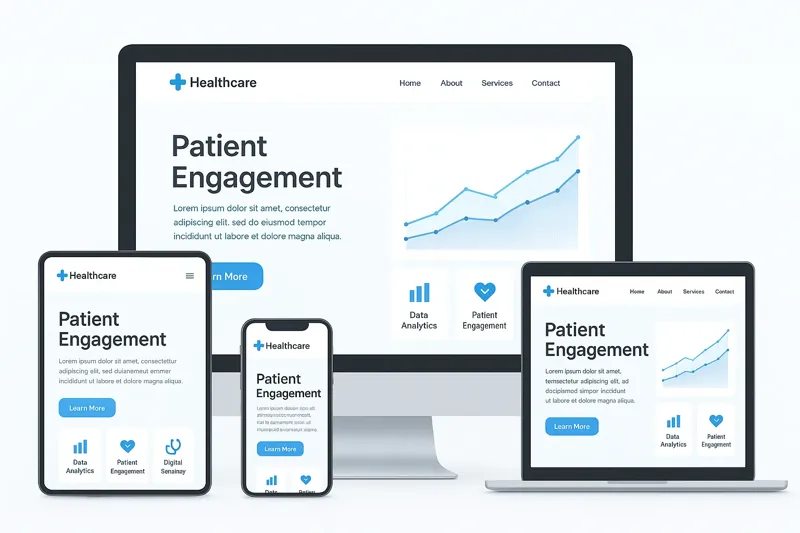
With most healthcare searches occurring on mobile devices, mobile-first indexing by Google makes fully responsive design essential. Mobile-friendly pages ensure content is accessible and usable on smartphones and tablets, improving both user experience and search engine rankings; this is part of best practices outlined in Healthcare SEO 2024.
What is the role of schema markup in healthcare websites?
Schema markup adds structured data that helps search engines understand content context. Healthcare-specific schemas, such as MedicalOrganization, Physician, MedicalCondition, and FrequentlyAskedQuestion, enable rich snippets in search results, increasing visibility and click-through rates according to Healthcare SEO Guide.
How do website security and HIPAA compliance affect SEO?
Secure sites using SSL certificates are favored by Google rankings and protect patient data during online interactions. Compliance with HIPAA privacy rules ensures lawful handling of sensitive health information, building patient trust and reducing legal risks. Implementing both bolsters site credibility and sustained SEO success as highlighted in Impact of Digital Marketing on Healthcare.
| Factor | Importance | Action Items |
|---|---|---|
| Site Architecture | Enhances crawlability and UX | Organize menus, use breadcrumbs (Best SEO Practices for Hospitals) |
| Loading Speed (LCP < 2.5s) | Improves engagement and SEO rankings | Optimize images, minify code, use CDNs (Improving Core Web Vitals) |
| Mobile Responsiveness | Vital for mobile-first indexing | Responsive design, test on devices (Mobile Responsiveness in Healthcare SEO) |
| Schema Markup | Enables rich snippets and better indexing | Add MedicalOrganization, Physician schemas (Schema markup for medical sites) |
| Security & HIPAA Compliance | Boosts trust and protects data | SSL certificates, audit for HIPAA (HIPAA Compliance in Digital Marketing) |
Content Marketing that Builds Authority and Trust

Creating helpful, patient-first content
In 2024, healthcare content marketing must prioritize genuinely Patient-first content strategies material to rebuild trust and counter negative public sentiment. Content should address real patient concerns and questions clearly and compassionately. By focusing on patient needs, practices enhance engagement and relevancy while aligning with Google’s Helpful Content update.
Incorporating provider expertise, case studies, and research
Content that showcases the provider’s unique expertise, supported by case studies and clinical research, significantly improves credibility. Sharing authentic clinical experiences and outcomes builds authority and positions the practice as a trusted source. This approach aligns with Google’s E-E-A-T Guidelines for Healthcare by highlighting Expertise, Experience, Authoritativeness, and Trustworthiness.
Using conversational, authentic language
Patient engagement increases when content uses conversational and authentic language that reflects everyday patient concerns. Avoiding generic medical jargon makes information more accessible and relatable, fostering stronger patient-provider connections and increasing site visit duration, a positive SEO signal.
Optimizing doctor bios with credentials for E-E-A-T compliance
Doctor bios should be detailed and include relevant credentials, professional experience, and specialties. Verified authorship signals to search engines and patients alike that the content is authoritative and trustworthy. Optimized bios support Healthcare SEO best practices, enhancing rankings and patient confidence.
Enhancing SEO Through Voice Search and Accessibility
How can healthcare providers optimize for voice search using natural and conversational keywords?
Voice search is becoming increasingly important in Healthcare SEO tips, as more patients use voice-activated devices to find medical information. Optimizing content with natural, conversational keywords that mirror how patients speak during voice queries can improve search rankings. For example, using question-based phrases such as "What are the symptoms of flu in New York?" or "Where can I find a pediatrician near me?" aligns with typical voice search patterns. For deeper insight, review strategies on Voice Search Optimization for Clinics.
Why are FAQ pages with structured data markup essential for voice search optimization?
Implementing FAQ pages enriched with structured data (schema markup) helps search engines understand and display concise answers directly in search results, including voice-assisted answers. Structured markup increases the chances of your content being featured in Google’s rich snippets and voice responses. These FAQs should address common patient queries, improving both SEO performance and patient engagement. Explore best practices for SEO for FAQ sections and Using Schema Markup for Healthcare Providers.
What steps can be taken to improve website accessibility for diverse patient populations?
Accessibility improvements broaden your patient reach and enhance your website’s overall SEO. Essential measures include using clear headings, alternative text for images, and ensuring screen reader compatibility. Mobile responsiveness and fast page load (with LCP under 2.5 seconds) also contribute to accessibility. Websites must comply with privacy and security standards (like HIPAA) and follow Web Content Accessibility Guidelines (WCAG) to serve patients with disabilities effectively. These points align well with insights in Technical SEO for Hospitals and Mobile Responsiveness in Healthcare SEO.
Optimizing voice search and enhancing accessibility are strategic moves that boost your healthcare practice’s online visibility, patient trust, and engagement, all contributing positively to SEO Strategies for Hospitals and Clinics in 2024.
The Power of Backlinks and Partnerships in Healthcare SEO
Building Authoritative Backlinks from Healthcare Organizations and Local Partners
Establishing authoritative backlinks is a vital strategy in Healthcare SEO trends 2024. Links from respected healthcare institutions, professional bodies, and local community organizations not only enhance the credibility of your medical website but also improve its search engine rankings. These backlinks serve as endorsements of your practice’s trustworthiness and expertise, strengthening your online presence.
Digital PR Strategies for Securing Trustworthy Mentions and Citations
Implementing a robust digital PR strategy helps healthcare providers gain valuable mentions and citations across reputable platforms. This can involve collaborations with healthcare media, sponsorships of local health initiatives, or publishing expert insights in industry-specific outlets. Such strategies build a strong network of authentic references that search engines recognize, boosting your site’s authority and visibility.
Effect of Backlinks on Search Rankings and Featured Snippets
Backlinks substantially contribute to better search rankings by signaling to search engines that your content is trustworthy and relevant. A strong backlink profile increases the likelihood of your site being featured in coveted search engine results page (SERP) features, such as snippets and FAQs. These enhanced listings improve click-through rates and patient engagement, directly impacting patient acquisition success.
| Strategy | Description | Impact on Healthcare SEO |
|---|---|---|
| Authoritative Healthcare Backlinks | Links from medical organizations and societies | Boosts credibility and domain authority |
| Local Partnerships | Collaborations with community groups | Enhances local SEO and patient trust |
| Digital PR and Media Outreach | Secure mentions in reputable outlets | Increases brand awareness and backlink quality |
| Backlink Impact on SERP Features | Improves chances for rich snippets and FAQs | Drives higher engagement and better rankings |
Reputation Management and Patient Reviews as SEO Assets

How Can Healthcare Providers Encourage Patient Reviews and Testimonials?
Healthcare providers can actively encourage patient reviews and testimonials by engaging patients post-visit via follow-up emails or text messages, inviting them to share their experiences on platforms like Google Business Profile and Healthgrades. Simplifying the review process with direct links and providing clear guidance on how to leave feedback increases patient participation.
Why Is Managing Online Reputation Crucial for Search Visibility and Trust?
Managing online reputation directly influences how search engines and potential patients perceive a healthcare practice. Consistently monitoring reviews allows healthcare marketers to address concerns promptly, thereby fostering higher patient satisfaction. Positive patient engagement signals reliability and build trust, which boosts local SEO rankings and enhances placement in the Local 3-Pack as part of effective SEO Strategies for Hospitals and Clinics.
What Is the Impact of Positive and Negative Reviews on Search Rankings?
Positive reviews enhance a healthcare provider’s credibility, increasing click-through rates and encouraging more patient inquiries, which are signals that improve search engine rankings. Conversely, unresolved negative reviews can lower patient trust and visibility. Strategic reputation management that encourages positive feedback and addresses negative comments safeguards SEO health and fosters ongoing patient growth, essential in Healthcare SEO for doctors.
Social Media’s Role in Supporting Healthcare SEO
Leveraging Social Media Platforms for Healthcare SEO
Healthcare providers can significantly enhance their SEO efforts by actively engaging on platforms such as Facebook, Instagram, LinkedIn, TikTok, and YouTube. These channels enable practices to reach diverse patient demographics and extend their online visibility beyond traditional websites and directories. For more detailed insights, see 2024 Healthcare Marketing Outlook.
Sharing Authentic Content and Live Events
Authenticity in social media content is critical. Health professionals should share genuine healthcare information, including live events and video storytelling like provider interviews and patient testimonials. This humanizes the practice, builds trust, and fosters stronger connections with potential patients. Learn about Healthcare SEO tips to enhance your content strategy.
Social Engagement’s Impact on SEO
Active participation on social media signals to Google a website’s credibility and relevance. This engagement influences the speed and priority of indexing healthcare content and can enhance domain authority. A robust social presence thus indirectly boosts search rankings, complementing technical SEO and content strategies. Explore Healthcare SEO trends for 2025 for how this integrates with SEO.
In summary, integrating social media marketing with Healthcare SEO strategies amplifies reach, improves patient engagement, and contributes positively to search engine performance in 2024.
AI and Emerging Technologies in Healthcare SEO
How are AI tools used for personalized content creation and keyword research?
AI technologies, such as ChatGPT, are increasingly employed in Healthcare SEO tips to generate personalized, patient-focused content and streamline keyword research. These tools analyze common patient questions, symptoms, and search behaviors to create relevant, authentic content tailored to specific demographics and locations. By leveraging AI, healthcare marketers can efficiently produce high-quality articles, blogs, and FAQs that align with Google's E-A-T (Expertise, Authoritativeness, Trustworthiness) guidelines, enhancing organic search visibility.
What are the benefits of AI-driven analytics and chatbots in healthcare marketing?
AI-driven analytics platforms enable healthcare providers to decode patient interactions and optimize marketing efforts in real time. These systems offer HIPAA-compliant tracking of online and offline touchpoints, improving campaign ROI and patient journey management. Additionally, AI-powered chatbots equipped with natural language processing (NLP) facilitate immediate, personalized patient engagement by answering common queries while respecting privacy standards. Such tools enhance user experience, increase patient satisfaction, and contribute to improved search engine rankings through sustained engagement.
How can healthcare providers maintain HIPAA compliance when leveraging AI and analytics platforms?
Maintaining HIPAA compliance is paramount when integrating AI into Healthcare marketing trends 2024. Providers must carefully select AI and analytics vendors that guarantee secure, encrypted data handling compliant with healthcare privacy laws. Platforms like Invoca and HIPAA-compliant analytics solutions (e.g., Mixpanel, Heap, Amplitude) enable detailed marketing insights without exposing protected health information (PHI). Moreover, ongoing audits and adherence to privacy policies ensure that patient data remains confidential while benefiting from AI-enhanced marketing capabilities.
Measuring and Monitoring SEO Performance Effectively
How can healthcare providers utilize analytics tools to track SEO performance?
Healthcare providers should primarily rely on Monitoring SEO with Google Analytics and Google Search Console for monitoring website SEO performance. These tools offer comprehensive insights into organic traffic, user behavior, keyword rankings, and technical issues affecting search visibility. Given HIPAA Compliance in Digital Marketing considerations, providers are also advised to implement HIPAA-compliant analytics platforms such as Mixpanel, Heap, or specialized Customer Data Platforms (CDPs) to safeguard patient data while gaining actionable insights.
What key metrics should be monitored for effective SEO tracking?
Key metrics include:
- Organic Traffic: Measures the number of visitors arriving via search engines, indicating Organic traffic importance and visibility.
- Keyword Rankings: Tracks the current position of targeted keywords to assess optimization efforts.
- Conversion Rates: Gauges the percentage of site visitors taking desired actions, such as appointment bookings.
- Page Speed: Evaluates website loading times, focusing on Core Web Vitals like Largest Contentful Paint (LCP) under 2.5 seconds to ensure optimal patient experience and search ranking, part of Site Speed and Performance in Healthcare SEO.
Why is competitor benchmarking essential, and how can strategies be adjusted?
Benchmarking SEO performance against competitors helps healthcare practices identify market positioning and uncover growth opportunities. By analyzing competitors’ keyword strategies, backlink profiles, and content quality, providers can refine their own SEO Strategies for Hospitals and Clinics, adapt to algorithm updates, and address gaps. Continuous monitoring allows for iterative adjustments to content, technical SEO, and local SEO efforts for sustainable patient acquisition.
Implementing systematic measurement strategies with compliant analytics tools and regularly updating benchmarks ensures healthcare entities maintain a competitive edge and maximize their online presence effectiveness in 2024, aligned with Healthcare SEO trends for 2025.
Compliance and Ethical Considerations in Healthcare SEO
Why Is Adhering to HIPAA and Privacy Regulations Crucial in Healthcare SEO?
Healthcare SEO tips must strictly comply with HIPAA and other privacy laws to protect patient information and maintain trust. Digital marketing efforts should avoid combining personally identifiable information with protected health information without proper consent. Utilizing HIPAA-compliant analytics for healthcare platforms and secure data handling methods ensures privacy is preserved, preventing legal risks. Agencies and providers should work with vendors who understand these requirements to maintain compliance while optimizing their online presence.
What Are the Risks of Using Black Hat SEO Tactics in Healthcare?
Black hat SEO strategies—such as keyword stuffing, cloaking, and buying backlinks—pose serious risks to healthcare providers. While nearly half of marketers may resort to these shortcuts, the potential consequences include severe search engine penalties, reputation damage, and loss of patient trust. Ethical SEO practices promote sustainable growth, whereas black hat tactics can endanger a practice's credibility and legal standing, undermining long-term marketing success. To stay competitive, it is crucial to follow SEO trends in healthcare for 2024 that emphasize ethical and compliant SEO methods.
How Can Healthcare Practices Ensure Content Accuracy and Ethical Information Sharing?
Content accuracy and ethical sharing are fundamental to building authority and patient trust. Healthcare content must go beyond generic advice by incorporating expert insights, research, and verified data. Featuring content by qualified healthcare professionals with verified credentials enhances authenticity and aligns with Google E-A-T Guidelines for Healthcare. Avoiding misleading or unsubstantiated claims and regularly updating information keeps content trustworthy and compliant, protecting both the practice and its patients. For detailed methods on patient-first content strategies and building trust in healthcare, healthcare providers should also focus on high-quality SEO content and provider expertise in SEO.
Website User Experience as a Ranking Factor
Importance of easy navigation, clear layout, and discoverability
A well-structured healthcare website serves as the first point of contact between patients and providers, making easy navigation and a clear layout essential. Clear menus, logical flow, and intuitive pathways help patients quickly find the information they need, reducing frustration and encouraging longer site visits. Enhanced discoverability of key content such as services, specialties, and appointment booking options improves engagement and supports SEO by increasing user satisfaction metrics. For more on Healthcare SEO tips and Healthcare website optimization, see related resources.
Mobile-friendly design and graphics
With the majority of healthcare searches conducted on mobile devices, optimizing websites for mobile is crucial. Mobile-friendly design includes responsive layouts that adapt to various screen sizes and mobile-optimized graphics such as vertically oriented images that load efficiently. These ensure that patients can access information conveniently on smartphones or tablets, enhancing usability and search ranking due to Google’s mobile-first indexing. Refer to insights about Mobile responsiveness in healthcare SEO and Mobile optimization for healthcare websites.
Fast loading times and seamless patient journey online
Page speed significantly impacts both user experience and SEO rankings. Healthcare websites should aim for a Largest Contentful Paint (LCP) under 2.5 seconds to ensure fast loading, which reduces bounce rates and improves patient satisfaction. Seamless patient journeys—from search to appointment booking—require optimized site architecture and minimal friction points. Streamlined navigation paths coupled with fast, reliable website performance foster patient trust and reinforce credibility, which align with search engine ranking criteria in 2024. For detailed strategies, see Technical SEO for hospitals and Improving page speed for healthcare sites.
Integrating Video Content to Boost Healthcare SEO
Why Use Video Content in Healthcare SEO?
Video content is an impactful way for healthcare providers to connect with patients. Interviews with providers, patient testimonials, and explainer videos help showcase real expertise and authentic patient experiences. This type of content enhances the trustworthiness and authority of the healthcare practice, which aligns with Google's E-A-T guidelines (Healthcare SEO trends 2024.
Engagement and SEO Benefits of Videos
Videos increase user engagement by providing visually rich information that is easy to digest. They keep visitors on your site longer, improving important SEO metrics like session duration and reducing bounce rates. Videos also generate higher click-through rates and improve ranking opportunities by making use of video-rich snippets in search results (2024 Healthcare SEO Trends.
Best Practices for Distributing Video Content
To maximize reach and SEO value, distribute video content across multiple platforms. Embed videos on your website’s homepage, service pages, and blog posts to improve onsite engagement. Social media platforms such as Facebook, Instagram, YouTube, and LinkedIn are essential for reaching diverse patient demographics. Consistent posting and promoting of videos on these channels build brand visibility and drive traffic back to your website (2024 Healthcare Marketing Outlook).
Incorporating video content into your healthcare SEO strategy creates a powerful combination of authenticity, patient trust, and improved organic search performance (Impact of Digital Marketing on Healthcare.
Leveraging Paid Search and Multichannel Strategies
How can targeted PPC campaigns complement SEO in healthcare marketing?
Paid search campaigns, particularly those utilizing PPC (Pay-Per-Click), serve as a powerful complement to organic Healthcare SEO strategies efforts in healthcare marketing. By targeting specific demographics and geographic locations, PPC allows healthcare providers to reach patients who are actively searching for relevant medical services within their vicinity. This demographic and location-focused approach is essential due to HIPAA restrictions that limit individualized tracking but still enable broad audience targeting. PPC campaigns can rapidly generate traffic, filling gaps while SEO builds long-term organic visibility.
Why is mobile advertising and geotargeting crucial for patient acquisition?
Mobile devices constitute the majority of healthcare-related searches, making mobile advertising indispensable. More than half of healthcare ad spend is allocated to mobile platforms, emphasizing the importance of mobile-optimized ads and landing pages. Geotargeting enhances this effectiveness by delivering personalized ads to patients within a specific radius, directly addressing local intent that over 46% of healthcare searches exhibit. This combination drives higher engagement and conversion rates, as patients find timely, location-specific information when seeking care. These insights align with the 2024 Healthcare Marketing Outlook, which highlights geotargeting and mobile optimization as critical growth strategies.
How can combining SEO and paid channels maximize patient reach?
Integrating insights drawn from organic SEO for healthcare websites, such as high-performing local keywords, patient queries, and topical interests, into paid search strategies creates synergy across channels. Leveraging SEO data helps refine PPC keyword choices and ad copy, ensuring messaging resonates with the patient demographics most actively searching for healthcare services. Meanwhile, PPC campaigns can reinforce SEO presence by boosting brand visibility in competitive local markets, thereby increasing overall patient acquisition and retention. Multichannel strategies that blend SEO, PPC, social media, and mobile advertising deliver comprehensive coverage, enhancing both reach and engagement across patient touchpoints as emphasized in Healthcare Digital Marketing in 2024.
Future-Proofing Healthcare SEO Strategies
How can healthcare providers stay updated on Google algorithm changes and new healthcare search features like Med-PaLM 2?
Healthcare practices must actively monitor Google’s evolving search algorithms and leverage emerging features such as Med-PaLM 2, which enhances healthcare search results with accurate, accessible Medicare and Medicaid information. Staying informed can be facilitated through subscriptions to SEO industry updates, participation in healthcare marketing forums, and following Google's official communications. This vigilance enables timely adjustments to SEO tactics and the ability to capitalize on new ranking opportunities, ensuring sustained visibility and patient outreach (Healthcare SEO trends for 2025, 2024 healthcare SEO trends.
Why are regular content updates and repurposing important in healthcare SEO?
Consistently updating existing healthcare content maintains relevance and complies with Google's emphasis on freshness, especially under YMYL (Your Money or Your Life) guidelines. Repurposing older articles by adding recent research, healthcare provider insights, or multimedia elements like videos refreshes authority signals and supports E-A-T (Expertise, Authoritativeness, Trustworthiness). This active content management improves patient trust, engagement, and search rankings over time (2024 Healthcare SEO Trends, Healthcare SEO tips).
How can continuous SEO skill development and adaptation benefit healthcare marketing?
Given the dynamic nature of search technology and competitive healthcare landscape, continuous learning is vital. Healthcare marketers should diversify their expertise in technical SEO, local SEO, AI-driven content optimization, voice search strategies, and compliance with HIPAA regulations. Regularly refining these skills fosters innovative, patient-centric approaches that align with search engine updates and evolving patient behaviors, ultimately driving measurable growth in online visibility and patient acquisition (Healthcare SEO trends for 2025, Best SEO Practices for Hospitals.
Conclusion: Embracing Comprehensive SEO for Healthcare Growth in 2024
The Essential SEO Strategies for Healthcare
Healthcare providers aiming for growth in 2024 must adopt comprehensive SEO strategies that combine patient-centered content with robust technical foundations. Emphasizing local SEO—optimized Google Business Profiles, consistent NAP details, and location-specific keywords—ensures visibility where most patient searches occur.
Creating authentic, expert-driven content rooted in E-A-T principles builds credibility and trust, crucial in healthcare's sensitive environment. Incorporating multimedia such as provider videos and leveraging patient reviews strengthens reputational capital.
Technical optimizations—including fast site speed, mobile responsiveness, structured data markup, and voice search readiness—elevate user experience and search rankings. Compliance with HIPAA and privacy standards during analytics and marketing ensures legal and ethical integrity.
A Call to Invest in Sustainable Digital Growth
This dual focus on patient-first content and technical excellence empowers healthcare organizations to stand out in an increasingly competitive digital landscape. Providers are urged to invest strategically in SEO initiatives, continuously monitor performance metrics, and adapt to evolving algorithms and technologies.
By doing so, healthcare practices can enhance online visibility, foster patient engagement, and secure sustainable growth—delivering measurable improvements in patient acquisition and retention in 2024 and beyond.
Introduction: The Critical Role of SEO in Modern Healthcare Marketing
Importance of SEO in the healthcare sector
Search engine optimization (SEO) has become indispensable for healthcare providers seeking to elevate their online presence. With over 46% of Google searches reflecting local intent, optimizing for search engines — particularly local SEO strategies — is essential in attracting nearby patients and improving visibility amid strong competition within the $4.5 trillion healthcare industry.
Growing digital patient engagement
Patients increasingly initiate their healthcare journeys online, researching symptoms, conditions, and specialized providers. Most health-related inquiries are conducted via mobile devices, making mobile responsiveness and fast-loading websites necessary to meet patient expectations. Engaging, authentic, and patient-focused content enhances user experience and drives organic traffic.
Impact of SEO on patient acquisition and trust
Effective SEO improves not only search rankings but also patient trust. By showcasing provider expertise, maintaining accurate practice information, and encouraging positive patient reviews, healthcare organizations build authority and credibility. This strategic approach to SEO aligns with Google’s E-A-T (Expertise, Authoritativeness, Trustworthiness) guidelines, thereby fostering trustworthiness and aiding patient acquisition.
Understanding the Healthcare SEO Landscape in 2024
Dominance of Google in Healthcare Searches
Google remains the preeminent search engine in the healthcare sector, commanding over 90% of the digital marketing focus by healthcare providers in the U.S. Its extensive reach and sophisticated algorithms make it the pivotal platform where most patient searches begin, influencing visibility and patient acquisition. For more on Google's role in healthcare SEO and Google's dominance in healthcare SEO.
Statistics on Local Search Intent
Local search intent dominates nearly half (46%) of health-related Google queries, underscoring the importance of local SEO for healthcare strategies for healthcare providers. Most patients seek care near their location using specific keywords that include conditions, specialties, and geographic indicators. Maintaining accurate and consistent information across directories, like Google Business Profile optimization, is essential to capitalize on this trend. See also NAP Consistency in Healthcare SEO and Optimizing Google Business Profile for Clinics.
Current Digital Marketing Trends in Healthcare
Healthcare digital marketing in 2024 integrates comprehensive SEO strategies for hospitals and clinics tactics, mobile optimization, and active social media in healthcare marketing engagement to build trust and enhance patient outreach. The industry emphasizes patient-first content strategies and authentic content aligned with Google E-A-T Guidelines for Healthcare and YMYL Compliance in Healthcare SEO standards. Additionally, the use of AI-powered healthcare marketing technologies and HIPAA-compliant analytics for healthcare tools is increasing to improve personalization, compliance, and ROI measurement. Integrating local SEO for healthcare providers with multi-channel campaigns, including video content for healthcare marketing and digital advertising, helps providers stay competitive and drives measurable patient growth.
Local SEO: Foundation for Patient Acquisition
Why is Local SEO Essential for Healthcare Providers?
Local SEO has become a cornerstone for healthcare providers aiming to acquire new patients, particularly because over 46% of healthcare-related Google searches carry local intent. This means patients frequently seek medical services near their location or with a specific specialty relevant to their symptoms. Prioritizing Local SEO for Healthcare helps practices increase visibility in local search results, driving relevant, location-based patient traffic that is crucial in a competitive healthcare market.
How Can Healthcare Providers Optimize Their Google Business Profile and Other Directories?
Optimizing the Google Business Profile for Clinics (GBP) is a pivotal tactic within local SEO strategies. An accurate and fully completed GBP not only improves a healthcare provider's visibility but also significantly boosts credibility. Healthcare organizations that manage their profiles diligently tend to rank higher in Google's Local 3-Pack, increasing chances that potential patients will engage. Besides GBP, maintaining active presence on platforms such as Apple Maps, Bing, Healthgrades, and specialized healthcare directories is vital to extending reach.
Why Is Consistency in NAP (Name, Address, Phone Number) Across Platforms Important?
Maintaining consistent NAP Consistency in Healthcare SEO information across directories, websites, and social media is fundamental for strong local SEO. Consistency enhances patient trust and improves search engine rankings by signaling reliability and authenticity to algorithms. Inaccurate or conflicting contact information may not only confuse potential patients but also harm search rankings, making it imperative to regularly audit and update this data.
How Should Local and Symptom-Specific Keywords Be Utilized?
Integrating local keywords (e.g., city or neighborhood names) combined with condition or specialty terms (such as “diabetes treatment in Boston” or “pediatric cardiology near me”) into website content and metadata effectively targets patients searching with localized health concerns. Symptom-specific keywords align marketing content closely with patient inquiries, improving engagement and conversion. Strategic use of these phrases in blogs, FAQs, and on Google Business Profiles helps position healthcare practices as relevant and accessible to the local community through Local Keywords in Healthcare SEO.
Technical SEO Essentials for Healthcare Websites
How can site architecture and navigation improvements enhance healthcare SEO?
A clear, logical site architecture and intuitive navigation help search engines index healthcare content efficiently while providing patients easy access to information. Structured menus, breadcrumb trails, and a well-organized hierarchy improve user experience, reduce bounce rates, and enhance crawlability, all vital for SEO strategies for hospitals and clinics.
Why is loading speed important, and how can Core Web Vitals be optimized?
Loading speed, particularly Largest Contentful Paint (LCP) under 2.5 seconds, is critical for patient satisfaction and search rankings. Optimizing images, leveraging content delivery networks (CDNs), and minimizing JavaScript improve site speed. Fast-loading pages reduce patient frustration and increase engagement, directly correlating with better SEO outcomes as discussed in Healthcare SEO Insights 2024.
How does mobile responsiveness impact healthcare SEO?
With most healthcare searches occurring on mobile devices, mobile-first indexing by Google makes fully responsive design essential. Mobile-friendly pages ensure content is accessible and usable on smartphones and tablets, improving both user experience and search engine rankings; this is part of best practices outlined in Healthcare SEO 2024.
What is the role of schema markup in healthcare websites?
Schema markup adds structured data that helps search engines understand content context. Healthcare-specific schemas, such as MedicalOrganization, Physician, MedicalCondition, and FrequentlyAskedQuestion, enable rich snippets in search results, increasing visibility and click-through rates according to Healthcare SEO Guide.
How do website security and HIPAA compliance affect SEO?
Secure sites using SSL certificates are favored by Google rankings and protect patient data during online interactions. Compliance with HIPAA privacy rules ensures lawful handling of sensitive health information, building patient trust and reducing legal risks. Implementing both bolsters site credibility and sustained SEO success as highlighted in Impact of Digital Marketing on Healthcare.
| Factor | Importance | Action Items |
|---|---|---|
| Site Architecture | Enhances crawlability and UX | Organize menus, use breadcrumbs (Best SEO Practices for Hospitals) |
| Loading Speed (LCP < 2.5s) | Improves engagement and SEO rankings | Optimize images, minify code, use CDNs (Improving Core Web Vitals) |
| Mobile Responsiveness | Vital for mobile-first indexing | Responsive design, test on devices (Mobile Responsiveness in Healthcare SEO) |
| Schema Markup | Enables rich snippets and better indexing | Add MedicalOrganization, Physician schemas (Schema markup for medical sites) |
| Security & HIPAA Compliance | Boosts trust and protects data | SSL certificates, audit for HIPAA (HIPAA Compliance in Digital Marketing) |
Content Marketing that Builds Authority and Trust
Creating helpful, patient-first content
In 2024, healthcare content marketing must prioritize genuinely Patient-first content strategies material to rebuild trust and counter negative public sentiment. Content should address real patient concerns and questions clearly and compassionately. By focusing on patient needs, practices enhance engagement and relevancy while aligning with Google’s Helpful Content update.
Incorporating provider expertise, case studies, and research
Content that showcases the provider’s unique expertise, supported by case studies and clinical research, significantly improves credibility. Sharing authentic clinical experiences and outcomes builds authority and positions the practice as a trusted source. This approach aligns with Google’s E-E-A-T Guidelines for Healthcare by highlighting Expertise, Experience, Authoritativeness, and Trustworthiness.
Using conversational, authentic language
Patient engagement increases when content uses conversational and authentic language that reflects everyday patient concerns. Avoiding generic medical jargon makes information more accessible and relatable, fostering stronger patient-provider connections and increasing site visit duration, a positive SEO signal.
Optimizing doctor bios with credentials for E-E-A-T compliance
Doctor bios should be detailed and include relevant credentials, professional experience, and specialties. Verified authorship signals to search engines and patients alike that the content is authoritative and trustworthy. Optimized bios support Healthcare SEO best practices, enhancing rankings and patient confidence.
Enhancing SEO Through Voice Search and Accessibility
How can healthcare providers optimize for voice search using natural and conversational keywords?
Voice search is becoming increasingly important in Healthcare SEO tips, as more patients use voice-activated devices to find medical information. Optimizing content with natural, conversational keywords that mirror how patients speak during voice queries can improve search rankings. For example, using question-based phrases such as "What are the symptoms of flu in New York?" or "Where can I find a pediatrician near me?" aligns with typical voice search patterns. For deeper insight, review strategies on Voice Search Optimization for Clinics.
Why are FAQ pages with structured data markup essential for voice search optimization?
Implementing FAQ pages enriched with structured data (schema markup) helps search engines understand and display concise answers directly in search results, including voice-assisted answers. Structured markup increases the chances of your content being featured in Google’s rich snippets and voice responses. These FAQs should address common patient queries, improving both SEO performance and patient engagement. Explore best practices for SEO for FAQ sections and Using Schema Markup for Healthcare Providers.
What steps can be taken to improve website accessibility for diverse patient populations?
Accessibility improvements broaden your patient reach and enhance your website’s overall SEO. Essential measures include using clear headings, alternative text for images, and ensuring screen reader compatibility. Mobile responsiveness and fast page load (with LCP under 2.5 seconds) also contribute to accessibility. Websites must comply with privacy and security standards (like HIPAA) and follow Web Content Accessibility Guidelines (WCAG) to serve patients with disabilities effectively. These points align well with insights in Technical SEO for Hospitals and Mobile Responsiveness in Healthcare SEO.
Optimizing voice search and enhancing accessibility are strategic moves that boost your healthcare practice’s online visibility, patient trust, and engagement, all contributing positively to SEO Strategies for Hospitals and Clinics in 2024.
The Power of Backlinks and Partnerships in Healthcare SEO
Building Authoritative Backlinks from Healthcare Organizations and Local Partners
Establishing authoritative backlinks is a vital strategy in Healthcare SEO trends 2024. Links from respected healthcare institutions, professional bodies, and local community organizations not only enhance the credibility of your medical website but also improve its search engine rankings. These backlinks serve as endorsements of your practice’s trustworthiness and expertise, strengthening your online presence.
Digital PR Strategies for Securing Trustworthy Mentions and Citations
Implementing a robust digital PR strategy helps healthcare providers gain valuable mentions and citations across reputable platforms. This can involve collaborations with healthcare media, sponsorships of local health initiatives, or publishing expert insights in industry-specific outlets. Such strategies build a strong network of authentic references that search engines recognize, boosting your site’s authority and visibility.
Effect of Backlinks on Search Rankings and Featured Snippets
Backlinks substantially contribute to better search rankings by signaling to search engines that your content is trustworthy and relevant. A strong backlink profile increases the likelihood of your site being featured in coveted search engine results page (SERP) features, such as snippets and FAQs. These enhanced listings improve click-through rates and patient engagement, directly impacting patient acquisition success.
| Strategy | Description | Impact on Healthcare SEO |
|---|---|---|
| Authoritative Healthcare Backlinks | Links from medical organizations and societies | Boosts credibility and domain authority |
| Local Partnerships | Collaborations with community groups | Enhances local SEO and patient trust |
| Digital PR and Media Outreach | Secure mentions in reputable outlets | Increases brand awareness and backlink quality |
| Backlink Impact on SERP Features | Improves chances for rich snippets and FAQs | Drives higher engagement and better rankings |
Reputation Management and Patient Reviews as SEO Assets
How Can Healthcare Providers Encourage Patient Reviews and Testimonials?
Healthcare providers can actively encourage patient reviews and testimonials by engaging patients post-visit via follow-up emails or text messages, inviting them to share their experiences on platforms like Google Business Profile and Healthgrades. Simplifying the review process with direct links and providing clear guidance on how to leave feedback increases patient participation.
Why Is Managing Online Reputation Crucial for Search Visibility and Trust?
Managing online reputation directly influences how search engines and potential patients perceive a healthcare practice. Consistently monitoring reviews allows healthcare marketers to address concerns promptly, thereby fostering higher patient satisfaction. Positive patient engagement signals reliability and build trust, which boosts local SEO rankings and enhances placement in the Local 3-Pack as part of effective SEO Strategies for Hospitals and Clinics.
What Is the Impact of Positive and Negative Reviews on Search Rankings?
Positive reviews enhance a healthcare provider’s credibility, increasing click-through rates and encouraging more patient inquiries, which are signals that improve search engine rankings. Conversely, unresolved negative reviews can lower patient trust and visibility. Strategic reputation management that encourages positive feedback and addresses negative comments safeguards SEO health and fosters ongoing patient growth, essential in Healthcare SEO for doctors.
Social Media’s Role in Supporting Healthcare SEO
Leveraging Social Media Platforms for Healthcare SEO
Healthcare providers can significantly enhance their SEO efforts by actively engaging on platforms such as Facebook, Instagram, LinkedIn, TikTok, and YouTube. These channels enable practices to reach diverse patient demographics and extend their online visibility beyond traditional websites and directories. For more detailed insights, see 2024 Healthcare Marketing Outlook.
Sharing Authentic Content and Live Events
Authenticity in social media content is critical. Health professionals should share genuine healthcare information, including live events and video storytelling like provider interviews and patient testimonials. This humanizes the practice, builds trust, and fosters stronger connections with potential patients. Learn about Healthcare SEO tips to enhance your content strategy.
Social Engagement’s Impact on SEO
Active participation on social media signals to Google a website’s credibility and relevance. This engagement influences the speed and priority of indexing healthcare content and can enhance domain authority. A robust social presence thus indirectly boosts search rankings, complementing technical SEO and content strategies. Explore Healthcare SEO trends for 2025 for how this integrates with SEO.
In summary, integrating social media marketing with Healthcare SEO strategies amplifies reach, improves patient engagement, and contributes positively to search engine performance in 2024.
AI and Emerging Technologies in Healthcare SEO
How are AI tools used for personalized content creation and keyword research?
AI technologies, such as ChatGPT, are increasingly employed in Healthcare SEO tips to generate personalized, patient-focused content and streamline keyword research. These tools analyze common patient questions, symptoms, and search behaviors to create relevant, authentic content tailored to specific demographics and locations. By leveraging AI, healthcare marketers can efficiently produce high-quality articles, blogs, and FAQs that align with Google's E-A-T (Expertise, Authoritativeness, Trustworthiness) guidelines, enhancing organic search visibility.
What are the benefits of AI-driven analytics and chatbots in healthcare marketing?
AI-driven analytics platforms enable healthcare providers to decode patient interactions and optimize marketing efforts in real time. These systems offer HIPAA-compliant tracking of online and offline touchpoints, improving campaign ROI and patient journey management. Additionally, AI-powered chatbots equipped with natural language processing (NLP) facilitate immediate, personalized patient engagement by answering common queries while respecting privacy standards. Such tools enhance user experience, increase patient satisfaction, and contribute to improved search engine rankings through sustained engagement.
How can healthcare providers maintain HIPAA compliance when leveraging AI and analytics platforms?
Maintaining HIPAA compliance is paramount when integrating AI into Healthcare marketing trends 2024. Providers must carefully select AI and analytics vendors that guarantee secure, encrypted data handling compliant with healthcare privacy laws. Platforms like Invoca and HIPAA-compliant analytics solutions (e.g., Mixpanel, Heap, Amplitude) enable detailed marketing insights without exposing protected health information (PHI). Moreover, ongoing audits and adherence to privacy policies ensure that patient data remains confidential while benefiting from AI-enhanced marketing capabilities.
Measuring and Monitoring SEO Performance Effectively
How can healthcare providers utilize analytics tools to track SEO performance?
Healthcare providers should primarily rely on Monitoring SEO with Google Analytics and Google Search Console for monitoring website SEO performance. These tools offer comprehensive insights into organic traffic, user behavior, keyword rankings, and technical issues affecting search visibility. Given HIPAA Compliance in Digital Marketing considerations, providers are also advised to implement HIPAA-compliant analytics platforms such as Mixpanel, Heap, or specialized Customer Data Platforms (CDPs) to safeguard patient data while gaining actionable insights.
What key metrics should be monitored for effective SEO tracking?
Key metrics include:
- Organic Traffic: Measures the number of visitors arriving via search engines, indicating Organic traffic importance and visibility.
- Keyword Rankings: Tracks the current position of targeted keywords to assess optimization efforts.
- Conversion Rates: Gauges the percentage of site visitors taking desired actions, such as appointment bookings.
- Page Speed: Evaluates website loading times, focusing on Core Web Vitals like Largest Contentful Paint (LCP) under 2.5 seconds to ensure optimal patient experience and search ranking, part of Site Speed and Performance in Healthcare SEO.
Why is competitor benchmarking essential, and how can strategies be adjusted?
Benchmarking SEO performance against competitors helps healthcare practices identify market positioning and uncover growth opportunities. By analyzing competitors’ keyword strategies, backlink profiles, and content quality, providers can refine their own SEO Strategies for Hospitals and Clinics, adapt to algorithm updates, and address gaps. Continuous monitoring allows for iterative adjustments to content, technical SEO, and local SEO efforts for sustainable patient acquisition.
Implementing systematic measurement strategies with compliant analytics tools and regularly updating benchmarks ensures healthcare entities maintain a competitive edge and maximize their online presence effectiveness in 2024, aligned with Healthcare SEO trends for 2025.
Compliance and Ethical Considerations in Healthcare SEO
Why Is Adhering to HIPAA and Privacy Regulations Crucial in Healthcare SEO?
Healthcare SEO tips must strictly comply with HIPAA and other privacy laws to protect patient information and maintain trust. Digital marketing efforts should avoid combining personally identifiable information with protected health information without proper consent. Utilizing HIPAA-compliant analytics for healthcare platforms and secure data handling methods ensures privacy is preserved, preventing legal risks. Agencies and providers should work with vendors who understand these requirements to maintain compliance while optimizing their online presence.
What Are the Risks of Using Black Hat SEO Tactics in Healthcare?
Black hat SEO strategies—such as keyword stuffing, cloaking, and buying backlinks—pose serious risks to healthcare providers. While nearly half of marketers may resort to these shortcuts, the potential consequences include severe search engine penalties, reputation damage, and loss of patient trust. Ethical SEO practices promote sustainable growth, whereas black hat tactics can endanger a practice's credibility and legal standing, undermining long-term marketing success. To stay competitive, it is crucial to follow SEO trends in healthcare for 2024 that emphasize ethical and compliant SEO methods.
How Can Healthcare Practices Ensure Content Accuracy and Ethical Information Sharing?
Content accuracy and ethical sharing are fundamental to building authority and patient trust. Healthcare content must go beyond generic advice by incorporating expert insights, research, and verified data. Featuring content by qualified healthcare professionals with verified credentials enhances authenticity and aligns with Google E-A-T Guidelines for Healthcare. Avoiding misleading or unsubstantiated claims and regularly updating information keeps content trustworthy and compliant, protecting both the practice and its patients. For detailed methods on patient-first content strategies and building trust in healthcare, healthcare providers should also focus on high-quality SEO content and provider expertise in SEO.
Website User Experience as a Ranking Factor
Importance of easy navigation, clear layout, and discoverability
A well-structured healthcare website serves as the first point of contact between patients and providers, making easy navigation and a clear layout essential. Clear menus, logical flow, and intuitive pathways help patients quickly find the information they need, reducing frustration and encouraging longer site visits. Enhanced discoverability of key content such as services, specialties, and appointment booking options improves engagement and supports SEO by increasing user satisfaction metrics. For more on Healthcare SEO tips and Healthcare website optimization, see related resources.
Mobile-friendly design and graphics
With the majority of healthcare searches conducted on mobile devices, optimizing websites for mobile is crucial. Mobile-friendly design includes responsive layouts that adapt to various screen sizes and mobile-optimized graphics such as vertically oriented images that load efficiently. These ensure that patients can access information conveniently on smartphones or tablets, enhancing usability and search ranking due to Google’s mobile-first indexing. Refer to insights about Mobile responsiveness in healthcare SEO and Mobile optimization for healthcare websites.
Fast loading times and seamless patient journey online
Page speed significantly impacts both user experience and SEO rankings. Healthcare websites should aim for a Largest Contentful Paint (LCP) under 2.5 seconds to ensure fast loading, which reduces bounce rates and improves patient satisfaction. Seamless patient journeys—from search to appointment booking—require optimized site architecture and minimal friction points. Streamlined navigation paths coupled with fast, reliable website performance foster patient trust and reinforce credibility, which align with search engine ranking criteria in 2024. For detailed strategies, see Technical SEO for hospitals and Improving page speed for healthcare sites.
Integrating Video Content to Boost Healthcare SEO
Why Use Video Content in Healthcare SEO?
Video content is an impactful way for healthcare providers to connect with patients. Interviews with providers, patient testimonials, and explainer videos help showcase real expertise and authentic patient experiences. This type of content enhances the trustworthiness and authority of the healthcare practice, which aligns with Google's E-A-T guidelines (Healthcare SEO trends 2024.
Engagement and SEO Benefits of Videos
Videos increase user engagement by providing visually rich information that is easy to digest. They keep visitors on your site longer, improving important SEO metrics like session duration and reducing bounce rates. Videos also generate higher click-through rates and improve ranking opportunities by making use of video-rich snippets in search results (2024 Healthcare SEO Trends.
Best Practices for Distributing Video Content
To maximize reach and SEO value, distribute video content across multiple platforms. Embed videos on your website’s homepage, service pages, and blog posts to improve onsite engagement. Social media platforms such as Facebook, Instagram, YouTube, and LinkedIn are essential for reaching diverse patient demographics. Consistent posting and promoting of videos on these channels build brand visibility and drive traffic back to your website (2024 Healthcare Marketing Outlook).
Incorporating video content into your healthcare SEO strategy creates a powerful combination of authenticity, patient trust, and improved organic search performance (Impact of Digital Marketing on Healthcare.
Leveraging Paid Search and Multichannel Strategies
How can targeted PPC campaigns complement SEO in healthcare marketing?
Paid search campaigns, particularly those utilizing PPC (Pay-Per-Click), serve as a powerful complement to organic Healthcare SEO strategies efforts in healthcare marketing. By targeting specific demographics and geographic locations, PPC allows healthcare providers to reach patients who are actively searching for relevant medical services within their vicinity. This demographic and location-focused approach is essential due to HIPAA restrictions that limit individualized tracking but still enable broad audience targeting. PPC campaigns can rapidly generate traffic, filling gaps while SEO builds long-term organic visibility.
Why is mobile advertising and geotargeting crucial for patient acquisition?
Mobile devices constitute the majority of healthcare-related searches, making mobile advertising indispensable. More than half of healthcare ad spend is allocated to mobile platforms, emphasizing the importance of mobile-optimized ads and landing pages. Geotargeting enhances this effectiveness by delivering personalized ads to patients within a specific radius, directly addressing local intent that over 46% of healthcare searches exhibit. This combination drives higher engagement and conversion rates, as patients find timely, location-specific information when seeking care. These insights align with the 2024 Healthcare Marketing Outlook, which highlights geotargeting and mobile optimization as critical growth strategies.
How can combining SEO and paid channels maximize patient reach?
Integrating insights drawn from organic SEO for healthcare websites, such as high-performing local keywords, patient queries, and topical interests, into paid search strategies creates synergy across channels. Leveraging SEO data helps refine PPC keyword choices and ad copy, ensuring messaging resonates with the patient demographics most actively searching for healthcare services. Meanwhile, PPC campaigns can reinforce SEO presence by boosting brand visibility in competitive local markets, thereby increasing overall patient acquisition and retention. Multichannel strategies that blend SEO, PPC, social media, and mobile advertising deliver comprehensive coverage, enhancing both reach and engagement across patient touchpoints as emphasized in Healthcare Digital Marketing in 2024.
Future-Proofing Healthcare SEO Strategies
How can healthcare providers stay updated on Google algorithm changes and new healthcare search features like Med-PaLM 2?
Healthcare practices must actively monitor Google’s evolving search algorithms and leverage emerging features such as Med-PaLM 2, which enhances healthcare search results with accurate, accessible Medicare and Medicaid information. Staying informed can be facilitated through subscriptions to SEO industry updates, participation in healthcare marketing forums, and following Google's official communications. This vigilance enables timely adjustments to SEO tactics and the ability to capitalize on new ranking opportunities, ensuring sustained visibility and patient outreach (Healthcare SEO trends for 2025, 2024 healthcare SEO trends.
Why are regular content updates and repurposing important in healthcare SEO?
Consistently updating existing healthcare content maintains relevance and complies with Google's emphasis on freshness, especially under YMYL (Your Money or Your Life) guidelines. Repurposing older articles by adding recent research, healthcare provider insights, or multimedia elements like videos refreshes authority signals and supports E-A-T (Expertise, Authoritativeness, Trustworthiness). This active content management improves patient trust, engagement, and search rankings over time (2024 Healthcare SEO Trends, Healthcare SEO tips).
How can continuous SEO skill development and adaptation benefit healthcare marketing?
Given the dynamic nature of search technology and competitive healthcare landscape, continuous learning is vital. Healthcare marketers should diversify their expertise in technical SEO, local SEO, AI-driven content optimization, voice search strategies, and compliance with HIPAA regulations. Regularly refining these skills fosters innovative, patient-centric approaches that align with search engine updates and evolving patient behaviors, ultimately driving measurable growth in online visibility and patient acquisition (Healthcare SEO trends for 2025, Best SEO Practices for Hospitals.
Conclusion: Embracing Comprehensive SEO for Healthcare Growth in 2024
The Essential SEO Strategies for Healthcare
Healthcare providers aiming for growth in 2024 must adopt comprehensive SEO strategies that combine patient-centered content with robust technical foundations. Emphasizing local SEO—optimized Google Business Profiles, consistent NAP details, and location-specific keywords—ensures visibility where most patient searches occur.
Creating authentic, expert-driven content rooted in E-A-T principles builds credibility and trust, crucial in healthcare's sensitive environment. Incorporating multimedia such as provider videos and leveraging patient reviews strengthens reputational capital.
Technical optimizations—including fast site speed, mobile responsiveness, structured data markup, and voice search readiness—elevate user experience and search rankings. Compliance with HIPAA and privacy standards during analytics and marketing ensures legal and ethical integrity.
A Call to Invest in Sustainable Digital Growth
This dual focus on patient-first content and technical excellence empowers healthcare organizations to stand out in an increasingly competitive digital landscape. Providers are urged to invest strategically in SEO initiatives, continuously monitor performance metrics, and adapt to evolving algorithms and technologies.
By doing so, healthcare practices can enhance online visibility, foster patient engagement, and secure sustainable growth—delivering measurable improvements in patient acquisition and retention in 2024 and beyond.