.png)

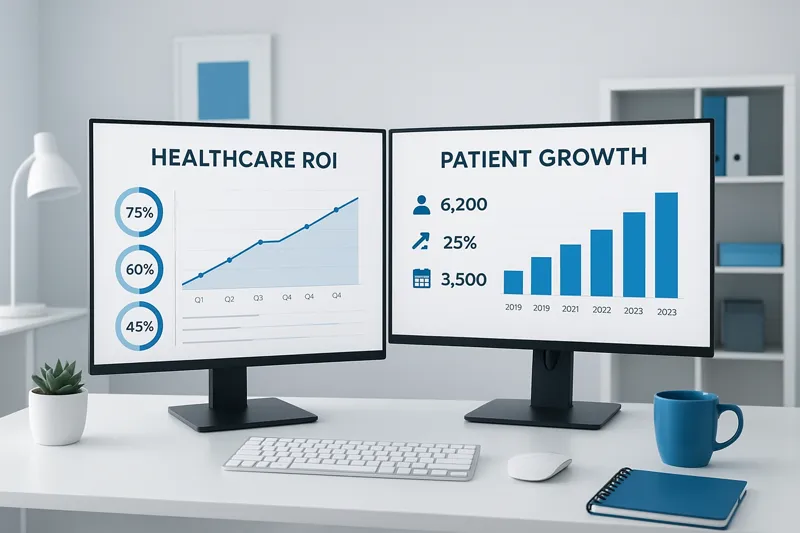
Introduction to Healthcare Marketing ROI
Understanding ROI in Healthcare Marketing
Return on Investment (ROI) in healthcare marketing quantifies the financial return generated from marketing investments relative to their costs. It is essential for justifying marketing expenditures and enabling healthcare organizations to allocate resources effectively.
Importance of ROI for Strategy and Budgeting
Accurately measuring ROI supports strategic decision-making by identifying which campaigns yield the best patient acquisition and retention outcomes. This empowers healthcare providers to optimize marketing strategies, reduce customer acquisition costs, and improve overall campaign effectiveness. ROI insights facilitate data-driven adjustments and enable leadership to confidently invest in initiatives driving profitable patient growth.
Financial and Non-Financial Dimensions
While financial ROI focuses on revenue, net margins, and contribution margins generated by marketing efforts, non-financial ROI includes metrics such as brand awareness, patient engagement, and improved community trust. Together, these dimensions provide a comprehensive evaluation of marketing success, emphasizing both immediate returns and long-term organizational value.
Digital Marketing in Healthcare: Foundation and Compliance

What is digital marketing in healthcare?
Healthcare digital marketing involves leveraging various online channels such as websites, social media, search engines, and email to promote healthcare services and improve patient engagement. It aims to reach potential patients effectively, providing them with relevant health information, appointment options, and patient support through digital platforms. Healthcare providers use targeted advertising, content marketing, and SEO strategies to increase visibility and attract high-quality patients. Compliance with regulations like HIPAA is essential to ensure patient privacy and data security in all marketing efforts. Overall, digital marketing in healthcare is a vital tool for building trust, enhancing patient education, and growing healthcare practices in a competitive digital landscape.
Definition and channels of digital marketing in healthcare
Digital marketing encompasses several online channels tailored to healthcare organizations. These include:
- Websites: A professional, user-friendly website serves as the foundational platform where patients search for providers and health information.
- Social Media: Platforms like Facebook and LinkedIn enable healthcare providers to engage audiences cost-effectively and informatively.
- Search Engine Optimization (SEO): Optimizing online content helps healthcare services rank higher in search results, attracting relevant patient traffic.
- Email Marketing: Targeted email campaigns foster patient communication and retention with high open rates, driving appointment bookings and ongoing engagement.
Role of websites, social media, SEO, and email marketing
Each channel plays a strategic role: websites establish credibility, social media enhances patient connection and outreach, Search Engine Optimization for Healthcare improves online visibility in local searches, and email marketing maintains personalized patient communication. Together, they create an integrated multichannel approach critical for sustained patient acquisition and retention.
Importance of HIPAA compliance and patient data security
Ensuring marketing efforts comply with privacy laws such as HIPAA is non-negotiable. HIPAA compliance in social media protects sensitive patient information amid digital outreach. Healthcare marketers must utilize secure, HIPAA-compliant platforms for data collection and communications, particularly when using email and SMS. This safeguards patient trust and meets regulatory obligations essential for long-term marketing ROI and organizational credibility.
Benefits of digital marketing for patient engagement and trust
Digital marketing advances patient engagement by delivering personalized, timely, and accessible health information. This builds trust, educates patients, and enhances satisfaction. Digital channels also facilitate easy appointment scheduling and feedback loops, fostering a positive patient experience. Consequently, healthcare organizations see improved patient retention, acquisition, and a stronger competitive position in the dynamic healthcare marketplace.
Essential Healthcare Marketing Strategies for Patient Acquisition and Retention

What are some effective marketing strategies for healthcare providers?
Healthcare providers aiming to expand patient acquisition and retention should begin by aligning marketing efforts closely with the organization’s overall goals. This strategic alignment ensures that all campaigns support long-term business objectives, such as growth in specific service lines or geographic markets.
Building trust remains foundational in healthcare marketing. Strengthening the brand—especially after name changes or opening new locations—is critical to establishing credibility. Providers should actively manage their online reputation, leveraging positive patient reviews and testimonials, which 50% of consumers trust as much as personal recommendations. Maintaining strong in-network referral relationships also plays a crucial role in sustaining patient flow. For more insights, see Healthcare marketing strategies.
Competitive analysis combined with digital analytics allows healthcare marketers to optimize channel selection. Understanding regional patient demographics and behaviors helps in allocating resources effectively to high-yield marketing tactics. Learn more about Healthcare marketing strategy 2026.
Enhancing digital presence through search engine optimization (SEO) ensures providers appear prominently in local searches, a decisive factor given that most patients research providers online. Utilizing a mobile-friendly, professional website with engaging content—like procedural videos, health blogs, and patient stories—increases conversion rates. Social media platforms are vital for reaching and influencing prospective patients through targeted advertising and organic engagement. Explore Digital marketing for doctors for detailed strategies.
Personalized outreach based on CRM data and patient segmentation boosts retention and encourages service line growth. Tailored messaging can address patient-specific needs and preferences, facilitating better engagement and higher response rates. For techniques to optimize patient outreach, see Healthcare digital marketing.
In summary, effective healthcare marketing in 2024 hinges on a comprehensive strategy that integrates organizational objectives, trust-building practices, data-driven channel optimization, an enhanced digital footprint, personalized communications, and active reputation management to drive patient acquisition and retention. For further guidance on measuring success and Return on Investment, refer to Healthcare Marketing ROI and understand essential Healthcare marketing ROI metrics.
Calculating ROI in Healthcare Marketing: Core Metrics and Methods
What is ROI in the context of healthcare and what does financial ROI mean?
ROI, or Return on Investment, in healthcare marketing measures both financial and non-financial benefits relative to marketing spending. Financial ROI focuses on profitability, calculated by dividing the net profit gained from marketing efforts by the initial marketing investment. A positive financial ROI indicates the marketing campaign generates more revenue than it costs. Additionally, ROI encompasses intangible benefits, such as enhanced patient satisfaction, improved care quality, and operational efficiencies. Establishing baseline metrics before launching campaigns allows healthcare organizations to accurately assess their marketing return and optimize resource allocation.
How do you calculate ROI in healthcare marketing?
Calculating healthcare marketing ROI involves the formula: ROI = (Revenue from marketing campaigns – Marketing costs) / Marketing costs × 100%, which expresses the return as a percentage. This requires tracking the revenue directly attributable to marketing activities and comparing it with the associated expenses.
Key metrics involved include:
- Cost Per Acquisition (CPA): The cost to acquire a new patient via a specific channel or campaign.
- Cost Per Lead (CPL): Expense to generate a potential patient lead.
- Conversion Rates: Percentage of leads converted into actual patients.
- Customer Lifetime Value (CLV): The total revenue expected from a patient over their relationship with the healthcare provider.
Marketers use Multi-touch attribution models in healthcare marketing, which allocate credit to different marketing touchpoints across the patient journey, ensuring more precise ROI measurements. Setting SMART (Specific, Measurable, Achievable, Relevant, Time-bound) goals ensures clear campaign objectives. Analytics tools like Google Analytics, HubSpot, and healthcare-specific CRMs help track these metrics and optimize campaigns to maximize ROI.
What is considered a good ROI percentage for marketing?
In healthcare marketing, a good ROI generally ranges from 400% to 900%, meaning providers earn $4 to $9 or more for every $1 spent. An industry benchmark example includes a 5:1 return, or 500% ROI, often targeted for new patient acquisition campaigns. However, this varies depending on campaign goals and metrics used, such as direct revenue, patient bookings, or lifetime value.
Accurate ROI assessment requires combining financial metrics with strategic indicators like patient retention and payer mix, given commercial payers reimburse significantly higher than government programs, directly affecting profitability.
By continuously monitoring Cost-per-acquisition (CPA), Customer Lifetime Value (CLV), and Campaign conversion rate, alongside campaign testing and personalization, healthcare marketers can achieve sustainable, measurable growth that justifies marketing investments.
Understanding Patient Acquisition Cost and Its Impact on ROI
What is the average cost of patient acquisition in medical practices?
The average patient acquisition cost (PAC) in medical practices varies widely, typically ranging from $300 to $1,000 depending on the medical specialty and the marketing strategies implemented. For example, cosmetic and plastic surgery practices experience higher acquisition costs averaging around $610, while specialties such as pediatrics may have lower costs, sometimes as little as $155 per patient. Learn more about Healthcare marketing ROI metrics and Patient acquisition cost.
How does PAC vary by medical specialty?
Specialties with more competitive markets or higher-value services tend to see elevated PAC. Conversely, primary care or pediatrics usually benefit from lower acquisition costs. This variation is influenced by factors including patient demographics, local market competition, and the complexity of the service offered. Understanding Healthcare marketing acquisition cost and Payer mix impact on ROI can help clarify these differences.
What strategies can optimize PAC and improve ROI?
Optimizing PAC involves a multi-faceted approach:
- Investing in targeted marketing channels with proven high ROI such as local SEO and search engine marketing (SEM) in healthcare.
- Enhancing online presence through professional, user-friendly websites and managing online reputation with positive patient reviews. For more on Healthcare content marketing and Online visibility for medical practices.
- Utilizing Data-driven insights for healthcare to refine campaigns and focus on high-converting digital tactics.
- Incorporating Multi-channel marketing strategies that combine digital and traditional outreach for broader reach and engagement.
How does PAC relate to lifetime patient value (PLV)?
A sound ROI strategy maintains a healthy balance where PAC is kept significantly below the patient lifetime value (PLV). A common target ratio is 3:1, ensuring that the cost of acquiring a patient returns triple in net revenue over the patient’s lifecycle. This relationship underscores the importance of both efficient acquisition costs and patient retention efforts. Learn more about Customer lifetime value in healthcare and Healthcare marketing profitability metrics.
What role do multi-channel marketing and digital optimization play in controlling acquisition cost?
Multi-channel marketing enhances patient acquisition by engaging prospects across various digital platforms, including social media, email, and paid search, along with offline methods such as community events. Digital optimization, including SEO for healthcare marketing, A/B testing, and predictive analytics, fine-tunes these efforts, increases conversion rates, and lowers wasted spend. These strategies collectively serve to manage PAC effectively while improving overall Healthcare marketing ROI.
Key Metrics to Track for Proving ROI in Healthcare Marketing

Audience Quality Metrics and Segmentation
Audience quality metrics measure how effectively marketing campaigns target potential high-value patients. Segmentation based on demographics, payer mix, and patient needs enhances campaign precision, increasing engagement and conversions. This targeted approach directly benefits ROI by focusing resources on the most promising patient segments.
Number of Leads and Funnel Stages
Tracking the number of leads generated and analyzing their progression through the lead funnel stages provides insight into campaign effectiveness. Understanding lead stages—from initial interest to booked appointments—helps marketers optimize their strategies to increase patient acquisition rates.
Campaign Conversion Rates and Engagement Metrics
Campaign conversion rate reflect the success of campaigns in turning leads into actual patients. Engagement metrics in healthcare marketing such as clicks and impressions, shares, comments, and calls to call centers indicate consumer interest and help predict conversion potential. High engagement often correlates with improved ROI.
Cost-Per-Acquisition by Channel and Campaign
Calculating cost-per-acquisition (CPA) broken down by marketing channel and individual campaign reveals which tactics deliver the most cost-effective patient acquisition. This metric guides resource allocation toward high-performing channels, maximizing ROI in the competitive U.S. healthcare landscape.
Contribution Margin and Profitability Analysis
Contribution margin analysis, defined as revenue minus variable costs, assesses the profitability of marketing efforts. Campaigns with positive contribution margins demonstrate effective ROI by generating net benefits beyond marketing expenses.
Payer Mix and Reimbursement Rate Effects on ROI
The payer mix significantly impacts ROI because commercial insurance reimbursement rates are typically 50% to 75% higher than Medicare or Medicaid rates. Targeting patients with favorable payer profiles enhances revenue potential and profitability of marketing campaigns.
By systematically tracking and analyzing these metrics, healthcare marketers can demonstrate measurable ROI, justify marketing investments, and strategically optimize campaigns for maximum patient growth and financial performance.
Advanced Tools and Techniques for Measuring Healthcare Marketing ROI

Use of CRM Systems and Healthcare Privacy Platforms
Modern healthcare marketing challenges increasingly relies on specialized CRM systems tailored to the healthcare sector, integrating patient data with marketing efforts. Privacy platforms compliant with regulations like HIPAA enable secure data collection and management, bridging the gap between marketing outreach and patient information while maintaining confidentiality.
Integration of Data from EHR, Marketing Platforms, and CRM
Combining data from Electronic Health Records (EHR), marketing platforms, and CRM systems provides a comprehensive view of patient journeys. This integration allows marketers to track potential patients from initial contact through appointment scheduling to treatment, ensuring more accurate Healthcare marketing ROI metrics measurement.
Customer Acquisition Cost (CAC) and Lifetime Value (LTV) Metrics
Calculating CAC involves dividing total marketing expenses by the number of new patients acquired, offering insight into campaign efficiency. Complementing this, LTV measures the total revenue a patient generates over time, assisting healthcare organizations in balancing acquisition costs with long-term profitability. Understanding Customer Acquisition Cost (CAC) and Lifetime Value in healthcare marketing is critical for optimizing spend.
Role of Call Tracking, Form Tracking, and Unique URLs
Call and form tracking technology captures detailed engagement metrics, identifying which marketing campaigns prompt patient inquiries. Unique tracking URLs further differentiate channel performance, giving marketers precise data for informed budget allocation and campaign refinement. Tools such as Call tracking importance and CallRail tracking tools are essential here.
A/B Testing, Predictive Analytics, and Automation to Optimize Campaigns
A/B Testing in Healthcare Marketing enables continual refinement by comparing campaign variations and selecting the most effective options. Predictive Analytics in Healthcare Marketing anticipates patient behaviors, optimizing timing and messaging for higher conversion rates. Automation tools streamline repetitive tasks, enhancing team efficiency and focusing efforts on strategic initiatives.
Dashboard Reporting and Data-Driven Decision Making
Real-time dashboards compile essential Healthcare marketing ROI metrics to provide actionable insights. These facilitate transparent reporting to leadership, helping secure executive buy-in by clearly demonstrating campaign impacts and guiding strategic marketing investments through Dashboard reporting for ROI.
This multi-faceted approach to ROI measurement empowers healthcare marketers to optimize resources, ensure compliance, and drive sustainable patient growth.
Building Trust and Compliance to Sustain Long-Term ROI

Ensuring HIPAA and Regulatory Compliance in Marketing Campaigns
Healthcare marketing must comply strictly with HIPAA privacy regulations and other regulations such as GDPR and the CAN-SPAM Act to protect patient privacy. Marketers should implement HIPAA-compliant marketing platforms for digital outreach, like email and SMS, to ensure secure communication. Regulatory adherence fosters patient confidence and protects the organization from legal repercussions.
Patient Data Privacy and Secure Handling
Handling patient data securely is critical. Fragmentation across EHRs, CRMs, and marketing platforms requires the use of Healthcare Privacy Platforms to create secure data bridges. This enables accurate tracking of patient interactions and measuring ROI while ensuring privacy laws are not violated.
Personalized Communication to Build Patient Trust and Engagement
Personalizing marketing campaigns based on patient segmentation and first-party data in healthcare marketing improves engagement and builds trust. Tailored messaging fosters patient loyalty, enhances conversion rates in healthcare marketing, and supports long-term relationships essential for sustainable ROI.
The Importance of Reputation Management and Positive Patient Reviews
Managing online reputation through patient reviews is vital. Approximately 98% of consumers rely on reviews for decision-making, and positive testimonials significantly influence patient choice. Incorporating patient feedback and online reputation management in healthcare marketing strengthens trust and attracts high-value patients.
Balancing Marketing Innovation with Ethical Considerations in Healthcare
While leveraging innovative digital marketing tools for healthcare technologies is important, healthcare organizations must balance this with ethical marketing practices. Maintaining transparency, protecting patient information, and avoiding misleading claims preserve credibility and uphold ethical standards critical in healthcare marketing.
| Focus Area | Best Practices | Impact on ROI |
|---|---|---|
| Regulatory Compliance | Use HIPAA-compliant platforms; stay updated on laws | Avoid legal issues; build patient trust |
| Data Privacy | Secure data bridges; HIPAA-compliant tracking | Accurate ROI; maintain confidentiality |
| Personalized Communication | Patient segmentation and targeted messaging | Increased engagement and retention |
| Reputation Management | Encourage positive reviews; respond to feedback | Improved patient conversion and loyalty |
| Ethical Marketing | Transparency; truthful claims | Maintain credibility and long-term ROI |
Emerging Trends and Challenges in Healthcare Marketing ROI Measurement
How does fragmented healthcare data affect ROI tracking?
Healthcare marketing ROI measurement is intricately challenged by the fragmentation of healthcare data across multiple platforms such as Electronic Health Records (EHRs), Customer Acquisition Cost (CAC), and marketing automation tools. This siloed data impairs marketers' ability to track patient journeys comprehensively, making it difficult to calculate critical metrics like Customer Acquisition Cost (CAC) and true Healthcare marketing ROI metrics. Without seamless data integration, understanding the complete patient conversion funnel remains elusive.
What solutions address data fragmentation and privacy concerns?
Emerging solutions such as Healthcare Privacy Platforms play a crucial role in bridging these data silos securely. These platforms enable healthcare organizations to create compliant "data bridges" that connect disparate systems while adhering to strict regulatory standards like HIPAA. By leveraging privacy-compliant tools, marketers gain access to down-funnel analytics including appointment bookings and attendance, leading to more precise ROI analysis in healthcare marketing and improved campaign optimization.
Why is multi-channel attribution challenging in healthcare marketing?
Healthcare patients often engage with providers through multiple channels—digital advertising, social media, email, phone calls, and in-person touchpoints—resulting in complex attribution challenges. Accurately assigning credit for patient acquisition across these channels is difficult due to fragmented data and regulatory constraints on data sharing. This requires sophisticated Multi-touch attribution models in healthcare marketing and consistent metric tracking across channels to effectively evaluate marketing campaign effectiveness.
How important is multi-channel marketing in current healthcare strategies?
Given the evolving patient behavior and expectations, an omnichannel digital marketing approach combining both online (SEO, digital ads, social media, email) and offline (community events, print ads, workshops) channels is essential. Multi-channel strategies improve consumer engagement in healthcare and conversion rates by meeting patients on their preferred platforms while also expanding outreach and reinforcing brand trust.
What market factors influence ROI measurement?
Several market dynamics heavily impact Healthcare marketing ROI metrics. Payer mix impact on ROI is a significant factor; commercially insured patients typically bring higher commercial insurance reimbursement rates than Medicare or Medicaid recipients, directly influencing marketing profitability metrics. Additionally, reimbursement policy changes and regulatory shifts (including funding cuts affecting trials and procurement) can alter the pace of patient acquisition and revenue flows, requiring marketers to adapt their healthcare marketing strategy and ROI models continuously.
How has the digital landscape and patient behavior shifted post-pandemic?
The COVID-19 pandemic accelerated the adoption of Telehealth Growth Statistics, with a 63-fold increase in usage reported, dramatically changing how patients interact with healthcare providers. Patients now expect personalized, digital-first experiences and seamless online journeys. This shift mandates healthcare marketers to invest substantially in digital channels in healthcare and HIPAA-compliant marketing platforms to cater to new patient preferences while ensuring privacy and compliance, ultimately aiming to drive measurable growth through optimized digital outreach.
Conclusion: Mastering ROI Metrics for Healthcare Marketing Success
Comprehensive Overview of ROI Metrics
Understanding and applying a broad range of healthcare marketing ROI metrics is essential for measuring and improving campaign success. Key measures such as Cost Per Acquisition (CPA), audience quality, campaign conversion rates, engagement metrics, contribution margin, and payer mix provide an in-depth view of marketing effectiveness and profitability. Calculating ROI involves linking marketing expenses to actual revenue and patient acquisition outcomes, often requiring integration of disparate data systems.
Continuous Monitoring and Optimization
Healthcare marketing demands continuous monitoring through dashboards and analytics platforms to allow ongoing strategy refinement. Tools for real-time tracking of conversions, patient journey data, and channel-specific performance help optimize marketing spend, improve targeting, and maximize returns on investment.
Compliance and Patient Trust
Adherence to HIPAA and other regulatory requirements is non-negotiable, safeguarding patient data while enabling compliant marketing. Building patient trust through personalized communication and transparency enhances long-term engagement, retention, and, ultimately, marketing ROI.
Embracing Data-Driven, Personalized, Multi-Channel Approaches
Healthcare organizations that implement data-driven strategies leveraging predictive analytics, personalization, and multiple digital channels realize stronger patient acquisition and retention. Employing integrated, HIPAA-compliant marketing platforms allows for granular insights and effective resource allocation, creating measurable, sustainable growth in the competitive healthcare market.
Introduction to Healthcare Marketing ROI
Understanding ROI in Healthcare Marketing
Return on Investment (ROI) in healthcare marketing quantifies the financial return generated from marketing investments relative to their costs. It is essential for justifying marketing expenditures and enabling healthcare organizations to allocate resources effectively.
Importance of ROI for Strategy and Budgeting
Accurately measuring ROI supports strategic decision-making by identifying which campaigns yield the best patient acquisition and retention outcomes. This empowers healthcare providers to optimize marketing strategies, reduce customer acquisition costs, and improve overall campaign effectiveness. ROI insights facilitate data-driven adjustments and enable leadership to confidently invest in initiatives driving profitable patient growth.
Financial and Non-Financial Dimensions
While financial ROI focuses on revenue, net margins, and contribution margins generated by marketing efforts, non-financial ROI includes metrics such as brand awareness, patient engagement, and improved community trust. Together, these dimensions provide a comprehensive evaluation of marketing success, emphasizing both immediate returns and long-term organizational value.
Digital Marketing in Healthcare: Foundation and Compliance
What is digital marketing in healthcare?
Healthcare digital marketing involves leveraging various online channels such as websites, social media, search engines, and email to promote healthcare services and improve patient engagement. It aims to reach potential patients effectively, providing them with relevant health information, appointment options, and patient support through digital platforms. Healthcare providers use targeted advertising, content marketing, and SEO strategies to increase visibility and attract high-quality patients. Compliance with regulations like HIPAA is essential to ensure patient privacy and data security in all marketing efforts. Overall, digital marketing in healthcare is a vital tool for building trust, enhancing patient education, and growing healthcare practices in a competitive digital landscape.
Definition and channels of digital marketing in healthcare
Digital marketing encompasses several online channels tailored to healthcare organizations. These include:
- Websites: A professional, user-friendly website serves as the foundational platform where patients search for providers and health information.
- Social Media: Platforms like Facebook and LinkedIn enable healthcare providers to engage audiences cost-effectively and informatively.
- Search Engine Optimization (SEO): Optimizing online content helps healthcare services rank higher in search results, attracting relevant patient traffic.
- Email Marketing: Targeted email campaigns foster patient communication and retention with high open rates, driving appointment bookings and ongoing engagement.
Role of websites, social media, SEO, and email marketing
Each channel plays a strategic role: websites establish credibility, social media enhances patient connection and outreach, Search Engine Optimization for Healthcare improves online visibility in local searches, and email marketing maintains personalized patient communication. Together, they create an integrated multichannel approach critical for sustained patient acquisition and retention.
Importance of HIPAA compliance and patient data security
Ensuring marketing efforts comply with privacy laws such as HIPAA is non-negotiable. HIPAA compliance in social media protects sensitive patient information amid digital outreach. Healthcare marketers must utilize secure, HIPAA-compliant platforms for data collection and communications, particularly when using email and SMS. This safeguards patient trust and meets regulatory obligations essential for long-term marketing ROI and organizational credibility.
Benefits of digital marketing for patient engagement and trust
Digital marketing advances patient engagement by delivering personalized, timely, and accessible health information. This builds trust, educates patients, and enhances satisfaction. Digital channels also facilitate easy appointment scheduling and feedback loops, fostering a positive patient experience. Consequently, healthcare organizations see improved patient retention, acquisition, and a stronger competitive position in the dynamic healthcare marketplace.
Essential Healthcare Marketing Strategies for Patient Acquisition and Retention
What are some effective marketing strategies for healthcare providers?
Healthcare providers aiming to expand patient acquisition and retention should begin by aligning marketing efforts closely with the organization’s overall goals. This strategic alignment ensures that all campaigns support long-term business objectives, such as growth in specific service lines or geographic markets.
Building trust remains foundational in healthcare marketing. Strengthening the brand—especially after name changes or opening new locations—is critical to establishing credibility. Providers should actively manage their online reputation, leveraging positive patient reviews and testimonials, which 50% of consumers trust as much as personal recommendations. Maintaining strong in-network referral relationships also plays a crucial role in sustaining patient flow. For more insights, see Healthcare marketing strategies.
Competitive analysis combined with digital analytics allows healthcare marketers to optimize channel selection. Understanding regional patient demographics and behaviors helps in allocating resources effectively to high-yield marketing tactics. Learn more about Healthcare marketing strategy 2026.
Enhancing digital presence through search engine optimization (SEO) ensures providers appear prominently in local searches, a decisive factor given that most patients research providers online. Utilizing a mobile-friendly, professional website with engaging content—like procedural videos, health blogs, and patient stories—increases conversion rates. Social media platforms are vital for reaching and influencing prospective patients through targeted advertising and organic engagement. Explore Digital marketing for doctors for detailed strategies.
Personalized outreach based on CRM data and patient segmentation boosts retention and encourages service line growth. Tailored messaging can address patient-specific needs and preferences, facilitating better engagement and higher response rates. For techniques to optimize patient outreach, see Healthcare digital marketing.
In summary, effective healthcare marketing in 2024 hinges on a comprehensive strategy that integrates organizational objectives, trust-building practices, data-driven channel optimization, an enhanced digital footprint, personalized communications, and active reputation management to drive patient acquisition and retention. For further guidance on measuring success and Return on Investment, refer to Healthcare Marketing ROI and understand essential Healthcare marketing ROI metrics.
Calculating ROI in Healthcare Marketing: Core Metrics and Methods
What is ROI in the context of healthcare and what does financial ROI mean?
ROI, or Return on Investment, in healthcare marketing measures both financial and non-financial benefits relative to marketing spending. Financial ROI focuses on profitability, calculated by dividing the net profit gained from marketing efforts by the initial marketing investment. A positive financial ROI indicates the marketing campaign generates more revenue than it costs. Additionally, ROI encompasses intangible benefits, such as enhanced patient satisfaction, improved care quality, and operational efficiencies. Establishing baseline metrics before launching campaigns allows healthcare organizations to accurately assess their marketing return and optimize resource allocation.
How do you calculate ROI in healthcare marketing?
Calculating healthcare marketing ROI involves the formula: ROI = (Revenue from marketing campaigns – Marketing costs) / Marketing costs × 100%, which expresses the return as a percentage. This requires tracking the revenue directly attributable to marketing activities and comparing it with the associated expenses.
Key metrics involved include:
- Cost Per Acquisition (CPA): The cost to acquire a new patient via a specific channel or campaign.
- Cost Per Lead (CPL): Expense to generate a potential patient lead.
- Conversion Rates: Percentage of leads converted into actual patients.
- Customer Lifetime Value (CLV): The total revenue expected from a patient over their relationship with the healthcare provider.
Marketers use Multi-touch attribution models in healthcare marketing, which allocate credit to different marketing touchpoints across the patient journey, ensuring more precise ROI measurements. Setting SMART (Specific, Measurable, Achievable, Relevant, Time-bound) goals ensures clear campaign objectives. Analytics tools like Google Analytics, HubSpot, and healthcare-specific CRMs help track these metrics and optimize campaigns to maximize ROI.
What is considered a good ROI percentage for marketing?
In healthcare marketing, a good ROI generally ranges from 400% to 900%, meaning providers earn $4 to $9 or more for every $1 spent. An industry benchmark example includes a 5:1 return, or 500% ROI, often targeted for new patient acquisition campaigns. However, this varies depending on campaign goals and metrics used, such as direct revenue, patient bookings, or lifetime value.
Accurate ROI assessment requires combining financial metrics with strategic indicators like patient retention and payer mix, given commercial payers reimburse significantly higher than government programs, directly affecting profitability.
By continuously monitoring Cost-per-acquisition (CPA), Customer Lifetime Value (CLV), and Campaign conversion rate, alongside campaign testing and personalization, healthcare marketers can achieve sustainable, measurable growth that justifies marketing investments.
Understanding Patient Acquisition Cost and Its Impact on ROI
What is the average cost of patient acquisition in medical practices?
The average patient acquisition cost (PAC) in medical practices varies widely, typically ranging from $300 to $1,000 depending on the medical specialty and the marketing strategies implemented. For example, cosmetic and plastic surgery practices experience higher acquisition costs averaging around $610, while specialties such as pediatrics may have lower costs, sometimes as little as $155 per patient. Learn more about Healthcare marketing ROI metrics and Patient acquisition cost.
How does PAC vary by medical specialty?
Specialties with more competitive markets or higher-value services tend to see elevated PAC. Conversely, primary care or pediatrics usually benefit from lower acquisition costs. This variation is influenced by factors including patient demographics, local market competition, and the complexity of the service offered. Understanding Healthcare marketing acquisition cost and Payer mix impact on ROI can help clarify these differences.
What strategies can optimize PAC and improve ROI?
Optimizing PAC involves a multi-faceted approach:
- Investing in targeted marketing channels with proven high ROI such as local SEO and search engine marketing (SEM) in healthcare.
- Enhancing online presence through professional, user-friendly websites and managing online reputation with positive patient reviews. For more on Healthcare content marketing and Online visibility for medical practices.
- Utilizing Data-driven insights for healthcare to refine campaigns and focus on high-converting digital tactics.
- Incorporating Multi-channel marketing strategies that combine digital and traditional outreach for broader reach and engagement.
How does PAC relate to lifetime patient value (PLV)?
A sound ROI strategy maintains a healthy balance where PAC is kept significantly below the patient lifetime value (PLV). A common target ratio is 3:1, ensuring that the cost of acquiring a patient returns triple in net revenue over the patient’s lifecycle. This relationship underscores the importance of both efficient acquisition costs and patient retention efforts. Learn more about Customer lifetime value in healthcare and Healthcare marketing profitability metrics.
What role do multi-channel marketing and digital optimization play in controlling acquisition cost?
Multi-channel marketing enhances patient acquisition by engaging prospects across various digital platforms, including social media, email, and paid search, along with offline methods such as community events. Digital optimization, including SEO for healthcare marketing, A/B testing, and predictive analytics, fine-tunes these efforts, increases conversion rates, and lowers wasted spend. These strategies collectively serve to manage PAC effectively while improving overall Healthcare marketing ROI.
Key Metrics to Track for Proving ROI in Healthcare Marketing
Audience Quality Metrics and Segmentation
Audience quality metrics measure how effectively marketing campaigns target potential high-value patients. Segmentation based on demographics, payer mix, and patient needs enhances campaign precision, increasing engagement and conversions. This targeted approach directly benefits ROI by focusing resources on the most promising patient segments.
Number of Leads and Funnel Stages
Tracking the number of leads generated and analyzing their progression through the lead funnel stages provides insight into campaign effectiveness. Understanding lead stages—from initial interest to booked appointments—helps marketers optimize their strategies to increase patient acquisition rates.
Campaign Conversion Rates and Engagement Metrics
Campaign conversion rate reflect the success of campaigns in turning leads into actual patients. Engagement metrics in healthcare marketing such as clicks and impressions, shares, comments, and calls to call centers indicate consumer interest and help predict conversion potential. High engagement often correlates with improved ROI.
Cost-Per-Acquisition by Channel and Campaign
Calculating cost-per-acquisition (CPA) broken down by marketing channel and individual campaign reveals which tactics deliver the most cost-effective patient acquisition. This metric guides resource allocation toward high-performing channels, maximizing ROI in the competitive U.S. healthcare landscape.
Contribution Margin and Profitability Analysis
Contribution margin analysis, defined as revenue minus variable costs, assesses the profitability of marketing efforts. Campaigns with positive contribution margins demonstrate effective ROI by generating net benefits beyond marketing expenses.
Payer Mix and Reimbursement Rate Effects on ROI
The payer mix significantly impacts ROI because commercial insurance reimbursement rates are typically 50% to 75% higher than Medicare or Medicaid rates. Targeting patients with favorable payer profiles enhances revenue potential and profitability of marketing campaigns.
By systematically tracking and analyzing these metrics, healthcare marketers can demonstrate measurable ROI, justify marketing investments, and strategically optimize campaigns for maximum patient growth and financial performance.
Advanced Tools and Techniques for Measuring Healthcare Marketing ROI
Use of CRM Systems and Healthcare Privacy Platforms
Modern healthcare marketing challenges increasingly relies on specialized CRM systems tailored to the healthcare sector, integrating patient data with marketing efforts. Privacy platforms compliant with regulations like HIPAA enable secure data collection and management, bridging the gap between marketing outreach and patient information while maintaining confidentiality.
Integration of Data from EHR, Marketing Platforms, and CRM
Combining data from Electronic Health Records (EHR), marketing platforms, and CRM systems provides a comprehensive view of patient journeys. This integration allows marketers to track potential patients from initial contact through appointment scheduling to treatment, ensuring more accurate Healthcare marketing ROI metrics measurement.
Customer Acquisition Cost (CAC) and Lifetime Value (LTV) Metrics
Calculating CAC involves dividing total marketing expenses by the number of new patients acquired, offering insight into campaign efficiency. Complementing this, LTV measures the total revenue a patient generates over time, assisting healthcare organizations in balancing acquisition costs with long-term profitability. Understanding Customer Acquisition Cost (CAC) and Lifetime Value in healthcare marketing is critical for optimizing spend.
Role of Call Tracking, Form Tracking, and Unique URLs
Call and form tracking technology captures detailed engagement metrics, identifying which marketing campaigns prompt patient inquiries. Unique tracking URLs further differentiate channel performance, giving marketers precise data for informed budget allocation and campaign refinement. Tools such as Call tracking importance and CallRail tracking tools are essential here.
A/B Testing, Predictive Analytics, and Automation to Optimize Campaigns
A/B Testing in Healthcare Marketing enables continual refinement by comparing campaign variations and selecting the most effective options. Predictive Analytics in Healthcare Marketing anticipates patient behaviors, optimizing timing and messaging for higher conversion rates. Automation tools streamline repetitive tasks, enhancing team efficiency and focusing efforts on strategic initiatives.
Dashboard Reporting and Data-Driven Decision Making
Real-time dashboards compile essential Healthcare marketing ROI metrics to provide actionable insights. These facilitate transparent reporting to leadership, helping secure executive buy-in by clearly demonstrating campaign impacts and guiding strategic marketing investments through Dashboard reporting for ROI.
This multi-faceted approach to ROI measurement empowers healthcare marketers to optimize resources, ensure compliance, and drive sustainable patient growth.
Building Trust and Compliance to Sustain Long-Term ROI
Ensuring HIPAA and Regulatory Compliance in Marketing Campaigns
Healthcare marketing must comply strictly with HIPAA privacy regulations and other regulations such as GDPR and the CAN-SPAM Act to protect patient privacy. Marketers should implement HIPAA-compliant marketing platforms for digital outreach, like email and SMS, to ensure secure communication. Regulatory adherence fosters patient confidence and protects the organization from legal repercussions.
Patient Data Privacy and Secure Handling
Handling patient data securely is critical. Fragmentation across EHRs, CRMs, and marketing platforms requires the use of Healthcare Privacy Platforms to create secure data bridges. This enables accurate tracking of patient interactions and measuring ROI while ensuring privacy laws are not violated.
Personalized Communication to Build Patient Trust and Engagement
Personalizing marketing campaigns based on patient segmentation and first-party data in healthcare marketing improves engagement and builds trust. Tailored messaging fosters patient loyalty, enhances conversion rates in healthcare marketing, and supports long-term relationships essential for sustainable ROI.
The Importance of Reputation Management and Positive Patient Reviews
Managing online reputation through patient reviews is vital. Approximately 98% of consumers rely on reviews for decision-making, and positive testimonials significantly influence patient choice. Incorporating patient feedback and online reputation management in healthcare marketing strengthens trust and attracts high-value patients.
Balancing Marketing Innovation with Ethical Considerations in Healthcare
While leveraging innovative digital marketing tools for healthcare technologies is important, healthcare organizations must balance this with ethical marketing practices. Maintaining transparency, protecting patient information, and avoiding misleading claims preserve credibility and uphold ethical standards critical in healthcare marketing.
| Focus Area | Best Practices | Impact on ROI |
|---|---|---|
| Regulatory Compliance | Use HIPAA-compliant platforms; stay updated on laws | Avoid legal issues; build patient trust |
| Data Privacy | Secure data bridges; HIPAA-compliant tracking | Accurate ROI; maintain confidentiality |
| Personalized Communication | Patient segmentation and targeted messaging | Increased engagement and retention |
| Reputation Management | Encourage positive reviews; respond to feedback | Improved patient conversion and loyalty |
| Ethical Marketing | Transparency; truthful claims | Maintain credibility and long-term ROI |
Emerging Trends and Challenges in Healthcare Marketing ROI Measurement
How does fragmented healthcare data affect ROI tracking?
Healthcare marketing ROI measurement is intricately challenged by the fragmentation of healthcare data across multiple platforms such as Electronic Health Records (EHRs), Customer Acquisition Cost (CAC), and marketing automation tools. This siloed data impairs marketers' ability to track patient journeys comprehensively, making it difficult to calculate critical metrics like Customer Acquisition Cost (CAC) and true Healthcare marketing ROI metrics. Without seamless data integration, understanding the complete patient conversion funnel remains elusive.
What solutions address data fragmentation and privacy concerns?
Emerging solutions such as Healthcare Privacy Platforms play a crucial role in bridging these data silos securely. These platforms enable healthcare organizations to create compliant "data bridges" that connect disparate systems while adhering to strict regulatory standards like HIPAA. By leveraging privacy-compliant tools, marketers gain access to down-funnel analytics including appointment bookings and attendance, leading to more precise ROI analysis in healthcare marketing and improved campaign optimization.
Why is multi-channel attribution challenging in healthcare marketing?
Healthcare patients often engage with providers through multiple channels—digital advertising, social media, email, phone calls, and in-person touchpoints—resulting in complex attribution challenges. Accurately assigning credit for patient acquisition across these channels is difficult due to fragmented data and regulatory constraints on data sharing. This requires sophisticated Multi-touch attribution models in healthcare marketing and consistent metric tracking across channels to effectively evaluate marketing campaign effectiveness.
How important is multi-channel marketing in current healthcare strategies?
Given the evolving patient behavior and expectations, an omnichannel digital marketing approach combining both online (SEO, digital ads, social media, email) and offline (community events, print ads, workshops) channels is essential. Multi-channel strategies improve consumer engagement in healthcare and conversion rates by meeting patients on their preferred platforms while also expanding outreach and reinforcing brand trust.
What market factors influence ROI measurement?
Several market dynamics heavily impact Healthcare marketing ROI metrics. Payer mix impact on ROI is a significant factor; commercially insured patients typically bring higher commercial insurance reimbursement rates than Medicare or Medicaid recipients, directly influencing marketing profitability metrics. Additionally, reimbursement policy changes and regulatory shifts (including funding cuts affecting trials and procurement) can alter the pace of patient acquisition and revenue flows, requiring marketers to adapt their healthcare marketing strategy and ROI models continuously.
How has the digital landscape and patient behavior shifted post-pandemic?
The COVID-19 pandemic accelerated the adoption of Telehealth Growth Statistics, with a 63-fold increase in usage reported, dramatically changing how patients interact with healthcare providers. Patients now expect personalized, digital-first experiences and seamless online journeys. This shift mandates healthcare marketers to invest substantially in digital channels in healthcare and HIPAA-compliant marketing platforms to cater to new patient preferences while ensuring privacy and compliance, ultimately aiming to drive measurable growth through optimized digital outreach.
Conclusion: Mastering ROI Metrics for Healthcare Marketing Success
Comprehensive Overview of ROI Metrics
Understanding and applying a broad range of healthcare marketing ROI metrics is essential for measuring and improving campaign success. Key measures such as Cost Per Acquisition (CPA), audience quality, campaign conversion rates, engagement metrics, contribution margin, and payer mix provide an in-depth view of marketing effectiveness and profitability. Calculating ROI involves linking marketing expenses to actual revenue and patient acquisition outcomes, often requiring integration of disparate data systems.
Continuous Monitoring and Optimization
Healthcare marketing demands continuous monitoring through dashboards and analytics platforms to allow ongoing strategy refinement. Tools for real-time tracking of conversions, patient journey data, and channel-specific performance help optimize marketing spend, improve targeting, and maximize returns on investment.
Compliance and Patient Trust
Adherence to HIPAA and other regulatory requirements is non-negotiable, safeguarding patient data while enabling compliant marketing. Building patient trust through personalized communication and transparency enhances long-term engagement, retention, and, ultimately, marketing ROI.
Embracing Data-Driven, Personalized, Multi-Channel Approaches
Healthcare organizations that implement data-driven strategies leveraging predictive analytics, personalization, and multiple digital channels realize stronger patient acquisition and retention. Employing integrated, HIPAA-compliant marketing platforms allows for granular insights and effective resource allocation, creating measurable, sustainable growth in the competitive healthcare market.