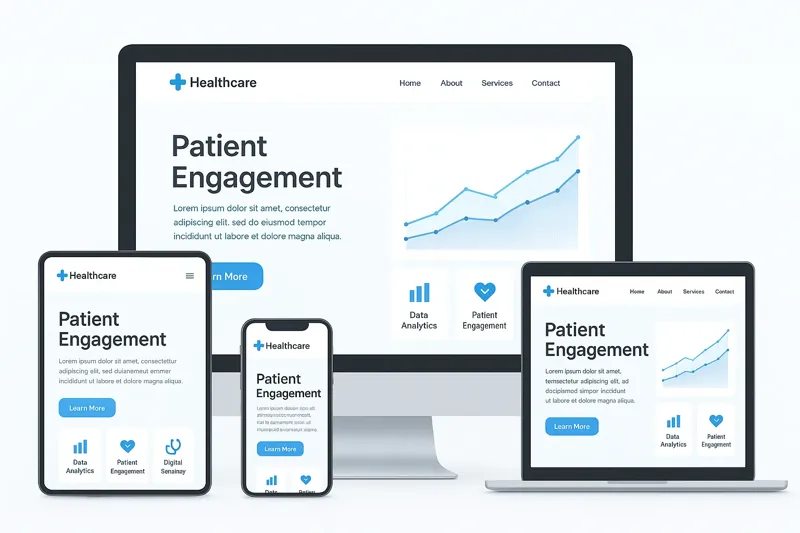



The Growing Importance of Digital Presence in Healthcare
The role of digital marketing in healthcare
Digital marketing in healthcare leverages online platforms such as social media, email, search engines, and mobile apps to educate, engage, and communicate with patients effectively. Strategies include targeted email campaigns, social media engagement, local SEO optimization, paid advertising, and telehealth promotion. These approaches offer measurable ROI and support patient acquisition, retention, and improved health outcomes.
Why online visibility matters for clinics and medical practices
Online visibility is crucial for medical practices in a competitive healthcare landscape. Since most patients research providers online before booking appointments, having a strong digital presence directly influences patient trust, credibility, and appointment rates. High-ranking search results, well-optimized websites, and positive online reviews significantly increase patient traffic and referrals, particularly within local markets.
Overview of patient behavior in finding healthcare online
Patients in the U.S. predominantly use search engines like Google to find healthcare providers, with over 77% starting their healthcare journey online. Mobile searches continue to rise, emphasizing mobile-friendly website design. Patients rely heavily on online reviews and social media for provider evaluation, and many prefer convenient features such as online appointment scheduling and telehealth consultations. Understanding these behaviors allows practices to tailor digital strategies that meet patient expectations and increase engagement.
Understanding Digital Marketing in Healthcare

What is digital marketing in healthcare?
Digital marketing in healthcare involves leveraging digital channels such as websites, search engines, social media, email, and online advertising to promote healthcare services and facilitate patient engagement. This approach enables healthcare providers to reach targeted audiences more efficiently, increasing visibility and attracting high-value patients. It also includes creating valuable and compliant content that educates patients, builds trust, and encourages them to choose the right healthcare provider for their needs. Additionally, digital marketing in healthcare relies on data analytics for website optimization and patient insights to continually refine strategies and improve outcomes. Overall, it is a vital tool for modern healthcare practices seeking to expand their reach and provide vital information in a patient-centric, compliant manner.
How do digital channels engage and attract patients?
Digital channels serve as critical touchpoints for healthcare practices by enhancing patient communication and accessibility. Websites optimized for local SEO, mobile responsiveness, and easy navigation help attract patients conducting online searches. Social media platforms like Facebook for healthcare engagement such as Facebook and Instagram enable sharing educational content, patient testimonials, and health tips, fostering community engagement and trust. Email campaigns for patient retention and newsletters deliver tailored health information and appointment reminders, enhancing patient retention. Emerging tools such as chatbots and AI-driven personalization in healthcare improve patient experiences by providing immediate responses and customized content. Paid advertising and geo-targeted campaigns further amplify reach within specific local markets.
What role do data analytics and compliance play in digital health marketing?
Data analytics tools, including Google Analytics for healthcare SEO and AI-powered systems, provide actionable insights into patient behavior, website performance, and campaign effectiveness. These insights enable healthcare providers to optimize content strategies, improve user experiences, and increase conversion rates for appointments. Meanwhile, compliance with regulations like HIPAA compliance in digital marketing is critical to safeguarding patient data and maintaining trust. Websites must be secure (HTTPS), ensure privacy policies are transparent, and meet accessibility standards such as ADA compliance for healthcare sites. Adhering to these requirements not only protects patients but also enhances search engine rankings by demonstrating trustworthiness and authority.
By integrating strategic digital channels, data-driven SEO optimization, and rigorous compliance, healthcare practices can effectively grow their patient base, improve engagement, and adapt to evolving digital consumer behaviors.
Key Components of an Effective Digital Marketing Strategy for Healthcare
What is the digital marketing strategy for healthcare?
Digital marketing strategy for healthcare involves a comprehensive approach that leverages multiple online channels for healthcare marketing to effectively reach and engage patients. Core components include:
Search Engine Optimization (SEO): Enhances organic visibility through relevant keywords, local SEO strategies for medical practices, mobile-friendly design, on-page SEO elements, and authoritative backlink building. It ensures healthcare providers appear prominently in patient searches like "dentist near me" or "pediatrician Chicago." SEO typically takes around six months to yield strong results and benefits from continuous content updates and data-driven refinements.
Pay-Per-Click (PPC) Advertising: Complements SEO by delivering immediate visibility via Google Ads and targeted campaigns, accelerating patient acquisition especially in competitive markets.
Social Media Marketing: Platforms such as Facebook, Instagram, and Twitter facilitate patient engagement, service awareness, and community building. These channels help share educational content, patient testimonials, and practice updates, fostering trust and loyalty.
Email Marketing: Targeted campaigns nurture existing patients and promote practice news, health tips, and appointment reminders, supporting patient retention.
Content marketing is pivotal, offering educational blogs, videos, webinars, and interactive tools that position providers as trusted authorities while complying with healthcare regulations including HIPAA compliance in digital marketing and ADA.
Online reputation management—promptly encouraging and responding to patient reviews—directly influences search rankings and patient trust.
A data-driven approach using analytics tools like Google Analytics 4 and AI-powered platforms allows continuous optimization tailored to patient demographics and behaviors.
Compliance with healthcare laws and privacy regulations ensures ethical marketing and maintains patient confidence. This holistic strategy leads to measurable patient growth and sustainable practice success in the ever-evolving digital healthcare landscape.
Applying the 7 P's of Marketing to Healthcare Websites

What are the 7 P's of marketing in the healthcare industry?
The 7 P's of healthcare marketing—product, price, place, promotion, people, packaging, and positioning—have been tailored from traditional marketing principles to meet the specialized needs of healthcare organizations. Unlike typical consumer products, healthcare services require a nuanced approach that accounts for regulatory constraints, ethical considerations, and the complexity of healthcare delivery.
Adapting traditional marketing elements for healthcare
- Product: Focuses on the comprehensive healthcare services offered, including specialties, telehealth options, and patient resources.
- Price: Transparent and competitive pricing models, with clear communication to patients about insurance acceptance and out-of-pocket costs.
- Place: Incorporates physical locations, virtual consultations, and accessibility considerations like ADA compliance.
- Promotion: Uses a mix of digital marketing such as SEO, content marketing, social media campaigns, and email outreach to build visibility and engagement.
- People: Engages not only patients but also healthcare providers, payers, and policymakers, ensuring messaging resonates across all stakeholders.
- Packaging: Encompasses the user experience with professional website design, easy navigation, and patient-friendly digital tools like online appointment scheduling.
- Positioning: Establishes the healthcare practice's unique value proposition, emphasizing expertise, trustworthiness, and patient-centered care.
Engaging stakeholders including patients, providers, payers, policymakers
Healthcare marketing strategies actively involve diverse audiences. Patients are influenced by online reviews, educational content, and convenient access to care. Providers and payers benefit from clear communication regarding service offerings and value. Policymakers are considered through compliance with healthcare laws and transparency in advertising.
Role of digital channels, reputation management, and compliance
Digital channels are the backbone of modern healthcare marketing. High-impact SEO, optimized Google Business Profiles, and active social media presence ensure local and broader patient engagement. Online reputation management—soliciting and responding to patient reviews—builds trust and credibility. Compliance with HIPAA, ADA, and data privacy regulations is mandatory, safeguarding patient information and maintaining ethical standards.
Together, these adapted marketing tactics create a strategic framework that drives patient acquisition, fosters loyalty, and supports sustainable healthcare growth in a competitive digital landscape.
Best Practices for Optimizing Healthcare Websites

What are some effective website optimization techniques for healthcare websites?
Optimizing healthcare websites requires a comprehensive strategy that prioritizes technical SEO for medical websites, user experience, and content structure.
Technical SEO fundamentals: site speed, mobile-friendliness, SSL security
Healthcare websites must load quickly to keep patient engagement high; slow sites cause increased bounce rates and reduced search rankings. mobile responsiveness in healthcare websites is critical as over 60% of healthcare searches happen on smartphones. Utilizing SSL encryption for medical websites is mandatory for securing patient data and building user trust. Together, these factors enhance search engine rankings for medical practices and meet compliance standards.
Structured content: titles, meta descriptions, headings, schema markup
Clear, descriptive page title tags and meta descriptions improve search engine indexing and click-through rates. Organizing content with hierarchical headings ensures that information is easy to navigate for both users and search engines. Employing schema markup for healthcare websites (such as LocalBusiness, MedicalClinic, and FAQ schemas) helps search engines better understand website content, leading to enhanced visibility through rich results and featured snippets.
Tools and collaboration for continuous website improvements
Healthcare websites benefit from data-driven tools like Google Analytics 4 in healthcare, session recordings, and exit-intent surveys to analyze user behavior and identify friction points. Continuous collaboration between SEO for doctors, UX designers, content creators, and developers enables incremental enhancements with measurable impact. This agile approach drives improved patient acquisition, reduces bounce rates, and increases conversions, aligning with evolving patient expectations and search trends.
By combining robust technical SEO for medical websites, well-structured content, and continuous data-driven improvements, healthcare websites can maintain high visibility, deliver exceptional user experiences, and attract targeted patient traffic effectively.
Core SEO Strategies for Clinics and Medical Practices
How can SEO be effectively applied to healthcare and medical practices?
Effective SEO for healthcare and medical practices centers on patient-focused keyword research for medical SEO. Incorporating long-tail keywords for niche medical services and local search terms such as "pediatrician near me" or "knee surgery Chicago" ensures the practice targets high-intent local patients actively seeking specific services. This approach boosts relevance and organic traffic.
On-page SEO optimization plays a critical role. This includes crafting clear, descriptive page titles, meta descriptions, organized headings, and using schema markup for healthcare websites like MedicalClinic or LocalBusiness to help search engines understand content. Mobile-friendly design, fast site speed, secure HTTPS protocols, and ADA compliance enhance user experience and search rankings.
Building authoritative backlinks is essential for establishing trust and credibility. Linking from reputable healthcare directories, academic institutions, and authoritative medical sites improves domain authority. Online reputation management through patient reviews, testimonials, and active response strategies further strengthens trust and encourages patient engagement.
Compliance with healthcare regulations such as HIPAA compliance in digital marketing must be integrated into SEO tactics. Protecting patient privacy in content and reviews, using secure website protocols, and partnering with SEO professionals experienced in healthcare ensure regulatory adherence while optimizing visibility.
Together, these strategies form a comprehensive SEO approach for healthcare practices that results in increased patient acquisition, improved online presence, and sustained growth for healthcare providers in the competitive US market.
Leveraging Local SEO to Attract Nearby Patients

Why is local SEO important for doctors to grow medical practice?
Local SEO is crucial for healthcare providers because 76% of local searches end in a phone call, driving direct patient engagement. Optimizing for local SEO means enhancing website elements like on-page SEO elements, localized content, and managing online reviews and local business schema—elements that are vital to increasing local visibility. See Local SEO strategies for doctors.
Google Business Profile optimization and consistent NAP listings
Completing and maintaining an optimized Google Business Profile (GBP) is essential. Search engines favor fully optimized profiles, ranking them in top search results 93% of the time. Equally important is the consistency of Name, Address, and Phone Number (NAP) information across all listings and directories, which boosts credibility and local search rankings. For more on this, review Importance of local SEO for doctors.
Using localized keywords and creating location-specific content
Incorporating geographic SEO targeting such as neighborhood names and city-specific terms helps connect with nearby patients actively searching for healthcare services. Creating dedicated location-specific pages and content tailored to local health concerns further enhances relevance and attracts qualified traffic. Explore Using SEO analytics in healthcare for details.
Managing online reviews and engaging with local communities
Patient reviews directly influence search rankings and local reputation. Actively soliciting, responding to, and managing reviews on platforms like Google, Healthgrades, and Yelp establishes trust and supports SEO performance. Engaging with local patient communities through social media and local events reinforces your practice's presence and authority. More information at Online reviews and patient trust and Social media engagement for medical sites.
Mobile optimization and voice search trends
With over 60% of healthcare searches performed via mobile devices, having a mobile-friendly healthcare website is non-negotiable. Additionally, optimizing for voice search optimization for healthcare queries—often conversational and local in nature—can capture a growing patient segment using virtual assistants like Siri and Google Assistant. Local SEO practices such as including natural language keywords improve voice search rankings. See also Mobile Optimization for Healthcare Sites.
By integrating these Local SEO strategies for doctors, medical practices can significantly enhance their online visibility, attract high-value local patients, and ultimately grow their practices through a measurable and targeted digital presence.
Content Marketing Strategies to Boost Patient Engagement
What are the best online marketing strategies for medical practices?
The most effective online marketing strategies for medical practices combine advanced SEO strategies for doctors who are tired of being the invisible man or woman online, targeted content marketing for medical practices, and dynamic social media engagement for medical sites to maximize visibility and attract new patients. A mobile-optimized, user-friendly website is fundamental, incorporating features such as online appointment scheduling preferences, bill payment, and rich educational content to enhance patient experience.
Developing educational blogs, videos, webinars, and AR/VR content
Educational content plays a pivotal role in engaging patients. Practices should produce blogs addressing common health concerns, procedure explainers, and preventative care tips. Videos and webinars for patient engagement are highly preferred formats, with videos on medical topics boosting engagement and SEO performance. Emerging technologies like augmented reality tools in medical marketing provide innovative avenues for patient education and increased website traffic, integrating interactive experiences that resonate with users.
Incorporating keywords naturally and adhering to E-E-A-T principles
Successful content marketing relies on strategically placing keywords that reflect patient search intent without compromising readability. Employing keyword optimization in healthcare, including keywords in titles, meta descriptions, headers, and throughout the content supports search rankings. Importantly, adhering to E-A-T principles in healthcare content ensures content credibility, a priority in healthcare SEO, by featuring author credentials and linking to authoritative sources.
Utilizing testimonials, FAQs, and success stories to build trust and authority
Including online reviews and patient trust, detailed FAQs, and success stories enhances website authority and fosters trust. These elements not only validate the provider’s expertise but improve local SEO by encouraging positive reviews and increasing user engagement. Transparent patient experiences and educational resources reassure prospective patients, encouraging appointment bookings.
Together, these comprehensive content marketing strategies drive patient engagement while improving a practice’s online reputation and search engine visibility for medical practices.
Harnessing Technology and Analytics for Continuous Optimization

Leveraging AI and Data Analytics for Healthcare Website Performance
Digital marketing in healthcare increasingly relies on artificial intelligence (AI) and robust data analytics tools such as Google Analytics 4 in healthcare. These technologies enable medical practices to gain actionable insights into visitor behavior, conversion rates, and traffic sources. Through continuous monitoring, healthcare providers can identify patterns and areas requiring optimization to enhance their Data analytics for website optimization.
Personalizing the Patient Experience Through AI-Powered Automation
AI-driven SEO tools personalize patient interactions by tailoring content, appointment reminders, and follow-up communications based on individual behavior and preferences. This personalization not only improves engagement but also streamlines patient journeys, ensuring that users receive relevant information and support throughout their healthcare search and decision-making process.
Tracking Key Performance Indicators to Refine Marketing Strategies
Healthcare marketers monitor key performance indicators (KPIs) such as patient engagement metrics, conversion rates, and retention levels to assess the effectiveness of digital campaigns. Regular analysis of these KPIs allows continuous refinement of marketing approaches, ensuring campaigns remain responsive to evolving patient needs and competitive dynamics in the US healthcare landscape.
By integrating AI technologies and Digital marketing in healthcare, healthcare practices can achieve a dynamic and data-driven approach to digital marketing, fostering sustainable patient growth and improved user experiences.
Innovative Approaches to Expand Patient Volume through Website Optimization
What creative ways can medical practices use to increase patient volume?
Medical practices can creatively boost patient volume by adopting a multifaceted digital approach that integrates advanced website optimization and patient engagement tools. Incorporating online appointment scheduling and telehealth services streamlines patient access and expands reach to remote or underserved populations, improving convenience and satisfaction. These digital scheduling systems reduce administrative burdens and support 24/7 patient interaction.
Utilizing chatbot integration for healthcare sites and interactive features for patient engagement enhances patient support by providing instant responses to common inquiries, helping with appointment booking, symptom checks, and directing patients to appropriate care. This elevates the patient experience by offering personalized real-time assistance without increasing staff workload.
Hosting videos and webinars for patient engagement such as webinars, health Q&A sessions, and community outreach online fosters stronger patient relationships and builds trust. These events increase engagement and position the practice as a credible healthcare resource, encouraging patient loyalty and word-of-mouth referrals.
Creative advertising campaigns centered on targeted online advertising for doctors and social media engagement for medical sites play a pivotal role in attracting new patients. Leveraging demographic and geographic data to craft precision-targeted advertisements on platforms like Google, Facebook, and Instagram increases visibility where potential patients are most active. Complementing paid campaigns with organic content such as educational videos, patient testimonials, and success stories optimizes reach and reinforces the practice’s reputation.
Together, these innovative strategies foster measurable growth by enhancing patient experience, increasing online visibility, and making healthcare access seamless and trustworthy in today’s competitive US healthcare market.
Sustaining Growth Through Strategic Website Optimization
Essentials of Website Optimization for Healthcare Practices
Effective website optimization combines multiple strategies to enhance visibility, attract patients, and build trust. Key strategies include implementing advanced SEO tactics such as AI-driven keyword research, voice search optimization, and schema markup to improve indexing and search result presentation. On-page SEO elements like clear titles, organized headings, optimized images, and mobile-friendly responsive design are fundamental.
Content marketing—through blogs, videos, webinars, and augmented reality tools—plays a vital role in patient engagement and authority building. Additionally, local SEO efforts, such as optimizing Google Business Profiles, incorporating location-specific keywords, and managing patient reviews, are crucial for attracting nearby patients.
Continued SEO, Content, Local Engagement, and Compliance
SEO is an ongoing process that requires continual content refreshes, backlink building, and data analysis using tools like Google Analytics 4. Maintaining ADA compliance, HIPAA standards, and ensuring website security through HTTPS fosters patient trust and meets regulatory requirements.
Sustaining growth also requires active reputation management through online reviews and social media engagement. Tailoring digital marketing for local demographic nuances—including voice search and mobile optimization—further enhances patient acquisition and retention.
Partnering with Healthcare SEO Experts
Healthcare practices benefit from collaborating with specialized SEO agencies familiar with healthcare regulations and local market specifics. Expert partners provide tailored strategies, timely performance monitoring, and responsive support, ensuring campaigns adapt to evolving search engine algorithms and patient behaviors.
Professional partnerships enable sustainable, long-term growth by balancing organic SEO with complementary paid advertising and maintaining a cohesive digital footprint that supports credibility and patient loyalty.
The Growing Importance of Digital Presence in Healthcare
The role of digital marketing in healthcare
Digital marketing in healthcare leverages online platforms such as social media, email, search engines, and mobile apps to educate, engage, and communicate with patients effectively. Strategies include targeted email campaigns, social media engagement, local SEO optimization, paid advertising, and telehealth promotion. These approaches offer measurable ROI and support patient acquisition, retention, and improved health outcomes.
Why online visibility matters for clinics and medical practices
Online visibility is crucial for medical practices in a competitive healthcare landscape. Since most patients research providers online before booking appointments, having a strong digital presence directly influences patient trust, credibility, and appointment rates. High-ranking search results, well-optimized websites, and positive online reviews significantly increase patient traffic and referrals, particularly within local markets.
Overview of patient behavior in finding healthcare online
Patients in the U.S. predominantly use search engines like Google to find healthcare providers, with over 77% starting their healthcare journey online. Mobile searches continue to rise, emphasizing mobile-friendly website design. Patients rely heavily on online reviews and social media for provider evaluation, and many prefer convenient features such as online appointment scheduling and telehealth consultations. Understanding these behaviors allows practices to tailor digital strategies that meet patient expectations and increase engagement.
Understanding Digital Marketing in Healthcare
What is digital marketing in healthcare?
Digital marketing in healthcare involves leveraging digital channels such as websites, search engines, social media, email, and online advertising to promote healthcare services and facilitate patient engagement. This approach enables healthcare providers to reach targeted audiences more efficiently, increasing visibility and attracting high-value patients. It also includes creating valuable and compliant content that educates patients, builds trust, and encourages them to choose the right healthcare provider for their needs. Additionally, digital marketing in healthcare relies on data analytics for website optimization and patient insights to continually refine strategies and improve outcomes. Overall, it is a vital tool for modern healthcare practices seeking to expand their reach and provide vital information in a patient-centric, compliant manner.
How do digital channels engage and attract patients?
Digital channels serve as critical touchpoints for healthcare practices by enhancing patient communication and accessibility. Websites optimized for local SEO, mobile responsiveness, and easy navigation help attract patients conducting online searches. Social media platforms like Facebook for healthcare engagement such as Facebook and Instagram enable sharing educational content, patient testimonials, and health tips, fostering community engagement and trust. Email campaigns for patient retention and newsletters deliver tailored health information and appointment reminders, enhancing patient retention. Emerging tools such as chatbots and AI-driven personalization in healthcare improve patient experiences by providing immediate responses and customized content. Paid advertising and geo-targeted campaigns further amplify reach within specific local markets.
What role do data analytics and compliance play in digital health marketing?
Data analytics tools, including Google Analytics for healthcare SEO and AI-powered systems, provide actionable insights into patient behavior, website performance, and campaign effectiveness. These insights enable healthcare providers to optimize content strategies, improve user experiences, and increase conversion rates for appointments. Meanwhile, compliance with regulations like HIPAA compliance in digital marketing is critical to safeguarding patient data and maintaining trust. Websites must be secure (HTTPS), ensure privacy policies are transparent, and meet accessibility standards such as ADA compliance for healthcare sites. Adhering to these requirements not only protects patients but also enhances search engine rankings by demonstrating trustworthiness and authority.
By integrating strategic digital channels, data-driven SEO optimization, and rigorous compliance, healthcare practices can effectively grow their patient base, improve engagement, and adapt to evolving digital consumer behaviors.
Key Components of an Effective Digital Marketing Strategy for Healthcare
What is the digital marketing strategy for healthcare?
Digital marketing strategy for healthcare involves a comprehensive approach that leverages multiple online channels for healthcare marketing to effectively reach and engage patients. Core components include:
Search Engine Optimization (SEO): Enhances organic visibility through relevant keywords, local SEO strategies for medical practices, mobile-friendly design, on-page SEO elements, and authoritative backlink building. It ensures healthcare providers appear prominently in patient searches like "dentist near me" or "pediatrician Chicago." SEO typically takes around six months to yield strong results and benefits from continuous content updates and data-driven refinements.
Pay-Per-Click (PPC) Advertising: Complements SEO by delivering immediate visibility via Google Ads and targeted campaigns, accelerating patient acquisition especially in competitive markets.
Social Media Marketing: Platforms such as Facebook, Instagram, and Twitter facilitate patient engagement, service awareness, and community building. These channels help share educational content, patient testimonials, and practice updates, fostering trust and loyalty.
Email Marketing: Targeted campaigns nurture existing patients and promote practice news, health tips, and appointment reminders, supporting patient retention.
Content marketing is pivotal, offering educational blogs, videos, webinars, and interactive tools that position providers as trusted authorities while complying with healthcare regulations including HIPAA compliance in digital marketing and ADA.
Online reputation management—promptly encouraging and responding to patient reviews—directly influences search rankings and patient trust.
A data-driven approach using analytics tools like Google Analytics 4 and AI-powered platforms allows continuous optimization tailored to patient demographics and behaviors.
Compliance with healthcare laws and privacy regulations ensures ethical marketing and maintains patient confidence. This holistic strategy leads to measurable patient growth and sustainable practice success in the ever-evolving digital healthcare landscape.
Applying the 7 P's of Marketing to Healthcare Websites
What are the 7 P's of marketing in the healthcare industry?
The 7 P's of healthcare marketing—product, price, place, promotion, people, packaging, and positioning—have been tailored from traditional marketing principles to meet the specialized needs of healthcare organizations. Unlike typical consumer products, healthcare services require a nuanced approach that accounts for regulatory constraints, ethical considerations, and the complexity of healthcare delivery.
Adapting traditional marketing elements for healthcare
- Product: Focuses on the comprehensive healthcare services offered, including specialties, telehealth options, and patient resources.
- Price: Transparent and competitive pricing models, with clear communication to patients about insurance acceptance and out-of-pocket costs.
- Place: Incorporates physical locations, virtual consultations, and accessibility considerations like ADA compliance.
- Promotion: Uses a mix of digital marketing such as SEO, content marketing, social media campaigns, and email outreach to build visibility and engagement.
- People: Engages not only patients but also healthcare providers, payers, and policymakers, ensuring messaging resonates across all stakeholders.
- Packaging: Encompasses the user experience with professional website design, easy navigation, and patient-friendly digital tools like online appointment scheduling.
- Positioning: Establishes the healthcare practice's unique value proposition, emphasizing expertise, trustworthiness, and patient-centered care.
Engaging stakeholders including patients, providers, payers, policymakers
Healthcare marketing strategies actively involve diverse audiences. Patients are influenced by online reviews, educational content, and convenient access to care. Providers and payers benefit from clear communication regarding service offerings and value. Policymakers are considered through compliance with healthcare laws and transparency in advertising.
Role of digital channels, reputation management, and compliance
Digital channels are the backbone of modern healthcare marketing. High-impact SEO, optimized Google Business Profiles, and active social media presence ensure local and broader patient engagement. Online reputation management—soliciting and responding to patient reviews—builds trust and credibility. Compliance with HIPAA, ADA, and data privacy regulations is mandatory, safeguarding patient information and maintaining ethical standards.
Together, these adapted marketing tactics create a strategic framework that drives patient acquisition, fosters loyalty, and supports sustainable healthcare growth in a competitive digital landscape.
Best Practices for Optimizing Healthcare Websites
What are some effective website optimization techniques for healthcare websites?
Optimizing healthcare websites requires a comprehensive strategy that prioritizes technical SEO for medical websites, user experience, and content structure.
Technical SEO fundamentals: site speed, mobile-friendliness, SSL security
Healthcare websites must load quickly to keep patient engagement high; slow sites cause increased bounce rates and reduced search rankings. mobile responsiveness in healthcare websites is critical as over 60% of healthcare searches happen on smartphones. Utilizing SSL encryption for medical websites is mandatory for securing patient data and building user trust. Together, these factors enhance search engine rankings for medical practices and meet compliance standards.
Structured content: titles, meta descriptions, headings, schema markup
Clear, descriptive page title tags and meta descriptions improve search engine indexing and click-through rates. Organizing content with hierarchical headings ensures that information is easy to navigate for both users and search engines. Employing schema markup for healthcare websites (such as LocalBusiness, MedicalClinic, and FAQ schemas) helps search engines better understand website content, leading to enhanced visibility through rich results and featured snippets.
Tools and collaboration for continuous website improvements
Healthcare websites benefit from data-driven tools like Google Analytics 4 in healthcare, session recordings, and exit-intent surveys to analyze user behavior and identify friction points. Continuous collaboration between SEO for doctors, UX designers, content creators, and developers enables incremental enhancements with measurable impact. This agile approach drives improved patient acquisition, reduces bounce rates, and increases conversions, aligning with evolving patient expectations and search trends.
By combining robust technical SEO for medical websites, well-structured content, and continuous data-driven improvements, healthcare websites can maintain high visibility, deliver exceptional user experiences, and attract targeted patient traffic effectively.
Core SEO Strategies for Clinics and Medical Practices
How can SEO be effectively applied to healthcare and medical practices?
Effective SEO for healthcare and medical practices centers on patient-focused keyword research for medical SEO. Incorporating long-tail keywords for niche medical services and local search terms such as "pediatrician near me" or "knee surgery Chicago" ensures the practice targets high-intent local patients actively seeking specific services. This approach boosts relevance and organic traffic.
On-page SEO optimization plays a critical role. This includes crafting clear, descriptive page titles, meta descriptions, organized headings, and using schema markup for healthcare websites like MedicalClinic or LocalBusiness to help search engines understand content. Mobile-friendly design, fast site speed, secure HTTPS protocols, and ADA compliance enhance user experience and search rankings.
Building authoritative backlinks is essential for establishing trust and credibility. Linking from reputable healthcare directories, academic institutions, and authoritative medical sites improves domain authority. Online reputation management through patient reviews, testimonials, and active response strategies further strengthens trust and encourages patient engagement.
Compliance with healthcare regulations such as HIPAA compliance in digital marketing must be integrated into SEO tactics. Protecting patient privacy in content and reviews, using secure website protocols, and partnering with SEO professionals experienced in healthcare ensure regulatory adherence while optimizing visibility.
Together, these strategies form a comprehensive SEO approach for healthcare practices that results in increased patient acquisition, improved online presence, and sustained growth for healthcare providers in the competitive US market.
Leveraging Local SEO to Attract Nearby Patients
Why is local SEO important for doctors to grow medical practice?
Local SEO is crucial for healthcare providers because 76% of local searches end in a phone call, driving direct patient engagement. Optimizing for local SEO means enhancing website elements like on-page SEO elements, localized content, and managing online reviews and local business schema—elements that are vital to increasing local visibility. See Local SEO strategies for doctors.
Google Business Profile optimization and consistent NAP listings
Completing and maintaining an optimized Google Business Profile (GBP) is essential. Search engines favor fully optimized profiles, ranking them in top search results 93% of the time. Equally important is the consistency of Name, Address, and Phone Number (NAP) information across all listings and directories, which boosts credibility and local search rankings. For more on this, review Importance of local SEO for doctors.
Using localized keywords and creating location-specific content
Incorporating geographic SEO targeting such as neighborhood names and city-specific terms helps connect with nearby patients actively searching for healthcare services. Creating dedicated location-specific pages and content tailored to local health concerns further enhances relevance and attracts qualified traffic. Explore Using SEO analytics in healthcare for details.
Managing online reviews and engaging with local communities
Patient reviews directly influence search rankings and local reputation. Actively soliciting, responding to, and managing reviews on platforms like Google, Healthgrades, and Yelp establishes trust and supports SEO performance. Engaging with local patient communities through social media and local events reinforces your practice's presence and authority. More information at Online reviews and patient trust and Social media engagement for medical sites.
Mobile optimization and voice search trends
With over 60% of healthcare searches performed via mobile devices, having a mobile-friendly healthcare website is non-negotiable. Additionally, optimizing for voice search optimization for healthcare queries—often conversational and local in nature—can capture a growing patient segment using virtual assistants like Siri and Google Assistant. Local SEO practices such as including natural language keywords improve voice search rankings. See also Mobile Optimization for Healthcare Sites.
By integrating these Local SEO strategies for doctors, medical practices can significantly enhance their online visibility, attract high-value local patients, and ultimately grow their practices through a measurable and targeted digital presence.
Content Marketing Strategies to Boost Patient Engagement
What are the best online marketing strategies for medical practices?
The most effective online marketing strategies for medical practices combine advanced SEO strategies for doctors who are tired of being the invisible man or woman online, targeted content marketing for medical practices, and dynamic social media engagement for medical sites to maximize visibility and attract new patients. A mobile-optimized, user-friendly website is fundamental, incorporating features such as online appointment scheduling preferences, bill payment, and rich educational content to enhance patient experience.
Developing educational blogs, videos, webinars, and AR/VR content
Educational content plays a pivotal role in engaging patients. Practices should produce blogs addressing common health concerns, procedure explainers, and preventative care tips. Videos and webinars for patient engagement are highly preferred formats, with videos on medical topics boosting engagement and SEO performance. Emerging technologies like augmented reality tools in medical marketing provide innovative avenues for patient education and increased website traffic, integrating interactive experiences that resonate with users.
Incorporating keywords naturally and adhering to E-E-A-T principles
Successful content marketing relies on strategically placing keywords that reflect patient search intent without compromising readability. Employing keyword optimization in healthcare, including keywords in titles, meta descriptions, headers, and throughout the content supports search rankings. Importantly, adhering to E-A-T principles in healthcare content ensures content credibility, a priority in healthcare SEO, by featuring author credentials and linking to authoritative sources.
Utilizing testimonials, FAQs, and success stories to build trust and authority
Including online reviews and patient trust, detailed FAQs, and success stories enhances website authority and fosters trust. These elements not only validate the provider’s expertise but improve local SEO by encouraging positive reviews and increasing user engagement. Transparent patient experiences and educational resources reassure prospective patients, encouraging appointment bookings.
Together, these comprehensive content marketing strategies drive patient engagement while improving a practice’s online reputation and search engine visibility for medical practices.
Harnessing Technology and Analytics for Continuous Optimization
Leveraging AI and Data Analytics for Healthcare Website Performance
Digital marketing in healthcare increasingly relies on artificial intelligence (AI) and robust data analytics tools such as Google Analytics 4 in healthcare. These technologies enable medical practices to gain actionable insights into visitor behavior, conversion rates, and traffic sources. Through continuous monitoring, healthcare providers can identify patterns and areas requiring optimization to enhance their Data analytics for website optimization.
Personalizing the Patient Experience Through AI-Powered Automation
AI-driven SEO tools personalize patient interactions by tailoring content, appointment reminders, and follow-up communications based on individual behavior and preferences. This personalization not only improves engagement but also streamlines patient journeys, ensuring that users receive relevant information and support throughout their healthcare search and decision-making process.
Tracking Key Performance Indicators to Refine Marketing Strategies
Healthcare marketers monitor key performance indicators (KPIs) such as patient engagement metrics, conversion rates, and retention levels to assess the effectiveness of digital campaigns. Regular analysis of these KPIs allows continuous refinement of marketing approaches, ensuring campaigns remain responsive to evolving patient needs and competitive dynamics in the US healthcare landscape.
By integrating AI technologies and Digital marketing in healthcare, healthcare practices can achieve a dynamic and data-driven approach to digital marketing, fostering sustainable patient growth and improved user experiences.
Innovative Approaches to Expand Patient Volume through Website Optimization
What creative ways can medical practices use to increase patient volume?
Medical practices can creatively boost patient volume by adopting a multifaceted digital approach that integrates advanced website optimization and patient engagement tools. Incorporating online appointment scheduling and telehealth services streamlines patient access and expands reach to remote or underserved populations, improving convenience and satisfaction. These digital scheduling systems reduce administrative burdens and support 24/7 patient interaction.
Utilizing chatbot integration for healthcare sites and interactive features for patient engagement enhances patient support by providing instant responses to common inquiries, helping with appointment booking, symptom checks, and directing patients to appropriate care. This elevates the patient experience by offering personalized real-time assistance without increasing staff workload.
Hosting videos and webinars for patient engagement such as webinars, health Q&A sessions, and community outreach online fosters stronger patient relationships and builds trust. These events increase engagement and position the practice as a credible healthcare resource, encouraging patient loyalty and word-of-mouth referrals.
Creative advertising campaigns centered on targeted online advertising for doctors and social media engagement for medical sites play a pivotal role in attracting new patients. Leveraging demographic and geographic data to craft precision-targeted advertisements on platforms like Google, Facebook, and Instagram increases visibility where potential patients are most active. Complementing paid campaigns with organic content such as educational videos, patient testimonials, and success stories optimizes reach and reinforces the practice’s reputation.
Together, these innovative strategies foster measurable growth by enhancing patient experience, increasing online visibility, and making healthcare access seamless and trustworthy in today’s competitive US healthcare market.
Sustaining Growth Through Strategic Website Optimization
Essentials of Website Optimization for Healthcare Practices
Effective website optimization combines multiple strategies to enhance visibility, attract patients, and build trust. Key strategies include implementing advanced SEO tactics such as AI-driven keyword research, voice search optimization, and schema markup to improve indexing and search result presentation. On-page SEO elements like clear titles, organized headings, optimized images, and mobile-friendly responsive design are fundamental.
Content marketing—through blogs, videos, webinars, and augmented reality tools—plays a vital role in patient engagement and authority building. Additionally, local SEO efforts, such as optimizing Google Business Profiles, incorporating location-specific keywords, and managing patient reviews, are crucial for attracting nearby patients.
Continued SEO, Content, Local Engagement, and Compliance
SEO is an ongoing process that requires continual content refreshes, backlink building, and data analysis using tools like Google Analytics 4. Maintaining ADA compliance, HIPAA standards, and ensuring website security through HTTPS fosters patient trust and meets regulatory requirements.
Sustaining growth also requires active reputation management through online reviews and social media engagement. Tailoring digital marketing for local demographic nuances—including voice search and mobile optimization—further enhances patient acquisition and retention.
Partnering with Healthcare SEO Experts
Healthcare practices benefit from collaborating with specialized SEO agencies familiar with healthcare regulations and local market specifics. Expert partners provide tailored strategies, timely performance monitoring, and responsive support, ensuring campaigns adapt to evolving search engine algorithms and patient behaviors.
Professional partnerships enable sustainable, long-term growth by balancing organic SEO with complementary paid advertising and maintaining a cohesive digital footprint that supports credibility and patient loyalty.