

Why Clinics Need a Strategic Website Redesign
Importance of Website Redesign for Clinics
A strategic website redesign is essential for clinics aiming to enhance patient engagement, improve operational efficiency, and stay competitive in the digital healthcare landscape. Outdated websites often suffer from slow load times, poor navigation, and lack of mobile optimization, leading to patient frustration and loss of potential appointments. A modern, user-centric redesign signals professionalism and builds digital trust, which directly impacts patient acquisition and retention.
Common Signs a Clinic Website Needs Updating
Clinics should consider redesigning their websites if they experience slow load speeds (over three seconds), non-mobile-friendly layouts, outdated appearance, absence of online appointment booking, lack of social proof, or if they feel embarrassed by their current site. Broken links and poor content organization also signal the need for a refresh to maintain credibility and user satisfaction.
Impact of First Impressions on Patient Trust and Acquisition
A clinic’s website is often the first point of contact for prospective patients, and 94% of people say web design influences their trust in a site. Clear, patient-focused copy, consistent branding, genuine testimonials, and intuitive navigation are critical elements that establish trust and reduce patient anxiety. Fast loading times and accessibility features contribute to a seamless experience, encouraging users to schedule appointments and engage with the clinic.
Mobile Responsiveness as a Critical Factor
With over 91% of adults owning smartphones and more than 60% of healthcare website traffic coming from mobile devices, mobile responsiveness is non-negotiable. Mobile-friendly designs ensure that users can access essential information and complete actions like appointment scheduling efficiently across all device types. Websites optimized for mobile not only improve patient satisfaction but also rank better on search engines, making them vital for clinic growth.
Prioritizing User-Centric Design and Accessibility
Why is User-Centricity in Healthcare Websites important?
User-centric design is fundamental in healthcare website development because it centers on understanding and addressing the specific needs and expectations of patients and healthcare providers. By identifying distinct user personas — such as patients, caregivers, and clinicians — designers can tailor content, functionality, and navigation to enhance engagement and trust. This approach improves usability by simplifying complex medical information and streamlining access to vital services like appointment booking and provider directories.
Understanding patient and healthcare provider needs
Healthcare users often require clear, jargon-free information, easy navigation, and accessible interactive tools. Providers, on the other hand, benefit from integrated platforms that support patient engagement and administrative efficiency. Designing with these nuanced requirements in mind enables a more empathetic and functional experience, ultimately facilitating better health outcomes and operational workflows.
User personas in healthcare website design
Developing detailed user personas helps pinpoint the motivations and behaviors of target audiences. This strategic insight guides the creation of audience-specific journeys and interfaces that anticipate user goals—whether that’s researching symptoms, finding specialists, or managing care plans. Personas enable customization of content and features, improving satisfaction and reducing confusion.
How do accessibility standards influence website design?
Adhering to accessibility and WCAG compliance is essential to ensure healthcare websites are inclusive for all users, including those with disabilities. These standards mandate features such as screen reader compatibility, alternative text for images, captioning for multimedia, keyboard navigation, and sufficient color contrast. Compliance not only supports legal and ethical obligations but also enhances overall usability by creating a more equitable digital environment.
Creating inclusive digital experiences for all patients
Inclusive design involves implementing accessibility features alongside responsive layouts and mobile-first healthcare website design. Websites should accommodate diverse abilities and preferences, providing customizable interfaces and assistive technologies. This inclusivity fosters greater patient trust and broadens service reach. Hospitals and practices that prioritize accessibility demonstrate commitment to health equity and improve digital engagement across populations.
By integrating user-centric design principles and comprehensive accessibility into healthcare website redesigns, organizations can significantly enhance patient experience, operational efficiency, and regulatory compliance.
Responsive, Mobile-First, and Performance Optimization

Why is mobile optimization essential for clinics' websites?
With over 91% of adults owning smartphones and the majority of healthcare-related queries happening on mobile devices, mobile-first healthcare website design has become indispensable for clinics. A mobile-optimized website ensures patients can easily access information and services like appointment scheduling without obstacles. Poor mobile experiences—such as awkward navigation or unreadable layouts—lead to user frustration and high bounce rates, leaving clinics at a competitive disadvantage.
Responsive UI design and cross-device compatibility
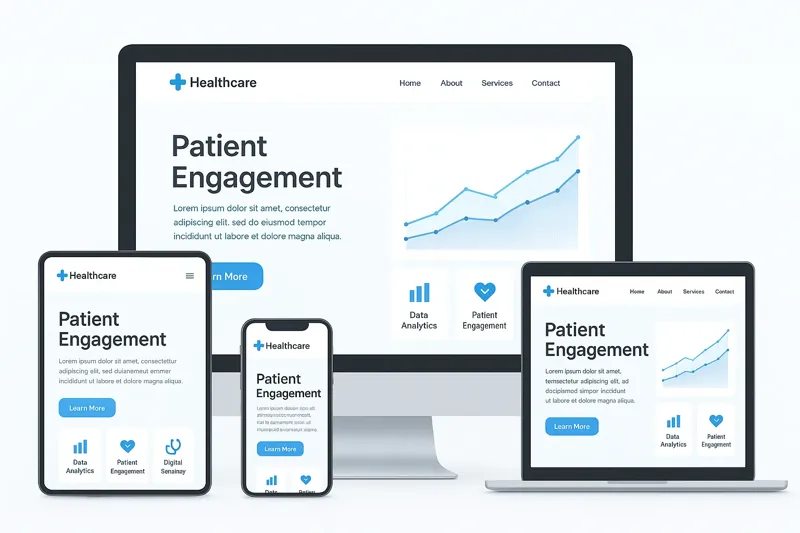
Responsive UI design guarantees that clinics' websites display and function flawlessly across all devices and screen sizes. This adaptability not only enhances usability and accessibility but also caters to diverse user preferences, whether they browse on a phone, tablet, or desktop. Such design reduces resource demands by maintaining a consistent, minimalistic aesthetic that loads quickly and looks professional.
How does website speed affect patient engagement?
Website speed is critical; studies show that if a website takes longer than three seconds to load, nearly half of potential patients may leave. Slow load times undermine patient trust and deter engagement with important features, such as provider directories or online forms. Fast-loading pages contribute to higher appointment bookings and better overall user satisfaction.
Technical approaches for performance optimization
Optimizing site performance involves several technical strategies:
- Image compression: Reduces file sizes without sacrificing visual quality, improving load times.
- Content Delivery Networks (CDNs): Distribute website content globally to shorten loading distances and enhance speed.
- Minimal plugin usage: Avoids unnecessary scripts that can slow down the website.
These measures collectively boost page responsiveness, enhance patient experience, and improve search engine rankings, ensuring clinics meet both user and technical expectations efficiently.
Clear Navigation, Visual Hierarchy, and Intuitive User Experience

How does clear navigation enhance user experience on clinic websites?
Clear and consistent clarity in navigation are fundamental to an effective healthcare website. They prevent user confusion by enabling patients to locate information and services quickly and efficiently. This streamlined access significantly improves patient satisfaction and engagement, while also reducing bounce rates, as visitors are less likely to abandon the site when their needs are met intuitively.
What role does visual hierarchy play in healthcare websites?
Visual hierarchy organizes website content through strategic use of clear visual hierarchy to direct users’ focus to the most important information first. In healthcare settings, this facilitates comprehension of complex medical information and guides users toward desired actions such as booking an appointment or finding providers. Clear visual cues help patients navigate confidently, reinforcing trust and reducing cognitive overload.
User experience strategies to reduce confusion and improve journey flow
Employing straightforward audience-specific user journeys combined with step-by-step guidance enhances usability by aligning with patient expectations. Familiar elements like top menus, search bars, and About Us pages reduce learning curves and make the site intuitive. Additionally, providing flexible options such as shortcuts, filters, and easy exit points empowers users to control their journey without frustration.
The use of familiar UI elements to lower learning curves
Incorporating common Familiar Website Elements improves accessibility for all users, including those less comfortable with digital platforms. Standard UI patterns foster a sense of familiarity and predictability, enabling patients to engage with the site effortlessly and focus on accessing care rather than deciphering navigation.
Together, clear navigation, effective visual hierarchy, and intuitive UI design create a seamless Website Usability that fosters patient trust and maximizes engagement on clinic websites.
Content Strategy and Patient-Focused Messaging
Developing audience-specific content and user journeys
Healthcare websites must cater to diverse visitor groups such as patients, providers, and caregivers. Designing tailored user journeys facilitates smooth navigation and allows content to specifically address each audience’s needs. Tools like mega menus and intuitive filtering options enhance this experience, making complex medical information easy to access.
Using patient-centric language to build trust
Employing language that speaks directly to patient concerns and experiences fosters trust and engagement. Clear, empathetic communication that prioritizes patient perspectives reassures users and highlights the healthcare organization's commitment to their wellbeing.
Including FAQs and clear, jargon-free information
Presenting comprehensive FAQ sections with clear, accessible answers addresses common patient questions and mitigates anxiety. This transparency improves users’ confidence, making health information approachable and actionable.
Leveraging testimonials and success stories for credibility
Authentic patient testimonials and success stories humanize the healthcare brand and serve as social proof. Sharing recent experiences offers emotional connection and validates the quality of care, enhancing credibility and encouraging patient interaction.
Why is patient-focused messaging important?
Patient-focused messaging builds trust by addressing patient concerns, fears, and informational needs in accessible language, enhancing emotional connection and increasing likelihood of engagement.
How do FAQs and testimonials contribute to website effectiveness?
FAQs reduce patient anxiety by addressing common questions clearly, while testimonials provide social proof that reinforces trust and credibility for prospective patients.
Interactive Features and User Control to Enhance Engagement

What interactive features improve clinic website engagement?
Integrating interactive elements such as scheduling appointments online and patient portals significantly streamlines patient access to services. These features not only facilitate easy booking but also help reduce administrative workload by automating routine tasks.
Find-a-provider tools with advanced filtering options—including specialty, location, and language empower users to quickly identify suitable healthcare professionals, boosting patient engagement and satisfaction.
Live chat and virtual consultation capabilities further enhance engagement by providing immediate support and personalized care access, fostering trust and reducing barriers to communication.
How does user control affect UX on healthcare sites?
User control is a vital component of effective healthcare website design. Clear back and exit buttons allow users to easily reverse navigation steps, correcting mistakes without frustration. This flexibility improves usability in healthcare websites and user satisfaction.
Additionally, providing multiple navigation pathways gives users the autonomy to explore the site according to their preferences, minimizing confusion and bounce rates.
These design choices collectively strengthen user retention by ensuring a seamless, stress-free browsing experience, crucial in healthcare contexts where users seek reliable and accessible information.
By prioritizing interactive tools and empowering user control, healthcare websites can achieve higher patient engagement levels and improved operational efficiency.
SEO, Compliance, and Security Considerations in Redesign
How do SEO and compliance affect clinic website success?
SEO best practices profoundly impact a healthcare clinic's online success by boosting visibility and driving high-quality patient traffic. Strategies such as localized SEO and mobile-first healthcare website design ensure that clinics appear prominently in search results, especially on mobile devices where over 60% of healthcare site visits originate. Effective SEO also integrates targeted keywords and metadata relevant to healthcare services, increasing discoverability and patient acquisition opportunities.
Compliance with regulations like HIPAA, ADA, WCAG, and GDPR is equally critical. These standards ensure the website protects patient privacy, data security, and accessibility for individuals with disabilities. Adhering to these regulations builds patient trust, reduces legal risks, and underscores a commitment to ethical healthcare service delivery. Together, SEO and compliance establish a foundation for both attracting and retaining patients through trustworthy and accessible digital experiences.
What security practices are essential for healthcare websites?
Protecting sensitive patient information is non-negotiable in healthcare web design. Essential security measures include implementing HTTPS protocols to encrypt data transmitted between the user and the website. Data encryption for stored patient information adds an additional safeguard against breaches.
Multi-factor authentication ensures that only authorized personnel can access protected areas or patient records, further enhancing security. Compliance with HIPAA mandates strict handling of Protected Health Information (PHI), requiring encryption, audit controls, and secure communication tools.
By integrating these security features, healthcare websites reassure patients about their data's privacy and integrity, fostering trust and compliance with legal requirements.
How to build patient trust through reputation management?
Reputation management in healthcare websites is vital for establishing credibility. This involves actively displaying verified patient testimonials, transparent communication about services and pricing, and maintaining up-to-date content that reflects clinical expertise.
Incorporating social proof through positive reviews and ensuring consistency across web and social media platforms encourages patient confidence. Secure, user-friendly appointment booking systems with clear calls-to-action empower patients, enhancing satisfaction and reinforcing trust.
| Aspect | Details | Benefits |
|---|---|---|
| SEO | Local SEO, Mobile Optimization, Relevant Keywords | Higher Visibility, Patient Growth |
| Compliance | HIPAA, ADA, WCAG, GDPR adherence | Legal Compliance, Trust |
| Security | HTTPS, Data Encryption, Multi-factor Authentication | Data Protection, User Confidence |
| Reputation Management | Testimonials, Transparent Content, Consistent Branding | Credibility, Patient Loyalty |
Strategic Project Planning and Post-Launch Optimization

What steps ensure a successful healthcare website redesign project?
A successful healthcare website redesign begins with a comprehensive site audit for healthcare websites to evaluate current site functionality, responsiveness, content accuracy, analytics, branding, and SEO performance. This audit identifies existing issues and opportunities for improvement.
Building a multidisciplinary team with clearly defined roles is crucial. This team typically includes internal stakeholders, designers, developers, content strategists, and compliance experts. Clear communication and involvement of all key participants throughout the project reduce risks and enhance final outcomes.
Developing realistic timelines and milestones ensures tasks such as content creation, wireframing, design, functionality testing, and stakeholder reviews proceed efficiently. Timelines must balance thorough quality assurance efforts with project momentum to avoid delays.
Understanding and defining user personas and business objectives guide content and design decisions to meet patient and organizational needs effectively. Incorporating extensive testing and gaining stakeholder approvals at each phase solidify alignment across all parties.
Why is post-launch optimization important?
Post-launch, continuous monitoring and analysis of performance metrics—such as organic traffic, conversion rates, bounce rates, and user engagement—are essential. These insights highlight areas for refinement and help prioritize improvement efforts.
Integrating user feedback, security updates, and evolving compliance requirements sustains a trustworthy and accessible website experience. Iterative updates ensure the site adapts to changing healthcare environments, user expectations, and technology advancements.
Ongoing refinement supports integration with broader marketing strategies, optimizes SEO impact, and improves patient engagement metrics over time, ultimately maximizing the website's value and return on investment.
Visual Consistency, Branding, and Conversion-Focused Design

Establishing a strong, consistent visual identity
A unified visual identity is fundamental to building patient trust and recognition. Consistency in colors, typography, and layout stabilizes the user's perception of the healthcare brand. This steady branding approach makes providers memorable and instills confidence that the organization delivers reliable, high-quality care.
Using high-quality images and branding elements
High-resolution photos of facilities, staff, and patient interactions add authenticity and humanize the healthcare experience. Custom icons and a coherent color scheme reinforce professionalism. Such visual cues not only improve aesthetic appeal but also help patients feel reassured and connected before their first visit.
Designing intentional calls-to-action aligned with user intent
Effective calls-to-action (CTAs) guide users smoothly toward desired outcomes like appointment scheduling or contacting a provider. These CTAs should be clearly visible, action-oriented, and contextually relevant to the page content. When CTAs align with patient goals, conversion rates improve significantly by reducing friction and simplifying next steps.
Creating a clean, professional, and trustworthy online presence
Minimalist, uncluttered design enhances user experience by enabling focus on essential information without distraction. Fast loading speeds and mobile responsiveness further contribute to user satisfaction and search engine visibility. Altogether, a professional website signals digital trustworthiness, which critically influences patient decisions in healthcare selection.
How does visual consistency affect patient trust?
Consistent branding and professional visuals reinforce credibility and make the healthcare provider memorable, fostering patient confidence in the quality of care.
What design elements drive higher conversion rates?
Clear call-to-action buttons, streamlined navigation, fast load times, and messaging that resonates with patient goals encourage appointment bookings and other desired actions.
Future-Proofing Clinic Websites with Ongoing Improvement
Importance of continuous updates and maintenance
Maintaining a healthcare website beyond its launch is crucial to sustain functionality, security, and patient engagement. Routine updates ensure compliance with evolving regulations, fix broken links, and keep content relevant and trustworthy, thereby reinforcing clinical credibility.
Leveraging analytics and user feedback for enhancements
Utilizing analytics tools like Google Search Console and implementing user feedback mechanisms enable clinics to monitor site performance and uncover usability issues. Data-driven insights inform targeted improvements in navigation, content accuracy, and interactive features, driving better user experiences and higher conversion rates.
Integrating websites within broader marketing strategies
A clinic’s website should function as a central hub within an integrated digital marketing ecosystem. Coordinating SEO, social media presence, paid advertising, and email campaigns with site content and functionality amplifies reach, strengthens brand trust, and guides patients toward desired actions such as appointment bookings.
The impact of a modernized, user-friendly website on patient growth
A fast, responsive, and accessible website fosters digital trust, elevates perceived quality of care, and reduces barriers to scheduling. Measurable outcomes from well-executed redesigns include increased organic traffic, improved engagement, and higher appointment volumes, which ultimately contribute to sustained patient growth and practice success.
Why Clinics Need a Strategic Website Redesign
Importance of Website Redesign for Clinics
A strategic website redesign is essential for clinics aiming to enhance patient engagement, improve operational efficiency, and stay competitive in the digital healthcare landscape. Outdated websites often suffer from slow load times, poor navigation, and lack of mobile optimization, leading to patient frustration and loss of potential appointments. A modern, user-centric redesign signals professionalism and builds digital trust, which directly impacts patient acquisition and retention.
Common Signs a Clinic Website Needs Updating
Clinics should consider redesigning their websites if they experience slow load speeds (over three seconds), non-mobile-friendly layouts, outdated appearance, absence of online appointment booking, lack of social proof, or if they feel embarrassed by their current site. Broken links and poor content organization also signal the need for a refresh to maintain credibility and user satisfaction.
Impact of First Impressions on Patient Trust and Acquisition
A clinic’s website is often the first point of contact for prospective patients, and 94% of people say web design influences their trust in a site. Clear, patient-focused copy, consistent branding, genuine testimonials, and intuitive navigation are critical elements that establish trust and reduce patient anxiety. Fast loading times and accessibility features contribute to a seamless experience, encouraging users to schedule appointments and engage with the clinic.
Mobile Responsiveness as a Critical Factor
With over 91% of adults owning smartphones and more than 60% of healthcare website traffic coming from mobile devices, mobile responsiveness is non-negotiable. Mobile-friendly designs ensure that users can access essential information and complete actions like appointment scheduling efficiently across all device types. Websites optimized for mobile not only improve patient satisfaction but also rank better on search engines, making them vital for clinic growth.
Prioritizing User-Centric Design and Accessibility
Why is User-Centricity in Healthcare Websites important?
User-centric design is fundamental in healthcare website development because it centers on understanding and addressing the specific needs and expectations of patients and healthcare providers. By identifying distinct user personas — such as patients, caregivers, and clinicians — designers can tailor content, functionality, and navigation to enhance engagement and trust. This approach improves usability by simplifying complex medical information and streamlining access to vital services like appointment booking and provider directories.
Understanding patient and healthcare provider needs
Healthcare users often require clear, jargon-free information, easy navigation, and accessible interactive tools. Providers, on the other hand, benefit from integrated platforms that support patient engagement and administrative efficiency. Designing with these nuanced requirements in mind enables a more empathetic and functional experience, ultimately facilitating better health outcomes and operational workflows.
User personas in healthcare website design
Developing detailed user personas helps pinpoint the motivations and behaviors of target audiences. This strategic insight guides the creation of audience-specific journeys and interfaces that anticipate user goals—whether that’s researching symptoms, finding specialists, or managing care plans. Personas enable customization of content and features, improving satisfaction and reducing confusion.
How do accessibility standards influence website design?
Adhering to accessibility and WCAG compliance is essential to ensure healthcare websites are inclusive for all users, including those with disabilities. These standards mandate features such as screen reader compatibility, alternative text for images, captioning for multimedia, keyboard navigation, and sufficient color contrast. Compliance not only supports legal and ethical obligations but also enhances overall usability by creating a more equitable digital environment.
Creating inclusive digital experiences for all patients
Inclusive design involves implementing accessibility features alongside responsive layouts and mobile-first healthcare website design. Websites should accommodate diverse abilities and preferences, providing customizable interfaces and assistive technologies. This inclusivity fosters greater patient trust and broadens service reach. Hospitals and practices that prioritize accessibility demonstrate commitment to health equity and improve digital engagement across populations.
By integrating user-centric design principles and comprehensive accessibility into healthcare website redesigns, organizations can significantly enhance patient experience, operational efficiency, and regulatory compliance.
Responsive, Mobile-First, and Performance Optimization
Why is mobile optimization essential for clinics' websites?
With over 91% of adults owning smartphones and the majority of healthcare-related queries happening on mobile devices, mobile-first healthcare website design has become indispensable for clinics. A mobile-optimized website ensures patients can easily access information and services like appointment scheduling without obstacles. Poor mobile experiences—such as awkward navigation or unreadable layouts—lead to user frustration and high bounce rates, leaving clinics at a competitive disadvantage.
Responsive UI design and cross-device compatibility
Responsive UI design guarantees that clinics' websites display and function flawlessly across all devices and screen sizes. This adaptability not only enhances usability and accessibility but also caters to diverse user preferences, whether they browse on a phone, tablet, or desktop. Such design reduces resource demands by maintaining a consistent, minimalistic aesthetic that loads quickly and looks professional.
How does website speed affect patient engagement?
Website speed is critical; studies show that if a website takes longer than three seconds to load, nearly half of potential patients may leave. Slow load times undermine patient trust and deter engagement with important features, such as provider directories or online forms. Fast-loading pages contribute to higher appointment bookings and better overall user satisfaction.
Technical approaches for performance optimization
Optimizing site performance involves several technical strategies:
- Image compression: Reduces file sizes without sacrificing visual quality, improving load times.
- Content Delivery Networks (CDNs): Distribute website content globally to shorten loading distances and enhance speed.
- Minimal plugin usage: Avoids unnecessary scripts that can slow down the website.
These measures collectively boost page responsiveness, enhance patient experience, and improve search engine rankings, ensuring clinics meet both user and technical expectations efficiently.
Clear Navigation, Visual Hierarchy, and Intuitive User Experience
How does clear navigation enhance user experience on clinic websites?
Clear and consistent clarity in navigation are fundamental to an effective healthcare website. They prevent user confusion by enabling patients to locate information and services quickly and efficiently. This streamlined access significantly improves patient satisfaction and engagement, while also reducing bounce rates, as visitors are less likely to abandon the site when their needs are met intuitively.
What role does visual hierarchy play in healthcare websites?
Visual hierarchy organizes website content through strategic use of clear visual hierarchy to direct users’ focus to the most important information first. In healthcare settings, this facilitates comprehension of complex medical information and guides users toward desired actions such as booking an appointment or finding providers. Clear visual cues help patients navigate confidently, reinforcing trust and reducing cognitive overload.
User experience strategies to reduce confusion and improve journey flow
Employing straightforward audience-specific user journeys combined with step-by-step guidance enhances usability by aligning with patient expectations. Familiar elements like top menus, search bars, and About Us pages reduce learning curves and make the site intuitive. Additionally, providing flexible options such as shortcuts, filters, and easy exit points empowers users to control their journey without frustration.
The use of familiar UI elements to lower learning curves
Incorporating common Familiar Website Elements improves accessibility for all users, including those less comfortable with digital platforms. Standard UI patterns foster a sense of familiarity and predictability, enabling patients to engage with the site effortlessly and focus on accessing care rather than deciphering navigation.
Together, clear navigation, effective visual hierarchy, and intuitive UI design create a seamless Website Usability that fosters patient trust and maximizes engagement on clinic websites.
Content Strategy and Patient-Focused Messaging
Developing audience-specific content and user journeys
Healthcare websites must cater to diverse visitor groups such as patients, providers, and caregivers. Designing tailored user journeys facilitates smooth navigation and allows content to specifically address each audience’s needs. Tools like mega menus and intuitive filtering options enhance this experience, making complex medical information easy to access.
Using patient-centric language to build trust
Employing language that speaks directly to patient concerns and experiences fosters trust and engagement. Clear, empathetic communication that prioritizes patient perspectives reassures users and highlights the healthcare organization's commitment to their wellbeing.
Including FAQs and clear, jargon-free information
Presenting comprehensive FAQ sections with clear, accessible answers addresses common patient questions and mitigates anxiety. This transparency improves users’ confidence, making health information approachable and actionable.
Leveraging testimonials and success stories for credibility
Authentic patient testimonials and success stories humanize the healthcare brand and serve as social proof. Sharing recent experiences offers emotional connection and validates the quality of care, enhancing credibility and encouraging patient interaction.
Why is patient-focused messaging important?
Patient-focused messaging builds trust by addressing patient concerns, fears, and informational needs in accessible language, enhancing emotional connection and increasing likelihood of engagement.
How do FAQs and testimonials contribute to website effectiveness?
FAQs reduce patient anxiety by addressing common questions clearly, while testimonials provide social proof that reinforces trust and credibility for prospective patients.
Interactive Features and User Control to Enhance Engagement
What interactive features improve clinic website engagement?
Integrating interactive elements such as scheduling appointments online and patient portals significantly streamlines patient access to services. These features not only facilitate easy booking but also help reduce administrative workload by automating routine tasks.
Find-a-provider tools with advanced filtering options—including specialty, location, and language empower users to quickly identify suitable healthcare professionals, boosting patient engagement and satisfaction.
Live chat and virtual consultation capabilities further enhance engagement by providing immediate support and personalized care access, fostering trust and reducing barriers to communication.
How does user control affect UX on healthcare sites?
User control is a vital component of effective healthcare website design. Clear back and exit buttons allow users to easily reverse navigation steps, correcting mistakes without frustration. This flexibility improves usability in healthcare websites and user satisfaction.
Additionally, providing multiple navigation pathways gives users the autonomy to explore the site according to their preferences, minimizing confusion and bounce rates.
These design choices collectively strengthen user retention by ensuring a seamless, stress-free browsing experience, crucial in healthcare contexts where users seek reliable and accessible information.
By prioritizing interactive tools and empowering user control, healthcare websites can achieve higher patient engagement levels and improved operational efficiency.
SEO, Compliance, and Security Considerations in Redesign
How do SEO and compliance affect clinic website success?
SEO best practices profoundly impact a healthcare clinic's online success by boosting visibility and driving high-quality patient traffic. Strategies such as localized SEO and mobile-first healthcare website design ensure that clinics appear prominently in search results, especially on mobile devices where over 60% of healthcare site visits originate. Effective SEO also integrates targeted keywords and metadata relevant to healthcare services, increasing discoverability and patient acquisition opportunities.
Compliance with regulations like HIPAA, ADA, WCAG, and GDPR is equally critical. These standards ensure the website protects patient privacy, data security, and accessibility for individuals with disabilities. Adhering to these regulations builds patient trust, reduces legal risks, and underscores a commitment to ethical healthcare service delivery. Together, SEO and compliance establish a foundation for both attracting and retaining patients through trustworthy and accessible digital experiences.
What security practices are essential for healthcare websites?
Protecting sensitive patient information is non-negotiable in healthcare web design. Essential security measures include implementing HTTPS protocols to encrypt data transmitted between the user and the website. Data encryption for stored patient information adds an additional safeguard against breaches.
Multi-factor authentication ensures that only authorized personnel can access protected areas or patient records, further enhancing security. Compliance with HIPAA mandates strict handling of Protected Health Information (PHI), requiring encryption, audit controls, and secure communication tools.
By integrating these security features, healthcare websites reassure patients about their data's privacy and integrity, fostering trust and compliance with legal requirements.
How to build patient trust through reputation management?
Reputation management in healthcare websites is vital for establishing credibility. This involves actively displaying verified patient testimonials, transparent communication about services and pricing, and maintaining up-to-date content that reflects clinical expertise.
Incorporating social proof through positive reviews and ensuring consistency across web and social media platforms encourages patient confidence. Secure, user-friendly appointment booking systems with clear calls-to-action empower patients, enhancing satisfaction and reinforcing trust.
| Aspect | Details | Benefits |
|---|---|---|
| SEO | Local SEO, Mobile Optimization, Relevant Keywords | Higher Visibility, Patient Growth |
| Compliance | HIPAA, ADA, WCAG, GDPR adherence | Legal Compliance, Trust |
| Security | HTTPS, Data Encryption, Multi-factor Authentication | Data Protection, User Confidence |
| Reputation Management | Testimonials, Transparent Content, Consistent Branding | Credibility, Patient Loyalty |
Strategic Project Planning and Post-Launch Optimization
What steps ensure a successful healthcare website redesign project?
A successful healthcare website redesign begins with a comprehensive site audit for healthcare websites to evaluate current site functionality, responsiveness, content accuracy, analytics, branding, and SEO performance. This audit identifies existing issues and opportunities for improvement.
Building a multidisciplinary team with clearly defined roles is crucial. This team typically includes internal stakeholders, designers, developers, content strategists, and compliance experts. Clear communication and involvement of all key participants throughout the project reduce risks and enhance final outcomes.
Developing realistic timelines and milestones ensures tasks such as content creation, wireframing, design, functionality testing, and stakeholder reviews proceed efficiently. Timelines must balance thorough quality assurance efforts with project momentum to avoid delays.
Understanding and defining user personas and business objectives guide content and design decisions to meet patient and organizational needs effectively. Incorporating extensive testing and gaining stakeholder approvals at each phase solidify alignment across all parties.
Why is post-launch optimization important?
Post-launch, continuous monitoring and analysis of performance metrics—such as organic traffic, conversion rates, bounce rates, and user engagement—are essential. These insights highlight areas for refinement and help prioritize improvement efforts.
Integrating user feedback, security updates, and evolving compliance requirements sustains a trustworthy and accessible website experience. Iterative updates ensure the site adapts to changing healthcare environments, user expectations, and technology advancements.
Ongoing refinement supports integration with broader marketing strategies, optimizes SEO impact, and improves patient engagement metrics over time, ultimately maximizing the website's value and return on investment.
Visual Consistency, Branding, and Conversion-Focused Design
Establishing a strong, consistent visual identity
A unified visual identity is fundamental to building patient trust and recognition. Consistency in colors, typography, and layout stabilizes the user's perception of the healthcare brand. This steady branding approach makes providers memorable and instills confidence that the organization delivers reliable, high-quality care.
Using high-quality images and branding elements
High-resolution photos of facilities, staff, and patient interactions add authenticity and humanize the healthcare experience. Custom icons and a coherent color scheme reinforce professionalism. Such visual cues not only improve aesthetic appeal but also help patients feel reassured and connected before their first visit.
Designing intentional calls-to-action aligned with user intent
Effective calls-to-action (CTAs) guide users smoothly toward desired outcomes like appointment scheduling or contacting a provider. These CTAs should be clearly visible, action-oriented, and contextually relevant to the page content. When CTAs align with patient goals, conversion rates improve significantly by reducing friction and simplifying next steps.
Creating a clean, professional, and trustworthy online presence
Minimalist, uncluttered design enhances user experience by enabling focus on essential information without distraction. Fast loading speeds and mobile responsiveness further contribute to user satisfaction and search engine visibility. Altogether, a professional website signals digital trustworthiness, which critically influences patient decisions in healthcare selection.
How does visual consistency affect patient trust?
Consistent branding and professional visuals reinforce credibility and make the healthcare provider memorable, fostering patient confidence in the quality of care.
What design elements drive higher conversion rates?
Clear call-to-action buttons, streamlined navigation, fast load times, and messaging that resonates with patient goals encourage appointment bookings and other desired actions.
Future-Proofing Clinic Websites with Ongoing Improvement
Importance of continuous updates and maintenance
Maintaining a healthcare website beyond its launch is crucial to sustain functionality, security, and patient engagement. Routine updates ensure compliance with evolving regulations, fix broken links, and keep content relevant and trustworthy, thereby reinforcing clinical credibility.
Leveraging analytics and user feedback for enhancements
Utilizing analytics tools like Google Search Console and implementing user feedback mechanisms enable clinics to monitor site performance and uncover usability issues. Data-driven insights inform targeted improvements in navigation, content accuracy, and interactive features, driving better user experiences and higher conversion rates.
Integrating websites within broader marketing strategies
A clinic’s website should function as a central hub within an integrated digital marketing ecosystem. Coordinating SEO, social media presence, paid advertising, and email campaigns with site content and functionality amplifies reach, strengthens brand trust, and guides patients toward desired actions such as appointment bookings.
The impact of a modernized, user-friendly website on patient growth
A fast, responsive, and accessible website fosters digital trust, elevates perceived quality of care, and reduces barriers to scheduling. Measurable outcomes from well-executed redesigns include increased organic traffic, improved engagement, and higher appointment volumes, which ultimately contribute to sustained patient growth and practice success.