

Why a Strategic Website Redesign is Crucial for Healthcare Clinics
Importance of Healthcare Website Redesign
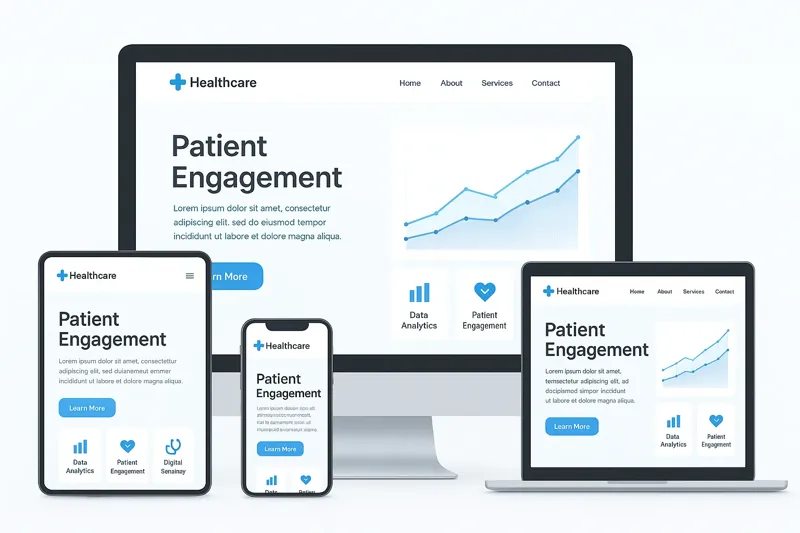
A strategic redesign of healthcare websites is essential to align digital presence with evolving patient expectations. Modern patients operate with a digital-first mindset, expecting seamless online appointment booking, quick access to medical records, and immediate, trustworthy information. Outdated websites with slow load times or poor mobile optimization can deter patient engagement and undermine credibility.
Impact on Patient Engagement and Clinical Efficiency
A modern website significantly enhances patient engagement by offering an intuitive user experience, fast load speeds, and mobile-first design, which are critical since mobile traffic now surpasses desktop use. Enhanced conversion paths, including streamlined appointment booking and payment systems, increase patient acquisition and retention. Moreover, improved clinical efficiency is supported through secure portals for communication and HIPAA compliance, ensuring both safety and regulatory adherence.
Necessity of Modern Digital Presence in Healthcare
With over 64% of adult internet users researching health information online and 91% of U.S. adults owning smartphones, a professionally designed, responsive healthcare website is vital. It acts as the first impression, influencing patient trust and perceived quality of care. A strategic redesign, focused on comprehensive functionality rather than just aesthetics, maximizes organic traffic, reduces bounce rates, and ultimately drives higher appointment rates, delivering measurable return on investment for healthcare clinics.
The Imperative for Redesigning Healthcare Websites
Why is redesigning a healthcare website necessary?
Redesigning a healthcare website is vital to maintain a user-friendly Healthcare Websites, accessible, and compliant digital platform. Outdated websites with poor Healthcare Website Mobile Optimization, slow load times, and lack of essential features such as Online Appointment Booking for Patients and telehealth services negatively impact Patient Engagement through Digital Platforms and trust. A modern redesign enhances convenience, supports digital-first patient behaviors, and professionally represents the healthcare practice’s brand.
Reasons for healthcare website redesign
Healthcare websites must evolve to address the digital expectations of today's patients. Key reasons for redesign include:
- Incorporating Mobile-First Design for Healthcare Websites to accommodate the over 91% of U.S. adults owning smartphones.
- Enhancing Website Load Speed and Patient Acquisition for better user experience, as delays over three seconds can drastically reduce patient acquisition.
- Integrating conversion-focused features like Boosting Appointment Bookings Online and streamlined payment options.
- Ensuring Healthcare Website Accessibility compliance with legal standards such as ADA and Section 508.
- Strengthening patient trust through Secure Communication in Healthcare and showcasing clinician expertise.
Impact of outdated technology on patient engagement
Outdated technology leads to poor mobile performance, slow loading speeds, and limited functionalities that frustrate users. This results in higher bounce rates and fewer appointment bookings. Websites that fail to meet these expectations may convey a lack of professionalism and reliability, ultimately damaging the practice’s credibility and patient retention. The Impact of Outdated Healthcare Websites shows the critical need for continual improvements.
Modern patient digital behaviors
Patients adopt a digital-first mindset, beginning their healthcare journey online, with 64% conducting Health Information Online Search Statistics. They expect responsive, accessible websites offering instant booking, easy access to records, and educational resources. Modern healthcare consumers prioritize speed, convenience, and clear navigation, making an optimized website a critical tool for Patient Engagement through Digital Platforms and engagement.
Enhancing User Experience through Design and Performance Optimization
How can user experience be improved on healthcare websites?
Improving user experience (UX) on healthcare websites revolves around creating a digital environment that is fast, accessible, and intuitive. A critical factor is site speed optimization; studies show that over half of mobile users abandon websites that take longer than three seconds to load. Prioritizing fast load times prevents patient frustration and reduces bounce rates, directly impacting patient engagement and conversion. For more insights, see UX design in healthcare websites.
Adopting a mobile-first and responsive design is essential given that mobile traffic now surpasses desktop visits. A mobile-optimized website ensures seamless usability across devices, catering to over 91% of U.S. adults who own smartphones. Responsive design adapts pages dynamically, delivering consistent experiences from smartphones to desktops. Explore details about Mobile-First Design for Healthcare Websites and Mobile-Friendly Healthcare Design.
Simplified navigation significantly enhances UX by minimizing unnecessary clicks and clearly guiding users through appointment booking, information search, and billing processes. Well-organized menus, prominent calls to action, and internal search functions help users find relevant content quickly. Learn more about Healthcare Website Navigation Tips and Calls to Action in Healthcare.
Accessibility features are also paramount. Incorporating keyboard navigation, alt text for images, high-contrast visuals, and readable fonts ensures compliance with ADA and Section 508 standards while widening access to all patients, including those with disabilities. Not only does this foster inclusivity, but it also improves SEO rankings as search engines favor user-friendly sites. See comprehensive guidance on Healthcare Website Accessibility Features and Healthcare Website Accessibility.
In summary, healthcare websites that combine fast performance, responsive layouts, clear navigation, and robust accessibility provide a welcoming, efficient digital experience, increasing patient trust and engagement while supporting organizational goals. Additional best practices and examples can be found under Benefits of Healthcare Website Redesign.
SEO: Driving Organic Traffic and Patient Acquisition

Why is SEO important in healthcare?
SEO is essential for healthcare providers as it drives measurable growth from high-intent health searches. With over 70,000 health-related queries on Google per minute in the U.S., optimizing for search engines connects medical practices with patients actively seeking care. A strong SEO strategy enhances visibility, builds trust, and supports sustainable patient acquisition. For more details, see Healthcare SEO Guide and SEO for healthcare.
How should healthcare providers develop their keyword strategy?
Effective keyword strategies focus on targeting long-tail, intent-specific, and location-based keywords, such as "pediatric dermatologist in New York" or "urgent care near me." These keywords address patients' specific needs and improve connection with high-intent local users, maximizing relevance and conversion. Refer to Healthcare SEO strategies and Medical website SEO best practices for additional keyword development insights.
What are the technical SEO essentials for healthcare websites?
Critical technical SEO elements include:
- Fast site loading speeds, optimized for mobile, as slow sites increase bounce rates.
- Secure HTTPS connections to ensure patient data safety and trust.
- Structured internal linking to improve navigation and distribute page authority. Together, these factors contribute to higher search rankings and better user experience. Learn more at Technical SEO for healthcare websites and Optimizing Healthcare Websites.
How do schema markup and backlink building enhance healthcare SEO?
Implementing structured data schema markup enables rich search results, increasing visibility and click-through rates. Building quality backlinks from reputable healthcare directories and medical sites strengthens site authority, improving organic rankings and credibility. Visit Urgent Care SEO Strategies and Healthcare SEO strategies for more information.
How is SEO performance measured and optimized?
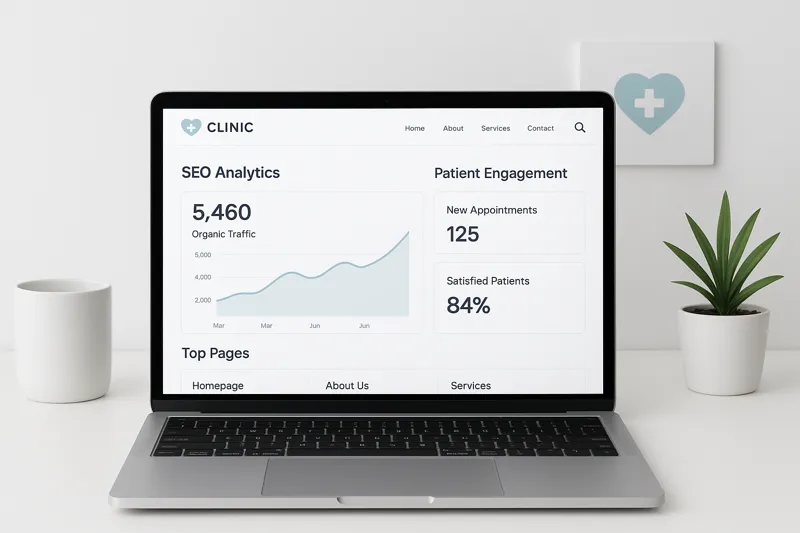
Healthcare providers use analytics tools like Google Analytics, SEMrush, and Ahrefs to monitor key performance indicators, including organic traffic, bounce rates, and conversion rates. Regular analysis helps refine SEO strategies for continuous growth. See SEO for healthcare and Healthcare SEO strategies for guidance on performance measurement.
What are the four main digital marketing strategies applicable to healthcare?
The four main digital marketing strategies for healthcare are Search Engine Optimization (SEO), content marketing, social media marketing, and email marketing. SEO enhances visibility on search engines, helping patients find providers easily, critical for patient acquisition. Additional information can be found at Digital marketing for clinics and Healthcare SEO strategies.
Local SEO: Capturing Nearby Patients Effectively
Why is Local SEO Important for Clinics?
Local SEO is essential for healthcare clinics aiming to attract patients in their immediate geographic area. Since 75% of urgent care and other local health-related searches do not go past the first page of search results, clinics must optimize their online presence to appear prominently in those results. Patients typically search using location-specific keywords like “urgent care near me” or “pediatric dermatologist in New York,” making local SEO crucial to connect practices with high-intent nearby patients. For more on these strategies, see Local SEO for Urgent Care Clinics and Local SEO for healthcare providers.
How to Optimize Your Google Business Profile and Bing Places
Maintaining a comprehensive and up-to-date Google Business Profile and Bing Places listing significantly enhances visibility in local map packs and search results. These profiles should include accurate clinic names, addresses, phone numbers (NAP), service offerings, photos, booking hours, and regular reviews. Properly optimized profiles ensure clinics appear in the top local searches, boosting patient acquisition. Learn more about Optimizing Google Business Profile and Optimizing Healthcare Websites.
Why is Consistent NAP Information Critical?
Consistency in Name, Address, and Phone number (NAP) across all online directories, clinic websites, and social media platforms is fundamental to local SEO success. Discrepancies can confuse search engines and patients alike, diminishing trust and search rankings. Clinics must ensure NAP accuracy across platforms like Google My Business, Yelp, WebMD, and healthcare-specific directories. This is detailed in NAP Consistency Importance and Healthcare SEO Guide.
What Role Does Local Keyword Targeting Play?
Targeting long-tail, location-specific keywords allows clinics to reach patients actively looking for their services in nearby areas. Tailored keywords such as “emergency hospital Los Angeles” or “urgent care center in Chicago” refine search intent and improve rank. This strategy aligns with the digital patient journey, where 64% of adults conduct health-related queries online. Additional insights are available in Long-tail keywords in medical SEO and Healthcare SEO strategies.
How Do Online Reviews Influence Local SEO and Reputation?
Patient reviews are invaluable for both local SEO rankings and building credibility. Higher and recent positive reviews increase a clinic’s visibility in local searches and improve trustworthiness in the eyes of prospective patients. Actively managing and responding to reviews fosters a positive reputation and steady patient engagement. Explore more about Impact of Patient Reviews on SEO and Building trust with E-E-A-T.
| Local SEO Component | Importance | Recommended Practices |
|---|---|---|
| Local SEO Importance | Connects clinics with nearby patients | Optimize for “near me” and location keywords (Local SEO for healthcare providers) |
| Google Business and Bing Places | Enhances local map visibility | Complete profiles with accurate info (Google Business Profile optimization |
| NAP Consistency | Ensures trust and ranking | Uniform data across all directories (NAP Consistency Importance) |
| Local Keyword Targeting | Captures high-intent searches | Use long-tail, location-specific keywords (Healthcare SEO strategies) |
| Review Management | Boosts rankings and credibility | Encourage, monitor, and respond to reviews (Impact of Patient Reviews on SEO |
Effectively implementing local SEO strategies tailored to healthcare clinics supports measurable growth in patient acquisition and strengthens community trust, which are vital for sustained success in healthcare marketing.
Content Strategy: Building Trust with Patients Through Expertise and Authority

Creating High-Quality, Informative Content
Healthcare websites must prioritize producing detailed, accurate, and patient-focused content that addresses common questions and specific health concerns. This informational approach not only attracts qualified traffic but also establishes the website as a reliable resource for medical knowledge. See Medical website SEO best practices.
Highlighting Clinician Expertise and E-E-A-T Principles
Showcasing clinicians' credentials, experience, and authority builds patient confidence. Emphasizing Expertise, Experience, Authoritativeness, and Trustworthiness (E-E-A-T) is especially crucial for Your Money Your Life (YMYL) healthcare topics, influencing search rankings and patient decisions. Learn more about Building trust with E-E-A-T.
Leveraging Patient Testimonials and Social Proof
Incorporating authentic patient reviews and success stories enhances credibility and helps prospective patients relate. Social proof serves as a powerful trust signal, reinforcing a healthcare provider’s reputation and differentiating it from competitors. For insights on Social Proof for Healthcare Marketing, visit the link.
Engaging Users with Video and Visual Content
Videos, infographics, and photos significantly increase engagement by simplifying complex information and inviting patient interaction. Visual content boosts site visibility with Google, making it about 50 times more likely to reach first-page rankings. Explore ideas in Healthcare Website SEO strategies.
Regular Content Updates for SEO Performance
Consistently refreshing and expanding website content ensures relevance, signals activity to search engines, and maintains high organic rankings. This proactive content management supports sustained patient acquisition and long-term digital growth. More about Healthcare SEO strategies.
This multi-faceted content strategy not only strengthens patient trust but also optimizes healthcare websites for measurable growth in patient engagement and acquisition. For a comprehensive view, see Benefits of Healthcare Website Redesign.
Accessibility and Compliance: Essential Elements in Healthcare Web Design
ADA and Section 508 Compliance
Healthcare websites must comply with the Americans with Disabilities Act (ADA) and Section 508 regulations to ensure accessibility for all users, especially patients with disabilities. Compliance is not only a legal mandate but also vital for providing equitable access to healthcare information and services. For more details, see Healthcare website accessibility features.
Accessibility Features to Implement
Key accessibility features include keyboard navigation for those unable to use a mouse, alternative text (alt text) for images to assist screen readers, and high-contrast visuals that improve readability for users with visual impairments. Additionally, providing text alternatives for media and ensuring WCAG-compliant document formats enhance user engagement and satisfaction. Learn more about this at Healthcare website accessibility features.
Benefits of Accessibility
Accessible websites foster patient trust and reduce frustration, which can prevent loss of potential patients to competitors. Effective accessibility also positively influences search engine optimization (SEO), as search engines favor well-structured, user-friendly sites. Enhanced accessibility improves overall patient satisfaction by making health information and services easier to navigate. Explore the topic further in Benefits of Healthcare Websites.
HIPAA Considerations in Website Design and SEO
Incorporating HIPAA compliance into website design and SEO strategies is crucial for protecting patient data and maintaining regulatory integrity. Secure, encrypted connections and HIPAA-compliant platforms for services like online appointment scheduling and payments help safeguard sensitive information, reinforcing patient trust and legal adherence. For comprehensive guidance, see Healthcare SEO Guide and Benefits of Healthcare Websites.
Conversion Rate Optimization: Turning Visitors Into Patients
Enhancing Conversion Paths Like Appointment Booking and Payments
Effective conversion rate optimization (CRO) in healthcare websites focuses on streamlining key patient actions such as appointment booking and payment processes. Ensuring these pathways are intuitive and fast can significantly reduce patient drop-off, improving both engagement and clinic visitations.
Mobile Pay Options and Secure Platforms
Offering mobile payment options integrated with HIPAA-compliant, data-secure platforms eases patient stress around medical bills. These solutions support automated payments and reduce friction, facilitating quicker financial transactions and reinforcing patients' trust in digital health services (Build healthcare user journeys).
Strategic Placement of Calls to Action (CTAs)
The precise positioning and clarity of CTAs guide users seamlessly towards desired actions, such as scheduling appointments or accessing patient portals. Placement should be informed by user behavior insights, ensuring CTAs are visible without being intrusive, thus promoting higher conversion rates (Healthcare Website Design Examples).
Patient Journey Mapping and User Personas
Developing detailed patient journey maps and user personas allows the customization of website experiences to address the specific needs and preferences of diverse patient groups. Tailored navigation and content based on these insights simplify decision-making and enhance patient satisfaction (Build healthcare user journeys.
A/B Testing and Continuous Improvement
Adopting a data-driven optimization approach through A/B testing enables healthcare marketers to compare different design elements and functionalities, isolating which factors most effectively drive conversion. Continuous improvement—using analytics and user feedback—ensures the website evolves to meet changing patient expectations and technological advances (Optimizing Healthcare Websites).
Custom Website Design: Tailoring Digital Experiences for Healthcare Providers
What are the advantages of custom website design for healthcare providers?
Custom website design offers healthcare providers a unique opportunity to create a digital presence that is precisely aligned with their specific operational needs and patient expectations. By building a site tailored to the distinct brand identity of the practice, custom design fosters patient trust and enhances credibility, which are crucial components in healthcare marketing (Benefits of Healthcare Websites).
Branding and trust-building are core advantages; a bespoke design seamlessly incorporates visual elements and messaging that reinforce the healthcare provider’s reputation for quality and reliability (Building Credibility with Healthcare Websites. This personalized approach encourages patient engagement and loyalty (Patient Engagement through Digital Platforms).
Scalability and flexibility are inherent benefits, allowing healthcare websites to adapt to evolving technologies and expanding services without compromising performance or user experience (UX design in healthcare websites). This future-proofing supports integration with advanced tools such as secure patient portals and telehealth platforms, which streamline appointment scheduling, medical record access, and remote consultations (Telehealth Integration in Healthcare Websites.
Security and compliance integration are central to custom designs in healthcare. Tailored websites can embed stringent HIPAA-compliant security measures, ensuring patient data protection and regulatory adherence (Healthcare Websites and HIPAA Compliance, HIPAA compliance in SEO. This integration builds confidence among patients while safeguarding the provider against legal risks (HIPAA compliance in SEO.
Overall, custom website design transforms healthcare digital experiences by combining intuitive navigation, robust security, and flexible functionality to support growth and enhance patient satisfaction (Benefits of Healthcare Website Redesign.
Leveraging Digital Marketing to Amplify Clinic Growth
What is digital marketing in healthcare and how can it benefit medical practices?
Digital marketing in healthcare refers to the use of online channels such as search engine optimization (SEO), social media, email marketing, and websites to help medical practices engage with current and prospective patients. This strategic approach enhances visibility, educates patients with valuable, trustworthy information, and builds confidence through social proof like patient testimonials and success stories. Digital campaigns are tailored to meet compliance standards, particularly HIPAA, ensuring patient data security and trust. For more details, see Digital marketing for clinics.
Overview of digital marketing in healthcare
Digital marketing is vital for clinics seeking to expand their reach and improve patient acquisition. It involves creating a strong, responsive online presence including SEO-optimized websites, engaging educational content, and email campaigns that nurture patient relationships. A comprehensive digital strategy also targets local audiences through local SEO, ensuring clinics appear in relevant local searches. Learn more about Digital marketing for clinics and Healthcare SEO Guide.
Role of social media platforms like Facebook and Instagram
Social media is a cornerstone for healthcare marketing, with platforms such as Facebook and Instagram serving as primary channels for patient engagement and brand awareness. Approximately 93% of healthcare marketers use social media, with Facebook leading at 98% usage. These platforms support sharing educational videos, patient stories, and timely updates, facilitating direct interaction with patients and fostering community trust. Explore Digital marketing for clinics for deeper insights into social media patient engagement.
Paid advertising impact
Healthcare organizations typically allocate about 12.5% of their marketing budgets to paid digital advertising. Targeted advertising campaigns help amplify clinic visibility, precisely reach high-intent patients, and encourage invaluable actions like appointment bookings. Paid ads complement organic efforts, providing measurable ROI and accelerating patient growth. More information can be found under Digital marketing for clinics.
Email marketing for patient engagement
Email campaigns deliver personalized content, appointment reminders, health tips, and satisfaction surveys. These interactions improve patient retention and loyalty, supporting continuous engagement beyond initial visits. This is part of broader Patient engagement strategies and Digital marketing for clinics.
Data-driven strategies
Leveraging analytics tools enables healthcare marketers to assess campaign performance rigorously. Data metrics such as traffic sources, conversion rates, and patient engagement guide optimization efforts to refine targeting and maximize marketing ROI. Continuous improvements based on user behavior and feedback uphold the clinic’s competitive edge in a rapidly evolving digital healthcare landscape. For comprehensive guidance see Benefits of Healthcare Website Redesign and Optimizing Healthcare Websites.
Patient Experience Improvement: Integrating UX with Clinical Care
How can healthcare providers improve patient experience?
Healthcare providers enhance patient experience by optimizing scheduling systems to minimize wait times and reduce patient stress. The adoption of digital forms significantly cuts down on paperwork, streamlining administrative processes for patients and staff alike. Creating comfortable and welcoming physical and digital environments contributes to patient satisfaction.
Clear and empathetic communication remains critical; trained staff equipped with communication skills can effectively engage patients, ensuring their concerns and needs are addressed. Continuous staff training and engagement cultivate stronger patient-provider relationships and consistent care quality. Additionally, integrating technology such as patient feedback tools enables providers to monitor satisfaction and identify improvement areas, fostering a culture of continuous quality enhancement.
What are the 4 P's of patient experience in healthcare?
The 4 P's framework guides providers in delivering superior patient experiences:
- Proactive Care: Anticipating patient needs before they arise to prevent issues and enhance care efficiency.
- Personalized Care: Customizing treatment plans and interactions to each patient’s unique circumstances and preferences.
- Predictive Care: Utilizing data analytics and health records to foresee health risks and intervene early.
- Precise Care: Ensuring accuracy in diagnosis and treatment to improve clinical outcomes and patient satisfaction.
Impact of patient-centered website design
A patient-centered website is essential to enhancing the overall experience. Such sites feature intuitive navigation, fast load times, mobile responsiveness, and accessibility, enabling patients to quickly find information and complete actions like appointment booking or bill payment. These digital touchpoints reflect the organization's professionalism and support seamless care coordination.
Technology use to reduce wait times and paperwork
Digital solutions such as online scheduling platforms and electronic health records reduce administrative burdens, allowing patients to self-manage appointments and update health information remotely. This leads to reduced waiting room time and fewer errors in patient data.
Importance of clear communication and staff training
Ensuring staff are well-trained in both clinical and communication skills helps maintain a consistent patient experience across all touchpoints. Clear communication alleviates anxiety and fosters trust, vital elements in patient engagement and retention.
Securing Leadership Support for Website Redesign Initiatives

Why Is a Data-Driven Approach Crucial for Leadership Buy-In?
Leadership support is pivotal for securing resources and budget for healthcare website redesigns. Employing a data-driven website redesign approach demonstrates the current website's shortcomings through objective performance metrics such as traffic trends, bounce rates, session durations, appointment conversion rates, and mobile engagement. This empirical evidence creates a compelling narrative that underscores the necessity for redesign, shifting the project from a discretionary marketing expense to a strategic investment aligned with measurable outcomes.
How Can Redesign Objectives Align with Broader Organizational Goals?
To gain executive approval, website redesign goals should map directly to organizational priorities. These often include improving patient acquisition and retention strategies, enhancing online appointment scheduling improvements, increasing revenue streams, and elevating overall patient satisfaction. Presenting the redesign as an enabler of these goals positions the project as integral to achieving the healthcare institution’s strategic ambitions.
What Role Does Stakeholder Involvement Play in the Redesign Process?
Building cross-departmental support enhances the redesign initiative's credibility. Early involvement of clinical leaders, human resources, patient experience teams, and IT staff ensures the redesigned site addresses varied needs, from regulatory compliance to user experience enhancements. This collaborative approach fosters internal champions who advocate for the project within leadership circles.
How Can Metrics and Storytelling Demonstrate ROI to Leadership?
Combining quantitative data with compelling storytelling creates a persuasive case for redesign. Visual dashboards showcasing improvements in appointment bookings, reduced bounce rates, enhanced mobile engagement, and increased patient inquiries provide tangible evidence. Supplementing this with patient testimonials or success stories illustrates the site’s impact on patient experience, thus reinforcing the value of investment through both numbers and narratives.
The Future of Healthcare Digital Experiences: Trends and Innovations

How is AI-Powered Personalization Shaping Healthcare Websites?
AI-powered personalization is revolutionizing patient engagement strategies by tailoring content, recommendations, and appointment prompts to individual user needs. This strategic use of artificial intelligence enriches the online patient journey, increases website conversion rates, and supports clinical efficiency by anticipating patient expectations with customized AI-Powered Personalization in Healthcare.
What Role Does Telehealth and Digital Therapeutics Integration Play?
Telehealth's growing acceptance—favored by 88% of Americans post-Covid—and digital therapeutics delivered via apps like Insula are central to modern Benefits of Healthcare Websites. Integrating these technologies enables clinicians to extend care beyond traditional settings, offering remote consultations and personalized chronic disease management, which improves patient access and adherence.
How Are Wearable Health Technologies Influencing Patient Care?
Wearable health technology, projected to become a $37.4 billion market by 2028, empowers continuous health monitoring with innovations such as microfluidic patches for real-time biomarker analysis. Their integration with healthcare websites can provide patients and providers with valuable, actionable data that supports proactive health management and personalized care plans.
What Are the Emerging Applications of AR and VR in Healthcare?
Augmented and virtual reality technologies are expanding healthcare capabilities, from surgical assistance to cognitive training for seniors. Expected to grow to a $4.05 billion market by 2032, AR/VR applications enhance clinical training, patient education, and therapeutic interventions, offering immersive experiences through digital healthcare UX trends 2026.
How Does Blockchain Enhance Data Security in Healthcare?
Blockchain technology improves patient control over medical records and secures sensitive clinical data. Examples such as Novo Nordisk’s blockchain applications for clinical trials demonstrate how blockchain fortifies data integrity and compliance with healthcare regulations, thereby reinforcing patient trust and legal security.
Healthcare websites that incorporate these cutting-edge innovations not only align with evolving patient expectations but also enhance marketing effectiveness by delivering secure, accessible, and personalized digital experiences that drive measurable patient growth.
Maximizing Clinic Growth with a Thoughtfully Redesigned Website
Benefits of a Strategic Redesign
A well-planned website redesign dramatically enhances SEO and user engagement, serving as the foundation for attracting and retaining patients. Modernized sites improve mobile optimization and loading speeds—critical as over 91% of U.S. adults use smartphones—while streamlined navigation reduces bounce rates. These improvements boost organic traffic and appointment bookings, yielding measurable returns on healthcare marketing investments.
Continuous Improvement and Compliance
Ongoing optimization using analytics and user feedback ensures the website stays efficient and patient-centered. Maintaining HIPAA compliance and accessibility standards not only protects patient data but also builds trust and adherence to legal requirements. Features like secure online payments and multilingual interfaces expand accessibility and patient satisfaction.
Digital Marketing’s Role
Sustaining patient acquisition necessitates integrated digital marketing strategies including local SEO, social media engagement, and content marketing. Utilizing platforms such as Google Business Profile and Facebook, along with regular updates and positive patient reviews, strengthens online visibility and reputation. Transparency and compliance foster credibility, reinforcing long-term patient relationships and clinic growth.
Why a Strategic Website Redesign is Crucial for Healthcare Clinics
Importance of Healthcare Website Redesign
A strategic redesign of healthcare websites is essential to align digital presence with evolving patient expectations. Modern patients operate with a digital-first mindset, expecting seamless online appointment booking, quick access to medical records, and immediate, trustworthy information. Outdated websites with slow load times or poor mobile optimization can deter patient engagement and undermine credibility.
Impact on Patient Engagement and Clinical Efficiency
A modern website significantly enhances patient engagement by offering an intuitive user experience, fast load speeds, and mobile-first design, which are critical since mobile traffic now surpasses desktop use. Enhanced conversion paths, including streamlined appointment booking and payment systems, increase patient acquisition and retention. Moreover, improved clinical efficiency is supported through secure portals for communication and HIPAA compliance, ensuring both safety and regulatory adherence.
Necessity of Modern Digital Presence in Healthcare
With over 64% of adult internet users researching health information online and 91% of U.S. adults owning smartphones, a professionally designed, responsive healthcare website is vital. It acts as the first impression, influencing patient trust and perceived quality of care. A strategic redesign, focused on comprehensive functionality rather than just aesthetics, maximizes organic traffic, reduces bounce rates, and ultimately drives higher appointment rates, delivering measurable return on investment for healthcare clinics.
The Imperative for Redesigning Healthcare Websites
Why is redesigning a healthcare website necessary?
Redesigning a healthcare website is vital to maintain a user-friendly Healthcare Websites, accessible, and compliant digital platform. Outdated websites with poor Healthcare Website Mobile Optimization, slow load times, and lack of essential features such as Online Appointment Booking for Patients and telehealth services negatively impact Patient Engagement through Digital Platforms and trust. A modern redesign enhances convenience, supports digital-first patient behaviors, and professionally represents the healthcare practice’s brand.
Reasons for healthcare website redesign
Healthcare websites must evolve to address the digital expectations of today's patients. Key reasons for redesign include:
- Incorporating Mobile-First Design for Healthcare Websites to accommodate the over 91% of U.S. adults owning smartphones.
- Enhancing Website Load Speed and Patient Acquisition for better user experience, as delays over three seconds can drastically reduce patient acquisition.
- Integrating conversion-focused features like Boosting Appointment Bookings Online and streamlined payment options.
- Ensuring Healthcare Website Accessibility compliance with legal standards such as ADA and Section 508.
- Strengthening patient trust through Secure Communication in Healthcare and showcasing clinician expertise.
Impact of outdated technology on patient engagement
Outdated technology leads to poor mobile performance, slow loading speeds, and limited functionalities that frustrate users. This results in higher bounce rates and fewer appointment bookings. Websites that fail to meet these expectations may convey a lack of professionalism and reliability, ultimately damaging the practice’s credibility and patient retention. The Impact of Outdated Healthcare Websites shows the critical need for continual improvements.
Modern patient digital behaviors
Patients adopt a digital-first mindset, beginning their healthcare journey online, with 64% conducting Health Information Online Search Statistics. They expect responsive, accessible websites offering instant booking, easy access to records, and educational resources. Modern healthcare consumers prioritize speed, convenience, and clear navigation, making an optimized website a critical tool for Patient Engagement through Digital Platforms and engagement.
Enhancing User Experience through Design and Performance Optimization
How can user experience be improved on healthcare websites?
Improving user experience (UX) on healthcare websites revolves around creating a digital environment that is fast, accessible, and intuitive. A critical factor is site speed optimization; studies show that over half of mobile users abandon websites that take longer than three seconds to load. Prioritizing fast load times prevents patient frustration and reduces bounce rates, directly impacting patient engagement and conversion. For more insights, see UX design in healthcare websites.
Adopting a mobile-first and responsive design is essential given that mobile traffic now surpasses desktop visits. A mobile-optimized website ensures seamless usability across devices, catering to over 91% of U.S. adults who own smartphones. Responsive design adapts pages dynamically, delivering consistent experiences from smartphones to desktops. Explore details about Mobile-First Design for Healthcare Websites and Mobile-Friendly Healthcare Design.
Simplified navigation significantly enhances UX by minimizing unnecessary clicks and clearly guiding users through appointment booking, information search, and billing processes. Well-organized menus, prominent calls to action, and internal search functions help users find relevant content quickly. Learn more about Healthcare Website Navigation Tips and Calls to Action in Healthcare.
Accessibility features are also paramount. Incorporating keyboard navigation, alt text for images, high-contrast visuals, and readable fonts ensures compliance with ADA and Section 508 standards while widening access to all patients, including those with disabilities. Not only does this foster inclusivity, but it also improves SEO rankings as search engines favor user-friendly sites. See comprehensive guidance on Healthcare Website Accessibility Features and Healthcare Website Accessibility.
In summary, healthcare websites that combine fast performance, responsive layouts, clear navigation, and robust accessibility provide a welcoming, efficient digital experience, increasing patient trust and engagement while supporting organizational goals. Additional best practices and examples can be found under Benefits of Healthcare Website Redesign.
SEO: Driving Organic Traffic and Patient Acquisition
Why is SEO important in healthcare?
SEO is essential for healthcare providers as it drives measurable growth from high-intent health searches. With over 70,000 health-related queries on Google per minute in the U.S., optimizing for search engines connects medical practices with patients actively seeking care. A strong SEO strategy enhances visibility, builds trust, and supports sustainable patient acquisition. For more details, see Healthcare SEO Guide and SEO for healthcare.
How should healthcare providers develop their keyword strategy?
Effective keyword strategies focus on targeting long-tail, intent-specific, and location-based keywords, such as "pediatric dermatologist in New York" or "urgent care near me." These keywords address patients' specific needs and improve connection with high-intent local users, maximizing relevance and conversion. Refer to Healthcare SEO strategies and Medical website SEO best practices for additional keyword development insights.
What are the technical SEO essentials for healthcare websites?
Critical technical SEO elements include:
- Fast site loading speeds, optimized for mobile, as slow sites increase bounce rates.
- Secure HTTPS connections to ensure patient data safety and trust.
- Structured internal linking to improve navigation and distribute page authority. Together, these factors contribute to higher search rankings and better user experience. Learn more at Technical SEO for healthcare websites and Optimizing Healthcare Websites.
How do schema markup and backlink building enhance healthcare SEO?
Implementing structured data schema markup enables rich search results, increasing visibility and click-through rates. Building quality backlinks from reputable healthcare directories and medical sites strengthens site authority, improving organic rankings and credibility. Visit Urgent Care SEO Strategies and Healthcare SEO strategies for more information.
How is SEO performance measured and optimized?
Healthcare providers use analytics tools like Google Analytics, SEMrush, and Ahrefs to monitor key performance indicators, including organic traffic, bounce rates, and conversion rates. Regular analysis helps refine SEO strategies for continuous growth. See SEO for healthcare and Healthcare SEO strategies for guidance on performance measurement.
What are the four main digital marketing strategies applicable to healthcare?
The four main digital marketing strategies for healthcare are Search Engine Optimization (SEO), content marketing, social media marketing, and email marketing. SEO enhances visibility on search engines, helping patients find providers easily, critical for patient acquisition. Additional information can be found at Digital marketing for clinics and Healthcare SEO strategies.
Local SEO: Capturing Nearby Patients Effectively
Why is Local SEO Important for Clinics?
Local SEO is essential for healthcare clinics aiming to attract patients in their immediate geographic area. Since 75% of urgent care and other local health-related searches do not go past the first page of search results, clinics must optimize their online presence to appear prominently in those results. Patients typically search using location-specific keywords like “urgent care near me” or “pediatric dermatologist in New York,” making local SEO crucial to connect practices with high-intent nearby patients. For more on these strategies, see Local SEO for Urgent Care Clinics and Local SEO for healthcare providers.
How to Optimize Your Google Business Profile and Bing Places
Maintaining a comprehensive and up-to-date Google Business Profile and Bing Places listing significantly enhances visibility in local map packs and search results. These profiles should include accurate clinic names, addresses, phone numbers (NAP), service offerings, photos, booking hours, and regular reviews. Properly optimized profiles ensure clinics appear in the top local searches, boosting patient acquisition. Learn more about Optimizing Google Business Profile and Optimizing Healthcare Websites.
Why is Consistent NAP Information Critical?
Consistency in Name, Address, and Phone number (NAP) across all online directories, clinic websites, and social media platforms is fundamental to local SEO success. Discrepancies can confuse search engines and patients alike, diminishing trust and search rankings. Clinics must ensure NAP accuracy across platforms like Google My Business, Yelp, WebMD, and healthcare-specific directories. This is detailed in NAP Consistency Importance and Healthcare SEO Guide.
What Role Does Local Keyword Targeting Play?
Targeting long-tail, location-specific keywords allows clinics to reach patients actively looking for their services in nearby areas. Tailored keywords such as “emergency hospital Los Angeles” or “urgent care center in Chicago” refine search intent and improve rank. This strategy aligns with the digital patient journey, where 64% of adults conduct health-related queries online. Additional insights are available in Long-tail keywords in medical SEO and Healthcare SEO strategies.
How Do Online Reviews Influence Local SEO and Reputation?
Patient reviews are invaluable for both local SEO rankings and building credibility. Higher and recent positive reviews increase a clinic’s visibility in local searches and improve trustworthiness in the eyes of prospective patients. Actively managing and responding to reviews fosters a positive reputation and steady patient engagement. Explore more about Impact of Patient Reviews on SEO and Building trust with E-E-A-T.
| Local SEO Component | Importance | Recommended Practices |
|---|---|---|
| Local SEO Importance | Connects clinics with nearby patients | Optimize for “near me” and location keywords (Local SEO for healthcare providers) |
| Google Business and Bing Places | Enhances local map visibility | Complete profiles with accurate info (Google Business Profile optimization |
| NAP Consistency | Ensures trust and ranking | Uniform data across all directories (NAP Consistency Importance) |
| Local Keyword Targeting | Captures high-intent searches | Use long-tail, location-specific keywords (Healthcare SEO strategies) |
| Review Management | Boosts rankings and credibility | Encourage, monitor, and respond to reviews (Impact of Patient Reviews on SEO |
Effectively implementing local SEO strategies tailored to healthcare clinics supports measurable growth in patient acquisition and strengthens community trust, which are vital for sustained success in healthcare marketing.
Content Strategy: Building Trust with Patients Through Expertise and Authority
Creating High-Quality, Informative Content
Healthcare websites must prioritize producing detailed, accurate, and patient-focused content that addresses common questions and specific health concerns. This informational approach not only attracts qualified traffic but also establishes the website as a reliable resource for medical knowledge. See Medical website SEO best practices.
Highlighting Clinician Expertise and E-E-A-T Principles
Showcasing clinicians' credentials, experience, and authority builds patient confidence. Emphasizing Expertise, Experience, Authoritativeness, and Trustworthiness (E-E-A-T) is especially crucial for Your Money Your Life (YMYL) healthcare topics, influencing search rankings and patient decisions. Learn more about Building trust with E-E-A-T.
Leveraging Patient Testimonials and Social Proof
Incorporating authentic patient reviews and success stories enhances credibility and helps prospective patients relate. Social proof serves as a powerful trust signal, reinforcing a healthcare provider’s reputation and differentiating it from competitors. For insights on Social Proof for Healthcare Marketing, visit the link.
Engaging Users with Video and Visual Content
Videos, infographics, and photos significantly increase engagement by simplifying complex information and inviting patient interaction. Visual content boosts site visibility with Google, making it about 50 times more likely to reach first-page rankings. Explore ideas in Healthcare Website SEO strategies.
Regular Content Updates for SEO Performance
Consistently refreshing and expanding website content ensures relevance, signals activity to search engines, and maintains high organic rankings. This proactive content management supports sustained patient acquisition and long-term digital growth. More about Healthcare SEO strategies.
This multi-faceted content strategy not only strengthens patient trust but also optimizes healthcare websites for measurable growth in patient engagement and acquisition. For a comprehensive view, see Benefits of Healthcare Website Redesign.
Accessibility and Compliance: Essential Elements in Healthcare Web Design
ADA and Section 508 Compliance
Healthcare websites must comply with the Americans with Disabilities Act (ADA) and Section 508 regulations to ensure accessibility for all users, especially patients with disabilities. Compliance is not only a legal mandate but also vital for providing equitable access to healthcare information and services. For more details, see Healthcare website accessibility features.
Accessibility Features to Implement
Key accessibility features include keyboard navigation for those unable to use a mouse, alternative text (alt text) for images to assist screen readers, and high-contrast visuals that improve readability for users with visual impairments. Additionally, providing text alternatives for media and ensuring WCAG-compliant document formats enhance user engagement and satisfaction. Learn more about this at Healthcare website accessibility features.
Benefits of Accessibility
Accessible websites foster patient trust and reduce frustration, which can prevent loss of potential patients to competitors. Effective accessibility also positively influences search engine optimization (SEO), as search engines favor well-structured, user-friendly sites. Enhanced accessibility improves overall patient satisfaction by making health information and services easier to navigate. Explore the topic further in Benefits of Healthcare Websites.
HIPAA Considerations in Website Design and SEO
Incorporating HIPAA compliance into website design and SEO strategies is crucial for protecting patient data and maintaining regulatory integrity. Secure, encrypted connections and HIPAA-compliant platforms for services like online appointment scheduling and payments help safeguard sensitive information, reinforcing patient trust and legal adherence. For comprehensive guidance, see Healthcare SEO Guide and Benefits of Healthcare Websites.
Conversion Rate Optimization: Turning Visitors Into Patients
Enhancing Conversion Paths Like Appointment Booking and Payments
Effective conversion rate optimization (CRO) in healthcare websites focuses on streamlining key patient actions such as appointment booking and payment processes. Ensuring these pathways are intuitive and fast can significantly reduce patient drop-off, improving both engagement and clinic visitations.
Mobile Pay Options and Secure Platforms
Offering mobile payment options integrated with HIPAA-compliant, data-secure platforms eases patient stress around medical bills. These solutions support automated payments and reduce friction, facilitating quicker financial transactions and reinforcing patients' trust in digital health services (Build healthcare user journeys).
Strategic Placement of Calls to Action (CTAs)
The precise positioning and clarity of CTAs guide users seamlessly towards desired actions, such as scheduling appointments or accessing patient portals. Placement should be informed by user behavior insights, ensuring CTAs are visible without being intrusive, thus promoting higher conversion rates (Healthcare Website Design Examples).
Patient Journey Mapping and User Personas
Developing detailed patient journey maps and user personas allows the customization of website experiences to address the specific needs and preferences of diverse patient groups. Tailored navigation and content based on these insights simplify decision-making and enhance patient satisfaction (Build healthcare user journeys.
A/B Testing and Continuous Improvement
Adopting a data-driven optimization approach through A/B testing enables healthcare marketers to compare different design elements and functionalities, isolating which factors most effectively drive conversion. Continuous improvement—using analytics and user feedback—ensures the website evolves to meet changing patient expectations and technological advances (Optimizing Healthcare Websites).
Custom Website Design: Tailoring Digital Experiences for Healthcare Providers
What are the advantages of custom website design for healthcare providers?
Custom website design offers healthcare providers a unique opportunity to create a digital presence that is precisely aligned with their specific operational needs and patient expectations. By building a site tailored to the distinct brand identity of the practice, custom design fosters patient trust and enhances credibility, which are crucial components in healthcare marketing (Benefits of Healthcare Websites).
Branding and trust-building are core advantages; a bespoke design seamlessly incorporates visual elements and messaging that reinforce the healthcare provider’s reputation for quality and reliability (Building Credibility with Healthcare Websites. This personalized approach encourages patient engagement and loyalty (Patient Engagement through Digital Platforms).
Scalability and flexibility are inherent benefits, allowing healthcare websites to adapt to evolving technologies and expanding services without compromising performance or user experience (UX design in healthcare websites). This future-proofing supports integration with advanced tools such as secure patient portals and telehealth platforms, which streamline appointment scheduling, medical record access, and remote consultations (Telehealth Integration in Healthcare Websites.
Security and compliance integration are central to custom designs in healthcare. Tailored websites can embed stringent HIPAA-compliant security measures, ensuring patient data protection and regulatory adherence (Healthcare Websites and HIPAA Compliance, HIPAA compliance in SEO. This integration builds confidence among patients while safeguarding the provider against legal risks (HIPAA compliance in SEO.
Overall, custom website design transforms healthcare digital experiences by combining intuitive navigation, robust security, and flexible functionality to support growth and enhance patient satisfaction (Benefits of Healthcare Website Redesign.
Leveraging Digital Marketing to Amplify Clinic Growth
What is digital marketing in healthcare and how can it benefit medical practices?
Digital marketing in healthcare refers to the use of online channels such as search engine optimization (SEO), social media, email marketing, and websites to help medical practices engage with current and prospective patients. This strategic approach enhances visibility, educates patients with valuable, trustworthy information, and builds confidence through social proof like patient testimonials and success stories. Digital campaigns are tailored to meet compliance standards, particularly HIPAA, ensuring patient data security and trust. For more details, see Digital marketing for clinics.
Overview of digital marketing in healthcare
Digital marketing is vital for clinics seeking to expand their reach and improve patient acquisition. It involves creating a strong, responsive online presence including SEO-optimized websites, engaging educational content, and email campaigns that nurture patient relationships. A comprehensive digital strategy also targets local audiences through local SEO, ensuring clinics appear in relevant local searches. Learn more about Digital marketing for clinics and Healthcare SEO Guide.
Role of social media platforms like Facebook and Instagram
Social media is a cornerstone for healthcare marketing, with platforms such as Facebook and Instagram serving as primary channels for patient engagement and brand awareness. Approximately 93% of healthcare marketers use social media, with Facebook leading at 98% usage. These platforms support sharing educational videos, patient stories, and timely updates, facilitating direct interaction with patients and fostering community trust. Explore Digital marketing for clinics for deeper insights into social media patient engagement.
Paid advertising impact
Healthcare organizations typically allocate about 12.5% of their marketing budgets to paid digital advertising. Targeted advertising campaigns help amplify clinic visibility, precisely reach high-intent patients, and encourage invaluable actions like appointment bookings. Paid ads complement organic efforts, providing measurable ROI and accelerating patient growth. More information can be found under Digital marketing for clinics.
Email marketing for patient engagement
Email campaigns deliver personalized content, appointment reminders, health tips, and satisfaction surveys. These interactions improve patient retention and loyalty, supporting continuous engagement beyond initial visits. This is part of broader Patient engagement strategies and Digital marketing for clinics.
Data-driven strategies
Leveraging analytics tools enables healthcare marketers to assess campaign performance rigorously. Data metrics such as traffic sources, conversion rates, and patient engagement guide optimization efforts to refine targeting and maximize marketing ROI. Continuous improvements based on user behavior and feedback uphold the clinic’s competitive edge in a rapidly evolving digital healthcare landscape. For comprehensive guidance see Benefits of Healthcare Website Redesign and Optimizing Healthcare Websites.
Patient Experience Improvement: Integrating UX with Clinical Care
How can healthcare providers improve patient experience?
Healthcare providers enhance patient experience by optimizing scheduling systems to minimize wait times and reduce patient stress. The adoption of digital forms significantly cuts down on paperwork, streamlining administrative processes for patients and staff alike. Creating comfortable and welcoming physical and digital environments contributes to patient satisfaction.
Clear and empathetic communication remains critical; trained staff equipped with communication skills can effectively engage patients, ensuring their concerns and needs are addressed. Continuous staff training and engagement cultivate stronger patient-provider relationships and consistent care quality. Additionally, integrating technology such as patient feedback tools enables providers to monitor satisfaction and identify improvement areas, fostering a culture of continuous quality enhancement.
What are the 4 P's of patient experience in healthcare?
The 4 P's framework guides providers in delivering superior patient experiences:
- Proactive Care: Anticipating patient needs before they arise to prevent issues and enhance care efficiency.
- Personalized Care: Customizing treatment plans and interactions to each patient’s unique circumstances and preferences.
- Predictive Care: Utilizing data analytics and health records to foresee health risks and intervene early.
- Precise Care: Ensuring accuracy in diagnosis and treatment to improve clinical outcomes and patient satisfaction.
Impact of patient-centered website design
A patient-centered website is essential to enhancing the overall experience. Such sites feature intuitive navigation, fast load times, mobile responsiveness, and accessibility, enabling patients to quickly find information and complete actions like appointment booking or bill payment. These digital touchpoints reflect the organization's professionalism and support seamless care coordination.
Technology use to reduce wait times and paperwork
Digital solutions such as online scheduling platforms and electronic health records reduce administrative burdens, allowing patients to self-manage appointments and update health information remotely. This leads to reduced waiting room time and fewer errors in patient data.
Importance of clear communication and staff training
Ensuring staff are well-trained in both clinical and communication skills helps maintain a consistent patient experience across all touchpoints. Clear communication alleviates anxiety and fosters trust, vital elements in patient engagement and retention.
Securing Leadership Support for Website Redesign Initiatives
Why Is a Data-Driven Approach Crucial for Leadership Buy-In?
Leadership support is pivotal for securing resources and budget for healthcare website redesigns. Employing a data-driven website redesign approach demonstrates the current website's shortcomings through objective performance metrics such as traffic trends, bounce rates, session durations, appointment conversion rates, and mobile engagement. This empirical evidence creates a compelling narrative that underscores the necessity for redesign, shifting the project from a discretionary marketing expense to a strategic investment aligned with measurable outcomes.
How Can Redesign Objectives Align with Broader Organizational Goals?
To gain executive approval, website redesign goals should map directly to organizational priorities. These often include improving patient acquisition and retention strategies, enhancing online appointment scheduling improvements, increasing revenue streams, and elevating overall patient satisfaction. Presenting the redesign as an enabler of these goals positions the project as integral to achieving the healthcare institution’s strategic ambitions.
What Role Does Stakeholder Involvement Play in the Redesign Process?
Building cross-departmental support enhances the redesign initiative's credibility. Early involvement of clinical leaders, human resources, patient experience teams, and IT staff ensures the redesigned site addresses varied needs, from regulatory compliance to user experience enhancements. This collaborative approach fosters internal champions who advocate for the project within leadership circles.
How Can Metrics and Storytelling Demonstrate ROI to Leadership?
Combining quantitative data with compelling storytelling creates a persuasive case for redesign. Visual dashboards showcasing improvements in appointment bookings, reduced bounce rates, enhanced mobile engagement, and increased patient inquiries provide tangible evidence. Supplementing this with patient testimonials or success stories illustrates the site’s impact on patient experience, thus reinforcing the value of investment through both numbers and narratives.
The Future of Healthcare Digital Experiences: Trends and Innovations
How is AI-Powered Personalization Shaping Healthcare Websites?
AI-powered personalization is revolutionizing patient engagement strategies by tailoring content, recommendations, and appointment prompts to individual user needs. This strategic use of artificial intelligence enriches the online patient journey, increases website conversion rates, and supports clinical efficiency by anticipating patient expectations with customized AI-Powered Personalization in Healthcare.
What Role Does Telehealth and Digital Therapeutics Integration Play?
Telehealth's growing acceptance—favored by 88% of Americans post-Covid—and digital therapeutics delivered via apps like Insula are central to modern Benefits of Healthcare Websites. Integrating these technologies enables clinicians to extend care beyond traditional settings, offering remote consultations and personalized chronic disease management, which improves patient access and adherence.
How Are Wearable Health Technologies Influencing Patient Care?
Wearable health technology, projected to become a $37.4 billion market by 2028, empowers continuous health monitoring with innovations such as microfluidic patches for real-time biomarker analysis. Their integration with healthcare websites can provide patients and providers with valuable, actionable data that supports proactive health management and personalized care plans.
What Are the Emerging Applications of AR and VR in Healthcare?
Augmented and virtual reality technologies are expanding healthcare capabilities, from surgical assistance to cognitive training for seniors. Expected to grow to a $4.05 billion market by 2032, AR/VR applications enhance clinical training, patient education, and therapeutic interventions, offering immersive experiences through digital healthcare UX trends 2026.
How Does Blockchain Enhance Data Security in Healthcare?
Blockchain technology improves patient control over medical records and secures sensitive clinical data. Examples such as Novo Nordisk’s blockchain applications for clinical trials demonstrate how blockchain fortifies data integrity and compliance with healthcare regulations, thereby reinforcing patient trust and legal security.
Healthcare websites that incorporate these cutting-edge innovations not only align with evolving patient expectations but also enhance marketing effectiveness by delivering secure, accessible, and personalized digital experiences that drive measurable patient growth.
Maximizing Clinic Growth with a Thoughtfully Redesigned Website
Benefits of a Strategic Redesign
A well-planned website redesign dramatically enhances SEO and user engagement, serving as the foundation for attracting and retaining patients. Modernized sites improve mobile optimization and loading speeds—critical as over 91% of U.S. adults use smartphones—while streamlined navigation reduces bounce rates. These improvements boost organic traffic and appointment bookings, yielding measurable returns on healthcare marketing investments.
Continuous Improvement and Compliance
Ongoing optimization using analytics and user feedback ensures the website stays efficient and patient-centered. Maintaining HIPAA compliance and accessibility standards not only protects patient data but also builds trust and adherence to legal requirements. Features like secure online payments and multilingual interfaces expand accessibility and patient satisfaction.
Digital Marketing’s Role
Sustaining patient acquisition necessitates integrated digital marketing strategies including local SEO, social media engagement, and content marketing. Utilizing platforms such as Google Business Profile and Facebook, along with regular updates and positive patient reviews, strengthens online visibility and reputation. Transparency and compliance foster credibility, reinforcing long-term patient relationships and clinic growth.