.png)

Introduction: The Imperative of Modern Healthcare Website Redesigns
The Digital Gateway to Patient Engagement
Healthcare websites have become a pivotal component in modern medicine, serving as the primary touchpoint for patient interaction and information acquisition. Around 80% of internet users in the U.S. seek medical information online, making a well-designed website crucial for attracting and retaining patients.
Adapting to a Digital-First Healthcare Environment
In today's healthcare landscape, websites function not only as informational resources but also as virtual front desks and brand emissaries. They facilitate appointment bookings, telehealth services, and patient communications, embodying the clinic’s digital front door to seamless care.
Responding to Patient Expectations
The surge in digital health demands a shift toward patient-centered design, prioritizing mobile responsiveness, clear navigation, accessibility compliance, and integrated telemedicine capabilities. Patients increasingly expect convenience, personalized content, and secure interactions that build trust and facilitate engagement.
Trends Driving Healthcare Website Evolution
Current trends including AI-driven personalization, voice search optimization, WCAG-compliant accessibility features, and IoT integration are reshaping how clinics connect with patients online. Websites now emphasize simplicity, security, and educational value, positioned to meet regulatory requirements while enhancing user experience across devices.
Modernizing a healthcare website is no longer optional but essential to remain competitive and effective in delivering patient-centered care in a rapidly evolving digital environment.
Embracing Digital Transformation: AI, Telehealth, and Personalization

Integration of AI Technologies such as Chatbots and Predictive Analytics
Artificial intelligence (AI) is revolutionizing healthcare websites by enhancing user engagement and service efficiency. AI chatbots for healthcare support provide instant patient support by answering common questions, guiding care, and facilitating appointment scheduling, all while maintaining HIPAA compliant security features to protect patient data. Predictive analytics for health leverage patient data to offer preventive health recommendations and anticipate patient needs, leading to more personalized and proactive care.
Telemedicine Features Including Video Consultations and Virtual Appointment Scheduling
Telehealth capabilities are becoming standard features on modern healthcare websites. These include video consultation portals and virtual appointment booking systems that increase convenience and accessibility for patients. Integrated telemedicine ensures compliance with HIPAA compliance for healthcare security regulations, offering confidential and seamless digital interactions between patients and providers.
Personalized User Experiences Tailored by AI-Driven Recommendations
AI-driven personalization in healthcare delivers customized content and service suggestions based on individual patient profiles and browsing behaviors. This strategic approach improves patient engagement with tailored health information, relevant care options, and targeted calls-to-action, enhancing the overall user journey and conversion rates. Personalized patient portals enable users to view appointments, receive reminders, and access personalized educational resources.
Impact of Digital Health Solutions and Wearable Device Integration
Healthcare websites now often integrate data from wearable health trackers and IoT integration in healthcare, enabling real-time health monitoring and data sharing. This integration supports chronic disease management through personalized dashboards and remote patient care. By combining web platforms with connected devices, practices enable more proactive and informed healthcare delivery, aligning with the growing trend of digital health ecosystems.
What Are the Current Major Trends in Healthcare?
The healthcare industry is undergoing a significant transformation with the adoption of advanced digital technologies such as AI, telehealth, and electronic health records. These innovations facilitate a shift toward personalized and value-based care, utilizing data analytics and genomics for precision treatment strategies. Expanding access via telemedicine and wearable devices improves convenience and patient outcomes, while stringent compliance and cybersecurity measures ensure data security practices in healthcare and trust.
User-Centered and Accessible Design: Meeting Diverse Patient Needs
What are the best practices and design trends for healthcare and medical websites?
Healthcare website design now prioritizes user-centered medical website design and accessible features to cater to diverse patient populations, including seniors and individuals with disabilities. Ensuring compliance with ADA & WCAG compliance and WCAG 2.2 AA compliance standards is foundational. This includes implementing keyboard navigation features , screen reader compatibility, and proper form labeling for healthcare to ensure content is accessible to users with varying abilities.
ADA and WCAG compliance and features such as keyboard navigation and screen reader compatibility
Websites must be fully navigable via keyboard and compatible with screen readers, facilitating access for users with motor or visual impairments. Regular accessibility audits in healthcare help maintain adherence to evolving standards and ensure barrier-free use.
Accessible design elements including alt text, high-contrast fonts, and captioned videos
Incorporating alt text for images enhances usability for blind users. High-contrast fonts and layouts assist users with poor vision, while captioned videos for accessibility support those who are deaf or hard of hearing, making rich media content inclusive.
Incorporation of dark mode and customizable themes for user comfort
Offering dark mode and customizable themes caters to users with light sensitivity or who browse at night, improving comfort and reducing eye strain. Such options reflect user comfort in healthcare websites and empathetic design supporting diverse patient needs.
Serving seniors and disabled users with inclusive design
Enlarged clickable buttons, simplified navigation, and clear messaging reduce cognitive load and accommodate seniors and disabled users. These elements foster trust and improve engagement, crucial for healthcare decision-making, as promoted in Healthcare Website Usability for Seniors and Inclusive healthcare web design.
By embracing these practices, healthcare websites create welcoming and compliant digital environments that respect patient diversity and enhance overall user experience in healthcare web design.
Mobile-First, Speed, and Seamless Navigation: Foundations of Modern UX
Importance of Responsive and Mobile-First Design Due to Majority Mobile Traffic
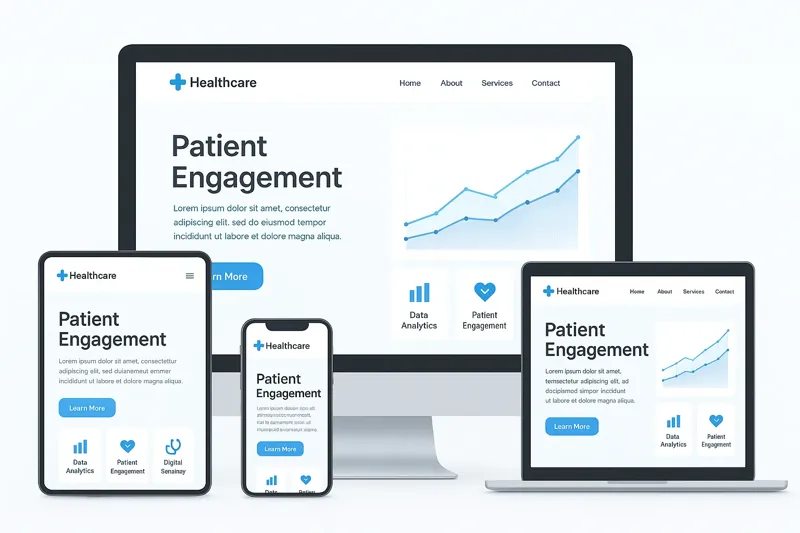
More than half of U.S. healthcare website visits come from mobile devices. Modern healthcare websites must be designed with Mobile-first healthcare websites principles, ensuring content, imagery, and functionality seamlessly adjust to various screen sizes. This approach maximizes patient accessibility and engagement by catering to their preferred devices.
Optimization of Website Speed with Load Times Under 3 Seconds
Fast loading times are critical in Fast load times in healthcare websites. Research shows that pages taking longer than 3 seconds to load cause visitors to abandon sites and reduce engagement. Optimizing site performance through efficient coding, image compression, and smart caching maintains user attention and boosts conversion rates.
Simplified and Intuitive Navigation Structures Including Clear Menus and Search Functionality
Healthcare websites often contain complex information. Streamlined navigation with clear menus, categorized service sections, and prominent search bars allow patients to quickly locate critical information. Simplified navigation reduces user frustration and supports seamless digital patient journeys with Healthcare website navigation and Healthcare website navigation best practices.
Use of Micro-Interactions and Subtle Animations to Enhance Engagement Without Slowing Performance
Adding micro-interactions such as button hover effects and progress indicators can improve user engagement and provide feedback without compromising speed. Subtle animations guide users intuitively through the site, creating a more dynamic and approachable interface, as recommended in Micro-interactions in healthcare UX.
What Are the Best Practices and Design Trends for Healthcare and Medical Websites?
Successful healthcare websites combine mobile responsiveness, fast page loads under 3 seconds, and intuitive navigation with clear calls-to-action. They enhance user experience by integrating interactive features like micro-interactions and ensuring their design fosters usability, trust, and accessibility across all devices, aligning with Healthcare website design tips and Best practices for medical website development.
Security, Privacy, and Compliance: Building Trust Through Technology

What are the best practices and design trends for healthcare and medical websites?
Healthcare websites today must prioritize robust security, privacy, and regulatory compliance to establish and maintain patient trust. Fundamentally, adherence to HIPAA Compliance for Healthcare Websites regulations is non-negotiable. This includes implementing SSL Encryption for Healthcare Websites to safeguard data transmissions, using Encrypted patient forms for collecting patient information, and Secure patient portals for confidential access.
Beyond encryption, technical safeguards are integral. Websites should employ Transport Layer Security (TLS) (TLS Encryption for Healthcare Sites), granular access controls to restrict data access to authorized personnel, and audit logging to track access and changes, ensuring accountability and detecting potential breaches promptly.
Additionally, these websites must undergo regular accessibility audits to ensure ongoing compliance with ADA & WCAG compliance (ADA Compliance for Healthcare Websites). Features such as Keyboard navigation in healthcare websites, Screen reader compatibility, high-contrast fonts, and alt text not only meet legal requirements but also enhance usability for seniors, individuals with disabilities, and all users, fostering inclusivity (Accessibility features in healthcare websites).
Transparency about data usage supports patient confidence. Clear privacy policies and straightforward communication about how patient information is stored, used, and protected reinforce ethical standards in healthcare digital experiences (Transparency in Healthcare Data Use).
Together, these practices create a secure, accessible, and trustworthy online environment. Combining HIPAA compliant security features with ADA and WCAG accessibility standards allows healthcare providers to deliver digital services that are not only legally compliant but also Patient-centered website design, fostering long-term engagement and retention (Healthcare website design tips).
Content Strategy and SEO: Elevating Visibility and Authority
Developing and auditing content to align with patient personas and SEO goals
A robust content strategy begins with a comprehensive Conducting a Content Audit to assess existing materials, identify keyword gaps, and evaluate structural organization. Updating patient personas based on current demographics and behaviors ensures content resonates effectively with target audiences. Aligning website content with these personas and SEO objectives promotes a clear, consistent brand voice while addressing patient needs.
Incorporating blogs, FAQs, videos, and educational resources to boost engagement
Diversifying content formats enhances user engagement and positions healthcare providers as trusted authorities. Blogs offer timely insights on medical topics; FAQs for patient education help address common patient concerns, saving staff time and improving user experience; video content, such as provider interviews and patient testimonials, increases transparency and reduces patient anxiety; and educational resources empower patients with knowledge relevant to their care journey.
Local SEO tactics including geo-targeted keywords and optimized Google My Business profiles
Optimizing for local search plays a crucial role in attracting nearby patients. Using geo-targeted keywords within website content and meta tags, structuring accurate business information with Local SEO strategies for healthcare, and maintaining an optimized Google My Business profile improve visibility in local search results. These tactics ensure that patients find the healthcare practice easily when searching for services in their area.
Regularly refreshing content to maintain relevance and improve search rankings
Consistently updating website content with new blogs, certifications, news, or service updates signals to search engines that the site is active and authoritative. This practice boosts SEO rankings, enhances user trust, and reflects a commitment to keeping patients informed. Continuous content optimization based on analytics supports sustained growth in organic traffic and patient engagement. See also Healthcare Website Redesigns.
Best practices and design trends for healthcare and medical websites
Effective healthcare websites integrate mobile-friendly, authoritative, and accessible content combined with strategic SEO and local optimization. Transparency, user-centered design, and regular content updates build patient trust and improve conversion rates. Educational patient-centric materials and clear, simplified navigation further enhance user satisfaction and brand credibility. For more on Healthcare Website Design Best Practices and Healthcare web design trends 2026.
Design Elements That Build Credibility: Branding, Visuals, and Storytelling

Use of high-quality original imagery and patient testimonials to build trust
Healthcare websites benefit significantly from authentic visuals. Original photography showcasing real patients and staff fosters trust and credibility much better than generic stock images. Patient testimonials and success stories provide social proof, reassuring visitors about the quality and reliability of care. See Healthcare website imagery and Patient testimonials and reviews for examples.
Calming color palettes and minimalist layouts to reduce patient anxiety
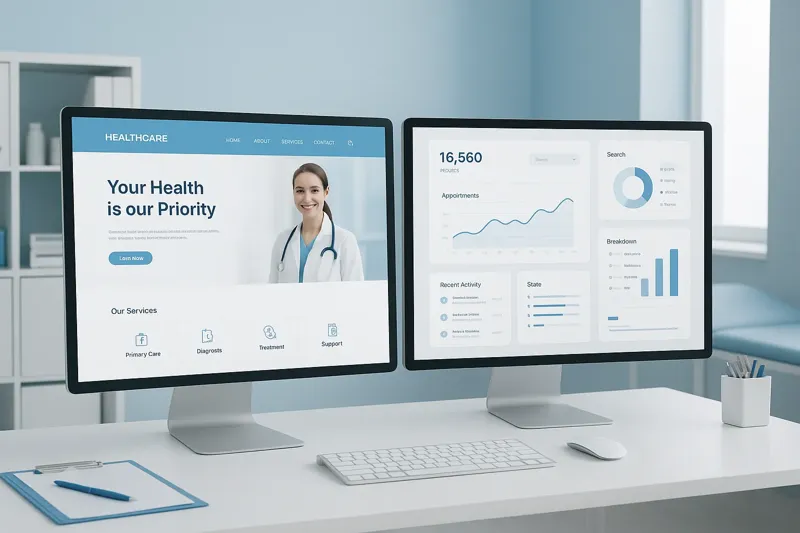
Design choices like soft blues, neutrals, and subtle color schemes create a serene online environment that eases patient anxiety. Minimalist layouts with clear spacing help convey information cleanly and reduce cognitive overload. These design strategies contribute to a sense of safety and professionalism. Learn more under Calming colors in healthcare websites and Minimalist healthcare design.
Inclusion of videos and animated storytelling to humanize the clinic and engage visitors
Incorporating short videos and subtle animations enhances visitor engagement. Storytelling elements such as provider introductions, patient testimonials, and animated infographics help communicate complex medical concepts and clinic values more effectively. These media formats humanize the clinic, fostering emotional connections with prospective patients. Refer to Healthcare website videos and animations and Video storytelling on healthcare websites.
Showcasing provider credentials and transparent clinic identity
Transparent presentation of physician qualifications, experience, and affiliations builds organizational credibility. Highlighting clinic identity with consistent branding elements and trust signals like certifications or awards establishes a reputable image that patients seek when choosing providers. See Building Trust with Provider Credentials and Healthcare Website Branding Tips.
What should digital marketing agencies specializing in healthcare focus on to attract high-value patients?
To attract high-value patients, agencies should develop credible, compliant online presences that feature professional bios, authentic multimedia content, and patient testimonials. Prioritizing personalized content with clear service details enhances engagement and differentiates practices in a competitive digital healthcare landscape. Check Healthcare website design strategies, Patient-centered website design, and Working with experienced healthcare web design partners for additional guidance.
Advanced Features Driving Patient Engagement and Convenience

What should digital marketing agencies specializing in healthcare focus on to attract high-value patients?
Digital marketing agencies targeting the healthcare sector must prioritize patient-centered website design features that enhance engagement and convenience. Key functionalities include online appointment scheduling with immediate booking options, which streamline patient access and reduce barriers to care. Integrating telehealth portals enables virtual visit functionalities, meeting the growing demand for remote healthcare services and improving patient satisfaction.
AI-powered chatbots offer instant support by answering common queries and guiding appointment bookings efficiently, ensuring patients receive timely assistance 24/7. Furthermore, interactive tools such as symptom checkers and personalized dashboards connected to wearable health devices empower patients by providing tailored health insights and promoting proactive care management.
These features not only improve user experience in healthcare web design but also foster higher appointment conversion rates and patient retention. By implementing these advanced digital capabilities, healthcare providers can attract high-value patients who prioritize convenience and personalized service, giving practices a competitive edge in the evolving digital healthcare landscape.
Preparing for the Future: Modular, Scalable, and Sustainable Design
What should digital marketing agencies specializing in healthcare focus on to attract high-value patients?
To successfully attract and retain high-value patients, digital marketing agencies specializing in healthcare must prioritize building websites that are modular and scalable. Implementing a modular Content Management System (CMS) allows healthcare providers to easily adapt their websites as services expand or regulations evolve. This adaptability supports compliance with complex healthcare standards such as HIPAA and WCAG, which remain dynamic.
Agencies should also optimize healthcare websites for emerging technologies, including interoperable APIs and digital twins. These technologies enable seamless data integration and enhanced patient-provider interactions, laying the groundwork for more personalized and efficient care experiences.
Sustainability is increasingly important in healthcare web design. Employing eco-friendly hosting solutions and sustainable design practices not only reduce environmental impact but also appeal to environmentally conscious patients, strengthening brand reputation.
Continuous optimization through analytics is essential. Utilizing tools like Google Analytics enables agencies to monitor website performance, user engagement, and SEO effectiveness. This data-driven approach supports ongoing adaptation to regulatory changes and evolving patient needs, ensuring that healthcare websites remain competitive and compliant.
In summary, focusing on modularity, technological readiness, sustainability, and continuous performance optimization equips healthcare websites to thrive in a rapidly evolving digital landscape while meeting patient and regulatory demands.
Conclusion: Strategic Website Redesigns Empower Modern Clinics
Embracing Essential Redesign Trends
Modern healthcare website redesigns focus on integrating telemedicine, AI-driven personalization, and streamlined UX/UI design. Emphasis on mobile responsiveness, accessibility compliance (ADA, WCAG), and fast loading times ensures all users receive an inclusive and efficient experience.
Balancing Technology with Security and Accessibility
Successful redesigns marry advanced technologies like AI chatbots, secure telehealth portals, and IoT integration with rigorous HIPAA-compliant security measures. This balanced approach protects sensitive patient data while delivering accessible, user-friendly services.
Digital Marketing Agencies as Strategic Partners
Expert digital marketing agencies help clinics by aligning website features with market demands—conducting content audits, optimizing SEO, and implementing patient-centric design. Their involvement boosts patient attraction and retention, driving measurable clinic growth.
Investing in Website Redesign for Growth
Clinics must prioritize comprehensive website redesigns that combine technological innovation, data security, accessibility, and superior user experience. Such investments empower clinics to thrive in a digital-first healthcare landscape by enhancing patient engagement and trust.
Introduction: The Imperative of Modern Healthcare Website Redesigns
The Digital Gateway to Patient Engagement
Healthcare websites have become a pivotal component in modern medicine, serving as the primary touchpoint for patient interaction and information acquisition. Around 80% of internet users in the U.S. seek medical information online, making a well-designed website crucial for attracting and retaining patients.
Adapting to a Digital-First Healthcare Environment
In today's healthcare landscape, websites function not only as informational resources but also as virtual front desks and brand emissaries. They facilitate appointment bookings, telehealth services, and patient communications, embodying the clinic’s digital front door to seamless care.
Responding to Patient Expectations
The surge in digital health demands a shift toward patient-centered design, prioritizing mobile responsiveness, clear navigation, accessibility compliance, and integrated telemedicine capabilities. Patients increasingly expect convenience, personalized content, and secure interactions that build trust and facilitate engagement.
Trends Driving Healthcare Website Evolution
Current trends including AI-driven personalization, voice search optimization, WCAG-compliant accessibility features, and IoT integration are reshaping how clinics connect with patients online. Websites now emphasize simplicity, security, and educational value, positioned to meet regulatory requirements while enhancing user experience across devices.
Modernizing a healthcare website is no longer optional but essential to remain competitive and effective in delivering patient-centered care in a rapidly evolving digital environment.
Embracing Digital Transformation: AI, Telehealth, and Personalization
Integration of AI Technologies such as Chatbots and Predictive Analytics
Artificial intelligence (AI) is revolutionizing healthcare websites by enhancing user engagement and service efficiency. AI chatbots for healthcare support provide instant patient support by answering common questions, guiding care, and facilitating appointment scheduling, all while maintaining HIPAA compliant security features to protect patient data. Predictive analytics for health leverage patient data to offer preventive health recommendations and anticipate patient needs, leading to more personalized and proactive care.
Telemedicine Features Including Video Consultations and Virtual Appointment Scheduling
Telehealth capabilities are becoming standard features on modern healthcare websites. These include video consultation portals and virtual appointment booking systems that increase convenience and accessibility for patients. Integrated telemedicine ensures compliance with HIPAA compliance for healthcare security regulations, offering confidential and seamless digital interactions between patients and providers.
Personalized User Experiences Tailored by AI-Driven Recommendations
AI-driven personalization in healthcare delivers customized content and service suggestions based on individual patient profiles and browsing behaviors. This strategic approach improves patient engagement with tailored health information, relevant care options, and targeted calls-to-action, enhancing the overall user journey and conversion rates. Personalized patient portals enable users to view appointments, receive reminders, and access personalized educational resources.
Impact of Digital Health Solutions and Wearable Device Integration
Healthcare websites now often integrate data from wearable health trackers and IoT integration in healthcare, enabling real-time health monitoring and data sharing. This integration supports chronic disease management through personalized dashboards and remote patient care. By combining web platforms with connected devices, practices enable more proactive and informed healthcare delivery, aligning with the growing trend of digital health ecosystems.
What Are the Current Major Trends in Healthcare?
The healthcare industry is undergoing a significant transformation with the adoption of advanced digital technologies such as AI, telehealth, and electronic health records. These innovations facilitate a shift toward personalized and value-based care, utilizing data analytics and genomics for precision treatment strategies. Expanding access via telemedicine and wearable devices improves convenience and patient outcomes, while stringent compliance and cybersecurity measures ensure data security practices in healthcare and trust.
User-Centered and Accessible Design: Meeting Diverse Patient Needs
What are the best practices and design trends for healthcare and medical websites?
Healthcare website design now prioritizes user-centered medical website design and accessible features to cater to diverse patient populations, including seniors and individuals with disabilities. Ensuring compliance with ADA & WCAG compliance and WCAG 2.2 AA compliance standards is foundational. This includes implementing keyboard navigation features , screen reader compatibility, and proper form labeling for healthcare to ensure content is accessible to users with varying abilities.
ADA and WCAG compliance and features such as keyboard navigation and screen reader compatibility
Websites must be fully navigable via keyboard and compatible with screen readers, facilitating access for users with motor or visual impairments. Regular accessibility audits in healthcare help maintain adherence to evolving standards and ensure barrier-free use.
Accessible design elements including alt text, high-contrast fonts, and captioned videos
Incorporating alt text for images enhances usability for blind users. High-contrast fonts and layouts assist users with poor vision, while captioned videos for accessibility support those who are deaf or hard of hearing, making rich media content inclusive.
Incorporation of dark mode and customizable themes for user comfort
Offering dark mode and customizable themes caters to users with light sensitivity or who browse at night, improving comfort and reducing eye strain. Such options reflect user comfort in healthcare websites and empathetic design supporting diverse patient needs.
Serving seniors and disabled users with inclusive design
Enlarged clickable buttons, simplified navigation, and clear messaging reduce cognitive load and accommodate seniors and disabled users. These elements foster trust and improve engagement, crucial for healthcare decision-making, as promoted in Healthcare Website Usability for Seniors and Inclusive healthcare web design.
By embracing these practices, healthcare websites create welcoming and compliant digital environments that respect patient diversity and enhance overall user experience in healthcare web design.
Mobile-First, Speed, and Seamless Navigation: Foundations of Modern UX
Importance of Responsive and Mobile-First Design Due to Majority Mobile Traffic
More than half of U.S. healthcare website visits come from mobile devices. Modern healthcare websites must be designed with Mobile-first healthcare websites principles, ensuring content, imagery, and functionality seamlessly adjust to various screen sizes. This approach maximizes patient accessibility and engagement by catering to their preferred devices.
Optimization of Website Speed with Load Times Under 3 Seconds
Fast loading times are critical in Fast load times in healthcare websites. Research shows that pages taking longer than 3 seconds to load cause visitors to abandon sites and reduce engagement. Optimizing site performance through efficient coding, image compression, and smart caching maintains user attention and boosts conversion rates.
Simplified and Intuitive Navigation Structures Including Clear Menus and Search Functionality
Healthcare websites often contain complex information. Streamlined navigation with clear menus, categorized service sections, and prominent search bars allow patients to quickly locate critical information. Simplified navigation reduces user frustration and supports seamless digital patient journeys with Healthcare website navigation and Healthcare website navigation best practices.
Use of Micro-Interactions and Subtle Animations to Enhance Engagement Without Slowing Performance
Adding micro-interactions such as button hover effects and progress indicators can improve user engagement and provide feedback without compromising speed. Subtle animations guide users intuitively through the site, creating a more dynamic and approachable interface, as recommended in Micro-interactions in healthcare UX.
What Are the Best Practices and Design Trends for Healthcare and Medical Websites?
Successful healthcare websites combine mobile responsiveness, fast page loads under 3 seconds, and intuitive navigation with clear calls-to-action. They enhance user experience by integrating interactive features like micro-interactions and ensuring their design fosters usability, trust, and accessibility across all devices, aligning with Healthcare website design tips and Best practices for medical website development.
Security, Privacy, and Compliance: Building Trust Through Technology
What are the best practices and design trends for healthcare and medical websites?
Healthcare websites today must prioritize robust security, privacy, and regulatory compliance to establish and maintain patient trust. Fundamentally, adherence to HIPAA Compliance for Healthcare Websites regulations is non-negotiable. This includes implementing SSL Encryption for Healthcare Websites to safeguard data transmissions, using Encrypted patient forms for collecting patient information, and Secure patient portals for confidential access.
Beyond encryption, technical safeguards are integral. Websites should employ Transport Layer Security (TLS) (TLS Encryption for Healthcare Sites), granular access controls to restrict data access to authorized personnel, and audit logging to track access and changes, ensuring accountability and detecting potential breaches promptly.
Additionally, these websites must undergo regular accessibility audits to ensure ongoing compliance with ADA & WCAG compliance (ADA Compliance for Healthcare Websites). Features such as Keyboard navigation in healthcare websites, Screen reader compatibility, high-contrast fonts, and alt text not only meet legal requirements but also enhance usability for seniors, individuals with disabilities, and all users, fostering inclusivity (Accessibility features in healthcare websites).
Transparency about data usage supports patient confidence. Clear privacy policies and straightforward communication about how patient information is stored, used, and protected reinforce ethical standards in healthcare digital experiences (Transparency in Healthcare Data Use).
Together, these practices create a secure, accessible, and trustworthy online environment. Combining HIPAA compliant security features with ADA and WCAG accessibility standards allows healthcare providers to deliver digital services that are not only legally compliant but also Patient-centered website design, fostering long-term engagement and retention (Healthcare website design tips).
Content Strategy and SEO: Elevating Visibility and Authority
Developing and auditing content to align with patient personas and SEO goals
A robust content strategy begins with a comprehensive Conducting a Content Audit to assess existing materials, identify keyword gaps, and evaluate structural organization. Updating patient personas based on current demographics and behaviors ensures content resonates effectively with target audiences. Aligning website content with these personas and SEO objectives promotes a clear, consistent brand voice while addressing patient needs.
Incorporating blogs, FAQs, videos, and educational resources to boost engagement
Diversifying content formats enhances user engagement and positions healthcare providers as trusted authorities. Blogs offer timely insights on medical topics; FAQs for patient education help address common patient concerns, saving staff time and improving user experience; video content, such as provider interviews and patient testimonials, increases transparency and reduces patient anxiety; and educational resources empower patients with knowledge relevant to their care journey.
Local SEO tactics including geo-targeted keywords and optimized Google My Business profiles
Optimizing for local search plays a crucial role in attracting nearby patients. Using geo-targeted keywords within website content and meta tags, structuring accurate business information with Local SEO strategies for healthcare, and maintaining an optimized Google My Business profile improve visibility in local search results. These tactics ensure that patients find the healthcare practice easily when searching for services in their area.
Regularly refreshing content to maintain relevance and improve search rankings
Consistently updating website content with new blogs, certifications, news, or service updates signals to search engines that the site is active and authoritative. This practice boosts SEO rankings, enhances user trust, and reflects a commitment to keeping patients informed. Continuous content optimization based on analytics supports sustained growth in organic traffic and patient engagement. See also Healthcare Website Redesigns.
Best practices and design trends for healthcare and medical websites
Effective healthcare websites integrate mobile-friendly, authoritative, and accessible content combined with strategic SEO and local optimization. Transparency, user-centered design, and regular content updates build patient trust and improve conversion rates. Educational patient-centric materials and clear, simplified navigation further enhance user satisfaction and brand credibility. For more on Healthcare Website Design Best Practices and Healthcare web design trends 2026.
Design Elements That Build Credibility: Branding, Visuals, and Storytelling
Use of high-quality original imagery and patient testimonials to build trust
Healthcare websites benefit significantly from authentic visuals. Original photography showcasing real patients and staff fosters trust and credibility much better than generic stock images. Patient testimonials and success stories provide social proof, reassuring visitors about the quality and reliability of care. See Healthcare website imagery and Patient testimonials and reviews for examples.
Calming color palettes and minimalist layouts to reduce patient anxiety
Design choices like soft blues, neutrals, and subtle color schemes create a serene online environment that eases patient anxiety. Minimalist layouts with clear spacing help convey information cleanly and reduce cognitive overload. These design strategies contribute to a sense of safety and professionalism. Learn more under Calming colors in healthcare websites and Minimalist healthcare design.
Inclusion of videos and animated storytelling to humanize the clinic and engage visitors
Incorporating short videos and subtle animations enhances visitor engagement. Storytelling elements such as provider introductions, patient testimonials, and animated infographics help communicate complex medical concepts and clinic values more effectively. These media formats humanize the clinic, fostering emotional connections with prospective patients. Refer to Healthcare website videos and animations and Video storytelling on healthcare websites.
Showcasing provider credentials and transparent clinic identity
Transparent presentation of physician qualifications, experience, and affiliations builds organizational credibility. Highlighting clinic identity with consistent branding elements and trust signals like certifications or awards establishes a reputable image that patients seek when choosing providers. See Building Trust with Provider Credentials and Healthcare Website Branding Tips.
What should digital marketing agencies specializing in healthcare focus on to attract high-value patients?
To attract high-value patients, agencies should develop credible, compliant online presences that feature professional bios, authentic multimedia content, and patient testimonials. Prioritizing personalized content with clear service details enhances engagement and differentiates practices in a competitive digital healthcare landscape. Check Healthcare website design strategies, Patient-centered website design, and Working with experienced healthcare web design partners for additional guidance.
Advanced Features Driving Patient Engagement and Convenience
What should digital marketing agencies specializing in healthcare focus on to attract high-value patients?
Digital marketing agencies targeting the healthcare sector must prioritize patient-centered website design features that enhance engagement and convenience. Key functionalities include online appointment scheduling with immediate booking options, which streamline patient access and reduce barriers to care. Integrating telehealth portals enables virtual visit functionalities, meeting the growing demand for remote healthcare services and improving patient satisfaction.
AI-powered chatbots offer instant support by answering common queries and guiding appointment bookings efficiently, ensuring patients receive timely assistance 24/7. Furthermore, interactive tools such as symptom checkers and personalized dashboards connected to wearable health devices empower patients by providing tailored health insights and promoting proactive care management.
These features not only improve user experience in healthcare web design but also foster higher appointment conversion rates and patient retention. By implementing these advanced digital capabilities, healthcare providers can attract high-value patients who prioritize convenience and personalized service, giving practices a competitive edge in the evolving digital healthcare landscape.
Preparing for the Future: Modular, Scalable, and Sustainable Design
What should digital marketing agencies specializing in healthcare focus on to attract high-value patients?
To successfully attract and retain high-value patients, digital marketing agencies specializing in healthcare must prioritize building websites that are modular and scalable. Implementing a modular Content Management System (CMS) allows healthcare providers to easily adapt their websites as services expand or regulations evolve. This adaptability supports compliance with complex healthcare standards such as HIPAA and WCAG, which remain dynamic.
Agencies should also optimize healthcare websites for emerging technologies, including interoperable APIs and digital twins. These technologies enable seamless data integration and enhanced patient-provider interactions, laying the groundwork for more personalized and efficient care experiences.
Sustainability is increasingly important in healthcare web design. Employing eco-friendly hosting solutions and sustainable design practices not only reduce environmental impact but also appeal to environmentally conscious patients, strengthening brand reputation.
Continuous optimization through analytics is essential. Utilizing tools like Google Analytics enables agencies to monitor website performance, user engagement, and SEO effectiveness. This data-driven approach supports ongoing adaptation to regulatory changes and evolving patient needs, ensuring that healthcare websites remain competitive and compliant.
In summary, focusing on modularity, technological readiness, sustainability, and continuous performance optimization equips healthcare websites to thrive in a rapidly evolving digital landscape while meeting patient and regulatory demands.
Conclusion: Strategic Website Redesigns Empower Modern Clinics
Embracing Essential Redesign Trends
Modern healthcare website redesigns focus on integrating telemedicine, AI-driven personalization, and streamlined UX/UI design. Emphasis on mobile responsiveness, accessibility compliance (ADA, WCAG), and fast loading times ensures all users receive an inclusive and efficient experience.
Balancing Technology with Security and Accessibility
Successful redesigns marry advanced technologies like AI chatbots, secure telehealth portals, and IoT integration with rigorous HIPAA-compliant security measures. This balanced approach protects sensitive patient data while delivering accessible, user-friendly services.
Digital Marketing Agencies as Strategic Partners
Expert digital marketing agencies help clinics by aligning website features with market demands—conducting content audits, optimizing SEO, and implementing patient-centric design. Their involvement boosts patient attraction and retention, driving measurable clinic growth.
Investing in Website Redesign for Growth
Clinics must prioritize comprehensive website redesigns that combine technological innovation, data security, accessibility, and superior user experience. Such investments empower clinics to thrive in a digital-first healthcare landscape by enhancing patient engagement and trust.